Vegamour Alternative: How to Compare Hair Serums
Looking for a vegamour alternative usually means one of two things: you want a botanical scalp serum that costs less, or you have realised the botanical category and the medical route are not the same choice at all. This guide explains what separates them, what a cosmetic serum can honestly deliver, and the five things worth checking on any label before you commit to a year of it.
Key takeaways
- Botanical serums are cosmetics. They work on the scalp environment and on the fibre, and they do not act on hormones.
- Anything that acts on the hormonal side of pattern thinning is a medicine and belongs in a conversation with a GP or pharmacist.
- Format decides contact time. A leave on serum has hours on the scalp, a shampoo has about two minutes.
- Cost per month over a full year is the number that matters, because nothing in this category works on a two week trial.
- Work out whether you are seeing hair loss, shedding or breakage first. Only one of the three responds well to a serum.
What is Vegamour, and what would a fair vegamour alternative need to match?
Vegamour is a United States hair care brand built around plant derived actives, sold mainly as leave on scalp serums alongside shampoos, conditioners and supplements. It is a cosmetic range, positioned on botanical formulation and clean beauty language rather than on medicinal claims. We have not tested their products and we are not going to characterise how well they work, because that is their evidence to present, not ours to summarise.
What that does tell you is what a fair vegamour alternative has to be: another cosmetic, in a comparable leave on format, with an ingredient list you can actually assess, sold at a price you can sustain for at least a year. Comparing a botanical serum against a medicine is not comparing alternatives at all. Those are two different decisions, taken for different reasons, and often taken by the same person at the same time.
Botanical or medical: which decision are you actually making?
The honest division is by regulation, not by marketing. Cosmetics are regulated on safety and on the accuracy of cosmetic claims. Medicines are licensed on efficacy for a specific purpose and are sold through pharmacies or on prescription. A brand cannot be both, and a product making a medicinal claim while sold as a cosmetic is a product cutting a corner.
So the practical question is what you want changed. If you want the hormonal pattern itself addressed, that is a GP conversation and no botanical serum substitutes for it. If you want a scalp that behaves, hair that survives washing and detangling, and a routine you can keep up, that is exactly what a good cosmetic does, and it is a real benefit rather than a consolation prize. Our guide to topical hair thinning products lays the three categories out side by side.

Is it hair loss, hair shedding or hair breakage?
Serums get bought for all three and only genuinely help with one of them. Hair loss means follicles miniaturising over years, producing finer hair each cycle, which is the inherited patterned kind. Hair shedding means a large volume releasing at once because the growth cycle was disturbed, typically two to four months after illness, childbirth, surgery or sharp weight loss. Hair breakage means the fibre snapping partway along, so the follicle is perfectly healthy and the hair is not.
| What is happening | Will a botanical serum help? | What actually helps |
|---|---|---|
| Hair loss, patterned and gradual | Only at the margins | A GP conversation about the pattern, plus cosmetic care for the hair you keep |
| Shedding after an event | No | Ferritin, thyroid and vitamin D checks. It usually settles on its own |
| Breakage | Yes, and conditioner more so | Less heat and tension, more slip, gentler detangling |
If you are not sure which you have, our three clue self check sorts it in about five minutes and will save you money either way.
What should you check on any vegamour alternative label?
Five checks separate a serious cosmetic from an expensive fragrance. None of them require a chemistry degree.
| Check | What good looks like |
|---|---|
| Format | Leave on for the scalp. A rinse off product has two minutes and is designed to be washed away |
| Where the actives sit | Named actives in the first two thirds of the list, not below the fragrance and preservative |
| Size of the claim | Scalp comfort, breakage, fuller looking hair. Anything about hormones or follicle cycles is a medicinal claim |
| Evidence offered | A named study you can look up, with numbers. Percentages with no source attached mean nothing |
| Cost across a year | A price you will still be paying in month eleven, because that is when you would see anything |
The percentage trap. A claim like "94% saw improvement" usually comes from a self reported satisfaction survey of a small group given free product, not from a controlled study measuring hair. Ask what was measured, on how many people, for how long, and by whom. Brands with good answers publish them.
Get a discount on your next order
Join the Watermans mailing list and we will email a discount code straight to your inbox. Vegan, made in the UK, over 5 million bottles sold since 2012.
Which botanical actives are worth paying for?
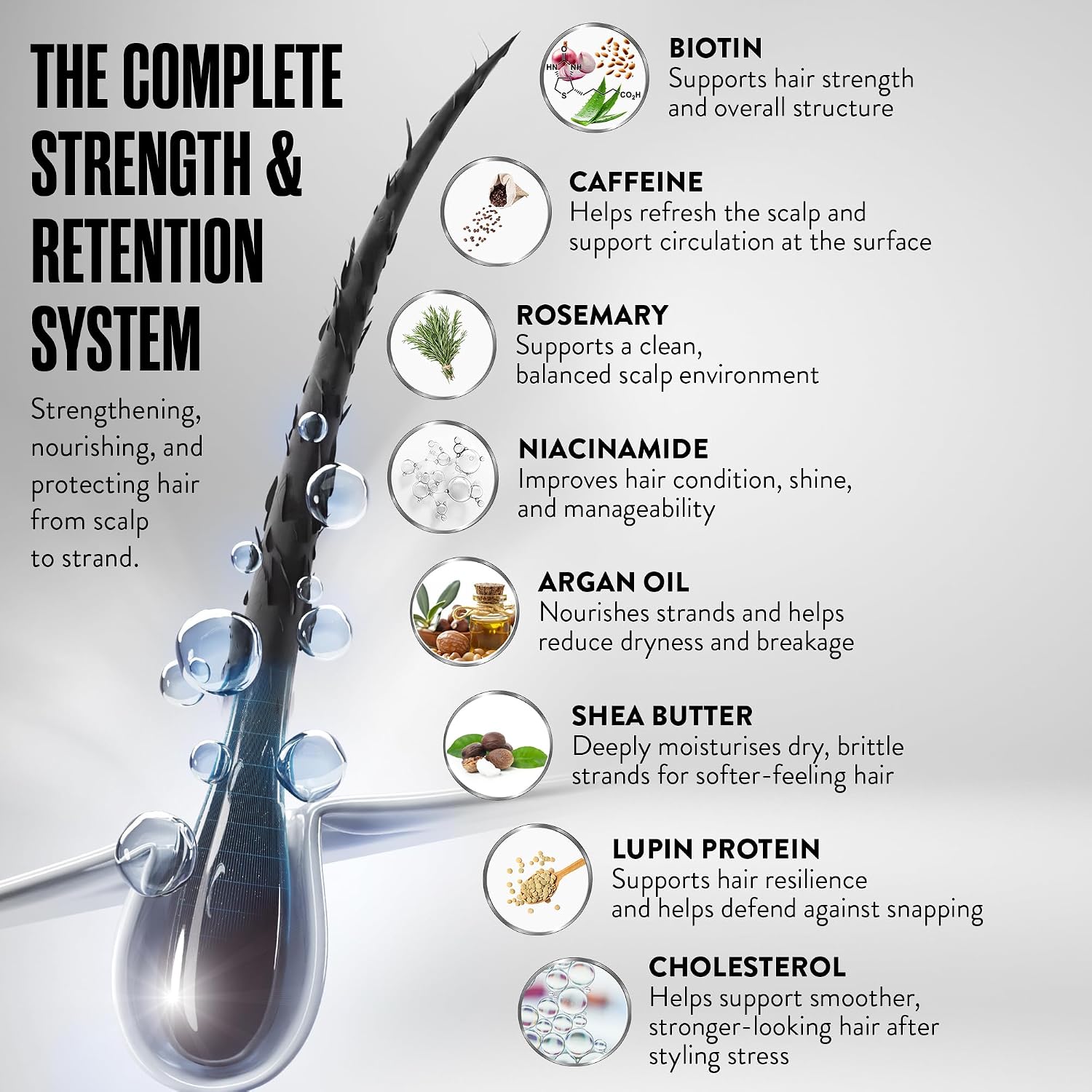
Most of the plant actives in this category have modest evidence, usually small studies, often short. That does not make them worthless, it makes the size of the claim the thing to police. Caffeine and rosemary are the two most commonly used and the two most commonly over sold. Niacinamide has decent general skin science behind it and the scalp is skin. Hydrolysed proteins do something well established but unglamorous: they reinforce the fibre temporarily so it survives handling.
Conditioning agents and oils have the strongest evidence of anything in the category and get the least marketing, because "reduces breakage during detangling" sells nothing. It is nonetheless the mechanism by which most people gain visible length and thickness over a year. We work through one active in detail in how to read a cosmetic ingredient claim.

What do we make, and how do we describe it?
Ours are cosmetics, made in the UK, vegan, built around caffeine, rosemary, niacinamide, biotin and hydrolysed lupine protein with conditioning agents chosen for breakage reduction. We are not going to claim that combination acts on hormones, because it does not, and a brand that claims otherwise is telling you something about itself.

Grow More Elixir
The like for like format: a leave on scalp elixir applied overnight to the areas where density is lower. Judge it on scalp comfort and on how your hair handles at week twelve.

Grow Me Shampoo
The rinse off half. Its job is to clean without stripping and leave the scalp comfortable, which is a cleanser's honest remit.
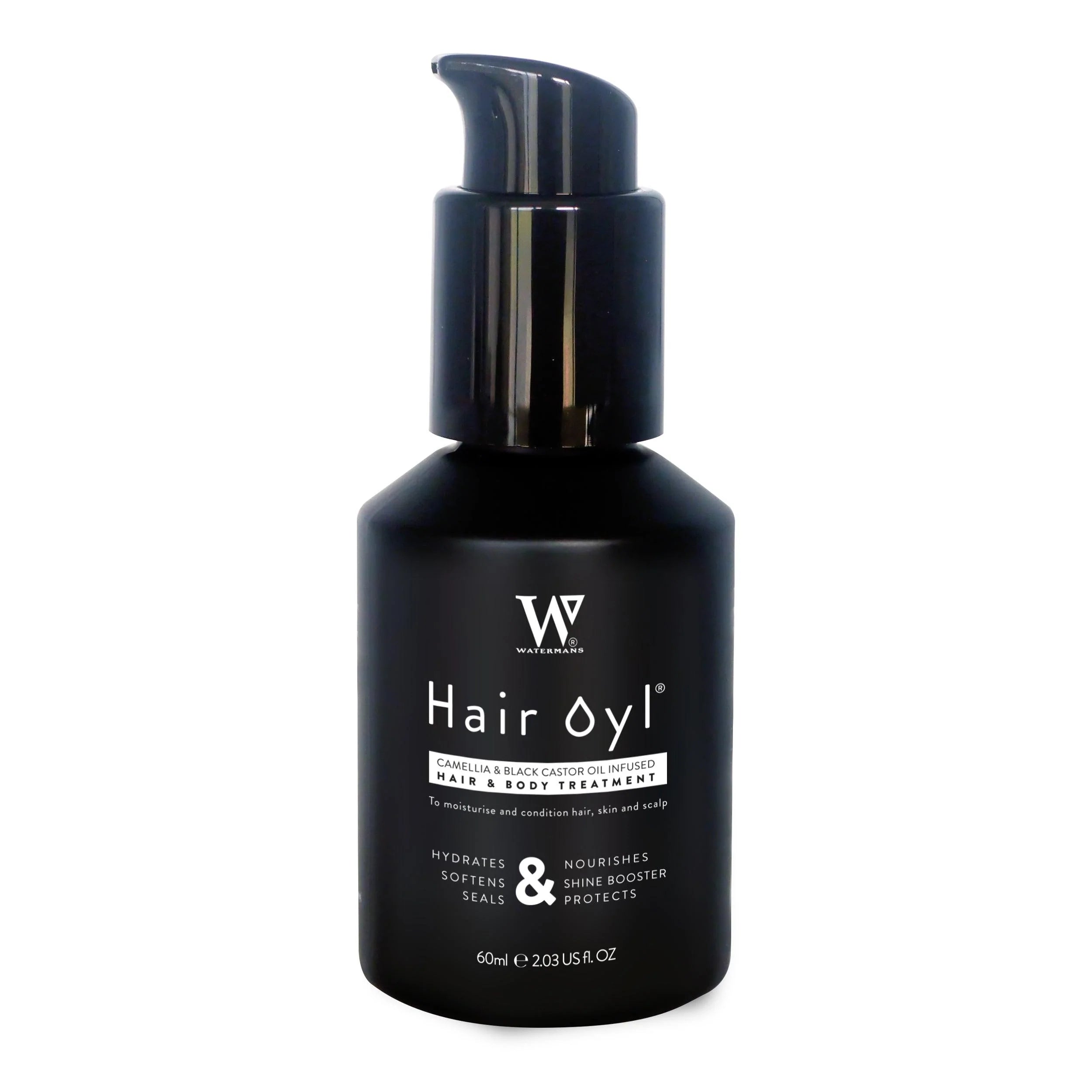
Camellia and Black Castor Oil
If what you actually want from a botanical is shine and less snapping on dry lengths, an oil does that job better than any serum, and honestly. Pre wash or on the ends, not on the scalp.
Over 5 million bottles sold since 2012, vegan and made in the UK. If another brand's formulation suits your scalp better, buy theirs. A serum you like enough to use for a year beats a better one you abandon in week three.
How do you run a fair comparison at home?
Pick one product and give it ninety days. Running two serums at once tells you nothing about either, and alternating them halves the contact time of both. Photograph the parting, the crown from above and the hairline in the same light before you start, then monthly.
Judge on three things at week twelve: how the scalp feels, how the hair behaves when wet and when detangling, and what the photographs show. If nothing has moved on any of the three, stop buying it. That is a completely normal outcome in a cosmetic category and no brand, ours included, should make you feel you did it wrong.
If the photographs show the pattern advancing regardless, that is useful information rather than a failure, and it is the point at which a GP conversation is worth more than a different bottle. What that route involves long term is covered in what happens when you stop.
Frequently asked questions
What is the best vegamour alternative?
There is no single best one, because the right vegamour alternative depends on which problem you have. For scalp comfort and contact time, look for a leave on serum with named actives high in the list. For breakage on dry lengths, an oil or a conditioner will do more than any serum. For a hormonal pattern, no cosmetic is the answer.
Are botanical hair serums safe?
Generally yes when properly formulated, though essential oils are a common cause of scalp irritation and allergy. Patch test behind the ear, and stop if the scalp becomes itchy, red or sore. Natural is a marketing word rather than a safety category.
Do plant based serums work as well as medicines?
They are not the same category and should not be compared as if they were. Cosmetics are assessed on safety and on the accuracy of cosmetic claims. Medicines are licensed on efficacy for a defined purpose and come through a pharmacist or a GP.
How long should I use a serum before deciding?
Ninety days minimum, because the hair growth cycle sets the pace. Scalp comfort and manageability can improve within a few weeks, and those count as evidence too.
Can I use a serum and a medicine at the same time?
Many people do, and they do different jobs. Ask the GP or pharmacist who arranged the medicine about timing and about anything applied to the same area, because they know what you are using.
Is a more expensive serum a better serum?
Not reliably. Price in this category reflects packaging, marketing and brand positioning at least as much as formulation. Compare the ingredient list and the format first, then the cost across a year.
Do I need the whole range or just the serum?
The serum plus a cleanser you like is enough for most people. Buying five products that overlap is the most common way to overspend here.
Will a serum help hair I have already lost?
No cosmetic brings back a follicle that has stopped producing. What a serum can honestly contribute is a comfortable scalp and less breakage in the hair that is still growing, which is what makes remaining hair look denser.
The short version
A vegamour alternative is a cosmetic decision, and it should be judged on format, on where the actives sit in the list, on the size of the claim, on the quality of the evidence offered and on what a year costs. Botanical serums genuinely help scalp comfort and breakage. They do not act on hormones, and if the pattern is the problem, the useful conversation is with a GP rather than with another label.
Watermans products are 100% cosmetic and do not treat medical hair loss. Individual results may vary.
Sources and References
- NHS, Hair loss: causes, types and when to see a GP. nhs.uk/conditions/hair-loss
- NICE Clinical Knowledge Summaries, Alopecia, androgenetic. cks.nice.org.uk
- Medicines and Healthcare products Regulatory Agency, Borderlines between medicines and cosmetics. gov.uk
- Advertising Standards Authority, CAP Code rules on health, beauty and efficacy claims. asa.org.uk
- British Association of Dermatologists, Male and female pattern hair loss information leaflets. bad.org.uk