PCOS Hair Loss: Why It Happens and How to Manage It
PCOS hair loss is scalp thinning driven by androgen sensitivity. In polycystic ovary syndrome, higher circulating androgens act on follicles at the crown and parting that are genetically sensitive to them, and each growth cycle produces a slightly finer hair. It shows as a widening parting rather than bald patches, it frequently appears alongside unwanted facial or body hair, and it responds best to addressing the underlying hormonal and metabolic picture rather than to shampoo alone.
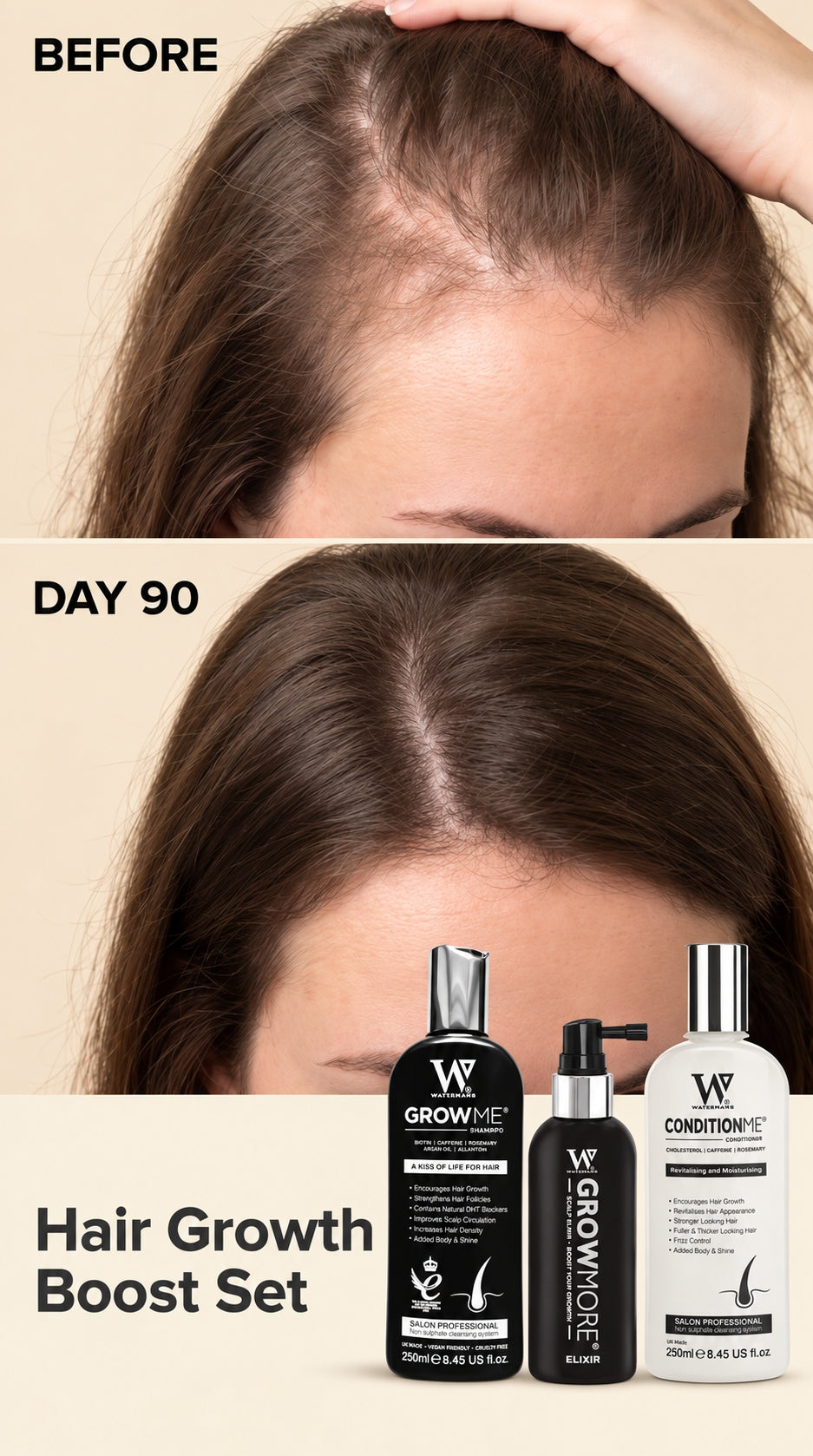
Our hair growth shampoo
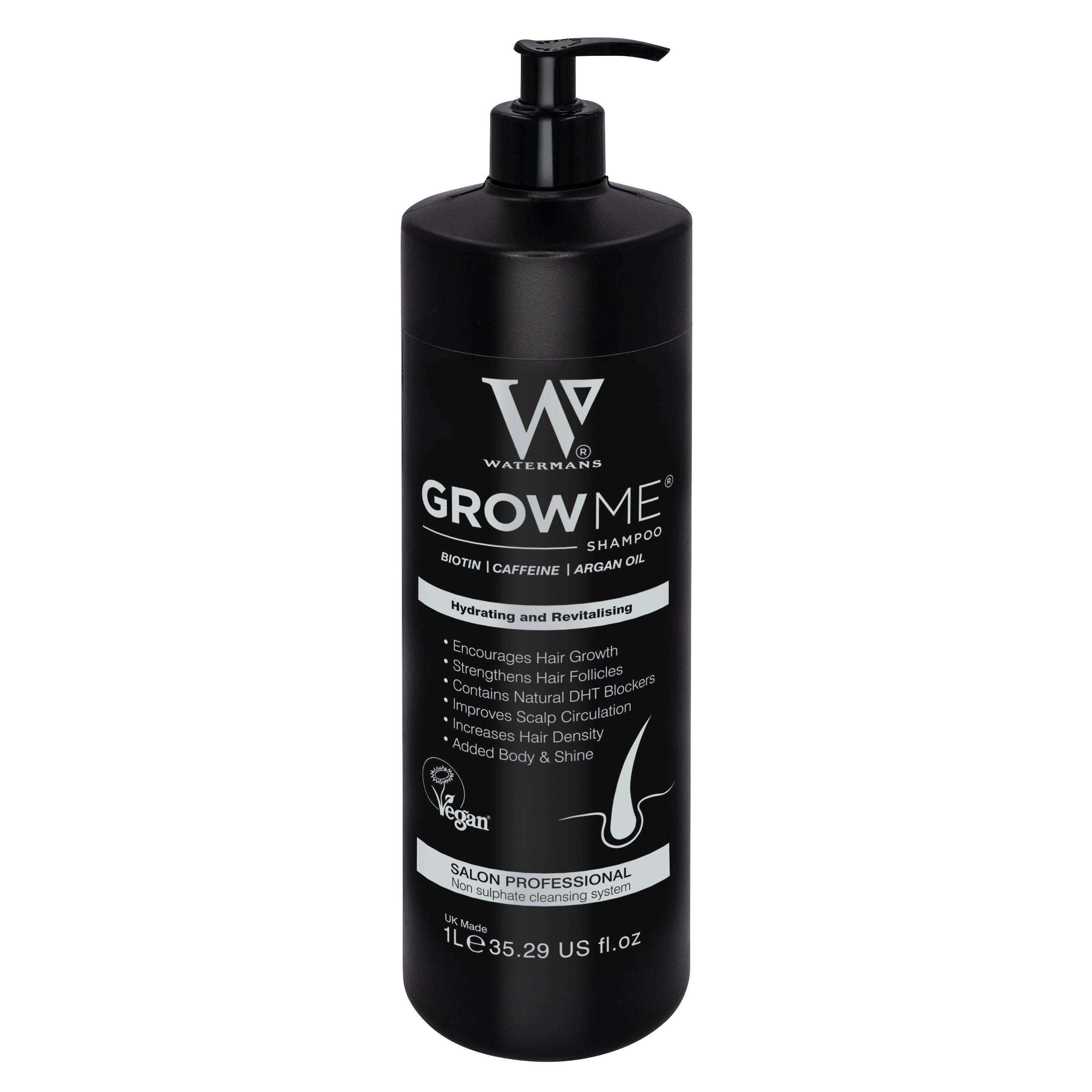
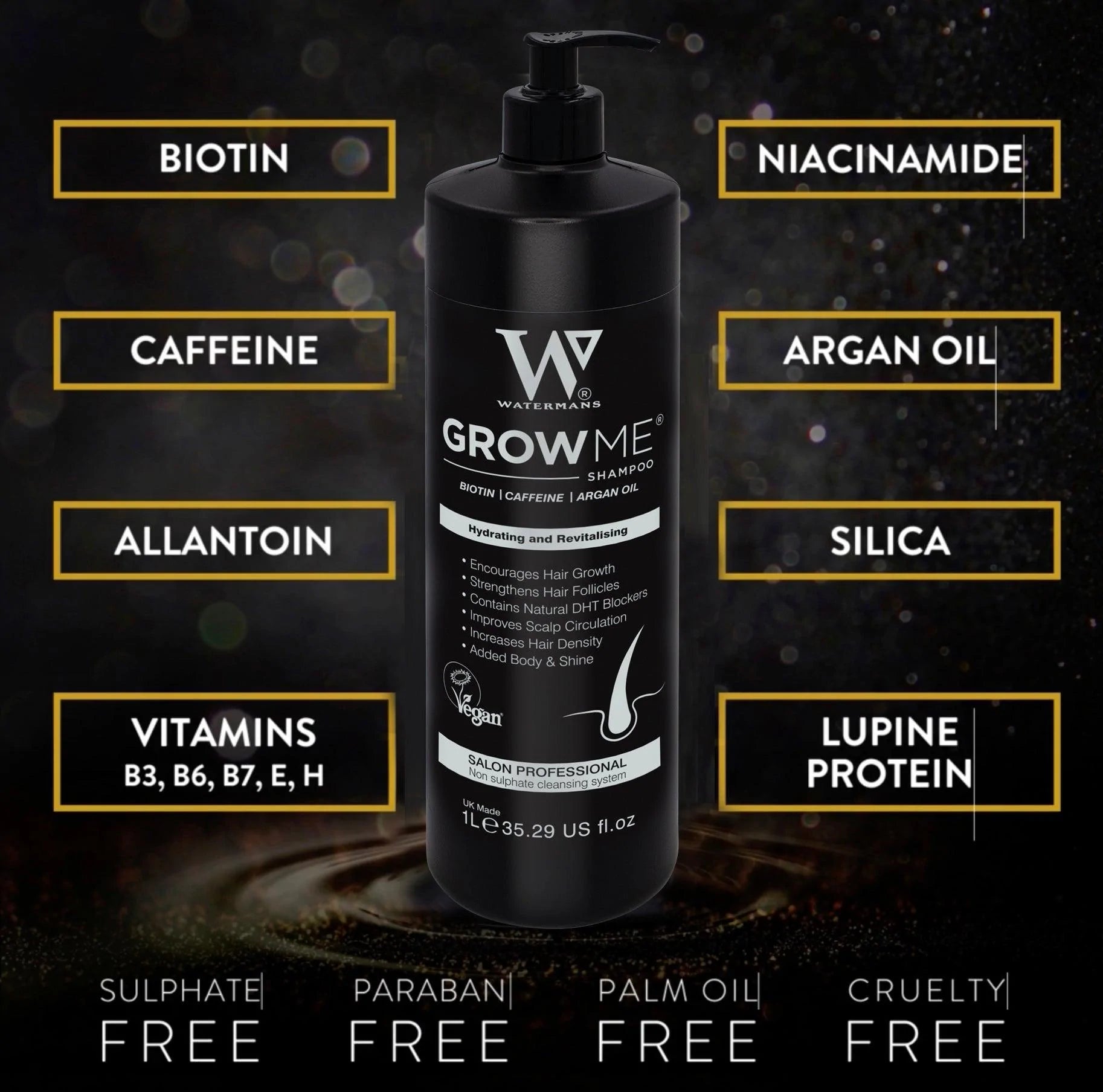
Grow Me® Hair Growth Shampoo, £14.95. A sulphate free daily shampoo that supports a healthy scalp environment and helps reduce breakage, so lengths hold on and look fuller.
Key takeaways
- The pattern is diffuse thinning at the crown and parting, with the hairline usually preserved.
- PCOS often causes hair to thin on the head and grow where it is not wanted, from the same hormonal cause.
- Insulin resistance sits underneath a great deal of this, which is why weight, diet and movement genuinely matter.
- Low ferritin and thyroid problems are common alongside PCOS and make the picture worse, so get them checked.
- Cosmetic care reduces breakage and makes hair look fuller. It does not change your hormones and cannot.
What does PCOS hair loss look like?
The pattern is recognisable and it is different from the two other things people often confuse it with.
- A widening parting that becomes noticeable over months and years rather than weeks.
- Thinning at the crown, with the front hairline usually staying where it is.
- Finer strands, so the hair feels less substantial in a ponytail even before the scalp shows.
- Hair that reaches a shorter maximum length than it used to, because the growing phase is shorter.
- Often, unwanted hair elsewhere, most commonly on the chin, upper lip, chest or stomach.
That last point catches people out. It seems contradictory to lose hair from the scalp and gain it on the face, but it is the same hormone acting on two different kinds of follicle. Scalp follicles at the crown miniaturise in response to androgens, while facial and body follicles are stimulated by them. Where the hormonal picture is one of falling rather than raised hormones, see falling oestrogen and hair.

What is the difference between hair loss, hair shedding and hair breakage?
Getting this wrong is the reason so many women spend money on the wrong product for a year. The three mechanisms look similar in the shower and need entirely different responses.
| Mechanism | What it looks like | What actually helps |
|---|---|---|
| Hair loss, follicles miniaturising | Wider parting, sparser crown, finer strands, gradual | Addressing the hormonal and metabolic picture with your GP |
| Hair shedding, cycle disruption | Sudden heavy fall about 3 months after illness, crash dieting or stress | Removing the trigger and waiting, since it usually settles in 6 to 9 months |
| Hair breakage, the fibre snapping | Short broken ends, frizz, length that never increases | Less heat, looser styling, better conditioning |
PCOS hair loss is the first row. Crash dieting for PCOS related weight concerns can add the second row on top, which is one reason very restrictive diets often backfire. For the fuller comparison, see what causes thinning hair, and for the androgen driven pattern in general, pattern hair loss explained.
Why does PCOS cause hair to thin?
Three linked mechanisms are at work, and understanding which one dominates for you is what makes the plan sensible rather than scattergun.
Raised androgens. PCOS is characterised by higher levels of androgens than usual for women. In androgen sensitive scalp follicles, this shortens the growing phase and shrinks the follicle a little each cycle, so hair comes back finer and shorter until eventually it is barely visible.
Insulin resistance. A large proportion of women with PCOS have some degree of insulin resistance, independent of body weight. Higher circulating insulin pushes the ovaries to produce more androgens and lowers the protein that binds them in the blood, so more free androgen is available to act on follicles. This is the mechanism behind why the dietary and movement advice is not just generic wellness filler.
Genetic sensitivity. Two women with identical hormone levels can have very different hair, because how strongly follicles respond to androgens is inherited. This is why some women with PCOS never notice any scalp change at all.
What should you ask your GP about?
PCOS is identified by a GP or specialist using a combination of irregular or absent periods, clinical or blood test evidence of raised androgens, and an ultrasound picture, with other causes excluded first. If you have not been formally assessed and you have irregular periods alongside thinning hair or unwanted hair growth, that assessment is the right first step. The enzyme behind much of this balance is explained in our guide to aromatase activity and hair, which covers why body composition and life stage change the hormonal picture.
Worth asking about specifically:
- Ferritin. Iron stores are commonly low in women with heavy or irregular bleeding, and low ferritin thins hair independently of everything else.
- Thyroid function. Thyroid problems are more common in women with PCOS and produce a very similar diffuse thinning. Our guide to thyroid related hair loss covers the overlap.
- Vitamin D and B12. Both frequently low, both easy to correct.
- Blood glucose and insulin markers. Because insulin resistance sits underneath so much of this.
- Medical options. There are hormonal and metabolic approaches a GP can discuss with you. Which one suits depends on your age, whether you are trying to conceive and your wider health, so that conversation belongs with them rather than with a hair care company. This article deliberately does not name medicines.

Which lifestyle changes actually influence PCOS hair loss?
This is the part of PCOS advice that is most often delivered badly, either as an unhelpful instruction to lose weight or as a list of miracle supplements. The honest version is narrower and more useful.
Improving insulin sensitivity is the lever that matters. The 2023 international guideline for PCOS emphasises lifestyle as a foundation of management, and the mechanism is specific: better insulin sensitivity means less free androgen, and less free androgen means less pressure on the follicle.
Resistance training and walking do more than punishing cardio. Muscle is the main site of glucose disposal, and regular movement improves insulin sensitivity independently of any weight change. Consistency beats intensity here by a wide margin.
Eat in a way you can sustain. Enough protein at each meal, fibre with carbohydrates, and no extreme restriction. Very low calorie dieting reliably triggers a heavy shed about three months later, which layers a second hair problem on top of the first.
Sleep, seriously. Poor sleep worsens insulin resistance measurably within days. It is not a hair remedy, but it sits upstream of the thing that is.
Quick tip: photograph your parting in the same daylight every three months. Hair changes far too slowly to judge from memory, and without a photo trail you will not be able to tell whether anything you are doing is working.

Get a discount on the thinning hair range
Join the Watermans mailing list and we will email a discount code straight to your inbox, so you can try the thinning hair range for less. Vegan, made in the UK, over 6.5 million bottles sold since 2012.
What can cosmetic hair care honestly do here?
It can do two real things and it cannot do a third. It can reduce breakage, so the hair you grow reaches its full length instead of snapping halfway. It can support a comfortable scalp and make hair look and feel fuller. What it cannot do is change your androgen levels, and no shampoo, oil or supplement should be sold to you on that basis. The metabolic side of this is worth understanding properly, and our guide to insulin resistance and why strength training helps explains the mechanism and what genuinely improves it.
That still matters more than it sounds. When density is already reduced, losing another portion to breakage is what tips a manageable change into a visible one. A sulfate free shampoo, proper conditioning and a heat protectant are unglamorous and they hold on to what you have.

Grow Me Shampoo
Sulfate free daily shampoo with biotin, caffeine and rosemary. Reduces breakage for fuller looking hair. Vegan, made in the UK.
View Grow Me
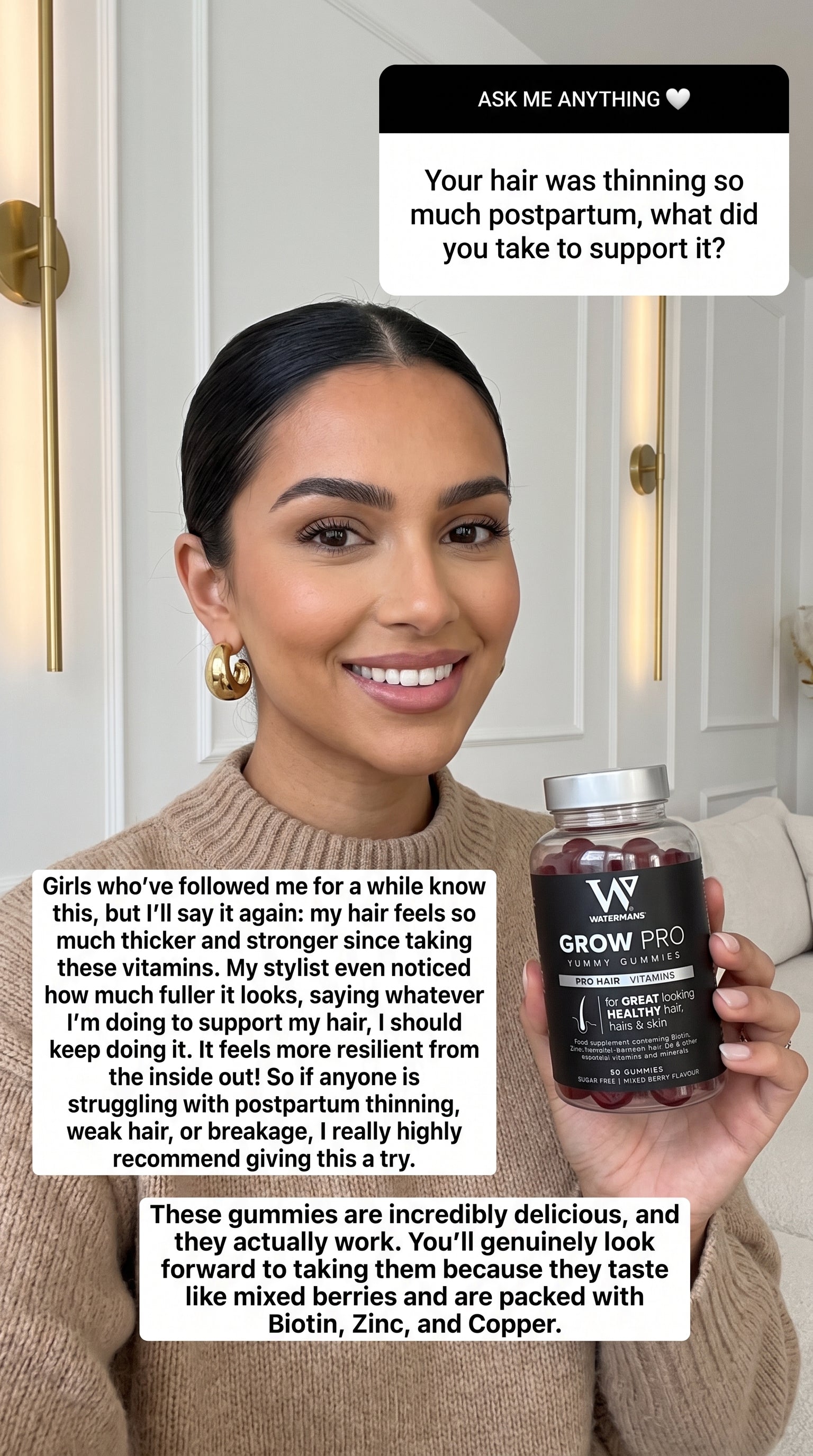
GrowPro Hair, Skin and Nails Gummies
Sugar free vegan gummies with biotin, zinc and silica. Nutrients that contribute to the maintenance of normal hair.
View the gummiesWatermans products are 100% cosmetic and do not treat medical hair loss. Individual results may vary. Watermans has sold over 6.5 million bottles since 2012. If you want the evidence on what supplements can and cannot do, we go through it in hair vitamins, what actually works.
How long does it take to see any change?
Slowly, and that is worth knowing before you start so you do not abandon something that was working.
Hair grows around a centimetre a month, and the follicle cycle means any change to the underlying picture takes about three months to show and six to twelve months to judge properly. If you correct a low ferritin, expect three to six months before the hair reflects it. If you improve insulin sensitivity, the same sort of timescale applies. Cosmetic improvements to breakage show sooner, within four to eight weeks, because that is a change to the fibre rather than to the follicle.
There is no cure for PCOS, and the realistic goal is management rather than resolution. Many women hold their density steady for years once the underlying picture is addressed, which is a genuinely good outcome even though it is not the one the adverts promise. PCOS often brings acne alongside the hair changes, and if a new active has made your skin worse before it got better, our guide to telling skin purging from a breakout sets out the four tests that settle it. How much of that testosterone is actually free to reach a follicle depends on SHBG, the protein that binds it in the blood.
Frequently asked questions about PCOS hair loss
Is PCOS hair loss permanent?
Follicles miniaturise gradually rather than dying outright, so hair is still being produced, just finer. Addressing the hormonal and metabolic picture early gives the best chance of holding density steady, which is why an early conversation with your GP is worth having.
Why am I losing hair on my head and growing it on my face?
The same androgens act in opposite directions on different follicles. Scalp follicles at the crown shrink in response to them, while facial and body follicles are stimulated into producing thicker, darker hair.
Will losing weight help my hair?
Improving insulin sensitivity helps, and for some women that comes with weight loss while for others it comes from movement and diet quality without much change on the scales. Crash dieting is counterproductive and reliably triggers a heavy shed a few months later.
Does the contraceptive pill affect PCOS hair loss?
Hormonal contraception affects androgen levels and some women notice a difference in their hair, in either direction. This is a decision to make with your GP based on your whole situation, not on hair alone.
Can inositol or other supplements help?
Some supplements have evidence for insulin sensitivity in PCOS and the picture is mixed rather than settled. Discuss anything you are considering with your GP, particularly if you are on other medication, and be sceptical of anything sold specifically as a hair fix.
Is PCOS hair loss the same as male pattern baldness?
The mechanism is closely related, but the pattern differs. Women typically keep their frontal hairline and thin diffusely through the crown and parting, rather than receding at the temples.
Should I see a dermatologist or my GP first?
Start with your GP. They can run the blood tests, look at the wider PCOS picture, and refer you on if the hair situation needs specialist input. If your question is about products or a routine rather than a medical one, you can talk to Gail Waterman, our co-founder, as an AI avatar on the Watermans homepage.
Does hair dye make PCOS hair loss worse?
Colour does not affect the follicle. Bleaching and repeated lightening damage the hair fibre and cause breakage, which makes thinning look worse than it is, so depositing colour is the gentler choice.
What is the bottom line on pcos hair loss?
PCOS hair loss is androgen driven thinning at the crown and parting, and the lever that moves it is the underlying hormonal and metabolic picture rather than anything in a bottle. Get properly assessed, ask for ferritin, thyroid, vitamin D and insulin markers, and work on insulin sensitivity through movement, protein and sustainable eating rather than restriction. Use cosmetic care for what it genuinely does, which is protecting the hair you have from breakage and making it look fuller, and give any change six to twelve months before you judge it. Unwanted facial and body hair often turns up alongside the scalp changes, and facial hair reduction methods compared works through the at home options and the NHS signs that mean booking a GP appointment.
Watermans products are 100% cosmetic and do not treat medical hair loss. Individual results may vary.
Most routines fall over because they are complicated, so start with our sulphate free hair growth shampoo and nothing else. Vegan, made in the UK.
Sources and References
- Polycystic ovary syndrome, NHS.
- Recommendations From the 2023 International Evidence-based Guideline for the Assessment and Management of Polycystic Ovary Syndrome, PMC10505534.
- Hair loss, NHS.
- Iron, NHS vitamins and minerals.