Patchy Hair Loss: How to Tell What Is Causing It
Patchy hair loss means hair disappearing in defined areas rather than thinning evenly all over, and the shape of those areas is the most useful clue you have. Smooth round bare spots point one way, ragged thinning at a tight hairline points another, and a scaly, itchy patch points somewhere else entirely. Reading the pattern before you buy anything is what stops you spending money on the wrong problem. Whether the follicle itself has survived is the question underneath all of this, and the guide to non-scarring alopecia explains how to tell the two groups apart. We look at mcdonalds hairline separately, with the practical steps.
Our heat protection spray
Protect Me® Heat Protection Spray, £13.95. A leave in spray that shields hair from heat styling, helps control frizz and keeps colour looking fresher for longer.
Key takeaways
- Smooth and round with clear skin usually means alopecia areata. Scaly, red or itchy usually does not, and needs a GP.
- Thinning at the hairline, temples or under a parting where hair is pulled tight is often tension damage, and that one is largely avoidable.
- Diffuse shedding is a different thing entirely. It thins everywhere at once and usually follows a trigger from two to three months earlier.
- Take photographs in the same light every month. Memory is unreliable and photographs settle arguments.
- Cosmetics can protect the hair around a patch. Nothing on our shelf changes what is happening inside it.
What are the common causes of patchy hair loss?
Several different things produce bare or thinning areas, and they are not variations of one problem. The main ones worth knowing:
- Alopecia areata. An autoimmune condition. Immune activity interrupts follicles and they stop producing, leaving smooth, usually circular patches with normal looking skin. It can appear over days.
- Traction damage. Sustained pull from tight ponytails, braids, weaves, buns or extensions. It shows up where the tension is greatest, typically the hairline and temples, and often with small bumps early on.
- Fungal scalp infection. More common in children. The patch is usually scaly, sometimes inflamed, and the hairs break off short rather than falling out whole. This one needs a GP because it needs specific medicine, not shampoo.
- Trichotillomania. Hair pulling, often not fully conscious. The patches have irregular edges and hairs of varying lengths within them.
- Scarring conditions. Less common, but important. The skin looks shiny or smooth with no visible follicle openings. These need dermatology input early, because once the follicle is gone it does not come back.

How do you tell patchy hair loss from shedding and from breakage?
This distinction does more work than any product recommendation, so it is worth being precise. Patchy hair loss is follicular and local: specific areas stop producing hair while the rest of the scalp carries on normally. Shedding is cyclical and diffuse: more hairs than usual release from the root across the whole head at once, each with a small pale bulb at the end, and it commonly follows an illness, an operation, a big weight change, childbirth or a hormonal shift a couple of months earlier. Breakage is structural: the fibre snaps somewhere along its length, so what you find is short broken pieces with no bulb, frayed ends, and hair that feels rough. If you are in south London and weighing up who to see about a patch, our Croydon guide to patchy hair loss and who to see first sets out the GP-first signs and what a trichologist can add.
The practical consequence is simple. Breakage responds well to conditioning and gentler handling. Shedding mostly responds to time and to sorting out whatever triggered it. A patch responds to neither, which is why it belongs in front of a GP rather than in a shopping basket.
| Sign | Patchy hair loss | Shedding | Breakage |
|---|---|---|---|
| Where | Defined areas | Whole scalp | Wherever stress on the fibre is highest |
| What you find | Bare skin | Whole hairs with a pale bulb | Short pieces, no bulb |
| Onset | Days to weeks | Follows a trigger by 2 to 3 months | Gradual, tracks styling habits |
| Does a product help | No, see your GP | Not really, it usually settles | Yes, genuinely |
What does patchy hair loss from tight styling look like?
Tension damage is worth its own section because it is the one form most people can do something about themselves, today, for free.
It appears where hair is pulled hardest. The classic picture is a receding, thinning band at the front hairline and around the temples, sometimes with a fringe of fine short hairs left behind at the very edge. Early on you may see small bumps or tenderness after styling. If your scalp aches after a style, or you can feel the pull when you raise your eyebrows, that is too tight.
Caught early it is reversible in the sense that the follicles usually recover once the tension stops. Left for years it can become permanent, because sustained pull eventually scars the follicle. That is the reason to act on it now rather than after another two years of the same style. Our full guide to traction alopecia covers the styling changes in detail.

A rule of thumb worth having: if a hairstyle hurts, it is doing damage. Discomfort is not the price of a neat finish, and a style that gives you a headache is pulling hard enough to matter.

Protect Me Heat Protection Spray, 13.95 GBP
Relevant only to the breakage side of this page. If you use straighteners or tongs on hair that is already fragile at the hairline, a heat protectant and a lower temperature setting reduce snapping. It does nothing whatsoever for a bare patch, and we are not going to suggest otherwise.
Get a discount on your next order
Join the Watermans mailing list and we will email a discount code straight to your inbox. Made in the UK, over 6.5 million bottles sold since 2012.
What can you check at home before seeing anyone?
None of this replaces a proper look from your GP, but it makes that appointment more useful.
- Look at the skin, not just the hair. Smooth and normal coloured, or red, scaly and flaky? That single observation splits the likely causes roughly in half.
- Look for follicle openings. Under good light, can you still see the tiny dots where hairs emerge? If the skin looks completely smooth and shiny with no openings at all, mention that specifically, because it changes the urgency.
- Check the edges. Sharp and circular, or ragged with hairs of different lengths inside?
- Check elsewhere. Eyebrows, eyelashes, beard, body hair, and your nails for pitting or ridging. These matter and people rarely think to mention them.
- Photograph it monthly. Same spot, same light, something in frame for scale. This is the single most useful thing you can bring.
Whether hair returns depends entirely on which cause you are dealing with, and our piece on whether hair loss is permanent goes through that properly.
What is actually worth your money here?
We sell hair care, so read what follows with appropriate suspicion and check it against the sources at the bottom. It is still the honest version.
Worth spending on: a decent conditioner if you are losing length to snapping, a heat protectant if you use hot tools, and better hair ties. All three address breakage, which is a real and fixable problem, and none of them cost much. A GP appointment costs nothing at all and is the highest value thing on this list by a wide margin.
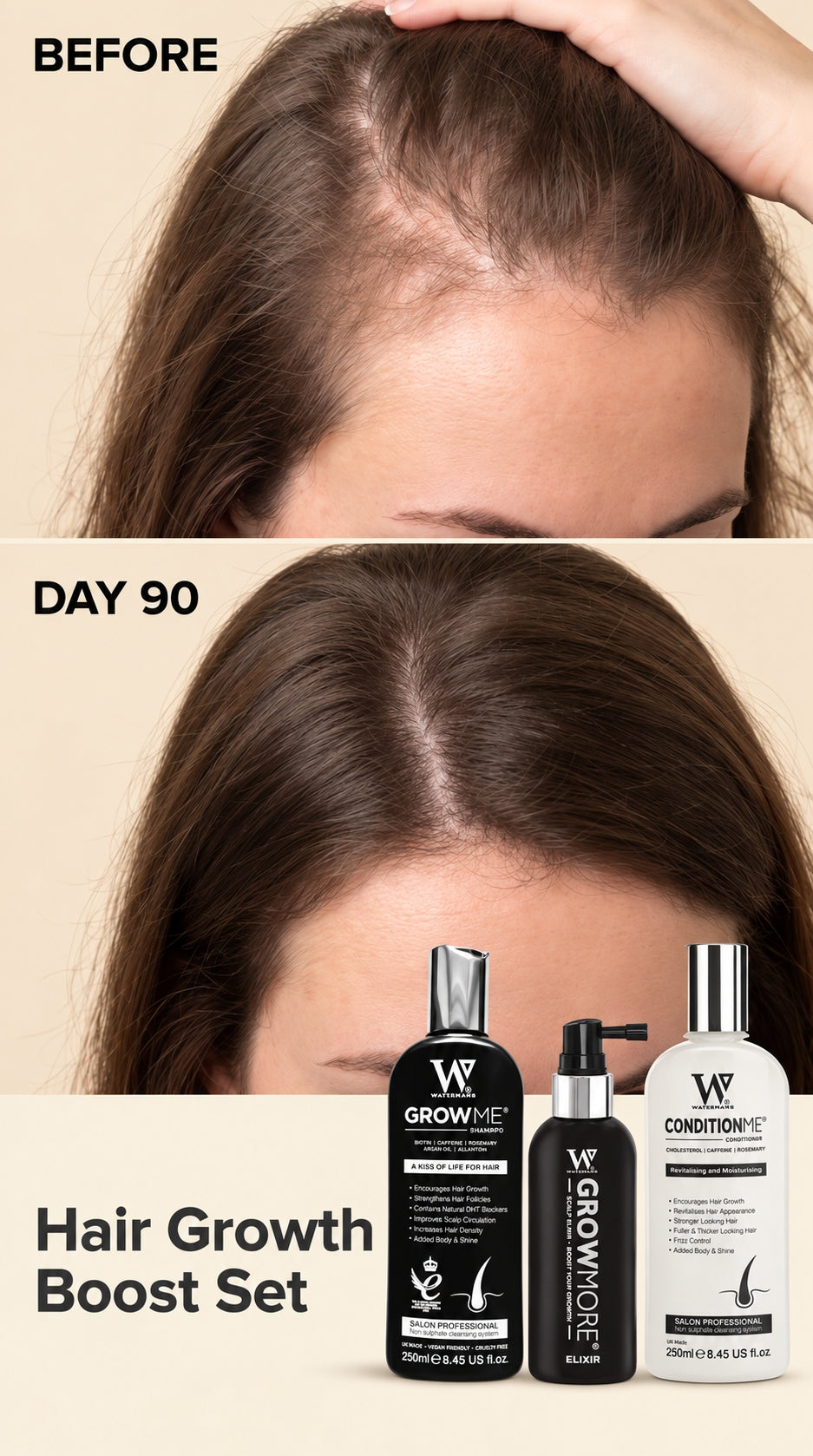
Not worth spending on: anything sold specifically as a fix for bare patches. Serums promising to wake up dormant follicles, laser combs marketed for autoimmune hair loss, and expensive supplement stacks aimed at people with no confirmed deficiency all fall here. So does any product whose marketing leans on a before and after photograph without saying what else the person was doing at the time.
The honest grey area: scalp massage, rosemary oil and similar traditional approaches. People enjoy them, they are cheap, and the evidence is thin and mixed rather than absent. If you like doing it, there is no harm in it. Just do not delay a GP appointment because you are giving something six more months.
One more thing worth saying, because it costs us sales to say it. If your hair loss turns out to be a scarring condition, time genuinely matters, and every month spent working through shop bought options is a month the follicle does not get back. In that situation the single most useful purchase is a train fare to a dermatology appointment your GP has arranged.

When should you see a GP about patchy hair loss?
Speak to your own GP about any new bare area, and do it sooner rather than later if the skin is red, scaly, painful or shiny, if patches are spreading or joining, if you are also losing eyebrow or eyelash hair, if your nails have changed, or if a child is affected. Childhood scalp infections in particular need proper medicine and spread easily.
Go too if it is affecting your sleep or your mood. That is a real reason and it is taken seriously.
We are a cosmetics company. We do not run clinics, we cannot examine your scalp, and we deliberately do not name specific medicines on this page. What we can tell you honestly is which of your symptoms a shampoo could plausibly influence, which is breakage and scalp comfort, and which it cannot, which is everything else on this page. If your question is about products or a routine rather than a medical one, you can talk to Gail Waterman, our co-founder, as an AI avatar on the Watermans homepage.

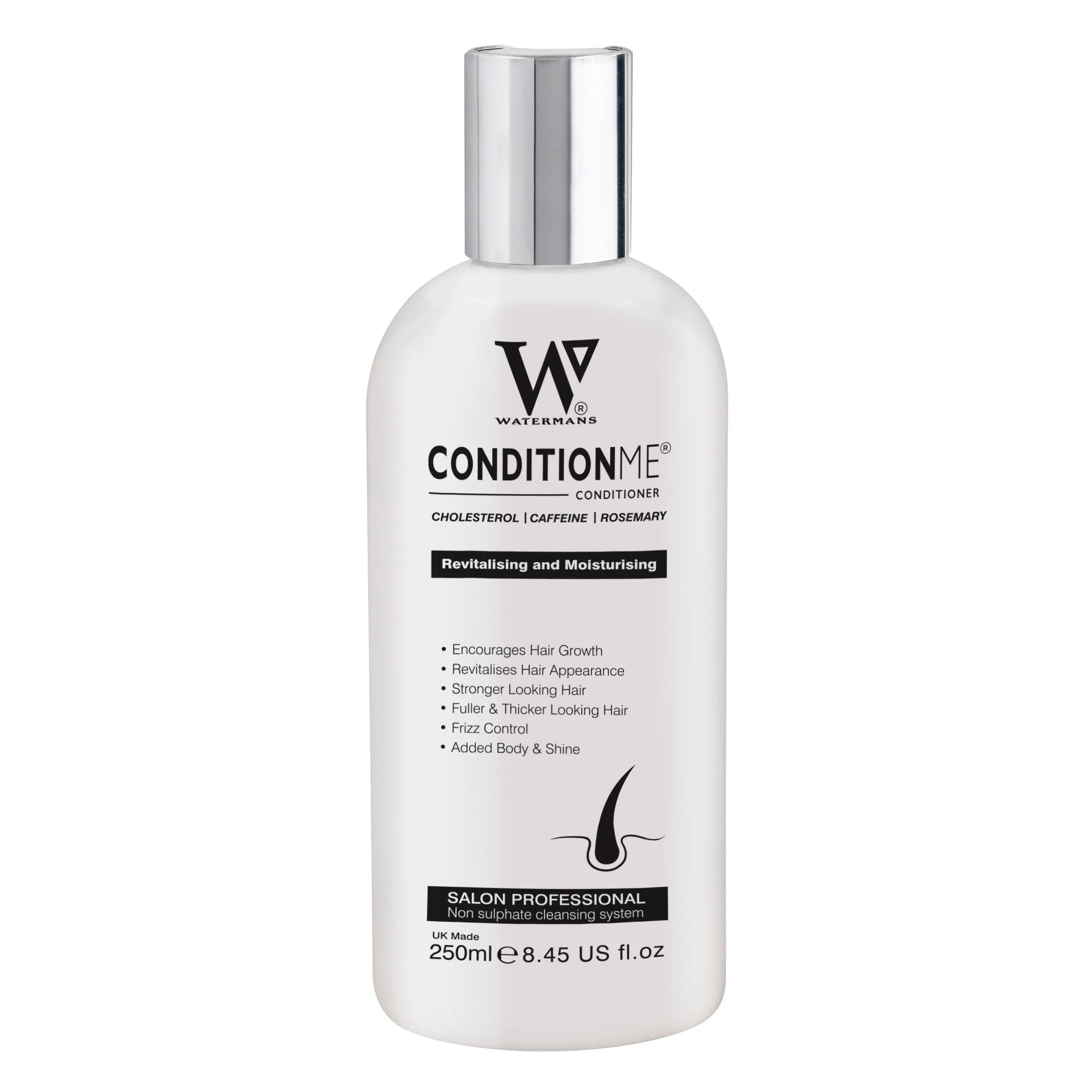
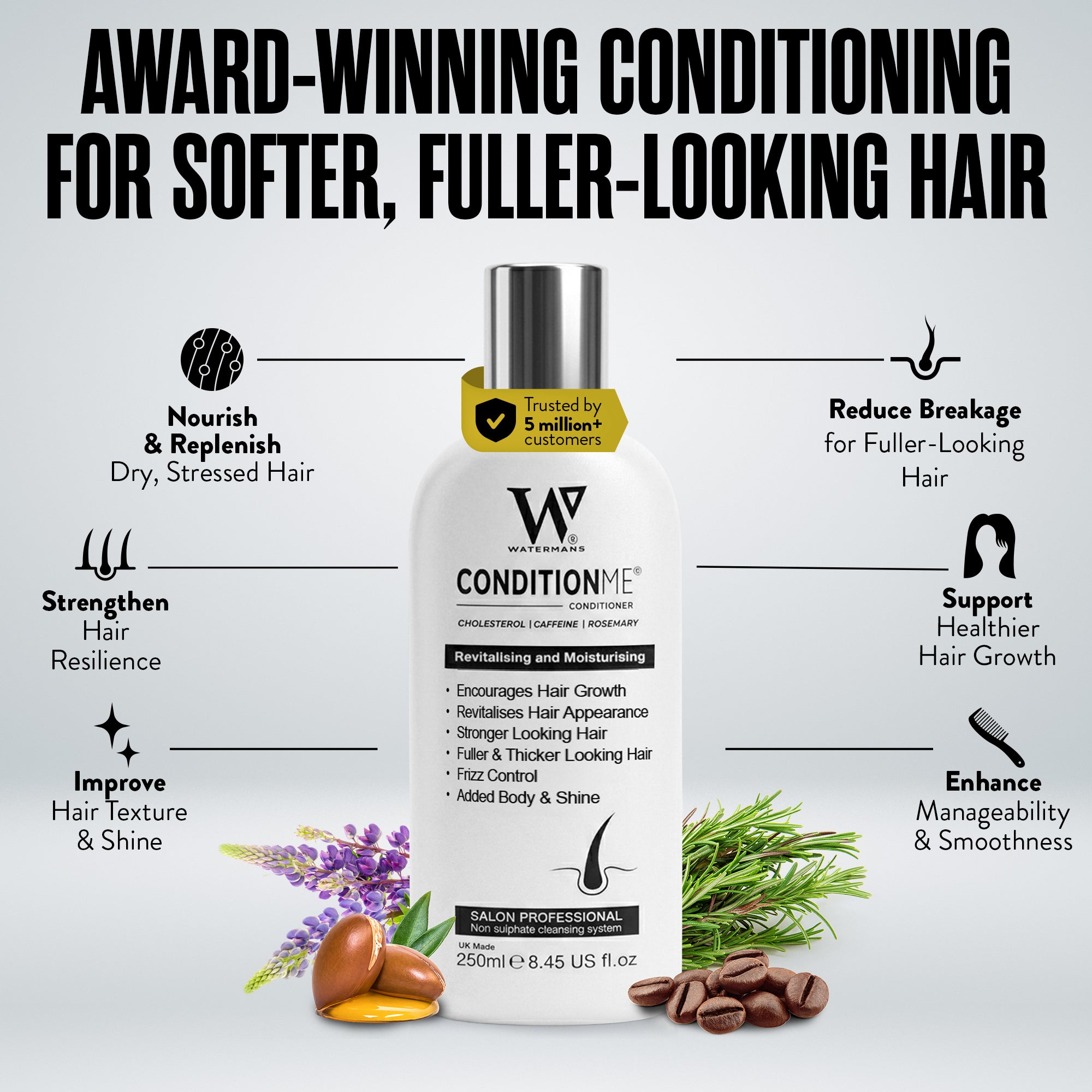
Condition Me Hair Growth Conditioner, 13.95 GBP
For the breakage part of the picture only. Easier detangling means fewer hairs snapped in the shower, which matters more when a patch already makes the hair look sparse. Cosmetic product, no effect on the underlying cause.
How should you care for hair around a patch day to day?
Gently, and without ceremony. Wash to your scalp's comfort rather than on a schedule someone on the internet gave you. Detangle from the ends upwards with conditioner in. Keep heat low. Loosen every style that pulls. Protect exposed skin from the sun, because a bare area on the crown burns quickly and painfully.
If your patches are confirmed as alopecia areata, we have a dedicated guide to day to day alopecia areata hair care that goes further into washing, coverings and scalp comfort. This page is about working out what you are looking at. That one is about living with it once you know. Where a private assessment is the right next step, our guide to vetting a hair and scalp specialist covers how to verify qualifications and what a first consultation should cover.
Frequently asked questions
Is patchy hair loss permanent?
It depends on the cause. Alopecia areata patches often fill in again because the follicle survives. Tension damage usually recovers if you stop the pulling early enough. Scarring conditions are the exception, which is why a shiny patch with no visible follicle openings should be looked at promptly.
Can stress cause bare patches?
Stress is often reported alongside alopecia areata, and the evidence for it as a direct cause is genuinely mixed rather than settled. Stress is a much clearer contributor to diffuse shedding, which is a different pattern. Either way, nobody should tell you this is your fault.
Will shampoo help?
Not with the patch. Shampoo works on the fibre and the scalp surface, so it can reduce breakage and keep skin comfortable. It cannot switch a follicle back on.
Why is the patch itchy?
Itch, scaling or redness suggests something other than plain alopecia areata, such as an inflammatory skin condition or an infection. That is a GP question rather than a shopping one.
My child has a bare patch, what should I do?
See a GP rather than trying products. Scalp infections are common in children, need specific medicine, and pass easily between children. We would not sell you a growth product for a child and you should be wary of anyone who would.
Can I cover it while I wait?
Yes, and there is nothing wrong with doing so. Loose scarves, hats and hairstyles that do not pull are all fine. Just avoid anything with a tight band sitting on the same spot every day.
How long until I know if it is coming back?
For alopecia areata, many people see fine, often pale hairs appearing within a few months, though it varies a great deal and can come and go. Monthly photographs are far more reliable than daily mirror checks, which will only make you anxious.
Should I take supplements?
Only for a deficiency confirmed by a blood test through your GP. Taking hair vitamins on spec does nothing for a bare patch and high dose biotin can interfere with some blood tests, which is worth mentioning before any sample is taken.
What is the bottom line on patchy hair loss?
Patchy hair loss is a pattern, not an answer you can settle at home, and the useful first step is describing that pattern accurately: where it is, what the skin looks like, how fast it appeared, and whether anything else has changed. Smooth and round means one conversation with your GP, scaly and itchy means a more urgent one, and thinning where your hair is pulled tight means changing the style today. Cosmetics have a genuine but narrow role here, which is protecting the hair around the area from breakage. Our guide to tension damage on afro and coily hair explains how traction differs from the patterns described here.
Watermans products are 100% cosmetic and do not treat medical hair loss. Individual results may vary.
Sources and references
- NHS, Hair loss, on causes, when to see a GP and what the NHS provides.
- National Institute for Health and Care Excellence, Clinical Knowledge Summaries: Alopecia areata, on presentation, nail changes and referral thresholds.
- British Association of Dermatologists, Alopecia areata information leaflet for the public.
- DermNet, Alopecia areata, on distinguishing features and scarring versus non scarring hair loss.