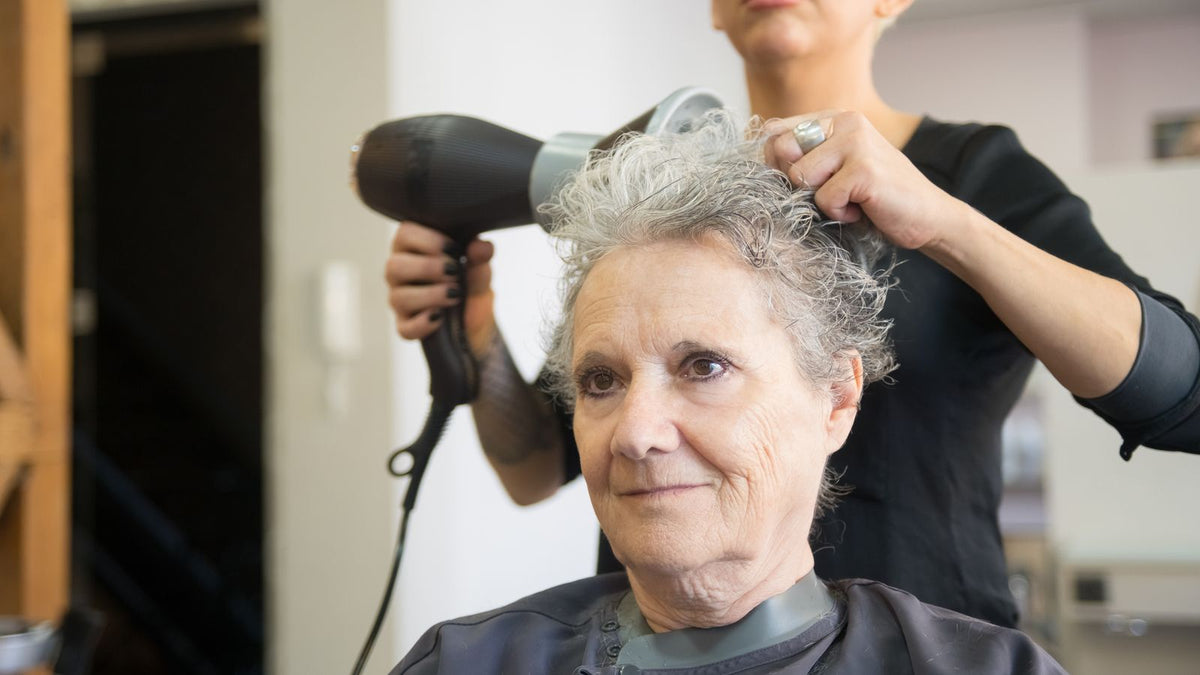
Shampoo for Older Women: What Mature Hair Actually Needs
Shampoo for Older Women: What Mature Hair Actually Needs
The right shampoo for older women is lightweight, sulfate free and gently cleansing rather than richly moisturising, because mature hair has two problems at once: it is drier along the length and finer at the root. A heavy moisturising formula answers the first and makes the second visibly worse. Put the moisture where it is needed, on the mid lengths and ends, and keep the shampoo itself light so the roots can still lift.
Key takeaways
- Mature hair is drier and finer at the same time, which is why one product rarely solves it. Split the job between a light shampoo and a rich conditioner.
- Sulfate free matters more after 50, because a scalp producing less oil has less to spare.
- Grey hair is coarser, more porous and more prone to yellowing. It needs different care, not just the same care in a purple bottle.
- Thinning after menopause is common and is not the same problem as dryness. Sorting out which you have decides everything else.
- Cosmetic care changes how hair looks and behaves. It does not change what the follicle is doing.

What actually changes in hair after 50?
Four things change, and they change independently of each other, which is why hair after 50 often feels contradictory to look after.
- Sebum production falls. The scalp makes less oil, so hair that was greasy at 30 can be dry at 60. The lengths lose their natural conditioning first, because oil no longer travels as far down the strand.
- Strand diameter narrows. Individual hairs get finer with age even where density is unchanged, so the same number of hairs occupies less visual space.
- Pigment production stops. Follicles gradually cease making melanin. Grey and white hair is structurally different, not just differently coloured: it is often coarser, more porous and more wiry.
- The growing phase shortens. Hair does not grow as long before it rests, so maximum achievable length reduces and density drops modestly.
Falling oestrogen through perimenopause and menopause accelerates several of these at once, which is why so many women describe their hair changing character within a couple of years rather than gradually across a decade. Our guide to menopause hair loss and what actually helps covers that transition in detail.

Does a shampoo for older women fix dryness, thinning or breakage?
These three get treated as one complaint and they need three different answers. Working out which applies to you is the most useful five minutes in this article.
| Which one | What is happening | The tell | What answers it |
|---|---|---|---|
| Dryness | Less sebum reaching the length, and a more porous cuticle losing water faster | Feels rough and straw like, dull, frizzy in humidity, but full length hairs | Light shampoo, rich conditioner on the ends, a weekly mask |
| Thinning | Follicles producing finer, shorter hairs cycle after cycle | Widening parting, scalp visible under light, sides unaffected, hairs of mixed thickness | A GP conversation, plus a lighter routine and a shorter cut for appearance |
| Breakage | The fibre snapping mid length, follicle untouched | Short broken pieces with no white bulb, ends that never seem to get longer | Gentler handling, less heat, better conditioning. The one you can directly stop |
Most women over 50 have dryness plus some breakage, and a smaller number also have genuine thinning underneath. A widening parting with the sides untouched is the signal to raise it with your GP, because iron and thyroid changes are common at this age and both are checkable with a blood test. Our piece on whether hair loss is normal for a woman covers what is expected and what is not.

What should be on the label of a shampoo for older women?
Five things to look for and three to avoid. This is the whole of the ingredient question, and it is simpler than the shelf makes it look.
Worth having
- Sulfate free surfactants. Look for cocamidopropyl betaine, coco glucoside or sodium cocoyl isethionate rather than sodium lauryl sulfate. They clean effectively without stripping a scalp that is already producing less oil.
- Humectants. Glycerin and panthenol draw water into the fibre and hold it there, which is the actual mechanism behind hair feeling less brittle.
- Hydrolysed proteins. Small enough to sit in the gaps in a porous cuticle, which temporarily improves strength and reduces snapping.
- Niacinamide and other scalp conditioning agents. Support a comfortable scalp environment, which matters more as skin thins with age.
- Chelating agents. If you are in a hard water area, these lift the mineral deposits that dull grey hair and make it feel wiry.
Worth avoiding
- Heavy non soluble silicones on fine hair. They give an immediate smooth feel and then accumulate into weight at the root. Fine for coarse grey lengths, poor at the parting.
- Rich two in one shampoos. The conditioning agents inevitably reach the scalp. Two products used properly beat one product used everywhere.
- Drying alcohols high in the list. Denatured alcohol near the top of an ingredient list on already dry hair is working against you.

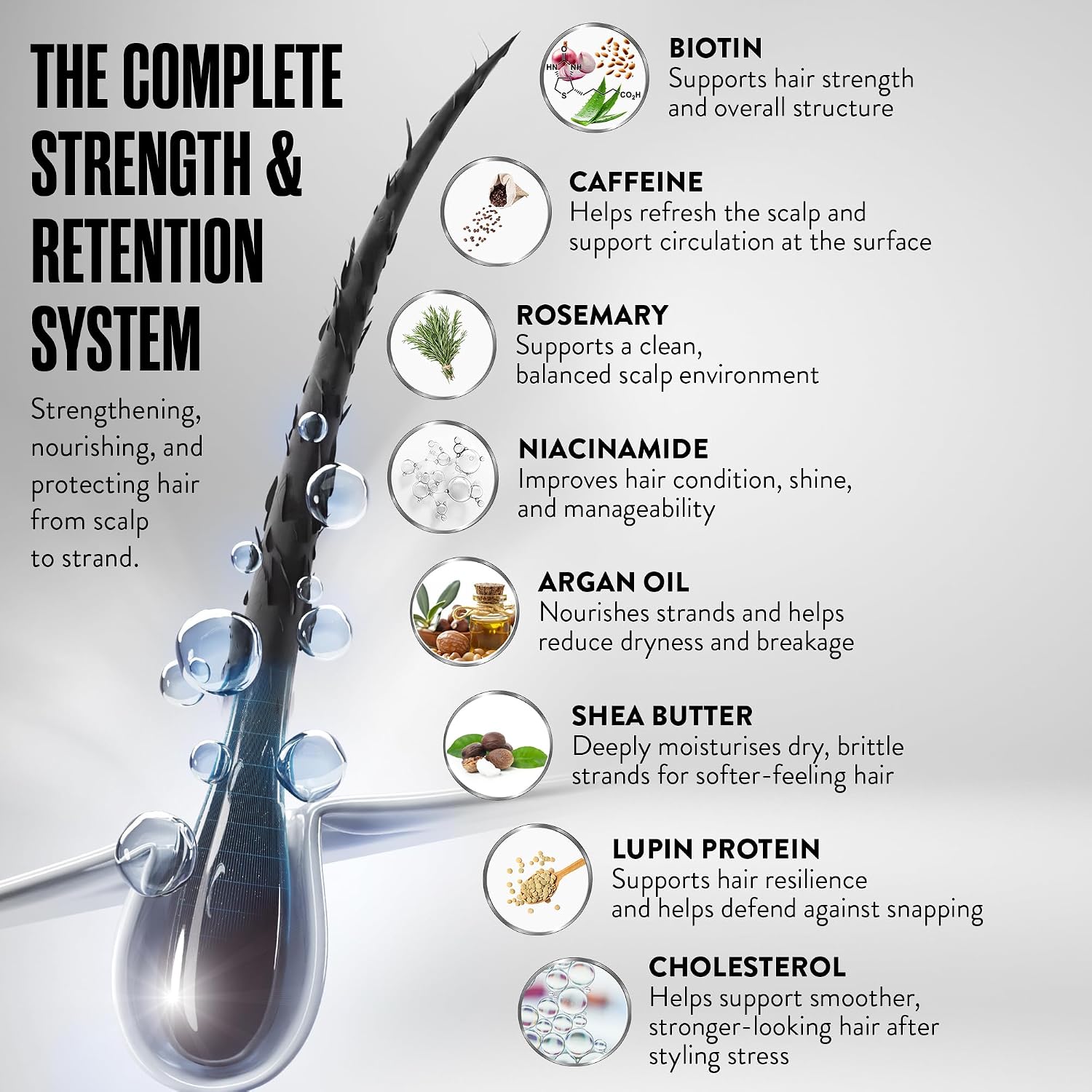
Sulfate free and lightweight, which is the combination mature hair needs at the root: it cleans without stripping a scalp that produces less oil than it used to. Biotin, caffeine, rosemary, niacinamide and hydrolysed lupine protein support a healthy scalp environment and leave finer hair feeling fuller rather than coated.
Get a discount on the mature hair range
Join the Watermans mailing list and we will email a discount code straight to your inbox, so you can try the mature hair range for less. Vegan, made in the UK, over 5 million bottles sold since 2012.
How should grey and white hair be cared for differently?
Grey hair needs more moisture, more protection from the sun and something to counter yellowing, because losing pigment changes the fibre itself rather than just its colour.
Three practical consequences follow. First, grey hair is usually more porous, so it takes water in quickly and loses it just as fast. That is why it feels dry within a day of washing and why a leave in or a weekly mask makes a bigger difference on grey hair than it did on pigmented hair. Second, melanin was providing a degree of natural protection against ultraviolet light, so white hair yellows in strong sun and benefits from a hat on holiday. Third, mineral deposits from hard water and residue from styling products show far more on a pale background, which is why grey hair often looks dull rather than bright.
Purple and silver shampoos work by depositing a violet pigment that visually cancels yellow tones. They are genuinely useful and easy to overdo: once a week or once a fortnight is usually right, and leaving them on too long turns white hair lilac. They are also mostly not moisturising, so use a conditioner afterward.

What does a good mature hair routine look like?
A good routine built around a light shampoo for older women takes no more time than whatever you are doing now, and it splits the two jobs properly instead of asking one product to do both.
- Wash two or three times a week, or more if your roots look flat sooner. Lukewarm water, a light sulfate free shampoo, concentrated at the scalp and allowed to rinse through the lengths.
- Condition every wash, mid lengths and ends only. This is the single most important line in the routine. Rich is good here. Rich at the root is not.
- Mask once a week for ten to fifteen minutes, particularly on grey or coarse hair. This is where the real moisture repair happens.
- Detangle wet, from the bottom up, with a wide tooth comb. Mature hair is more fragile when wet and a brush dragged from the roots is a reliable way to create breakage.
- Dry on medium heat with protection, roots first and against the direction they fall, finishing with the cool shot to set the shape.
- Keep the cut shorter than you think. Length is weight, and weight is the enemy of lift on finer hair. Blunt ends read as thicker than tapered ones.

The weekly step that does the heavy lifting on dry, porous or grey lengths. Rosemary, caffeine, hydrolysed lupine protein, niacinamide, provitamin B5 and argan oil, left on for ten to fifteen minutes on the mid lengths and ends. Hair feels softer and combs through with far less snagging, which is where a lot of breakage starts.

Menopause Hair Care Kit, £69.99
If the change in your hair arrived with the other symptoms of perimenopause, this is the whole routine in one box: the shampoo, conditioner and scalp elixir above, plus a supplement and a moisturiser. Sensible if you want the full routine rather than assembling it bottle by bottle.
Which claims about mature hair products should you ignore?
Be sceptical of any shampoo promising to restore density or turn back the clock, because no shampoo influences what a follicle does. A shampoo sits on your hair for a couple of minutes and is then rinsed away.
What a good product genuinely delivers is worth having and worth stating accurately. It removes weight so roots lift. It reduces friction so less hair snaps. It holds water in a porous fibre so hair feels softer and looks brighter. It keeps the scalp comfortable. Those improvements are visible, they compound over a few months as you stop losing length to breakage, and none of them require a claim about hair growth.
Two other things deserve caution. Volumising claims are real but modest, and they work by leaving less residue rather than by adding anything. And a product marketed specifically at older women is not automatically formulated for them: check the ingredient list against the checklist above rather than the packaging.
Frequently asked questions
What shampoo should women over 50 use?
A lightweight, sulfate free shampoo with humectants such as glycerin or panthenol, paired with a richer conditioner used only on the mid lengths and ends. That split addresses dryness along the length without flattening finer roots, which is exactly the combination mature hair needs.
Why has my hair been so dry since menopause?
Falling oestrogen reduces sebum production and the scalp simply makes less oil than it did, so less reaches the length. The cuticle also becomes more porous with age, so the fibre loses water faster. Both are addressed by moisture on the length rather than a heavier shampoo at the root.
Does grey hair need a different shampoo for older women to use?
Yes, in two respects. Grey hair is generally more porous and coarser, so it needs more moisture, and it yellows from sun, minerals and product residue, so a violet toning wash once a week or fortnight keeps it bright. Follow any toning shampoo with conditioner, because most are not moisturising.
Can a shampoo make older women's hair thicker?
It can make hair look thicker by removing weight so roots lift, and it can help you keep more length by reducing breakage. It cannot change the diameter of the strand or the number of follicles. Any product claiming otherwise is overselling, and the honest version of the claim is still a genuinely visible improvement.
How often should older women wash their hair?
Two or three times a week suits most people over 50, because the scalp produces less oil than it used to. If your roots look flat within a day, wash more often with something lighter rather than persevering with less frequent washing.
Is thinning after 50 inevitable?
Some reduction in density and strand diameter is a normal part of ageing, but a clearly widening parting is not something to write off as inevitable. Iron and thyroid changes are common at this age and both are checkable, so it is worth raising with your GP rather than assuming.
Do hair supplements help after menopause?
Only if you were genuinely short of something. Correcting low iron or an inadequate diet can reduce shedding meaningfully. Taking supplements on top of an already adequate diet does very little, and high dose biotin can interfere with several blood tests, so mention it if you are having any done.
Should I stop colouring my hair?
Not necessarily, but adjust around it. Colour processing raises the cuticle and adds to porosity on hair that is already more porous, so stretch out the intervals, favour demi permanent formulas where they suit, and make the weekly mask non negotiable.
Conclusion
Choosing a shampoo for older women comes down to one insight: mature hair is dry along the length and fine at the root, and those two problems need opposite things. Keep the shampoo light and sulfate free, put the richness in the conditioner and a weekly mask, use both only on the mid lengths and ends, and cut length that your density can no longer carry. Add a violet wash if you are grey and a hat if you are in strong sun. Expect softer, brighter, fuller looking hair and less breakage. If your parting is widening while the sides stay thick, that is a separate question: our three clue self-check for thinning hair will tell you quickly, and it is worth taking to your GP.
Watermans products are 100% cosmetic and do not treat medical hair loss. Individual results may vary.
Sources and references
- NHS, Menopause
- NHS, Hair loss
- NHS, Iron deficiency anaemia
- NHS, Underactive thyroid (hypothyroidism)
- NHS, Vitamins and minerals