

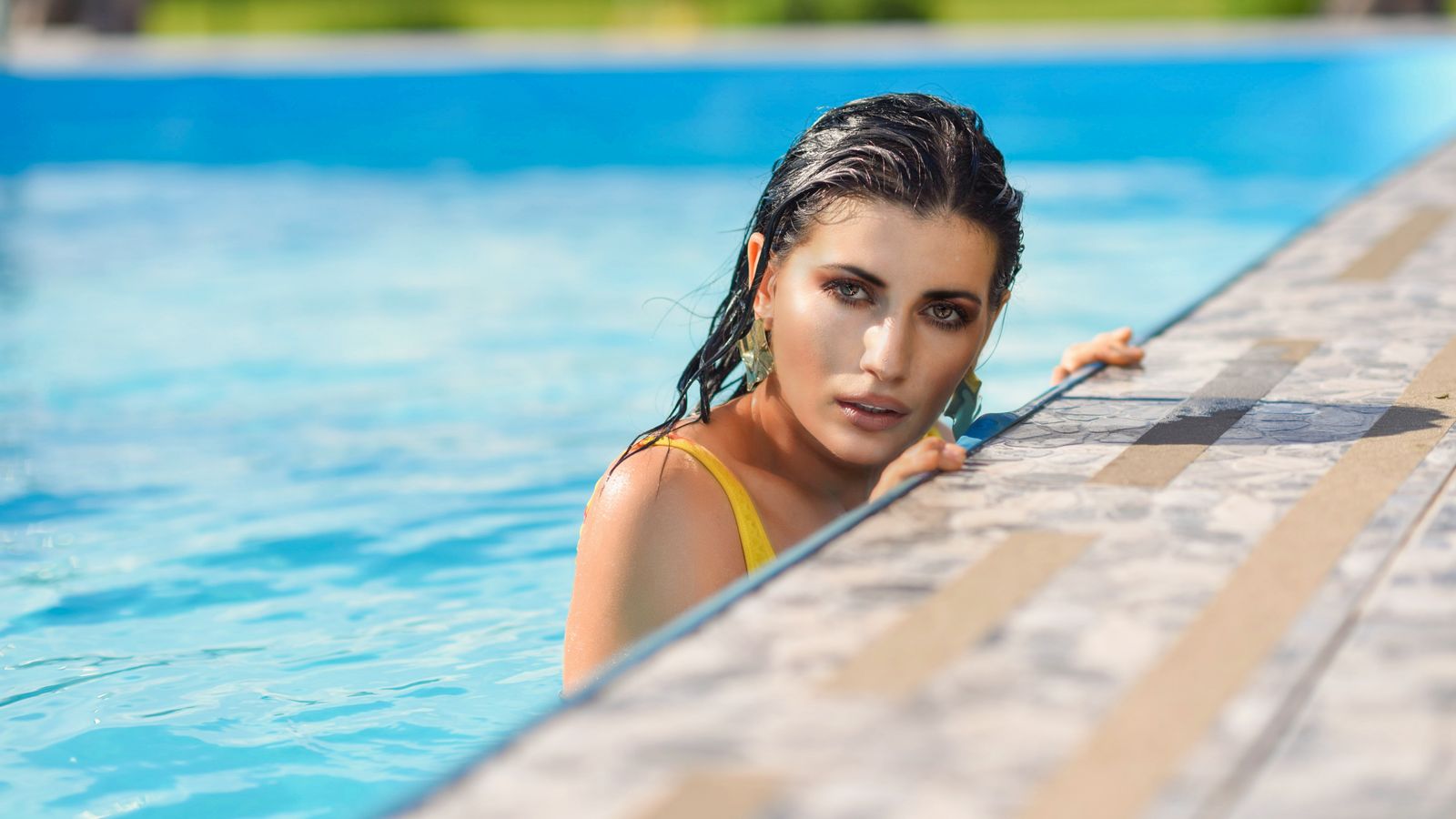
How to Protect Your Hair from Chlorine and Hard Tap Water
Chlorine and hard water do their damage the same way: they strip your hair's protective oils and leave deposits that dry, dull and roughen the strand, chlorine from pools and treated tap water, and calcium and magnesium from hard-water areas (most of southern and eastern England). Both are beatable, and the single most powerful trick is almost free: saturate your hair with clean water before it meets the chlorinated or hard water, so it cannot absorb much of the bad stuff. Here is the full defence, from the two-second pre-swim rinse to the after-care that rescues already-affected hair.
Key takeaways
- Hair absorbs less chlorine and mineral if it is already soaked in clean water, rinse before you swim.
- A leave-in or light oil layer adds a physical barrier; a swim cap adds more.
- Wash chlorine out promptly with a gentle clarifying-then-moisturising routine.
- Hard-water areas benefit from a shower filter and an occasional chelating/clarifying wash.
- Deep conditioning weekly repairs the dryness both leave behind.
How chlorine and hard water damage hair
Chlorine is an oxidiser: it strips the sebum coating the strand and can react with the hair's proteins, leaving it porous, dry, frizzy and faster to fade colour (and, on very light or bleached hair, occasionally green-tinged from copper in the water). Hard-water minerals bind to the strand and scalp, leaving a stiff, dull film that blocks moisture and makes hair feel coated no matter how much you condition. Same outcome, straw-like, lacklustre hair, from two different offenders, and the same defence works for both.
Before exposure: build the barrier
- Pre-soak with clean water (the big one): wet hair fully at the poolside shower before getting in. Saturated hair simply cannot absorb much more, so it takes on far less chlorine. Same logic for hard-water areas, a clean-water rinse before a long hard-water wash helps.
- Add a leave-in or oil layer: a leave-in conditioner or a light oil coats the strand and repels waterborne nasties. A few drops of a nourishing oil on the lengths is the swimmer's classic pre-dip move.
- Wear a swim cap: over pre-soaked, conditioned hair, it is the strongest defence of all for regular swimmers.
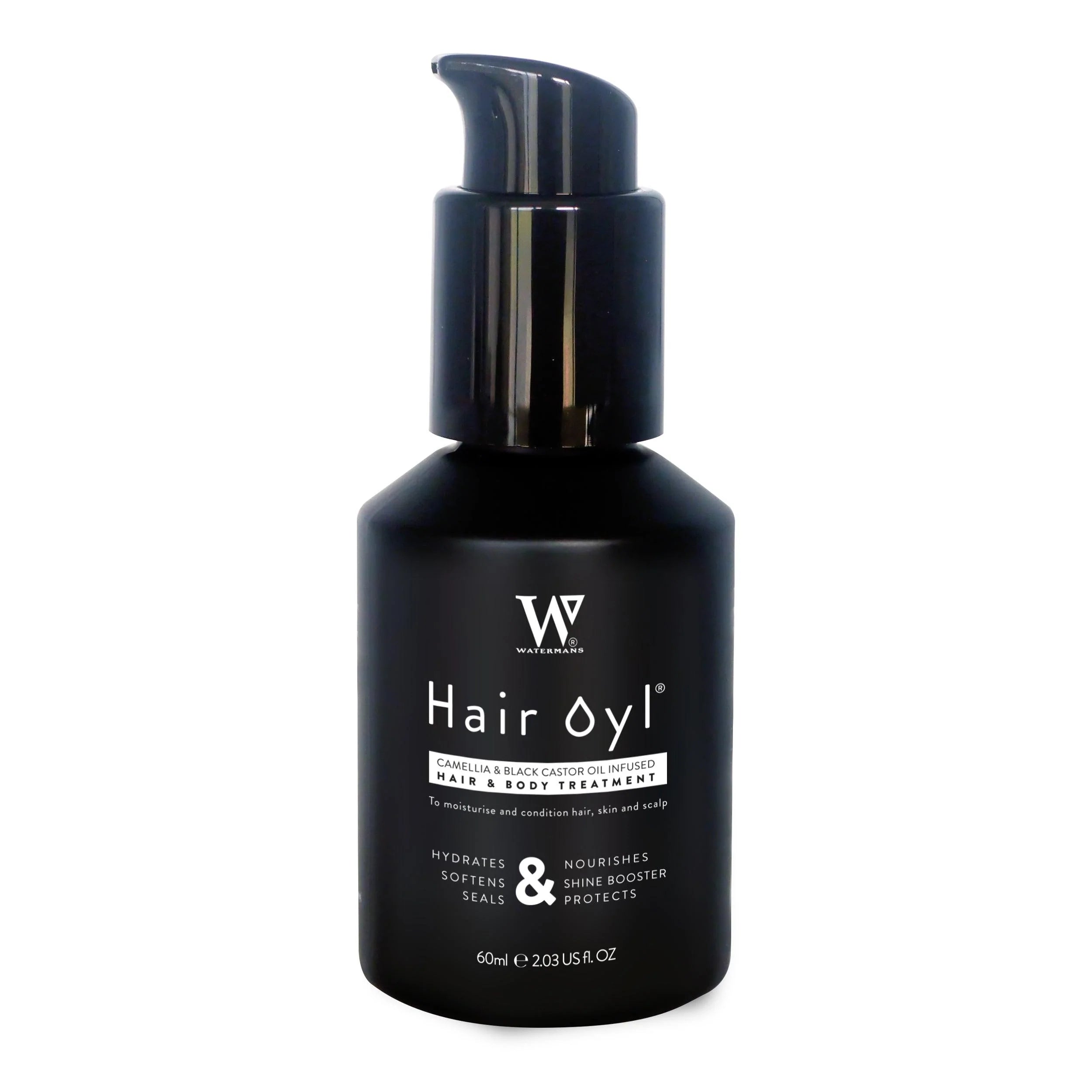
A light botanical oil that makes an excellent pre-swim barrier layer over damp hair, and a moisturiser for skin dried by chlorine too. Smooth a few drops through the lengths before the cap goes on.
Shop the oilAfter exposure: wash it out properly
- Rinse and wash promptly: the longer chlorine or minerals sit, the more they dry the hair. Rinse thoroughly, then cleanse.
- Clarify, but not daily: a clarifying (or chelating, for hard-water minerals) wash lifts deposits, use it after swimming or roughly weekly, not every day, as it is by design a stronger cleanse.
- Follow with a gentle, moisturising wash on other days: a sulphate-free everyday shampoo restores what the clarifier and the chlorine stripped.
- Deep condition weekly: a rich mask puts moisture back into strands roughened by chlorine or hard water.

The weekly rescue for chlorine- and hard-water-dried hair: an argan-oil-rich mask that rehydrates and smooths roughened strands. Ten minutes after your swimming-week washes.
Shop Masque MeThe hard-water fix at home
If your problem is tap water rather than the pool, a shower filter reduces chlorine and some minerals at source, the highest-value one-off purchase for hard-water hair, and an occasional clarifying/chelating wash clears the film that builds up between filter changes. Colour-treated hair especially benefits, since both chlorine and hard water fade dye faster. The wider habits are in our hair damage guide.
Watermans is a UK family business that has sold over 5 million bottles since 2012. The range is vegan and cruelty-free.
Frequently asked questions
How do I get chlorine out of my hair?
Rinse promptly, then use a clarifying (or chelating) shampoo to lift the deposits, and follow with a moisturising conditioner or mask. Do the clarify roughly weekly, not daily.
Does rinsing before swimming really help?
Yes, markedly. Hair saturated with clean water absorbs far less chlorine, it is the single most effective free step.
Can hard tap water damage hair like chlorine?
Yes, hard-water minerals coat and dry the hair much as chlorine does. A shower filter and occasional chelating wash are the answer.
Why does my blonde hair go green in pools?
Copper in the water (oxidised by chlorine) binds to porous or light hair. Pre-soaking, a cap and a chelating wash prevent and remove it.
How often should I deep condition if I swim a lot?
Weekly at least, twice weekly for frequent swimmers or bleached hair, chlorine's dryness needs regular moisture to offset.
Chlorine and hard water are a barrier-and-moisture problem, and both halves are easy: soak and shield before, clarify and deep-condition after, filter the tap if that is your culprit. Your hair, and your swimming habit, can happily coexist.