

Is a Derma Roller Good for Hair Growth? An Honest Guide
Is a derma roller good for hair growth? The honest answer is that microneedling has some genuine research behind it for thinning scalps, but the effect is modest, it works best alongside a scalp routine rather than on its own, and a badly used roller does more harm than the device ever does good. What follows is what the evidence supports, how to use one without damaging your scalp, and when a roller is the wrong answer entirely.
Key takeaways
- Microneedling creates controlled micro punctures that trigger the skin's ordinary wound response, which is why it is studied for scalp density.
- The research is real but small scale, mostly on androgenetic alopecia, and mostly in combination with something applied topically rather than alone.
- Needle length matters more than anything else. For home scalp use, 0.5mm is the usual ceiling and longer is not better.
- Once a week is plenty. Rolling daily inflames the scalp and can cause the very shedding you are trying to stop.
- Cheap unbranded rollers blunt fast, and a blunt needle tears rather than punctures.
- Never roll over active infection, open sores, psoriasis plaques, seborrhoeic dermatitis flares, or a scalp that is already sore.
- If your loss is patchy, sudden, or comes with scalp pain, scaling or scarring, speak to your GP before you buy any device.
What does a derma roller actually do to the scalp?
A derma roller is a handheld barrel studded with fine needles. Rolled across the skin it makes hundreds of tiny punctures, each one a fraction of a millimetre deep. None of them is an injury you would notice, but collectively they switch on the skin's repair machinery: local blood flow rises, platelet derived growth factor and other signalling molecules are released, and collagen production increases over the following days.
The theory for hair is that the same repair signalling reaches the follicles sitting in that skin, and that dermal papilla cells respond to it. There is laboratory work showing that mechanical stimulation of this kind alters the expression of genes involved in the hair cycle. That is a plausible mechanism, and it is why microneedling made the jump from skin texture to scalp density in the first place.
What it is not is a growth drug. Nothing about rolling changes your genetics, your hormones, your iron stores or your thyroid function. If one of those is the reason your hair is thinning, a roller is working against a headwind it cannot beat.

Is a derma roller good for hair growth according to the research?
The evidence base is genuinely interesting and genuinely thin, and both halves of that sentence matter.
The most cited work is a 2013 controlled study from India in men with androgenetic alopecia, which compared a topical routine alone against the same routine plus weekly microneedling. The microneedling arm did measurably better on hair count at twelve weeks. Several smaller studies and case series since have pointed the same way, and a number of reviews have concluded that microneedling is a promising adjunct with a reasonable safety profile at short needle lengths.
Now the caveats, because they are large. Sample sizes are small, often a few dozen people. Follow up is usually three to six months, so nobody knows what year three looks like. Almost every positive study pairs the roller with a topical, which means the roller's solo contribution is not cleanly separated. Blinding is difficult when one group is visibly rolling their head. And publication bias in this corner of dermatology is not trivial.
So the fair summary is this. Microneedling looks helpful as an addition to a scalp routine for people with pattern thinning. It is not established as a standalone answer, the effect sizes reported are moderate rather than dramatic, and it has never been shown to do anything for hair loss that is not follicle related. Where good sources disagree, they disagree mostly about whether the benefit comes from the needling itself or from better absorption of whatever is applied afterwards, and that question is still open.
The most common mistake. People roll harder and more often because they want faster results. Microneedling relies on a controlled, short lived repair response. Rolling a scalp that has not finished healing from the last session keeps it in a state of low grade inflammation, and inflamed scalps shed. Less is genuinely more here.
Which needle length is right, and how often should you roll?
Needle length is the single decision that separates a sensible home routine from a scalp injury. Longer needles reach deeper, hurt more, bleed more, and carry far more infection and scarring risk without a matching increase in benefit.
| Needle length | Suitable for home scalp use | Notes |
|---|---|---|
| 0.25mm | Yes | Gentle starting point. Mostly improves absorption of what you apply after. |
| 0.5mm | Yes, the usual ceiling | The length used in most of the scalp research. Weekly at most. |
| 0.75mm to 1.0mm | Only with professional guidance | Pinpoint bleeding is expected. Longer recovery, higher infection risk. |
| 1.5mm and above | No | Clinic territory. At home this is how people scar their scalps. |
Frequency follows from length. At 0.25mm, two or three times a week is tolerable. At 0.5mm, once a week, and once a fortnight if your scalp stays pink for more than a day. The skin needs the full repair cycle to complete before you interrupt it again, and that takes days, not hours.
How do you use a derma roller on your scalp safely?
The method is unglamorous and the details are where the risk lives.
- Disinfect the roller before and after. Soak the head in 70 percent isopropyl alcohol for ten minutes. Rinse it in hot water afterwards and let it air dry in its case. A roller stored damp grows bacteria in the barrel.
- Start on a clean, dry, product free scalp. Wash first, dry properly, and apply nothing beforehand.
- Section the hair. Part the hair into narrow rows so the needles reach skin rather than dragging through hair.
- Roll in four directions, four to six passes each. Vertical, horizontal, and both diagonals, over each section. Lift the roller between passes rather than dragging it back, which is what tears skin.
- Use light pressure. The weight of the device is close to enough. If it hurts sharply or you see more than the odd pinpoint of blood, you are pressing too hard or your needles are too long.
- Wait before applying anything. The channels close over within a few hours. Applying an active immediately after rolling raises absorption but also irritation, so leave it several hours or until the next morning if your scalp is sensitive.
- Replace the head every ten to fifteen sessions. Needles blunt and bend. A blunt needle tears a ragged hole instead of a clean channel, and that is what causes scarring.
Skip a session entirely if your scalp has any open or weeping area, an active flare of eczema, psoriasis or a flaky, inflamed seborrhoeic dermatitis scalp, a cold sore anywhere nearby, or a recent chemical service such as bleach or a relaxer. Rolling over inflammation spreads it.

Hair loss, shedding or breakage: which one are you actually dealing with?
This distinction decides whether a roller is even the right tool, and most people never make it.
Hair loss means the follicle itself is affected. A widening parting, a receding hairline, a smooth patch of bare scalp. Pattern loss and alopecia areata both sit here, and they behave completely differently from one another. Microneedling research addresses this category, and only the pattern type within it.
Hair shedding is whole hairs leaving the scalp with a small pale bulb at the root, at a rate above your normal. That is the hair cycle reacting to something that happened two or three months ago, usually illness, surgery, childbirth, a crash diet or acute stress. Telogen effluvium resolves on its own once the trigger passes, and rolling an already irritable shedding scalp tends to make matters worse rather than better.
Hair breakage is the fibre snapping partway along its length. You find short broken pieces with no bulb, and hair that never seems to get past a certain point. This is a handling and conditioning problem, and a derma roller does nothing for it at all. If you are not sure which of the three you have, the three clue thinning self check sorts it out in a couple of minutes.
Watermans products are 100% cosmetic and do not treat medical hair loss. Individual results may vary.
Free: the safe scalp microneedling checklist
A one page checklist covering needle length by scalp type, the sterilisation routine that actually works, the four direction rolling pattern, the eight situations where you should skip a session, when to replace the head, and a simple eight week photo log so you can judge results honestly rather than by feel. We will email it to you.
What should you apply afterwards?
Anyone asking is a derma roller good for hair growth ends up asking this second question within a week, because the aftercare is half of the routine. Whatever you use, the point is that a freshly rolled scalp absorbs more of it, which cuts both ways. Fragrance, alcohol and strong actives all sting more and irritate more. Keep aftercare simple, and keep it cosmetic.

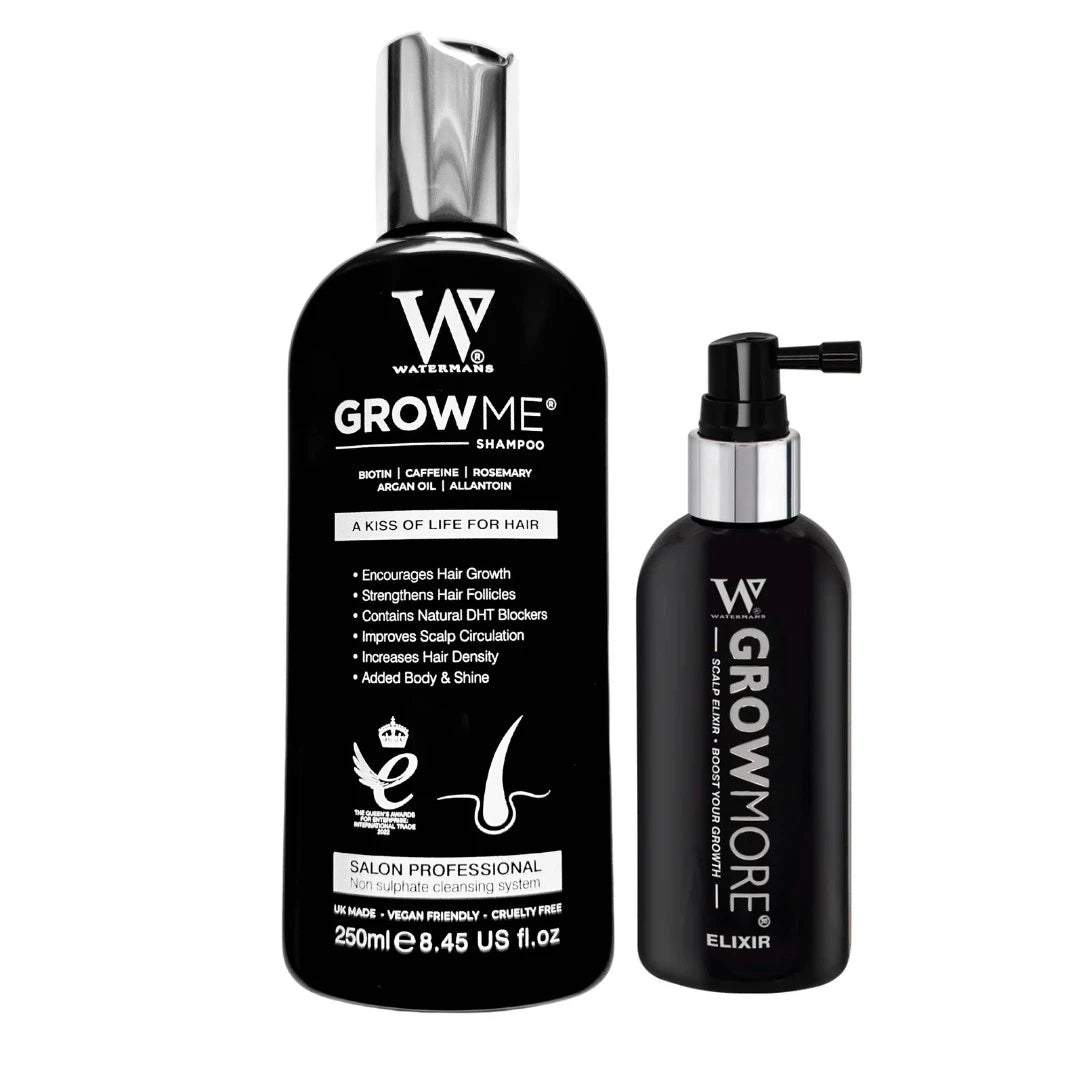
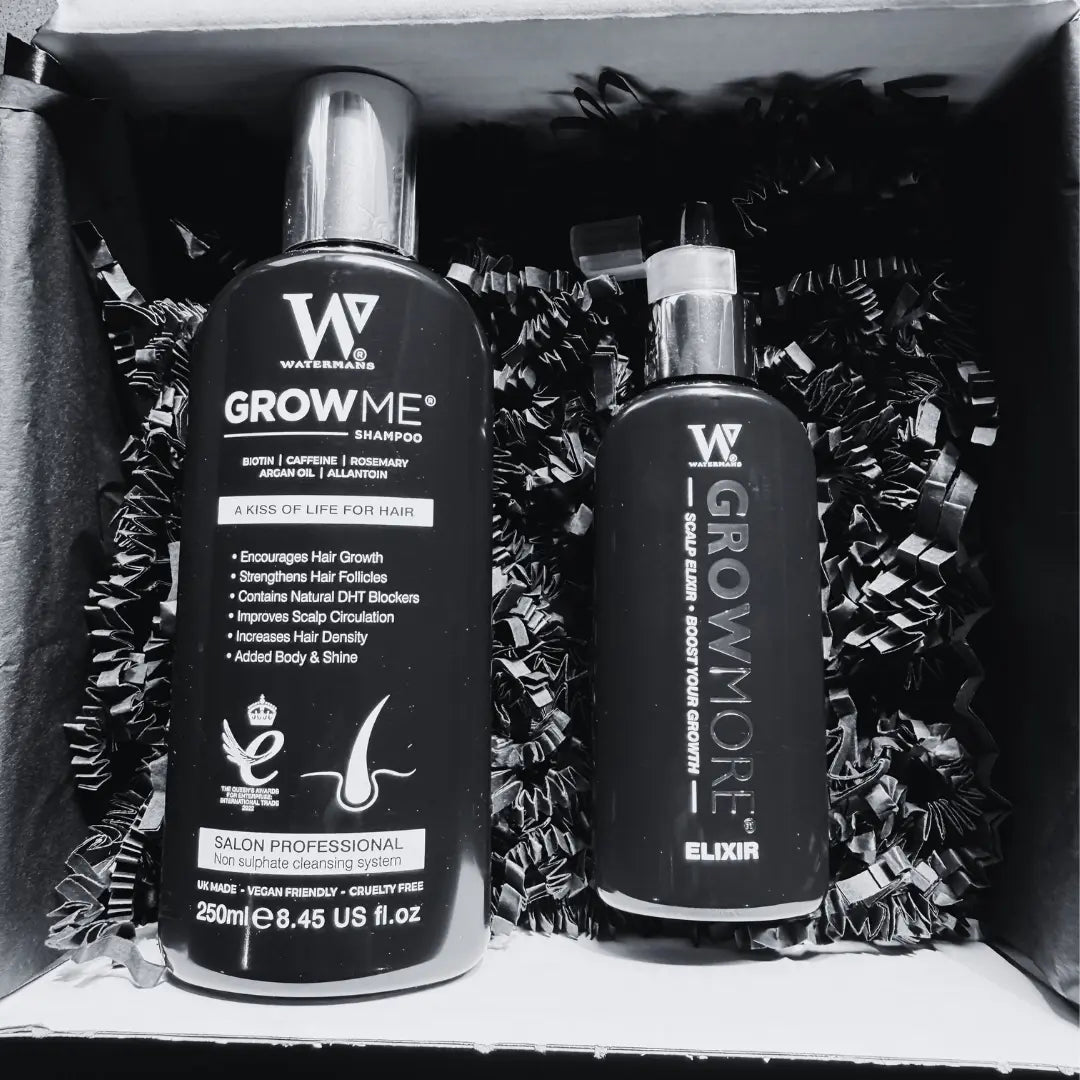
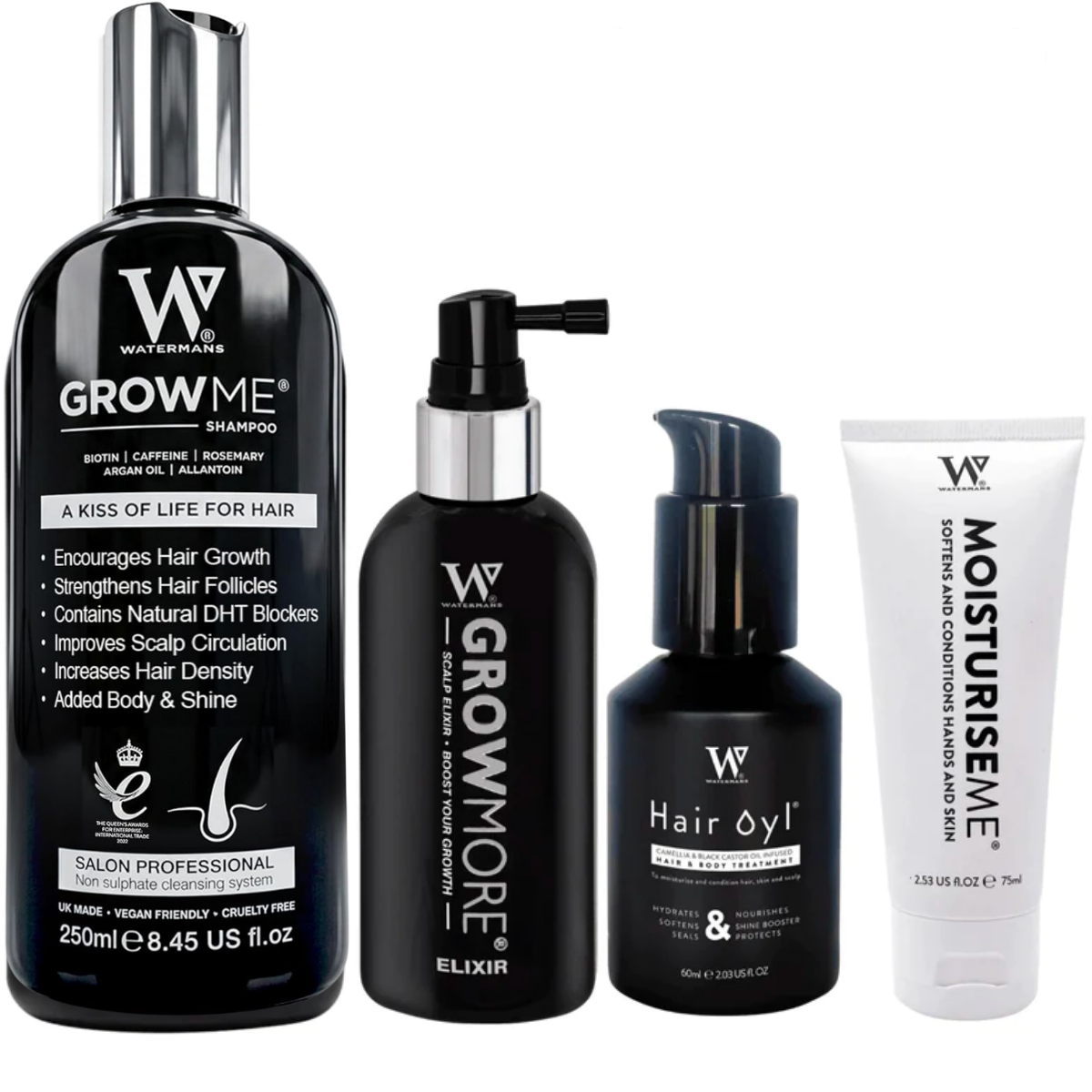
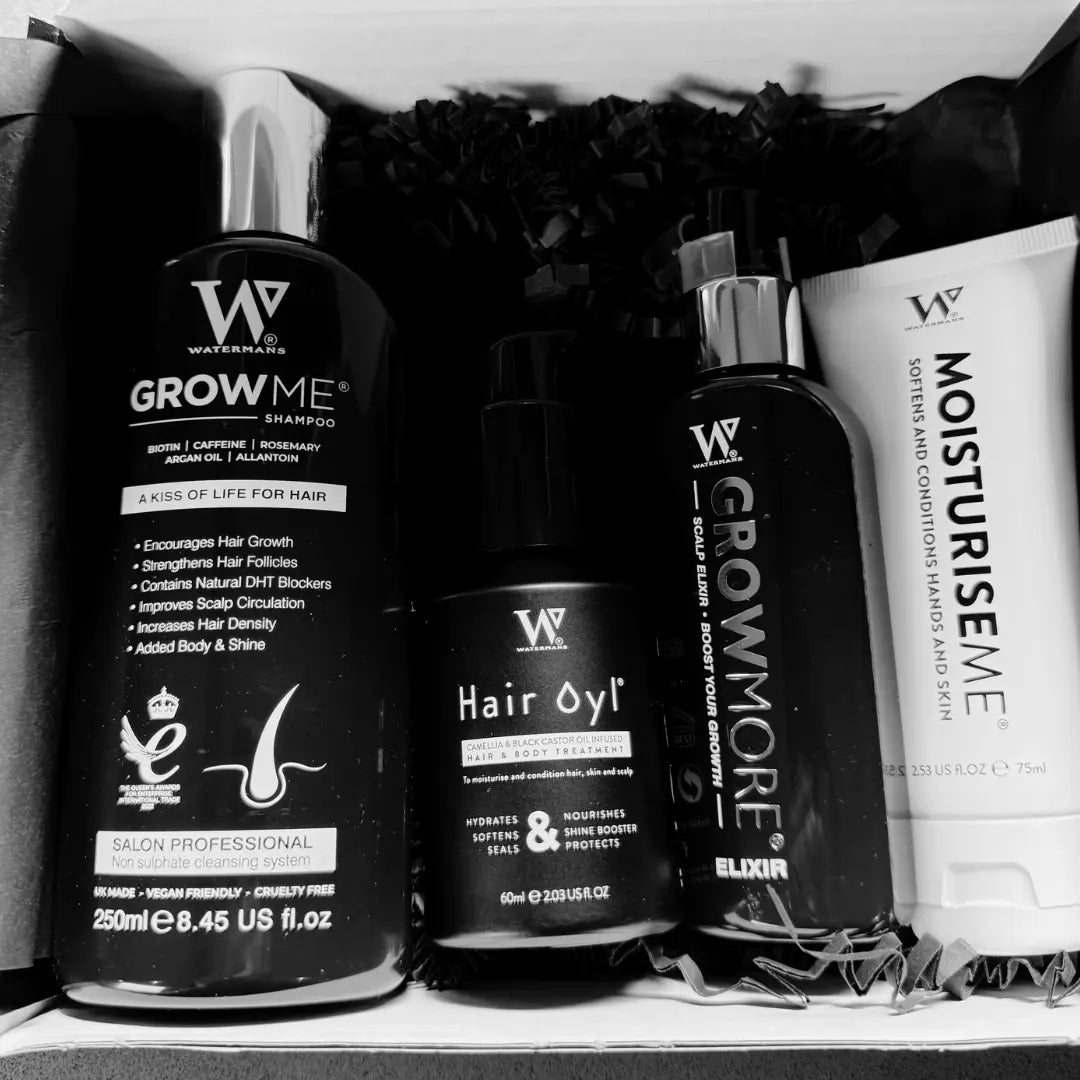
Grow More Elixir Leave In Scalp Serum
A leave on scalp serum with biotin, caffeine, rosemary, niacinamide and hydrolysed lupine protein, designed for lower density areas such as the crown and parting. Apply it the morning after a session rather than immediately, so the channels have closed and the scalp is calm.

Sulfate free, so it cleans the scalp without stripping it before a session. A calm, comfortable scalp is the baseline that any needling routine depends on, and a harsh cleanser undoes that in one wash.
Over five million bottles sold since 2012. Vegan, cruelty free and made in the UK.

When is a derma roller the wrong answer?
There are situations where the sensible move is to put the roller down and speak to your GP instead.
- Patchy, coin shaped bare areas. That pattern suggests an autoimmune process, and needling an active patch can provoke it further through what is known as the Koebner phenomenon.
- Sudden heavy shedding over weeks. That is a cycle event with a cause behind it, and finding the cause matters more than any device.
- Scalp pain, burning, scaling or visible scarring. Scarring alopecias destroy the follicle permanently and are a genuine medical urgency, because what is lost does not come back.
- You take blood thinning medication or have a bleeding disorder. Check with your GP first.
- Keloid prone skin. Repeated micro injury is a poor idea if your skin scars aggressively.
- You are under eighteen. Leave it.
None of that means microneedling is dangerous, and none of it makes the answer to is a derma roller good for hair growth a flat no. Used at 0.5mm, once a week, on a clean healthy scalp, it is one of the lower risk things in this category. It just is not universal, and the people most desperate for it to work are often the ones it suits least.
Frequently asked questions
Is a derma roller good for hair growth on its own, without anything else?
The evidence for microneedling alone is much weaker than for microneedling as part of a routine. Almost every study showing benefit paired the rolling with something applied topically. On its own it may still help a little, but do not expect the results the studies report.
How long before I would see anything?
Three months at the absolute minimum, six to judge it fairly. Hair grows roughly a centimetre a month, and any new growth spends its first weeks as fine, pale, barely visible hair. Photograph the same section in the same light every eight weeks.
Does it hurt?
At 0.25mm to 0.5mm it feels prickly and slightly hot rather than painful. Sharp pain means too much pressure or too long a needle.
Should the scalp bleed?
Not at home lengths. The odd pinpoint dot is not alarming, but genuine bleeding means you have gone deeper than a home routine should.
Can I use a derma roller if I have had a hair transplant?
Not without asking the surgeon who did it. Grafts need months to settle and the timing varies by technique.
Is a derma pen better than a roller?
A motorised pen stamps vertically instead of dragging, which is theoretically gentler on the skin and easier to control around a hairline. It is also more expensive and easier to overdo. Neither is clearly superior for scalp use in the published work.
Can I share a roller with my partner?
No. It is a blood contact device. One person, one roller, no exceptions.
Will it help a receding hairline specifically?
The hairline is the hardest area to improve and the easiest to irritate. Go gently there, use the shortest needle you own, and set your expectations low.
What if my scalp stays red for days?
Stop, let it settle completely, then restart at a shorter needle and a longer gap. Persistent redness is the signal that you are needling faster than you are healing.
Conclusion
Is a derma roller good for hair growth? For pattern thinning, used weekly at 0.5mm on a clean healthy scalp alongside a sensible routine, it is a reasonable and low risk thing to try, with modest published support behind it. For sudden shedding, patchy loss, a sore or scaling scalp, or hair that is breaking rather than falling, it is the wrong tool and can make things worse. Be strict about needle length, hygiene and frequency, judge it on photographs at six months rather than on how one session felt, and if your scalp is painful, scarring or losing hair in patches, speak to your GP rather than reaching for a device.
Sources and references
- Dhurat R and colleagues, A randomised evaluator blinded study of effect of microneedling in androgenetic alopecia, International Journal of Trichology, 2013, on the twelve week hair count difference between a topical routine alone and the same routine plus weekly microneedling.
- English RS and Ruiz S, reviews of microneedling for androgenetic alopecia in the dermatology literature, on effect sizes, study quality and the limits of the current evidence base.
- British Association of Dermatologists, public information on hair loss and on scarring alopecias, on which presentations need medical assessment rather than home devices.
- NHS, Hair loss, on normal daily hair fall, on telogen effluvium, and on when to speak to a GP.
- Primary Care Dermatology Society, guidance on alopecia areata, on the Koebner phenomenon and skin trauma in autoimmune hair loss.
- Medicines and Healthcare products Regulatory Agency guidance on skin piercing devices, on hygiene, single user rules and needle length in home use.