






Is Finasteride a DHT Blocker? How It Works, Honestly
Yes, finasteride is a DHT blocker, in fact it is the best-evidenced one there is. It works by inhibiting 5-alpha-reductase, the enzyme that converts testosterone into dihydrotestosterone (DHT), the hormone that drives male pattern hair loss in genetically sensitive men. Clinical trials show it slows or stops loss for most men who take it, with regrowth for many. It is also a prescription medicine with real possible side effects, it only works while you take it, and it is emphatically not something to start casually. Here is the honest, complete picture to take to a doctor.
Key Takeaways
- Finasteride blocks 5-alpha-reductase, cutting scalp DHT substantially, that is exactly what a "DHT blocker" means.
- It is the most proven oral treatment for male pattern hair loss, but prescription-only and doctor-guided.
- Possible side effects (sexual, mood) affect a minority but are real, an informed decision matters.
- Benefits last only while you take it; stopping lets loss resume within months.
- Women who are or may become pregnant must not take or handle broken tablets.
- Herbal "DHT blockers" and shampoos are not equivalents, cosmetic care supports, it does not replace.
What Is DHT and Why Does It Matter for Hair?
Dihydrotestosterone (DHT) is a potent androgen made from testosterone by the enzyme 5-alpha-reductase. In men genetically prone to androgenetic alopecia, DHT gradually miniaturises follicles at the hairline and crown, each cycle the hair grows back finer and shorter, until it stops. That is why lowering DHT is the core strategy in treating male pattern hair loss, and why it does nothing for kinds of loss that are not DHT-driven (like telogen effluvium).
How Finasteride Blocks DHT
Finasteride inhibits the type II form of 5-alpha-reductase, reducing DHT in the scalp and blood substantially. With less DHT pressing on sensitive follicles, miniaturisation slows, and follicles that were shrinking but still alive can recover calibre. In published trials, the large majority of men taking it maintained or improved their hair count over several years, results genuinely unmatched by any non-prescription option. Its cousin dutasteride blocks the enzyme even more broadly and is sometimes used off-label, strictly a specialist conversation.

The Honest Trade-offs
Possible side effects
- Sexual effects (reduced libido, erectile difficulty) in a minority of users, often resolving on stopping.
- Mood changes, reported by some users.
- Breast tenderness or enlargement, uncommon but recognised.
- Persistent symptoms in a small number of people (discussed as post-finasteride syndrome), still debated scientifically, but part of an informed decision.
Most men tolerate finasteride well, and for many the hair benefit clearly outweighs the risk. But this is a genuine medical trade-off to weigh with a doctor, not a supplement to order casually online.
Finasteride vs the Alternatives
| Option | DHT effect | Evidence |
|---|---|---|
| Finasteride (prescription) | Strong, well-characterised reduction | Established, the benchmark oral treatment |
| Topical minoxidil (pharmacy) | None, works via the growth cycle instead | Established; often combined with finasteride |
| Saw palmetto, pumpkin seed oil, nettle | Possible mild effect | Limited, mixed, far weaker than finasteride |
| Shampoos and cosmetic care | None | Cosmetic support only, not DHT blockers |
Worth stating plainly: no shampoo blocks DHT, and herbal options are not interchangeable with finasteride. If your loss is pattern loss and you want to keep your hair, the proven conversation is finasteride and/or minoxidil with a doctor, ideally early, while there is more to save.

Where Cosmetic Care Fits Alongside
Whatever you decide medically, everyday cosmetic care still has a job: keeping the scalp clean and comfortable and the hair you have looking its best. That sits alongside treatment, never instead of it.

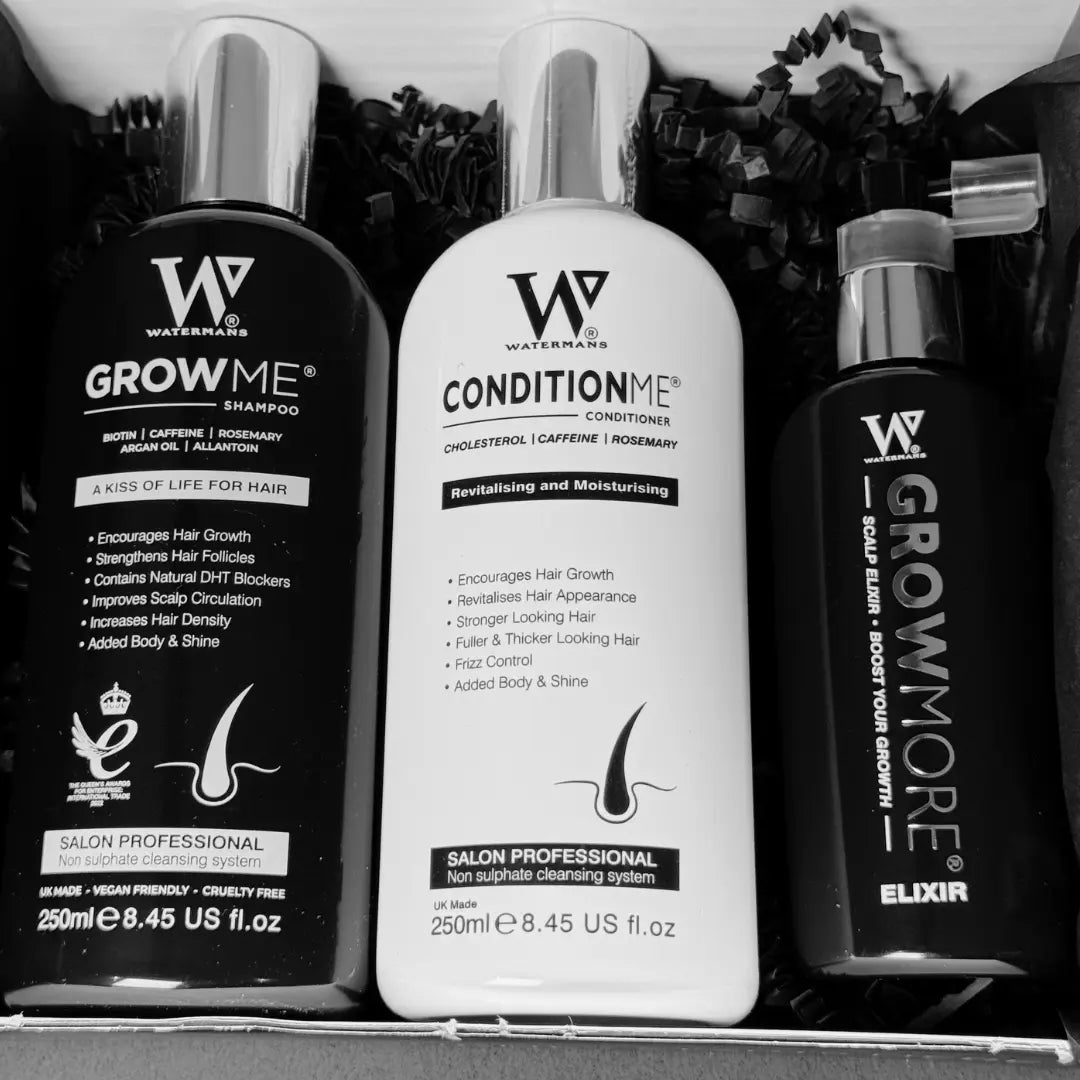
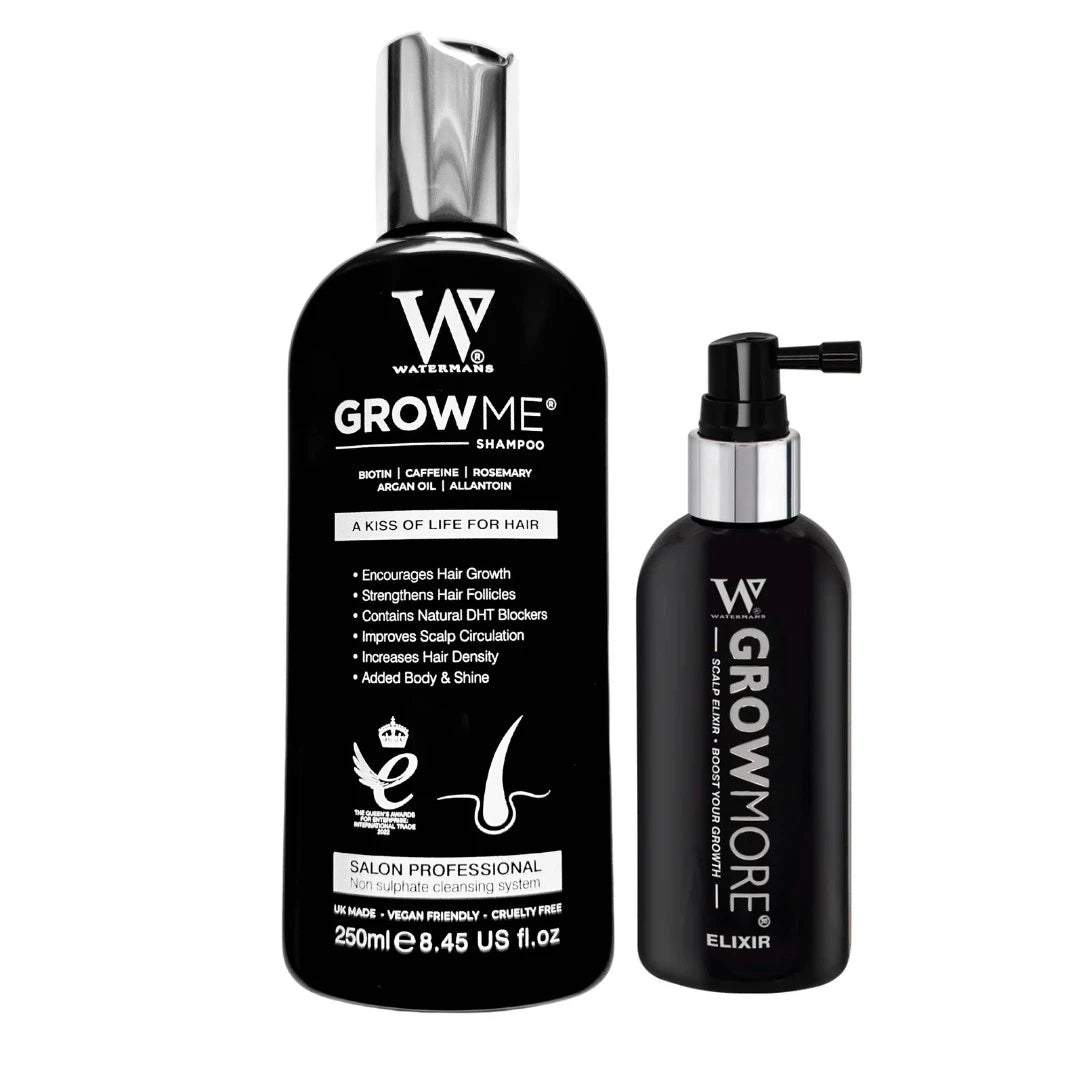
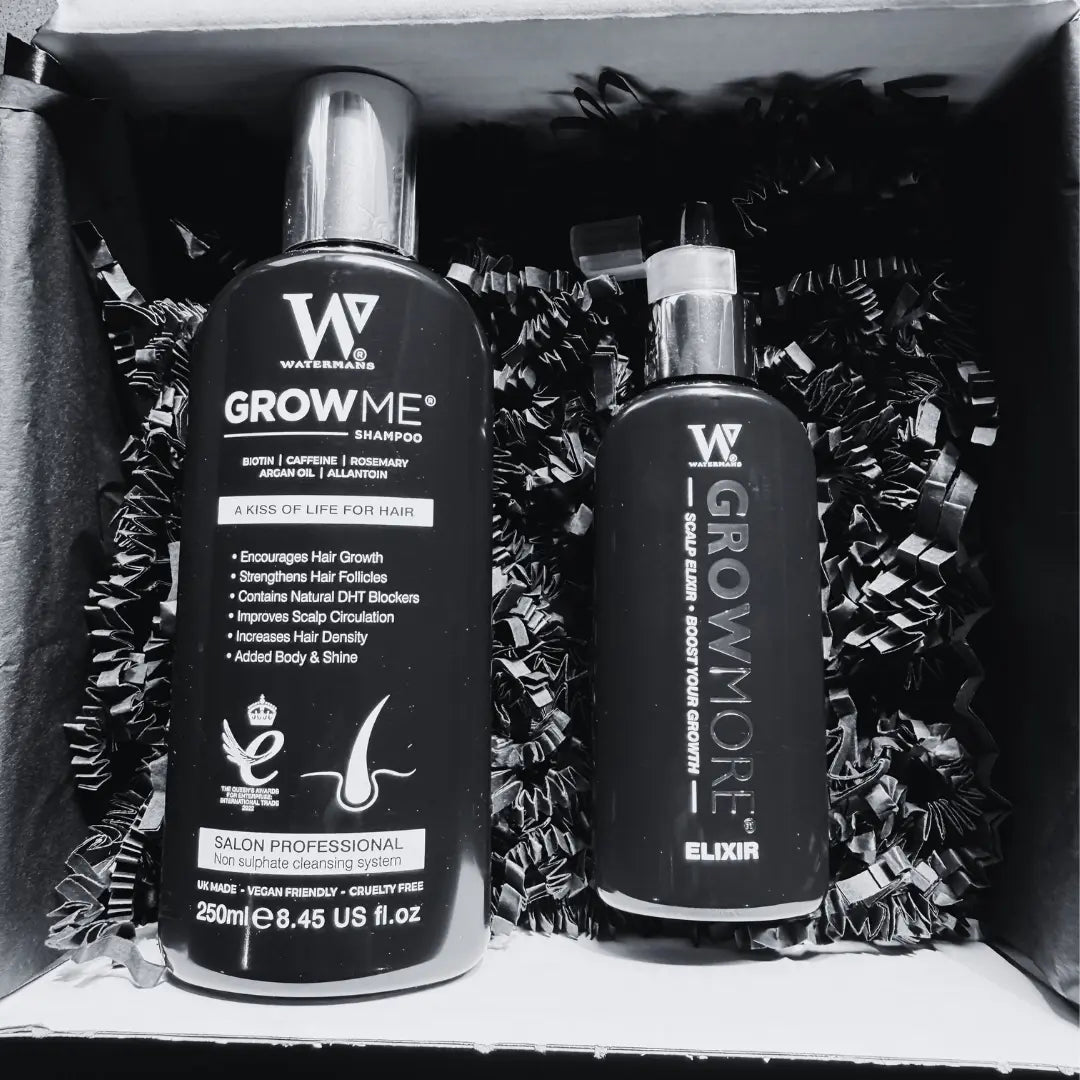
Grow Me® Shampoo
A gentle, sulphate-free daily shampoo with biotin, caffeine and rosemary, cosmetic scalp care that pairs comfortably with any doctor-guided treatment. Not a DHT blocker and not a substitute for medical options.
View Grow Me ShampooWatermans is a UK family business that has sold over 5 million bottles since 2012. The range is vegan and cruelty-free.
Frequently Asked Questions
Is finasteride actually a DHT blocker?
Yes, it inhibits 5-alpha-reductase, the enzyme that makes DHT, which is precisely what the term means. It is the best-evidenced oral DHT blocker for male pattern hair loss.
How long does finasteride take to work?
Shedding typically slows within months; visible improvement is judged at 6 to 12 months. Hair changes slowly, whatever the treatment.
What happens if I stop taking it?
DHT returns to baseline and pattern loss resumes, gains are generally lost within a year of stopping. It is a maintenance treatment, factor that in before starting.
Can women take finasteride?
Only in specific specialist situations. Women who are or may become pregnant must not take or handle broken tablets, as it can harm a developing male foetus.
Are natural DHT blockers as good?
No. Saw palmetto and similar herbs may have mild effects but the evidence is limited and inconsistent, they are not equivalents to finasteride.
Should I combine finasteride with minoxidil?
Many doctors do combine them, since they work by different mechanisms, that is a conversation for your prescriber.
So yes, finasteride is the DHT blocker, effective for most men with pattern loss, prescription-only, with trade-offs that deserve a proper medical conversation and a commitment to ongoing use. Decide with a doctor, act early if you act, and let cosmetic care play its honest supporting role. For the fuller picture, see our guides to whether DHT blockers are bad for you, understanding finasteride and using minoxidil.






,%20the...)