

Hair Loss Options: How to Judge What Is Worth Your Money
If your hair is thinning and you are trying to work out what to spend money on, the honest order is this: find out what is actually causing it, take anything medical to a GP or pharmacist, and think of cosmetic hair care as the thing that protects the hair you still have rather than the thing that brings back what has gone. Most people waste money by doing it the other way round, buying products first and asking what the problem is last.
Key Takeaways
- Cause first, product second. Gradual thinning at the crown and temples behaves very differently from a sudden shed three months after an illness, and the sensible response is different too.
- Anything involving medicines belongs with a pharmacist or GP. We are a cosmetic hair care company, we do not sell medicines, and we will not pretend to advise on them.
- Cosmetic care has a real but specific job: reducing breakage so you keep the length you grow, and supporting a healthy scalp environment. That is what makes hair look thicker and fuller.
- Nothing works in a fortnight. Hair grows roughly a centimetre a month, so three to six months is the shortest honest window for judging anything.
- Sudden, patchy or painful loss is a GP matter, not a shopping matter.
- The biggest single saving is refusing to buy anything that promises a specific percentage, a fixed timescale, or a result it cannot possibly know about your head.
If you came here looking for a specific tablet or medicine
You may have landed on this page expecting information about a named medicine. We have deliberately stopped writing about named medicines, and it is worth saying why plainly rather than leaving you to wonder.
Watermans is a British hair care company. Everything we make is a cosmetic: shampoo, conditioner, a scalp serum, a mask, an oil. We do not make, sell or supervise medicines, and a hair care brand writing about how a licensed medicine behaves in your body is a brand talking about something outside its competence. In the UK, information about a prescription medicine is the job of the person who can also check whether it is suitable for you, review it later, and take responsibility if it is not.
So the useful answer to "should I take something for this" is: ask a pharmacist first. It costs nothing, you do not need to make an appointment, and a pharmacy conversation will tell you quickly whether something is available over the counter, whether it needs a GP, and whether it interacts with anything else you take. If it turns out you want a medical route, your GP is the door to it.
What we can genuinely help with is everything on the other side of that line, which is a bigger and more useful territory than most people expect. That is what the rest of this page covers.

What is actually causing your hair to thin?
This is the question that decides everything else, and it is the one most people skip. Hair thins for several distinct reasons and they do not respond to the same things. Use the pattern of the loss to narrow it down.
| What you are seeing | Likely pattern | What tends to help |
|---|---|---|
| Slow thinning at the temples, crown or parting over years, often in the family | Androgenetic alopecia, sometimes called male or female pattern hair loss. Follicles gradually produce finer, shorter hairs. | A medical route via a GP or pharmacist if you want one, plus cosmetic care to protect what remains. It is progressive, so acting earlier gives you more to work with. |
| A sudden, heavy, all over shed starting two to four months after something stressful | Telogen effluvium, triggered by illness, surgery, childbirth, crash dieting, a bereavement or a fever. | Usually settles on its own once the trigger has passed. Gentle handling and good nutrition while you wait. Time is the main ingredient. |
| Thinning along the hairline, the temples, or wherever hair is pulled tight | Traction, from tight ponytails, braids, buns, weaves and extensions. | Change the styling now. Caught early it recovers well, left for years it may not. |
| Sudden, sharply defined round or oval patches | Alopecia areata, an autoimmune condition. | See a GP. This is a medical matter and no cosmetic addresses it. |
| Hair that feels short, snappy and rough, with a thinning ponytail but no bald areas | Breakage rather than loss. Heat, bleach, colour, hard brushing and tight styling. | This one is genuinely a hair care problem, and it is the most fixable thing on this list. |
| Thinning alongside tiredness, weight change, feeling cold, heavy periods | Possible thyroid or iron issue. | A blood test at the GP. Do not guess at this with supplements. |
Two of those six are not hair care problems at all, and one of them fixes itself. That is worth sitting with before you spend anything. If you are not sure which you are looking at, our guide to working out what is behind your hair thinning walks through it in more detail, and if the shed came on suddenly after a rough few months, what causes telogen effluvium and how long it lasts is the one to read.
The three tiers of hair loss options
It helps to sort everything on the market into three honest tiers, because the marketing deliberately blurs them.

Tier one: the established medical route
Licensed medicines and clinical procedures, accessed through a pharmacist, a GP or a qualified clinic. These are the options with the strongest evidence behind them for pattern hair loss, and they are also the ones with side effects, supervision requirements and ongoing cost. We do not discuss specific medicines here for the reasons above. What we will say is that if you are seriously considering this route, go through a UK pharmacy or GP rather than an overseas website, because the supervision is the point.
Tier two: cosmetic care
Shampoos, conditioners, masks, scalp serums, oils, styling changes. This is our tier. Cosmetic products work on the hair you have and on the condition of your scalp. They do not change the underlying biology of a follicle, and any brand telling you otherwise is making a claim it cannot support. What they genuinely do is covered in the next section, and it is more useful than the cynical view suggests.
Tier three: everything else
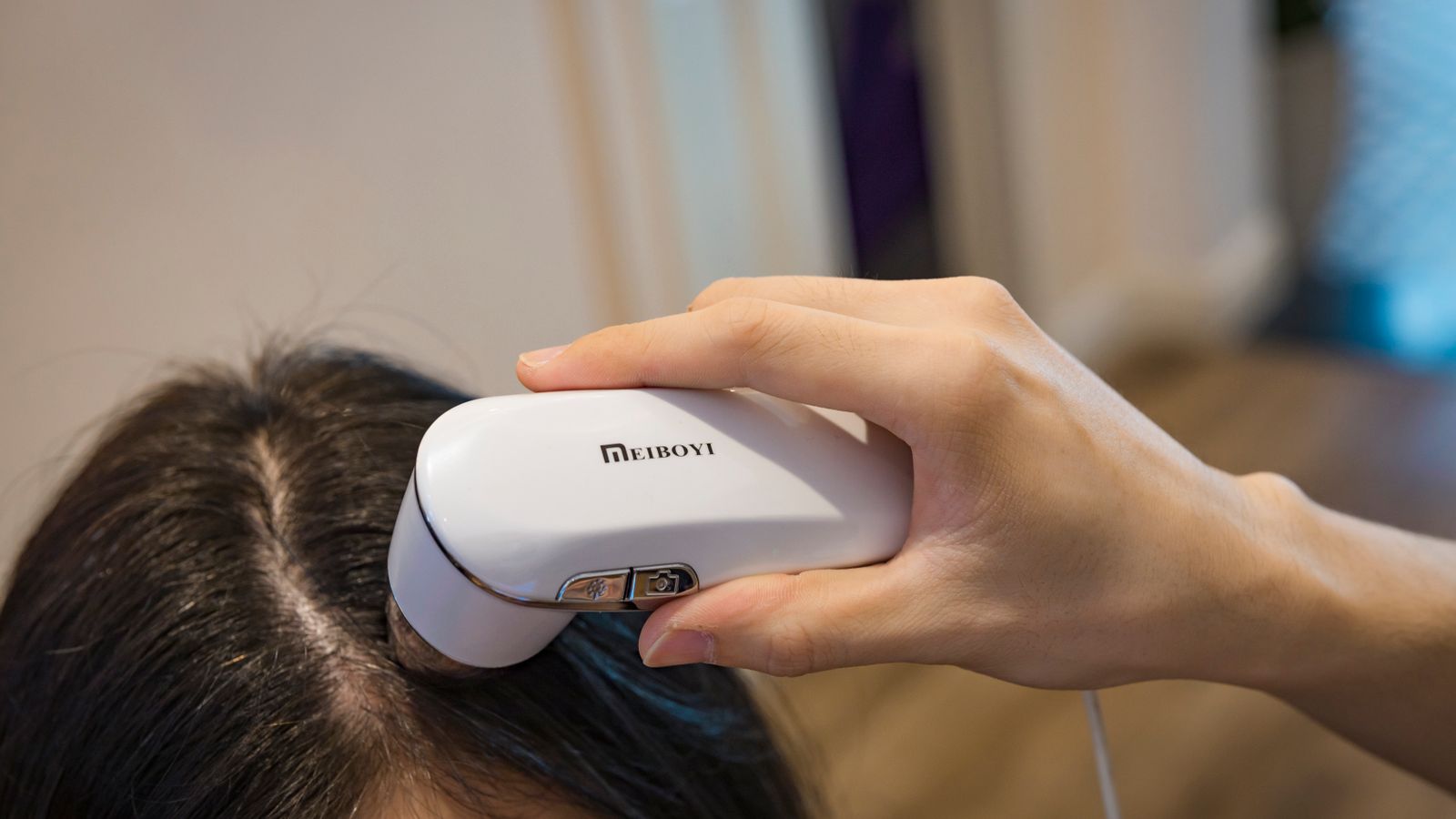
Supplements taken without knowing whether you are short of anything, laser combs, exotic oils, scalp gadgets, and the long tail of social media remedies. Some are harmless, some are a waste of money, a few are actively bad for your hair. The rule of thumb: the further a claim travels from "this conditions your hair" toward "this changes your biology", the more evidence it needs and the less it usually has.
The mistake that costs the most. People spend tier one money on tier three products. If you have made peace with the idea that you want a medical option, go and get a medical option properly. If you have decided you would rather not, spend your money on tier two, where the promises are smaller but real. The expensive middle ground of hopeful gadgets and unnecessary supplements is where most budgets quietly disappear.
What cosmetic hair care can honestly do
Here is the part that gets undersold, because the honest version is less exciting than the marketing version but it is true.
Most people who feel their hair is thinner than it used to be are losing hair in two ways at once. Some is genuinely lower density at the root. But a large share of the visible difference is length lost to breakage. Hair snaps partway along, so it never reaches the length it used to, and a ponytail that ends in wispy tapered ends reads as thin even when the density at the scalp has barely changed.

Breakage is the part you can genuinely change, and you can change it this week. That is what good cosmetic care is for:
- Reducing breakage so the hair you grow survives long enough to be seen. Conditioning, gentler detangling, less heat, looser styling.
- Supporting a healthy scalp environment. An itchy, flaking, irritated scalp makes people scratch and wash harshly, which costs hair.
- Making what you have look fuller. Cleaner roots, less product buildup, better cut, sensible drying. Cosmetic, visible, immediate.
- Removing the things actively damaging your hair. Often the biggest win, and it is free.
Notice that none of that is a claim about biology. It is a claim about keeping what you grow, which is exactly what a cosmetic can do.

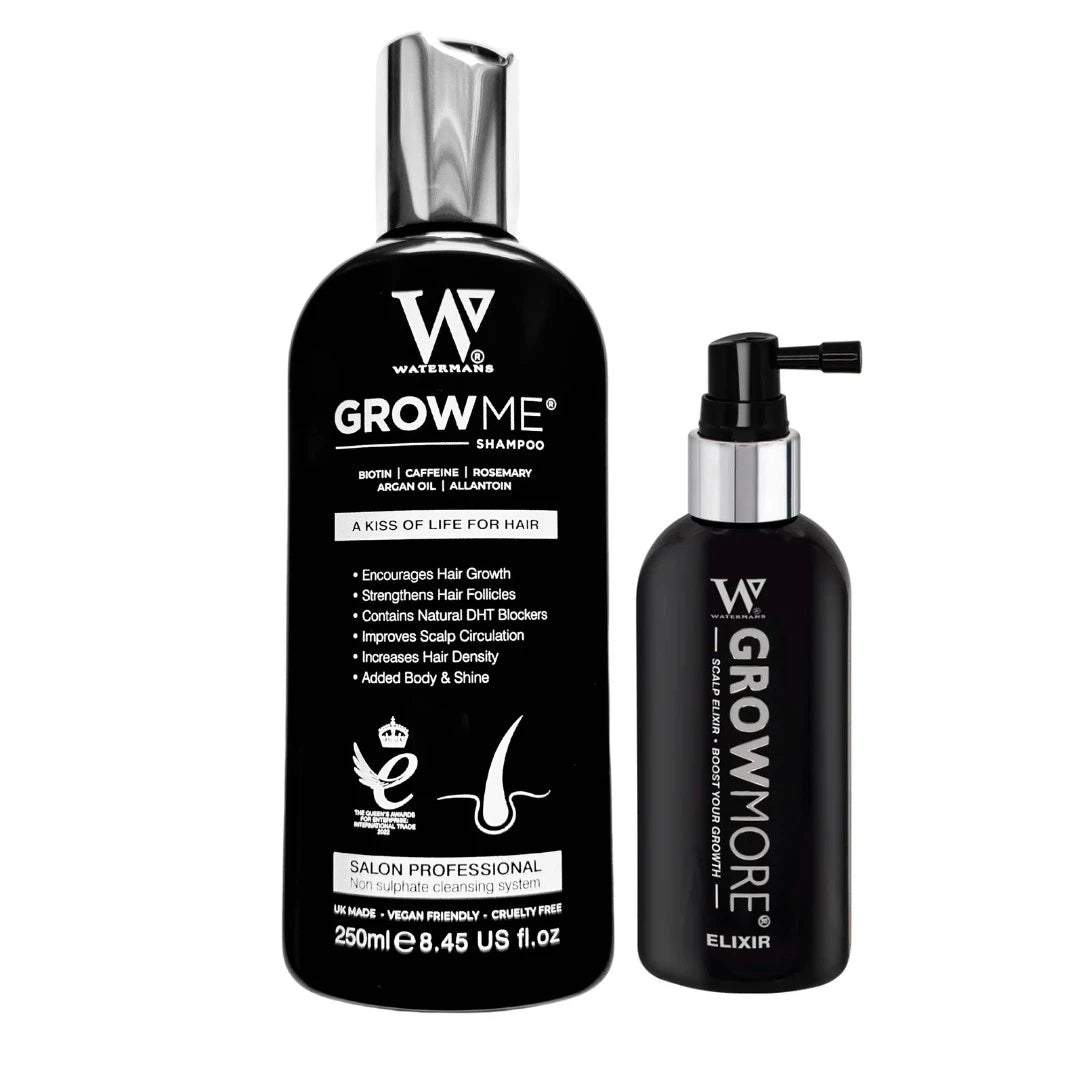
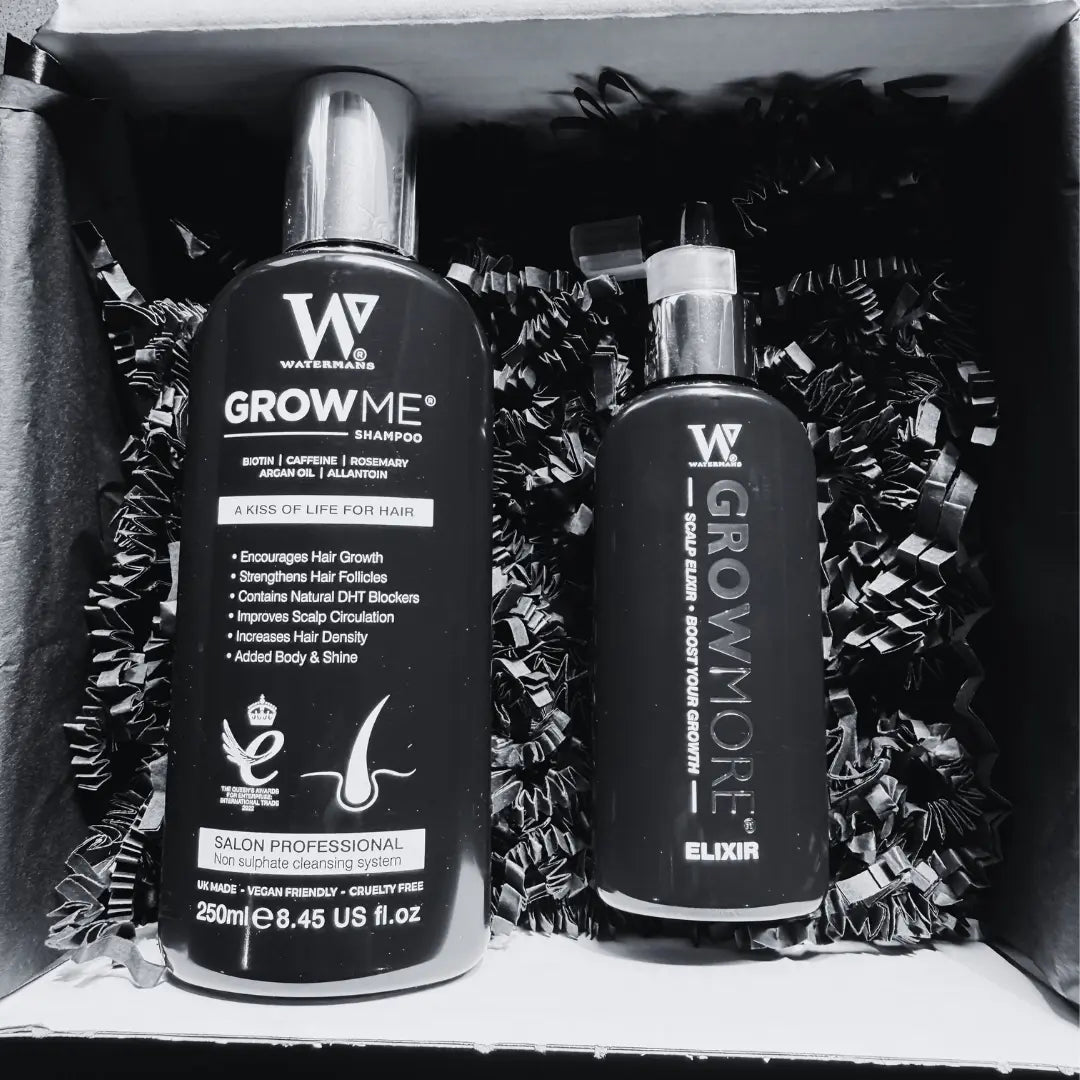
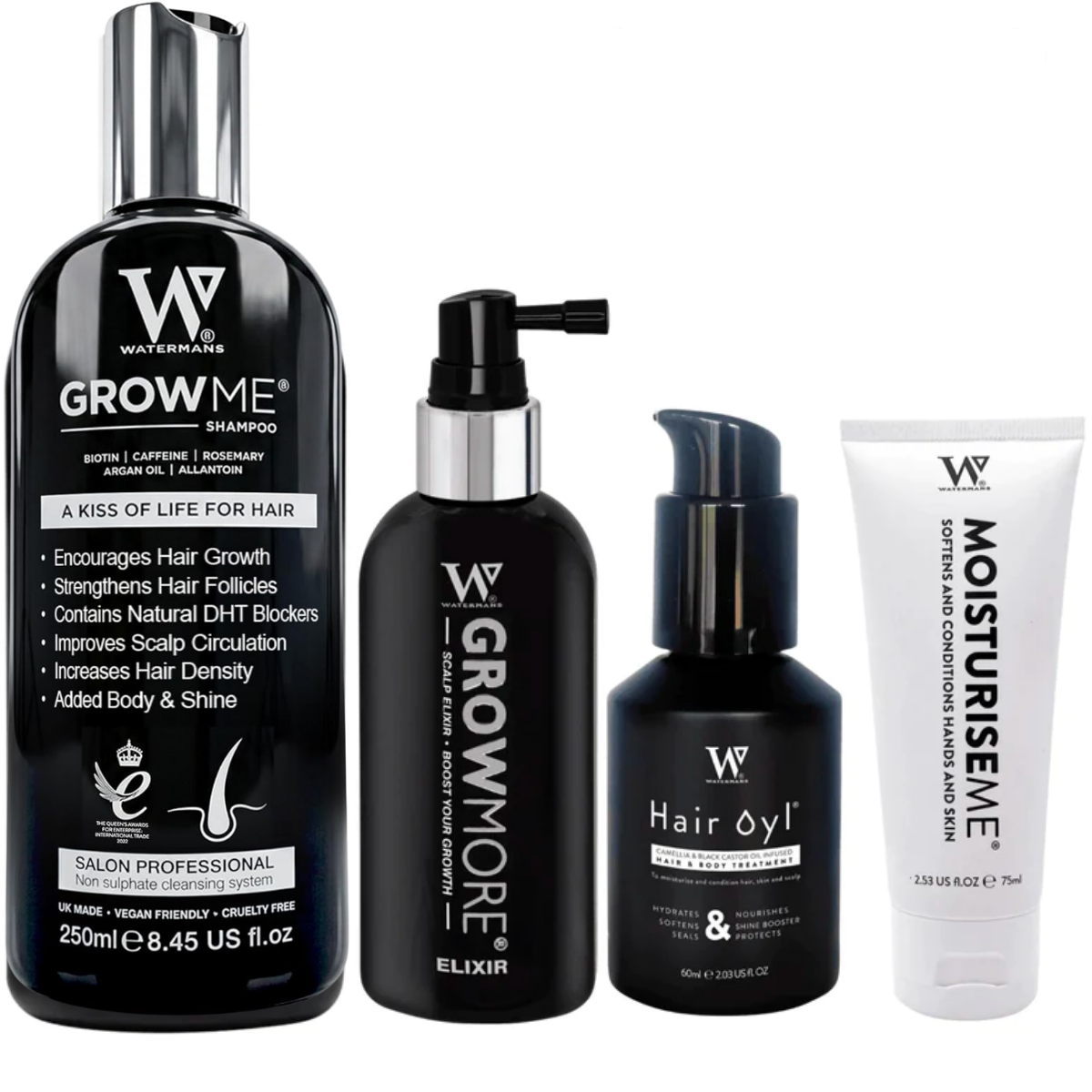
Grow Me® Shampoo, £14.95
A sulphate free shampoo with biotin, caffeine, rosemary, niacinamide and hydrolysed lupine protein. It cleanses without stripping, supports a healthy scalp environment, and reduces breakage so hair looks fuller. Vegan, cruelty free and made in the UK.
Best paired with the conditioner below, since cleansing and breakage defence are two halves of one job.

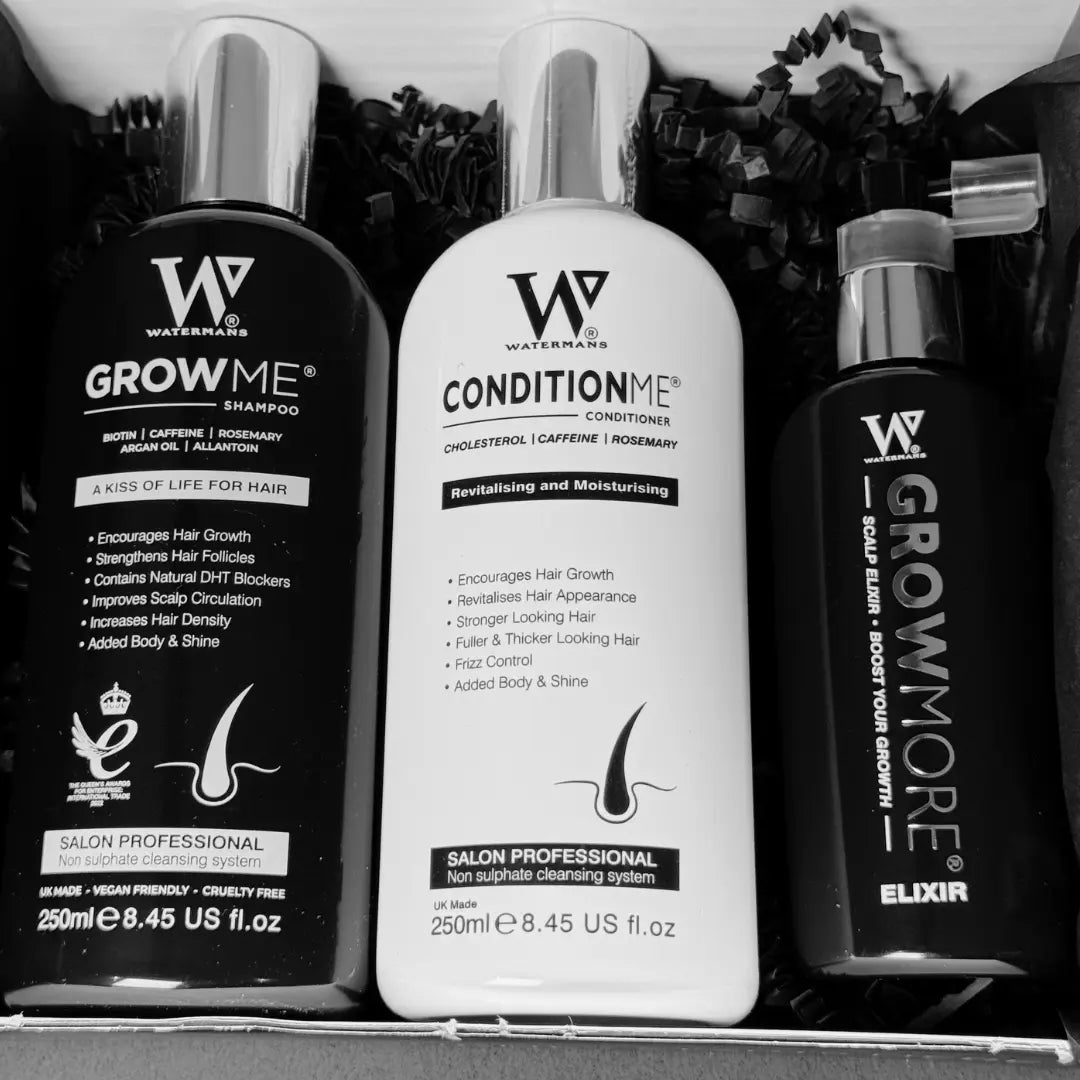
Hair Growth Boost Set, £53.40
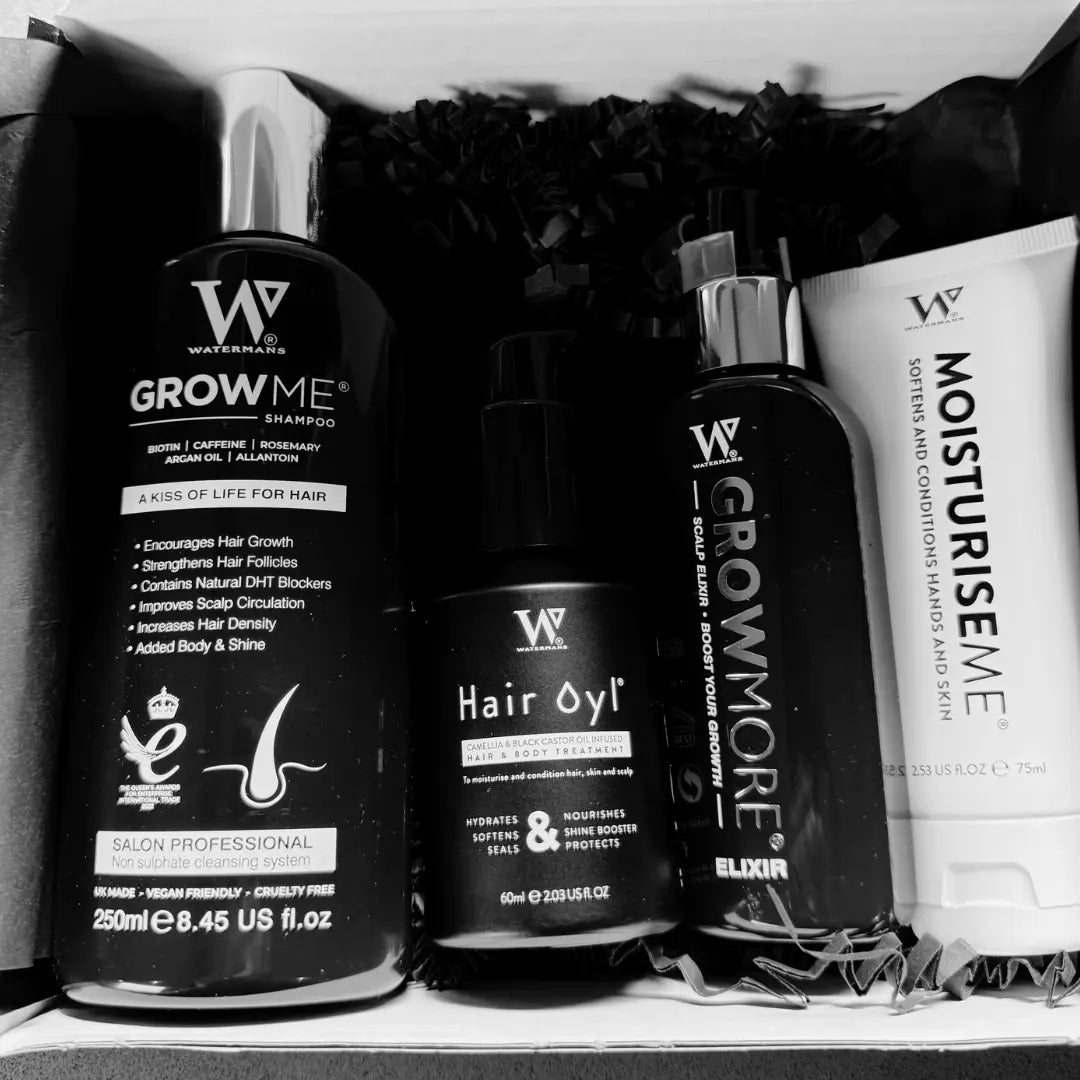
The full three step routine: Grow Me shampoo, Condition Me conditioner and the Grow More scalp elixir. If you want to give cosmetic care a fair run rather than testing one bottle at a time, this is the sensible way to do it for three months and then judge.
Get the plain English thinning hair guide
A short email series on working out which pattern of thinning you have, what genuinely reduces breakage, how long to give anything before judging it, and which popular remedies are not worth your money. Written the way this page is written: no percentages we cannot back up.
One email at a time, no spam, unsubscribe whenever you like.
How to judge a hair loss claim before you pay for it
Run anything you are considering through these seven questions. It is the cheapest filter available and it will save you more than any single product.
- Is it claiming to change biology or to condition hair? A conditioning claim is easy to support. A biological claim needs proper evidence and usually a licence.
- Does it name a specific number? "Up to 89 per cent saw a difference" almost always rests on a small self reported survey of people given free product. Ask how many, over how long, and compared with what.
- What is the timescale? Anything promising visible change in two weeks is describing how your hair looks when it is clean and conditioned, not how much of it there is.
- Are the before and after photos matched? Same lighting, same parting, same styling, same wet or dry state. Change any one of those and you can manufacture a transformation with no product at all.
- Who is saying it? A person paid to say it, on a page selling it, is marketing. That includes people in white coats in adverts.
- What happens when you stop? For anything working on active biology, the honest answer is usually that the effect fades. Factor the ongoing cost in from the start.
- Would a pharmacist raise an eyebrow? A genuinely useful test, and free to run.
A realistic timeline
Scalp hair grows roughly one centimetre a month, and a hair that starts growing today spends weeks below the surface before you see it. That single fact sets the pace for everything.

| Time | What is realistic |
|---|---|
| Week one | Hair feels softer, combs through more easily, less comes out on the brush because less is snapping. Condition, not density. |
| Weeks two to four | Scalp comfort settles if it was irritated. Ends look less ragged. Still far too early to judge anything meaningful. |
| Month three | The first honest checkpoint. Length is being kept rather than lost, so the ends of a ponytail look blunter and fuller. |
| Months four to six | Where a real difference in how thick your hair looks becomes visible, mostly because you have stopped losing length. |
| Beyond six months | If nothing has changed at all by now, the honest conclusion is that this was not the answer for your situation, and it is worth revisiting the cause. |
Take a photo on day one, in daylight, at the same parting, dry. Everyone forgets and then cannot tell whether anything changed.
What is not worth your money
- Supplements taken on a hunch. Correcting a genuine iron, ferritin, vitamin D or B12 shortfall matters. Taking a handful of pills without knowing whether you are short of anything mostly produces expensive urine, and some nutrients are harmful in excess. Ask for a blood test instead. Our guide to the vitamins and minerals that genuinely matter for hair separates the two.
- Anything bought from an unregulated overseas seller. You have no idea what is in it and no recourse.
- Harsh clarifying routines used daily in the belief that a squeaky clean scalp helps. It strips and it irritates.
- Undiluted essential oils on the scalp. A recurring cause of contact dermatitis.
- A second product before you have given the first one three months. Changing three things at once means you learn nothing.
When to see a GP rather than shop
- Sudden, patchy or sharply defined loss, or loss of eyebrows and eyelashes alongside it.
- A sore, scaly, blistered or scarring scalp, or bald areas where the skin looks smooth and shiny.
- Thinning with tiredness, weight change, feeling cold, low mood or heavy periods.
- Shedding that has continued heavily for more than six months.
- Hair loss in a child.
- Hair loss during or after any course of medical care, where the team looking after you is the right first call.
None of that is a reason to panic. It is a reason to get the cause established, because the right answer depends entirely on it, and a shampoo cannot tell you which one you have.
Frequently asked questions
What are my options if my hair is thinning?
Broadly three. A medical route accessed through a pharmacist or GP, cosmetic hair care that protects the hair you have and improves how it looks, and lifestyle factors such as nutrition, stress and how roughly you handle your hair. The right mix depends on what is causing the thinning, which is why establishing the cause comes first.
Why does this page not name specific medicines?
Because we are a cosmetic hair care company, not a pharmacy. Information about a licensed medicine should come from someone who can also check whether it suits you and take responsibility for that advice. A pharmacist can do that in a few minutes and it costs nothing.
Do hair growth shampoos actually work?
They work at what a cosmetic can do: cleansing without stripping, supporting a healthy scalp environment, and reducing breakage so you keep more of the length you grow. That is what makes hair look fuller over a few months. They do not change the biology of a follicle, and we would be sceptical of any brand that says otherwise.
How long before I can tell if something is working?
Three months minimum, six months to be fair to it. Hair grows about a centimetre a month, so anything claiming visible change in a fortnight is describing a conditioning effect rather than a change in how much hair you have.
Is my hair loss permanent?
It depends entirely on the type. Shedding after illness, childbirth or stress usually recovers on its own. Traction damage caught early usually recovers, and left for years often does not. Pattern hair loss is progressive, which is why people who act earlier have more to work with. A GP is the right person to tell you which you have.
Should I take hair supplements?
Only if you have reason to believe you are short of something, ideally confirmed with a blood test. Correcting a genuine deficiency helps. Taking supplements on the assumption of a deficiency mostly costs money, and a few nutrients cause problems in excess.
Is losing hair every day normal?
Yes. Shedding somewhere in the region of fifty to a hundred hairs a day is the normal cycle. What matters is a change from your own baseline: noticeably more in the plughole than usual, a ponytail that has thinned, or scalp becoming visible where it was not before.
Can stress cause hair to fall out?
A significant physical or emotional shock can push a large share of follicles into their resting phase at once, and they shed together two to four months later. It is one of the most common causes of a sudden heavy shed, and it usually settles once the trigger has passed.
What is the cheapest thing I can do that actually helps?
Stop the damage. Lower the heat setting, loosen the ponytail, detangle from the ends upwards with conditioner in, stretch the gap between bleach appointments, and do not brush hair hard when it is soaking wet. It costs nothing and it is often the biggest single change available.
Does washing hair less often help with hair loss?
Not usually, and it can make things worse. The hairs that come out in the shower were already shed and simply collect until you wash. Washing less often does not save them, it just means you see more at once, and a scalp left with buildup and irritation is not a good environment for hair.
The short version
Work out what is causing it before you spend anything. Take medicines to a pharmacist or GP, where they belong. Use cosmetic care for the job it genuinely does, which is keeping the hair you grow instead of losing it to breakage, and give it three to six months before you judge. Ignore any claim with a big number and a short timescale attached. Most of what people spend on thinning hair is spent in the wrong tier, and fixing that costs nothing.
Watermans is a family run British business making vegan, cruelty free hair care in the UK, with over 5 million bottles sold since 2012. We make cosmetics, we say so, and we would rather be useful than oversell.
Watermans products are 100% cosmetic and do not treat medical hair loss. Individual results may vary.
This article is general information about cosmetic hair care and is not medical advice. For anything involving medicines, or for sudden, patchy or painful hair loss, speak to a pharmacist or your GP.