


Are DHT Blockers Bad for Your Health? An Honest Guide

Are DHT blockers bad for your health? For most people they are not inherently harmful, but the answer depends heavily on which blocker you mean. Prescription medicines like finasteride are effective for pattern hair loss and are well studied, yet they carry possible side effects that some people find significant. Natural options like saw palmetto have a gentler reputation but weaker evidence. And cosmetic shampoos are not DHT blockers at all. The sensible approach is to understand the trade-offs and let a doctor guide any medication decision. This guide lays it out honestly.
Key Takeaways
- DHT is a hormone that drives androgenetic (pattern) hair loss in genetically sensitive people.
- DHT blockers work by slowing 5-alpha-reductase, the enzyme that turns testosterone into DHT.
- Finasteride is a prescription medicine, effective but with possible side effects. It needs a doctor.
- Saw palmetto and pumpkin seed oil are gentler but have limited, mixed evidence.
- Cosmetic hair shampoos are not DHT blockers and should not be sold as one.
- Finasteride must not be used or handled by women who are or may become pregnant.
What Is DHT and Why Does It Matter?
Dihydrotestosterone, or DHT, is an androgen (a male-type hormone) made from testosterone. It plays real and useful roles in the body, contributing to male development and function. In hair, though, DHT is the main driver of androgenetic alopecia, the common pattern thinning at the crown and hairline. In people who are genetically sensitive to it, DHT gradually shrinks affected follicles until the hairs they produce become finer and shorter. This is why reducing DHT is a recognised strategy for pattern hair loss, and why it is not relevant to every kind of hair loss.
How Do DHT Blockers Work?
DHT blockers target the enzyme 5-alpha-reductase, which converts testosterone into DHT. Slow that enzyme, and DHT levels fall, which can ease the pressure on sensitive follicles. The blockers people most often ask about are:
- Finasteride: A prescription medicine for male pattern hair loss. It is the best evidenced oral DHT blocker, and it works for many men, but it can cause side effects.
- Dutasteride: A related prescription medicine, sometimes used off-label, that blocks DHT more broadly. Doctor-guided only.
- Saw palmetto: A plant extract said to mildly slow DHT. Popular in herbal products, but the evidence is limited and less consistent than for prescription options.
- Pumpkin seed oil: Contains nutrients and may modestly influence 5-alpha-reductase. Early, small studies exist, so treat it as promising rather than proven.

Are DHT Blockers Bad for You? Weighing the Trade-offs
It varies by person and by product. Finasteride is effective and, for most users, well tolerated, but a minority experience side effects, and that possibility is the crux of the question. Being informed is the goal, not fear.
Possible side effects of prescription DHT blockers
- Sexual side effects, such as reduced libido or erectile difficulty, in a minority of users.
- Mood changes, which some people report while taking these medicines.
- Breast tenderness or enlargement, which is uncommon but recognised.
- Persistent symptoms in a small number of people, sometimes discussed as post-finasteride syndrome. This is why an informed conversation with a doctor matters.
Most men who take finasteride do not experience these problems, and for many the benefit to their hair outweighs the risks. But it is a genuine medical decision, so weigh it with a clinician rather than on your own.
Established Evidence, Limited Evidence, and Cosmetic Support
It helps to sort the options by how strong the evidence is:
| Option | Evidence | Notes |
|---|---|---|
| Finasteride / dutasteride | Established | Prescription only. Effective for many, with possible side effects. Doctor-guided. |
| Saw palmetto | Limited | Gentler reputation, weaker and mixed evidence. |
| Pumpkin seed oil | Limited | A few small studies. Promising, not proven. |
| Cosmetic shampoos and serums | Cosmetic support only | Not DHT blockers. Support scalp comfort and the look of hair. |
Who Should Consider a DHT Blocker?
A prescription DHT blocker may be worth discussing with a doctor if you have early signs of pattern hair loss, a confirmed diagnosis of androgenetic alopecia, and you understand the possible side effects. It may not suit you if you prefer to avoid medication, if you have had a bad reaction to these drugs before, or if you are a woman who is or may become pregnant. There is no wrong answer here, only an informed one.
A Word on Cosmetic Hair Care
Let us be clear and honest: a hair shampoo is not a DHT blocker, and no cosmetic product can claim to lower your DHT or reverse hair loss. What a good sulfate-free shampoo can do is keep the scalp clean and comfortable and support the look and feel of fuller hair, as everyday cosmetic care that sits alongside whatever medical route you choose.

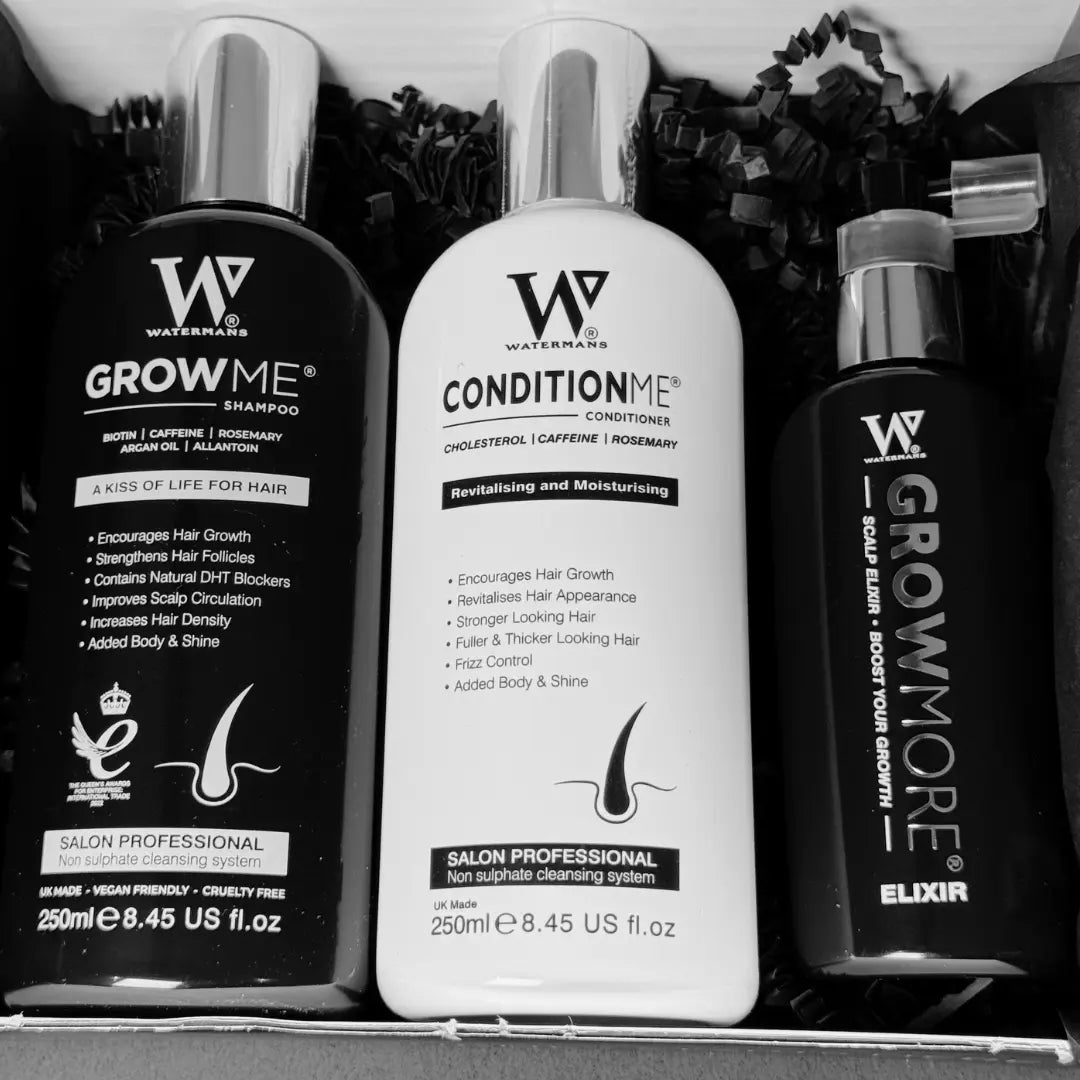
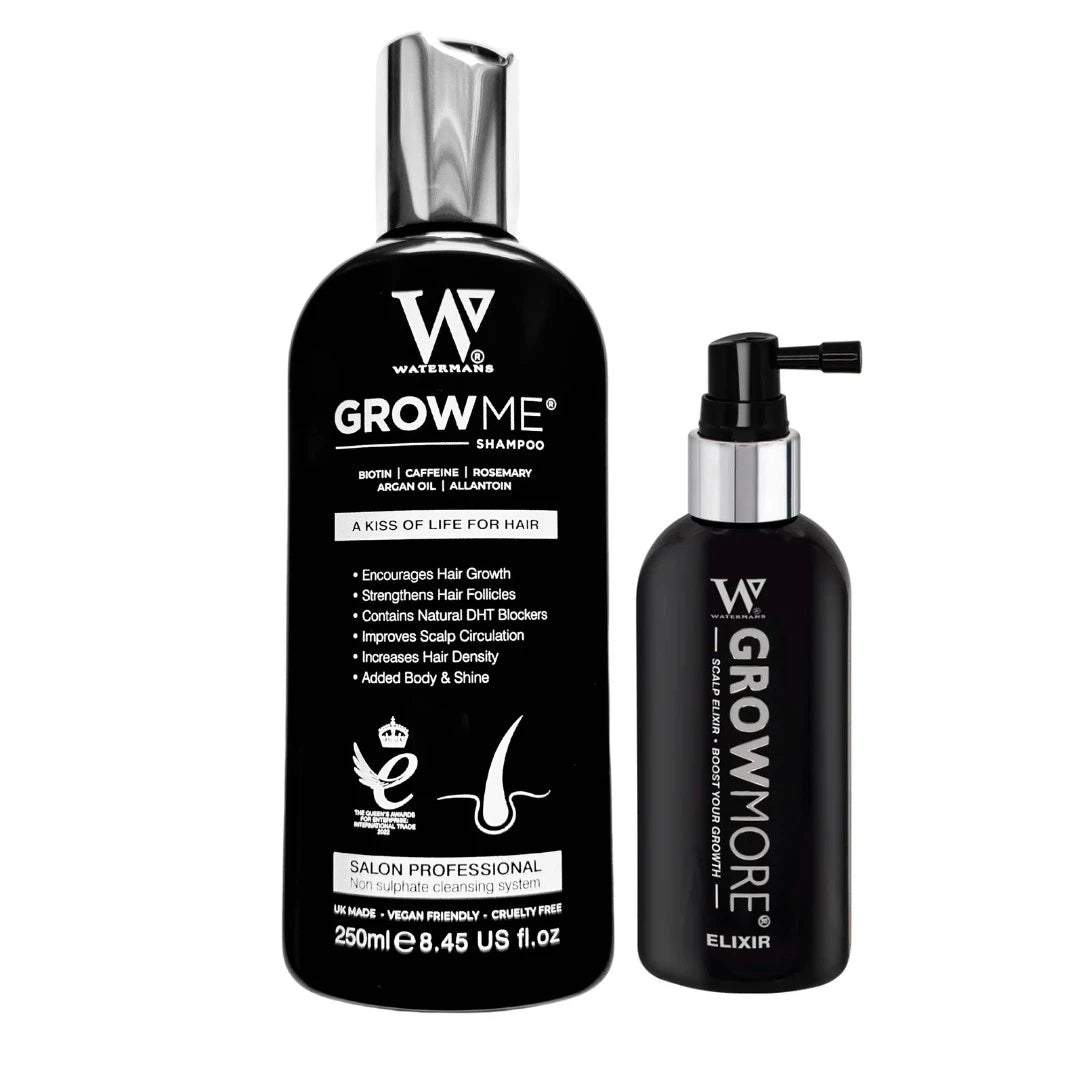
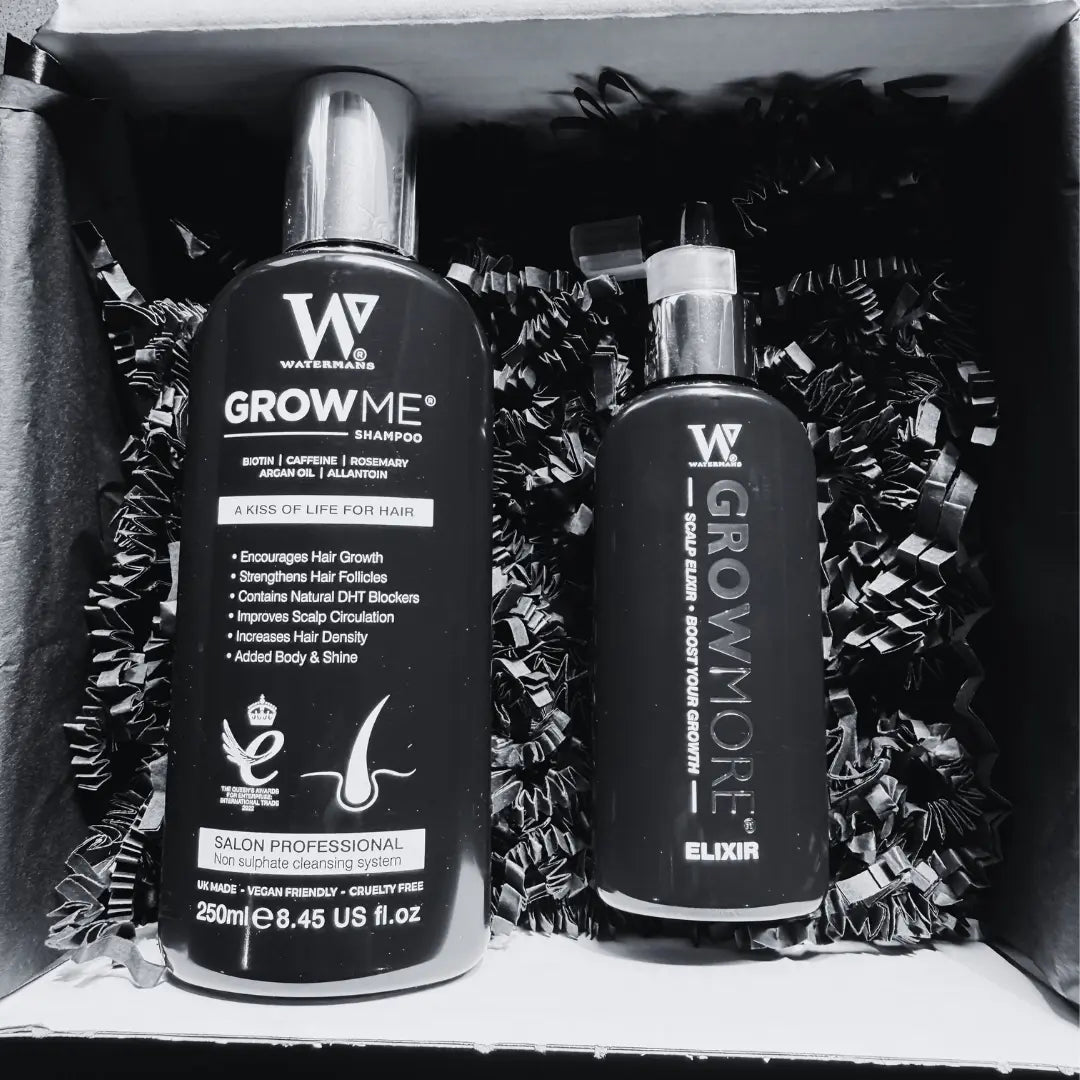
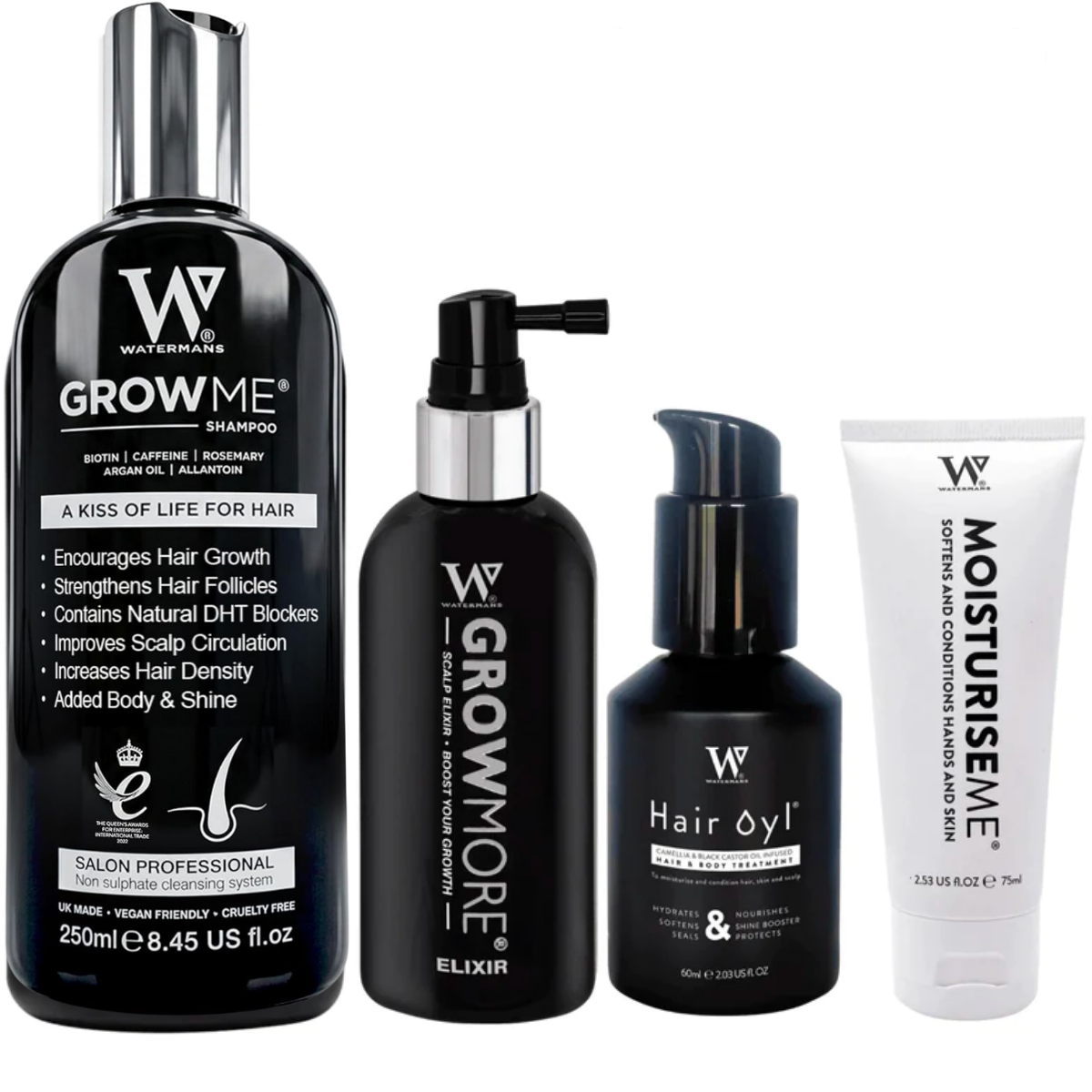
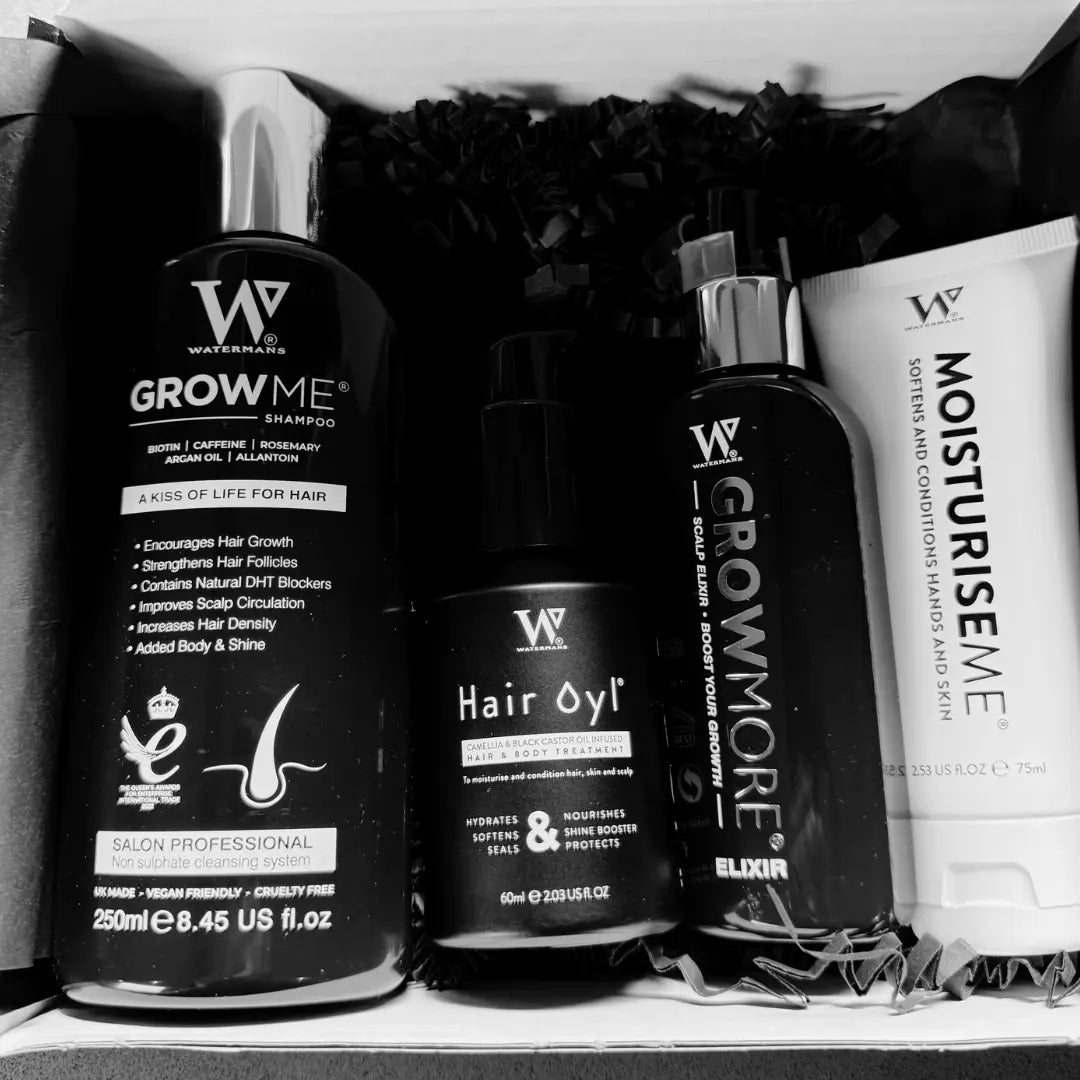
Grow Me® Shampoo, £14.95
A sulfate-free daily shampoo with biotin, caffeine, rosemary and argan oil. It is cosmetic scalp and hair care, not a DHT blocker and not a medical treatment. It keeps the scalp clean and supports the look of fuller-feeling hair.
View Grow Me ShampooWatermans is vegan, cruelty-free and made in the UK, with over 5 million bottles sold since 2012.

Did You Know?
- Not everyone with high DHT loses hair. Genetic sensitivity of the follicle matters as much as the hormone level.
- Women make DHT too, and can experience related thinning, though their treatment options differ and need medical input.
- DHT mainly affects the growth phase. It shortens the active growth stage of sensitive follicles over time.
- Diet and stress play supporting roles. They are not the root cause of pattern loss, but overall health still matters.
Related Reading
To go deeper, read how to reduce DHT on the scalp and what actually helps, the wider picture of what causes thinning hair, how to manage hair loss while taking testosterone, and whether stress can cause hair loss.
Frequently Asked Questions
Are DHT blockers safe to take?
Prescription DHT blockers are safe for many people but carry possible side effects, so they should be taken under medical guidance. Natural options are gentler but less proven. A doctor can weigh the risks and benefits for you.
What are the side effects of finasteride?
Possible effects include reduced libido, erectile difficulty, mood changes and, rarely, breast tenderness. Most users do not experience them, and a small number report persistent symptoms, which is why an informed medical discussion matters.
Can women take DHT blockers?
Only under specialist guidance, and finasteride and dutasteride must be avoided by women who are or may become pregnant, as they can harm a developing male foetus. Women should never handle broken or crushed tablets.
Do natural DHT blockers like saw palmetto work?
The evidence is limited and mixed. Some people use saw palmetto or pumpkin seed oil, but they are not as reliable as prescription options. Set modest expectations and tell your doctor what you take.
Is a hair growth shampoo a DHT blocker?
No. Cosmetic shampoos are not DHT blockers and cannot lower DHT or reverse hair loss. They support scalp comfort and the look of your hair as everyday care, alongside any medical treatment.
How soon do DHT blockers show results?
Hair changes slowly, so it typically takes several months of consistent use to judge whether a treatment is helping. Results also depend on genetics and overall health.
Can stress cause hair loss even if my DHT is normal?
Yes. Significant stress can trigger telogen effluvium, a temporary shedding that is separate from DHT-driven pattern loss. It usually recovers once the trigger passes.
Make it an informed choice
If you are weighing a DHT blocker, book a chat with a GP or dermatologist. They can confirm your type of hair loss and help you balance the benefits and risks. Cosmetic care like a gentle sulfate-free shampoo can sit comfortably alongside whatever you decide.