Safe Hair Growth Treatments: An Honest Comparison
Safe hair growth treatments fall into three honest groups: cosmetic products that work on the hair fibre and scalp and carry almost no risk, device-based options such as low-level light and microneedling that are low risk but modestly supported, and clinic procedures that cost the most and have the least settled evidence. Anything medical sits outside all three and belongs with a GP. Matching the group to your actual problem matters more than picking a brand.
Our complete hair growth routine
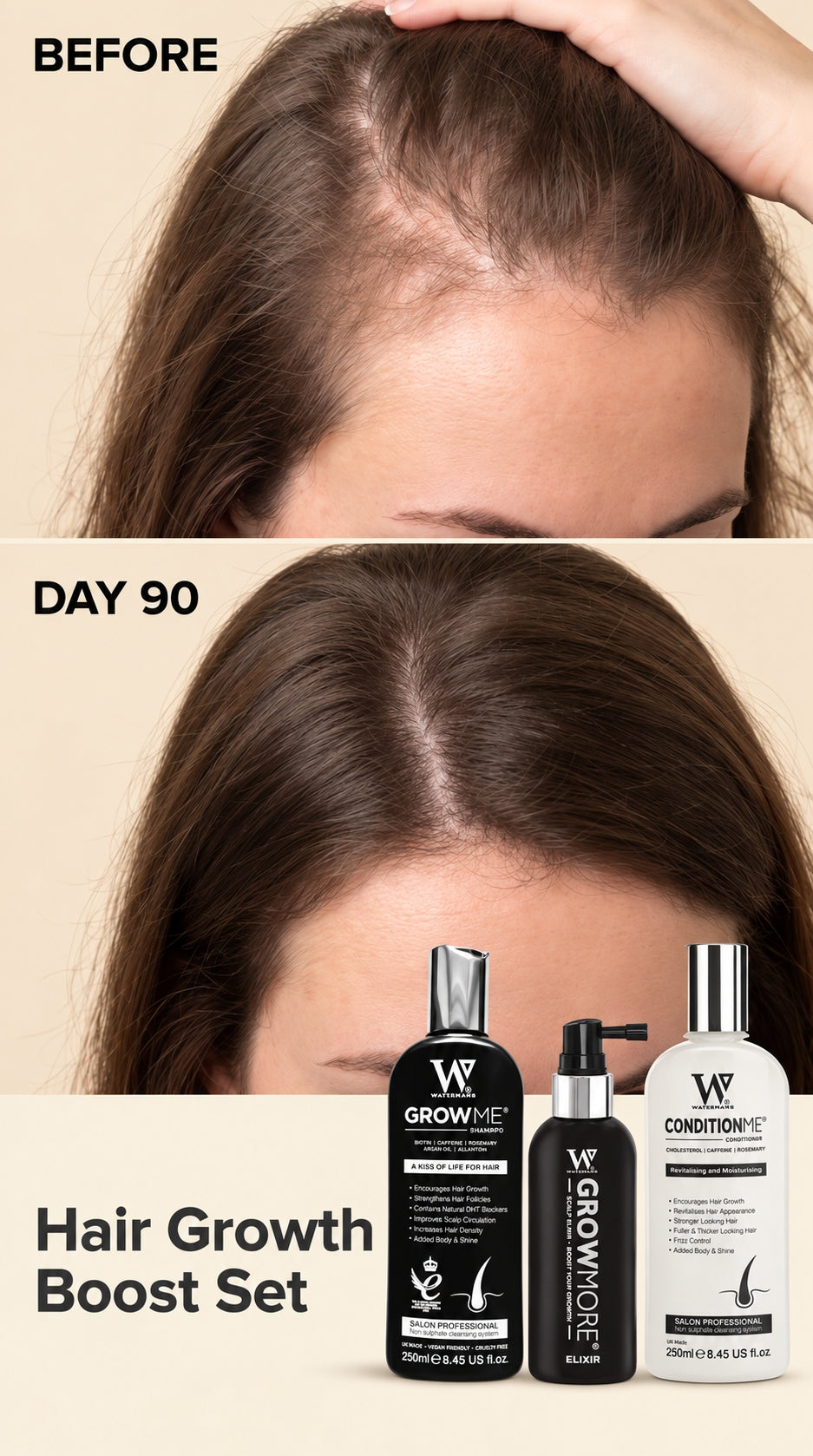
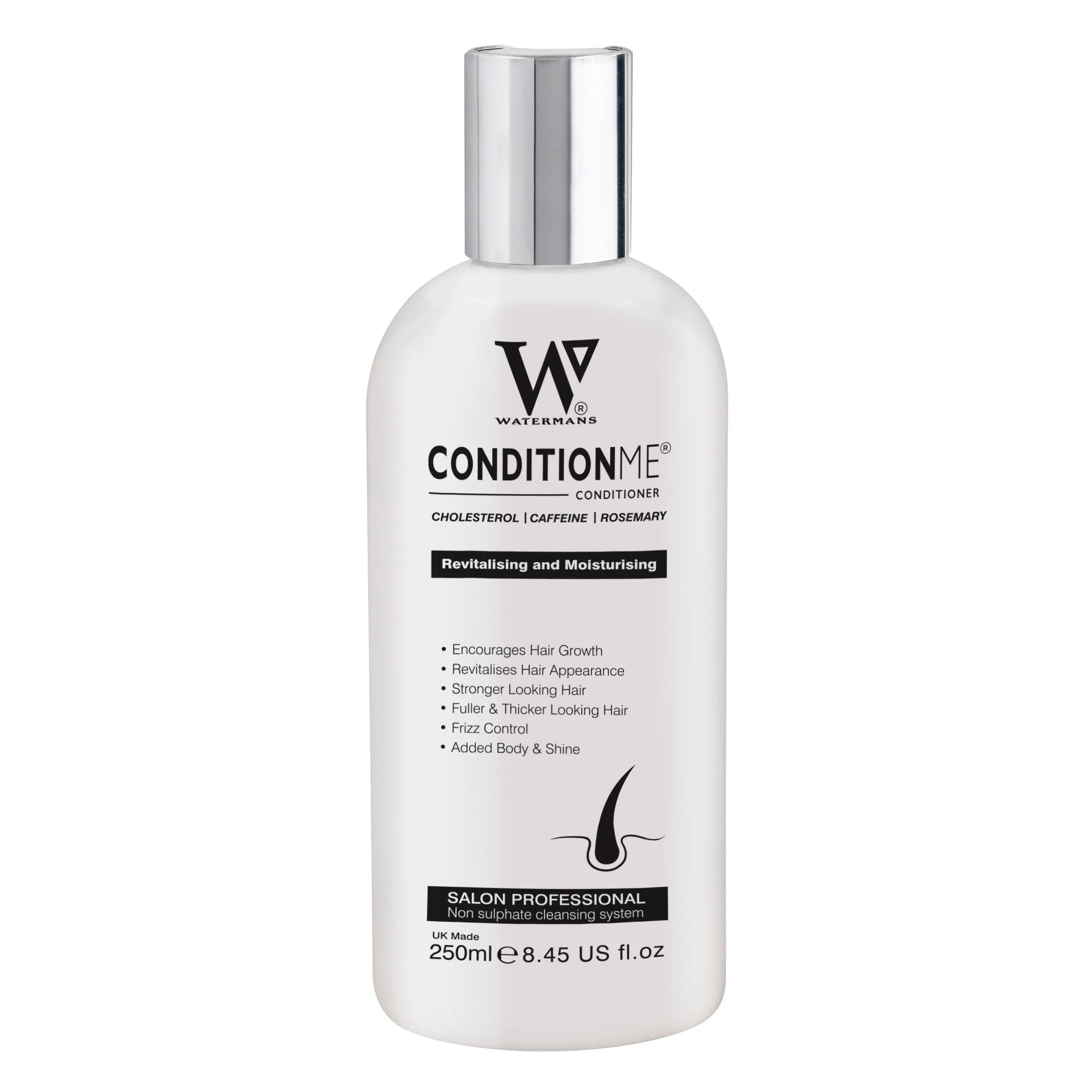
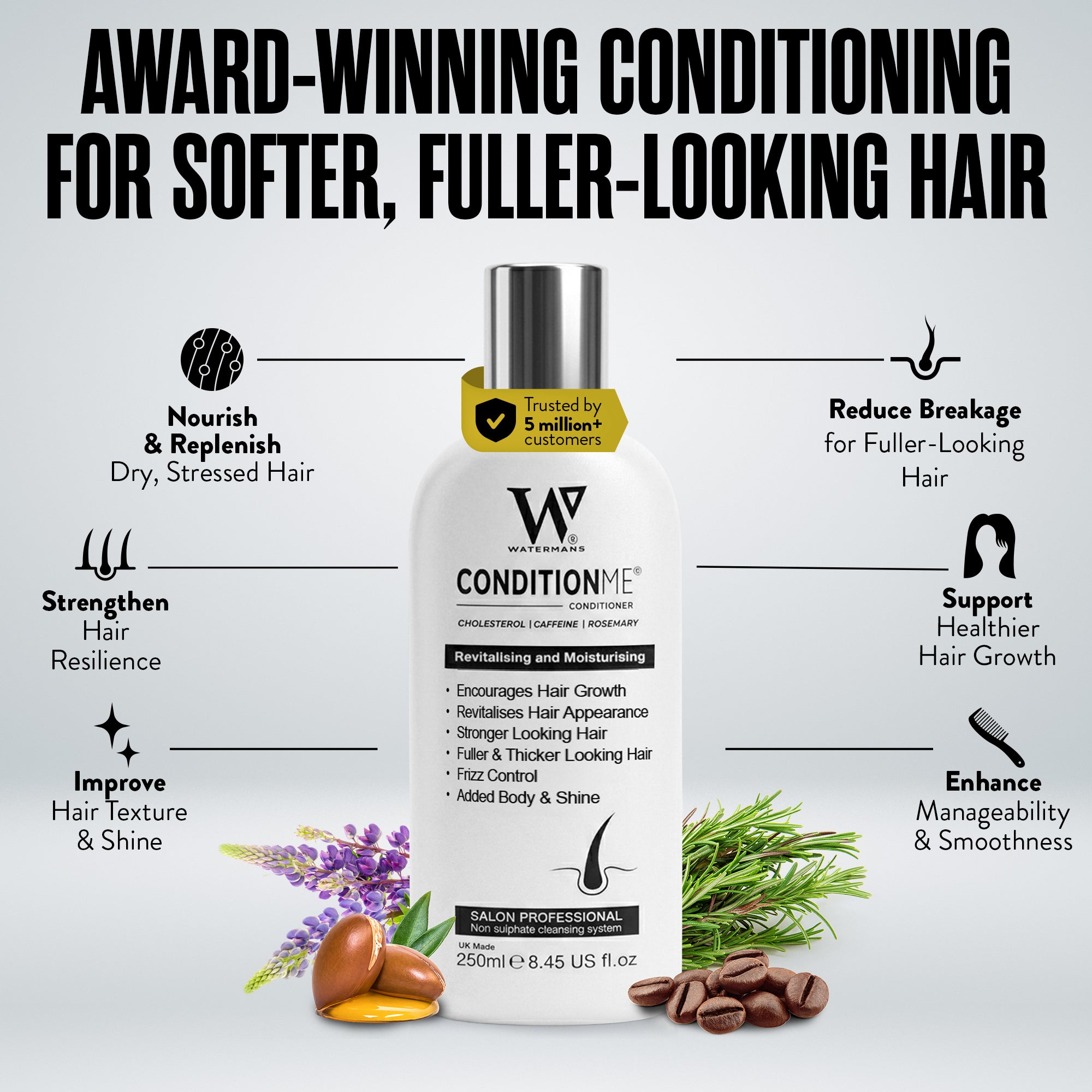
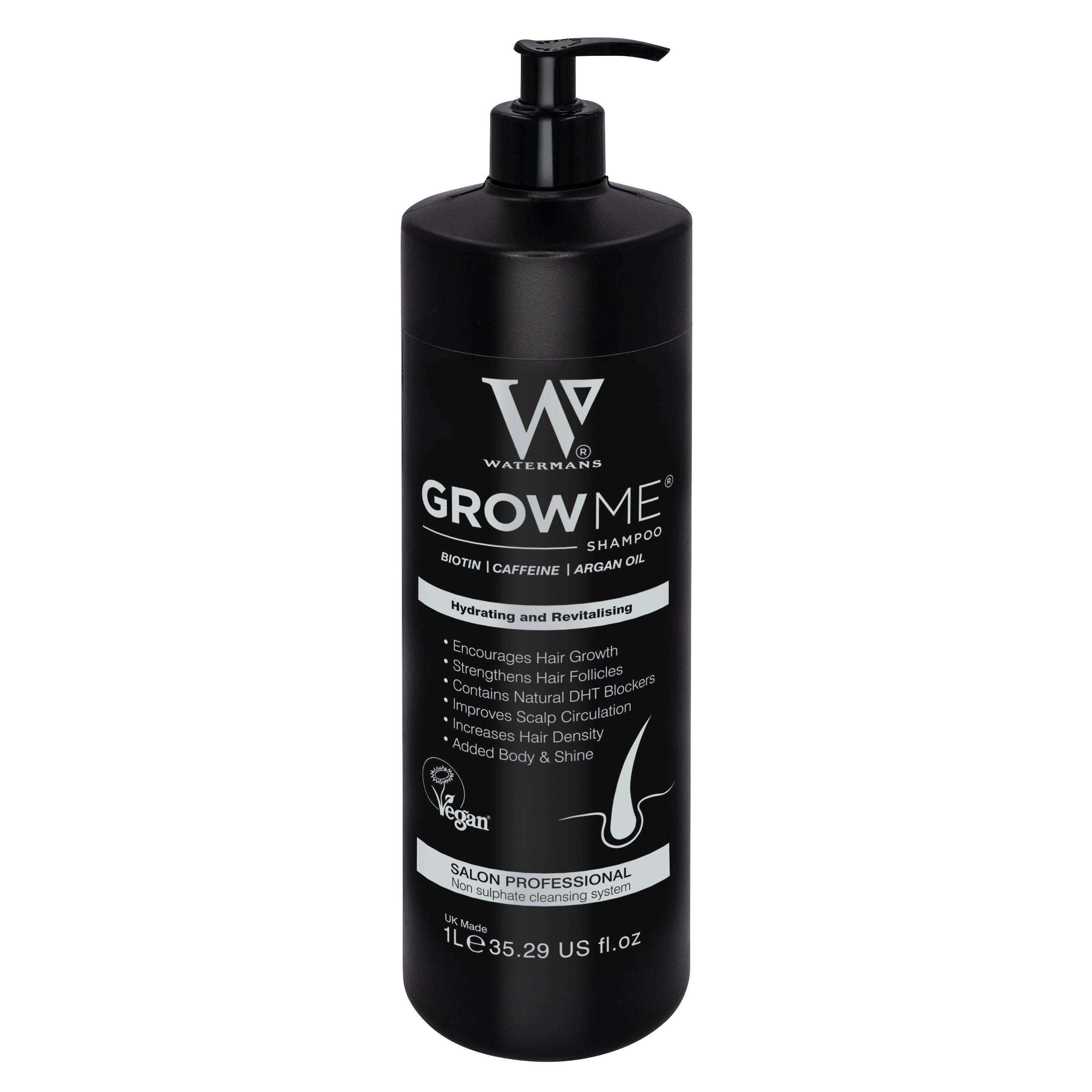
Hair Growth Shampoo, Conditioner & Scalp Elixir Set, £53.40. The full three step routine, cleanse, condition and an overnight scalp elixir, bought together for less than buying each alone.
Key takeaways
- Safe and effective are two different questions. Some of the safest options do the least, and some of the most promising carry the most uncertainty.
- Work out whether you are dealing with hair loss, hair shedding or hair breakage first. They respond to completely different things.
- Cosmetic products carry the lowest risk and deliver a visible rather than a biological change.
- Supplements only help if you are genuinely short of something. Recent systematic reviews are lukewarm.
- Sudden, patchy, painful or scarring hair loss is a GP matter, not a shopping decision.
What actually makes hair growth treatments safe?
Safety in this category means three separate things, and marketing tends to blur them. The first is the risk of harm: can this hurt your scalp, your skin or the rest of you. The second is regulatory status: cosmetics are regulated as cosmetics and cannot make medical claims, while anything working on follicle biology is regulated as a medicine and is a matter for a clinician. The third is honesty about what the evidence supports, because an option that does nothing at all is technically safe and still a waste of money.
Safe hair growth treatments, in the sense most people mean when they search for the phrase, are the ones you can use without a clinician supervising you and without a meaningful risk of harm. That is the scope of this article. Where an option sits outside it, the honest answer is to say so and point at the right door rather than sell around the problem.

Hair loss, hair shedding or hair breakage: which problem are you solving?
This is the step almost everyone skips, and it is why so much money gets wasted. Three different things look identical in the shower and need different responses.
Hair loss is a follicle problem. In pattern hair loss the follicle miniaturises over years, producing progressively finer and shorter hairs. It follows a recognisable pattern and it is gradual. Hair shedding is a cycle problem. A stressor such as illness, surgery, a crash diet or childbirth pushes an unusually large group of follicles into their resting phase together, and they release around three months later. It is alarming, diffuse and usually self-correcting. Hair breakage is not about follicles at all. The fibre snaps along its length from dryness, heat, bleach or rough handling, so density falls even though nothing has stopped growing.
| Question | Hair loss | Hair shedding | Hair breakage |
|---|---|---|---|
| What the hair end looks like | Pale bulb | Pale bulb | Blunt snap, no bulb |
| Where it shows | Parting, crown, temples | Evenly, all over | Mid-lengths and ends |
| Which group helps | Devices, clinic, GP | Time and the trigger | Cosmetic, immediately |
A thirty second check settles it. Gather five or six shed hairs and look at the ends on white paper. A tiny pale bulb means they left the follicle. A blunt end means they snapped. Our guide to what causes thinning hair goes through all three mechanisms in more depth.
Which safe hair growth treatments should you start with?
Cosmetic products are the lowest-risk of all the safe hair growth treatments available, and they are the only group that helps whichever of the three problems you have, because everybody benefits from keeping the hair they already grew.
What they genuinely do: reduce breakage so length is retained, support a comfortable scalp so you handle your hair less roughly, and improve how dense hair looks by improving the condition of each fibre. What they do not do: change what a follicle is doing. Any brand implying otherwise about a shampoo is overselling, and the honest version is more useful to you anyway.
The practical routine is unglamorous. Wash regularly rather than sparingly, because a clean comfortable scalp beats a neglected one. Use something sulphate-free if your hair is dry or colour-treated. Condition the mid-lengths and ends every wash, not occasionally. Detangle from the ends upwards with a wide-tooth comb. Let hair lose some water before towelling, since wet hair is at its most fragile. Keep heat tools lower and use protection when you do reach for them.
The quiet win. If you are losing six inches of length a year to snapping, no growth-focused option can outrun that. Fixing breakage is the fastest visible change most people can make, and it costs the least.

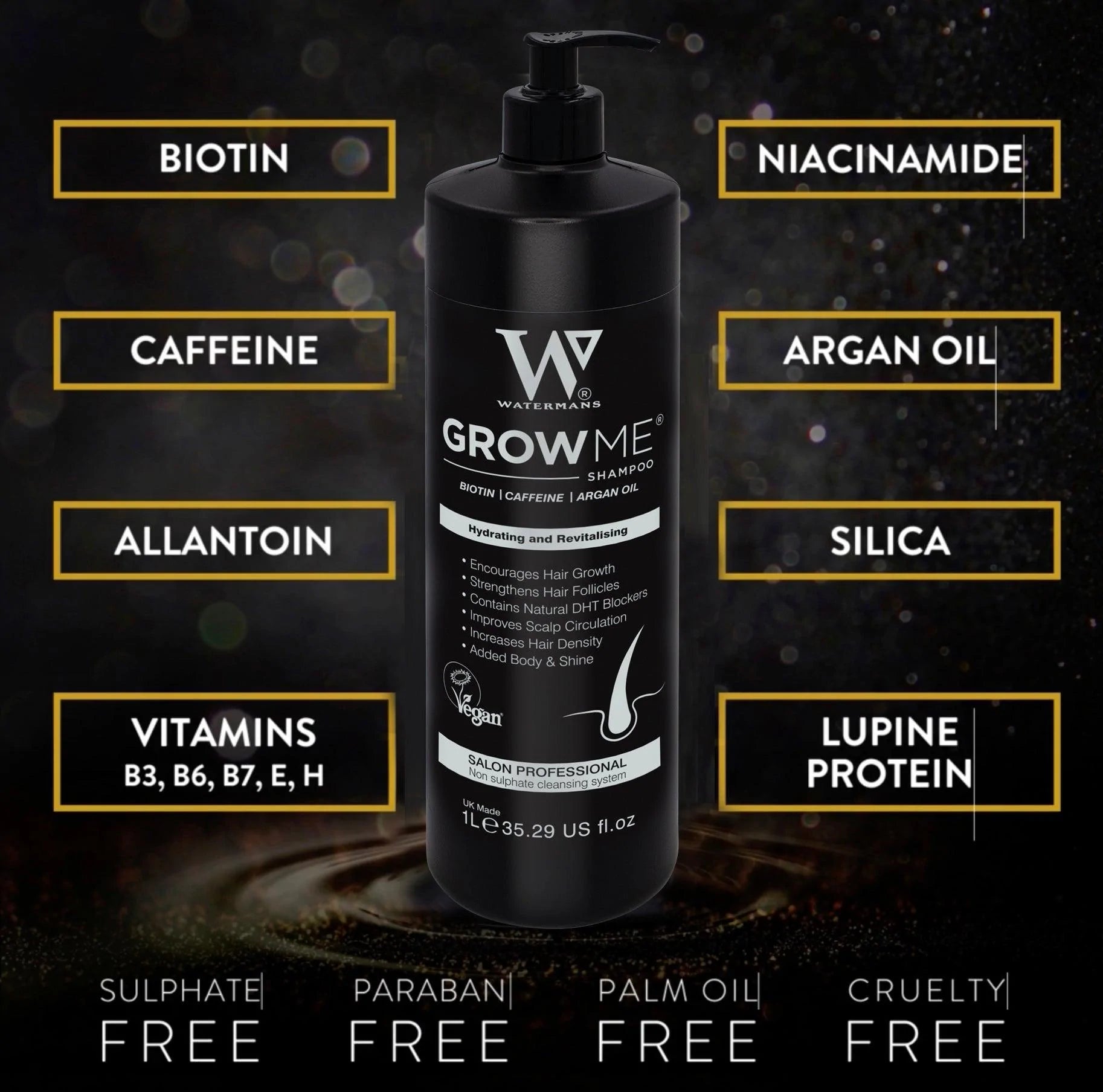
Grow Me 3-Step Routine Set, 53.40 GBP
Shampoo, conditioner and leave-on scalp elixir together. Biotin, caffeine, rosemary and niacinamide, formulated to reduce breakage for fuller-looking hair. Vegan and made in the UK.
See the 3-step setGet a discount on the thinning hair range
Join the Watermans mailing list and we will email a discount code straight to your inbox, so you can try the thinning hair range for less. Made in the UK, over 6.5 million bottles sold since 2012.
How safe are the device-based options?
Among the safe hair growth treatments people ask about most, devices sit in the middle of the risk scale: higher commitment than a bottle, far lower risk than anything injected.
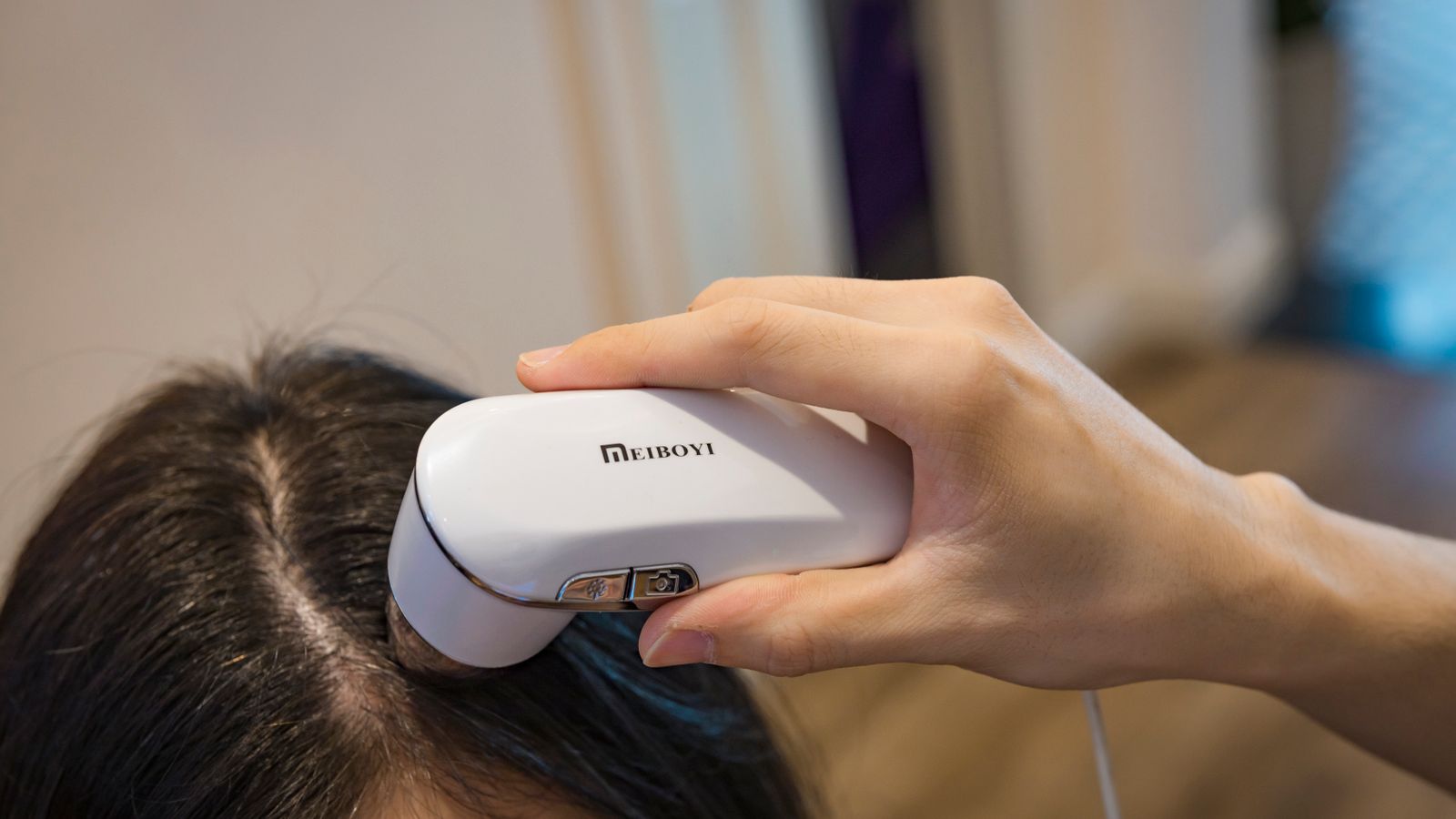
Low-level light therapy is sold as caps, helmets and combs. Controlled studies over sixteen to twenty-four weeks report modest density improvements, and reviews of the physical approaches to androgenetic alopecia rank it among the better-supported non-medical options. The risk profile is benign. The real obstacles are the price and the fact that the effect depends on using it several times a week for months, which is where most people quietly stop.
Microneedling creates controlled micro-injuries in the scalp with fine needles. Published reviews report improved density when it is done as a course, though the studies are mostly small and short. Safety here depends entirely on technique: needle depth, device cleanliness and leaving enough recovery time between sessions. A dirty roller is a genuine infection risk, which is the one place in this article where a low-risk option becomes a real one through misuse. Our guide to whether a 0.25mm derma roller is effective covers what the shallow home devices can and cannot do.
Scalp massage belongs here as the free option. The evidence is thin, but it is pleasant, harmless and encourages gentler handling.

Clinic procedures: where do the evidence and the marketing part company?
Platelet-rich plasma involves drawing blood, spinning it and injecting the concentrated fraction into the scalp. It is the option where reputable sources most visibly disagree. Some randomised work reports meaningful density gains. Other reviews describe the field as heterogeneous, with preparation protocols varying so much between clinics that studies cannot easily be compared, and describe the promise as running ahead of the proof. Both of those things are true at once, and a clinic quoting only the first half is not giving you the full picture.
The risks are real but modest for a competent operator: soreness, bruising, swelling and the ordinary risks of any injection. The larger costs are financial and psychological, because a course runs into four figures and needs repeating to hold any gain.
Scalp micropigmentation is a different proposition again. It changes nothing biological and is essentially a tattoo that mimics shaved stubble, which makes it predictable in a way the others are not. It suits very short or shaved hair, it fades and needs topping up, and the operator matters far more than the technology. For a fuller ranking of the non-surgical options by cost and speed, see our guide to non-surgical hair restoration for men.
Do supplements count as safe hair growth treatments?
Supplements are safe for most people at sensible amounts and much less effective than the category implies. A systematic review and meta-analysis of commercial oral supplements for hair growth found the evidence base weaker and more inconsistent than the marketing suggests, and the long-running work on biotin specifically concludes that supplementing helps people who are genuinely deficient and does little for people who are not. Deficiency is uncommon in people eating a varied diet.
Where nutrition does matter, it matters properly. Low iron stores and inadequate protein intake are both associated with poorer hair quality, and correcting a real shortfall can make a visible difference. The NHS guidance on iron is a more sensible starting point than a gummy, and a blood test beats guessing.
There is also a practical caution worth knowing. High-dose biotin can interfere with some laboratory blood tests, including thyroid and cardiac assays, producing misleading results. If you take a hair supplement and are having bloods done, say so.


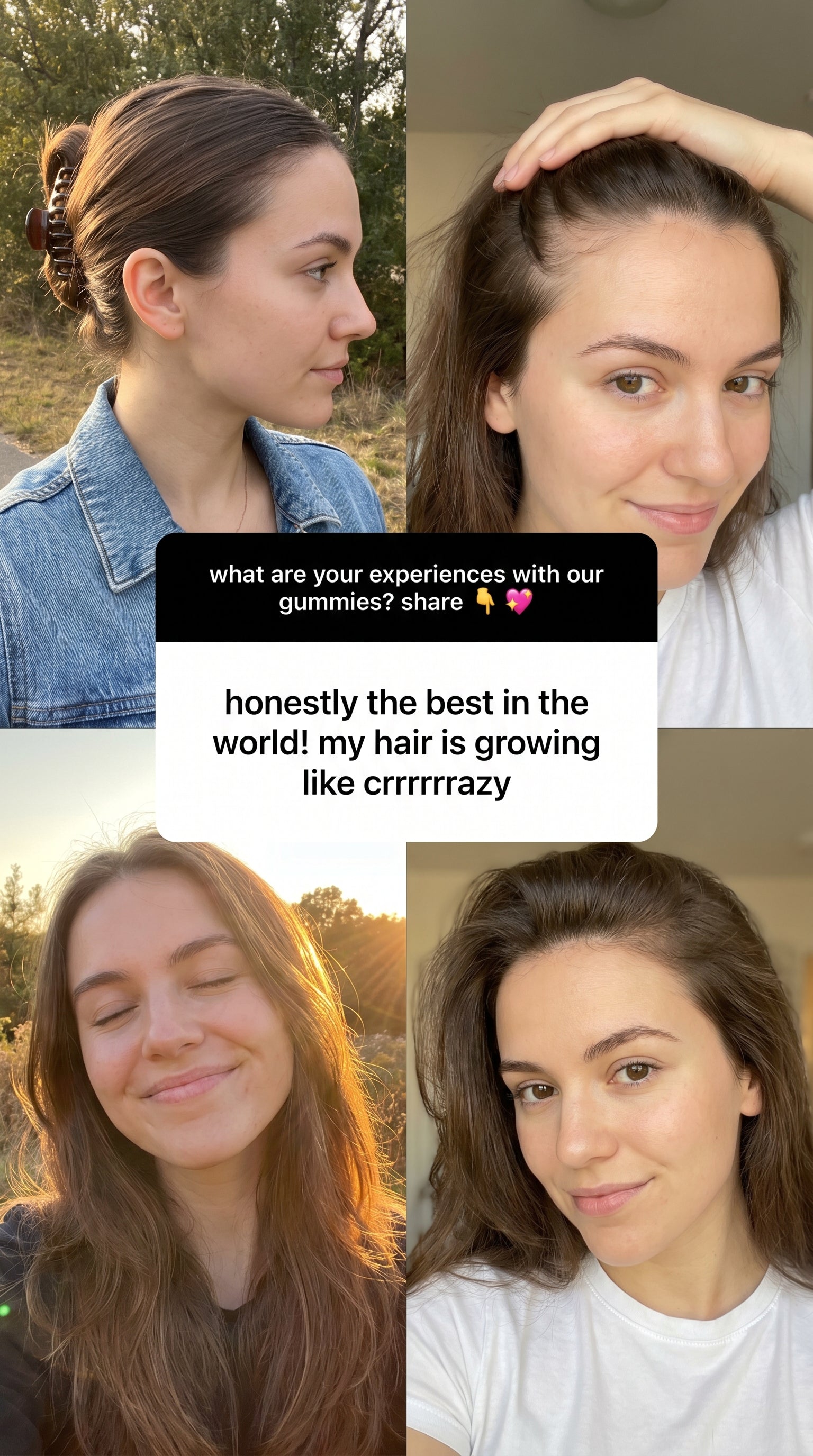
GrowPro Hair, Skin and Nails Gummies, 22.95 GBP
Sugar-free vegan gummies with biotin, zinc, silica and vitamins C, D3 and B12. Nutrients that contribute to the maintenance of normal hair, for people topping up a diet rather than fixing a deficiency.
See GrowPro GummiesWhich option suits which situation?
| Option | Risk | Evidence | Cost | Best for |
|---|---|---|---|---|
| Cosmetic routine | Very low | Strong for breakage | 15 to 60 GBP | Everyone, first |
| Low-level light device | Low | Modest, real | 200 to 900 GBP | Early pattern thinning |
| Microneedling course | Low if done properly | Moderate, small studies | 30 to 400 GBP plus | Committed, careful users |
| Platelet-rich plasma | Moderate | Contested | 1,000 to 2,500 GBP | Those who can fund repeats |
| Supplements | Low | Weak unless deficient | 15 to 30 GBP monthly | Confirmed shortfalls |
| Scalp micropigmentation | Low, permanent | Cosmetic, predictable | 1,000 to 3,000 GBP | Shaved or very short hair |
When should you stop shopping and see a GP?
No product is the right first step for some presentations. See a GP if hair comes out in discrete round patches, if the scalp is sore, red, scaly or shows signs of scarring, if loss is sudden and heavy rather than gradual, if it follows a new medicine or a serious illness, or if it arrives alongside fatigue, weight change or brittle nails. A GP can arrange blood tests and refer you to a dermatologist who can talk through the regulated medical routes available in the UK. Watermans is a cosmetics company and does not run clinics or assess scalps, so this is a genuinely different door rather than a soft sell. Our explainer on pattern hair loss helps you work out which conversation you are having. If your question is about products or a routine rather than a medical one, you can talk to Gail Waterman, our co-founder, as an AI avatar on the Watermans homepage.
Frequently asked questions
What are the safest hair growth treatments to start with?
Cosmetic products and a gentler routine. They carry the lowest risk, cost the least, and help regardless of whether your problem is loss, shedding or breakage. Devices are a reasonable second step once the basics are genuinely in place.
How long before any of this shows a difference?
Breakage improvements show in four to twelve weeks. Device courses need three to six months before a fair judgement, because the hair cycle itself is slow. Anything promising visible change in days is describing a cosmetic effect, not a growth effect.
Are laser caps and combs actually safe?
The risk profile is benign and reviews of the physical approaches place them among the better-supported non-medical options. The practical issues are cost and compliance rather than harm, because the effect depends on months of consistent use.
Is microneedling safe to do at home?
At shallow depths and with a scrupulously clean device, it is low risk. Deep needling, shared devices or poor hygiene turn a low-risk routine into a real one. If you are unsure about depth, have it done professionally.
Do hair supplements work?
They help if you are genuinely short of something. Recent systematic review evidence on commercial hair supplements is weak and inconsistent, and the biotin literature specifically finds benefit mostly in deficiency. Test rather than guess.
Can shampoo make hair grow back?
No. A cosmetic shampoo works on the hair fibre and the scalp environment. It can reduce breakage and make hair look fuller and healthier, which is a genuine visible benefit, but it does not change follicle biology.
Is PRP worth the money?
It is reasonable to try and wrong to present as settled. The published picture is genuinely mixed, protocols vary widely between clinics, and gains need repeat sessions to hold. Go in expecting uncertainty.
Are natural oils a safe alternative?
Most are safe on the hair and pleasant to use, and some help with condition and breakage. Patch test anything essential-oil based, dilute properly, and keep expectations at the cosmetic level. We look at frankincense oil for hair separately, with the practical steps.
What is the bottom line on safe hair growth treatments?
The most useful way to choose between safe hair growth treatments is to stop asking which one is best and start asking which problem you have and what you are willing to sustain. Identify loss, shedding or breakage first. Put the cosmetic routine in place properly, because it is the cheapest, the safest and the only group that helps in every scenario. Add a device if you will genuinely use it for six months. Approach clinic procedures with the uncertainty the literature actually shows rather than the certainty the brochure offers. And take anything sudden, painful or patchy to a GP instead of to a checkout. If a laser cap is one of the options you are weighing up, our honest guide to low level laser therapy sets out what the devices do and what the evidence actually supports.
If you would rather cover the basics from the inside too, the GrowPro hair vitamins take two a minute a day.
Watermans products are 100% cosmetic and do not treat medical hair loss. Individual results may vary.
GrowPro gummies is vegan, Watermans is made in the UK, and we have sold over 6.5 million bottles since 2012.
Sources and References
- NHS. Hair loss. Accessed August 2026.
- NHS. Vitamins and minerals: Iron. Accessed August 2026.
- Physical Treatments and Therapies for Androgenetic Alopecia. Journal of Clinical Medicine, 2024. PMC11313483.
- Evaluating the Effectiveness of Commercial Oral Supplements for Hair Growth: A Systematic Review and Meta-Analysis. Journal of Cosmetic Dermatology, 2026. PMC13063204.
- A Review of the Use of Biotin for Hair Loss. Skin Appendage Disorders, 2017. PMC5582478.
- Promises and Pitfalls of Regenerative Therapies for Androgenetic Alopecia: Platelet-Rich Plasma, Photobiomodulation. Medical Sciences, 2025. PMC12821594.