
What Causes Hair Damage? The Four Culprits and How to Stop Them
What causes hair damage is almost always something you are doing to the hair rather than something happening inside your body. Heat, bleach, friction and tension wear away the cuticle, the protective outer sleeve of each strand, and because hair is not living tissue it cannot rebuild what is lost. Understanding what causes hair damage matters because the wear is cumulative, so the fixes are all about prevention rather than repair.
Key takeaways
- Hair above the scalp is dead keratin. It has no blood supply and no self repair mechanism.
- The short answer to what causes hair damage is four things: heat, chemical processing, mechanical friction and tension.
- Damage is cumulative and permanent. The ends of long hair carry years of it.
- Conditioner and oils reduce future damage and disguise existing damage. Neither undoes it.
- Damage is a different problem from hair shedding and from hair loss, and needs a different response.

What is hair damage, physically?
Hair damage is the progressive loss of the cuticle and, once that is gone, of the protein structure underneath. A single strand has three layers. The medulla is a soft core, present in thicker hairs and largely irrelevant here. The cortex is the bulk of the strand, a bundle of keratin fibres held together by chemical bonds, and it is what gives hair its strength and elasticity. The cuticle is the outermost layer, five to ten overlapping scales deep, arranged like roof tiles pointing down toward the ends.
That layered structure is the key to what causes hair damage, because every cause on this page attacks the outermost layer first. Healthy hair has a smooth, intact cuticle. Light reflects off it evenly, which is shine, and strands slide past each other, which is why it feels soft and detangles easily. Damaged hair has cuticle scales that are lifted, chipped or missing entirely. Light scatters, so hair looks dull. Strands catch on each other, so it tangles and snaps. And with the sleeve gone, water and the cortex's own proteins escape more easily, so hair feels dry no matter how much conditioner you use.
The crucial point about all of this is that hair emerging from the scalp is dead. It has no cells, no blood supply and no capacity to mend itself. This is not a pessimistic framing, it is the single most useful fact in haircare, because it tells you that every pound and every minute is better spent on prevention than on repair.
What causes hair damage most: the four main culprits
The four main causes are heat, chemical processing, mechanical friction and tension. Almost everything else is a variation on one of them.
1. Heat styling
Straighteners, tongs and hot blow dryers do the fastest visible damage. Water trapped inside the shaft turns to steam and forces its way out, leaving microscopic cracks and bubbles. Research evaluating heat damaged hair finds measurable structural change well below the maximum temperature most irons will reach, which means the highest setting is rarely buying you anything except damage. Using heat on damp hair is worse still, because there is more water inside to boil.
2. Chemical processing
Bleach, permanent colour, perms and relaxers all work by forcing the cuticle open to reach the cortex, then altering the bonds inside it. Bleach is the harshest because it strips pigment and, in doing so, degrades the surrounding keratin. This is genuine, permanent structural damage, which is why bleached hair feels different forever and why the ends of highlighted hair carry every session you have ever had.
3. Mechanical friction
This is the quiet one, because no single instance feels like damage. Brushing, combing, towel rubbing and eight hours a night against a pillowcase all abrade the cuticle. Work quantifying the impact of braiding and repeated combing on natural African hair shows the effect is measurable rather than theoretical. Wet hair is at its most vulnerable, because water makes the fibre swell and stretch, so wet brushing does disproportionate harm.
4. Tension
Tight ponytails, buns, braids, weaves and extensions pull on the strand and, over time, on the follicle itself. This is the one cause on the list that can cross over from damaging the fibre to affecting the root, which is why persistent tight styling is worth taking seriously rather than dismissing as a purely cosmetic issue.

What causes hair damage that people overlook?
Beyond the big four, several everyday things cause more damage than most people expect, and they are easy to fix because nobody is attached to them.
- Chlorine and salt water. Both strip the lipid layer from the cuticle. Wetting hair with clean water before you swim means it absorbs less pool water, and rinsing straight afterwards makes a genuine difference.
- Sunlight. Ultraviolet light degrades keratin and fades colour. Long summers of unprotected exposure show up as dry, brittle ends by autumn.
- Hard water. Mineral deposits build up on the cuticle, leaving hair rough and dull and making it harder to rinse product out.
- Terry towelling. The looped surface catches and lifts cuticle scales. A microfibre towel or an old cotton t shirt does the same job far more gently.
- Elastic bands with metal joins. These snag and cut. Soft covered bands or spiral bands cost the same and do not.
- Over washing with a harsh shampoo. Strong detergents strip the natural oils that lubricate the cuticle. The fix is a gentler shampoo, not washing less often.
- Sleeping with wet hair. Combines the fragility of wet hair with hours of friction, which is the worst of both.
None of these will wreck your hair on its own. The problem is that most people are doing five of them at once, every week, for years.
Get a discount on the damaged hair range
Join the Watermans mailing list and we will email a discount code straight to your inbox, so you can try the damaged hair range for less. Vegan, made in the UK, over 5 million bottles sold since 2012.
What are the signs of damaged hair?
Once you know what causes hair damage, the signs are easy to read, because they are all consequences of a compromised cuticle, and they appear in a fairly predictable order as damage accumulates.
| Stage | What you notice | What is happening |
|---|---|---|
| Early | Less shine, slightly rough feel, more static | Cuticle scales beginning to lift |
| Moderate | Tangles easily, frizzes, dries out fast, colour fades quickly | Scales chipped, moisture escaping |
| Advanced | Split ends, white nodes, snapping, hair will not gain length | Cuticle gone in places, cortex exposed and fraying |
| Severe | Gummy or stretchy when wet, breaks when pulled gently | Structural protein loss in the cortex, usually chemical |
The stretch test is a quick way to place yourself on that table. Take one wet strand and pull gently. Healthy hair stretches a little and springs back. Damaged hair stretches further and does not recover. Severely damaged hair feels gummy and snaps. If you are at the gummy stage, stop all chemical processing and heat immediately and get a cut, because that hair will not recover.
Is hair damage the same as hair loss or shedding?
Hair damage, hair shedding and hair loss are three separate problems, and confusing them is the most common reason people spend money on the wrong thing. The distinction is simple once you have it.
- Hair damage and breakage happen along the length of the strand. The fibre fails and snaps, leaving short pieces with no bulb on the end. The follicle is completely fine. This is a haircare problem and it is what this page is about.
- Hair shedding is the growth cycle releasing hairs early, usually two to four months after a trigger such as illness, childbirth, surgery or crash dieting. Fallen hairs are full length with a small pale bulb at the root. It settles on its own once the trigger passes.
- Hair loss is the follicle producing progressively finer hair, or stopping altogether. It develops over years and shows as a widening parting, a sparser crown or a receding hairline. This one belongs with a GP.
Severe breakage convincingly mimics hair loss, because hair that snaps off near the scalp leaves the same thin, sparse appearance. Check the fallen hairs for a bulb, and check whether your parting has actually widened. If your parting is unchanged but your hair will not grow past a certain length, you have damage. Our explainer on what causes thinning hair covers the other two mechanisms in detail.

Can damaged hair be repaired?
Damaged hair cannot be repaired in any literal sense, and anyone telling you otherwise is selling you something. There are no cells to rebuild the cuticle and no mechanism to knit a split back together. What products genuinely do falls into three honest categories, and all three are worth having as long as you know which is which.
- Disguise. Silicones and film forming polymers coat the strand, filling gaps in the cuticle so hair looks glossy and feels smooth. Real and immediate, but it washes out.
- Substitute. Hydrolysed proteins are small enough to sit in damaged areas and temporarily bulk out the fibre, which is why protein products make weak hair feel firmer. Also temporary.
- Prevent. Conditioners and oils reduce friction so the next comb through does less harm. This is the only category that changes the trajectory, and it is where consistency beats intensity every time.
So the plan is always the same. Cut off what is beyond saving, stop the causes, then use the everyday products to slow the next round. Our guides to preventing split ends and argan oil for hair cover the practical routine.
Which products help with damaged hair?
The products worth your money are the everyday ones, because damage is caused by repetition and so is protection. A conditioner used at every wash does far more than an intensive mask used once a month.

Condition Me® Strengthening Conditioner
The most useful product on this page. It strengthens and detangles, which is exactly what reduces the friction that causes the next round of damage. Vegan and made in the UK.

Grow Me® Strength & Retention Shampoo
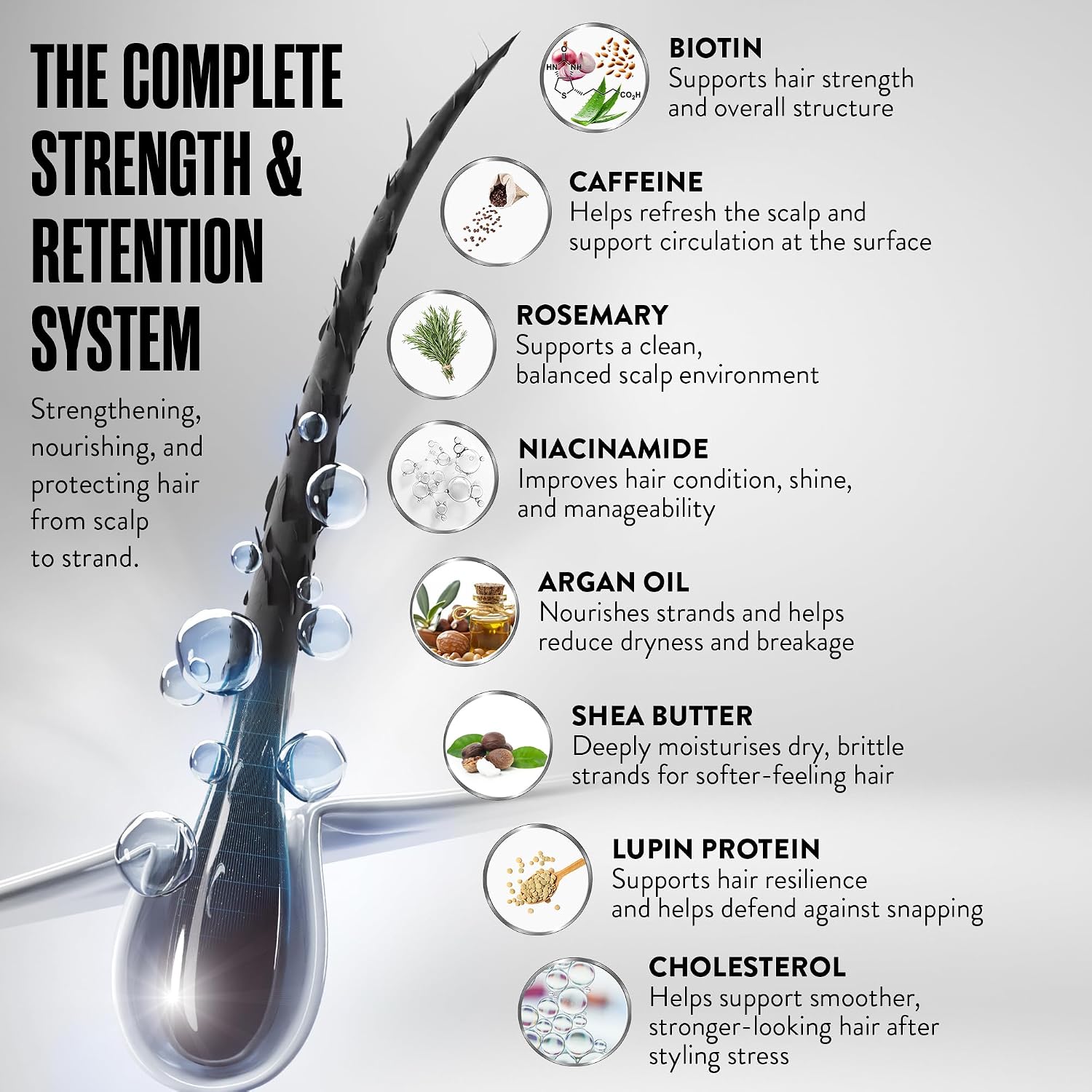
A non stripping daily shampoo with biotin, caffeine, niacinamide, lupin protein and argan oil. Swapping a harsh detergent for a gentler one is a genuine change, not a marketing one.

Grow Me® Shampoo & Conditioner Set
The pair together, which is the sensible answer if breakage is your problem, because conditioning every wash is the habit that actually moves the needle.
Watermans products are 100% cosmetic and do not treat medical hair loss. Individual results may vary.
How do you stop damage getting worse?
Stopping the damage getting worse is a matter of removing causes rather than adding products, and the order below is roughly by impact.
- Pause the chemical processing. If you bleach, stretch the gap between appointments and ask for the roots only. This is the biggest single lever available.
- Halve your heat use. Not zero, just half, and always on the lowest setting that works and never on damp hair.
- Condition every wash. Mid lengths to ends, every time, no exceptions.
- Detangle from the ends upward. Wide tooth comb, short sections, working up. This one habit prevents an enormous amount of snapping.
- Swap the towel and the hairband. Microfibre or a t shirt, and soft covered bands with no metal.
- Loosen your styles. If it pulls at your hairline, it is too tight. Vary where you place a ponytail rather than using the same spot daily.
- Protect from sun, chlorine and salt. Rinse before and after swimming, cover up in strong sun.
- Get a proper cut. Remove what is beyond help so the rest looks better and does not fray further.
Give it a full growth cycle before you judge. New hair takes about a centimetre a month to appear, so if your hair is shoulder length, seeing a genuinely undamaged head of hair means a year or two of doing the above consistently. That timescale is not a reason to skip it, it is a reason to start now.
When is damaged hair worth seeing a GP about?
Damaged hair itself is a haircare matter rather than a medical one, but a few signs point somewhere else and are worth a doctor's opinion. Speak to your own GP if:
- Hair is breaking very close to the scalp across the whole head, especially without heavy heat or chemical use.
- The scalp is itchy, sore, scaly, scarred or shiny where hair is thin.
- Your hairline is receding at the temples where you wear tight styles.
- Hair change comes with fatigue, weight change, feeling cold, or brittle nails and skin changes, which can point to a thyroid or nutritional issue.
- You are shedding heavily rather than breaking, and it has gone on beyond about nine months.
Watermans does not run clinics and cannot examine a scalp. Our part is the cosmetic half, which is helping you keep the hair you have in the best condition it can be while anything medical gets looked at by someone qualified to do it.
Frequently Asked Questions About What Causes Hair Damage
Can damaged hair go back to normal?
Not the damaged part. Hair above the scalp has no living cells and cannot rebuild its cuticle, so existing damage is permanent and the only way to remove it is to cut it off. What does return to normal is the new hair growing from the follicle, provided you stop doing whatever caused the damage.
What causes hair damage the fastest?
Bleach and high heat, especially used together or applied to hair that is still damp. Bleach forces the cuticle open and degrades keratin in the cortex, and heat boils residual water inside the shaft. Either alone is significant; combined they do serious structural harm in a single session.
Does hair damage stop hair growing?
No. Growth happens at the follicle and is unaffected by the condition of the strand above it. What damage does is make hair snap off at roughly the rate it grows, so length stalls. The growth has not stopped, the retention has.
How can I tell damage from hair loss?
Look at the fallen hairs and at your parting. Damage produces short broken pieces with no bulb, while shedding and loss produce full length hairs with a small pale bulb at the root. If your parting has not widened but your hair will not gain length, it is damage.
Do protein treatments repair damaged hair?
Hydrolysed proteins temporarily fill gaps in a damaged cuticle and make weak hair feel firmer, which is genuinely useful, but the effect washes out and no bond is permanently restored. Too much protein on hair that does not need it makes strands stiff and more likely to snap.
Is air drying always better than blow drying?
Mostly, but not absolutely. Hair swells while wet and stays vulnerable the whole time it is damp, so leaving very thick hair soaking for hours has its own cost. The practical answer is to air dry to about eighty percent, then finish on a low setting if you need to.
Does hard water damage hair?
Hard water leaves mineral deposits on the cuticle that make hair feel rough and look dull, and it makes product harder to rinse out. It is not damage in the structural sense, but the roughness increases friction, which does lead to damage over time. A shower filter or a periodic clarifying wash helps.
How long does it take to grow out damaged hair?
Hair grows at roughly one centimetre a month, so replacing shoulder length hair entirely takes around two years. Most people see a clear improvement long before that, because regular trims remove the worst of it while the healthier new growth moves down.
The Short Version
What causes hair damage is heat, chemical processing, friction and tension, applied over and over to a fibre that has no way of mending itself. That sounds bleak but it is actually good news, because every one of those four is something you control. Turn the irons down or off, stretch the gap between bleach appointments, condition at every single wash, detangle from the ends upward, swap the terry towel and the metal hairband, and loosen anything that pulls. Then cut off what is past saving and be patient while the new growth comes through at a centimetre a month. Products can disguise damage and slow the next round, but nothing on any shelf undoes it, and knowing that is what stops you wasting money on the promise that something might.
Sources & References
- Journal of Cosmetic Dermatology (2019), heat damaged evaluation of virgin hair, for structural change caused by thermal styling.
- International Journal of Cosmetic Science (2021), quantifying the impact of braiding and combing on the integrity of natural African hair, for the measured cost of mechanical grooming.
- Journal of Cosmetic Science (2011), Hair breakage index: an alternative tool for damage assessment of human hair, for how breakage is assessed.
- Rele and Mohile, Journal of Cosmetic Science (2003), Effect of mineral oil, sunflower oil, and coconut oil on prevention of hair damage, for the role of conditioning oils in limiting protein loss.
- NHS, Hair loss, for the distinction between breakage, everyday shedding and hair loss that warrants a GP visit.