


Why Are My Eyelashes Falling Out? Causes and What Helps
Short answer: losing one to five lashes a day is normal, because the whole lash line replaces itself roughly every three months. Losing noticeably more than that, or seeing gaps appear, almost always comes down to one of three things: something mechanical (extensions, curlers, waterproof mascara, rubbing), something at the lid margin, or something systemic that is affecting the hair on your head at the same time. The first group you can fix yourself in one lash cycle. The third group is a GP conversation and a blood test, not a serum.
Last updated: August 2026
Key takeaways
- One to five lashes a day is normal. A lash grows for around four to ten weeks, then rests and is pushed out. Some are always at the end of their run.
- Most lash loss is mechanical. Extensions and lifts, eyelash curlers, waterproof mascara and eye rubbing account for the large majority of it, and all four are free to stop.
- Give it a full cycle. Roughly three months to see real recovery, because every lash has to be replaced individually.
- Look at your scalp at the same time. Lashes and brows thinning alongside scalp shedding points at something systemic rather than something cosmetic.
- Sudden, patchy or one sided lash loss is worth showing a GP rather than working around.
- No cosmetic product can restart a follicle. What a conditioner does is stop you losing lashes to breakage, which is a smaller and more honest claim.
How many lashes should you lose in a day?
One to five, and you will rarely notice them. Each upper lid carries somewhere between 90 and 160 lashes, each lash grows for roughly four to ten weeks, rests, then gets pushed out by the one coming up behind it. Multiply that out and a lash line turns over completely about four times a year.
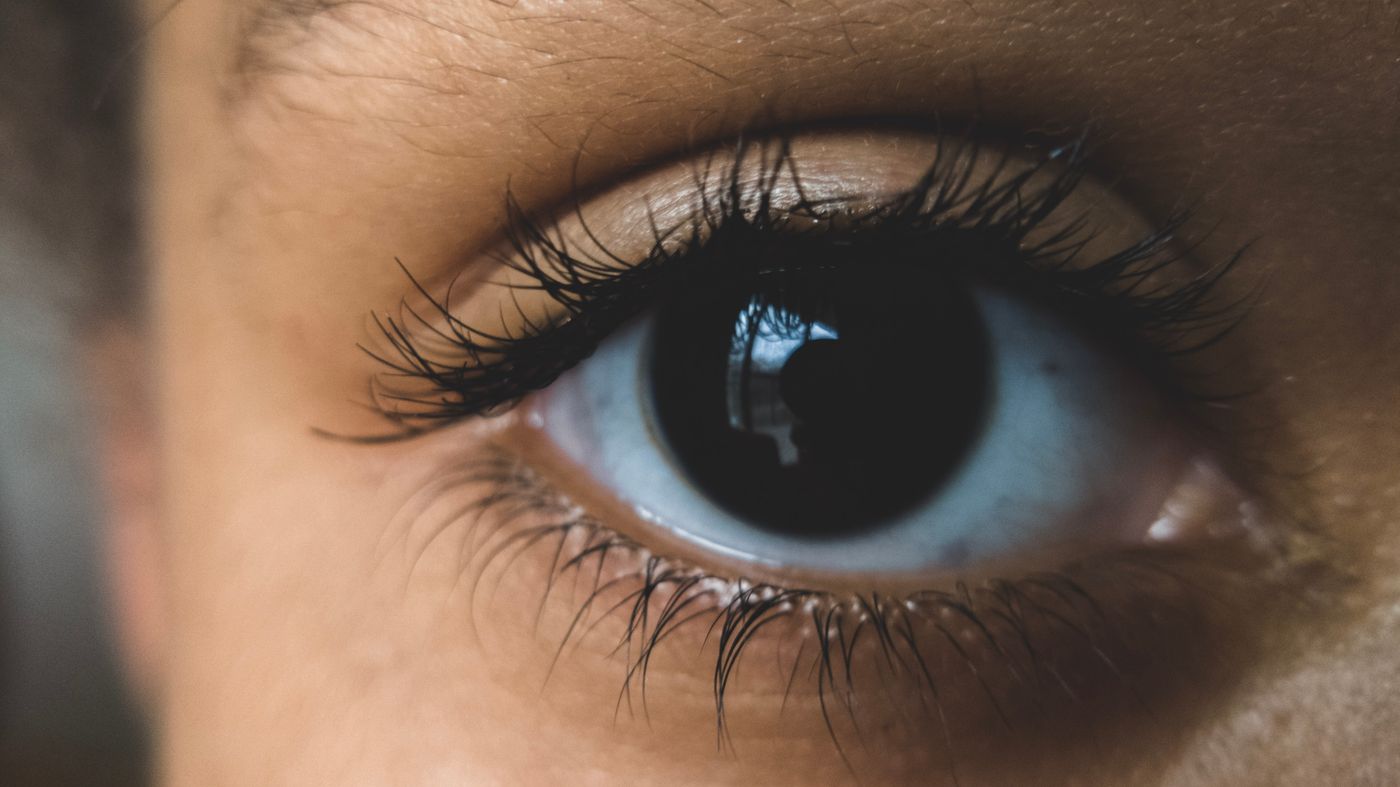
This matters because it sets the benchmark for worry. Finding a lash on your cheek is not a sign of anything. What is worth paying attention to is a change in the pattern: several coming away at once when you remove makeup, a visible gap or a shorter, sparser look developing over a few weeks, or one eye clearly different from the other.
Do this first: take a straight on photo of both eyes in daylight, no makeup, today. Lash changes are slow and memory is unreliable, and in six weeks this photo is the only thing that will tell you honestly whether anything has changed. Most people who think their lashes are disappearing find, on comparison, that one specific habit was the cause.
The mechanical causes, which is most of them
Lashes are short, fine hairs anchored in some of the thinnest skin on the body. They break and they pull out easily, and the everyday routine around them is surprisingly rough.
Extensions and lash lifts
This is the most common cause we see raised, and the mechanism is the same one behind traction damage on the scalp: constant tension on the follicle from the weight of the extension and the grip of the adhesive. Worn continuously for a year or more, without breaks, a thinner and patchier natural lash line is the well recognised result. Removal matters as much as application, and picking at a set that is growing out will take natural lashes with it every time.
Eyelash curlers
Not harmful in themselves, and genuinely useful. The damage comes from three specific habits: clamping over mascara that has already dried, holding too hard, and crimping right at the base where the lash is weakest. Any of those shears lashes off cleanly, which is why they look shorter rather than sparser.
Waterproof mascara
It is formulated not to come off, so removing it needs solvent, pressure or both, every single night. Occasional use is fine. Daily use is the single most common reason a lash line thins out over a year without anything else changing.
Rubbing your eyes
Hay fever, tiredness, screen strain, or simply a habit. Rubbing snaps lashes mid shaft and pulls others out at the root, and it is the hardest one to notice yourself doing.
Sleeping in makeup
Dried mascara stiffens lashes so they snap on the pillow, and the residue sitting at the lash line overnight is what tips a lid margin into irritation.

When the problem is the lid margin
If the skin right at the base of your lashes is red, itchy, sore, crusted in the mornings or persistently flaky, the hair is not the problem. Inflammation along the lid margin thins lashes on its own, and no amount of conditioning will get ahead of it while it continues.
This is worth a conversation with a pharmacist or your GP, because the answer is usually simple, cheap and nothing to do with cosmetics: warm compresses and careful daily cleaning of the lash line. Applying a serum on top of an inflamed lid margin tends to make both the irritation and the lash loss worse, so deal with this first and revisit the lashes afterwards.
When lash loss is a signal from the rest of your body
Lashes are hair, and hair is one of the first things the body deprioritises when something is off. If your lashes and brows are thinning at the same time as your scalp, the cause is very unlikely to be your mascara.
| Pattern you notice | What it often points at | Sensible next step |
|---|---|---|
| Outer third of both brows thinning, with tiredness, feeling cold or weight changes | Thyroid function | GP, and a simple blood test |
| Heavy scalp shedding starting 2 to 4 months after illness, surgery, birth or a stressful period | Telogen effluvium, a temporary whole body shed | Usually settles on its own over 6 to 9 months |
| Smooth, distinct round bare patches on lashes, brows or scalp | Alopecia areata | GP referral |
| General thinning with fatigue, breathlessness or heavy periods | Low iron or low ferritin | Ask for ferritin specifically, not just haemoglobin |
| Lash and brow loss alongside a new medicine or cancer therapy | A known effect of several medicines | Speak to the team who look after you before changing anything |
None of these responds to a cosmetic serum, and that is the whole point of listing them. Our guides to alopecia areata, thyroid related hair loss and working out why your hair is thinning go through each pattern properly, including which tests are worth asking for.
What about lash growth serums?
Worth being clear, because the category is confusing on purpose.
Conditioning serums, the ones built on panthenol, hyaluronic acid, peptides and oils, work on the lash you already have. They soften the fibre and reduce brittleness, so fewer lashes snap before they reach full length. That is a genuine benefit and a modest one, and it is the honest reason a lash line can look fuller after eight weeks of using one.
Anything promising dramatic new length in a fortnight is describing something a cosmetic is not supposed to be able to do. If a product bought over the counter genuinely lengthens lashes well beyond their normal range, the sensible question is what is in it and where it came from. Overseas marketplaces are the usual route by which something belonging in a pharmacy ends up on a UK bathroom shelf without any of the warnings that should come with it. If you are considering anything of that kind, that is a conversation to have with a healthcare professional first, not a purchase to make on a review score. Our companion guide on conditioning lash and brow care covers what the gentle formulas can and cannot do.
Get the shedding checklist
One free email. A single page to work out whether what you are seeing is normal turnover or a real change: the daily counts that matter for lashes and for scalp hair, the four blood tests worth asking your GP about and how to phrase the request, the timeline each common cause follows, and the six week photo method that settles it either way.
One email at a time, no spam, unsubscribe whenever you like.

What actually helps, in order of impact
Ordered by how much difference each one makes, rather than by how interesting it is.
- Take a break from extensions and lifts. Six to eight weeks minimum, ideally a full cycle. Nothing else on this list comes close if this is your cause.
- Change how you remove makeup. Soak a pad in a gentle micellar or oil based remover, hold it against closed lashes for fifteen seconds, then wipe once, downwards. Let the product dissolve the makeup instead of your hand dragging it off.
- Move waterproof mascara to occasional use. Keep it for the days it earns its place, and use a regular formula the rest of the time.
- Deal with an irritated lid margin. Warm compress, gentle daily cleaning at the lash line, pharmacist if it persists.
- Stop rubbing. If it is allergy driven, sorting the allergy out is what stops the rubbing.
- Use the curler before mascara, never after, and never at the very base.
- Condition them nightly. This is last for a reason. It reduces breakage, which is real but small compared with the four habits above.
- Get the blood tests if the pattern fits. Nothing on this list will help if the cause is your thyroid or your iron.
How long does recovery take?
The unavoidable arithmetic is that every lash has to be replaced individually, and that takes as long as it takes. Setting the expectation properly is what stops people abandoning a change that was working.
| Cause | First visible improvement | Full recovery |
|---|---|---|
| Curler or mascara breakage | 4 to 6 weeks | About 3 months |
| Extensions or lifts | 6 to 8 weeks | 3 to 6 months |
| Lid margin irritation | 2 to 4 weeks once settled | 3 months |
| Telogen effluvium | 3 to 6 months | 6 to 12 months |
| Low iron or thyroid | Only once levels are corrected | 6 to 12 months after that |

Straight answer on our own range: Watermans does not make an eyelash serum, and we would rather say so than imply otherwise. What we make is shampoo, conditioner and scalp care for the hair on your head. If your question is only about lashes, the honest recommendation on this page is a photo, a break from extensions, and your GP if the pattern fits, not a product.
If your scalp is shedding too
That is the part we can genuinely help with, and it works the same way: you cannot make a follicle do more than it is going to, but you can stop losing what you already grow to breakage. Less breakage means more of your hair reaching full length and staying there, which is what actually reads as thicker.

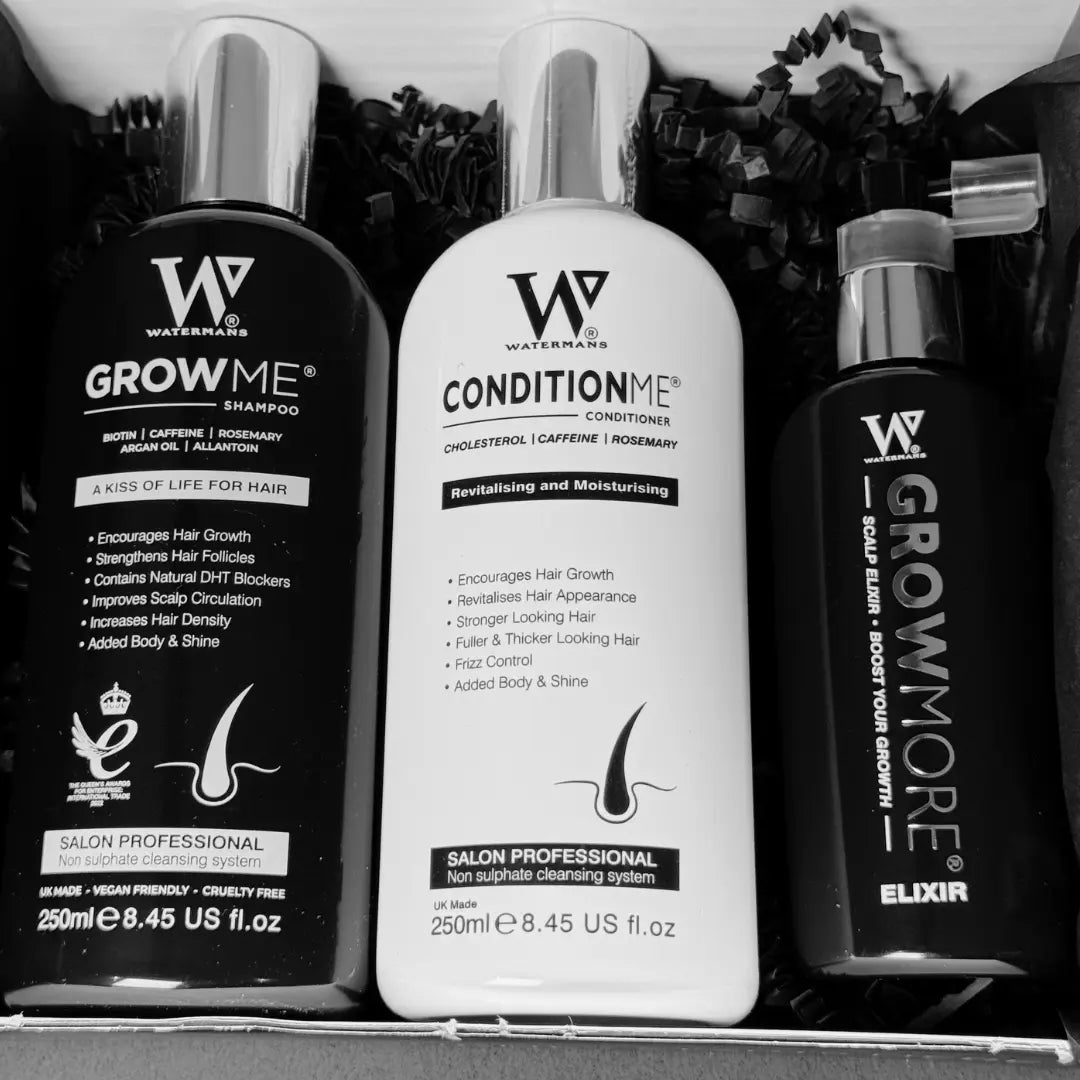
Grow Me® Sulfate Free Shampoo
For scalp hair, not lashes. A sulfate free formula with caffeine, biotin, rosemary and niacinamide alongside hydrolysed lupine protein, made to cleanse gently and reduce breakage for fuller looking hair while supporting a comfortable scalp environment.
£14.95 · vegan, made in the UK
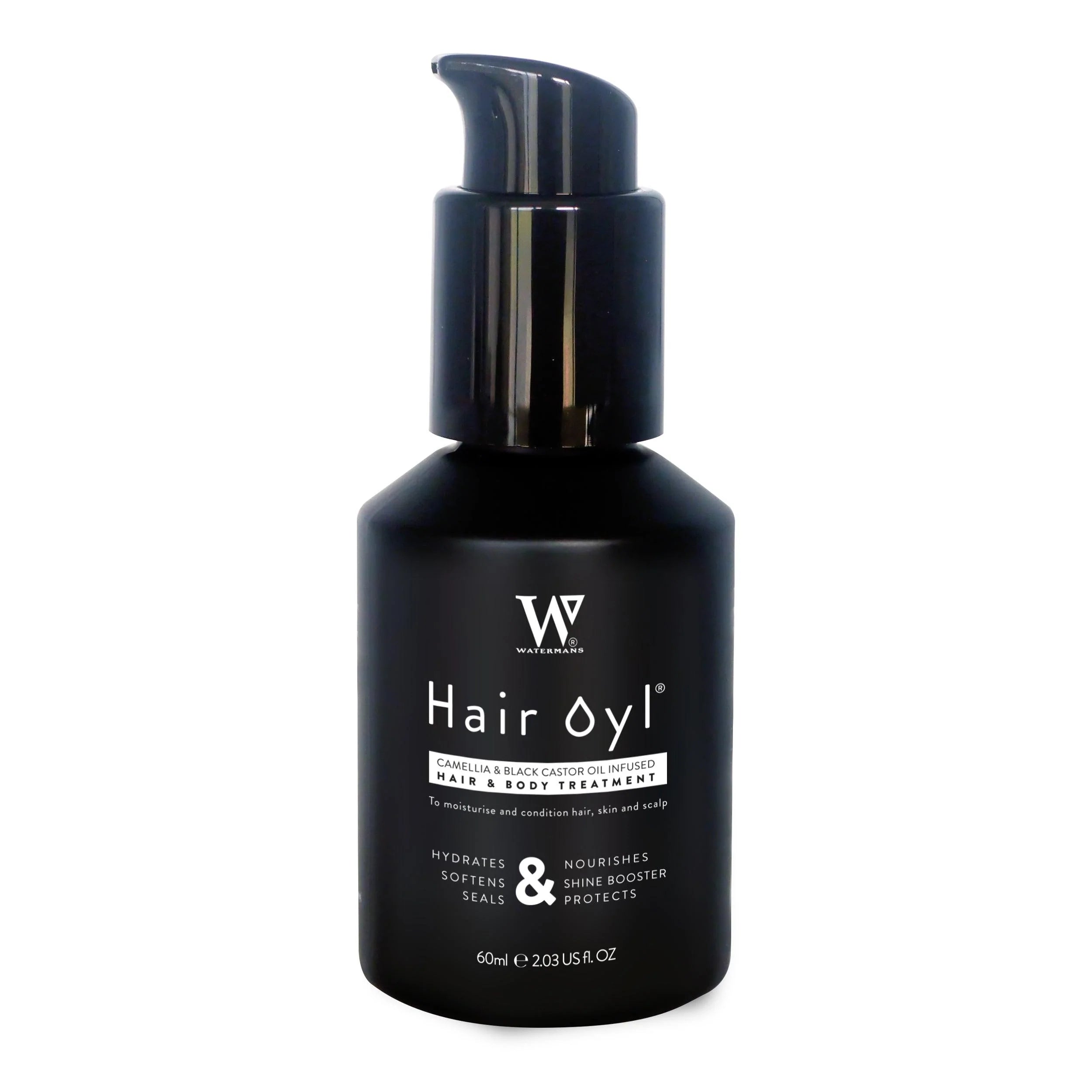
Camellia & Black Castor Hair & Body Oil
If you want something to condition sparse brows while they recover, a single drop of this on a clean spoolie is enough for both. Black castor oil with camellia oil and omega 3, 6 and 9. Cosmetic conditioning for the hairs you already have, and to be kept well away from the eye itself.
£24.95 · vegan, made in the UK
Watermans has sold over 5 million bottles since 2012, everything we make is vegan, and it is all made here in the UK.
Frequently asked questions
Why are my eyelashes falling out all of a sudden?
Sudden change usually has a recent trigger. Work backwards through the last two months: a new set of extensions, a switch to waterproof mascara, an eye infection or irritation, a period of illness or high stress, or a new medicine. If nothing fits and the loss is patchy or one sided, see your GP rather than waiting it out.
How many eyelashes do you lose a day?
One to five is normal. The whole lash line turns over roughly every three months, so a few are always finishing their cycle. Losing several at once during makeup removal, repeatedly, is the sign worth acting on.
Will my eyelashes come back after extensions?
Usually yes, provided the follicles have not been under tension for years. Expect first improvement at six to eight weeks and a proper recovery over three to six months, and stay off extensions completely during that time rather than booking a lighter set.
Can stress make your eyelashes fall out?
Yes, indirectly. A significant physical or emotional stress can push a large share of hairs into their resting phase at once, and lashes and brows are affected along with scalp hair. The shed typically starts two to four months after the event and settles over the following six to nine months.
Do eyelashes grow back if pulled out?
Generally yes, over about six to twelve weeks, though a lash pulled out is slower to return than one that shed naturally. Repeated pulling of the same lashes over a long period can damage the follicle permanently, so if pulling is compulsive rather than accidental, that is worth mentioning to your GP.
Does thyroid trouble cause lash loss?
It can, and the classic pattern is thinning at the outer third of both eyebrows, usually alongside fatigue, feeling cold or weight changes. It is checked with a straightforward blood test, so it is a cheap thing to rule out.
Should I use castor oil on my lashes?
As a conditioner it is fine and inexpensive, and it reduces the brittleness that causes breakage. It does not lengthen lashes and the evidence for that claim is anecdotal. Keep it out of the eye itself, since oils blur vision temporarily and can aggravate a dry or irritated eye.
Is it my mascara?
Quite possibly, if it is waterproof and you wear it daily. The mascara itself does little harm, the nightly removal does. Switching to a regular formula and changing your removal technique is the cheapest test available, and one lash cycle will tell you.
Can lash loss be a sign of something serious?
Most of the time it is mechanical and harmless. The patterns worth having looked at are patchy bare areas, loss on one side only, loss alongside scalp shedding or brow thinning, and any lash loss with pain, vision changes or persistent redness. None of that is a reason to panic, and all of it is quick to check.
Do supplements help lashes?
Only if you are genuinely short of something. Correcting low iron helps hair everywhere, including lashes. Taking biotin when your levels are already normal does not, and high dose biotin can interfere with several common blood tests, including thyroid ones, so tell your GP if you take it.
The honest bottom line
Take the photo, work through the mechanical causes first because that is where nearly all of the answer sits, and give it a full three month cycle before you judge anything. If your lashes are thinning alongside your brows and your scalp, skip the cosmetics entirely and go and get your bloods done. Everything else is patience.
Watermans products are 100% cosmetic and do not treat medical hair loss. Individual results may vary.
This article is general information from Watermans, a UK hair care brand, and is not medical advice. We do not sell eyelash products. Speak to your GP or optometrist about any lash loss that is sudden, patchy, one sided, or accompanied by pain, redness or changes in vision.