Oestrogen Hair Effects: How the Hormone Shapes Hair Growth
Oestrogen hair effects come down to one thing: the hormone lengthens the growing phase of the hair cycle. About 85% of scalp follicles are actively growing at any moment and around 15% are resting, and oestrogen shifts that balance towards growth. Hair looks fuller because more of it is present at once, not because anything is growing faster. When levels drop, the balance swings back and a wave of hairs rests together.
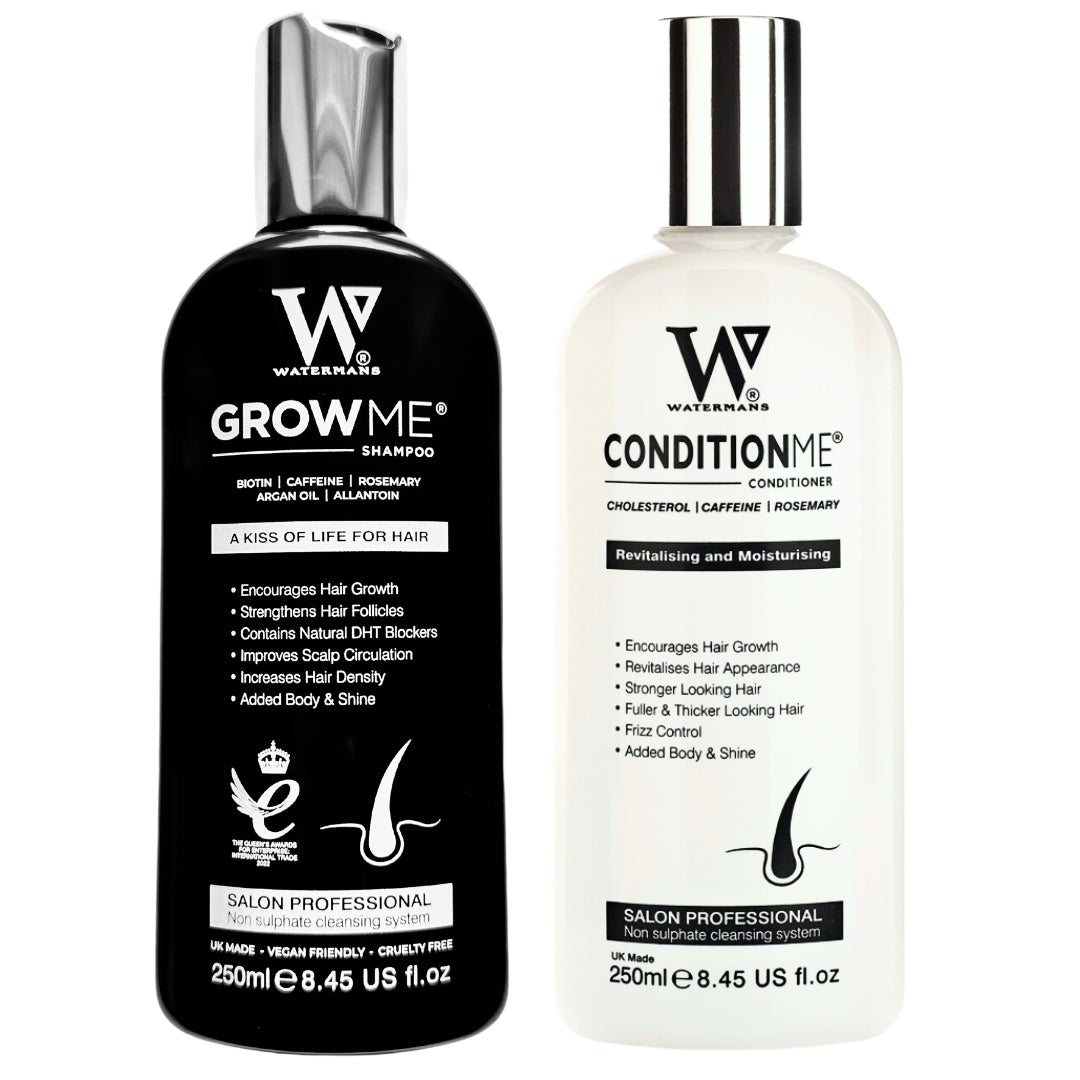
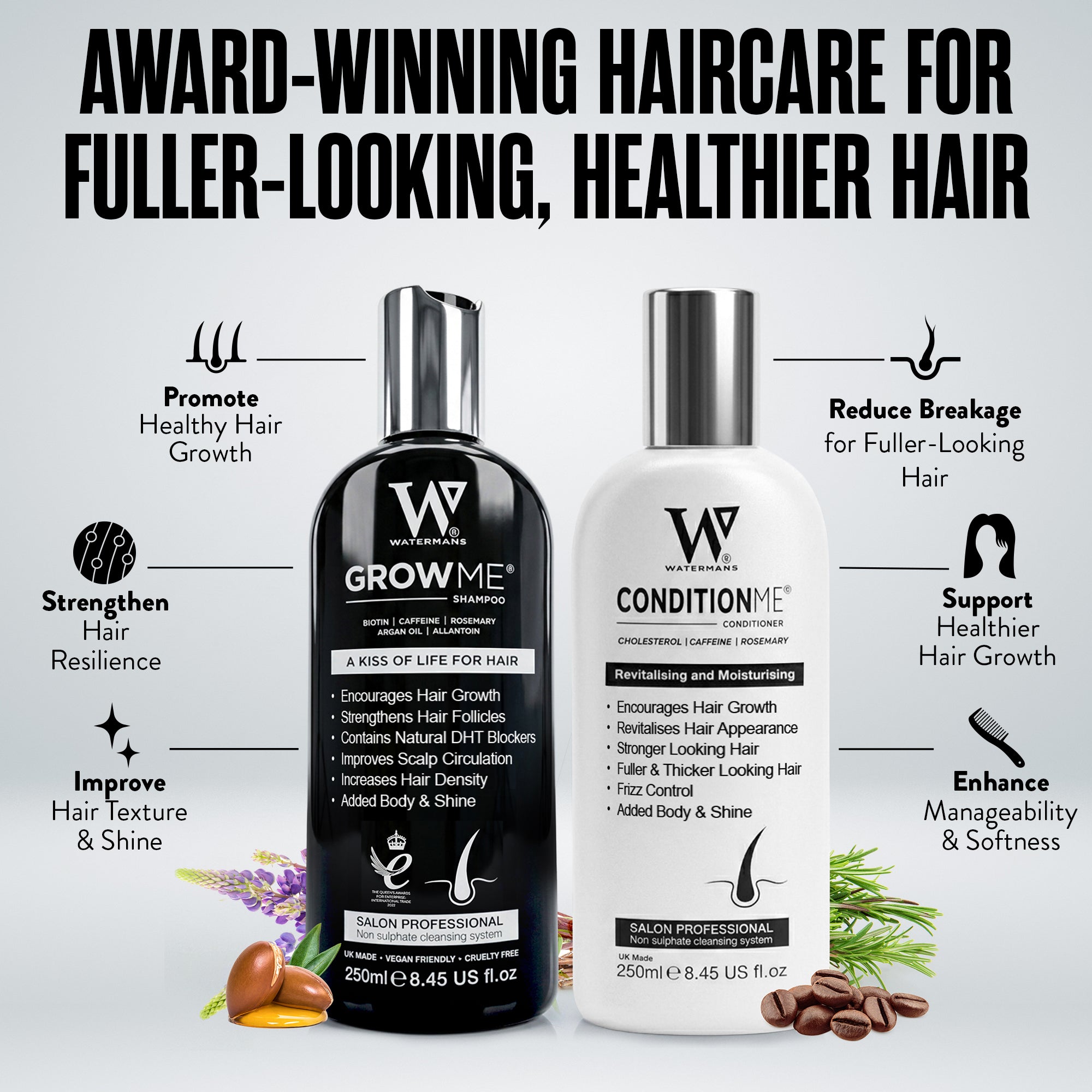
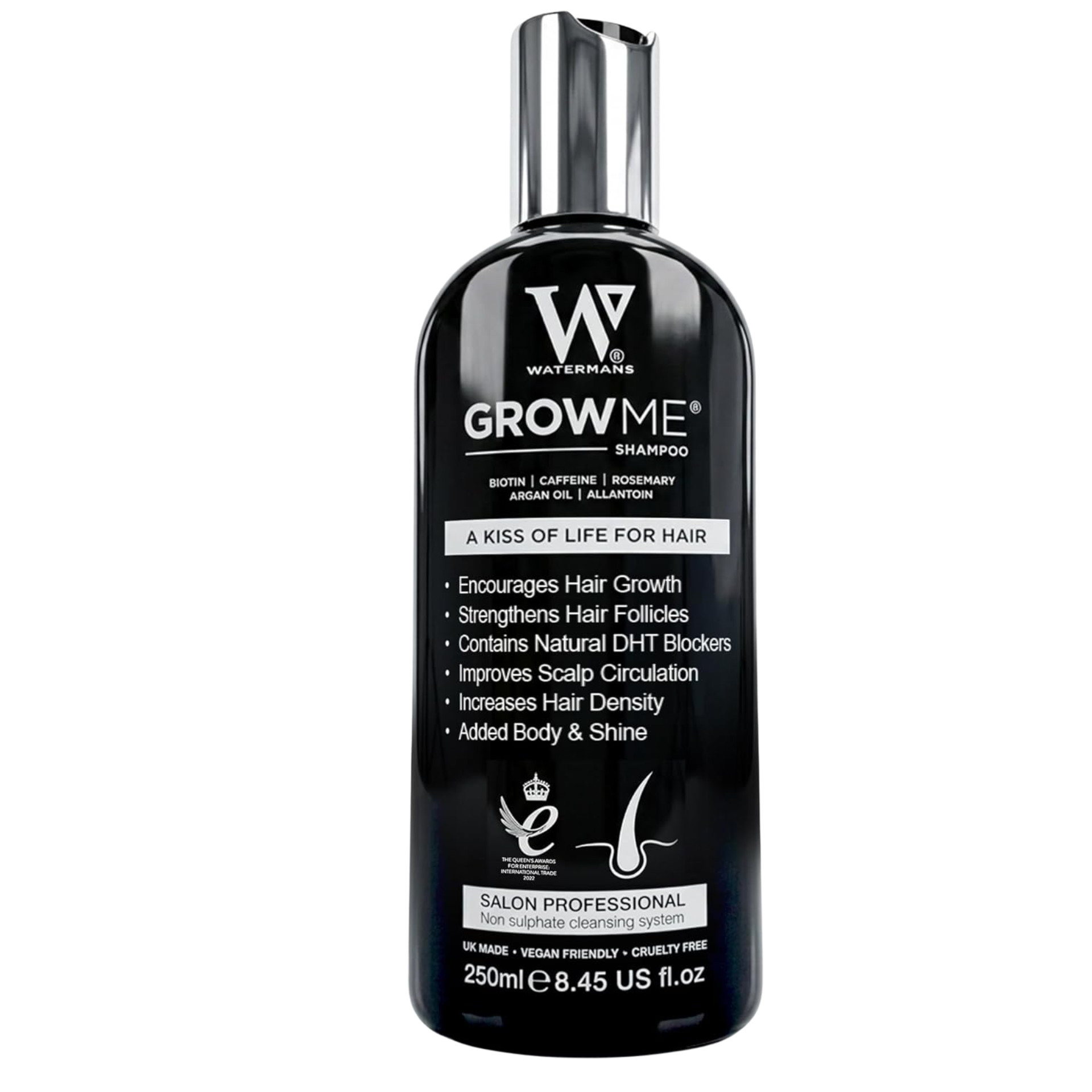
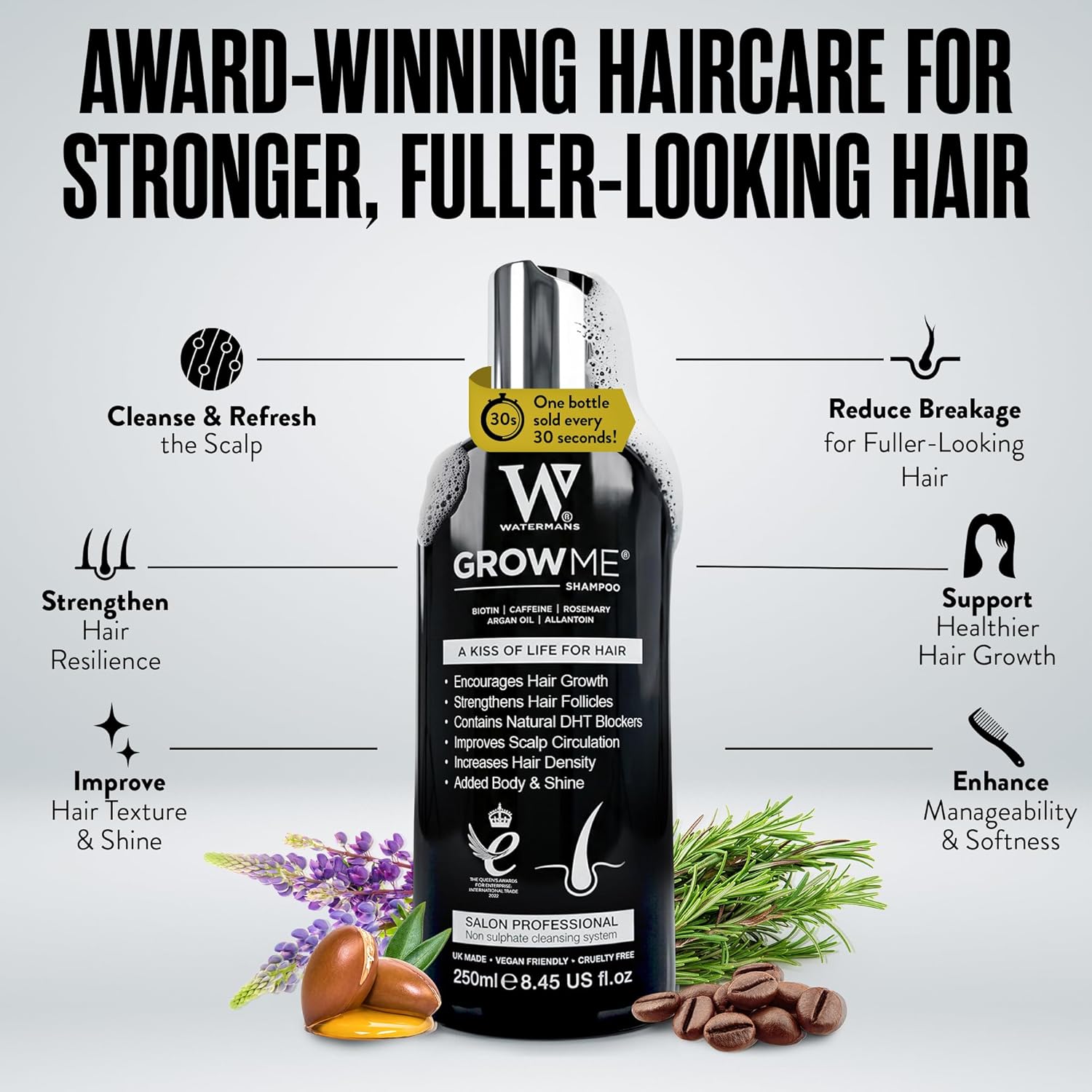
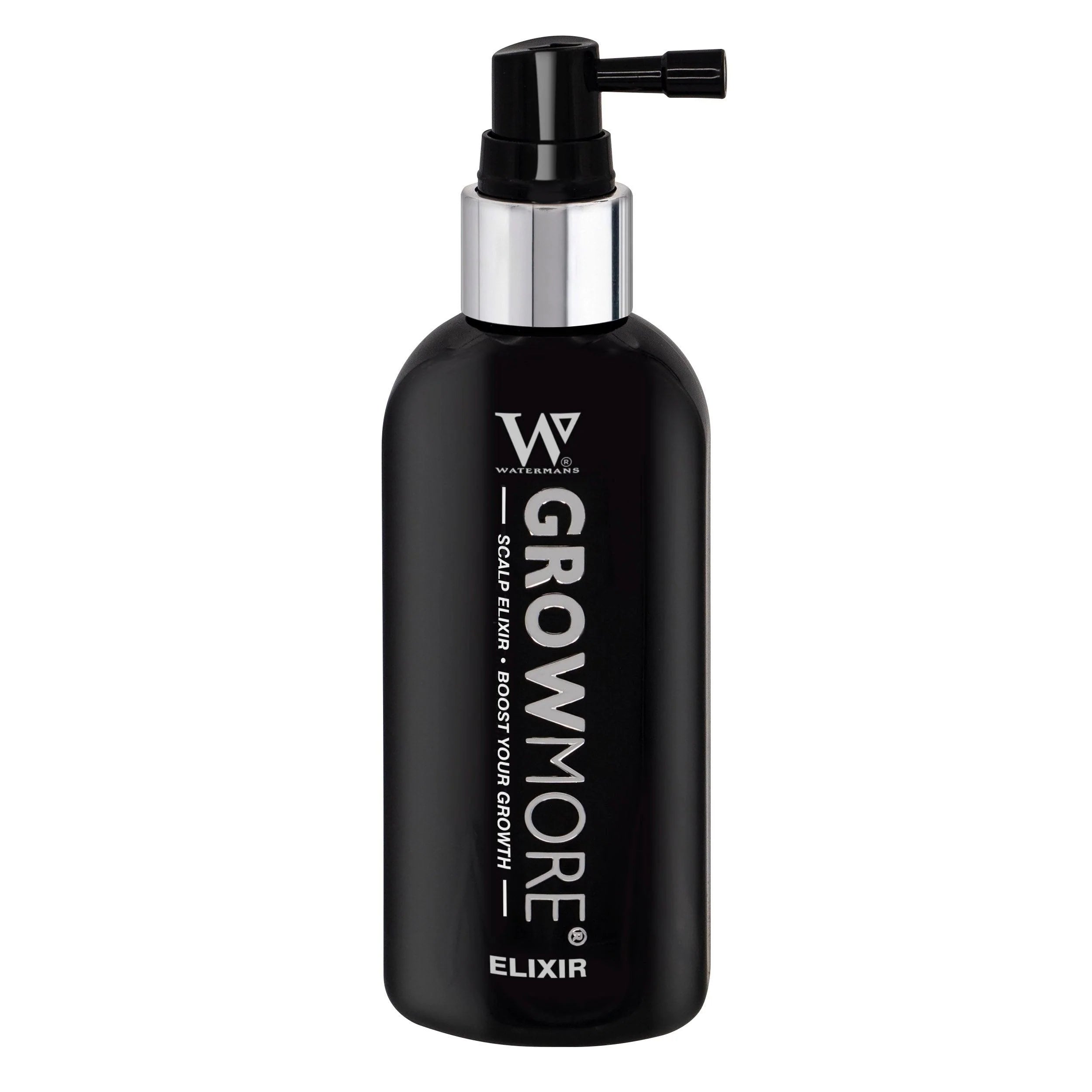
Our hair growth shampoo
Grow Me® Hair Growth Shampoo, £14.95. A sulphate free daily shampoo that supports a healthy scalp environment and helps reduce breakage, so lengths hold on and look fuller.
Key takeaways
- Oestrogen extends the growing phase. It does not make individual hairs grow faster or thicker.
- Pregnancy hair is postponed shedding, not new growth. The postponed hairs are released afterwards.
- A hormonal shed usually appears two to three months after the change, not immediately.
- Menopausal thinning is two mechanisms at once: less oestrogen, and unopposed androgen effects at the parting.
- Iron and thyroid problems cause an identical diffuse shed and are free to check with your GP.
- Nothing cosmetic changes your hormones. Cosmetic care protects the hair you already grow.
What are oestrogen hair effects, and how do they actually work?
Oestrogen hair effects are the changes in density, shedding rate and texture that follow a rise or fall in circulating oestrogen. The hormone acts on receptors in the follicle to prolong anagen, the active growing phase, which keeps more hairs on the head simultaneously. The follicle count never changes. What changes is the proportion of those follicles that happen to be growing rather than resting.
The numbers make this concrete. DermNet describes a follicle growing for roughly four years, then resting for about four months, after which the old hair is pushed out by the new one coming up beneath it. Because of that four month lag between a hair entering rest and actually falling, every hormonal event in this article shows its consequences a season late.
That delay is the most misunderstood part of the whole subject. People connect a shed to whatever happened last week, when the real trigger was two or three months earlier. Working backwards by a full season, rather than a fortnight, is usually what identifies the actual cause.
Why timing confuses almost everyone
A hair that is signalled to stop growing today does not fall out today. It sits in the resting phase for around four months first. So when you notice a heavy shed in November, the question to ask is what happened in August, not what changed last week.
Why does pregnancy make hair look so much thicker?
Pregnancy holds hairs in the growing phase that would otherwise have rested and fallen. Sustained high oestrogen keeps anagen running past its natural end point, so the normal daily loss of up to about 100 hairs slows dramatically and hair accumulates. The apparent thickness is roughly nine months of ordinary shedding that has been deferred rather than prevented.
Because it is deferred, it is owed. Once oestrogen falls sharply after birth, all those held hairs move into rest at once and are released together over the following months. That is postpartum shedding, and it is a normal, self limiting correction rather than a sign of damage. Our guide to what postpartum hair loss is and how long it lasts covers the recovery timeline in detail.
Knowing it is a correction changes how you respond. The hair was borrowed, not lost, and the follicles releasing it are healthy and still cycling.

High oestrogen in pregnancy holds hairs in the growing phase for longer than usual.
What causes the shed after childbirth or after stopping the pill?
Both events share one mechanism: a sharp fall in oestrogen releases hairs that were being held in the growing phase. The medical name is telogen effluvium, and DermNet notes that a shock to the system can move as many as 70% of growing hairs into rest at once, affecting up to half the hair on the scalp. Childbirth and discontinuing the contraceptive pill both appear on its list of recognised triggers.
The pattern is diffuse rather than patchy. Hair comes out evenly from all over the scalp, the fallen hairs are full length with a small pale bulb at the root, and the volume genuinely is higher than normal. It is alarming precisely because it is sudden, but it is the least worrying kind of hair change because the follicles themselves are undamaged.
Recovery is the default. Most sheds settle within six to twelve months once the trigger has passed, and our guide to what causes telogen effluvium sets out how to tell it apart from the slower patterns.
| Trigger | When the shed appears | How long it usually lasts | Pattern |
|---|---|---|---|
| Childbirth | 2 to 4 months after birth | 6 to 12 months | Diffuse, heaviest at the temples |
| Stopping the contraceptive pill | 2 to 3 months after stopping | 3 to 6 months | Diffuse |
| Illness with fever, or surgery | 2 to 3 months after the event | 3 to 6 months | Diffuse |
| Thyroid disorder or low iron | Gradual, ongoing | Until the cause is corrected | Diffuse, persistent |
| Perimenopause | Gradual over years | Ongoing | Widening parting, crown |
Get a discount on the hormonal hair shedding range
Join the Watermans mailing list and we will email a discount code straight to your inbox, so you can try the hormonal hair shedding range for less. Made in the UK, over 6.5 million bottles sold since 2012.
How do oestrogen hair effects change around the menopause?
Around the menopause, oestrogen falls gradually rather than crashing, so the hair change is slow and easy to miss until a parting has visibly widened. The NHS puts the menopause usually between ages 45 and 55. The loss of oestrogen removes the influence that was keeping follicles in growth for longer, and average density drifts down over years rather than months.
There is a second mechanism running alongside it, and conflating the two is the most common error on this subject. As oestrogen falls, the relative influence of androgens rises, and androgen sensitive follicles at the parting and crown begin to miniaturise in the female pattern. That is why menopausal thinning concentrates on the top of the head instead of spreading evenly, and it is why menopausal thinning behaves differently from a simple shed.
NICE guideline NG23 covers menopause care in the UK, and hormone therapy of any kind is prescription only and arranged through a GP. That decision sits well outside what a hair care company should be commenting on, and we do not.

Around the menopause, falling oestrogen and rising relative androgen influence act on hair at the same time.
Are hair loss, hair shedding and hair breakage the same thing?
These are three distinct problems and only two of them involve hormones at all. Sorting out which one you have is more useful than any product decision, because the correct response to each is completely different and the wrong response wastes months.
Hair loss affects the follicle itself, as in female pattern loss, where follicles miniaturise over years and the parting widens. Hair shedding affects the cycle, as in telogen effluvium, where healthy follicles release hair early and then recover. Hair breakage affects the fibre, where the hair snaps along its length from heat, bleach or tension, and has nothing to do with oestrogen whatsoever.
Check the root end of the fallen hairs. A shed hair carries a small pale bulb. A broken hair has a blunt or frayed end and no bulb at all. That one observation sorts the majority of cases in under a minute, and it costs nothing.

A shed hair carries a pale bulb at the root. A broken hair has a blunt end and no bulb.
What can you actually do about oestrogen hair effects?
Separate what is medical from what is cosmetic, and act on both honestly. The medical side belongs with a GP: blood tests for iron and thyroid function, and any conversation about hormone therapy. Those are free on the NHS and they rule out the causes that no shampoo will ever touch.
The cosmetic side is about retention. Hair grows at roughly a centimetre a month whatever you do, so the only variable you genuinely control is how much of that growth survives long enough to be seen. During a hormonal shed the hair you keep is doing extra work, and breakage on top of shedding is what turns a temporary problem into a visibly thin year. Condition every wash, keep heat low, and stop pulling it back tightly.

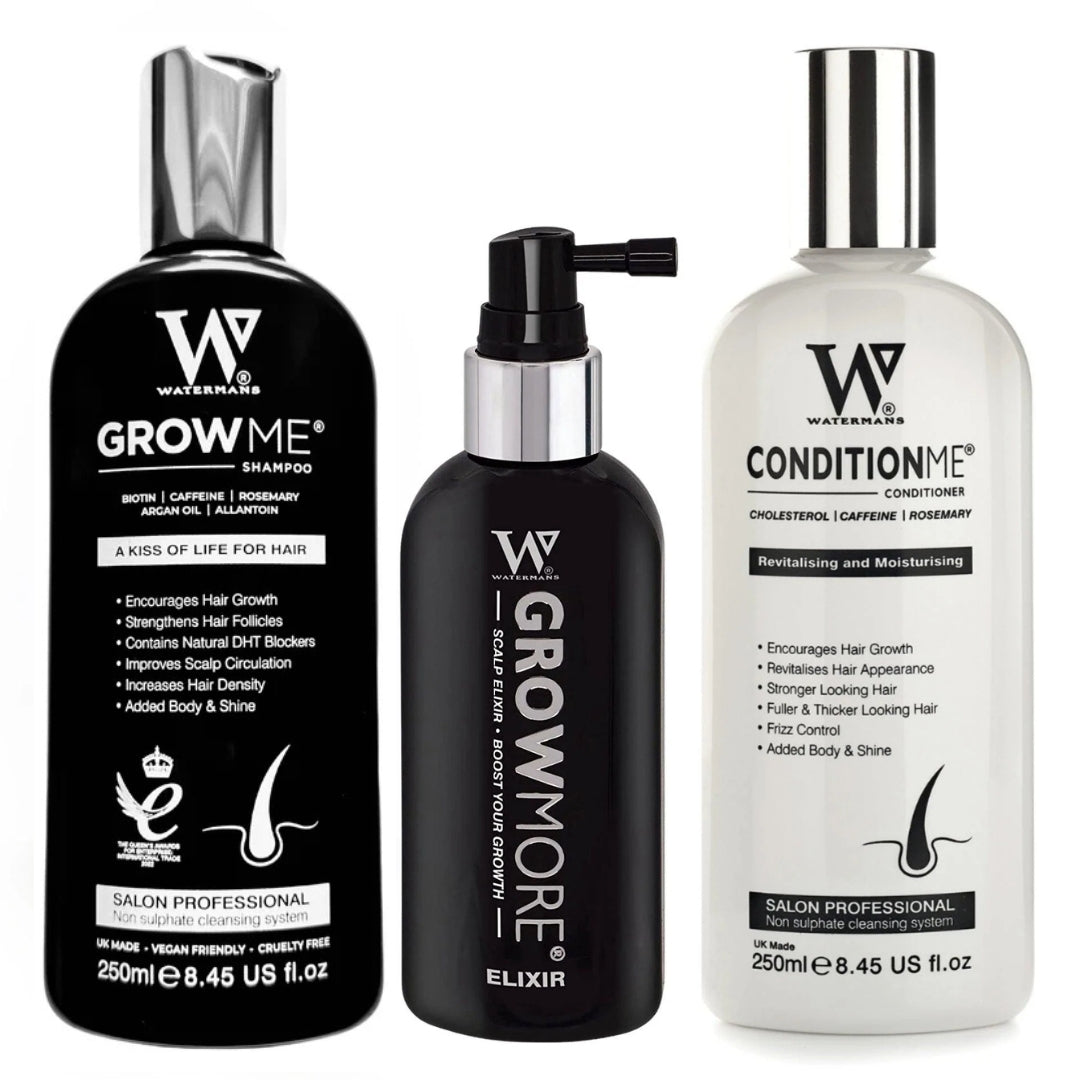
A cosmetic hair growth shampoo that cleanses gently and supports a healthy scalp environment, formulated to reduce breakage so more of what you grow reaches visible length. Vegan and made in the UK, from a brand that has sold over 6.5 million bottles since 2012.
£14.95

Condition Me® Hair Growth Conditioner
Conditioning after every wash is the highest value habit during a shed. It smooths the cuticle, makes combing far less damaging and leaves stronger looking strands through the mid lengths and ends.
£13.95

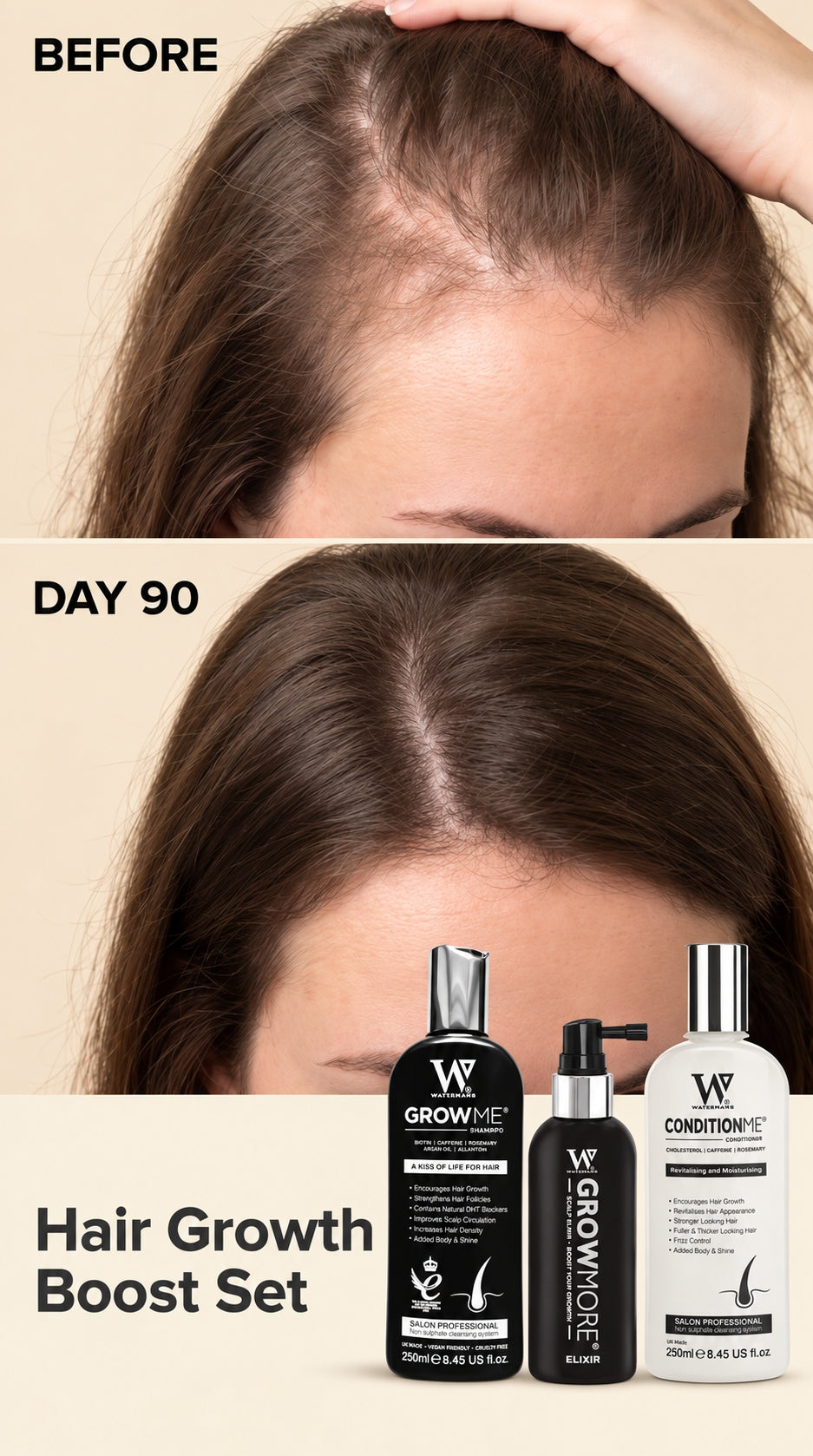
A kit put together for hair going through menopausal change, combining the cleanse and condition steps with the leave in scalp step in one routine. Cosmetic support for fuller looking hair, not a hormone product.
When should you see a GP about hormonal hair change?
See your GP when shedding is heavy beyond six months, when hair falls in discrete round patches rather than diffusely, when the parting is visibly widening, or when hair change arrives alongside fatigue, weight change, irregular periods or feeling the cold. Those combinations point to something testable rather than to ordinary hormonal fluctuation.
Ask specifically about ferritin and thyroid function. DermNet lists both iron deficiency and thyroid disorders among the standard triggers of telogen effluvium, they are cheap to check, and correcting either resolves the shedding that comes with it. Our guide to thyroid related hair loss explains what that pattern looks like.
Watermans does not run clinics, offer assessments or comment on medicines. We make cosmetic hair care, and the limit of what it does is stated plainly on every page. If your question is about products or a routine rather than a medical one, you can talk to Gail Waterman, our co-founder, as an AI avatar on the Watermans homepage. To keep a fair record through any HRT change, see our guide to HRT hair monitoring.
Frequently asked questions
What are the main oestrogen hair effects on the scalp?
Oestrogen extends the growing phase of the hair cycle, so more follicles stay in active growth at once and fewer sit in rest. The visible result is denser looking hair that sheds less. When levels fall, that extension is withdrawn and a wave of hairs move into rest together.
Why does hair look so much thicker during pregnancy?
Nothing new is growing. Sustained high oestrogen holds hairs in the growing phase past the point where they would normally have rested and fallen. Roughly a year of ordinary shedding is postponed rather than cancelled, which is why the hair looks unusually full.
How long does postpartum shedding last?
It usually peaks around two to four months after birth and settles within six to twelve months. The hairs being lost are the ones that were held back during pregnancy, so the shed is a return to normal rather than a new problem. Talk to your GP if heavy shedding is still going at a year.
Do oestrogen hair effects explain menopausal thinning entirely?
No, and this is where most articles oversimplify. Falling oestrogen removes a protective influence, but the thinning pattern that follows is usually androgen driven, which is why it concentrates at the parting and crown. Two separate mechanisms are running at once.
Can coming off the contraceptive pill cause shedding?
Yes. DermNet lists discontinuing the contraceptive pill among the recognised triggers of telogen effluvium. The shed typically shows up two to three months after stopping and settles on its own, following the same pattern as any other hormonally triggered shed.
Does any shampoo change your oestrogen levels?
No, and any product claiming to is one to walk away from. Shampoos and conditioners act on the hair fibre and the scalp surface. Watermans products are cosmetic: they reduce breakage so the hair you do grow survives to visible length, and they do nothing to your hormones.
Should I get a blood test before worrying about my hormones?
Yes, because the two most common causes of diffuse shedding are not hormonal at all. Iron deficiency and thyroid problems are both listed by DermNet among the usual triggers, both cause exactly the same diffuse shed, and both are free to check with your GP.
How much daily hair fall is actually normal?
DermNet puts normal loss at up to about 100 hairs a day from the comb, brush, basin and pillow combined. Most people never count, so a sudden awareness of hair on the pillow often reflects a real change rather than an imagined one. Counting for three days gives you a baseline.
What is the bottom line on oestrogen hair effects?
Oestrogen hair effects are a story about timing rather than quantity. The hormone holds hairs in the growing phase, so density rises when levels are high and a wave of shedding follows when they fall, roughly two to three months later. Pregnancy hair is borrowed, postpartum shedding is repayment, and menopausal thinning is a slower process with a second androgen driven mechanism layered on top.
Get iron and thyroid checked before assuming hormones are the whole answer, work backwards a full season when hunting a trigger, and protect the hair you have while the cycle resets. Nothing cosmetic will change your hormones, and anything claiming otherwise is worth ignoring.
If breakage during a shed is the part you want to tackle today, a gentle daily hair growth shampoo plus conditioner is the simplest way to keep more of what you grow.
Watermans products are 100% cosmetic and do not treat medical hair loss. Individual results may vary.
Sources & references
Every claim above that touches health, nutrition or physiology is drawn from the following sources, each checked at the time of writing.
- DermNet: Telogen effluvium (85% anagen / 15% telogen, four year growth phase, up to 100 hairs a day, up to 70% shifted by a shock, triggers including childbirth and stopping the pill)
- NHS: Menopause (usually affects women between 45 and 55)
- NICE guideline NG23: Menopause (UK menopause care guideline)
- NHS: Hormone replacement therapy (HRT) (hormone therapy is prescription only and arranged through a GP)
- NHS: Hair loss (when to see a GP about hair change)