How to Increase Ferritin Levels Hair Growth Depends On
To increase ferritin levels hair growth depends on, you need three things: a blood test that gives you an actual number, a consistent rise in the iron you absorb rather than just the iron you eat, and patience. Iron stores rebuild over three to six months, and hair needs another full cycle after that before the change is visible. Ask your GP for a ferritin test before you buy anything.
Our hair growth shampoo
Grow Me® Hair Growth Shampoo, £14.95. A sulphate free daily shampoo that supports a healthy scalp environment and helps reduce breakage, so lengths hold on and look fuller.
Key takeaways
- Test first, always. Ferritin is a simple blood test. Guessing risks both taking iron you do not need and missing a different cause entirely.
- The hair threshold is genuinely disputed. Laboratories flag deficiency low, many hair specialists prefer 50 or above. Good sources disagree and we are not going to pretend otherwise.
- Absorption beats intake. Vitamin C alongside iron helps. Tea, coffee and calcium at the same meal work against you.
- Shedding is the pattern to expect, not patches and not a receding hairline. Low iron drives a diffuse, all over thinning.
- Timeline: 3 to 6 months to rebuild stores, then 3 to 6 more before hair shows it.
Why does ferritin matter for hair at all?
Ferritin is the protein that stores iron, so a ferritin reading is a snapshot of your iron savings rather than the iron circulating right now. Hair follicles are among the most metabolically demanding structures in the body, dividing faster than almost any other cell type, and the body ranks them well below the heart, brain and muscles when supplies run short. Hair is a luxury the body drops early.
That is why ferritin can be low while a standard full blood count looks normal. You can have enough iron in circulation to avoid anaemia and still have run the savings account down far enough that the follicles notice. It is also why people are told their bloods are fine when the specific number that matters for hair was never measured.

What does the evidence actually show?
The link between iron stores and hair is real but softer than the internet suggests. A 2026 case control study in Dermatology Reports examined serum ferritin and hair iron content against measured hair diameter and density, and found a correlation between iron status and those measurements. A 2025 study in Cureus assessed serum ferritin in women with telogen effluvium and reported lower levels in that group than in controls. If you have a ferritin result in hand and want to know what it means for your hair, our guide to ferritin and hair loss explains the NICE threshold and why a normal number can mislead.
Where the sources part company is on the threshold. Laboratory reference ranges are built to catch anaemia, not to optimise hair, and typically flag deficiency somewhere between 15 and 30 micrograms per litre. A substantial body of dermatology opinion argues hair needs more, commonly citing 50 or even 70 as a working target, while systematic reviews have repeatedly noted that the evidence for those higher targets is weaker than their popularity suggests. We are not going to resolve that here. What is not disputed is that genuinely low iron is worth correcting, whatever it does for your hair.
Which test should you ask your GP for?
Ask for serum ferritin specifically, and ideally a full blood count alongside it. Two practical points make the number more useful. First, ferritin is an acute phase protein, meaning it rises with inflammation, infection and some long term conditions, so a normal looking ferritin during a flare up or an infection can hide a genuine shortfall. Adding a C reactive protein test helps interpret it. Second, ask for the number itself and the laboratory's reference range, not just the word normal, because normal is doing an enormous amount of work in that sentence.
Ask this at the desk
"Please could I have my ferritin result as a number, along with the lab's reference range?" You are entitled to it, it takes seconds, and it turns a vague reassurance into something you can actually track over the next six months.
How do you increase ferritin levels hair growth needs through food?
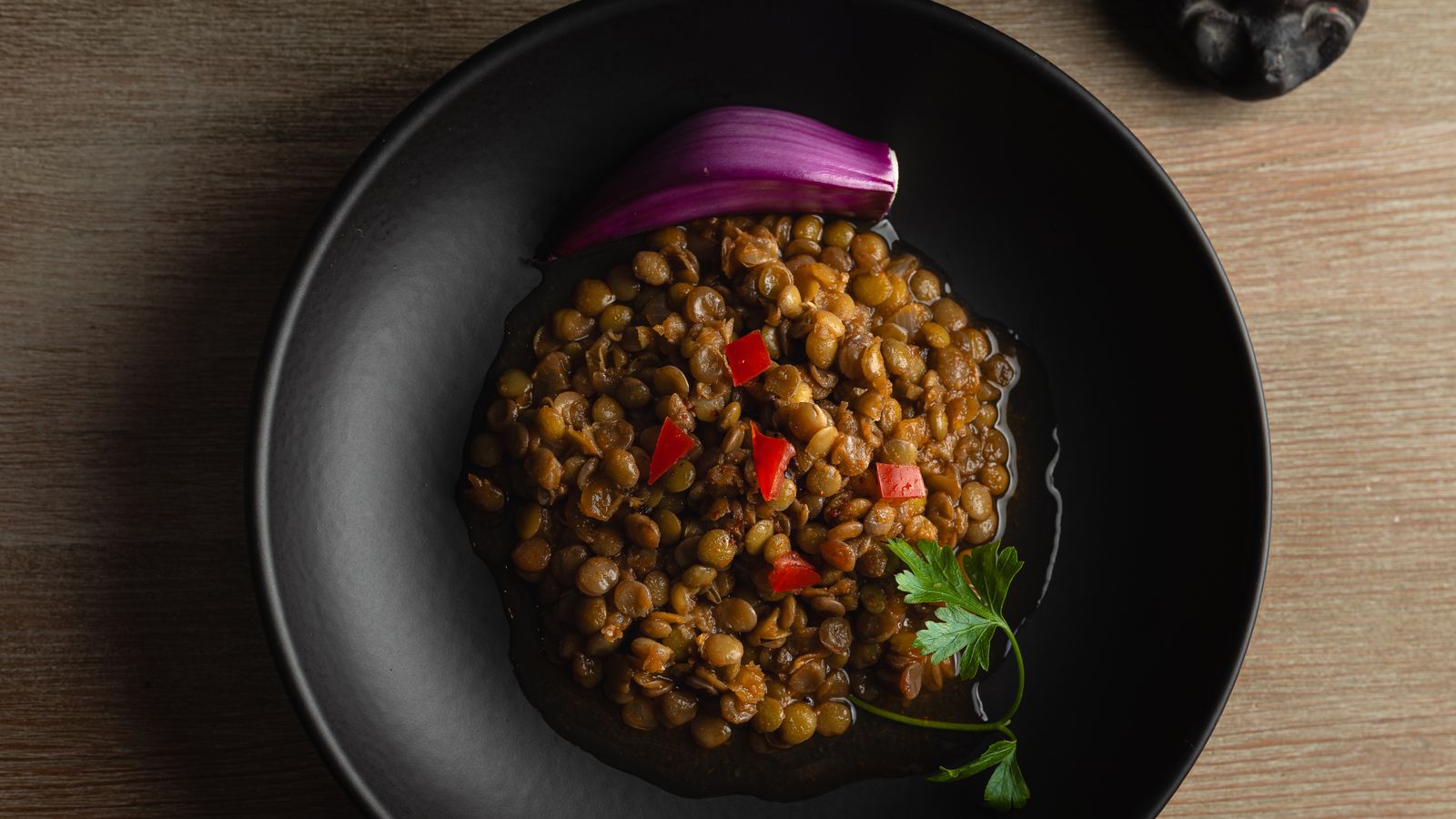
There are two kinds of dietary iron and they behave very differently. Haem iron, from red meat, liver, poultry and oily fish, is absorbed at roughly 15 to 35 percent. Non haem iron, from lentils, beans, tofu, pumpkin seeds, dark leafy greens and fortified cereals, is absorbed at closer to 2 to 20 percent and is far more sensitive to what you eat alongside it.
Practical rules that make the biggest difference: pair plant iron with vitamin C at the same meal, so peppers, tomatoes, citrus or a squeeze of lemon. Move tea and coffee at least an hour away from iron rich meals, because tannins bind iron in the gut and a strong mug of tea with dinner can cut absorption substantially. Keep calcium supplements and large amounts of dairy at a different time. And soak or sprout pulses where you can, which reduces the phytates that block absorption.
| Food | Iron type | Pair it with |
|---|---|---|
| Beef, lamb, liver | Haem, absorbed best | Anything. Absorption is already efficient. |
| Sardines, mackerel | Haem | On toast, with tomatoes. |
| Lentils, chickpeas | Non haem | Peppers, lemon, tomato based sauces. |
| Tofu, tempeh | Non haem | Stir fry with broccoli and peppers. |
| Pumpkin seeds | Non haem | Scatter on a citrus dressed salad. |
| Fortified cereal | Non haem | Orange juice, not tea. |
Get a discount on the thinning and shedding range
Join the Watermans mailing list and we will email a discount code straight to your inbox, so you can try the thinning and shedding range for less. Made in the UK, over 6.5 million bottles sold since 2012.
When is a supplement the right answer?
When a blood test says your stores are low and your GP agrees. For most people who need to increase ferritin levels hair growth relies on, food alone is too slow to close a real gap. Iron supplements are genuinely effective at rebuilding stores and they are also the reason iron is one of the more common causes of accidental poisoning in young children, so they are not a casual purchase. Follow the amount and the schedule your GP or pharmacist gives you, and keep the bottle out of reach.
Two things worth knowing. Alternate day dosing is increasingly favoured over daily, because taking iron every day raises a hormone called hepcidin that then blocks the next day's absorption, so less can actually be more. And side effects, constipation and stomach upset most commonly, are the usual reason people stop, so tell your GP rather than quietly giving up: there are gentler options.
Also worth asking: why were the stores low? Heavy periods, coeliac disease, a restricted diet, gastrointestinal blood loss and pregnancy are the common answers. Refilling the tank without finding the leak means doing it all again next year.
Is this hair loss, shedding or breakage?
Iron related hair change has a specific signature, and telling it apart from the alternatives stops you chasing the wrong fix.
- Shedding is what low iron causes. It is diffuse, spread over the whole scalp, and shows up as more hair in the brush, the plughole and on your pillow. The hairs come out from the root with a small pale bulb attached. This is the pattern that improves when you increase ferritin levels hair growth relies on. Our guide to what causes telogen effluvium covers the wider picture.
- Hair loss is follicular. A widening parting, a receding hairline or distinct patches points at pattern hair loss or alopecia areata rather than iron, and no amount of steak will change it. See why is my hair thinning for the self check.
- Breakage is fibre damage. Short broken pieces, wispy see through ends and flyaways at the crown mean the hair is snapping rather than falling. Iron has nothing to do with it. That one is about heat, bleach, friction and how you handle wet hair.
You can have more than one at once, which is why the ferritin number is useful: it either rules iron in or rules it out, and either answer is progress.
Important: Watermans products are 100% cosmetic and do not treat medical hair loss. Individual results may vary.
What can you do for your hair while you wait?
Rebuilding iron stores is slow, and the temptation in month two is to buy something dramatic. The better move is to protect the hair you still have, because hair that is already fragile from a shedding phase breaks more easily, and losing length to breakage on top of shedding is what makes the whole thing look worse than it is.
Practically: wash gently, condition every wash, comb wet hair with a wide tooth comb from the ends upwards, drop the heat on your dryer, and sleep on silk or satin. Our guide to everyday habits that reduce hair fall covers the technique in detail. A gentle cosmetic routine will not change your ferritin, and it will stop the situation compounding.

Grow Me® Shampoo £14.95
Sulphate free, so it cleans without stripping during a fragile phase. Biotin, caffeine, rosemary and niacinamide. It reduces breakage for fuller looking hair, and it does not change your iron stores.

Condition Me® Conditioner, £13.95
Breakage defence for fine or fragile hair. Cholesterol, shea butter and hydrolysed lupine protein help strands stay smooth, so you keep the length you grow.

Watermans is a family run British brand. Every formula is cruelty free and made in the UK, and we have sold over 6.5 million bottles since 2012.
What does the realistic timeline look like?
Weeks 0 to 4: test, get your number, find and address the cause. Nothing visible happens to your hair yet and that is normal. Months 1 to 3: stores begin to rise if intake and absorption are consistent. Shedding often settles before ferritin has fully recovered. Months 3 to 6: retest. Stores should be meaningfully higher. Fine new hairs may be visible at the hairline and parting, standing up shorter than the rest. Months 6 to 12: that new growth reaches a length where density looks genuinely better. If nothing has changed by month twelve with a restored ferritin, go back to your GP, because iron was not the whole story. For a wider view of eating for your hair, our best foods for hair growth guide covers protein, zinc, selenium and vitamin D too.
Frequently asked questions
What ferritin level do I need to increase ferritin levels hair growth responds to?
There is no single agreed number. UK laboratories usually flag deficiency below about 15 to 30 micrograms per litre, while a lot of hair specialists prefer to see 50 or above and some aim higher still. The honest position is that the threshold for hair is debated and the threshold for anaemia is not. Ask your GP for your actual figure and the laboratory's own reference range rather than comparing yourself to a number from a forum.
How long does it take to raise ferritin?
Iron stores rebuild slowly. Most people need three to six months of consistent intake to move ferritin meaningfully, and longer if the underlying loss has not been dealt with. Hair then needs its own three to six months on top, because a follicle has to complete a cycle before a better quality hair reaches the surface.
Can I just take an iron supplement without testing?
It is not a good idea. Too much iron is harmful and accumulates, and some people carry a genetic condition that makes iron overload dangerous. A blood test is quick, cheap and often free through your GP, and it also tells you whether iron is the problem at all.
Does vitamin C really help absorption?
Yes, and it is one of the few absorption tricks with solid backing. Vitamin C converts plant iron into a form the gut absorbs more readily. A glass of orange juice, some peppers or a squeeze of lemon alongside an iron rich meal makes a measurable difference at no cost.
What blocks iron absorption?
Tea and coffee are the big two, because the tannins bind iron in the gut. Calcium competes with iron, so avoid taking an iron supplement with milk or a calcium tablet. Wholegrains and pulses contain phytates that reduce absorption, although soaking, sprouting and fermenting cut that effect. Leave an hour either side of an iron rich meal before your tea.
Is vegetarian or vegan iron enough?
It can be, but it takes more planning. Plant iron is absorbed less efficiently than the iron in meat and fish, so vegetarians and vegans generally need a higher total intake, paired deliberately with vitamin C. Lentils, tofu, pumpkin seeds, fortified cereals and dark leafy greens all count.
Will my hair go back to how it was?
Where low iron stores were the driver, hair usually recovers once you increase ferritin levels hair growth depends on, though it happens gradually and unevenly rather than all at once as those stores rebuild. If shedding continues after ferritin has been restored for six months, something else is going on and it is worth going back to your GP.
Does a shampoo help while I wait?
Not with the iron, no. What a gentle cosmetic routine does while your stores rebuild is stop you losing extra length to breakage during a phase when hair is already fragile. That is worth doing, and it is a completely different claim from fixing the cause.
Sources & references
- Debinta AA, Budianti WK, Hardjodipuro A (2026). Serum ferritin and hair iron content in correlation to hair diameter and density: a case-control study. Dermatology Reports. PubMed record: pubmed.ncbi.nlm.nih.gov/41789941
- Thamotharan N, Harikumar MV, Sundaram M (2025). Assessment of serum ferritin levels in women with telogen effluvium. Cureus. PubMed record: pubmed.ncbi.nlm.nih.gov/41607990
- NHS. Iron: how much you need, sources and what happens if you take too much. nhs.uk/conditions/vitamins-and-minerals/iron
- NICE Clinical Knowledge Summaries. Anaemia, iron deficiency: assessment and management in primary care. cks.nice.org.uk/topics/anaemia-iron-deficiency
- NHS. Hair loss: causes and when to get advice. nhs.uk/conditions/hair-loss
What is the bottom line on how to increase ferritin levels hair growth?
If you want to increase ferritin levels hair growth depends on, start with a blood test and a number, not a supplement. Fix the reason your stores ran down, eat iron with vitamin C and away from tea, take supplements only on your GP's advice, and retest at three to six months. Meanwhile, handle your hair gently so you are not losing length to breakage on top of shedding. It is slow, it is unglamorous, and it works when iron really was the problem. If your question is about products or a routine rather than a medical one, you can talk to Gail Waterman, our co-founder, as an AI avatar on the Watermans homepage.
The shampoo is the step you actually repeat, which is why our sulphate free hair growth shampoo is the one worth getting right.