Hair Strengthening Products UK: The 9 Essentials You Need
Hair strengthening products UK shoppers actually need come down to nine categories, not nine brand names: a gentle shampoo, a conditioner, a weekly mask, a leave in, a heat protectant, a bond or protein step, a scalp product, a low friction tool and, where a genuine shortfall exists, a supplement. Each does a different job, and the strength comes from the combination rather than from any single bottle. For the cleansing step on its own, how to choose a hair strengthening shampoo goes through the ingredients line by line.
The two that do most of the work
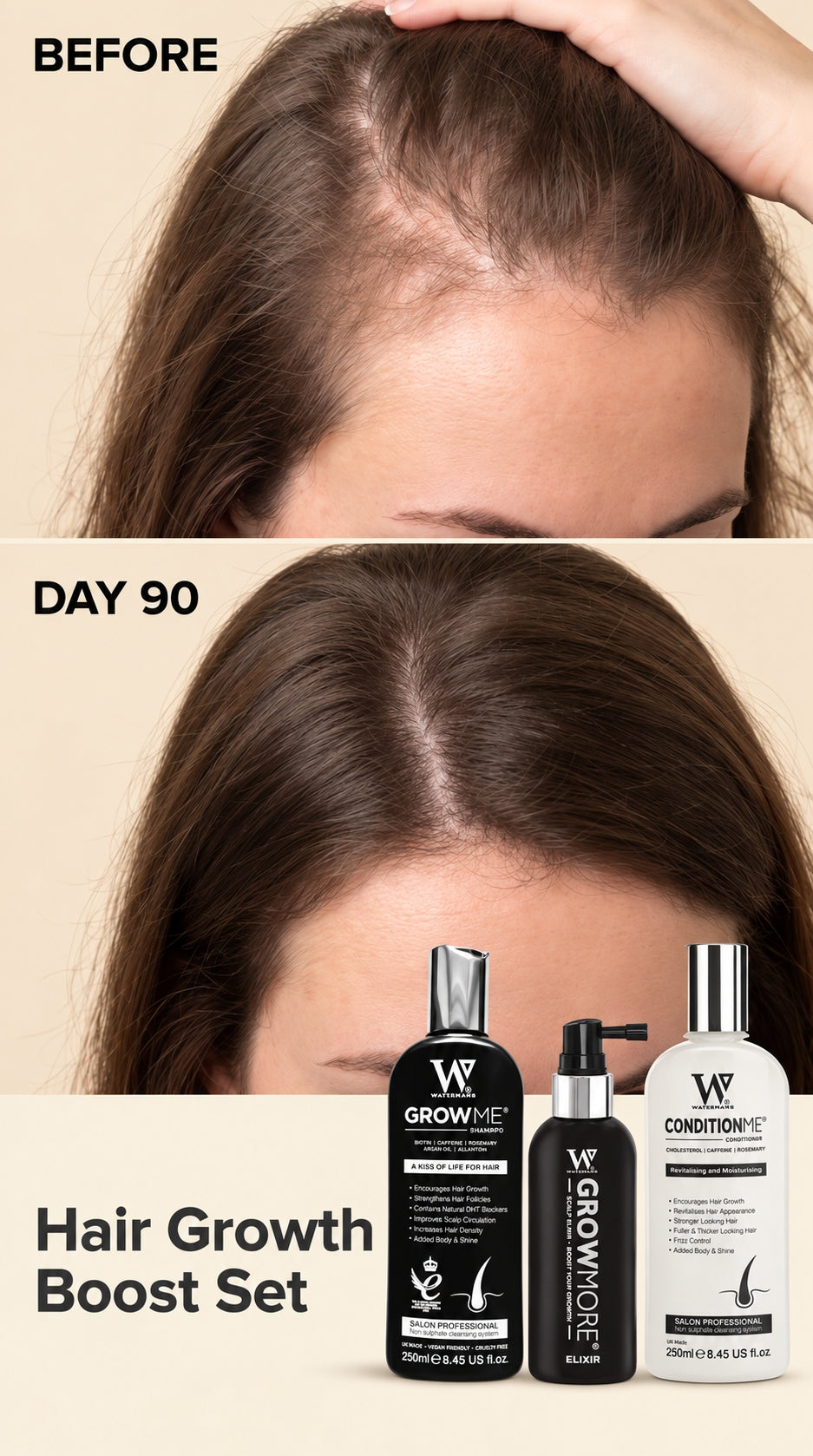
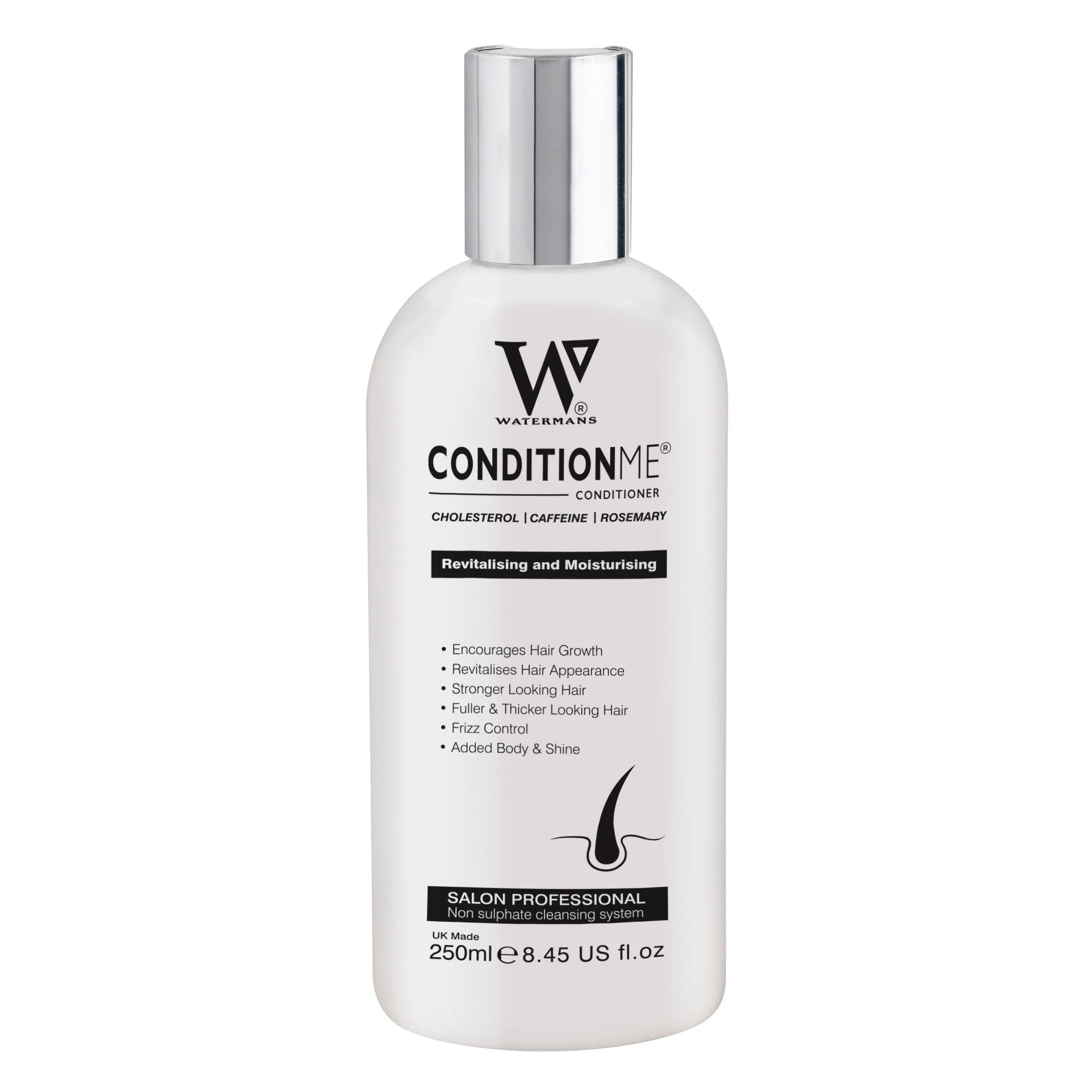
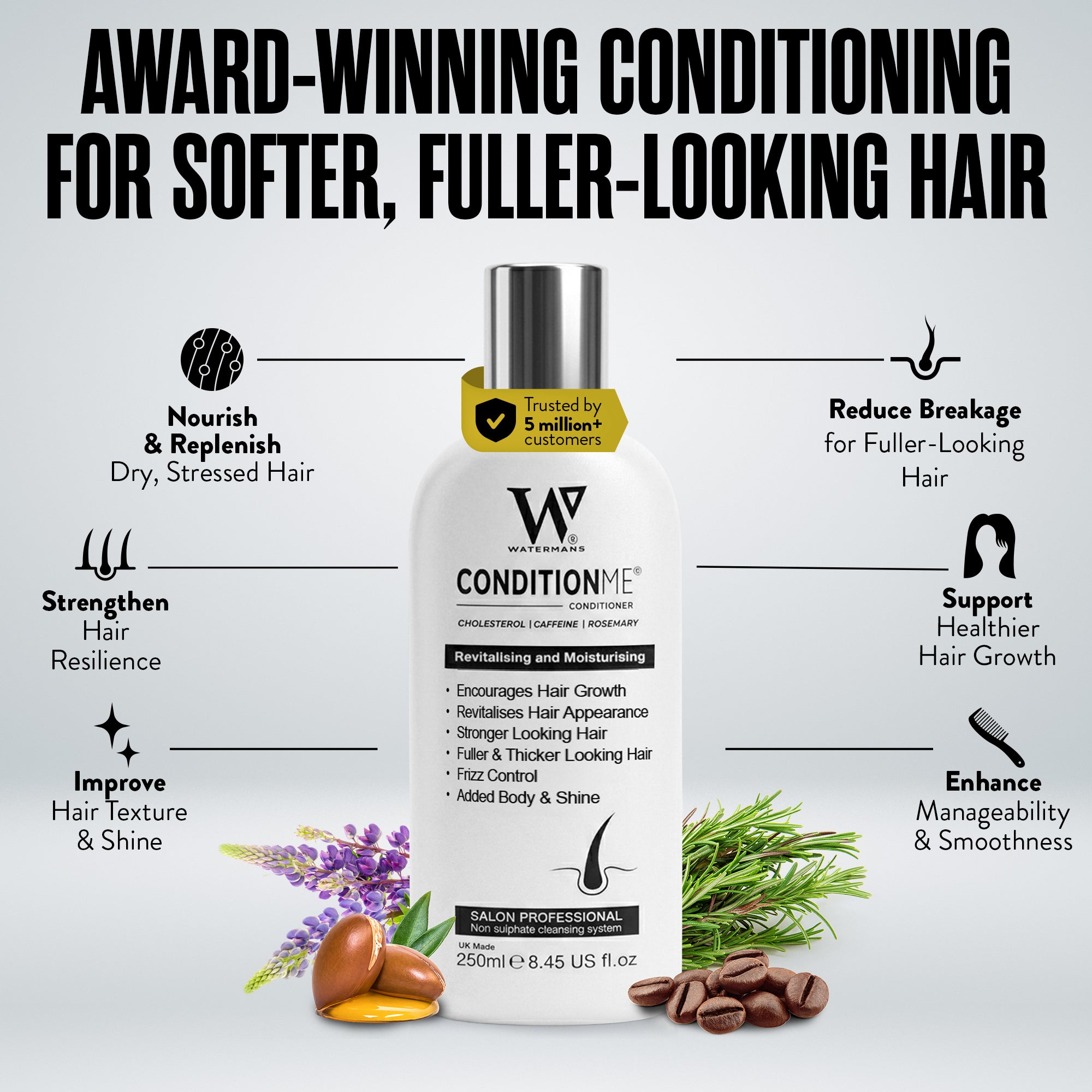
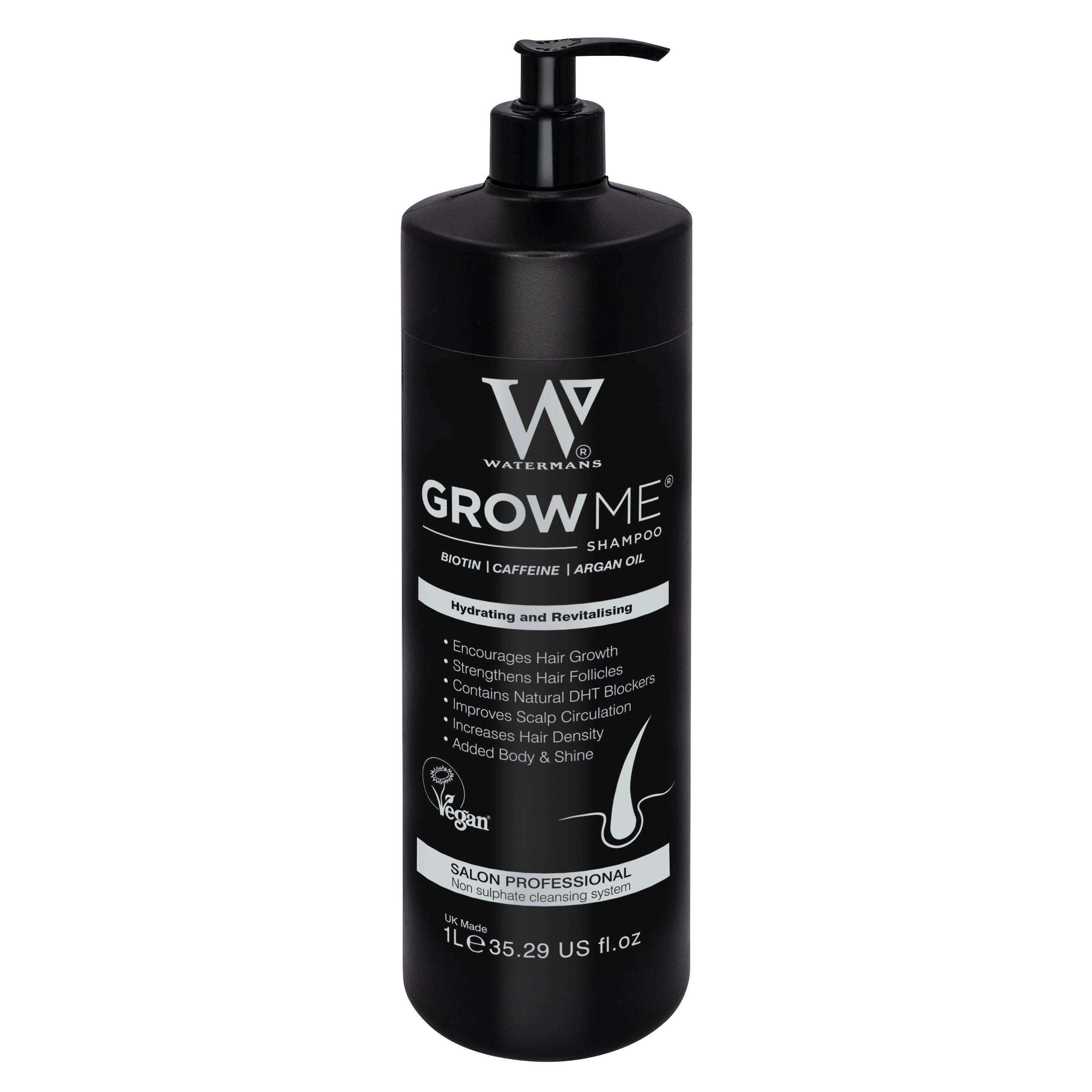
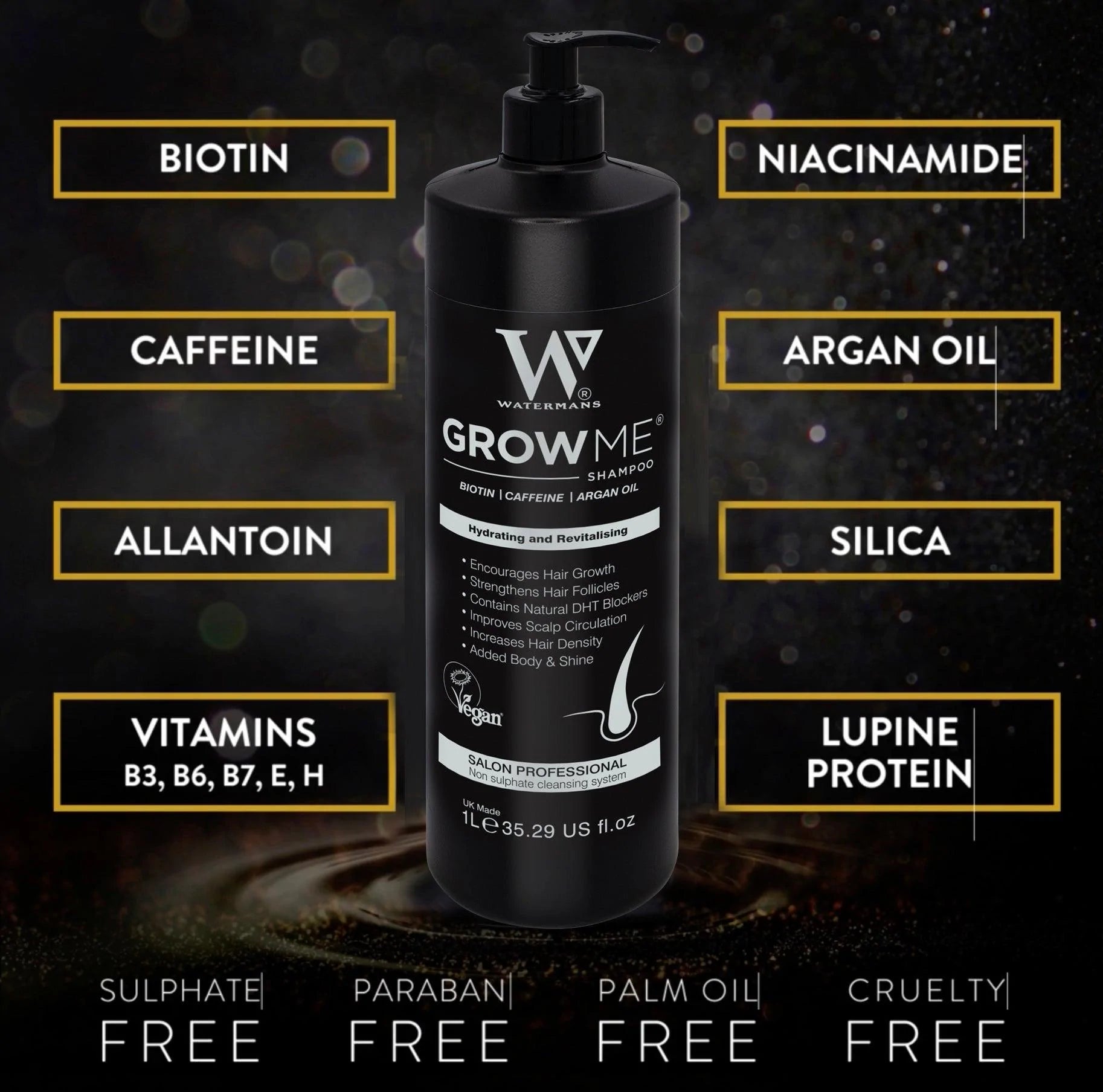
Grow Me® Shampoo, £14.95 and Condition Me® Conditioner, £13.95. Hydrolysed lupine protein, cholesterol and shea butter to cut breakage, which is what strengthening actually means in practice. The other seven follow.
Key takeaways
- Strength is retention, not growth. Most people who say their hair will not grow are losing length to breakage at the ends, not failing to grow it at the root.
- Nine categories, not nine brands. Cleanse, condition, mask, leave in, heat protect, protein or bond, scalp, tools, and nutrition if you are short.
- The heat protectant is the highest value item on the list. One study measured meaningfully less shaft damage when a dryer was used at distance rather than close and hot.
- Protein and moisture are a balance, not a race. Do the stretch test before you buy either.
- Expect a change in feel within two or three washes, and in how the ends look at four to six weeks.
What do hair strengthening products UK shoppers buy actually do?
Hair strengthening products work on a fibre that is not alive. Once a hair emerges from the scalp it cannot repair itself, so every product in this category is doing one of three things: cleaning it without stripping the lipids that hold it together, depositing something that temporarily fills, coats or bridges damage, or preventing the next round of damage before it happens. The third one is where the real value sits, and it is the least glamorous.
That reframes the shopping list. You are not buying strength, you are buying fewer opportunities to break. British hair takes a specific beating: hard water in much of the south and east, central heating in winter, and a national fondness for straighteners. A routine built around those three realities beats a routine built around whichever ingredient is trending.
Which nine categories make up a strengthening routine?
Here are the nine, in the order they touch your hair. Buy the first four before you think about the rest.
1. A sulphate free shampoo
Harsh detergents strip the natural lipid layer that keeps the cuticle smooth, which is why hair can feel squeaky and then snap. A gentler surfactant system cleans perfectly well. Look for a short ingredients list and no sodium lauryl sulphate near the top. More on this in our guide to sulphate free shampoo.
2. A conditioner, used every single wash
The most skipped step and the most valuable. Conditioner reduces the friction of combing wet hair, which is when hair is at its weakest and most stretchable. Skipping it to avoid weighing hair down is a false economy, use less and rinse more thoroughly instead.
3. A weekly deep conditioning mask
A mask is simply a conditioner with a higher concentration and a longer contact time. Ten minutes on towel dried hair, mid lengths and ends only, once a week. Damp hair absorbs better than soaking hair, which just dilutes what you put on.
4. A heat protection spray
The single highest return item here. Research on hair dryer use found that drying from a distance with movement produced markedly less surface damage than close, static, high heat drying, and a protectant film adds another buffer on top of good technique.
5. A leave in conditioner or cream
For coarse, curly or long hair, a leave in keeps the cuticle smooth all day rather than only until it dries. Fine hair usually wants a spray version, applied from the ears down.
6. A protein or bond building step
Bleached and heavily coloured hair loses internal structure, and protein or bond products temporarily bridge the gap. Used too often on healthy hair they make it stiff and brittle, which is the opposite of the goal. Fortnightly at most unless your hair is chemically processed.
7. A scalp product
Strong hair emerges from a comfortable scalp. A serum, tonic or exfoliating wash keeps flaking and itching down, and less scratching means less mechanical damage at the root.
8. Low friction tools
Not a product in a bottle, but it belongs on the list. A wide tooth comb for wet hair, a soft bristle brush for dry, a silk or satin pillowcase, and fabric covered hair ties instead of elastics. Cheap, permanent, and it removes a daily source of snapping.
9. Nutrition, but only if you are short
Biotin, zinc and iron all contribute to the normal maintenance of hair. Topping up a genuine deficiency helps. Taking more when your levels are already normal does not. Ask your GP for a blood test rather than buying on a hunch. If your question is about products or a routine rather than a medical one, you can talk to Gail Waterman, our co-founder, as an AI avatar on the Watermans homepage.
| Your hair | Buy first | Skip or go easy on |
|---|---|---|
| Fine and flat | Gentle shampoo, light conditioner, spray leave in, heat protectant | Heavy masks, butters, oils on the roots |
| Coloured or bleached | Mask, bond or protein step, heat protectant | Clarifying shampoos every wash |
| Curly or coily | Leave in, mask, oil to seal, wide tooth comb | Frequent protein, daily washing |
| Long and heat styled | Heat protectant, mask, silk pillowcase | Anything that means more time under a dryer |
| Shedding more than usual | A GP appointment first, then gentle basics | Expensive rescue kits bought in a panic |
Get a discount on the hair strengthening range
Join the Watermans mailing list and we will email a discount code straight to your inbox, so you can try the hair strengthening range for less. Made in the UK, over 6.5 million bottles sold since 2012.
Which ingredients genuinely strengthen the strand?
Most hair strengthening products uk retailers stock draw on the same short list of working ingredients, so ignore the marketing nouns and look for these on the back of the bottle. Hydrolysed proteins, which are small enough to sit in surface damage and temporarily firm the fibre. Cationic conditioning agents such as behentrimonium chloride, which neutralise the negative charge on damaged hair so it stops tangling. Fatty alcohols like cetearyl alcohol, which are emollients rather than the drying kind of alcohol. Panthenol and glycerin, which hold water in the fibre. And silicones or plant oils to seal, depending on whether you prefer a synthetic or a natural finish.
One ingredient with genuine data behind it is coconut oil. A 2003 study in the Journal of Cosmetic Science found it reduced protein loss in hair both before and after washing, which mineral oil and sunflower oil did not. That is a narrow finding about one oil in one setting, not a licence to put coconut oil on everything, and coconut oil sits badly on some scalps. Where sources disagree, the balance of evidence favours pre wash oiling of the lengths over leaving heavy oils on the scalp.

Is it hair loss, shedding or breakage?
Strengthening products help enormously with one of these three and barely at all with the other two, so it is worth knowing which you have.
- Hair loss happens at the follicle. In pattern hair loss the follicle gradually miniaturises and produces finer hairs each cycle. No cosmetic product changes that, and it is a GP conversation. See what causes thinning hair.
- Shedding happens in the hair cycle. An unusual number of follicles enter the resting phase together, often two to three months after an illness, an operation, childbirth or a stressful stretch, and the hair falls out from the root with a small white bulb attached. It usually settles on its own.
- Breakage happens along the fibre. The hair snaps mid length, leaving short pieces, flyaway bits at the crown and ends that look see through. This is what hair strengthening products uk retailers sell are genuinely for, and it responds within weeks. See how to prevent split ends.
A quick test: hairs with a small pale bulb on the end came out from the root and are shedding. Hairs that are short, blunt at both ends and much shorter than your length are broken.
Important: Watermans products are 100% cosmetic and do not treat medical hair loss. Individual results may vary.
How do you build the routine week by week?
Do not buy nine things at once. Add one category of hair strengthening products uk stockists carry at a time, so you can tell what is actually working.
Week 1: swap to a gentler shampoo and use conditioner on every wash, no exceptions. Week 2: add heat protection and drop your dryer down a heat setting. Week 3: add a weekly mask on mid lengths and ends. Week 4: change the tools, wide tooth comb, silk pillowcase, fabric ties. Week 5 onwards: add a scalp product if your scalp is itchy or flaky, and a protein or bond step only if the stretch test says you need one.

Which Watermans products fit this routine?
Four of the nine categories are covered by the range. Everything here is made in the UK, and all of it is cosmetic, so it works on the fibre and the scalp surface rather than on a medical cause.

Grow Me® Shampoo £14.95
Category 1. Sulphate free, with biotin, caffeine, rosemary and niacinamide. Cleans without stripping the lipids that keep the cuticle smooth.

Condition Me® Conditioner £13.95
Category 2. Cholesterol, shea butter and hydrolysed lupine protein for slip and breakage defence on the wet comb through.

Masque Me® Hair Mask £24.95
Category 3. A weekly 10 minute deep conditioner for mid lengths and ends, with argan oil, panthenol and rosemary.

Protect Me® Heat Protection Spray £13.95
Category 4, and the one to buy first if you own straighteners. Protects to 230C, plus colour and frizz protection.
Watermans is a family run British brand. Every formula is cruelty free and made in the UK, and we have sold over 6.5 million bottles since 2012.
Which mistakes waste the money?
Five recur constantly. Using a mask and a conditioner on the same wash, which mostly wastes the mask. Applying conditioner to soaking wet hair so it dilutes and slides off. Using protein products weekly on hair that is not chemically processed, which leaves it stiff and prone to snapping. Rubbing hair dry with a terry towel instead of squeezing it in a microfibre one. And buying a new range every six weeks, which means you never find out whether anything was working.
The cheapest upgrade on this page
Turn your dryer down one heat setting and hold it 15cm further away. It costs nothing, it adds perhaps two minutes to your routine, and on the available evidence it does more for the state of your ends than most of what is in the bathroom cabinet.
Frequently asked questions
Which hair strengthening products UK shoppers buy actually make a difference?
The four that earn their place in almost every routine are a gentle sulphate free shampoo, a conditioner used on every wash, a weekly deep conditioning mask and a heat protection spray. Those four cut breakage at the points where it actually happens. Everything else, oils, serums, bond builders, supplements, is refinement on top of that base.
Do I need a protein product or a moisture product?
Do the stretch test. Take one clean, damp hair and pull it gently. If it stretches a long way and does not spring back, it needs protein. If it snaps almost immediately with no give, it needs moisture. Most UK hair, washed in hard water and heat styled, needs moisture more often than protein.
How often should I use a strengthening mask?
Once a week for most hair, twice a week for bleached, coloured or very coarse hair, and once a fortnight for fine hair that goes limp easily. A mask that sits on for 10 minutes on damp hair does more than one left on for an hour on soaking wet hair.
Does hard water really weaken hair?
Hard water leaves mineral deposits on the cuticle that make hair feel rough and dull and can make it harder to rinse product out cleanly. Most of England and the south east sits in a hard water area. A clarifying wash every few weeks, or a shower filter, deals with the build up. It is a real effect, but it is a cosmetic one.
Are hair strengthening supplements worth it?
Only if you are short of something. Nutrients like biotin, zinc and iron support normal hair maintenance, and topping up a genuine shortfall can help. Taking extra when your levels are already fine does nothing useful. If you suspect a deficiency, ask your GP for a blood test rather than guessing.
Can strengthening products stop hair falling out?
No, and any product claiming to is overreaching. Cosmetic products act on the hair fibre and the scalp surface. They reduce the hair you lose to snapping and mechanical damage, which is often a surprising share of what people see in the shower. They do not change what a follicle does.
What order do the products go in?
Shampoo, then mask or conditioner (not both on the same wash), rinse cool, blot with a towel rather than rubbing, then heat protection or leave in on damp hair, then styling. Oils go on last on dry hair, or before shampooing as a pre wash step.
How long before hair feels stronger?
Two to three washes for how it feels and combs, four to six weeks for a visible change in how the ends look, and about six months before the length you are growing has spent its whole life in the better routine. Damage cannot be undone, only prevented from spreading, so the honest measure is fewer broken pieces over time.
Sources & references
- Rele AS, Mohile RB (2003). Effect of mineral oil, sunflower oil, and coconut oil on prevention of hair damage. Journal of Cosmetic Science, 54(2). PubMed record: pubmed.ncbi.nlm.nih.gov/12715094
- Lee Y and colleagues (2011). Hair shaft damage from heat and drying time of hair dryer. Annals of Dermatology, 23(4). PubMed record: pubmed.ncbi.nlm.nih.gov/22148012
- Trueb RM (2015). The impact of oxidative stress on hair. International Journal of Cosmetic Science, 37(S2). PubMed record: pubmed.ncbi.nlm.nih.gov/26574302
- NHS. Hair loss: when to get advice and what causes it. nhs.uk/conditions/hair-loss
What is the bottom line on hair strengthening products uk?
The best hair strengthening products uk shoppers can buy are boring and cheap: a gentle shampoo, a conditioner used every wash, a weekly mask and a heat protectant. Those four remove most of the breakage that makes hair look thin at the ends. Add a leave in, a protein step, a scalp product and better tools as you go, and use supplements only to correct a measured shortfall rather than as a default. Then give it six weeks before you judge anything.
If you are changing one thing this month, make it the wash: our sulphate free hair growth shampoo is sulphate free and built for the scalp. Vegan and made in the UK.