Is Native Bad for Your Hair? An Honest Review

Is native bad for your hair? No, not in any evidenced sense. Native shampoo and conditioner are ordinary sulphate free cosmetic formulas that meet the same safety requirements as every other brand on the shelf, and there is no published research showing they damage hair. What is fair to say is that a gentle sulphate free cleanser does not suit everyone, and the complaints you find online mostly describe a mismatch or a build up problem rather than damage.
Key takeaways
- The evidenced answer to is native bad for your hair is no. There is no research showing it damages hair or causes it to fall out.
- Sulphate free cleansers are gentler but less effective at removing silicones, heavy oils and styling product, so build up is a genuine and common complaint.
- Shedding noticed after starting any new product is very difficult to attribute, and usually has a cause that started weeks earlier.
- Naturally derived has no fixed legal meaning. It is a marketing description, not a safety standard, across the whole category.
- Give any new shampoo two to four weeks before judging it, and see a GP rather than another product if shedding genuinely increases.
What is Native hair care?
Native began as a deodorant brand and expanded into shampoo, conditioner and body wash. The positioning is straightforward: simple, recognisable ingredient lists, sulphate free and silicone free formulas, no parabens, and heavy use of fragrance as a selling point across a rotating range of scents.
That places it in a very crowded segment. Sulphate free and silicone free has been the mainstream direction of the whole hair care market for well over a decade, so in formulation terms Native is a conventional modern product rather than an unusual one. The distinctive part is the branding and the scent range, not the chemistry.
What is actually in it?
The cleansing is typically done by milder surfactants such as sodium cocoyl isethionate or coco glucoside rather than sodium lauryl sulphate. These produce less lather and clean less aggressively, which is exactly the intent.
The conditioning side uses the standard cationic conditioning agents and fatty alcohols found in most conditioners, along with plant oils and glycerin. Fragrance is present at a meaningful level, which matters if you are sensitive to it.
None of this is remarkable, and that is the point worth making. There is nothing in these formulas that provides a mechanism for damage, which is why the honest answer to is native bad for your hair has to start with the chemistry rather than with the reviews.

So is native bad for your hair, or are the complaints valid?
Both things can be true at once, and usually are. The product is not damaging, and a lot of people genuinely did not get on with it. Those are not contradictory statements, and separating them is the useful part.
| Concern raised online | What is fair to say |
|---|---|
| It makes hair fall out | No published evidence supports this. Shedding reported after any product change is very hard to attribute and usually has another cause |
| It leaves hair greasy or coated | Plausible. Sulphate free cleansers remove heavy oils and silicones less effectively, so build up is a genuine possibility |
| It dries hair out | Reported by some, and fragrance load and formula suitability vary by hair type. Individual response is real |
| The natural claim is misleading | Naturally derived has no fixed legal definition anywhere. That criticism applies across the whole category, not to one brand |
| It is unsafe | Not supported. It is a conventional cosmetic meeting the same regulatory requirements as its competitors |
The pattern in the table is worth noticing. The complaints that hold up are about suitability and cleansing power. The ones that do not hold up are the alarming ones.
Why do people report shedding after switching shampoo?
This deserves a careful answer, because it is the concern that actually worries people and it comes up for every brand.
The first reason is timing. Telogen effluvium, the most common cause of a sudden increase in shedding, begins two to three months after its trigger, which might be illness, surgery, childbirth, a crash diet or a period of serious stress. By the time hair is visibly coming out, the trigger is months in the past and long forgotten, while the new shampoo bought three weeks ago is right there in the shower. The shampoo gets the blame. What causes telogen effluvium sets out that timeline properly.
The second is washing frequency. Hairs that have already finished their growth cycle sit loosely in the follicle until something dislodges them. Change your routine, wash less often, or start detangling differently, and a batch comes out at once. Those hairs had already let go. The shampoo released them, it did not cause them.
The third is build up making hair look thinner. Coated hair clumps, loses volume and shows more scalp. It reads as thinning in the mirror, and it clears completely with a proper wash.
None of this proves nobody ever reacts badly to a product. Contact reactions to fragrance are real. But a reaction shows as an itchy, red, uncomfortable scalp, not as painless shedding, and that distinction is worth holding on to.
Get a discount on the thinning hair range
Join the Watermans mailing list and we will email a discount code straight to your inbox, so you can try the thinning hair range for less. Vegan, made in the UK, over 5 million bottles sold since 2012.
Is it hair loss, hair shedding or hair breakage?
If you are here because something changed after switching products, work out which of these three you are actually seeing before you blame anything.
Hair shedding is whole hairs leaving the scalp, each with a small white bulb at the root end. Fifty to a hundred a day is normal. This is the one people notice after a product change, and it is almost always telogen effluvium with a trigger months earlier.
Hair breakage is the fibre snapping mid length, leaving short broken pieces with no bulb, split ends and a halo of shorter hairs. It is caused by heat, bleach, tension and brushing wet hair. A gentler shampoo does not cause breakage, though under conditioning can contribute to it. What causes hair damage covers the four main culprits.
Hair loss is follicular miniaturisation over years, showing as a widening parting or receding hairline rather than as hairs on the pillow. No shampoo causes it and no shampoo changes it. Pattern hair loss, its stages and causes explains what it looks like.
Check the root end of the hairs you are finding. A white bulb means shedding. A clean break with no bulb means breakage. That single check answers most of these questions.
A quick self test
Collect the hairs from one wash and look at the ends. Bulbs on most of them means shedding, which is a follicle and cycle question. No bulbs and uneven lengths means breakage, which is a handling and conditioning question. They need completely different responses.

Who does sulphate free suit, and who should avoid it?
The most useful way to settle is native bad for your hair for your own head is to ask who sulphate free cleansing actually suits. It suits colour treated hair, dry or coarse hair, curly and coily hair, and anyone with a scalp that reacts to stronger cleansers. For these people the gentler surfactants are a genuine improvement.
It suits people less well if they use silicone based serums, heavy oils or firm styling products, or if their scalp produces a lot of oil. In those cases the milder cleanser leaves residue and hair starts to feel heavy within a couple of weeks. That is not the product failing, it is the wrong tool for the job. Our guide to whether sulphate free shampoo is really better goes through both sides.
The workable middle ground for most people is a gentle sulphate free shampoo most of the time with a proper clarifying wash when hair starts to feel coated.
How should you judge any new shampoo?
The question is native bad for your hair is really a question about testing properly, and most people never do. Four rules make it straightforward.
Give it a month. One wash tells you about lather and scent, not about how your hair behaves.
Change one thing at a time. Switching shampoo, conditioner and styling products together makes it impossible to know what did what.
Judge on the right criteria: how your scalp feels the day after washing, whether the hair tangles more or less, and whether volume holds. Not on how much lather you get, which reflects the surfactant type rather than how clean your hair is. Our step by step on using a hair cleanser properly covers technique, which matters as much as the bottle.
And if shedding genuinely increases and stays increased, stop testing products and see a GP. That is a cycle question, and no shelf in any shop contains the answer to it.
What we would suggest instead
We make sulphate free shampoo too, so treat this as an interested opinion rather than a neutral one. The qualities worth looking for are the same whoever you buy from: cleans without stripping, does not leave residue, and pairs with a conditioner that genuinely reduces the friction that snaps hair.

Grow Me® Shampoo, £14.95
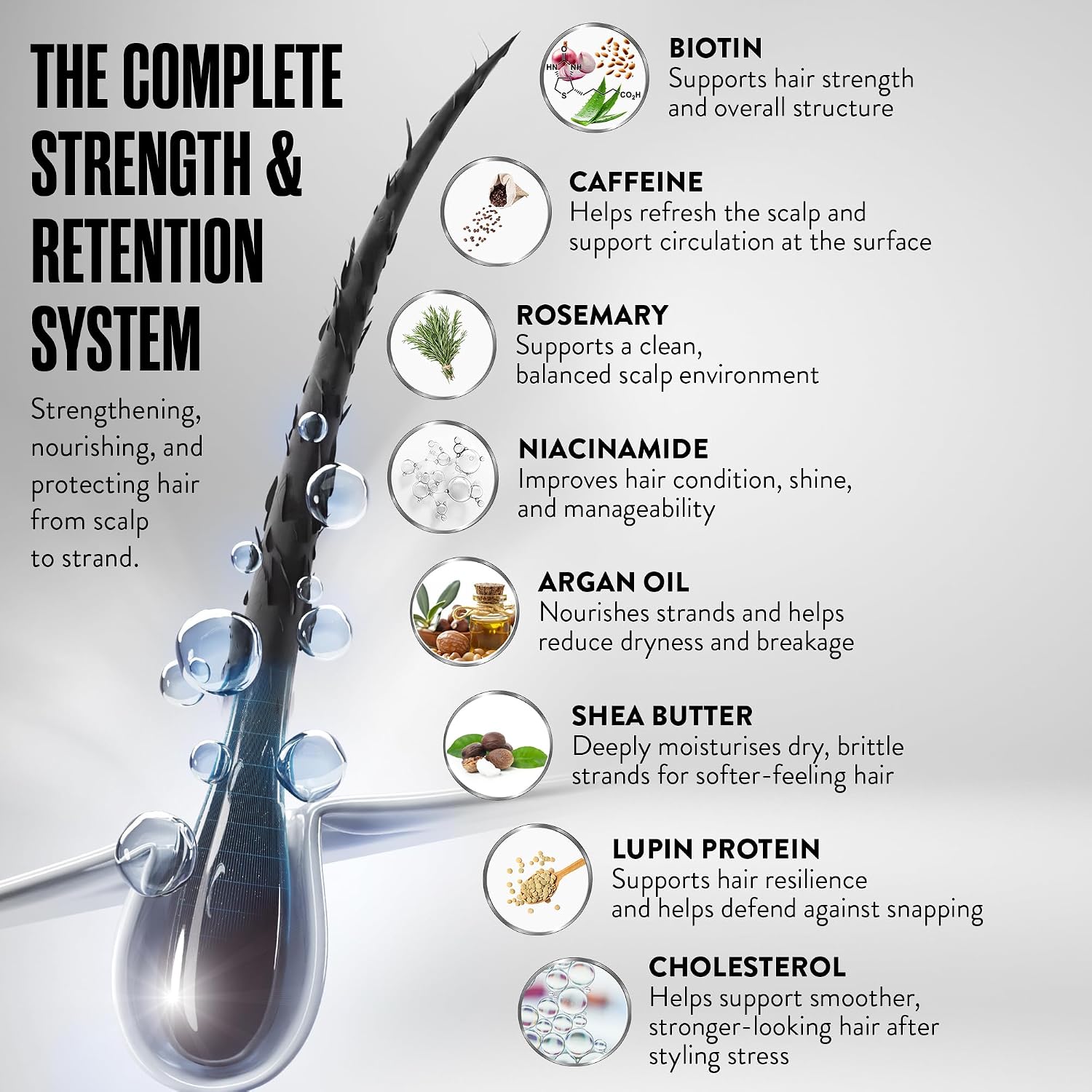
A sulphate free daily shampoo with biotin, caffeine, rosemary and niacinamide, formulated for a comfortable scalp and stronger looking strands. Vegan, made in the UK, over 5 million bottles sold since 2012.
View Grow Me® Shampoo
Condition Me® Conditioner, £13.95
A breakage defence conditioner with cholesterol, shea butter and hydrolysed lupine protein, built to reduce the snapping that makes hair look thinner than it is.
View Condition Me® ConditionerIf your hair is dry or colour treated and a conditioner alone is not enough, a weekly mask does more than switching shampoo again. Our guide to using conditioner properly covers the step most people rush.

Masque Me® Hair Mask, £24.95
An 8 in 1 deep conditioning mask for the weekly slot, aimed at hair that feels dry, coarse or colour worn.
View Masque Me® Hair Mask
Frequently asked questions
Is Native bad for your hair, yes or no?
No, not in the sense of damaging it. Native shampoo and conditioner are conventional sulphate free cosmetic formulas that meet the same safety rules as any other product sold in the UK and US. Whether they suit your hair is a separate question, and for some hair types they genuinely do not.
Why do some people say Native made their hair fall out?
Online reports of shedding after starting a new product are common across the whole category, not just this brand, and they are extremely difficult to attribute. The usual explanations are that the shedding was already beginning for an unrelated reason, that hairs already loose were released during a change of washing routine, or that heavy build up made the hair look and feel thinner. There is no published evidence that Native causes hair to fall out.
Is sulphate free shampoo better?
It is gentler, which suits colour treated, dry, curly and sensitive scalps. It is also less powerful at removing heavy oils, silicones and styling product, so people who use a lot of product sometimes find their hair feels coated after switching. Better depends entirely on what you put on your hair.
Does Native cause build up?
It can, in the same way any gentler cleanser can, particularly if you use silicone based styling products or heavy oils. Build up feels like hair that is heavy, dull and limp despite being freshly washed. A thorough wash usually clears it.
How long does it take to adjust to a new shampoo?
Give it two to four weeks. Hair and scalp often go through a settling period after a change in cleansing, especially when moving from a strong sulphate shampoo to a gentler one. If it still feels wrong after a month, it is not for you.
Is Native good for coloured hair?
Sulphate free formulas are generally kinder to colour, because stronger surfactants strip more dye with each wash. That part of the positioning is fair. Colour longevity also depends on water temperature, sun exposure and heat styling, so shampoo is one factor among several.
Are naturally derived ingredients safer than synthetic ones?
Not automatically. Naturally derived is a marketing description with no fixed legal meaning, and safety in cosmetics is determined by the specific substance and its concentration rather than by origin. Plenty of synthetic ingredients are extremely well tolerated and plenty of natural extracts are common allergens.
What should I do if a shampoo does not suit me?
Stop using it and give your hair a month on something simple before judging. If shedding is genuinely increased, if your scalp is inflamed, or if the change persists, see a GP rather than working through more products, because a change in your hair often has a cause that has nothing to do with what is in the shower.
The short version
Is native bad for your hair? On the evidence, no. It is a conventional sulphate free cosmetic that meets the same safety rules as everything else on the shelf, and nothing in its formulation provides a route to damage. The complaints worth taking seriously are about fit rather than harm: a gentler cleanser leaves residue if you use silicones, heavy oils or firm styling products, and coated hair looks and feels thinner. The shedding stories almost always have a cause that began months before the bottle was bought. Give any new shampoo a month, change one thing at a time, check whether the hairs you find have bulbs or broken ends, and if shedding genuinely persists, see a GP rather than buying another bottle.
Watermans products are 100% cosmetic and do not treat medical hair loss. Individual results may vary. This article is general information and is not medical advice. Speak to your GP or a pharmacist about any concern with your health or your scalp.
Sources & References
- Gavazzoni Dias MFR, Hair Cosmetics: An Overview, International Journal of Trichology, 2015, on surfactant types, cleansing strength and how conditioners deposit on the hair.
- Gavazzoni Dias MFR et al., The Shampoo pH can Affect the Hair: Myth or Reality?, International Journal of Trichology, 2014, on shampoo formulation, pH and effects on the hair surface.
- NHS, Hair loss, on the common causes of shedding and hair loss and when to see a GP.
- The Cosmetic Products Enforcement Regulations 2013, legislation.gov.uk, on the safety requirements every cosmetic sold in the UK must meet.
- British Association of Dermatologists, hair and scalp information leaflets, on scalp reactions, contact irritation and when they need clinical input.