Hair Cleanser Guide: How to Choose One and Use It Properly
A good hair cleanser lifts oil, sweat and product from the scalp without stripping the lengths, so for most people that means a mild, sulphate free shampoo matched to how oily their scalp is and how dry or coloured their ends are. How you use it matters as much as which one you buy: soak the hair first, work the lather into the scalp rather than the ends, and rinse for longer than feels necessary.
The cleanser we make
Grow Me® Shampoo, £14.95 is a sulphate free cleanser: it lifts oil and product without stripping, which is the whole point of a gentler wash. How to use one properly is below.
Key takeaways
- Cleanser is for the scalp. The ends are cleaned by run-off, not by scrubbing.
- Pre-rinse for a full minute so water, not friction, does the initial work.
- Two short cleanses beat one long one when there is oil or product to shift.
- Rinse longer than you think. Residue is a leading cause of itch and dullness.
- Wash frequency is set by scalp comfort, not by a rule you read online.
What is a hair cleanser, and how is it different from shampoo?
Hair cleanser is the broader term. Every shampoo is a cleanser, but not every cleanser is a shampoo. The category now covers classic sulphate shampoos, sulphate free shampoos, cleansing conditioners, low-lather creams and clarifying washes, and they differ mainly in the surfactants they use and how aggressively those surfactants strip oil.
A review of hair cosmetics in the International Journal of Trichology sets out the basic chemistry clearly: shampoos rely on surfactant molecules with a water-loving head and an oil-loving tail, which surround sebum and residue so that water can carry them away. Anionic surfactants such as sodium lauryl sulphate clean powerfully and can over-strip. Milder amphoteric and non-ionic surfactants clean less aggressively and suit dry, fragile or colour treated hair.
| Cleanser type | Best for | Watch out for |
|---|---|---|
| Classic sulphate shampoo | Oily scalps, heavy styling product, occasional deep clean | Can strip colour and leave dry hair squeaky and rough |
| Sulphate free shampoo | Most people, most of the time, especially colour treated hair | Lathers less, so a second cleanse is often needed |
| Cleansing conditioner | Coily, very dry or chemically processed hair | Leaves fine hair limp and struggles with silicone build-up |
| Clarifying wash | Once a month reset, hard water areas, swimmers | Too drying for weekly use on most hair |
If you are weighing up the sulphate question specifically, our guide to whether sulphate free shampoo is really better goes through the trade-offs without the marketing.
How to use hair cleanser: what is the full method, step by step?
This is the sequence that fixes most washing problems. It takes no longer than what you already do, it just puts the effort in different places.
- Detangle before you get in. Brush or finger-comb dry hair from the ends upward. Wet hair is at its weakest, and tugging a wet tangle is one of the fastest ways to snap fibres.
- Pre-rinse for a full minute. Warm, not hot. A proper soak lifts a surprising amount of sweat, dust and loose residue before any product is involved, so you need less cleanser.
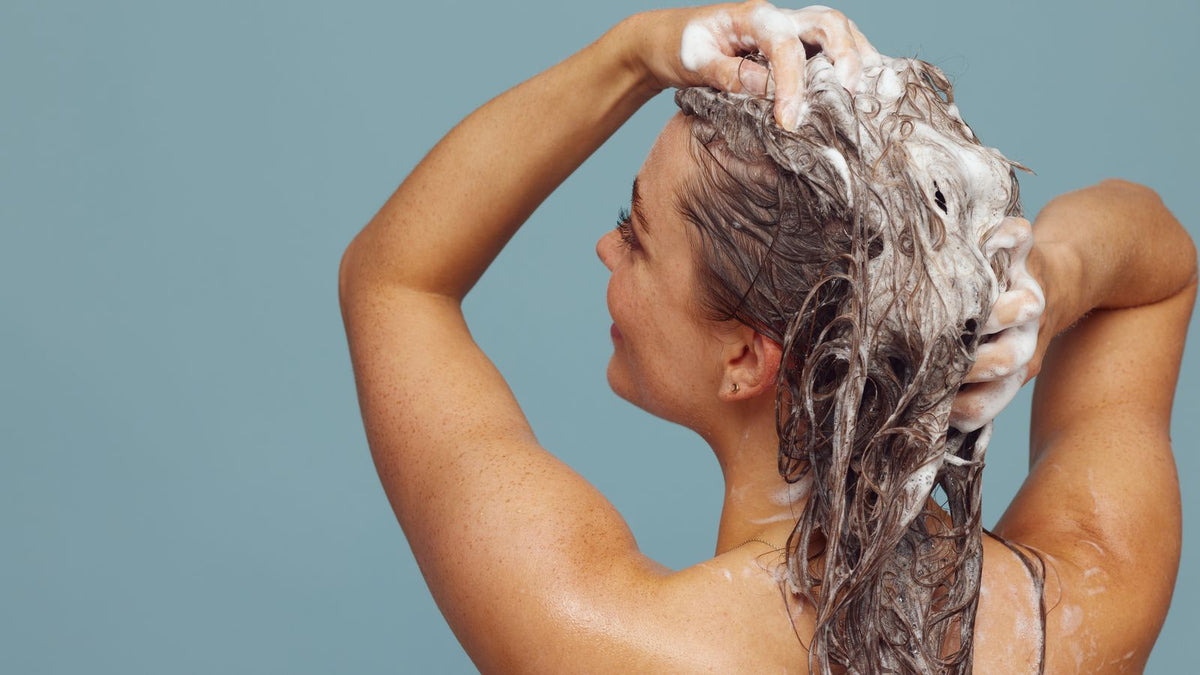
- Emulsify in your palms. Add the cleanser to wet hands with a splash of water and rub them together until it goes milky. Neat product dropped straight onto one spot cleans that spot and nothing else.
- Apply to the scalp in sections. Nape, sides, crown, hairline. The scalp is where oil is produced, so that is where cleanser belongs.
- Massage with finger pads for 60 seconds. Small circles, no nails. You are lifting sebum and loosening flakes, not scrubbing a pan.
- Let the run-off clean the lengths. Gently squeeze the diluted lather down the mid lengths and ends. Do not pile long hair on top of your head and scrub it.
- Rinse, then cleanse a second time if needed. The second pass is shorter and lathers properly because the first one removed the oil that was suppressing it.
- Rinse for longer than feels necessary, paying attention to the nape and behind the ears, where residue hides.
- Condition the mid lengths and ends, never the scalp, then finish with a cooler rinse.

The single biggest fix
If you change one thing about how you wash, make it the rinse. Under-rinsing leaves a film that dulls shine, attracts dirt faster and irritates the scalp, and it is the reason a lot of people conclude that a perfectly good cleanser does not suit them.

Grow Me® Hair Growth Shampoo £14.95
A sulphate free daily shampoo with caffeine, rosemary, niacinamide and biotin that cleans the scalp without stripping the lengths, formulated to reduce breakage for fuller-looking hair.
How do you choose the right hair cleanser?
The right hair cleanser is the one whose surfactants match your scalp: a mild, sulphate free formula for most people, a stronger or clarifying wash only for very oily scalps or heavy product build-up, and a low-lather or cream cleanser for very dry, coily or fragile hair. Read the first few ingredients, because they tell you how hard it cleans.
The International Journal of Trichology review of shampoo chemistry cited below explains why: anionic surfactants such as sodium lauryl sulphate clean strongly and can over-strip, while milder amphoteric and non-ionic surfactants suit dry or colour treated hair. Use this checklist on any bottle.
| What to check | Good sign | Warning sign |
|---|---|---|
| Main cleanser | Coco-glucoside, decyl glucoside, cocamidopropyl betaine, amino acid cleansers | Sodium lauryl sulphate high on the list for everyday use on dry hair |
| Moisture support | Glycerin, panthenol (provitamin B5), aloe | Nothing to hold water in the fibre |
| Slip after rinsing | Hair feels smooth and detangles easily | A squeaky, tangled or straw-like feel |
| Scalp comfort | No tightness or itch a few hours after washing | Itch, flaking or tightness every wash day |
| Label wording | Gentle, daily, for coloured or fragile hair | Clarifying or deep cleansing sold as an everyday wash |
We will not claim ours is the best hair cleanser for everyone, because no brand can prove that about its own product. Grow Me, mentioned above, is our sulphate free option; judge it, and any other bottle, against the table.
How often should you use a hair cleanser?
Knowing how to use hair cleanser is only half the job, and how often you use it is the other half. Wash frequency is set by your scalp, not by a rule. Sebum production varies enormously between people, and hair texture decides how quickly that sebum travels down the fibre. Straight, fine hair conducts oil to the ends within a day and looks greasy fast. Coily hair barely conducts it at all, which is why the same scalp oil that flattens fine hair never reaches the ends of type 4 hair.
- Fine or oily scalp: daily to every other day, with a gentle cleanser.
- Medium, straight to wavy: every two to three days.
- Thick, curly or colour treated: every three to five days.
- Coily or locs: weekly or less, often with a cleansing conditioner.
Two myths deserve killing here. Washing your hair does not make it fall out, and washing less does not train your scalp to produce less oil. The hairs in the drain had already detached at the follicle. Leaving them there for four days just means you find them all at once.
Get a discount on the hair care range
Join the Watermans mailing list and we will email a discount code straight to your inbox, so you can try the hair care range for less. Made in the UK, over 6.5 million bottles sold since 2012.
How do you match a cleanser to your hair and water?
Three variables decide what suits you: how oily your scalp is, how porous your hair is, and how hard your water is. Porosity is the one people miss. High porosity hair, usually from bleaching, heat or coarse texture, takes water in fast and loses it just as fast, so it needs milder cleansing and more conditioning. Low porosity hair resists water, so products sit on the surface and build up, and it benefits from a clarifying wash now and then.
Hard water leaves mineral deposits that make hair feel rough and look dull however well you wash. If you live in a hard water area and your hair feels coated no matter what you do, a monthly clarifying wash is usually the answer rather than another new bottle.

What are the most common mistakes?
Six errors account for most of the complaints people bring to a hairdresser. If you have the method above right, everything else about how to use hair cleanser is a matter of not undoing it here, and every one of these is free to fix.
- Water too hot. It dries the scalp and roughens the cuticle.
- Cleanser applied neat to one spot. It cleans unevenly and wastes product.
- Scrubbing the ends. The ends are the oldest, most damaged hair on your head.
- Using nails instead of finger pads. Scratching an itchy scalp makes it itchier.
- Rushing the rinse. Residue causes most of the dullness blamed on the product.
- Rough towel drying. Squeeze water out with a towel or cotton t-shirt, do not rub.
Conditioning is the other half of this, and it has its own rules. Our step by step on how to use conditioner properly covers where it goes and how long to leave it, and if your ends are already parched, the four step routine for dry hair is the place to start.

Condition Me® Hair Growth Conditioner £13.95
A breakage-defence conditioner with cholesterol, shea butter and hydrolysed lupine protein. Use it on the mid lengths and ends every single wash to keep detangling gentle.

Masque Me® Repairing Hair Mask £24.95
An 8-in-1 deep conditioning mask for the weekly step, aimed at dry, porous or heat stressed lengths that need more than a rinse-out conditioner can give.

Watermans products are 100% cosmetic and do not treat medical hair loss. Individual results may vary.
What can washing change: hair loss, hair shedding or hair breakage?
Washing technique changes exactly one of these three, so it is worth being clear which is which.
Hair loss is a follicular event. In pattern thinning or alopecia areata, the follicle itself is affected, and no cleanser or washing routine alters that. A widening parting, a receding hairline or defined bald patches warrant a GP appointment.
Hair shedding is a cycle event. Telogen effluvium pushes an unusual number of hairs into the resting phase after illness, childbirth, surgery, crash dieting or acute stress, and they release two to three months later. Washing neither causes nor prevents it. Fixing the trigger and checking iron and thyroid does.
Hair breakage is a fibre event, and this is the one washing owns. Hot water, aggressive scrubbing, wet detangling, skipped conditioner and rough towel drying all snap hair along its length. If you are finding short broken pieces rather than full-length hairs with a white bulb, your washing routine is where the gains are. Our guide to keeping your scalp healthy covers the rest of that picture.
Frequently Asked Questions
Which hair cleanser should I buy?
Choose a hair cleanser by your scalp first: a mild, sulphate free shampoo suits most people, a clarifying wash is for occasional build-up only, and very dry or coily hair often does better with a low-lather cream cleanser. Check that the hair feels smooth, not squeaky, after rinsing and that your scalp stays comfortable.
How much hair cleanser should I actually use?
A ten pence coin sized amount suits short to mid length hair, and a fifty pence sized amount suits long or thick hair. If you are using more than that and still not getting lather, the problem is usually too little water or too much build-up, not too little product. Add water to your palms first and emulsify before it touches your head.
Should I shampoo once or twice?
Twice, if it has been more than a couple of days, or if you use oils, dry shampoo or styling product. The first pass lifts oil and residue and often barely lathers. The second pass is the one that actually cleans the scalp. If you wash daily and use little product, once is enough.
Does hair cleanser go on the lengths or the scalp?
The scalp. The single most important part of how to use hair cleanser is that it goes on the scalp, because that is where oil, sweat and residue collect. The lengths get cleaned by the diluted lather running down during rinsing, which is gentler on the older, more fragile hair at the ends. Scrubbing cleanser directly into the ends is a common cause of dryness.
How often should I wash my hair?
There is no universal number. Fine or oily scalps often do best every day or every other day, medium hair every two to three days, and coily or very dry hair once a week or less. The right frequency is the one where your scalp feels comfortable and your ends are not parched. Comfort beats any rule you read online.
Is a cleansing conditioner better than shampoo?
It depends on your hair. Cleansing conditioners use gentle cationic surfactants and suit dry, coily or colour treated hair that shampoo strips. They struggle with heavy build-up, silicone-rich stylers and genuinely oily scalps, where they leave hair limp. Many people do best alternating between the two.
Why does my scalp itch after washing?
The usual culprits are cleanser left in from an incomplete rinse, water that is too hot, or washing too infrequently so residue accumulates. Rinse for longer than feels necessary, especially at the nape and behind the ears. If itching, flaking or soreness persists, see a pharmacist or your GP rather than cycling through more products. If your question is about products or a routine rather than a medical one, you can talk to Gail Waterman, our co-founder, as an AI avatar on the Watermans homepage.
Should I use hot or cold water?
Warm to wash, cool to finish. Warm water helps lift oil and lets the cleanser work. A cooler final rinse is more comfortable for the scalp and helps the cuticle lie flatter, which is what people mean when they say cold water adds shine. Very hot water dries the scalp and roughens the fibre.
Can washing my hair cause hair loss?
Washing does not cause hair loss, and washing less does not save hair. The hairs you see in the shower were already released from the follicle and were going to come out whenever you next disturbed them. Washing less simply collects them for a bigger, more alarming pile later.
Sources & References
- Gavazzoni Dias MF. Hair cosmetics: an overview. International Journal of Trichology, 2015. PubMed 25878443
- Rele AS, Mohile RB. Effect of mineral oil, sunflower oil, and coconut oil on prevention of hair damage. Journal of Cosmetic Science, 2003. PubMed 12715094
- NHS. Hair loss. nhs.uk
- DermNet. Telogen effluvium. dermnetnz.org
What is the bottom line on choosing and using a hair cleanser?
Pick a hair cleanser that matches your scalp, usually a mild sulphate free one, then use it well. Knowing how to use hair cleanser well is one of the cheapest upgrades available to your hair. Soak first, emulsify in your palms, clean the scalp and let the run-off handle the lengths, cleanse twice when there is oil or product to shift, and rinse for longer than feels necessary. Match the cleanser to your scalp oiliness, your porosity and your water, then condition every wash. That routine will not change a follicle, but it will keep far more of the hair you grow attached to your head.
Watermans is a British family brand. Grow Me shampoo is vegan. Our products are made in the UK and cruelty free, with over 6.5 million bottles sold since 2012.
For the everyday version of all this, our sulphate free hair growth shampoo does the scalp work while you get on with the rest.