Marula Oil for Hair: Benefits, How to Use It, and Honest Limits
Used sensibly, marula oil for hair does three things well: it smooths the cuticle so light reflects evenly, it reduces friction so hair combs and snaps less, and it slows moisture loss on dry or coarse lengths. It is light, high in oleic acid and absorbs faster than most plant oils. What it does not do is make hair grow, thicken a follicle or reliably protect against heat styling.
That is the whole honest picture, and it is a genuinely useful one. Below is where marula oil comes from, how its fatty acid profile compares with argan and coconut, four practical ways to use it, and how to tell whether the problem you are trying to solve is even one an oil can address.
Key takeaways
- Marula oil for hair is pressed from the kernel of the Sclerocarya birrea fruit and is roughly 70 to 80 percent oleic acid, which is why it feels light and absorbs quickly.
- Its real strengths are shine, slip and frizz control on the lengths, plus less breakage during combing.
- It cannot reach the follicle, so it has no effect on growth or on hair density.
- It is not a substitute for heat protection. Use a formulated spray before hot tools, and oil afterwards.
- Dose is everything: one to two drops for fine hair, three to six for thick or coily hair, ends first and roots last.
- If your ends are snapping, an oil helps. If your parting is widening, it will not.
What is marula oil?
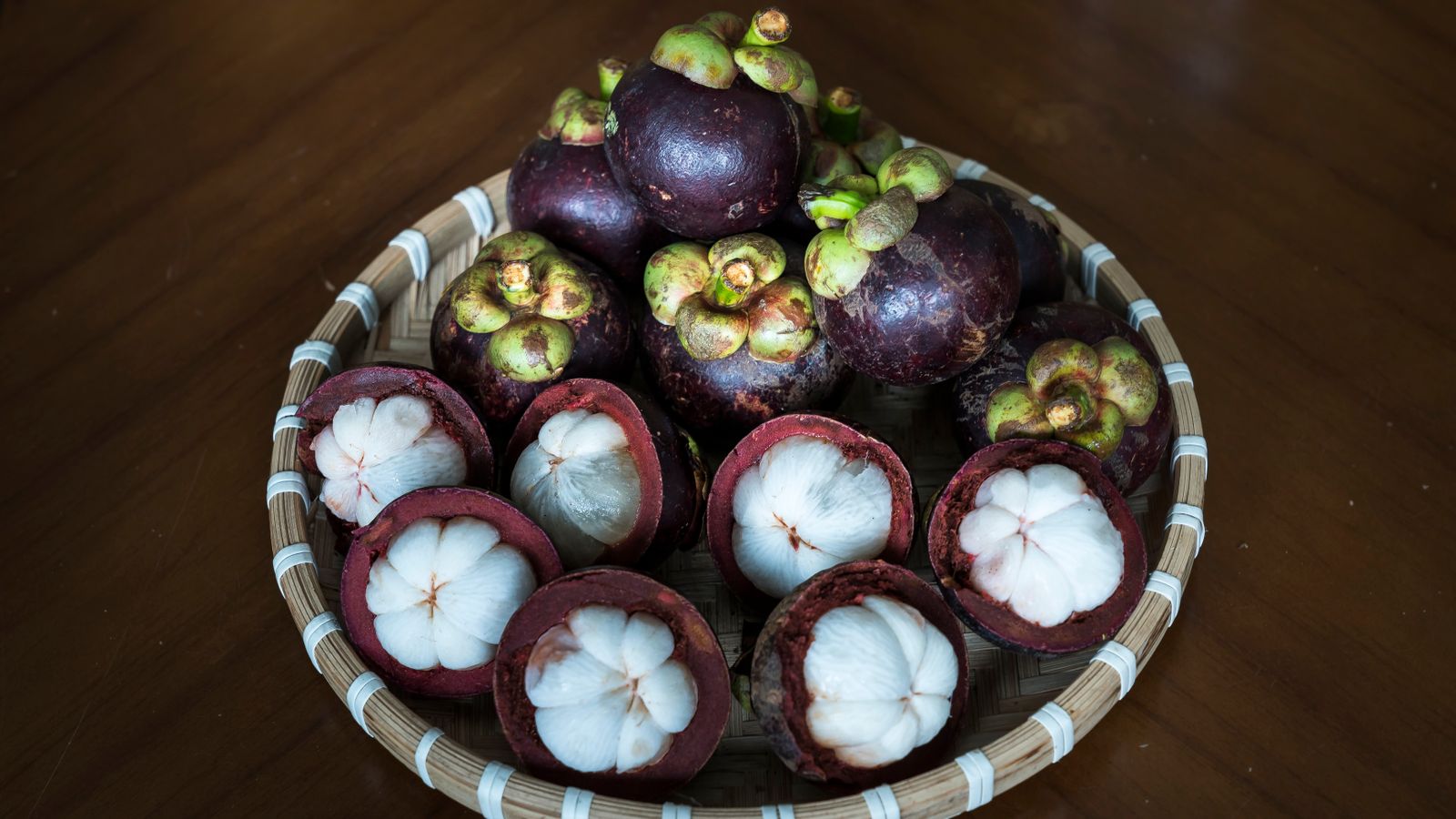
Marula oil comes from Sclerocarya birrea, a tree that grows across southern and West Africa and produces a small yellow fruit. The oil is cold pressed from the kernel inside the stone. It has been used in southern Africa for skin and hair care for a very long time, and it is now a fixture in Western hair oil formulations, largely because of how it feels: thin, almost dry to the touch, and absorbed within a minute.
Analytical work characterising marula seed oil, including a 2023 study in Phytochemical Analysis profiling oils by geographical origin, consistently puts oleic acid at around 70 to 80 percent of the fatty acid content, with palmitic and linoleic acids making up most of the rest, plus tocopherols and sterols in smaller amounts. That very high monounsaturated fraction is the reason it is more oxidation stable than a polyunsaturated oil, so it keeps longer on a bathroom shelf without going rancid.
On safety, a 2015 clinical perspective in the Journal of Ethnopharmacology reviewing marula oil concluded it is well tolerated on skin, which is consistent with how widely it is now used cosmetically.
What are the real benefits of marula oil for hair?
Shine. Hair looks shiny when the cuticle scales lie flat enough for light to reflect in one direction rather than scattering. An oil film smooths the surface mechanically, which is why the effect is immediate and why it washes away. Real, visible, temporary.
Slip and less breakage. This is the most valuable one. Combing force is what breaks hair, and work in the Journal of Cosmetic Science measuring breakage during combing found conditioning agents substantially reduce the number of hairs that snap, especially on chemically damaged hair. An oil is a crude conditioner in that sense: it lowers the friction coefficient between neighbouring hairs.
Frizz control. Frizz is largely raised cuticle plus humidity. A light oil film flattens the scales and slows how fast water moves in, which is why oiled hair holds a smooth shape longer on a damp day.
Slower moisture loss. An occlusive layer does not add water to hair. It slows the rate at which water already in the fibre leaves. On coarse, coily or bleached hair, that is worth having.
What it does not do. It does not penetrate to the cortex the way coconut oil does. The much cited 2003 comparison of mineral, sunflower and coconut oils in the Journal of Cosmetic Science found coconut oil, high in lauric acid with a straight chain and low molecular weight, reduced protein loss from hair, while the others did not. Marula is oleic acid dominated, so its action is largely surface level. It also does not reach the follicle, and no topical oil does.

How does marula oil compare with argan and coconut oil?
| Oil | Dominant fatty acid | Feel | Best used for |
|---|---|---|---|
| Marula | Oleic, roughly 70 to 80 percent | Very light, absorbs fast | Daily shine and frizz finish on all but the finest hair |
| Argan | Oleic and linoleic | Light, slightly richer | Similar job, marginally more conditioning on coarse hair |
| Coconut | Lauric | Heavy, solid below 24C | Pre-wash use, the one oil shown to reduce protein loss |
| Castor | Ricinoleic | Very thick and sticky | Sealing ends, usually diluted with a lighter oil |
If argan is what you actually have in the cupboard, our guide to what argan oil really does for hair covers the same ground for that oil. The practical answer is that these are close substitutes and the differences between them are smaller than the difference between using an oil correctly and using too much of it.
How to use marula oil on your hair
There are four practical ways to use marula oil for hair, and they suit different problems. Pick one rather than doing all four in the same week.
As a leave-in shine and frizz finish
One to two drops for fine hair, three to six for thick or curly. Warm it between your palms, then press it through the bottom third of the hair first and only use whatever remains on your hands higher up. Never start at the roots. This is the highest value way to use marula oil for hair and takes ten seconds.
As a pre-wash oiling
Apply generously to dry hair 30 to 60 minutes before washing, concentrating on the ends. It reduces the amount of water the fibre absorbs during the wash, which reduces the swelling that raises friction. Coconut oil is the better choice if protein retention is your goal, but marula is far pleasanter to rinse out.
Mixed into a conditioner or mask
Two or three drops stirred into a palmful of conditioner adds slip without changing the formula meaningfully. This is a good way to use an oil on hair that goes limp when oil is applied neat. Our step by step on how to use conditioner properly covers quantity and dwell time.
As a light finishing layer after heat
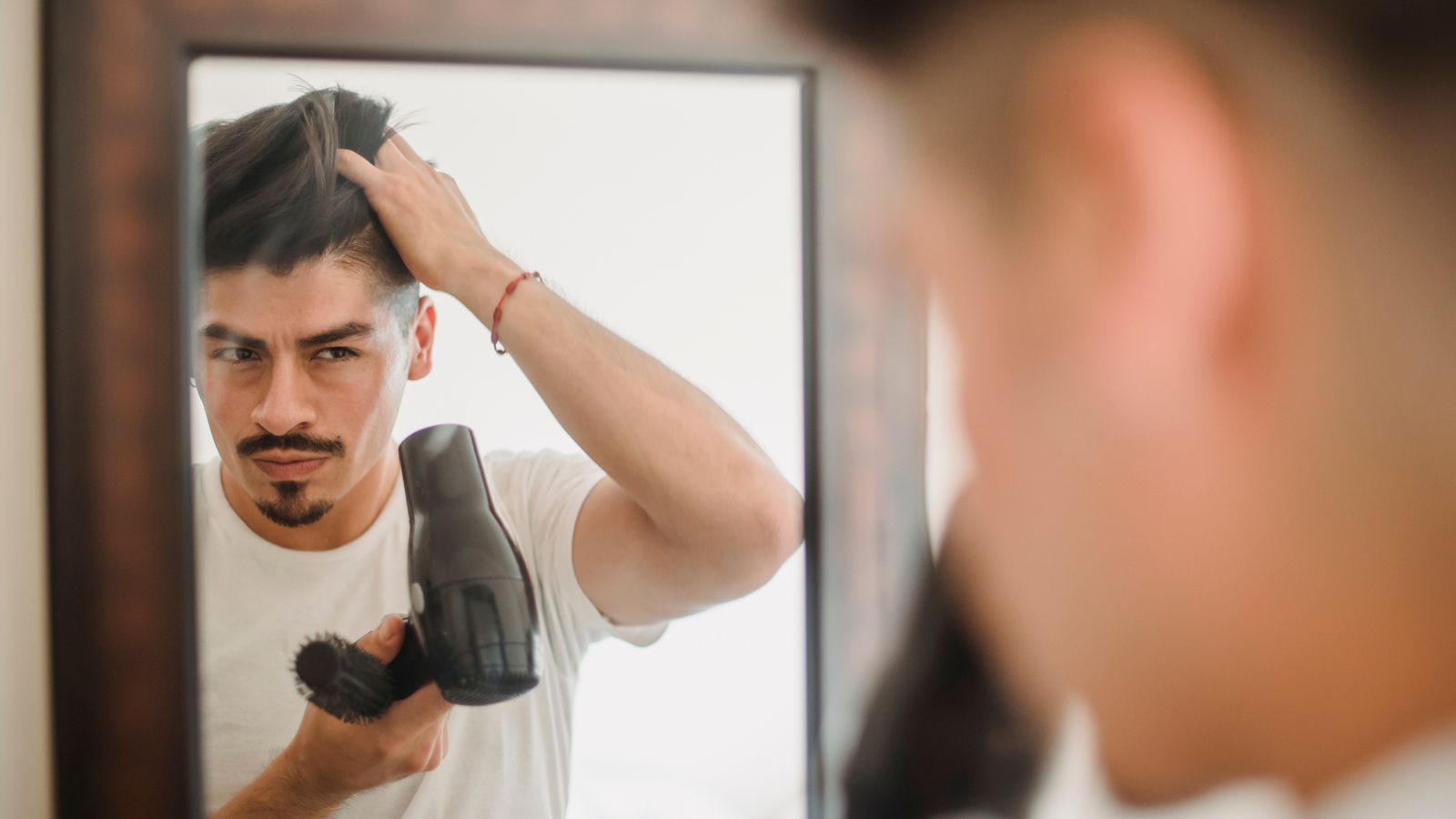
After blow drying or straightening, not before. A drop through the ends restores the light scattering surface that heat roughened. Before hot tools you want a formulated heat protectant, which behaves very differently from an oil.

The single most common mistake
Too much, too high. Oil belongs on the oldest, driest part of the hair, which is the ends. Applied at the roots it flattens the hair, makes the scalp feel coated and gets blamed on the oil rather than the placement.
Get a discount on the dry and frizzy hair range
Join the Watermans mailing list and we will email a discount code straight to your inbox, so you can try the dry and frizzy hair range for less. Vegan, made in the UK, over 6.5 million bottles sold since 2012.
Hair loss, hair shedding and hair breakage: which one is an oil relevant to?
Hair oils are marketed hardest at people worried about losing hair, which makes this distinction worth spelling out.
Hair breakage is the one an oil genuinely helps. The follicle is healthy and the fibre snaps mid length because of friction, heat, bleach or tension. Broken hairs are short, blunt ended and turn up in the towel and on your shoulders. Reducing comb friction and slowing moisture swings directly reduces how often this happens, which is why oiled hair holds length better. Our guide to what actually causes hair damage goes through the four mechanisms.
Hair shedding is the growth cycle releasing hairs that have finished their run, roughly 50 to 100 a day, more after illness, surgery, childbirth or a period of severe stress. A shed hair has a small pale bulb at the root. No oil changes this, because the event happened inside the follicle before the hair let go.
Hair loss is follicular miniaturisation, most commonly the pattern form driven by hormones and genetics. The visible sign is finer hair and a widening parting rather than more hair in the brush. This is a matter for a GP rather than a bottle, and any oil sold as an answer to it is being sold dishonestly.
If your ends are the problem, our piece on the habits that stop split ends pairs well with an oil routine.

The easiest way to get marula style benefits
A single oil is one tool. In practice most people get a better result from a small routine: something that lowers combing friction on wash day, something that seals the ends afterwards, and something that stands between the hair and a 200C plate.

Camellia & Black Castor Hair & Body Oil, £24.95
A blend of camellia and black castor oils that does the same surface job as marula: shine, slip and frizz control, with a little more weight for coarse or coily lengths. Use it on the ends of damp or dry hair, and as a pre-wash oiling.

A deep conditioning mask with hydrolysed lupine protein, argan oil and provitamin B5 for lengths that feel dry, rough or snap easily. Once a week does more for the ends than adding a second oil.

Protect Me® Heat Protection Spray, £13.95
A leave-in heat protection spray rated to 230C. This is the part an oil cannot do, so use the spray before hot tools and the oil afterwards.
Important: Watermans products are 100% cosmetic and do not treat medical hair loss. Individual results may vary.
Frequently asked questions
Is marula oil good for all hair types?
Marula oil for hair suits most hair types because it is light and absorbs quickly, but the amount changes everything. Fine hair needs one or two drops on the ends only, or it goes flat. Thick, coarse, curly or coily hair can take three to six drops and often wants more. Very oily scalps should keep it off the roots entirely.
Can marula oil make hair grow?
No, and no oil can. Growth happens at the follicle, below the skin, and an oil sitting on the fibre has no access to it. What an oil can do is help you keep the length you already grow, by reducing friction and the snapping that shortens hair from the ends up. That is a retention effect, not a growth effect, and the difference matters.
How often can I use marula oil?
Daily is fine on the ends if your hair is dry or coarse. Two or three times a week suits medium hair. If your hair starts to look limp or feels coated, you are using too much or applying it too high up the shaft, not using it too often.
Can I put marula oil on my scalp?
You can, and some people with a dry, tight scalp find it comfortable. It is not necessary for most people, and if your scalp is oily or you are prone to flaking, adding oil at the root usually makes things worse rather than better. Keep it on the lengths unless you have a specific reason not to.
Is marula oil better than argan oil?
They are close cousins in practice. Both are high in oleic acid, both smooth the cuticle, both add shine. Marula is slightly lighter in feel and higher in oleic acid, argan carries more vitamin E and a slightly nuttier scent. Anyone claiming a dramatic advantage for either is selling something. Choose on texture, price and smell.
Does marula oil protect hair from heat?
Not properly, and this is where oils are most often oversold. An oil adds a thin lubricating film that reduces friction, but it does not have the film forming polymers or the thermal behaviour of a formulated heat protection spray, and some oils smoke at styling temperatures. Use a proper heat protectant for straightening and blow drying, and use oil afterwards for finish.
Does marula oil clog pores or cause build up?
It is low on the comedogenic scales and rarely causes problems on the scalp at sensible amounts. Build up on the hair itself is more common, and it is a dosing issue. If your hair looks dull and heavy after a week of oiling, a single clarifying wash resets it.
Should marula oil go on wet or dry hair?
Both work for different reasons. On damp hair it spreads further, distributes more evenly and helps seal moisture in as the hair dries. On dry hair it does more visible work on frizz and shine, and you can see exactly where you are putting it. Damp for prevention, dry for finish.
Is marula oil safe if I have a nut allergy?
Marula is a stone fruit, and the oil is pressed from the kernel inside the stone, so it is not a tree nut in the botanical sense. That said, kernel oils are a grey area for people with nut allergies and cross contamination is possible in processing. If you have a diagnosed nut allergy, ask an allergy specialist before using it and patch test on the inner arm first.
Sources & references
- Safety and efficacy of Sclerocarya birrea (A.Rich.) Hochst (Marula) oil: a clinical perspective. Journal of Ethnopharmacology, 2015. PubMed 26528587
- Characterisation of Sclerocarya birrea (marula) seed oil and investigation of geographical origin. Phytochemical Analysis, 2023. PubMed 37515510
- Rele AS, Mohile RB. Effect of mineral oil, sunflower oil and coconut oil on prevention of hair damage. Journal of Cosmetic Science, 2003. PubMed 12715094
- Hair breakage during combing III: the effects of bleaching and conditioning on breakage by wet and dry combing. Journal of Cosmetic Science, 2007. PubMed 17728947
- NHS. Hair loss. nhs.uk
The bottom line
Marula oil for hair earns its place as a finishing oil: light, fast absorbing, good for shine and frizz, and genuinely useful for reducing the breakage that costs you length. Judge it on how your hair feels three hours later, not on any claim about growth, and put a heat protectant in front of it whenever hot tools are involved.
Watermans makes vegan hair care in the UK, with over 6.5 million bottles sold since 2012. Our products are cosmetic, and we would rather tell you what an oil cannot do than let you find out yourself.