Hormone Therapy Hair Miniaturization: What It Is, How It Is Measured
hormone therapy hair miniaturization is the gradual shrinking of individual follicles, so each new hair arrives finer, shorter and less pigmented than the one before. The follicle stays alive and keeps cycling, which is why the scalp looks thin rather than bare. Because a follicle only expresses the change at its next cycle, this is measured in calibre and photographs over 6 to 12 months, never in hairs counted in the shower.
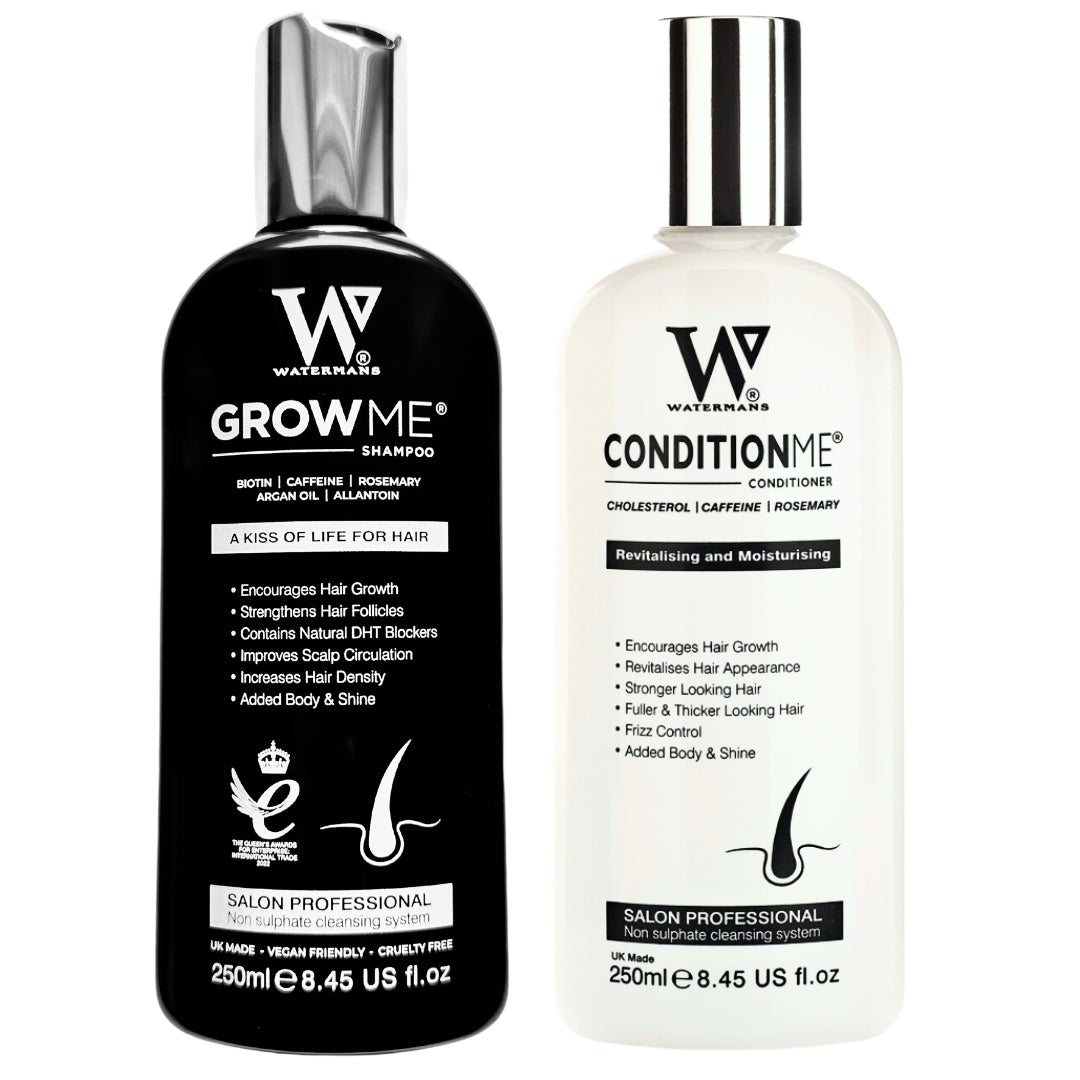
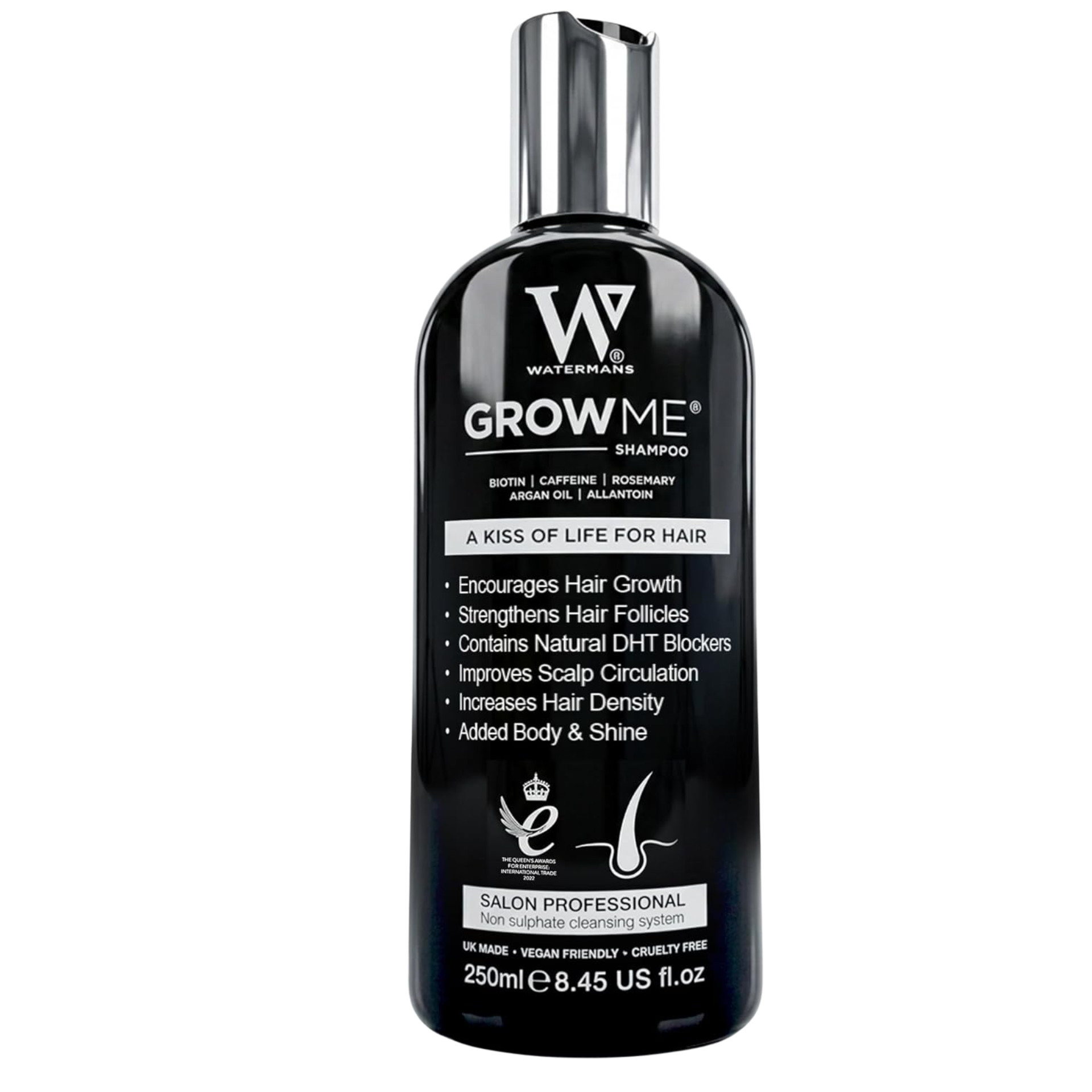
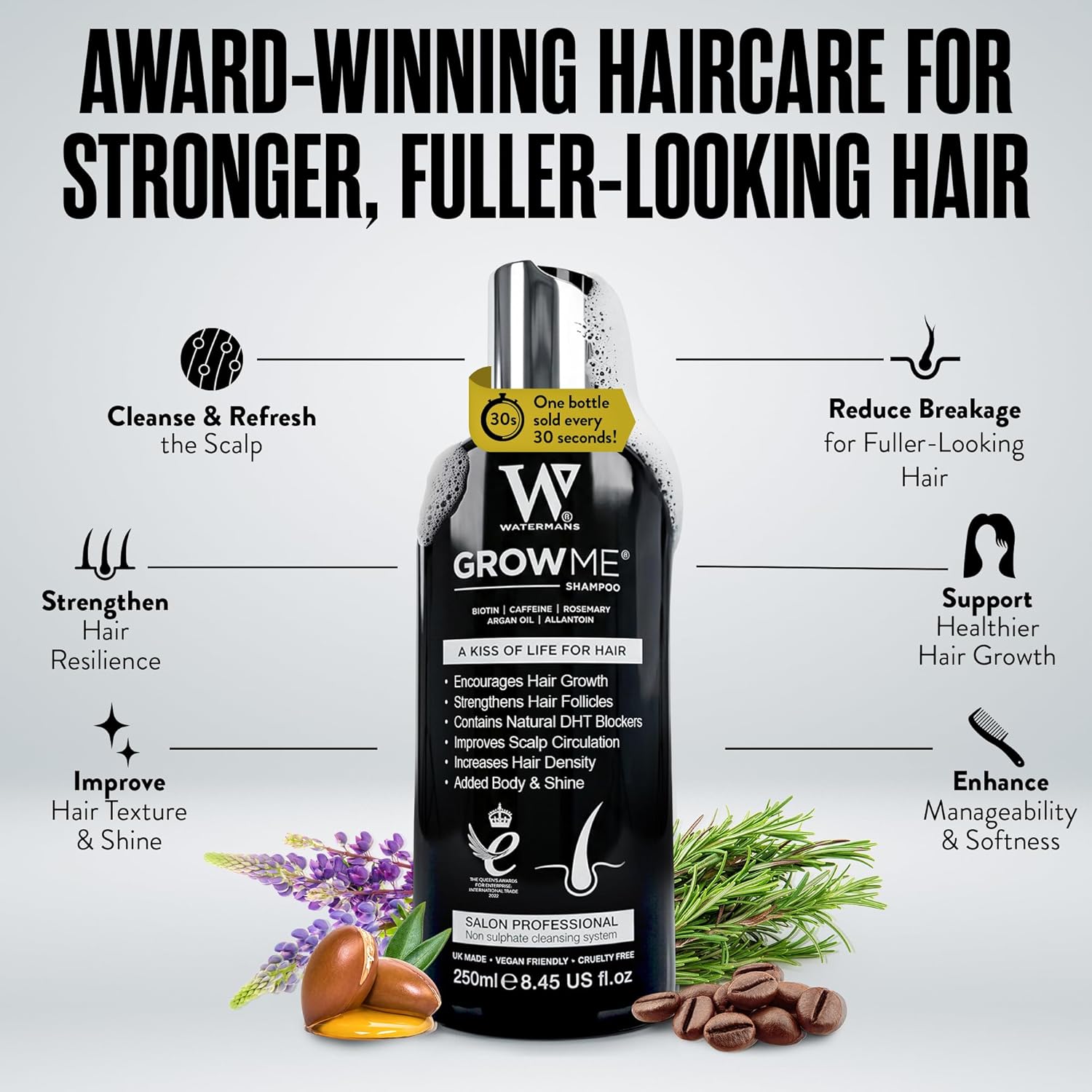
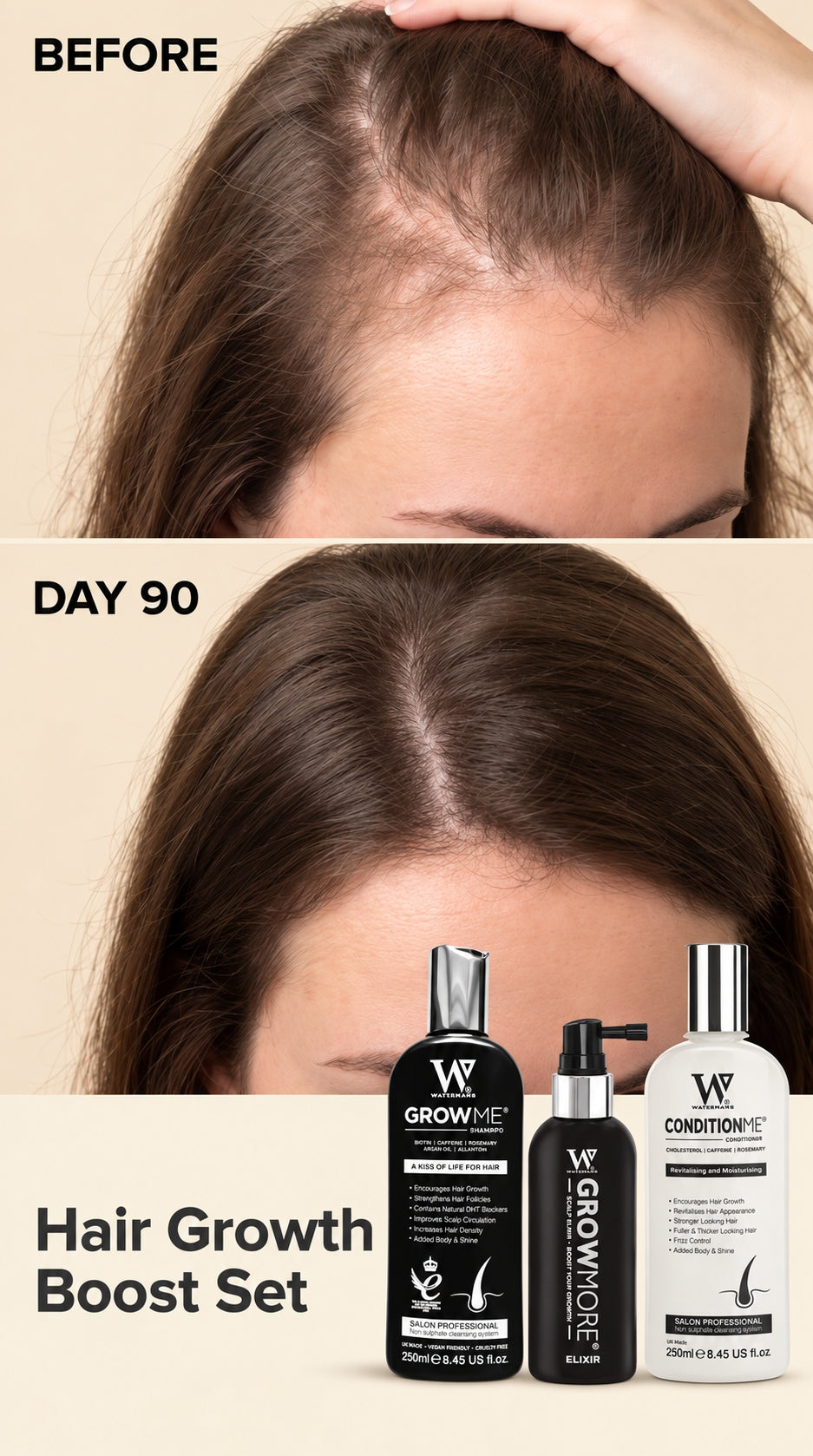
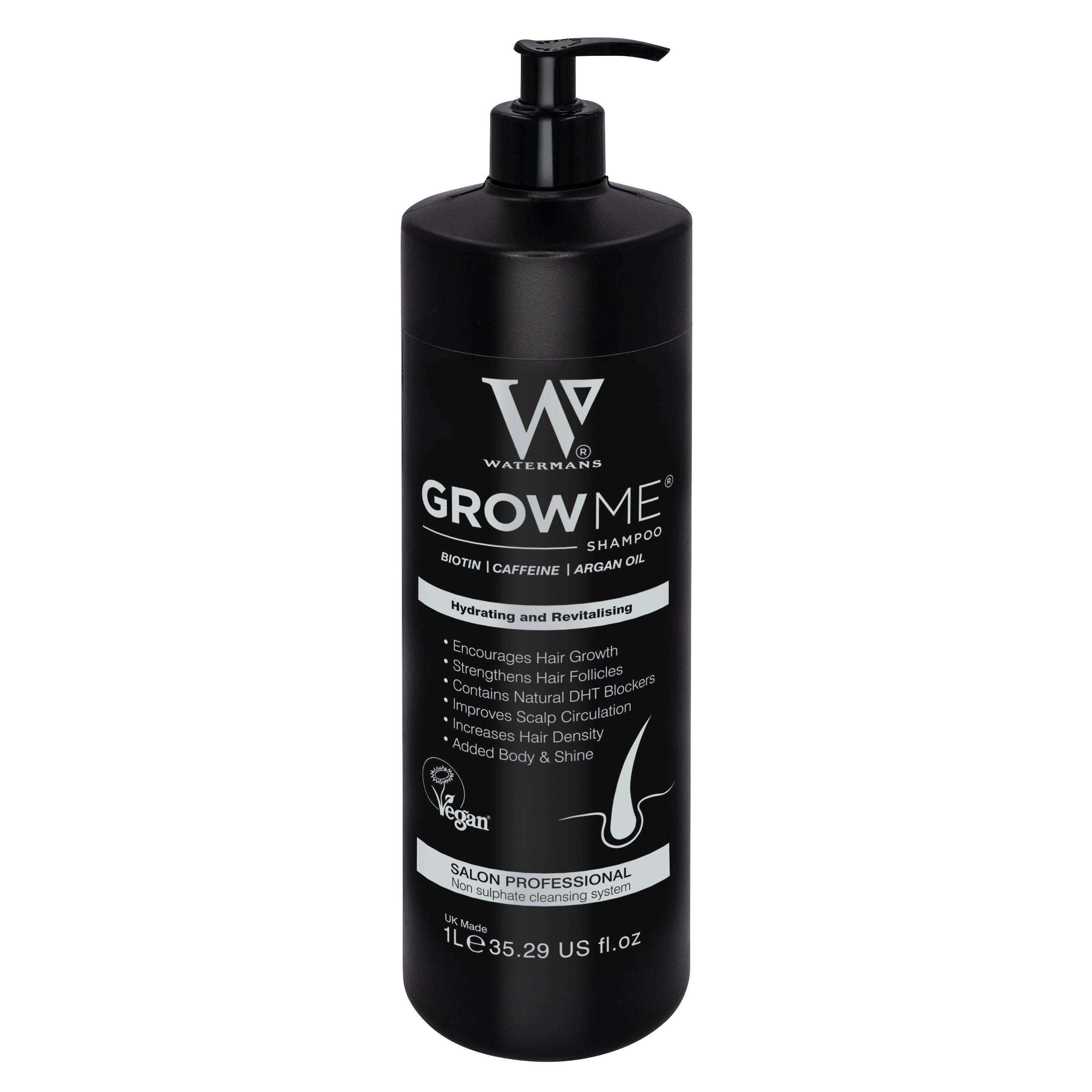
Our hair growth shampoo
Grow Me® Hair Growth Shampoo, £14.95. A sulphate free daily shampoo that supports a healthy scalp environment and helps reduce breakage, so lengths hold on and look fuller.
Key takeaways
- Miniaturization is a calibre problem. The follicle shrinks, so the hair it makes gets finer and shorter each cycle.
- It is not shedding. Shedding is a timing event that resolves; miniaturization is quiet, gradual and progressive.
- The tell is variation. Healthy areas show fairly even strand thickness, affected areas show thick and wispy side by side.
- Judge it over 6 to 12 months with monthly photos of the same parting in the same light, not day to day in the mirror.
- No shampoo or serum changes strand calibre. Cosmetics protect the strand you already grew, which is still worth doing.
- See your GP first to rule out iron deficiency and thyroid problems, then a registered trichologist for the scalp itself.
What is hormone therapy hair miniaturization at the level of the follicle?
Hormone therapy hair miniaturization is a change in the follicle, not in the hair you are holding. Each follicle runs a repeating cycle, and at every new cycle it decides how thick and how long the next hair will be. In miniaturization, that decision trends downward: the follicle's growing phase shortens and the shaft it produces narrows, so a thick pigmented terminal hair is replaced over several cycles by a short, fine, pale one.
DermNet's pages on female and male pattern hair loss describe exactly this progression, and note that the follicle persists rather than dying. That detail explains the appearance people find so confusing. There is no bald patch and no clear edge, just an area where the hair is present but no longer doing the work of covering the scalp.
Androgen sensitivity at the follicle is the recognised driver of pattern hair loss, which is why a change in hormone levels can change the pressure on those follicles in either direction. NHS guidance frames hormone therapy as something reviewed over months, so the honest expectation is a slow trend you assess over a year, not a verdict you reach in a fortnight. For the wider hormonal picture, our HRT and hair loss explainer sets out the context.

Calibre is the whole story. Fine and thick strands sitting side by side is the pattern that matters.
How does it differ from shedding and from breakage?
Shedding, hormone therapy hair miniaturization and breakage are three distinct problems, and mixing them up sends people after the wrong fix for months. Shedding releases whole hairs early and then stops. Miniaturization keeps the same number of follicles but makes each hair thinner. Breakage snaps the fibre partway along, so the root is untouched and the length is lost.
| Shedding | Miniaturization | Breakage | |
|---|---|---|---|
| What changes | The timing of the cycle | The calibre of each new hair | The fibre after it has grown |
| What you find | Whole hairs with a pale bulb | Nothing extra in the brush at first | Short fragments, blunt at both ends |
| How fast | Weeks, peaking near month 3 | Years, cycle by cycle | Immediately after rough handling or heat |
| Does it resolve alone | Usually within 6 to 9 months | No, it is progressive without intervention | Yes, once the handling changes |
| First move | Look back 3 months for a trigger | Photograph the parting and see your GP | Cut heat and tension, improve slip |
People commonly meet both at once. A shedding wave thins an area quickly, and when the dust settles they notice the calibre change that was already quietly under way and had been hidden by the hair that has now gone. That is why a shed so often feels like the moment everything started. Our guides to hair thinning and crown thinning cover the density side in more detail.
The pull test tells you less than you think
A handful of hairs coming away says something about shedding and nothing about calibre. Hold a few strands up to the light next to hairs from the back of your head instead. A visible difference in thickness is the useful signal.
Get a discount on the thinning hair range
Join the Watermans mailing list and we will email a discount code straight to your inbox, so you can try the thinning hair range for less. Made in the UK, over 6.5 million bottles sold since 2012.
How is strand calibre actually assessed?
Assessment works by comparing thicknesses within your own scalp rather than against any population average. Under magnification, a clinician or registered trichologist looks at a defined area and notes the spread of calibres. An unaffected area shows fairly uniform hairs. An affected area shows a wide mix, with wispy short hairs growing between normal thick ones, and that variation is the finding that matters.
Comparing the crown or parting with the hair at the back and sides is part of why this works. In pattern hair loss the back and sides are typically far less affected, so they serve as your own internal control. If the hair at your parting is visibly finer than the hair at your nape, that asymmetry says more than any single count.

Sectioning the hair to see the scalp under good light is how calibre is actually assessed.
You can do a useful version at home. Photograph the same parting once a month, hair dry, parted in the same place, in the same daylight and from the same distance. Density change is far easier to see between two photographs three months apart than in a mirror you look at every day. Keep the dates, because the timeline is what turns a worry into information a clinician can use.
The Institute of Trichologists maintains a public register, which is the practical way to check that whoever you see is qualified. We do not run clinics and we do not assess scalps, so anything needing a clinical eye belongs with your GP or a registered trichologist. Our guide to follicle health covers the biology in more depth. If your question is about products or a routine rather than a medical one, you can talk to Gail Waterman, our co-founder, as an AI avatar on the Watermans homepage.
What should you ask your GP about first?
Your GP is the right first stop because several common and correctable conditions mimic or compound a calibre change. Iron deficiency anaemia and an underactive thyroid both affect hair, both are ordinary, and both are picked up on a blood test rather than by looking at your head. Checking those before assuming hormones explain everything is simply good sequencing.
The panel usually discussed is ferritin, a full blood count, thyroid function and vitamin D. Your GP decides what is appropriate, and the order is test first, correct second. Taking supplements speculatively can obscure a deficiency on a later test, and with iron it is not risk free. If ferritin is the issue, our ferritin guide explains how that is approached.
Take your photographs to the visit. A dated series showing the same parting over six months is far more persuasive than a description, and it gives the clinician the one thing they cannot get from examining you once: the direction of travel.
What can cosmetic care honestly do?
Cosmetic care in the context of hormone therapy hair miniaturization works on the strand after it has grown, which is a real job even though it is not the one people wish it were. Finer hair is more easily damaged, so on a scalp that is already producing thinner strands, every hair lost to a hot straightener or a dragged comb is a loss that did not have to happen. Reducing breakage keeps the length and coverage you have.
Watermans products are made in the UK and over 6.5 million bottles have sold since 2012. They reduce breakage related hair fall, support a healthy scalp environment, and make hair look fuller and feel stronger. They do not change what your follicles are doing, and we will not pretend otherwise.

Caffeine, biotin and hydrolysed lupine protein in a sulphate free daily cleanse for finer looking hair. Vegan and made in the UK.

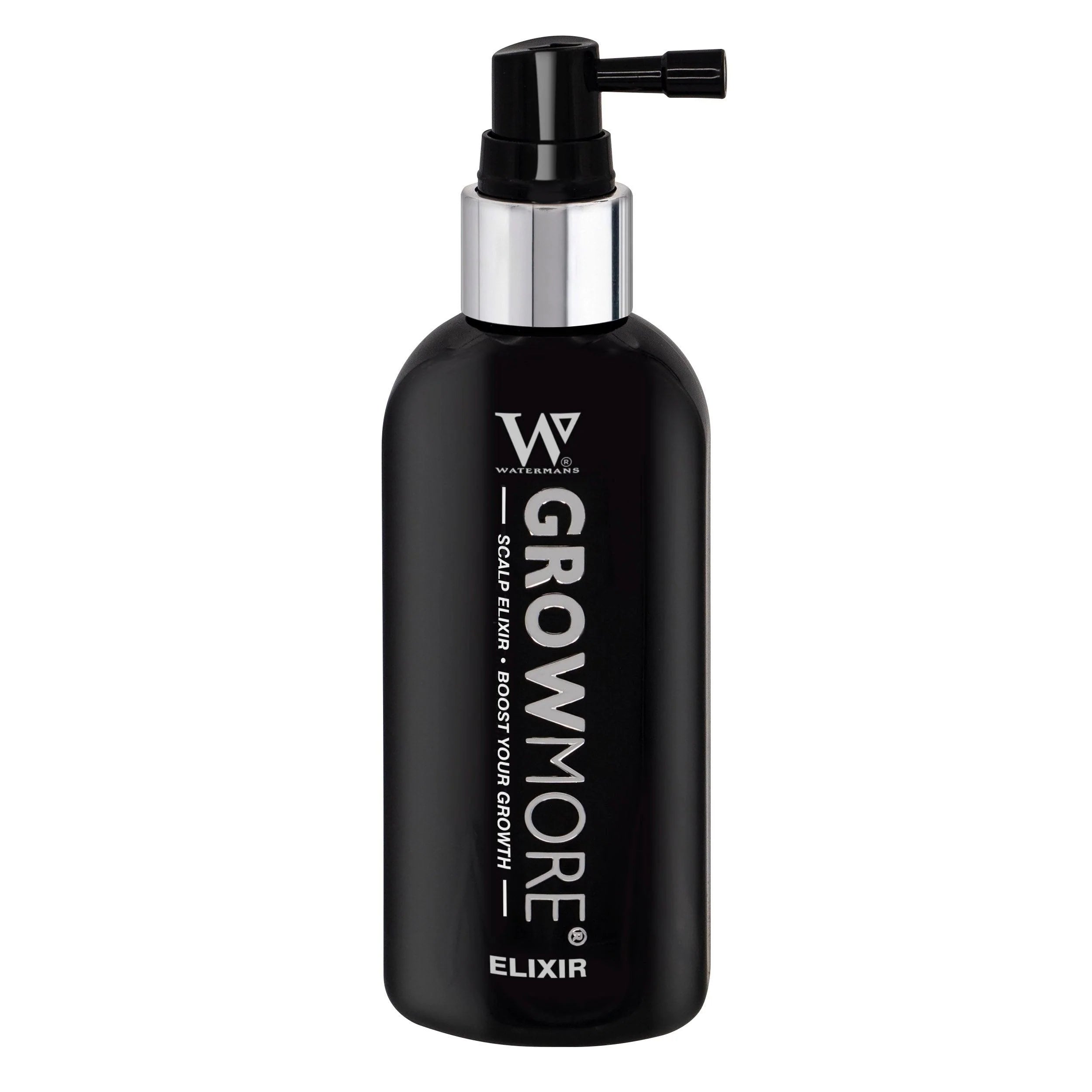
Grow More Leave In Scalp Elixir
A leave in scalp serum with caffeine and biotin, applied to damp roots and left on to support a healthy scalp environment. Vegan.

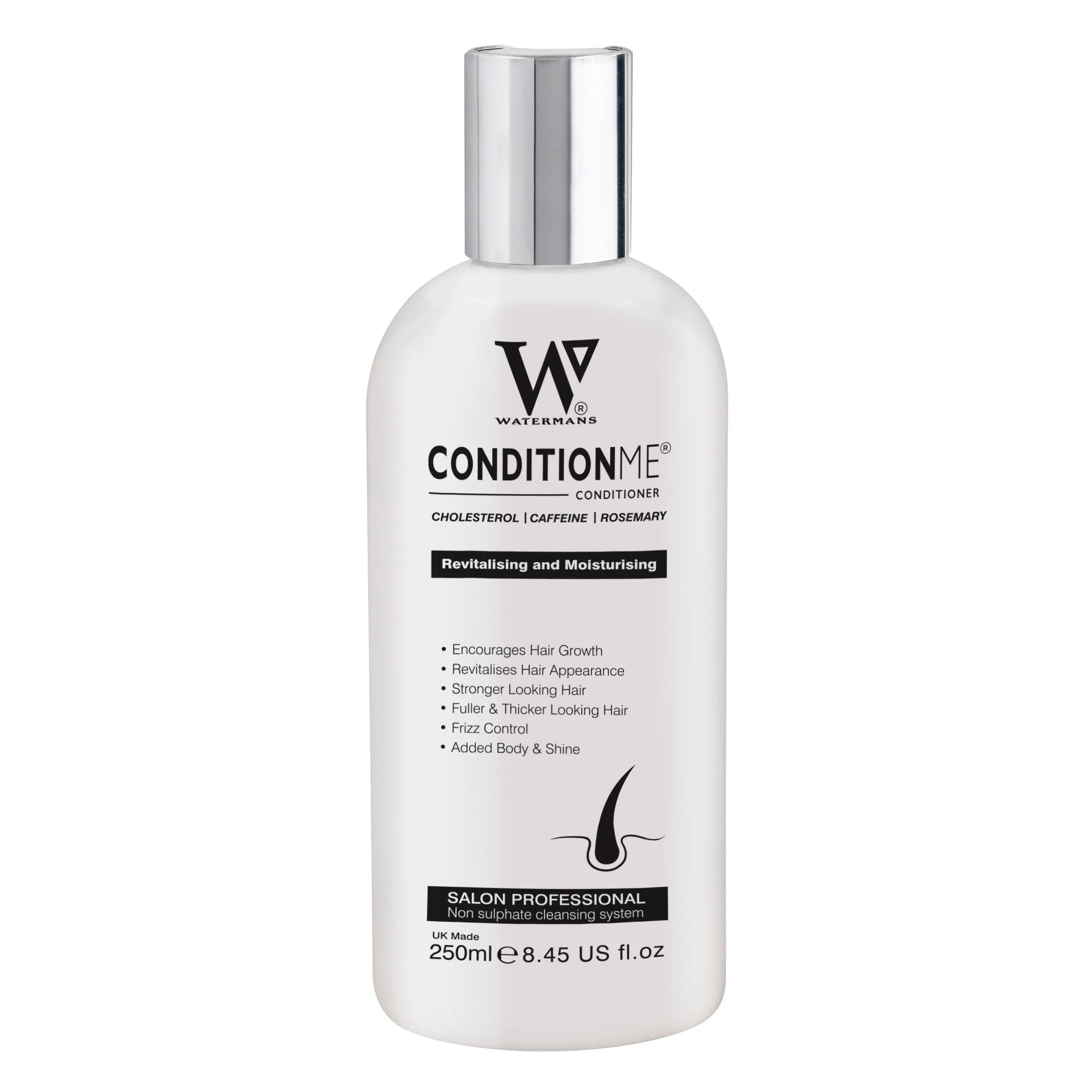
A lightweight conditioner that improves slip so wet combing snaps fewer strands, leaving hair looking thicker and feeling stronger.

Everyday handling is where fine hair is won or lost. Gentle detangling on conditioned hair costs nothing.
Alongside products, the handling matters: detangle from the ends upward on damp conditioned hair, bring heat down, and avoid sustained tension at the hairline. Our hair strength guide goes further on all three.
What is the bottom line on hormone therapy hair miniaturization?
The bottom line on hormone therapy hair miniaturization is that it is a calibre change inside a living follicle, so it is slow, quiet and progressive rather than dramatic. Read it by looking at the spread of strand thicknesses on your own scalp and by photographing the same parting monthly, and judge it over 6 to 12 months. See your GP to check ferritin and thyroid function before concluding that hormones are the whole story, and use a registered trichologist for the scalp itself. Cosmetics cannot change calibre, but they can stop fine hair also becoming broken hair.
If you want one product for that job, Grow Me hair growth shampoo is a sulphate free daily cleanse made for finer looking hair, and using it with the Grow More leave in scalp elixir keeps the routine simple while you track the picture over the year.
Frequently asked questions
What does miniaturization actually mean?
Miniaturization describes a follicle producing a progressively smaller hair at each new cycle. The strand loses calibre, loses length and eventually loses pigment, going from a thick pigmented terminal hair to a short, fine, pale one. The follicle is still there and still cycling, which is why density looks patchy rather than bald.
How is hormone therapy hair miniaturization measured?
Assessment relies on strand calibre rather than counting fallen hairs. A clinician or registered trichologist looks at the scalp under magnification and notes the mix of thick and fine hairs in a given area. A healthy scalp shows fairly uniform calibre, while an affected area shows a wide spread of thicknesses side by side. Serial photographs of the same parting in the same light add the change over time.
Is miniaturization the same as shedding?
No, and this is the distinction that matters most. Shedding is a timing event in which many follicles release their hairs early and then carry on as normal. Miniaturization is a calibre change that builds across cycles. Shedding is dramatic and usually temporary, while miniaturization is quiet and progressive, so people often notice the shedding and miss the miniaturization underneath it.
Can hormone therapy cause it or slow it?
Androgen sensitivity at the follicle is the main driver of pattern hair loss, so changing hormone levels changes the pressure on those follicles in either direction. That is why some people notice pattern change beginning after a hormone shift and others notice it stabilising. What happens in your case depends on your own follicle sensitivity and your hormone profile, which is a conversation for the clinician who manages your therapy.
How long before I can tell if anything has changed?
Give it 6 to 12 months before judging. A follicle expresses a change at its next cycle, not immediately, and scalp hair grows about 1cm a month, so a finer or thicker replacement takes months to become visible at any useful length. Monthly photos of the same parting are far more reliable than daily mirror checks.
Does a wide parting always mean miniaturization?
No. A parting can look wider because hair is shorter after a shed, because it is freshly washed and flat, or because lighting is overhead and unforgiving. Calibre is the thing to look at. If the hairs bordering the parting vary noticeably in thickness, that points to a calibre change, whereas uniform but sparse looking hair often reflects a recent shed.
Can shampoo or serum change strand calibre?
No. Calibre is set inside the follicle, and no cosmetic product reaches or alters that. What cosmetics honestly do is protect the strand that has already grown, so fine hair is not also broken hair, and make the hair you have look and feel thicker. Anything promising to change your follicle is making a claim it cannot support.
Who should I see about it?
Start with your GP, who can check for the common non hormonal contributors such as iron deficiency and thyroid problems. For assessment of the scalp and strand calibre specifically, a registered trichologist is the relevant professional, and the Institute of Trichologists holds a public register you can check.
Sources and references
- DermNet: Female pattern hair loss
- DermNet: Male pattern hair loss
- DermNet: Telogen effluvium
- NHS: Hair loss
- NHS: Hormone replacement therapy (HRT)
- The Institute of Trichologists
- NHS: Iron deficiency anaemia
Watermans products are 100% cosmetic and do not treat medical hair loss. Individual results may vary.