HRT Hair Strength: Why Hair Snaps and What Actually Holds
HRT hair strength is about whether the fibre you have already grown holds together, and it is a completely different question from how much hair you have. Hormone therapy can change fibre diameter and how the cuticle behaves, and finer hair snaps more readily. Most of what people call hair loss during hormonal change is actually hair breakage, which is far more fixable.
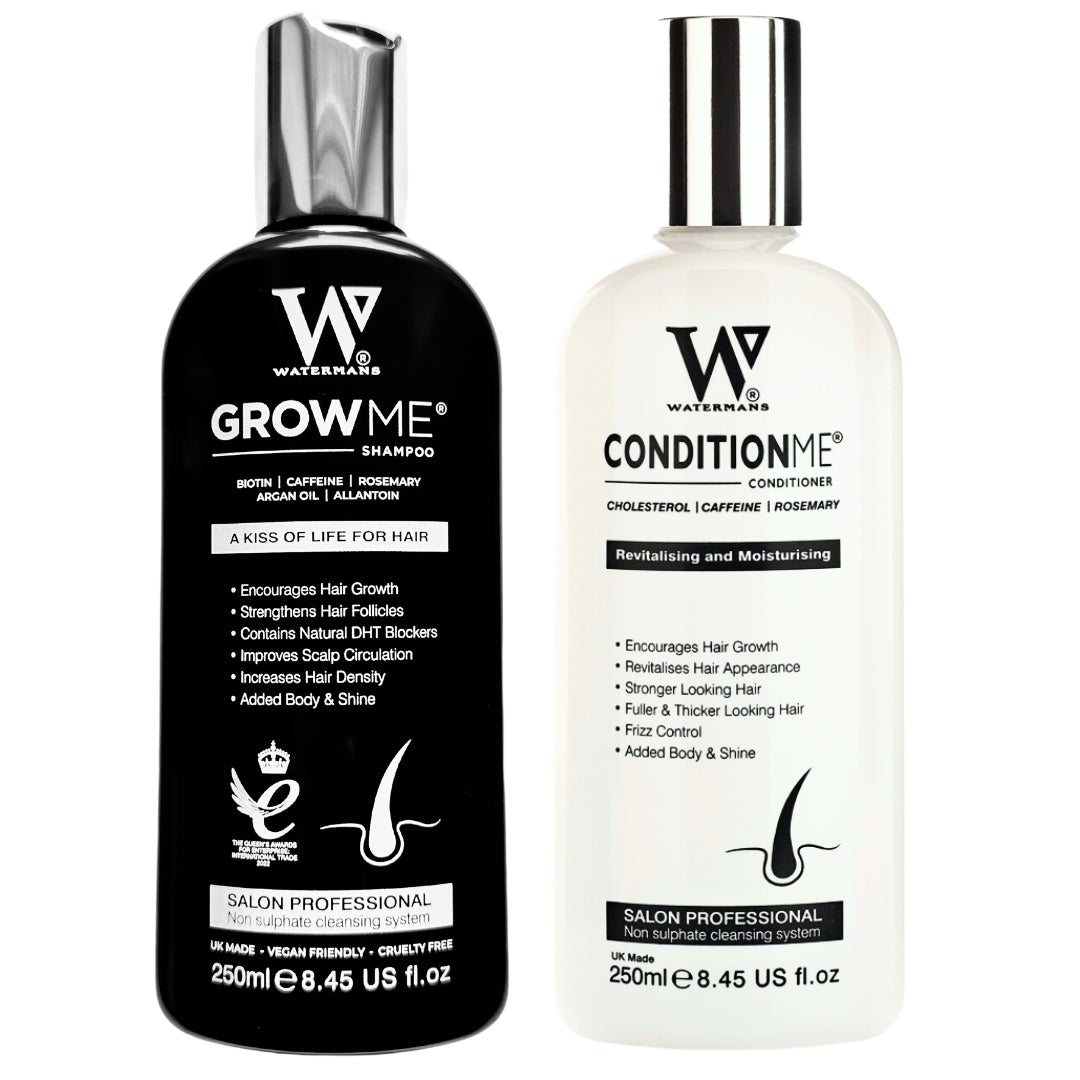
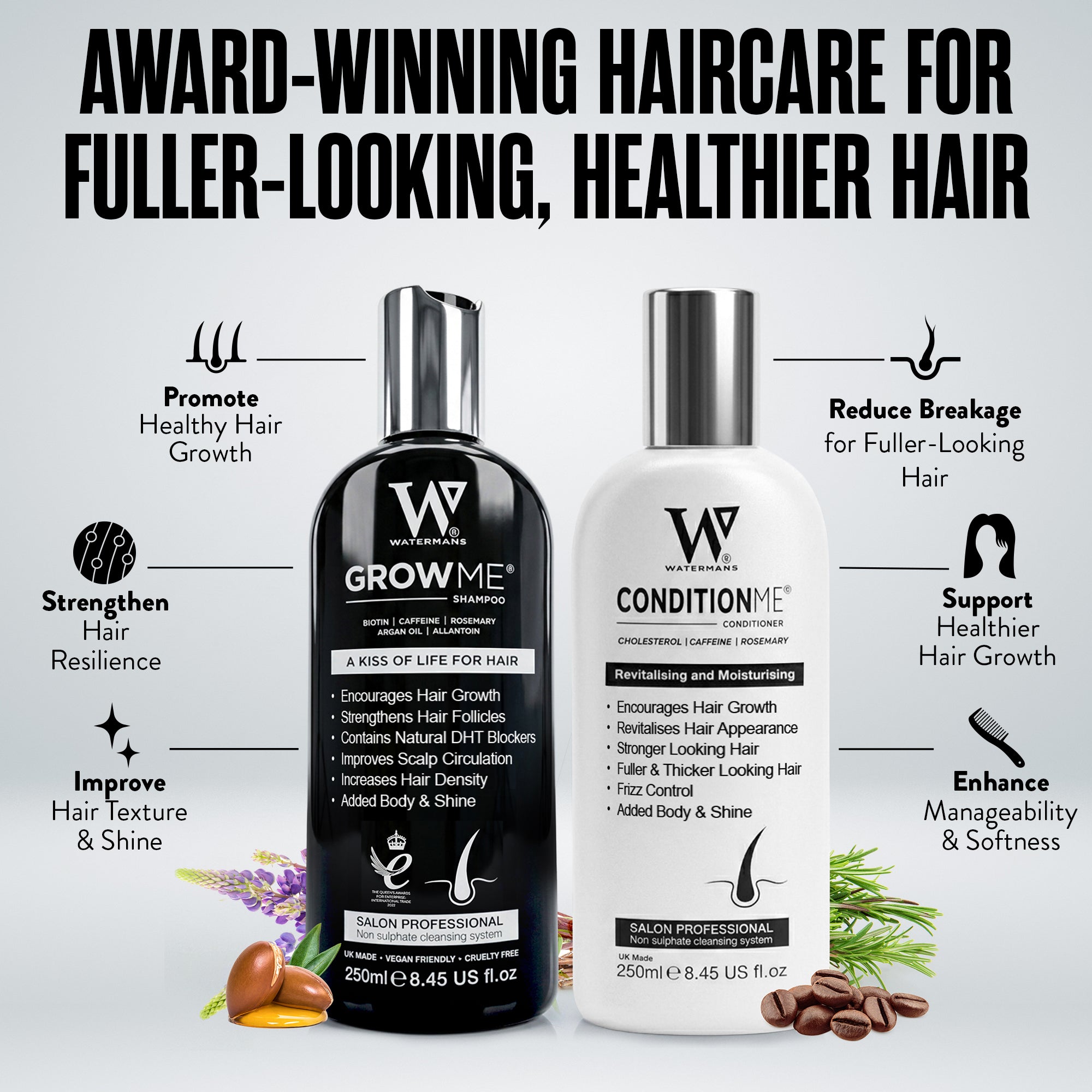
Our hair growth conditioner
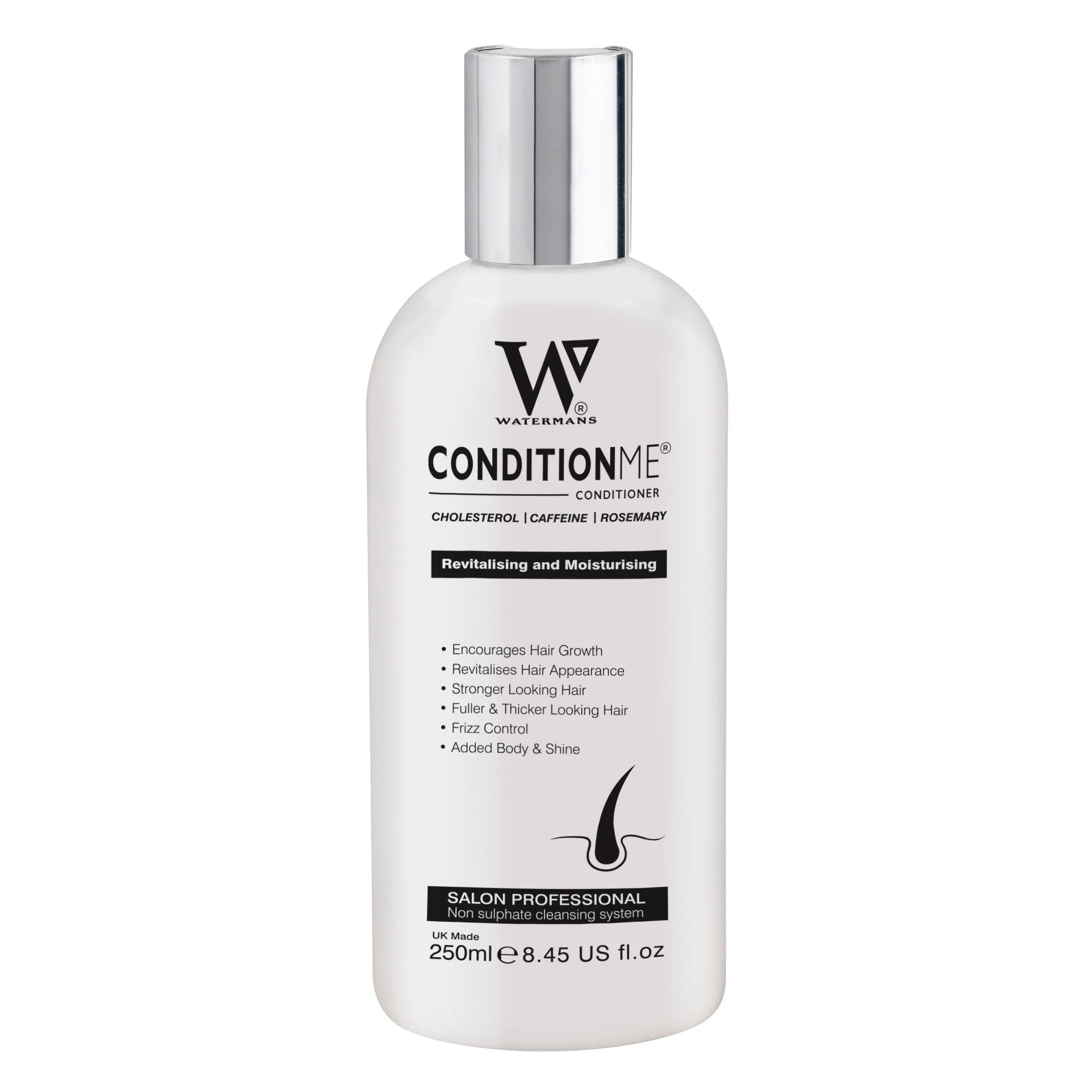
Condition Me® Hair Growth Conditioner, £13.95. Detangles and strengthens the hair fibre so lengths snap less on the brush and look thicker through the ends.
Key takeaways
- Breakage is fibre snapping along its length. Loss is follicles producing less. Shedding is whole hairs leaving early.
- Broken hairs are short, of uneven lengths and have no white bulb at the end. Shed hairs are full length and do have one.
- Finer hair carries less tensile reserve, so the same brushing or heat that was fine before can now cost you length.
- Protein and moisture both matter. Too much of either alone leaves hair either brittle or limp and stretchy.
- Wet hair is at its most fragile, which is why detangling technique changes more outcomes than any product does.
What does HRT hair strength actually mean?
HRT hair strength means the tensile and elastic capacity of each individual fibre under the hormone balance you now have. A strong fibre stretches slightly under tension and returns. A weak one either snaps immediately, which is a protein problem, or stretches like chewing gum and never recovers, which is a moisture problem.
The hair shaft is dead tissue built from keratin and held together by an outer cuticle of overlapping scales. Once the follicle has made it, nothing repairs it. Products can smooth the cuticle, fill gaps temporarily and reduce friction, which genuinely reduces breakage, but they cannot rebuild a fibre. That distinction matters when you are deciding where to spend.

How can you tell hair breakage from hair loss or shedding?
Look at the ends of the hairs you are finding. Broken hairs are short, vary in length and taper or fray at one end with no bulb. Shed hairs are full length with a small white or pale bulb at the root end. Hair loss shows up as a widening parting over months rather than as hairs in your hand at all.
| Clue | Hair breakage | Hair shedding | Hair loss |
|---|---|---|---|
| Length of hairs found | Short, uneven | Full length | Not usually about loose hairs |
| End of the hair | Frayed or blunt, no bulb | Small white bulb | Not applicable |
| Where you notice it | Brush, pillow, shoulders | Shower drain, brush | Parting and hairline in the mirror |
| Timing | Follows heat, colour or rough handling | Starts 2 to 3 months after a trigger | Gradual over many months |
| Where the answer lies | Routine and handling | Usually the trigger passing | Your GP |
Shedding has a reliable delay of about two to three months between the trigger and the hair actually leaving, which is why people so often blame the wrong month. the four main causes of hair damage covers the breakage side in detail.
Why does hormone therapy affect how easily hair snaps?
Hormone therapy changes fibre diameter, and diameter drives strength directly. A thinner fibre has less cross sectional area to resist a pulling force, so the brush stroke that was harmless on your old hair can now break the new. This is physics rather than damage, and it is why technique has to change alongside the hair.
Scalp oil production also shifts, and that matters more than people expect. Sebum is the hair fibre native conditioner, travelling down from the root and keeping the cuticle flexible. Where hormone therapy reduces oil, lengths dry out and become brittle. Where it increases oil, roots get heavy while the ends can still be parched. what actually happens to the scalp on hormone therapy works through both patterns.
The stretch test
Take one shed hair and pull it slowly between two fingers. Snapping almost immediately points at a protein deficit. Stretching a long way and staying stretched points at too much moisture and not enough protein. Stretching a little and springing back is a healthy fibre.
What is the protein and moisture balance, and how do you fix it?
Protein and moisture are the two things a hair fibre needs in proportion, and either one alone creates a problem. Protein rich products lend temporary structure to a damaged cuticle. Moisture rich products lend flexibility. Hair heavy on protein feels rough and snaps. Hair heavy on moisture feels mushy when wet and stretches without returning.
Most people going through hormonal change land on the moisture side, because the ends are dry and every instinct says to add more oil and more conditioner. If your hair feels soft, limp and stretchy but still breaks, add structure rather than more moisture. If it feels rough, straw like and snaps dry, do the opposite.

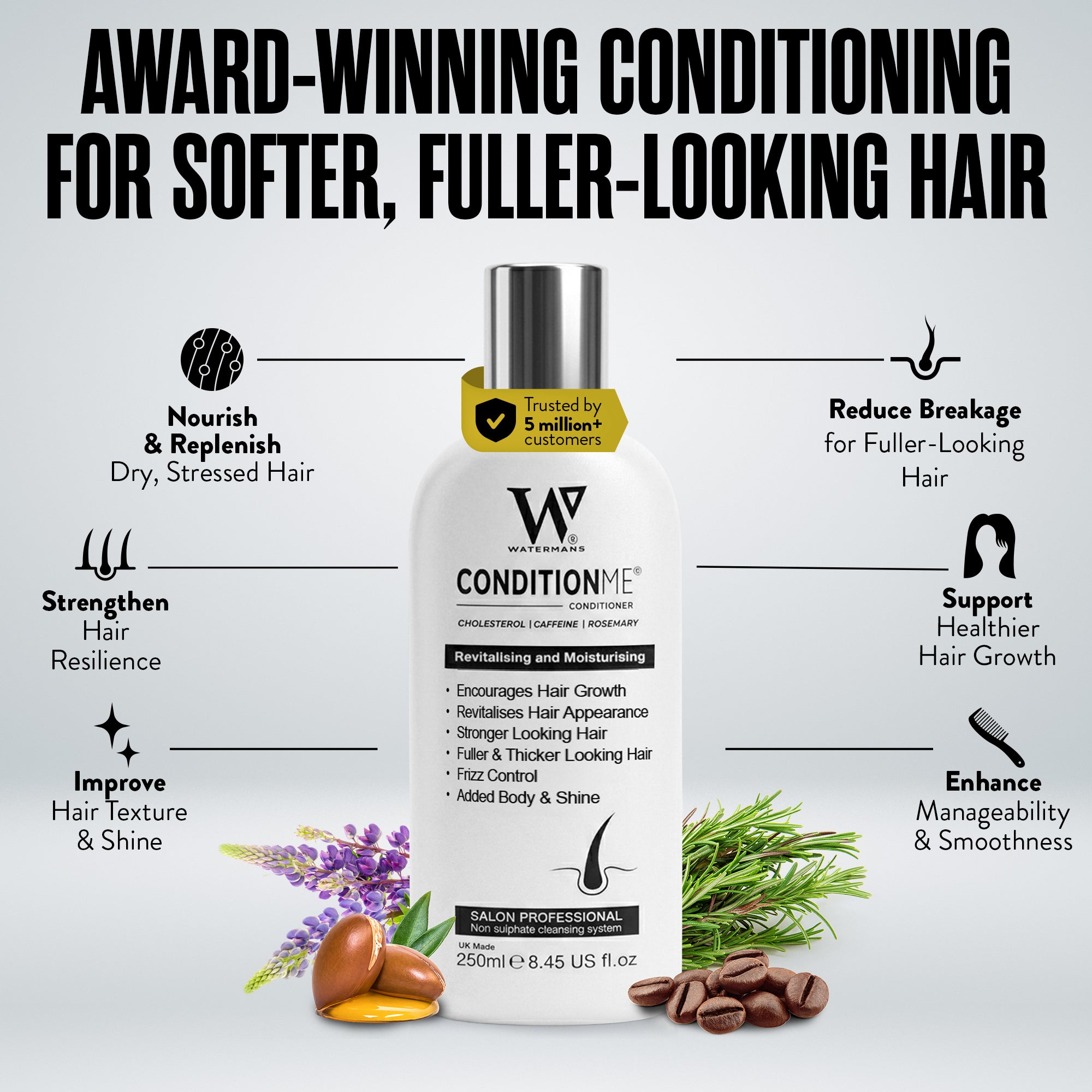
Condition Me® Hair Growth Conditioner £13.95
Breakage defence conditioner with cholesterol, shea butter and glycerin. Smooths the cuticle so combing pulls less hair out at the mid lengths.
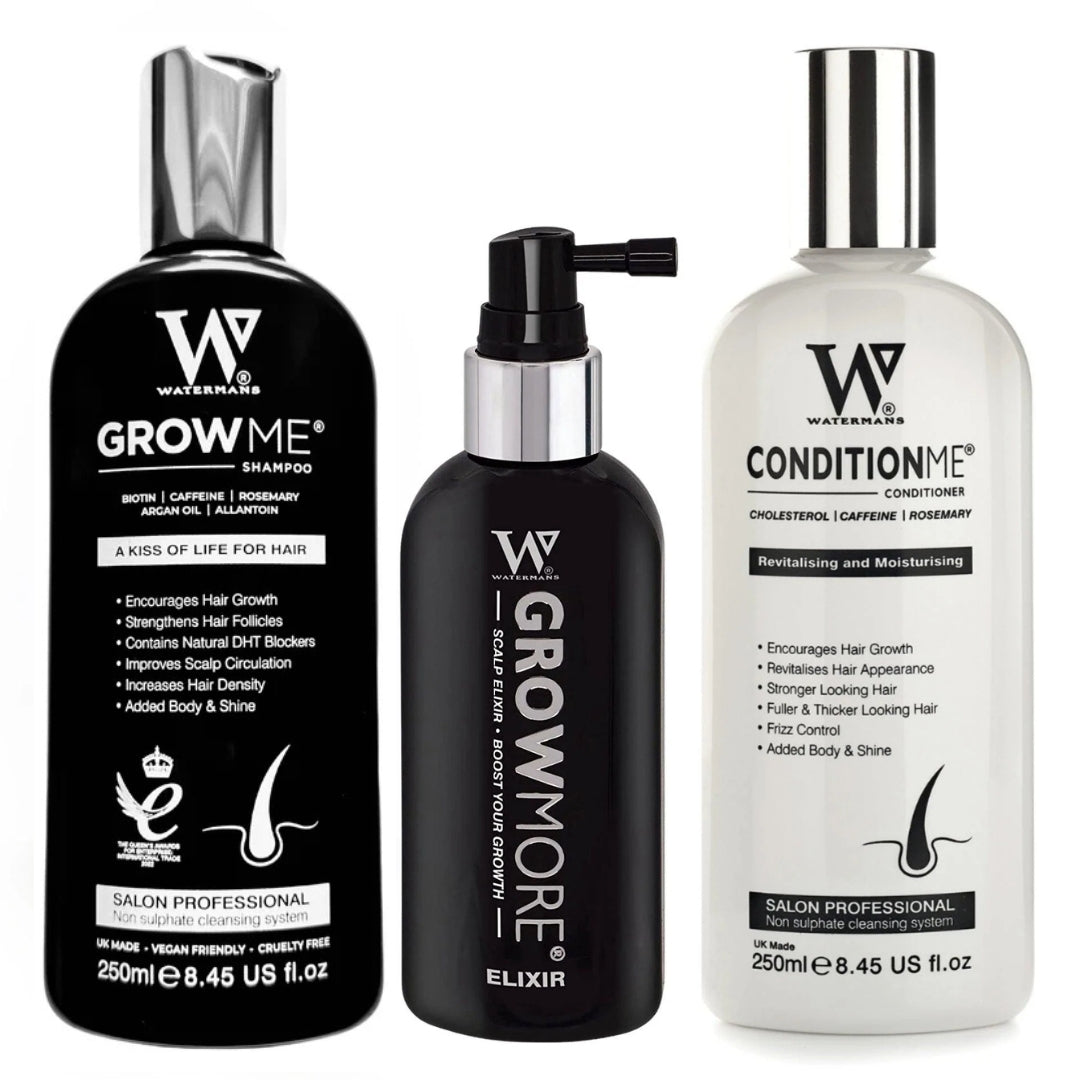
Condition Me sits deliberately in the middle: cholesterol and shea butter for flexibility, hydrolysed lupine protein and silica for structure. At £13.95 it is an everyday conditioner, used from the ears down after every wash. That routine placement is what protects HRT hair strength week to week, not the occasional rescue product.
Get a discount on the hair breakage range
Join the Watermans mailing list and we will email a discount code straight to your inbox, so you can try the hair breakage range for less. Made in the UK, over 6.5 million bottles sold since 2012.
Which everyday habits cost you the most length?
Four habits account for most avoidable breakage: brushing wet hair from the top down, heat styling without protection, daily tight tension styles, and towel scrubbing. Each is free to fix and each returns visible length within a couple of months, because you simply stop losing what you have already grown.
- Detangle from the ends upward. Start at the last two centimetres, work up in sections, with conditioner still in and a wide tooth comb.
- Never use heat dry without protection. Wet hair plus high heat causes the water inside the fibre to expand, and the cuticle pays for it.
- Swap the terry towel for a cotton t shirt. Squeeze, do not rub. Terry loops catch and lift the cuticle scales.
- Vary where you tie your hair. The same tight ponytail in the same place every day is a slow, cumulative injury to the hairline.
- Sleep on silk or satin, or plait loosely. Friction over eight hours a night is not nothing.

Which products genuinely help with HRT hair strength?
Two categories earn their place: a heat protectant used without exception, and a weekly deep conditioning mask. Everything else is optional. Neither changes what the follicle builds, but both reduce how much of the fibre you lose between the scalp and the ends, which is where visible length actually comes from.

Protect Me® Heat Protection Spray £13.95
Leave in spray rated to 230C, with panthenol, niacinamide and sunflower oil. The cheapest insurance there is against straightener and dryer damage.
Protect Me is rated to 230C and carries panthenol, niacinamide and sunflower oil. At £13.95 it is the highest return product in this article by a wide margin, because heat damage is permanent and prevention is the only option available.

Masque Me® Repairing Hair Mask £24.95
Eight in one deep conditioning mask with argan oil, provitamin B5 and rosemary. A weekly reset for lengths that have gone coarse, dry or dull.
Masque Me is the weekly reset for lengths that have already gone coarse or dry, with argan oil, provitamin B5 and rosemary in an eight in one formula. Five minutes on the mid lengths and ends, once a week. our four step routine for dry hair shows how to sequence it, and the habits that actually prevent split ends covers the trimming question honestly.

When is breakage a sign of something medical?
Get checked when breakage arrives with scalp pain, redness, scaling, bald patches, or hair that breaks close to the scalp across the whole head rather than at the ends. Widespread breakage at the root end is not a routine problem and is not something a conditioner addresses.
It is also worth asking your GP about iron and thyroid blood tests if brittle hair comes with tiredness or feeling cold, since the NHS lists hair changes among the symptoms of both iron deficiency anaemia and an underactive thyroid. The Institute of Trichologists maintains a public register of qualified specialists. We make cosmetic hair care and do not run clinics, so this is genuinely a clinician question. If your question is about products or a routine rather than a medical one, you can talk to Gail Waterman, our co-founder, as an AI avatar on the Watermans homepage.
Frequently asked questions
Can anything repair hair that has already broken?
No product repairs a broken fibre, because hair is dead tissue once it leaves the follicle. Conditioners and masks smooth the cuticle and temporarily fill gaps, which reduces further breakage and improves how hair looks and feels. The broken piece is gone.
Does HRT hair strength improve on its own over time?
Often yes, once the fibre character settles after about a year and your routine has adapted to it. What improves faster is the amount of length you keep, because most breakage is caused by handling rather than by hormones.
Should I cut my hair if it is breaking?
A trim removes split ends before they travel further up the shaft, which is worth doing every ten to twelve weeks. It does not make hair grow faster and it does not fix the cause, so pair it with a routine change.
Is protein treatment or moisture treatment right for me?
Use the stretch test on a single shed hair. Snapping immediately means add protein. Stretching without returning means add moisture. Most people going through hormonal change need protein, having already over corrected on moisture.
Why does my hair break more since starting hormone therapy?
Usually because the new fibre is finer than the old, so the same handling now exceeds what it can take. The routine has to get gentler in proportion to how much finer the hair has become.
Does hard water affect hair strength?
It contributes. Mineral deposits leave hair rougher and harder to rinse clean, which increases friction during combing. A fortnightly clarifying wash helps, though more frequently than that tends to dry the hair out.
Can hair supplements strengthen existing hair?
No. Nutrients can only affect fibre that has not been built yet, so any benefit appears in new growth months later, and only where the diet was genuinely short. Existing hair is beyond their reach.
How long until better habits show a visible difference?
Six to eight weeks for how hair feels, and three to four months before you see length being kept rather than lost. Scalp hair grows around one centimetre a month, so retained length accumulates slowly but reliably.
What is the bottom line on HRT hair strength?
HRT hair strength is a breakage question, not a density question, and breakage is the most fixable of the three things that go wrong with hair. Identify what you are actually finding in the brush, get the protein and moisture balance right, protect against heat every single time, and change how you detangle.
Do those four things and you keep length that you were previously losing without noticing. Take widening partings, bald patches or a sore scalp to your GP instead, because no routine reaches those.
If you only add one product, make it a heat protection spray, because heat damage cannot be undone and every unprotected styling session costs you fibre you have already grown.
Watermans products are 100% cosmetic and do not treat medical hair loss. Individual results may vary.
Sources and References
- NHS, Hair loss, normal daily hair loss and when to see a GP
- NHS, Iron deficiency anaemia, hair loss among the symptoms, confirmed by blood test
- NHS, Underactive thyroid (hypothyroidism), dry and coarse hair among the symptoms
- DermNet, Telogen effluvium, the two to three month delay between a trigger and shedding
- The Institute of Trichologists, public register of qualified trichologists in the UK