Is Bone Broth Good for Hair Growth? An Honest Answer
Is bone broth good for hair growth? Honestly, it is a decent source of protein and it will not do your hair any harm, but there is no good human evidence that simmered bones do anything for your hair that ordinary dietary protein does not already do. Hair is built from a protein called keratin, and what your follicles need is a steady daily supply of amino acids, iron and energy. Broth can contribute to that. It is not a shortcut.
Our hair, skin and nails gummies
GrowPro® Hair, Skin & Nails Gummies, £22.95. Sugar free daily gummies for people who would rather chew than swallow a tablet, supporting hair care from the inside out.
Key takeaways
- Bone broth is mostly water, gelatine and minerals. A typical mug supplies roughly 6g to 10g of protein, less than one egg and a slice of toast.
- The collagen in broth is digested into amino acids like glycine and proline before absorption. Your body decides where those go, and it does not send them preferentially to your scalp.
- The strongest nutrition links to hair are iron, total protein and overall energy intake, not any single food.
- If you are asking is bone broth good for hair growth because your hair is falling more than usual, the far more useful question is what changed roughly three months ago.
- Persistent shedding, a widening parting or a receding hairline deserve a GP or a registered trichologist, not a new soup.
Is bone broth good for hair growth, or is this a collagen marketing story?
The claim spread because it stacks two true statements into a false conclusion. True statement one: hair fibres are made almost entirely of protein. True statement two: bone broth contains collagen, which is a protein. The leap people then make is that eating collagen sends collagen to your hair. It does not work like that. Digestion breaks dietary protein down into individual amino acids and short peptides in the small intestine. Those enter a shared circulating pool that every tissue in the body draws on, and your liver, muscles and immune system are all in that queue alongside your follicles.
There is a second problem specific to collagen. Collagen is not the protein hair is made of. Hair fibre is keratin, and keratin is unusually rich in cysteine, a sulphur containing amino acid that forms the disulphide bonds giving hair its strength. Collagen contains almost no cysteine. It is very high in glycine, proline and hydroxyproline instead. So as a raw material for building a hair fibre specifically, collagen is one of the less well matched proteins you could pick. An egg, a tin of tuna or a lentil dhal all deliver a more useful amino acid profile.
None of this makes broth bad. It makes it ordinary. A mug of good broth is a pleasant, warming, low calorie way to add a little protein and some fluid to your day, and if it displaces a biscuit then it is doing something quietly useful. Just do not expect it to change what is happening at your follicles.
What is actually in a cup of bone broth?
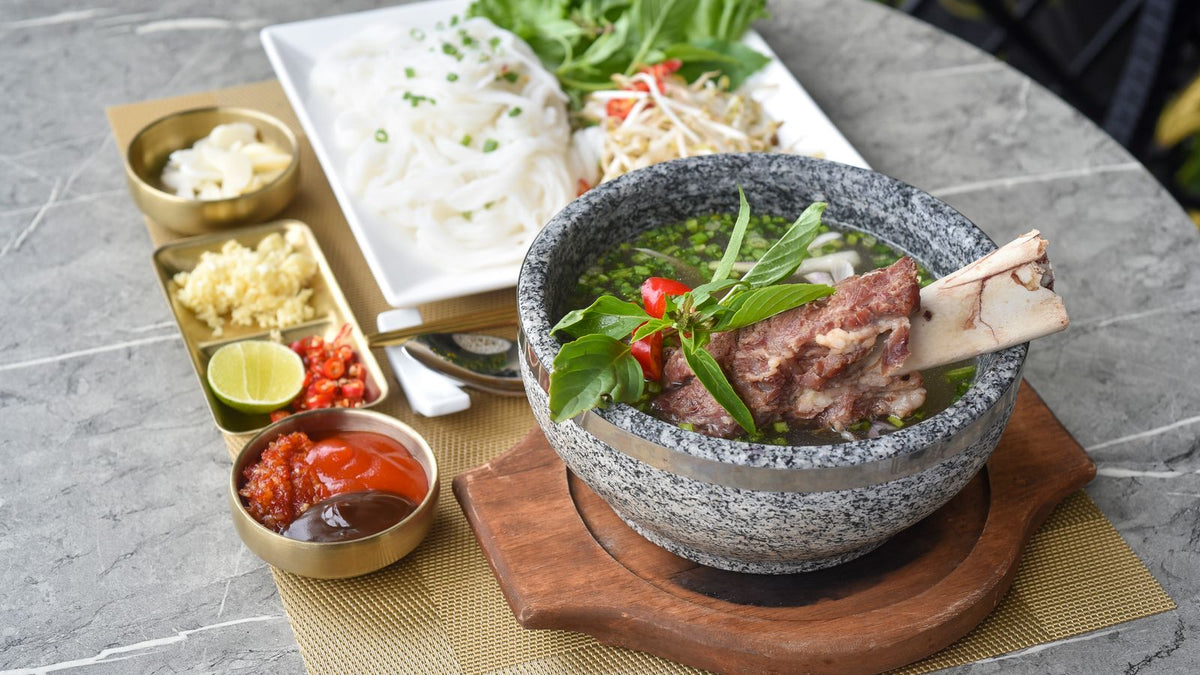
People asking is bone broth good for hair growth usually picture something far more nutritionally dense than what is actually in the pot. Bone broth is what you get when you simmer animal bones and connective tissue in water, usually with a splash of acid such as vinegar, for anywhere between four and twenty four hours. The long simmer converts collagen in the bones and cartilage into gelatine, which is what makes a good broth set to a wobble in the fridge. That wobble is the most reliable sign you extracted a meaningful amount of gelatine.
The nutritional reality is more modest than the marketing. Protein content varies enormously with how concentrated the broth is, but homemade broth typically lands somewhere between 5g and 10g of protein per 250ml mug, and many shop bought cartons sit lower still because they are diluted for flavour. Mineral content is also variable. Bones are rich in calcium and phosphorus, but calcium is not very soluble and only a fraction leaches into the water even with added acid. Analyses of homemade broths have generally found modest mineral levels rather than the mineral powerhouse the packaging implies.

What broth does have going for it is glycine. Glycine is genuinely useful, it is involved in collagen synthesis throughout the body and in the production of glutathione, and most Western diets are relatively light on it because we tend to eat muscle meat and discard the connective tissue. That is a real, if unglamorous, nutritional argument for broth. It is an argument about your general diet, not about your hair.
How would a nutrient reach a hair follicle at all?
A hair follicle is one of the most metabolically demanding structures in the body. During the anagen phase, which is the active growing phase and lasts anywhere from two to seven years on the scalp, the cells at the base of the follicle divide faster than almost any other cell population you have. That process runs on a blood supply delivering amino acids, iron, oxygen and energy through the dermal papilla.
Because it is so demanding, the follicle is also one of the first structures the body throttles back when supply drops. That is the mechanism behind telogen effluvium, where a physiological shock pushes an unusually large share of follicles out of the growing phase and into the resting phase all at once. Roughly two to four months later those resting hairs release, and you see the shedding. The lag is the single most confusing thing about hair, and it is why people so often blame whatever they were doing in the week the shedding started rather than what happened a season earlier. Our guide to what causes telogen effluvium walks through the common triggers in detail.
So the honest framing is this. Nutrition matters to hair in the way fuel matters to a car. Running short causes real problems. Adding extra fuel to a tank that is already full does not make the car go faster. Bone broth is a top up to a tank that, for most people eating a reasonable UK diet, is not empty.
What does the evidence on collagen supplements and hair actually show?
This is where honesty costs a little. There is a body of research on oral collagen peptides, and some of it is genuinely interesting, but it is overwhelmingly about skin rather than hair. Several randomised trials have reported improvements in skin elasticity and hydration with collagen peptide supplements over eight to twelve weeks. Reviews of that skin literature also note a recurring problem, which is that the trials are short, use different peptide doses and sources, and almost never measure hair at all.
That gap matters, because the question is bone broth good for hair growth is almost always answered in public with skin research rather than hair research. For hair specifically the picture is much thinner. The published hair studies tend to be small, short, open label, or run on multi ingredient supplements where collagen sits alongside biotin, zinc and other nutrients, which makes it impossible to say what did the work. There is no good randomised evidence that bone broth in particular changes hair density in humans. Anyone telling you otherwise is either citing the skin research and hoping you do not check, or citing a study on a formulated supplement rather than on soup. Maca gets the same kind of wellness press, and we give an honest answer on maca and hair growth. Garlic gets exactly the same treatment in the wellness press, and our guide to garlic for hair growth gives the honest answer on it.
Where reasonable sources disagree, it is worth saying so plainly. Some dermatology commentators consider oral collagen peptides a promising area for skin and possibly for hair quality. Others consider the effect sizes small and the funding picture disqualifying. Both positions are defensible from the current literature. What neither position supports is the specific claim that bone broth grows hair.
Which nutrients genuinely matter for hair, and where do you get them?
Anyone asking is bone broth good for hair growth is usually really asking whether they are missing something their hair needs. If you want to use food to support your hair, the evidence points at a short and slightly boring list.
| Nutrient | Why hair cares | Good everyday sources | Does broth help? |
|---|---|---|---|
| Total protein | Supplies the amino acids the fibre is built from | Eggs, fish, chicken, dairy, beans, lentils, tofu | A little, roughly one tenth of a day's needs per mug |
| Iron and ferritin | Low stores are the nutrition factor most consistently linked to shedding in women | Red meat, liver, sardines, lentils, fortified cereal | Very little, iron stays largely in the bone and marrow |
| Cysteine and methionine | Sulphur amino acids that form keratin's disulphide bonds | Eggs, poultry, fish, sunflower seeds, oats | No, collagen is very low in cysteine |
| Zinc | Involved in follicle cell division and repair | Shellfish, beef, pumpkin seeds, chickpeas | Minimal |
| Overall energy | Sustained under eating pushes follicles into the resting phase | Eating enough, consistently | Broth is very low in calories, so no |
Notice the pattern. Every honest answer in that last column is a version of not really. If you are eating enough, and eating varied protein, you have already covered what your hair can use. If you are not, broth is not the food that fixes it. For a fuller breakdown of the micronutrients involved, see our guide to the essential vitamins and minerals for healthy hair.
Get a discount on the thinning hair range
Join the Watermans mailing list and we will email a discount code straight to your inbox, so you can try the thinning hair range for less. Vegan, made in the UK, over 6.5 million bottles sold since 2012.
How much protein does hair actually need each day?
Adults in the UK are advised to get around 0.75g of protein per kilogram of body weight per day as a minimum, which is about 45g for a 60kg woman and 56g for a 75kg man. Many nutrition researchers argue the optimum for adults, particularly older adults, sits meaningfully higher, closer to 1.0g to 1.2g per kilogram. Hair takes a small share of that total, and it takes it last.
Put a mug of broth against that backdrop and the arithmetic is unromantic. At roughly 8g of protein, a mug covers something like a sixth of a smaller adult's daily minimum. Two eggs deliver about 12g. A tin of tuna delivers about 25g. A chicken breast delivers about 30g. If your protein intake is genuinely low, the fix is a bigger portion at meals, not a mug of stock alongside them.
There is one group for whom broth earns more credit. If you are recovering from illness or surgery, off your food, or struggling to eat solids, a nourishing broth is an easy way to get fluid, salt and some protein in when nothing else appeals. That is a real use, and it is a moment when hair often takes a hit too, because illness is a classic trigger for a shed a few months down the line.
What is the difference between hair loss, hair shedding and hair breakage?
Most disappointing hair results come from solving the wrong one of these, so it is worth separating them before you change anything.
Hair loss is a follicular problem. In androgenetic alopecia, follicles progressively miniaturise under hormonal influence, producing finer, shorter, less pigmented hairs each cycle until they produce almost nothing. The parting widens, or the temples and crown recede. No food changes this process, and no cosmetic product changes it either.
Hair shedding is a cycle problem. The follicle is healthy but too many hairs have shifted into the resting phase at once, usually after childbirth, illness, a crash diet, a general anaesthetic, a bereavement or a period of severe stress. Shedding of this kind is usually self limiting over six to nine months once the trigger has passed. Nutrition is genuinely relevant here, especially iron and total energy intake, which is the strongest argument anyone can honestly make for the diet angle. If you cut carbs hard and the shedding followed a few months later, our guide to keto hair loss covers the timeline and the nutrients to put back.
Diet claims attract the same wishful thinking as metabolism claims, and we went through the evidence in our guide to the slow metabolism myth.
Hair breakage is a fibre problem. The follicle is fine and the hair grows normally, but the strand snaps partway along its length because of heat, bleach, tight styling or mechanical stress. You see short broken pieces, split ends and a ragged, thinning looking mid length while your parting stays the same width. This is the one that responds fastest to what you actually do at the basin, and it is the one people most often mistake for something more serious.

A quick self check. Look at what comes out. A shed hair has a small pale bulb at the root end. A broken piece does not, and is usually shorter than the rest of your hair. If you are seeing bulbs, you are shedding. If you are seeing short blunt fragments, you are breaking. The two need different responses, and only one of them has anything to do with your dinner.
What does a realistic routine look like, food and otherwise?
If you arrived here asking is bone broth good for hair growth, the more useful version of that question is whether your diet as a whole gives your follicles enough to work with. If you want to give your hair the best conditions you reasonably can, the list is short and it is not exciting.
Eat enough, and get protein at every meal rather than loading it all into dinner. Do not diet aggressively while worrying about your hair, because sustained energy restriction is one of the more reliable ways to push follicles into the resting phase. If you are a menstruating woman with unexplained shedding, ask your GP about checking your full blood count and ferritin, because low iron stores are common and easily missed. Sleep properly. Handle wet hair gently, because that is when the fibre is at its weakest. Ease off the tight ponytails and the daily straighteners.
On the cosmetic side, the honest promise is about the fibre and the scalp, not the follicle. A sulphate free cleanse that does not strip the hair, conditioning that reduces the friction of combing, and leaving the scalp comfortable and clean all help hair look thicker and hold its length better, because hair that does not snap keeps more of what it grew.

GrowPro Hair, Skin and Nails Gummies
If your diet is patchy rather than deficient, a simple daily gummy with biotin, zinc and selenium is a more sensible bet than a litre of stock. Vegan, made in the UK.

A sulphate free daily cleanse with caffeine, biotin and rosemary that leaves the scalp comfortable and hair feeling thicker. Over 6.5 million bottles sold since 2012, made in the UK, and Grow Me shampoo is vegan.
Frequently Asked Questions
Is bone broth good for hair growth?
Bone broth is a modest source of protein and glycine and it will not harm your hair, but there is no good human evidence that it improves hair density. Hair fibre is keratin, which is rich in cysteine, and collagen contains almost none of it. Eggs, fish, dairy and pulses are better matched sources of the amino acids a follicle actually uses.
How much collagen is in a cup of bone broth?
It varies widely with simmer time and concentration. Homemade broth typically supplies 5g to 10g of protein per 250ml mug, most of it gelatine derived from collagen in the bones and cartilage. Many shop bought cartons contain less because they are diluted for flavour. If your broth sets to a wobble in the fridge, you extracted a decent amount.
How long would it take to see a difference from any diet change?
Scalp hair grows roughly 1cm a month, and follicles pushed into the resting phase take two to four months to release before new growth appears. So a genuine dietary correction, such as restoring low iron stores, typically takes three to six months to become visible and longer to look normal. Anything promising results in weeks is not describing how hair works.
Is bone broth better than a collagen powder?
Neither has good evidence for hair specifically. Collagen powders are more concentrated and give a consistent daily amount, while broth is food and brings fluid, salt and flavour with it. If you enjoy broth, drink it because you enjoy it, not as a hair strategy.
Can vegetarians and vegans get the same thing without broth?
Yes, easily. Nothing in bone broth is unique or essential. Soya, lentils, chickpeas, tofu, oats, seeds, nuts and, if you eat them, dairy and eggs together supply the full amino acid range, including the sulphur containing amino acids that matter most for keratin.
Could bone broth contain heavy metals?
Bone stores lead, and a small number of published analyses have found low levels of lead in broths made from bones. Reported levels have generally been low rather than alarming, but it is a fair argument against drinking very large quantities every day, and particularly against making it a staple for young children.
My hair is shedding. Should I change my diet first?
Look back three to four months for a trigger such as illness, childbirth, surgery, a crash diet or a period of severe stress, because that is the usual lag. Nutrition is worth reviewing, especially iron if you menstruate. If shedding continues beyond six months, or your parting is visibly widening, speak to your GP or a registered trichologist rather than experimenting with food. If your question is about products or a routine rather than a medical one, you can talk to Gail Waterman, our co-founder, as an AI avatar on the Watermans homepage.
Does drinking broth help hair that is breaking rather than shedding?
No. Breakage happens along the length of a hair that has already grown, so it is a fibre and handling problem rather than a nutrition one. Reducing heat, loosening tight styles, conditioning properly and being gentle with wet hair will do far more than anything you drink.
Is bone broth good for hair growth, and what is the bottom line?
So, is bone broth good for hair growth? It is good food and a fair source of protein and glycine, and there is nothing wrong with drinking it. What it is not is a hair intervention. The collagen in it is the wrong protein for keratin, the quantities are small, and the human evidence for hair is simply not there. If your hair is changing, spend your attention on the things that genuinely move the needle. Eat enough and spread your protein across the day, get your iron checked if you menstruate and are shedding, look back three to four months for a trigger, handle your hair gently, and get a professional opinion if the parting itself is widening. For another food first question answered honestly, see chia seeds for hair growth.
The scalp is where this starts, so give the Grow Me hair growth shampoo a couple of months of honest use. Vegan and made in the UK.
Watermans products are 100% cosmetic and do not treat medical hair loss. Individual results may vary.
Sources and References
- NHS, Hair loss. Overview of common causes, expected timelines and when to seek help.
- NHS, Meat in your diet. UK guidance on protein foods and portion sizes.
- NHS, Vitamins and minerals. Reference intakes for iron, zinc and related nutrients.
- NHS, Iron. UK reference intakes for iron and the signs of low stores.
- British Dietetic Association, Food Facts. Dietitian reviewed UK guidance on protein, supplements and fad diets.