What Causes Thinning Hair? Common Causes and What Helps
Thinning hair is one of the most common hair concerns there is, and it usually comes down to a handful of causes: natural ageing, stress, hormonal changes, breakage from damage, nutrition gaps and genetics. Most are manageable, several are reversible, and the right routine makes hair look noticeably fuller while you address the cause. Here is what thins hair, and what actually helps.
Key takeaways
- Losing 50 to 100 hairs a day is normal, thinning is when loss outpaces regrowth or strands get finer.
- The big causes: age, stress, hormones, damage/breakage, nutrition and genetics.
- Breakage from heat and rough handling is one of the most fixable causes of thin-looking hair.
- A gentle routine (nourishing wash, scalp care, heat protection) supports fuller-looking hair.
- Sudden, patchy or persistent loss deserves a GP check, several causes are testable.
Why is my hair thinning?
If you are asking that question, take comfort: you are far from alone, and more often than not it is nothing sinister. Here are the most common culprits.
Age
Hair thinning is a normal part of ageing. The width of each strand gradually lessens over time, and some follicles slow down or stop producing new hairs, so the overall effect is finer, less dense hair. It is common, natural and manageable with the right care, see our guide to the best shampoo for ageing hair.

Stress
In times of high stress the body releases more cortisol, which can disrupt the hair cycle and push extra follicles into their resting phase, showing up as heavier shedding a couple of months later. The full mechanism is covered in our guide to stress and hair loss. If ongoing stress feels like a factor, check in with your GP.
Hormonal changes
Pregnancy, the menopause and other hormonal shifts change oestrogen levels, and lower oestrogen can speed up shedding, this is why postpartum and menopause hair changes are so common. Hormone-driven thinning affects men too, often showing at the crown or hairline. A thyroid condition is another hormonal cause worth ruling out with a simple blood test.
Damage and breakage
Here is the one most people overlook: hair that snaps mid-strand from heat, bleach, sun or rough handling makes hair look thinner even when the roots are perfectly healthy. Excess heat styling, colouring chemicals and tight styles are the usual suspects, and all of them are fixable with a kinder routine.
Nutrition and genetics
Crash diets and low iron, zinc or protein can all thin hair, a balanced diet protects it. Genetic pattern thinning, meanwhile, is gradual and tends to run in families; it cannot be prevented, but a GP or dermatologist can advise on options, and acting early gives you the most choices.
Thinning hair causes at a glance
| Cause | Pattern | Outlook |
|---|---|---|
| Age | Gradual overall fining | Normal, manageable with care |
| Stress | Diffuse shedding ~2-3 months later | Usually temporary |
| Hormones | Diffuse, or crown/hairline | Often improves; testable causes |
| Damage/breakage | Mid-strand snapping, split ends | Very fixable |
| Nutrition | Diffuse shedding | Reversible with diet/GP help |
| Genetics | Patterned, gradual | Not preventable; see a GP early |
How to manage thinning hair
Whatever the cause, this routine protects the hair you have and supports the look of fuller, stronger hair.
1. Use a nourishing shampoo and conditioner

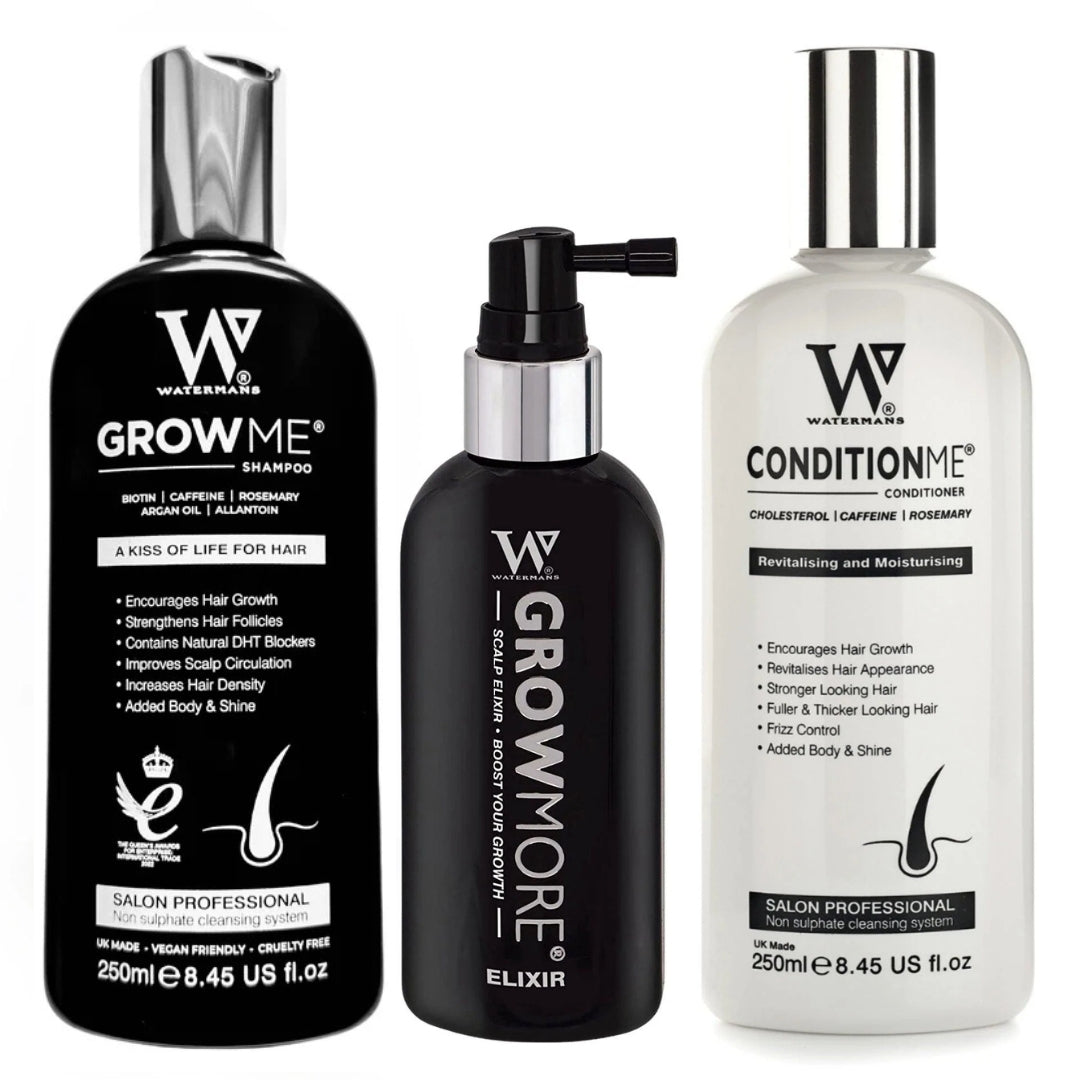
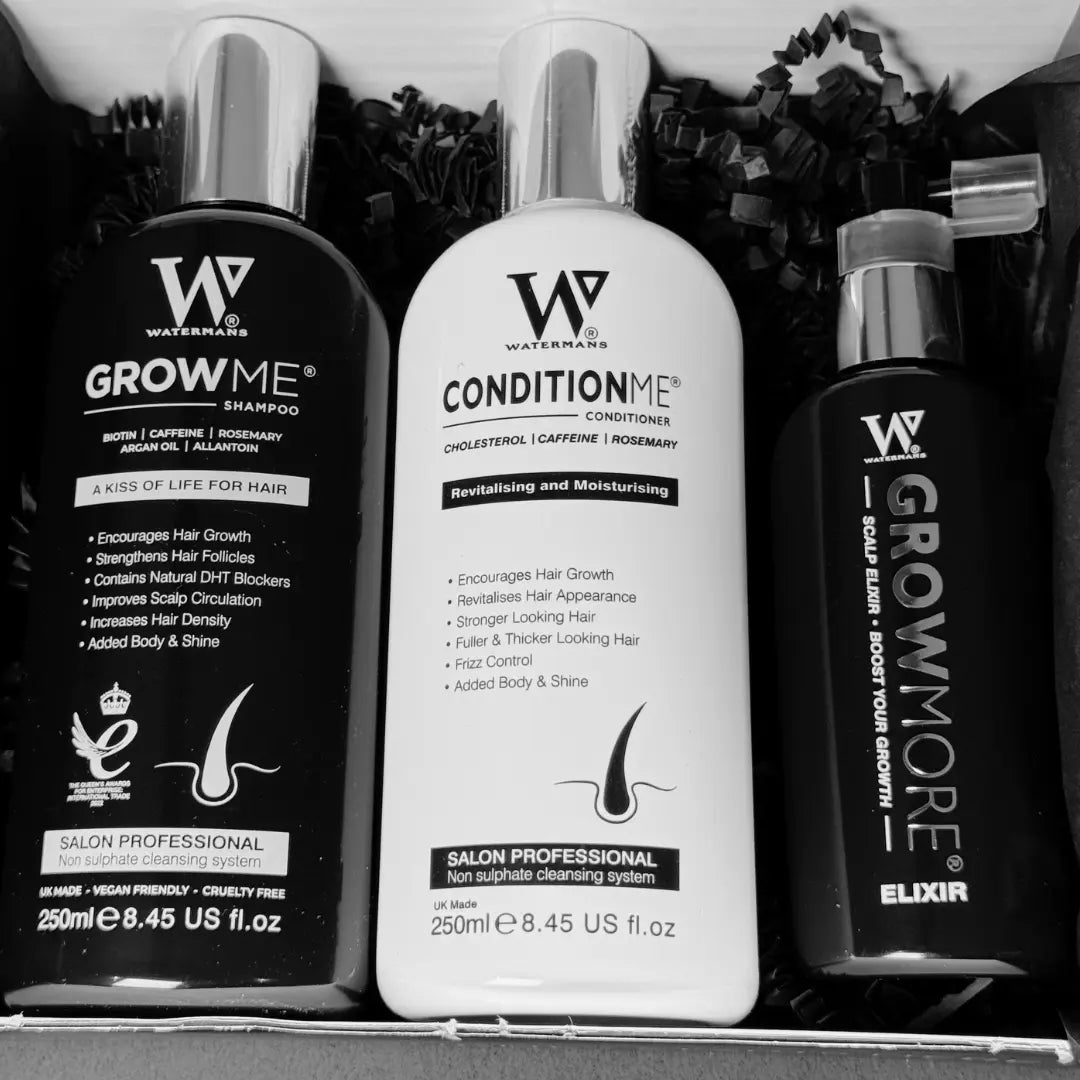
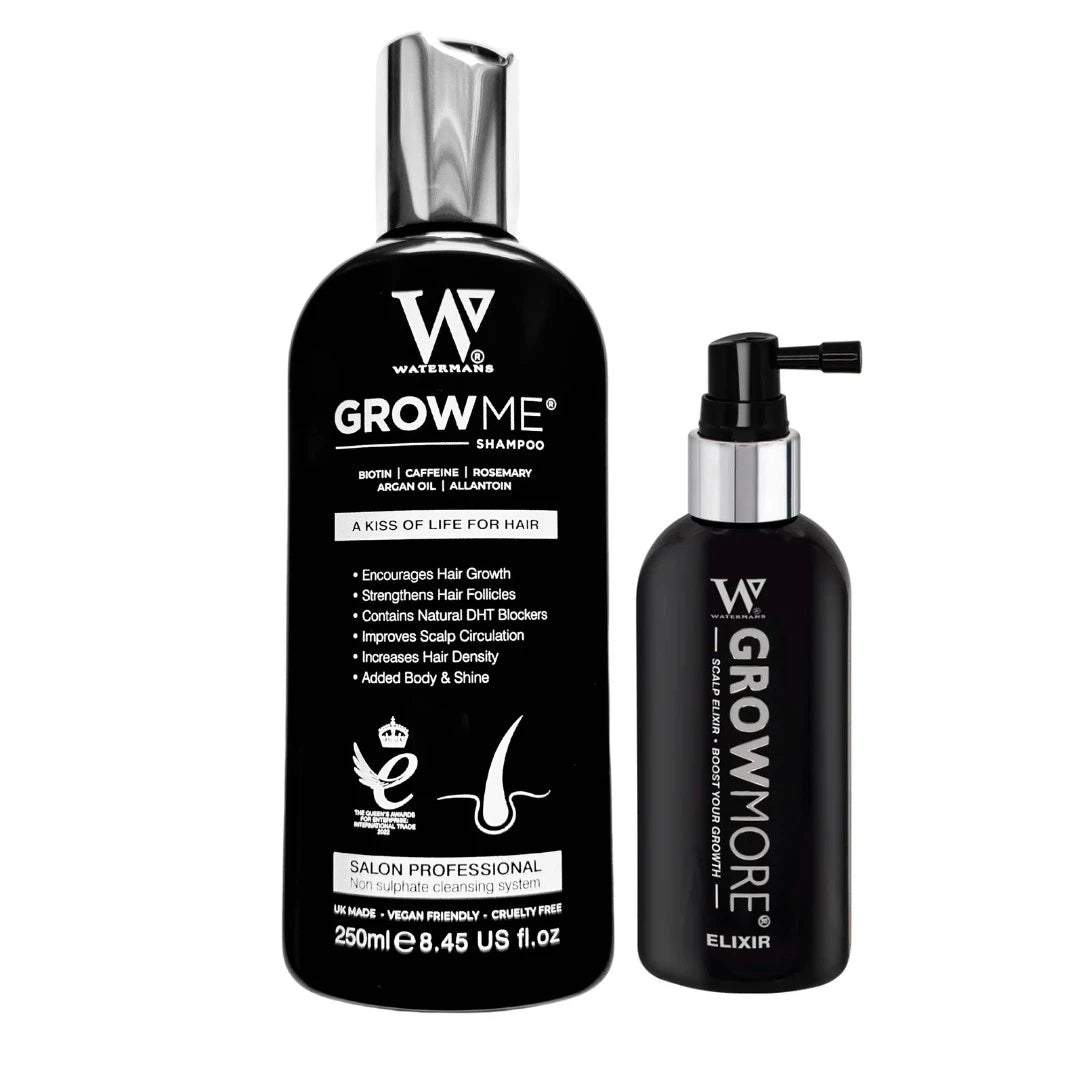
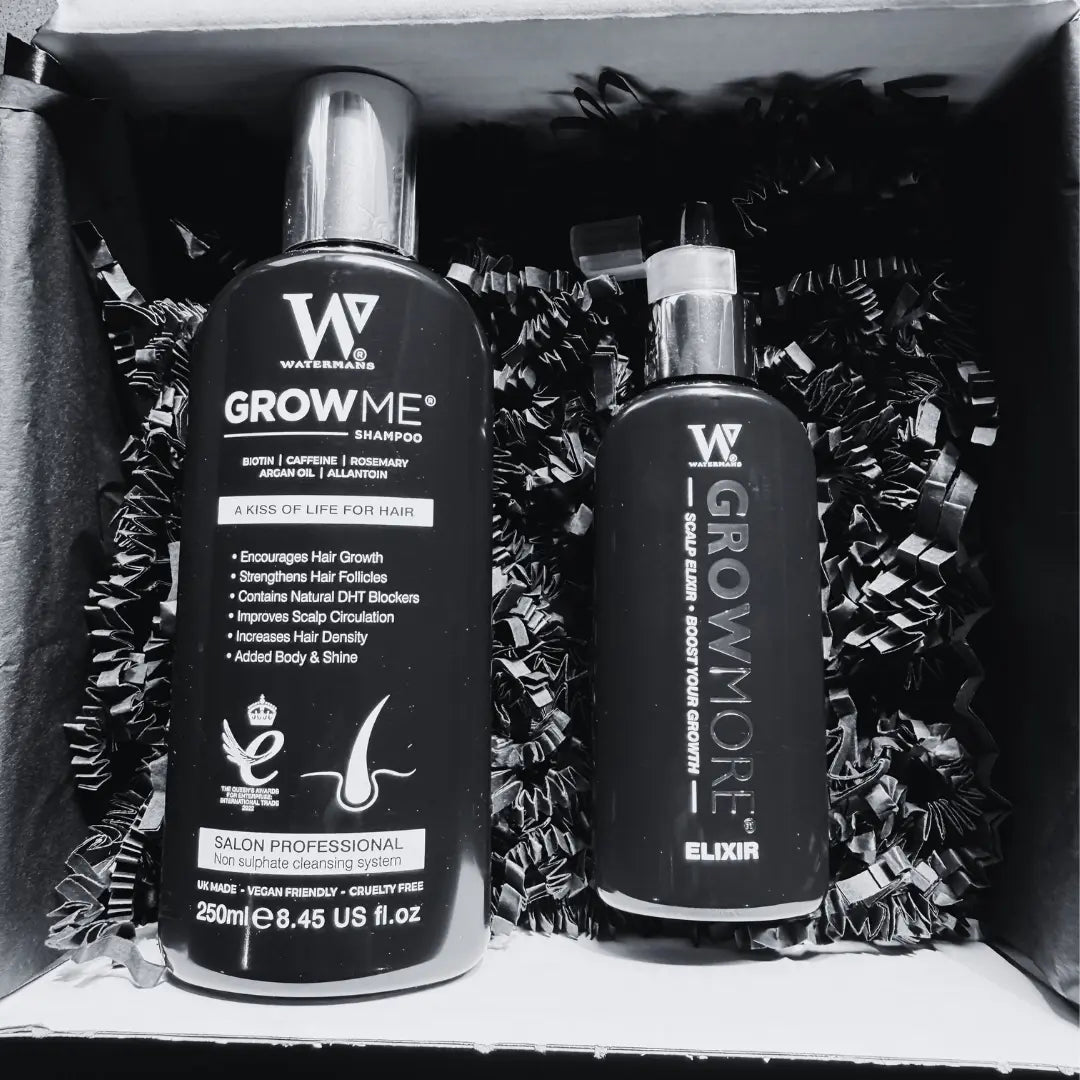
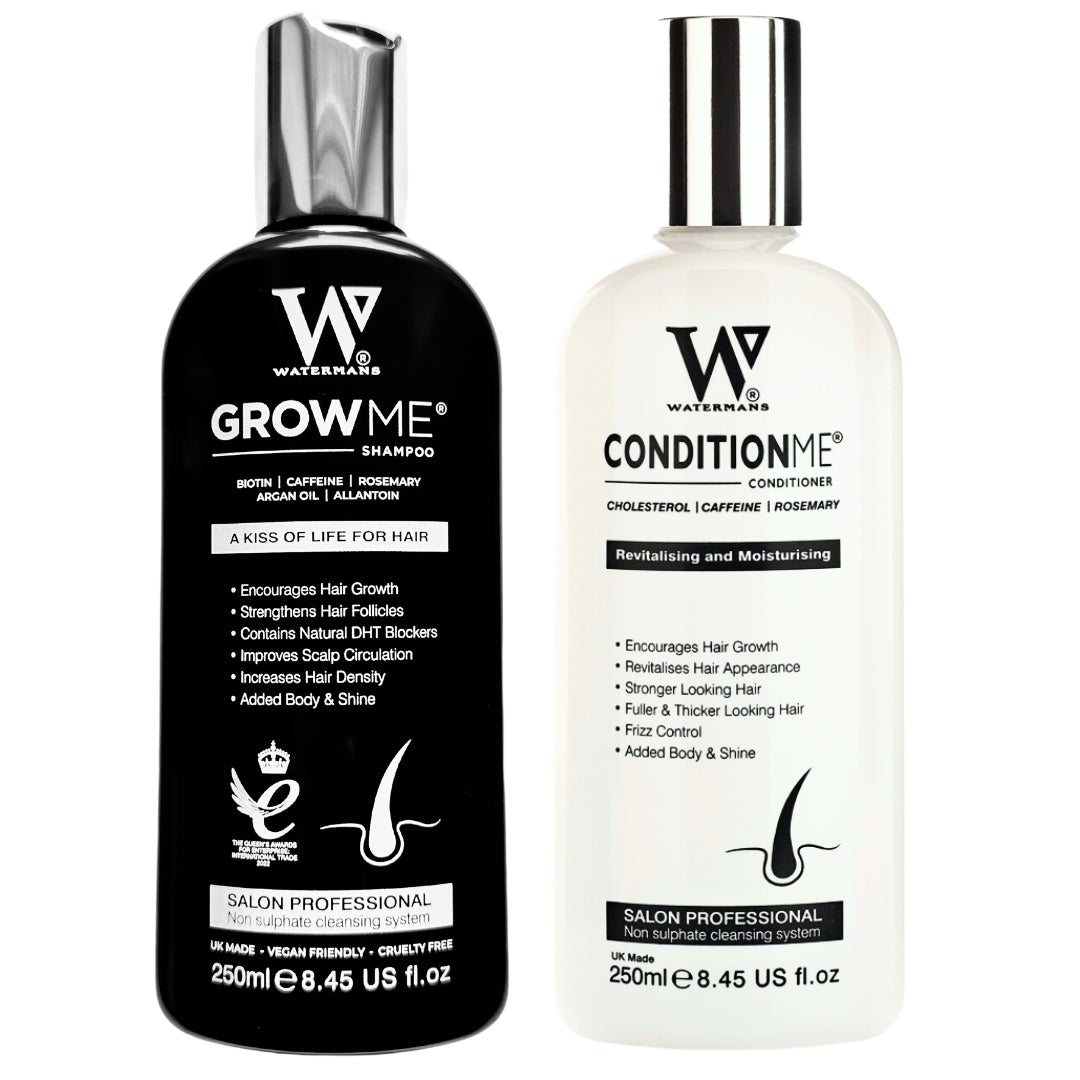
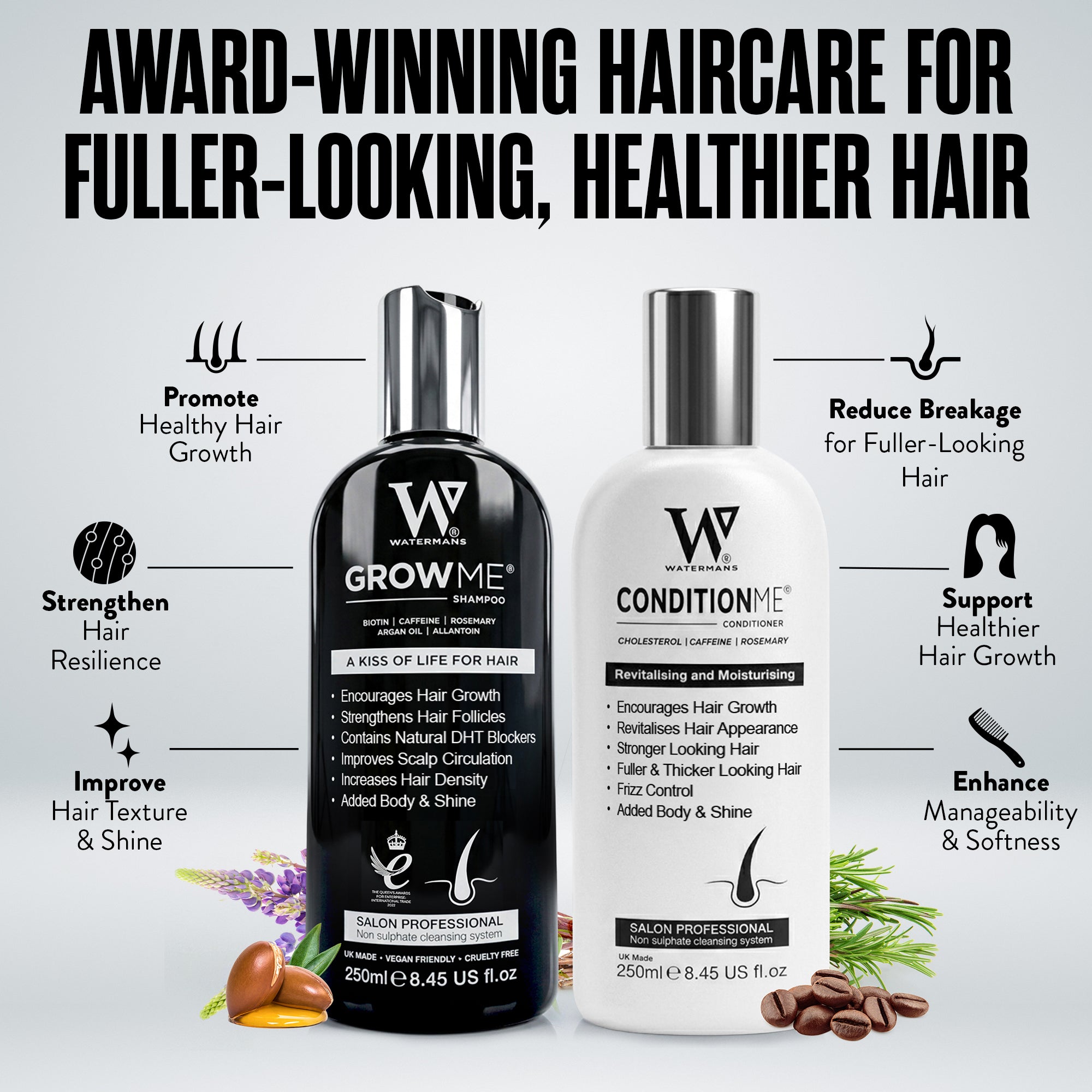
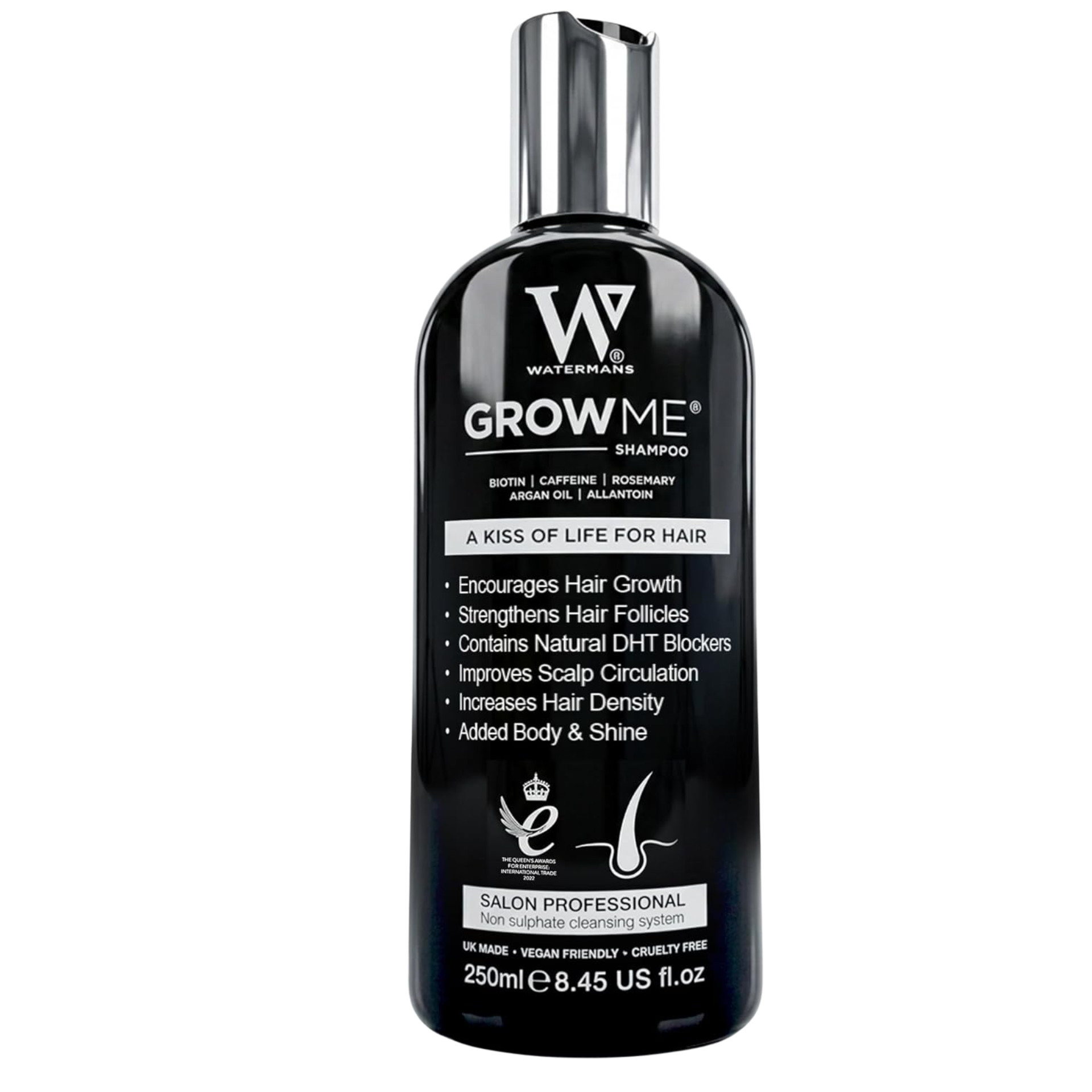
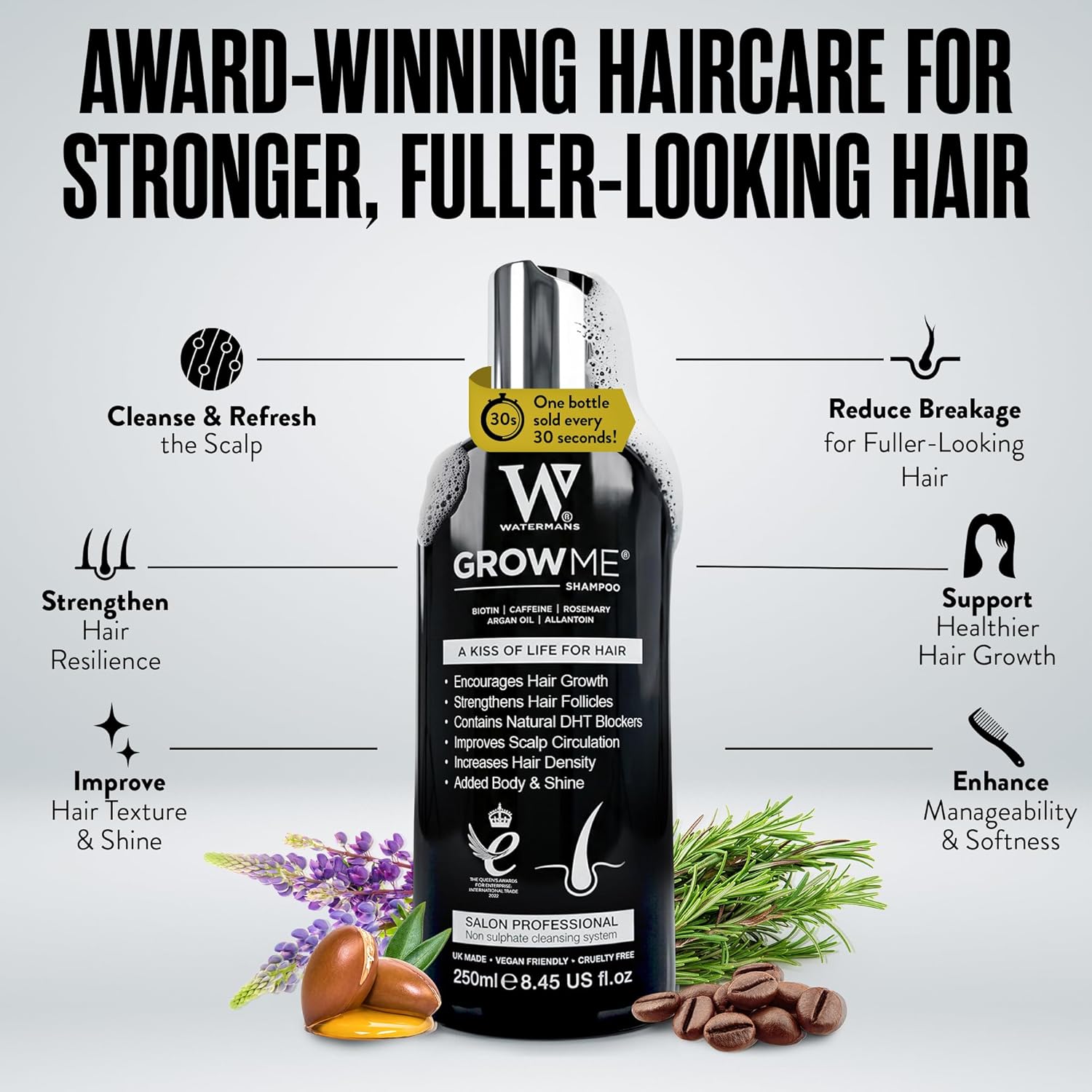
Grow Me® Hair Growth Shampoo
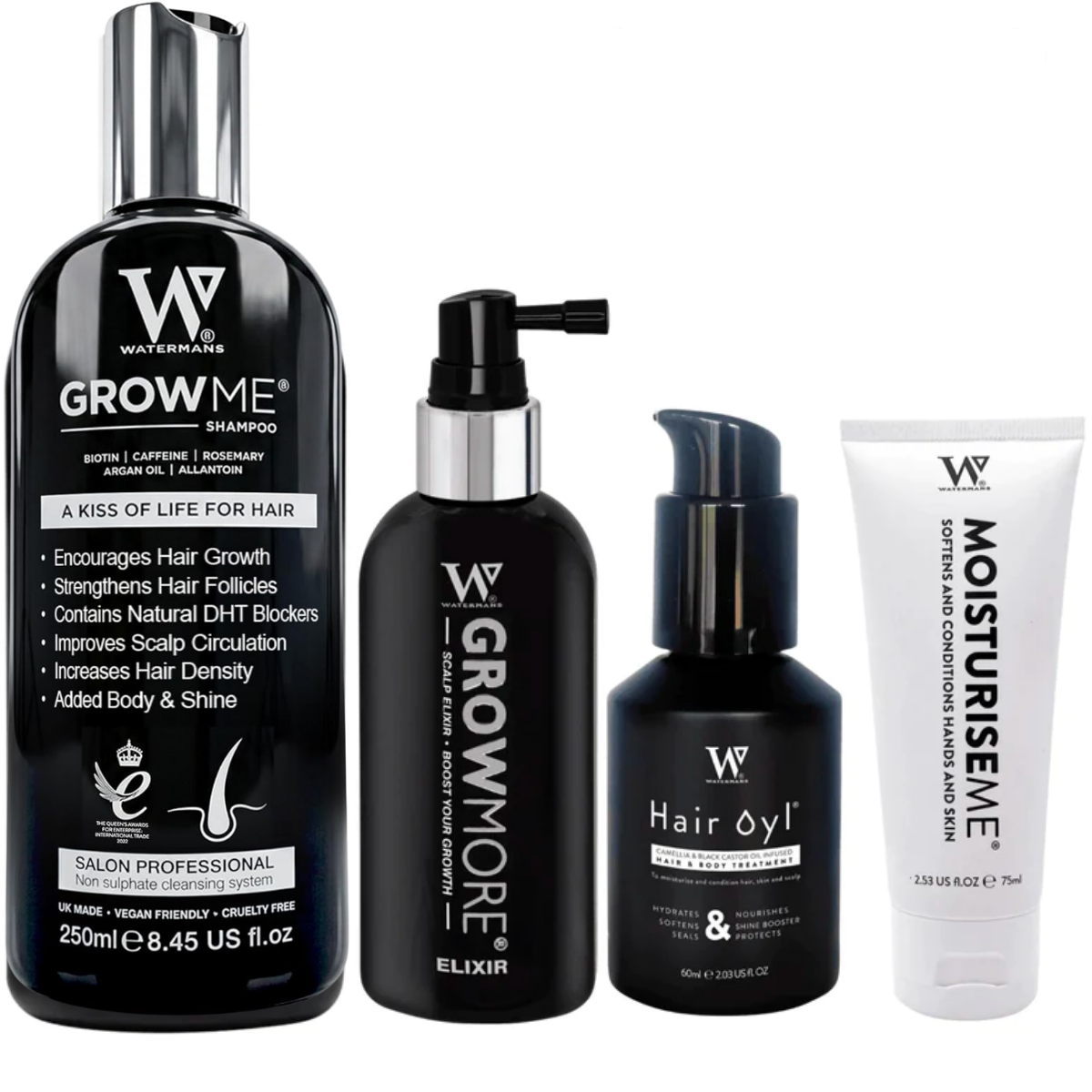
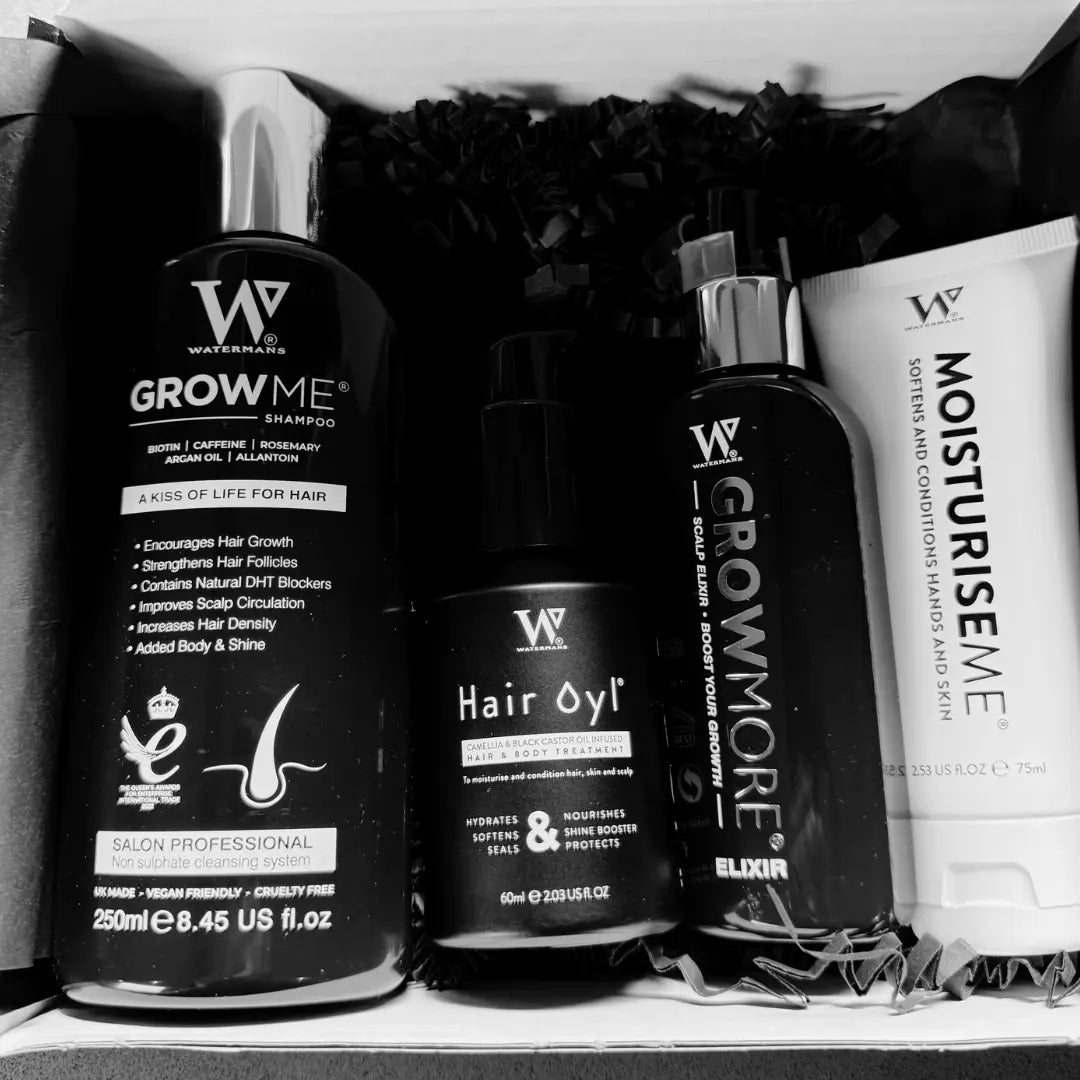
Sulphate-free and rich in biotin, niacinamide and argan oil, Grow Me nourishes the scalp and supports the look of fuller, thicker-feeling hair. Follow with Condition Me conditioner to add moisture and reduce breakage, for very dry hair it even works as an overnight leave-in treatment.
Shop Grow Me Shampoo2. Apply a scalp serum
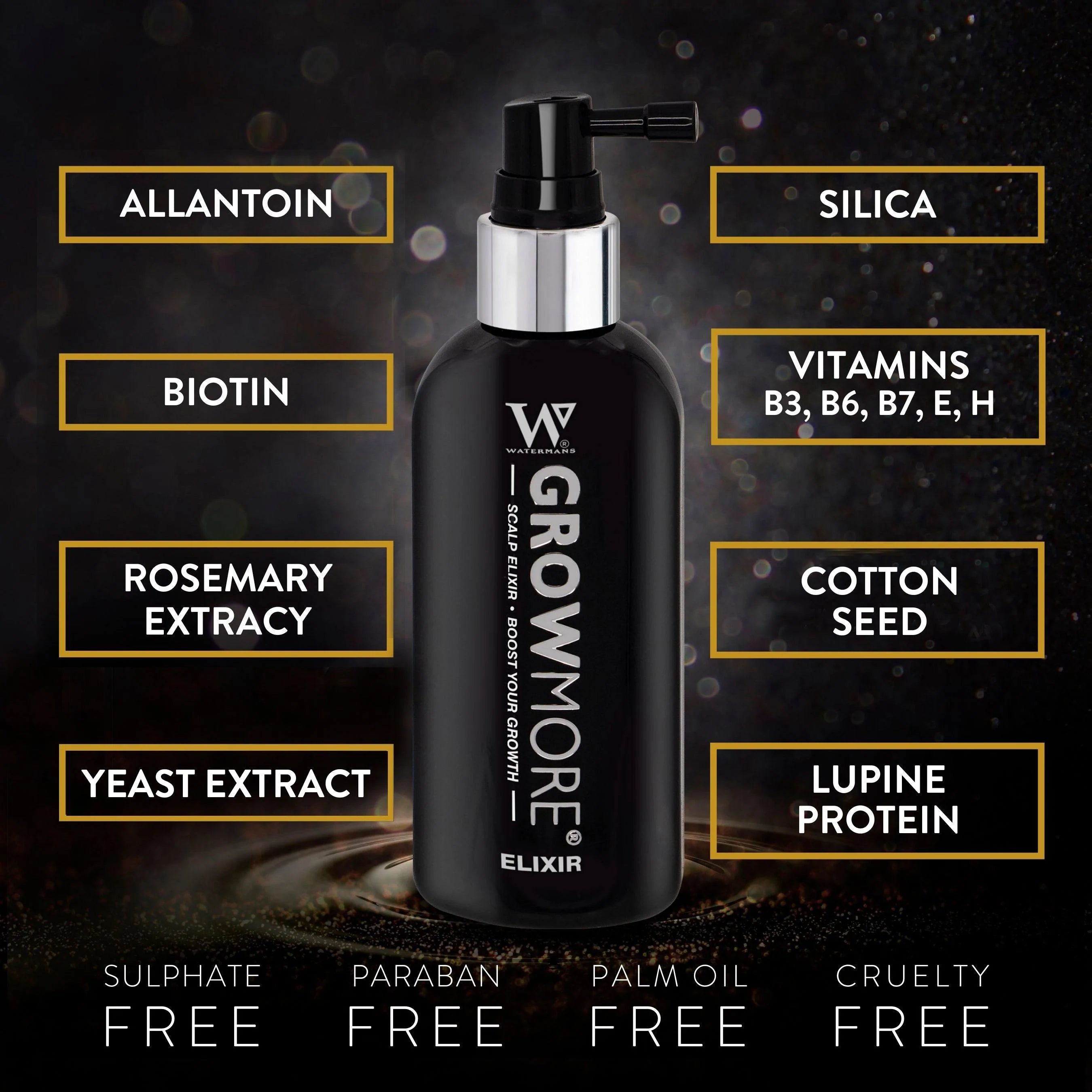
A leave-in serum takes care straight to the roots. Massage a few drops of our Grow More elixir, with lupine protein, cottonseed protein and rosemary, into the scalp in the evening; the massage boosts comfort and the ritual doubles as a stress-breaker.
3. Protect hair when styling

Protect Me® Heat Protection Spray
Shields hair up to 230°C while helping retain moisture, control frizz and reduce split ends, essential before any hot tool, and a handy extra layer of protection on sunny days outdoors.
Shop Protect Me Spray4. Handle with care
Loose styles, gentle detangling from the ends up, minimal bleach, and a satin pillowcase all reduce the everyday breakage that makes hair look thin. Our guide to reducing hair breakage goes deeper.
Watermans is a UK family business that has sold over 5 million bottles since 2012. The range is vegan and cruelty-free.
When should you see a doctor?
See your GP if thinning is sudden, severe, patchy, or comes with other symptoms like fatigue or weight changes. Iron, thyroid and hormonal causes are easy to test for and usually treatable, and pattern loss responds best to early advice.
Frequently asked questions
What is the most common cause of thinning hair?
Ageing and genetics lead overall, but stress, hormonal changes and breakage from damage are the most common fixable causes.
Can thinning hair grow back?
Often, yes. Thinning from stress, nutrition, hormones or breakage usually improves once the cause is addressed. Genetic pattern thinning needs earlier, medical guidance.
Why is my hair thinning at the crown or hairline?
Crown and hairline thinning is often hormonal or genetic in both men and women, worth an early chat with a GP for the most options.
Does damaged hair look thinner?
Yes. Breakage from heat, bleach and rough handling snaps strands mid-length, which reads as thinness even with healthy roots.
What vitamins help with thinning hair?
Biotin and zinc contribute to the maintenance of normal hair, and iron matters too. A balanced diet covers most people, ask your GP about testing before supplementing heavily.
Can a shampoo thicken thinning hair?
A shampoo is cosmetic: it cannot change genetics, but a nourishing, sulphate-free formula genuinely helps hair look and feel fuller and reduces breakage.
When is thinning hair a medical issue?
When it is sudden, patchy, severe or accompanied by other symptoms, that pattern deserves a GP visit and possibly a blood test.
Thinning hair almost always has a findable cause, and most of them respond to care: manage stress, feed your follicles, protect against damage and get the testable causes checked. Start with the gentle routine above, and for the bigger picture read our guides on preventing hair loss and telogen effluvium.