


Hair Fall, Thinning or Breakage? How to Tell Which You Have
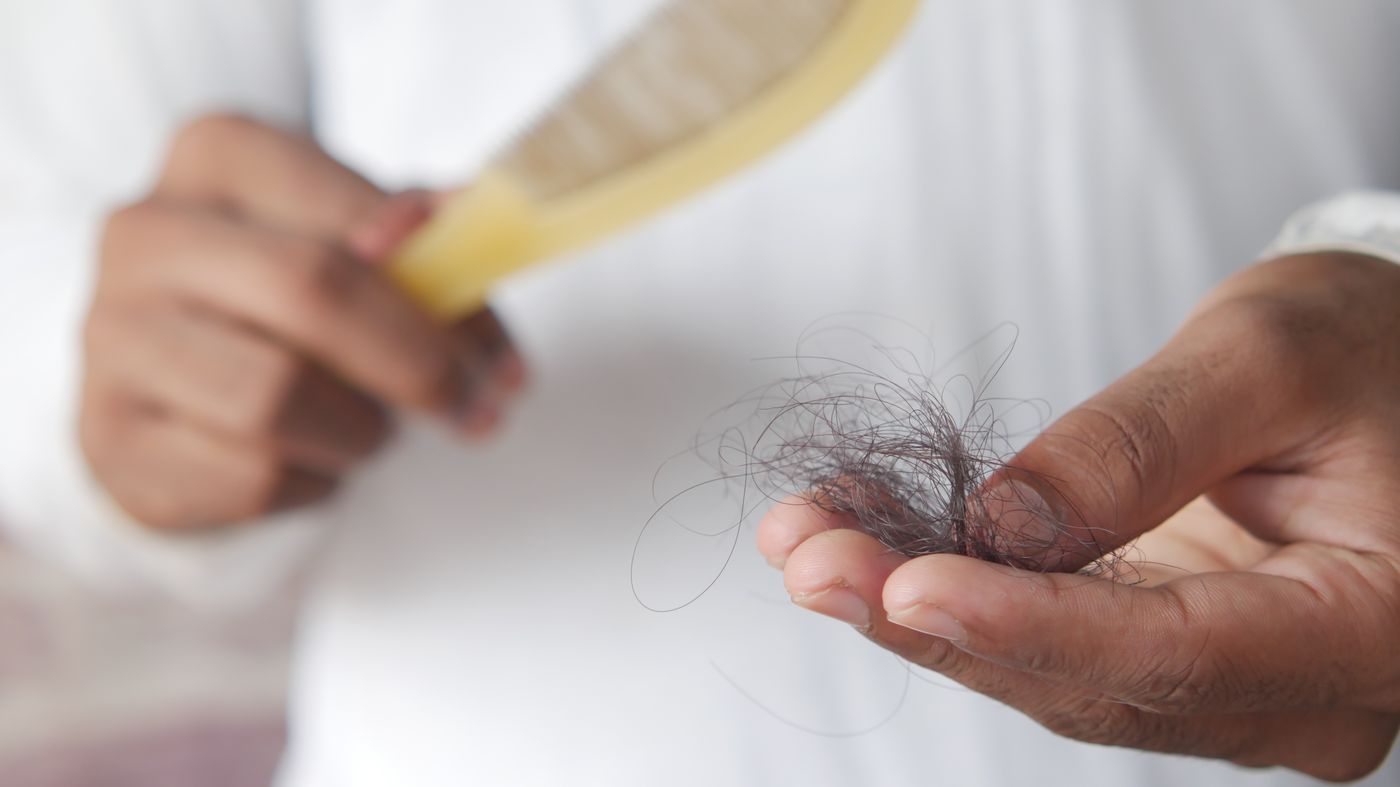
Pick one hair off your brush and look at the end that was nearest your scalp. If there is a small pale or dark bulb on it, the hair was shed from the root, which is hair fall. If both ends are blunt, frayed or split, and the hairs on your brush are noticeably different lengths, the hair snapped along its length, which is breakage. If neither is happening much but your parting looks wider than it did a year ago, that is thinning. These three problems look identical in the plughole and need completely different responses.
Key takeaways
- Losing 50 to 100 hairs a day is normal. Wash days look worse because several days of shedding arrive at once.
- The bulb test separates shedding from breakage in seconds: a bulb means it came from the root.
- Breakage is a hair care problem. Shedding is usually a body problem. Thinning is usually a follicle problem.
- Stress related shedding starts two to three months after the trigger, which is why the cause is so often missed.
- Breakage responds fastest, often within weeks. Shedding takes months. Density takes longer still.
- Patchy loss, a widening parting, scalp pain or sudden heavy shedding all warrant a GP or trichologist, not a new shampoo.
How do you tell shedding from breakage in 30 seconds?
Collect the hairs from your brush after one session and look at the ends. A shed hair has a small club shaped bulb at one end, usually white or slightly darker than the strand, which is the base of the follicle it grew from. A broken hair has no bulb at either end. It will be blunt, wispy or split, and the collected hairs will vary widely in length.
Length is the second giveaway. Shed hairs are mostly full length, because a hair that completes its cycle falls out at whatever length it had reached. Broken hairs are short and mixed, because strands snap wherever they were weakest. A brush holding twenty hairs of roughly the same length is shedding. A brush holding twenty hairs ranging from two centimetres to twenty is breakage.

What is the difference between shedding, breakage and thinning?
Shedding is hair leaving the scalp, breakage is hair snapping mid strand, and thinning is fewer or finer hairs being produced in the first place. They can happen together, which is why people often get the diagnosis wrong, but each has a distinct signature.
| Shedding (hair fall) | Breakage | Thinning (reduced density) | |
|---|---|---|---|
| The strand | Bulb at the root end, full length | No bulb, blunt or split, mixed lengths | Individual hairs finer and shorter over time |
| What you notice | Handfuls in the shower, more on the pillow | Halo of short flyaways, ends that will not grow past a point | Wider parting, smaller ponytail, visible scalp |
| Usual cause | Stress, illness, childbirth, iron or thyroid issues, crash dieting | Heat, bleach, tight styles, rough handling, hard water | Genetics, hormones, ageing, follicle miniaturisation |
| Timeline | Starts 2 to 3 months after the trigger | Builds gradually with the damaging habit | Years, often noticed suddenly |
| First move | Find the trigger, ask your GP for blood tests | Change how you handle and heat your hair | See a GP or trichologist for a diagnosis |
How much hair loss per day is normal?
Between 50 and 100 hairs a day is the usual range quoted for an adult with a full head of hair, and people with longer or thicker hair often lose more simply because each strand is more visible. Every hair on your head is independently cycling through growth, transition and rest phases, so a steady background loss is the system working correctly, not failing.
Wash day distorts this badly. Hairs that have already detached stay tangled in the rest of your hair until you disturb them, so if you wash twice a week you see three or four days of normal shedding at once and it looks alarming. The number that matters is not one frightening shower, it is whether the daily average has clearly risen and stayed risen for more than a month. Our guide to what counts as normal hair loss covers the benchmarks in detail.
What causes excessive shedding?
Most sudden, diffuse shedding across the whole scalp is telogen effluvium, where a shock pushes an unusually large number of follicles into their resting phase at once. Those hairs then release together two to three months later, which is why almost nobody connects the shedding to the event that caused it.
Common triggers include childbirth, a significant illness or high fever, surgery under general anaesthetic, severe emotional stress, rapid weight loss or crash dieting, starting or stopping hormonal contraception, iron deficiency, and thyroid disorders. The pattern is diffuse, meaning it comes evenly from all over rather than in patches, and it is usually self limiting once the trigger is resolved, recovering over roughly six to nine months.
Because several of these causes are medical, blood tests are worth asking for rather than guessing. Ferritin, full blood count, thyroid function and vitamin D are the standard starting panel. Read more in our guides to telogen effluvium triggers and recovery and thyroid related hair loss.
What causes hair breakage?
Breakage is mechanical and chemical damage to the strand, and unlike shedding it is almost entirely within your control. The cuticle is a layer of overlapping scales protecting the fibre inside, and once it is lifted or stripped the hair loses moisture, roughens, tangles and snaps.
- Heat without protection, especially straighteners above 180 degrees on hair that is not fully dry.
- Bleach and permanent colour, which open the cuticle chemically. Repeated lightening is the single most damaging routine process.
- Tension from tight ponytails, buns, braids, extensions and weaves, which can cause traction damage at the hairline.
- Wet brushing, since hair is at its weakest and most elastic when saturated.
- Rough towel drying and cotton pillowcases, both of which create friction.
- Hard water, which leaves mineral deposits that make hair feel coarse and more prone to snapping.
The tell that distinguishes breakage from everything else is length that plateaus. If your hair has not got past your shoulders in three years despite growing at the usual rate of roughly one centimetre a month, it is not failing to grow, it is snapping off at the same rate. See what causes hair damage and how to repair it for the full picture.

How do you actually fix breakage?
You cannot repair a broken strand, because hair is not living tissue and does not heal. What you can do is stop creating new damage and support the length you still have so it stops snapping. That combination visibly changes hair condition within four to eight weeks, which makes breakage the fastest of the three problems to improve.
The practical changes, in order of how much difference they make: lower your heat tools to 150 to 180 degrees and always use a heat protectant; stretch the time between bleach appointments; detangle from the ends upwards with a wide tooth comb on damp rather than soaking hair; swap the towel turban for a microfibre wrap or an old t shirt; loosen the ponytail and vary where it sits; and condition every wash without exception.

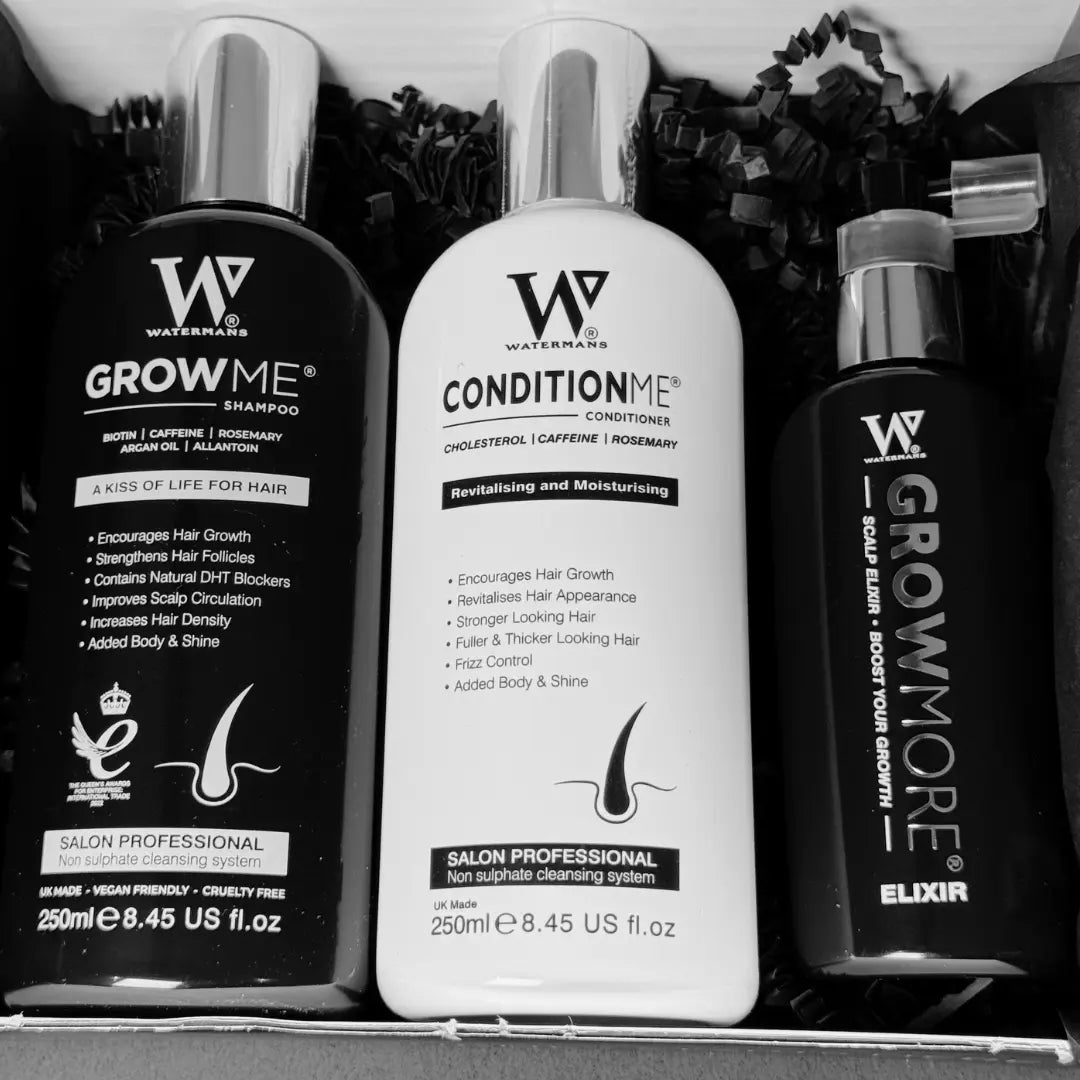
Condition Me® Hair Growth Conditioner, £13.95
Breakage defence conditioner with cholesterol, shea butter, glycerin, hydrolysed lupine protein, niacinamide and rosemary. Its job is to smooth the cuticle so hair detangles instead of snapping during brushing, which is where a lot of everyday breakage actually happens.

Protect Me® Heat Protection Spray, £13.95
A leave in spray offering heat protection to 230 degrees, plus colour and frizz protection, with niacinamide, panthenol, caffeine and sunflower oil. If you use straighteners or a dryer regularly, this is the highest value change on the whole list, because prevented damage costs nothing to repair.
For the detail on technique, including how much conditioner to use and where to put it, see how to use conditioner properly.
What helps when the problem is shedding rather than breakage?
Shedding responds to fixing the cause, not to changing your shampoo. If the trigger was a one off event such as an illness or childbirth, the shedding stops on its own and regrowth follows, typically visible as a fringe of short new hairs along the hairline six to nine months later. If the trigger is ongoing, such as low ferritin or an untreated thyroid problem, nothing topical will resolve it until that is addressed.
What good scalp care does contribute is a better environment for the hair you have and the hair coming through. Keeping the scalp clean and comfortable, avoiding harsh sulphates that leave it tight and itchy, and not adding traction damage on top of a shedding phase all help. That is a supporting role, and it is worth being clear that it is a supporting role.


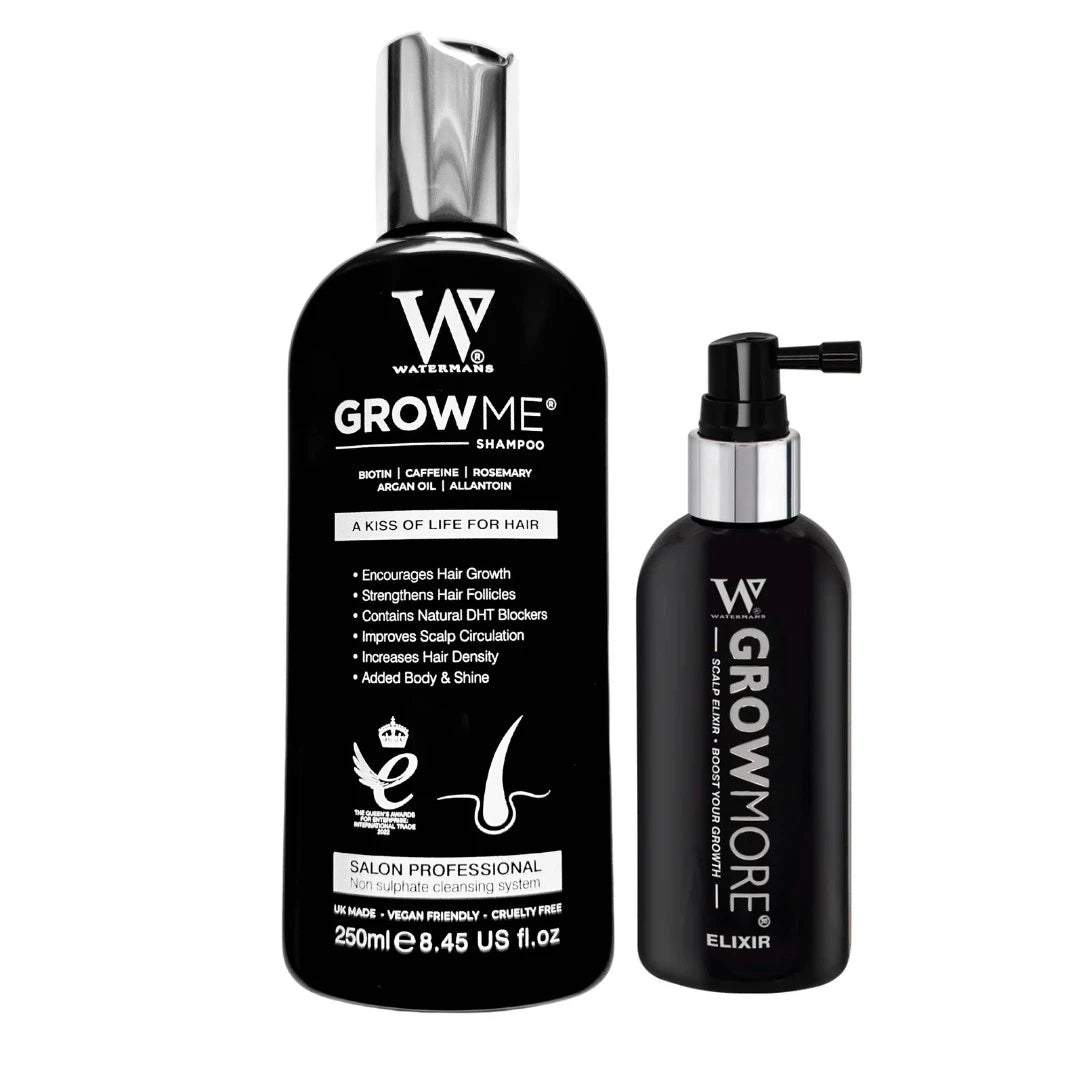
Grow Me® Hair Growth Shampoo, £14.95
A sulphate free shampoo with caffeine, biotin, niacinamide, rosemary and hydrolysed lupine protein, formulated to support scalp comfort and leave hair looking fuller with less breakage. It is a cosmetic product. It does not treat telogen effluvium, correct an iron deficiency or reverse pattern hair loss, and it is not a reason to delay seeing your GP.
How do you check whether the shedding is genuinely excessive?
Two simple checks give you something more useful than a general sense of alarm. The first is a count: collect every hair you lose over one full day, including from the shower drain, brush and pillow, and repeat on three non consecutive days. An average consistently above 100 to 150 is worth taking to a GP.
The second is the gentle pull test. Take about 50 to 60 hairs between finger and thumb near the scalp and draw your fingers slowly along the length. Coming away with two or three hairs is normal. Coming away with six or more, repeatedly, in several areas of the scalp, suggests active shedding. Do this on unwashed hair, since a fresh wash has already removed the loose ones and will give you a falsely reassuring result.
Take photographs. Same spot, same light, same parting, once a month. Hair changes too slowly for memory to judge accurately, and a set of monthly photos is genuinely useful evidence to show a GP or trichologist.
How long before you see a difference?
Hair grows roughly one centimetre a month, so every timeline here is measured in months rather than weeks. Setting the expectation properly matters, because most people abandon a change at week three, which is before any of them could have worked.
| Problem | First signs of change | Meaningful difference |
|---|---|---|
| Breakage | 2 to 4 weeks (less snapping when brushing) | 3 to 6 months as damaged length grows out |
| Telogen effluvium | Shedding slows at 3 to 6 months | 6 to 9 months, regrowth visible at the hairline |
| Scalp comfort | 1 to 3 weeks | 4 to 8 weeks |
| Density in pattern hair loss | Not from cosmetics | Requires medical treatment, assessed at 6 to 12 months |
When should you see a GP or trichologist?
Book an appointment rather than buying anything if you have hair loss in distinct patches or circles, a parting that is visibly widening, scalp pain, burning, scaling or sores, sudden heavy shedding that has lasted more than six weeks, or hair loss alongside fatigue, weight change, irregular periods or new facial hair. Those combinations point to conditions that need diagnosis, including alopecia areata, thyroid disorders, iron deficiency and polycystic ovary syndrome.
Ask specifically for blood tests covering ferritin, full blood count, thyroid function and vitamin D. Where hair loss follows a pattern rather than being diffuse, the treatments with genuine evidence are medicines, principally minoxidil and finasteride, which have side effects and need a proper conversation with a clinician. No shampoo substitutes for that discussion, and any product implying it does is overclaiming. Our guide to working out why your hair is thinning walks through the process.
Frequently asked questions
Can you have shedding and breakage at the same time?
Yes, and it is common. Someone going through a stressful period often handles their hair more roughly, styles it up tightly and reaches for heat tools more often, so a shedding phase and a breakage problem arrive together. Sort the breakage first because it improves fastest.
Does washing your hair more often cause hair loss?
No. Washing releases hairs that had already detached, so a wash makes the loss visible rather than causing it. Washing less does not reduce shedding, it just batches it into fewer, more alarming shower drains, and it can leave an oily scalp less comfortable.
Is my hair breaking because I need more protein?
Sometimes, but over use of protein treatments causes exactly the same brittleness. Hair needs a balance of protein and moisture, and hair that feels stiff, straw like and snaps cleanly is more often protein overloaded than protein deficient. Alternate a protein treatment with a purely moisturising conditioner.
Do split ends travel up the hair shaft?
A split can extend further up the strand once it has started, which is why trimming every eight to twelve weeks matters. It does not travel to the root or affect the follicle. Trimming does not make hair grow faster, it just removes the length you were going to lose anyway.
Why is more hair coming out since I started using a new shampoo?
Usually because you changed how you wash rather than what you wash with. Massaging more thoroughly, or washing more frequently, dislodges hairs already detached. If the shedding continues beyond a few weeks and the daily average has genuinely risen, look for a cause that started two to three months ago.
Does hard water cause hair loss?
Hard water is associated with breakage and a rough, dull feel rather than with shedding from the root. Mineral deposits build up on the cuticle and make hair harder to detangle. A clarifying wash every few weeks and a shower filter both help, though evidence for filters is largely anecdotal.
Will cutting my hair short make it grow back thicker?
No. Thickness is determined at the follicle, not by the length of the strand. Short hair can feel thicker because a blunt cut end is wider than a tapered one, and because short hair breaks less, but the actual number and diameter of your hairs is unchanged.
How do I tell breakage at the hairline from receding?
Look closely at the short hairs near the front. Breakage from traction leaves broken stubs of varying length, often with the hairline itself still intact. A genuine recession moves the hairline back and the skin behind it is smooth, with fine short hairs or none. Persistent traction damage can eventually become permanent, so loosen the styles early.
Diagnose first, then treat
Do the bulb test tonight. If it is breakage, change your heat, tension and conditioning habits and expect improvement within two months. If it is shedding or thinning, book the blood tests. Buying the wrong product for the wrong problem is how a year gets lost.
Shop Condition Me conditioner | Shop Protect Me heat spray | Shop Grow Me shampoo
Watermans is a founder led British brand making vegan, UK manufactured hair care, with over 5 million bottles sold since 2012. Our products are cosmetics that support scalp condition and the look of fullness. They are not medicines: for patchy, sudden or persistent hair loss, see your GP or a registered trichologist.
Last updated: August 2026.