Do Hair Growth Serums Work? An Evidence Guide to the Actives
Do hair growth serums work? Some of what goes into them has real evidence behind it, and a lot of it does not. Only two things are licensed to regrow hair in pattern hair loss: topical minoxidil and, for men, oral finasteride. Everything sold as a cosmetic serum, including ours, works on a different level: scalp condition, breakage, and how full the hair you still have looks and behaves. That is a genuine benefit and it is worth paying for, but it is not the same claim, and any brand that blurs the two is selling you something it cannot deliver.
This guide goes ingredient by ingredient. Caffeine, aminexil, rosemary, biotin, niacinamide, peptides, saw palmetto, microneedling. For each one you get what the research actually supports, how strong that evidence is, and what the ingredient is not. Then a practical layering order, a realistic timeline, and the point at which you should stop buying serums and see a GP instead.
Key takeaways
- Topical minoxidil is the only over-the-counter product licensed to regrow hair in pattern hair loss. Cosmetic serums are not equivalent to it.
- Caffeine has laboratory and small human evidence for follicle activity, which is promising but not on the same footing as minoxidil.
- Aminexil is a cosmetic active, not a form of minoxidil, and it is not a precursor to zinc pyrithione. Those are two different molecules with different jobs.
- Rosemary oil rests on one small 2015 trial. Interesting, widely over-quoted, not replicated at scale.
- Biotin only helps if you are deficient, and deficiency is rare in people eating normally. A blood test beats guessing.
- Give any cosmetic routine 8 to 12 weeks before judging it, photographed in the same light and the same parting.
- Patchy loss, a fast widening parting, scalp pain or scaling, or shedding alongside fatigue or weight change all need a GP, not another bottle.

Do hair growth serums actually work for thinning hair?
A cosmetic hair growth serum can improve scalp comfort, reduce breakage and make existing hair look fuller, and there is reasonable ingredient evidence for parts of that. What it cannot do is reverse pattern hair loss, because that is driven by hormones acting on follicles and needs a medicine. Expect better condition, not new density.
The distinction matters commercially as well as scientifically. If your problem is that hair is snapping off at the mid shaft and your ponytail has thinned because of damage, a good conditioning routine genuinely fixes that, and fixes it within weeks. If your parting is widening because of androgenetic alopecia, no shampoo or leave-on serum on the UK market will halt it, and the honest advice is to see a clinician early, because the treatments that work protect what you still have rather than raising the dead.
Work out which one you are dealing with before you spend anything. We wrote a separate diagnostic guide on how to tell hair fall, thinning and breakage apart, including the bulb test and the pull test, and it is the right place to start if you are not sure. If your suspicion is diffuse thinning rather than damage, working out the underlying cause of thinning hair will save you months of buying the wrong category of product.
Which hair growth ingredients have real evidence?
Ranked honestly, the evidence falls into four tiers: licensed medicines, ingredients with promising but limited human data, ingredients that only help when you are deficient, and ingredients whose reputation runs well ahead of the research. The table below is the whole picture in one place, as of August 2026.
| Ingredient | What the research supports | Evidence strength | What it is not |
|---|---|---|---|
| Topical minoxidil 2% / 5% | Regrowth and reduced shedding in pattern hair loss across many randomised trials | Established. Licensed medicine, sold in pharmacies | Not a cosmetic. Ask a pharmacist or GP whether it suits you |
| Finasteride, dutasteride (oral) | Lowers DHT and slows male pattern loss; used off licence in some women under specialist care | Established. Prescription only | Not something to buy from an unregulated website |
| Caffeine (topical) | Hair shaft elongation in cultured follicles, plus small human studies on shaft thickness | Promising, limited. Small samples, often industry funded | Not equivalent to minoxidil, whatever the packaging implies |
| Ketoconazole shampoo | Reduces scalp yeast and flaking, which reduces the inflammation that worsens shedding | Established for dandruff, indirect for hair | Not a growth treatment. It treats the scalp, not the follicle |
| Aminexil | Cosmetic active promoted for keeping collagen around the follicle supple | Limited. Largely manufacturer studies, little independent replication | Not minoxidil, and not a precursor to zinc pyrithione |
| Rosemary oil | One 2015 trial found improvement comparable to 2% minoxidil at 6 months | Single small trial, not replicated | Not proof of equivalence, and undiluted it can irritate |
| Biotin (oral) | Corrects hair and nail problems caused by genuine biotin deficiency | Established for deficiency only | Not a growth booster if your levels are normal, which they usually are |
| Iron, vitamin D, zinc | Correcting a documented deficiency can reduce diffuse shedding | Established when deficient, needs a blood test | Not safe to load up on blind. Too much iron is harmful |
| Niacinamide (B3) | Well studied for skin barrier function and comfort, and the scalp is skin | Good for the barrier, indirect for hair | Not a regrowth ingredient |
| Hydrolysed proteins and peptides | Deposit on the hair shaft, reducing breakage and improving feel and body | Cosmetic, reasonably well established for condition | Not a medicine, and the effect washes out over time |
| Microneedling (derma roller) | Small trials suggest added benefit when combined with minoxidil | Promising as an adjunct only | Not a standalone treatment, and unsterile rolling risks infection |
| Saw palmetto | A few small studies suggest a mild anti androgen effect | Weak. Much smaller effect than finasteride | Not a natural substitute for a prescription |

What does caffeine actually do in a shampoo or serum?
Caffeine penetrates the follicle and, in laboratory studies on cultured human hair follicles, extended the growth phase and increased hair shaft elongation. Small human studies have reported improved shaft thickness with regular use. It is one of the better supported cosmetic actives, which is exactly why it appears in so many formulas.
The honest caveats: the strongest data is laboratory rather than clinical, the human trials are small, and a good share are funded by companies selling caffeine products. Contact time also matters. A shampoo you rinse after 30 seconds gives an active far less opportunity than a leave-on serum does, which is the practical argument for having both in a routine rather than one or the other.
Is aminexil the same thing as minoxidil?
No. Aminexil and minoxidil are different molecules with different regulatory status. Minoxidil is a licensed medicine with decades of randomised trial data. Aminexil is a cosmetic ingredient, promoted on the idea that it keeps the collagen sheath around the follicle supple so the root anchors better. The names look similar, which is convenient for marketing, and it causes real confusion.
Two claims about aminexil circulate online and both are wrong. It is not a form of minoxidil, and it is not a precursor to zinc pyrithione. Zinc pyrithione is a separate antifungal used in anti dandruff shampoos, and there is no chemical pathway that turns one into the other. If a page tells you otherwise, treat everything else on that page with suspicion too.
Does rosemary oil really work as well as minoxidil?
That claim traces back to a single 2015 trial in Skinmed Journal, which compared rosemary oil to 2% minoxidil in androgenetic alopecia and found similar improvement at six months. It is a real study and it is genuinely interesting. It is also one small single site trial, and no large replication has followed in the decade since.
What that means in practice: rosemary is a reasonable ingredient to have in a formula, and the smell and scalp feel are pleasant, but one study does not establish equivalence with a licensed medicine. Neat essential oil applied undiluted also irritates plenty of scalps, so if you are using it outside a finished cosmetic product, dilute it in a carrier oil and patch test first.

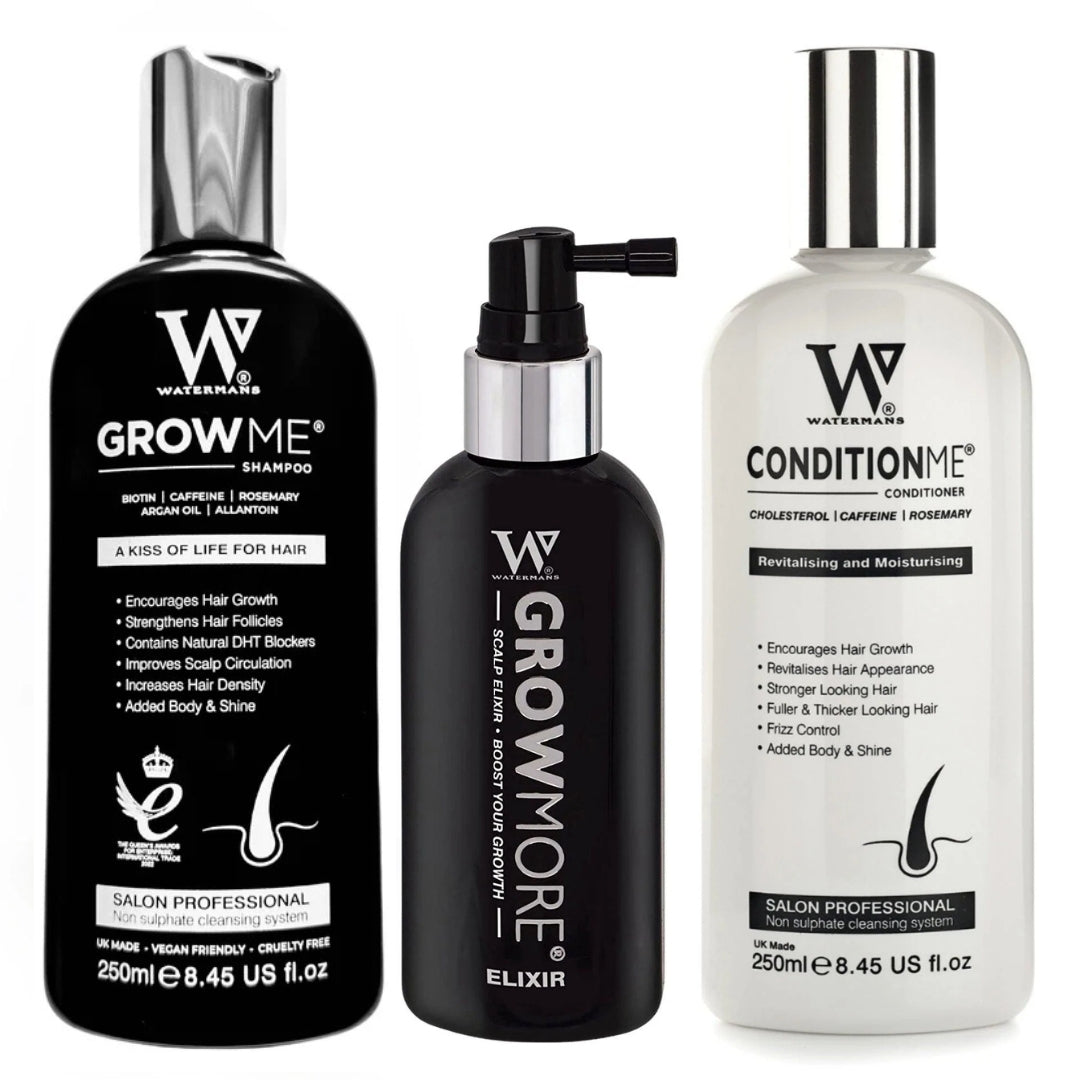
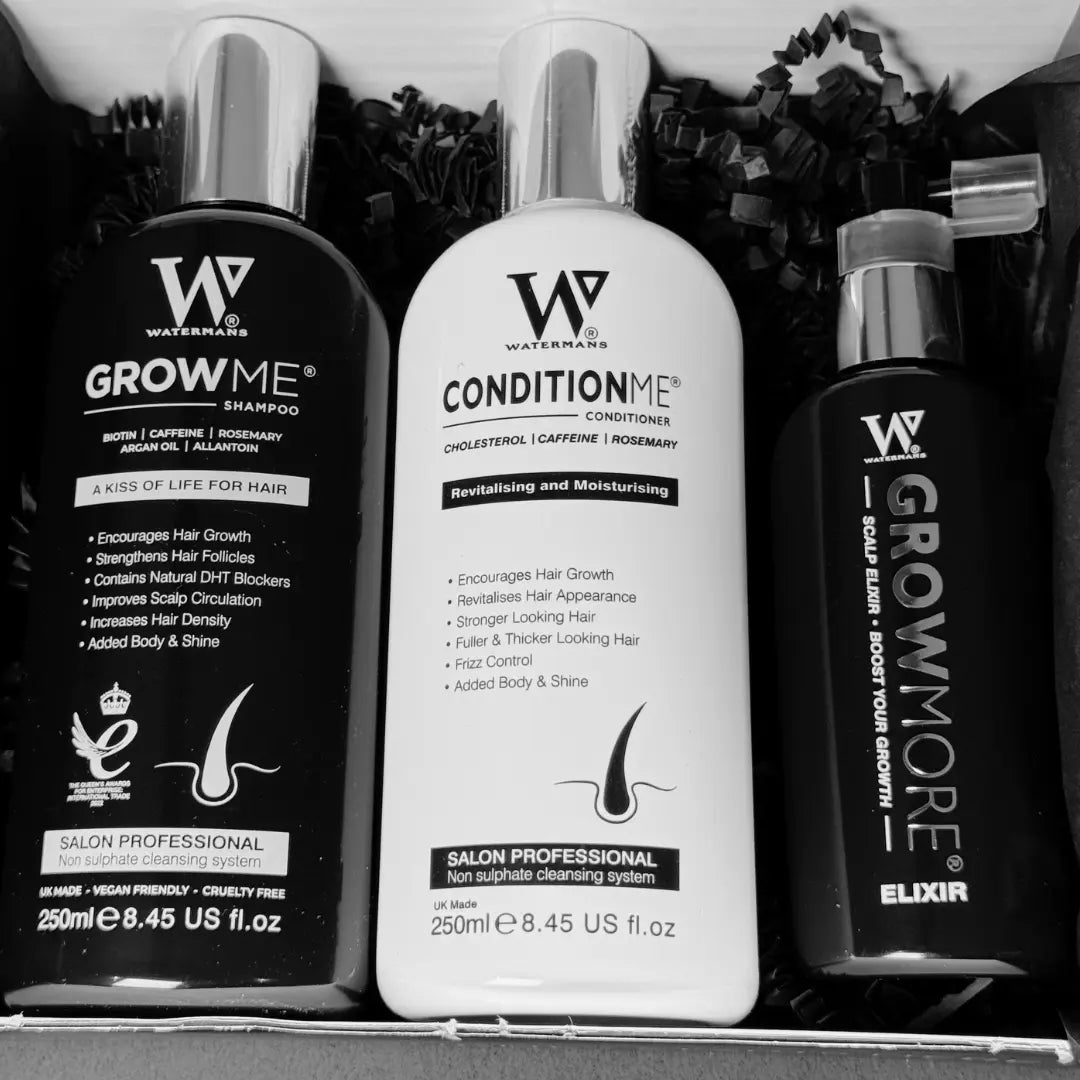
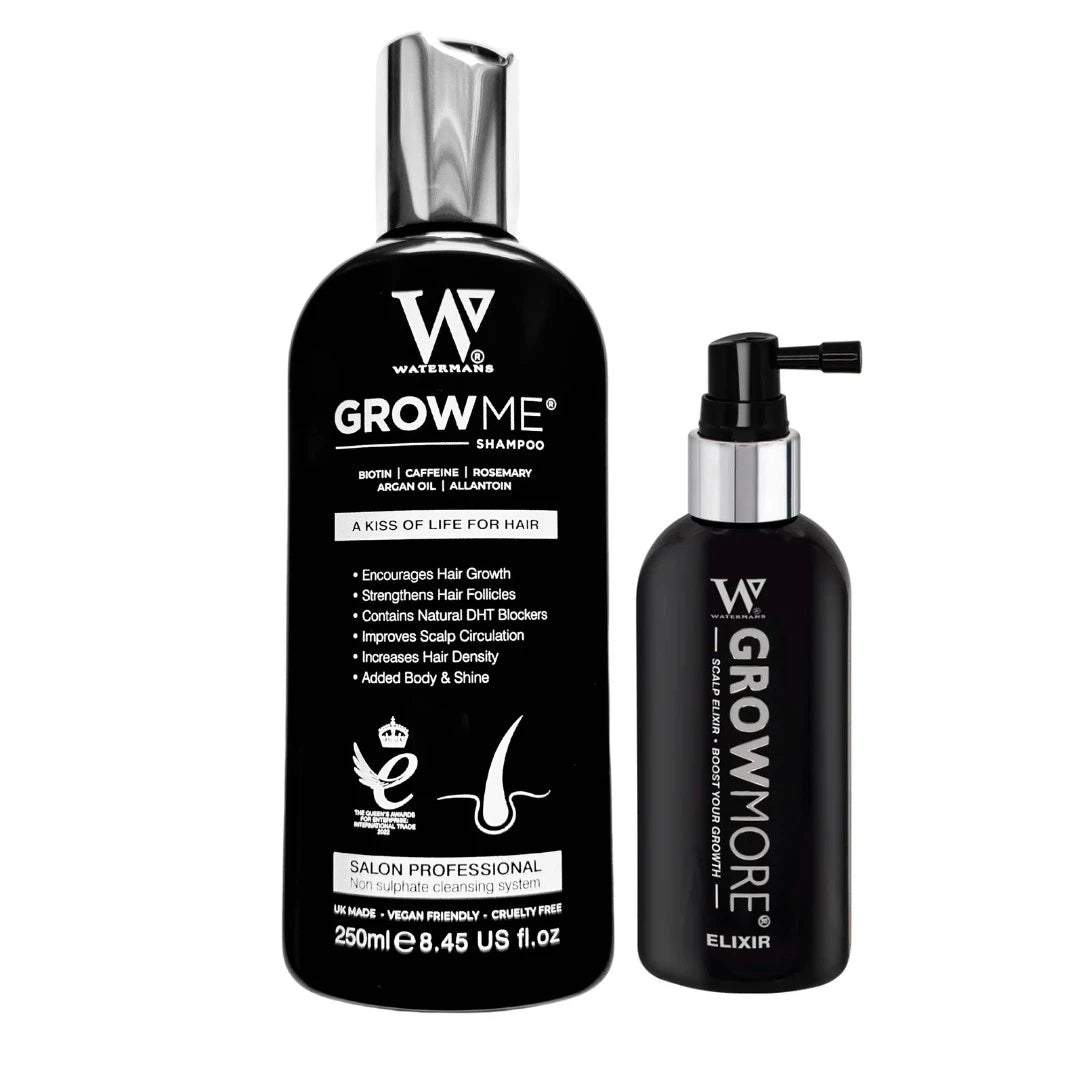
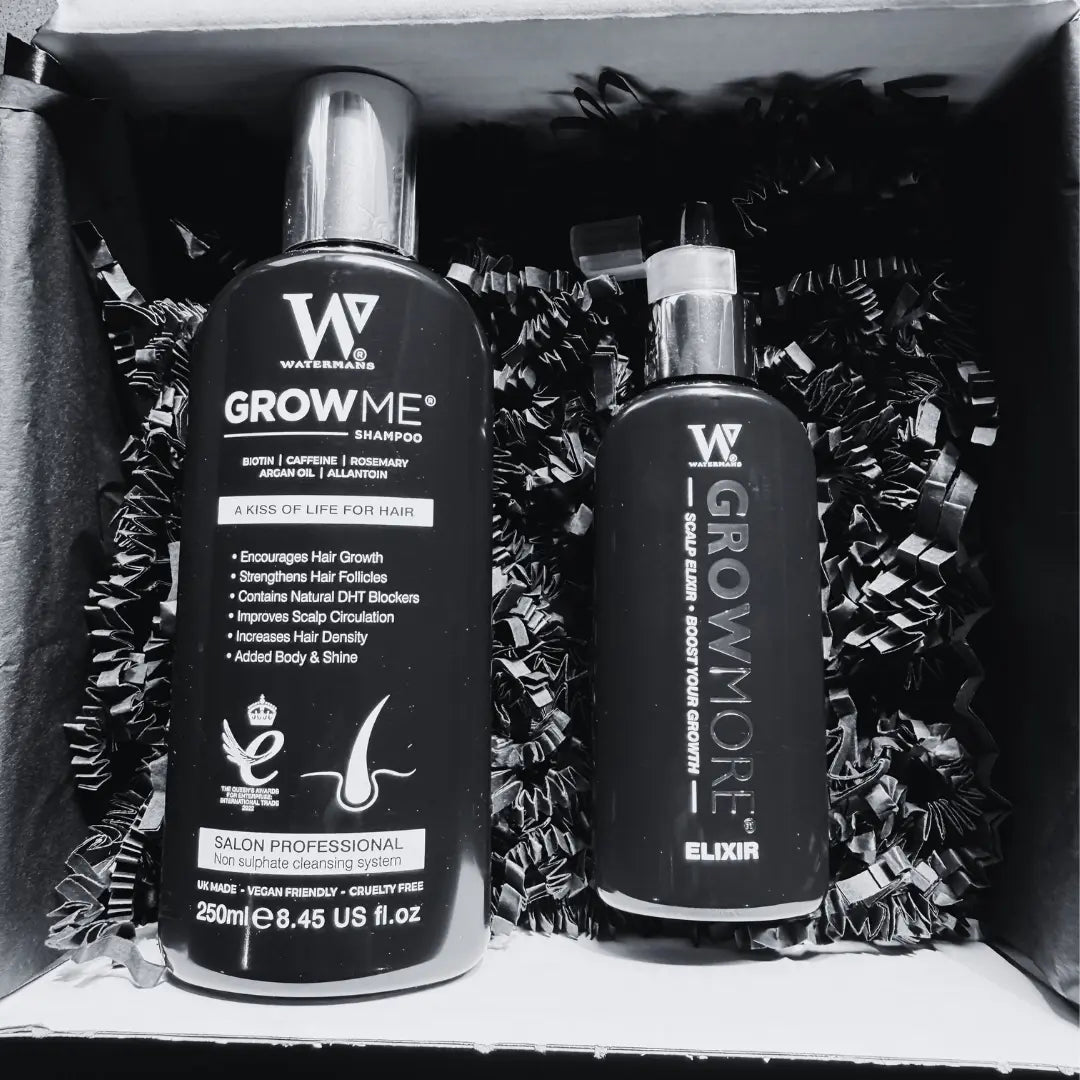
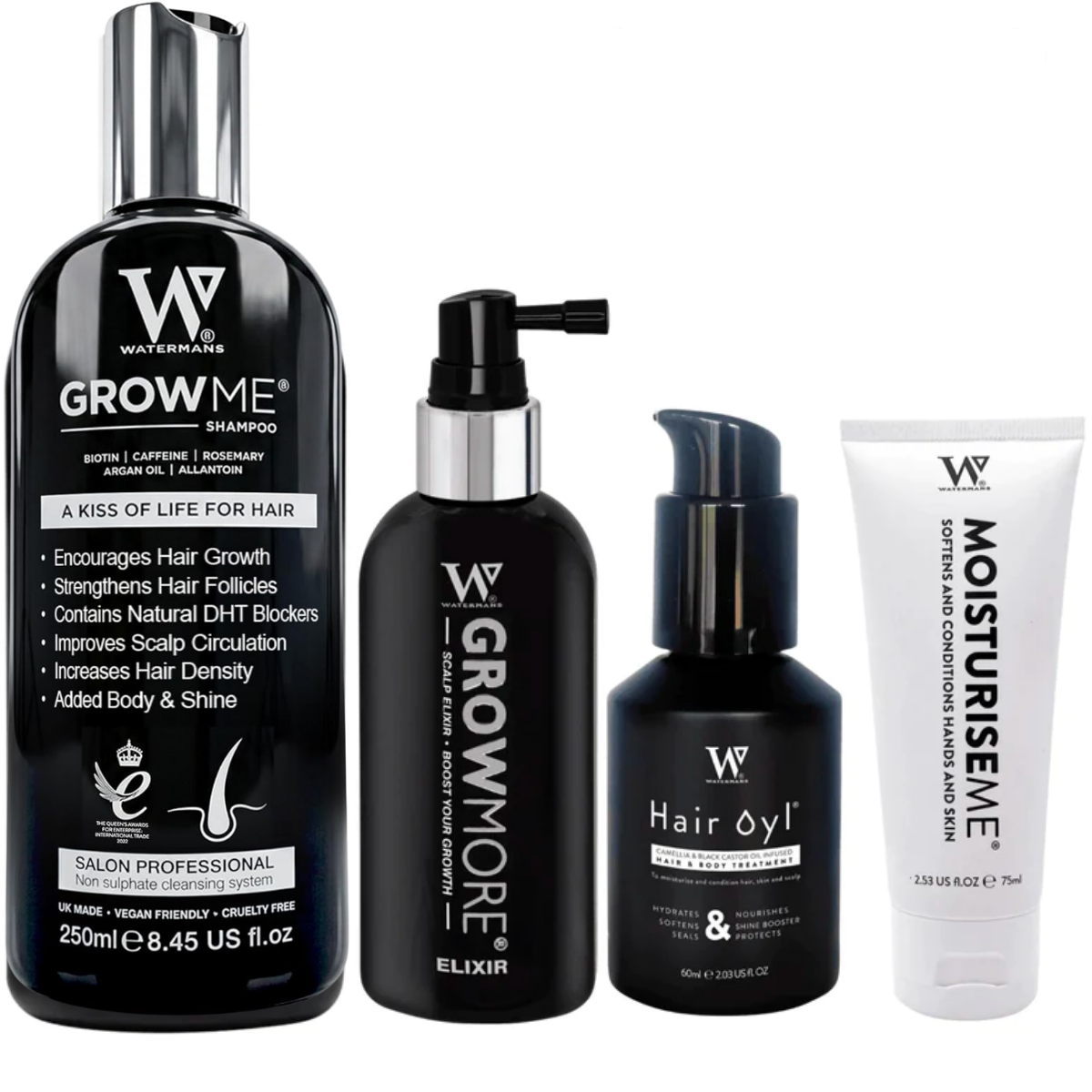
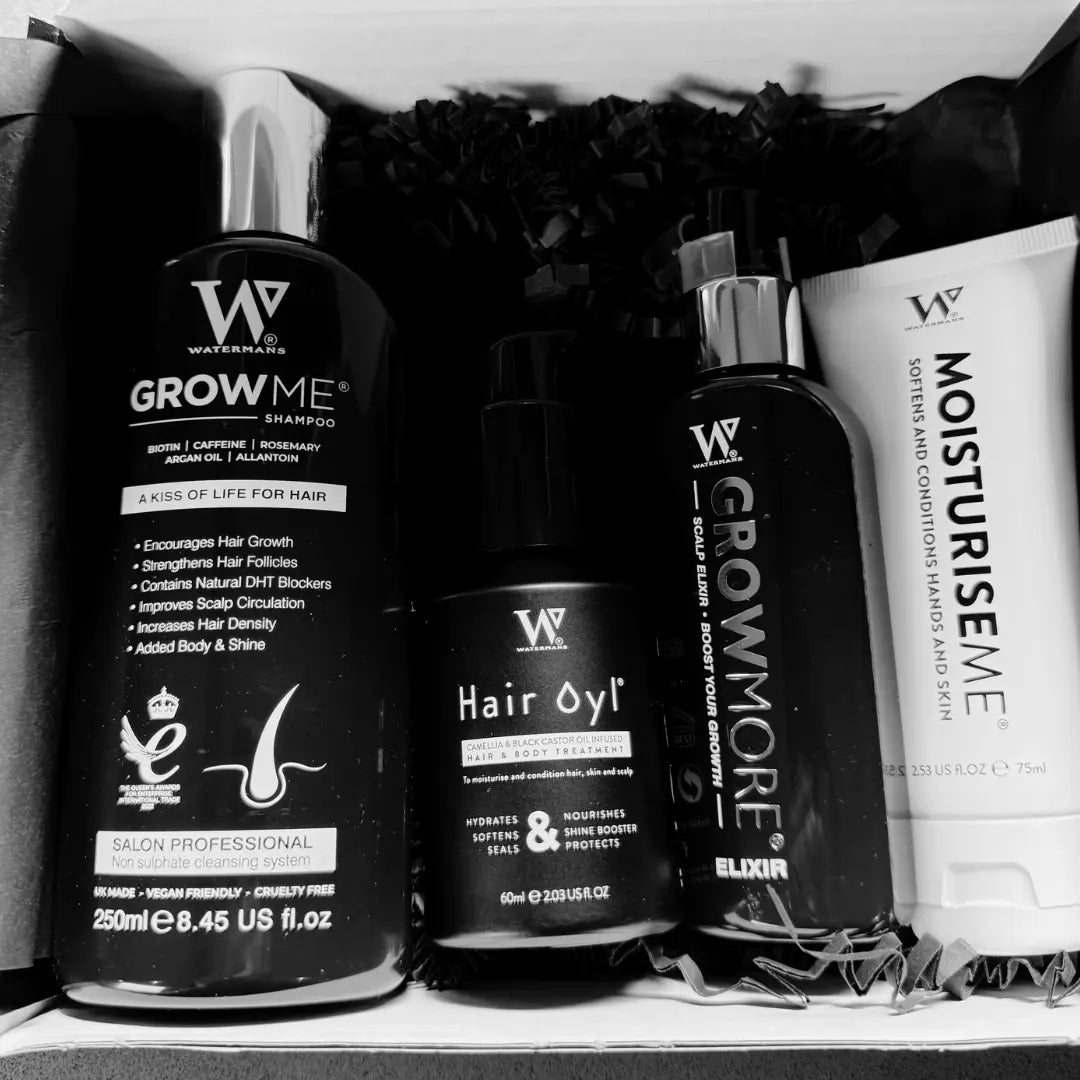
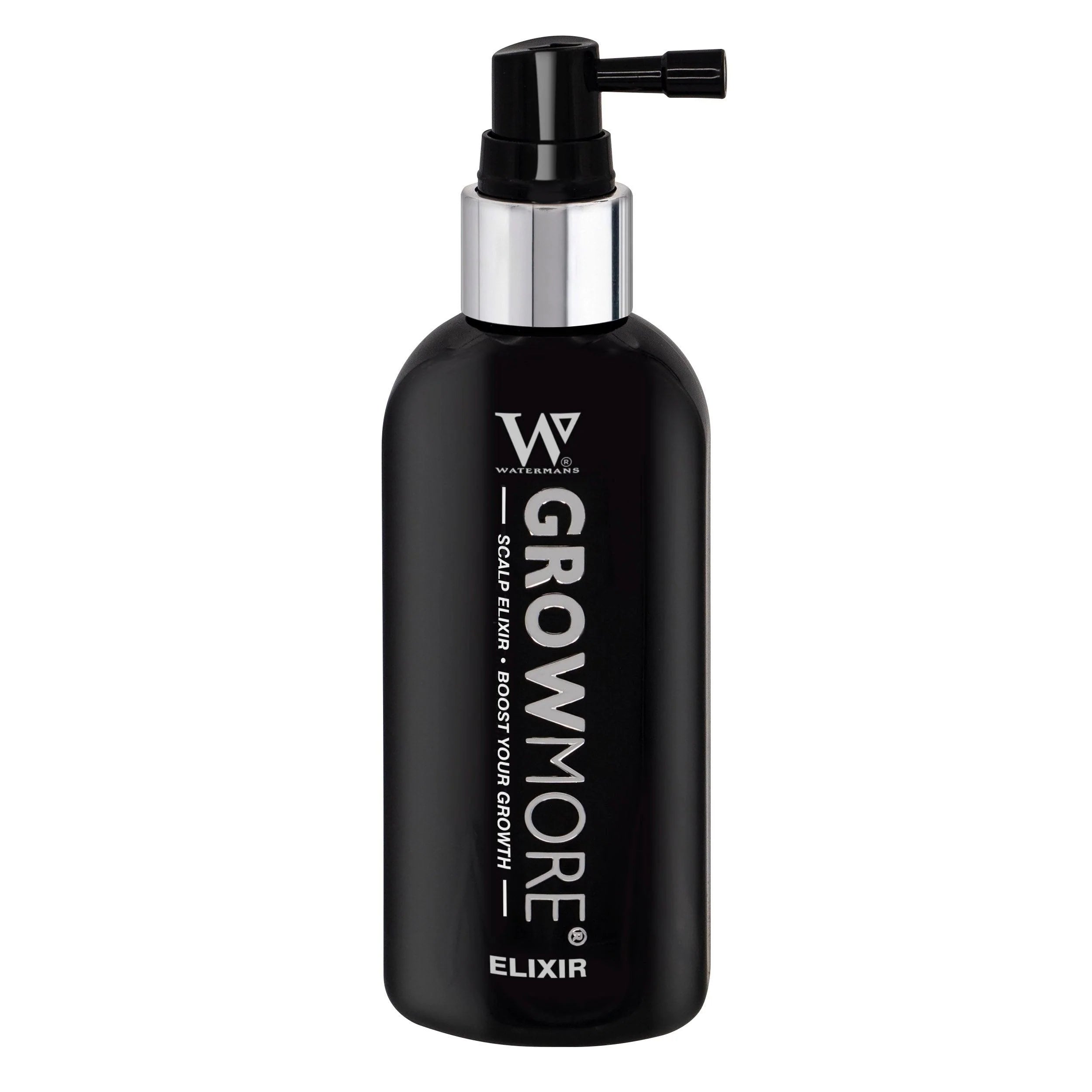
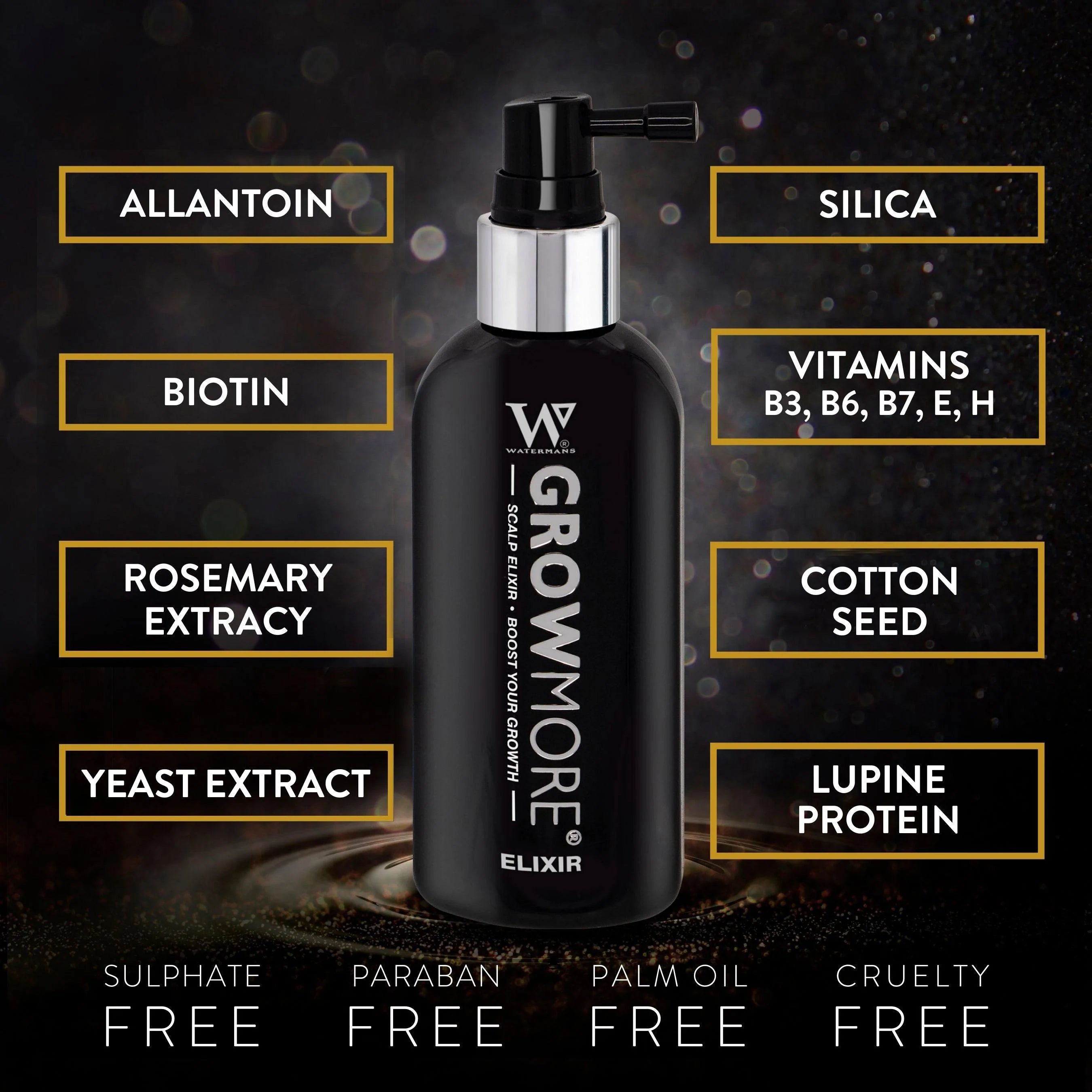
Grow More® Elixir, Leave-In Hair Density Serum, £25.50
An overnight leave-on scalp serum formulated with caffeine, rosemary, niacinamide, biotin, allantoin and hydrolysed lupine protein. Because it stays on the scalp rather than being rinsed away, the actives get hours of contact rather than seconds.
What it is not: a medicine. It does not regrow hair in pattern hair loss, does not treat alopecia, and will not correct an iron deficiency. It is a cosmetic serum for scalp condition and fuller-looking hair.
What do niacinamide and hydrolysed proteins do for hair?
Niacinamide supports the skin barrier, and the scalp is skin, so it earns its place for comfort, flaking and general scalp condition rather than for growth. Hydrolysed proteins and peptides work on the fibre instead: they deposit along the shaft, temporarily filling damage and reducing how easily hair snaps when wet and brushed.
Neither is a growth ingredient, and honest labelling should say so. What they do change is the two things people actually notice in the mirror, which are how much hair survives brushing and how much body a ponytail has. If you want the detail on the first of those, we have a fuller piece on what niacinamide does for hair and scalp.
What has weak or no evidence for hair growth?
Several popular categories have very little behind them. Knowing which ones lets you stop spending on them and put the money where it does something.
- Scalp massage alone. Pleasant and stress reducing, with only tiny studies on hair thickness. Not a treatment.
- Onion juice, garlic, rice water. Home remedies with almost no controlled human data. Rice water can leave hair stiff and brittle with heavy repeated use.
- Collagen supplements for hair. Marketed hard, thin evidence for hair specifically. Your body does not route ingested collagen to your follicles on request.
- Biotin megadoses. No benefit at normal levels, and high dose biotin is known to interfere with some laboratory tests, including thyroid and cardiac markers. Tell your GP if you take it.
- Laser combs and caps. Some low level laser devices have small positive trials, but the effect is modest and the cost is high. Not a first move.
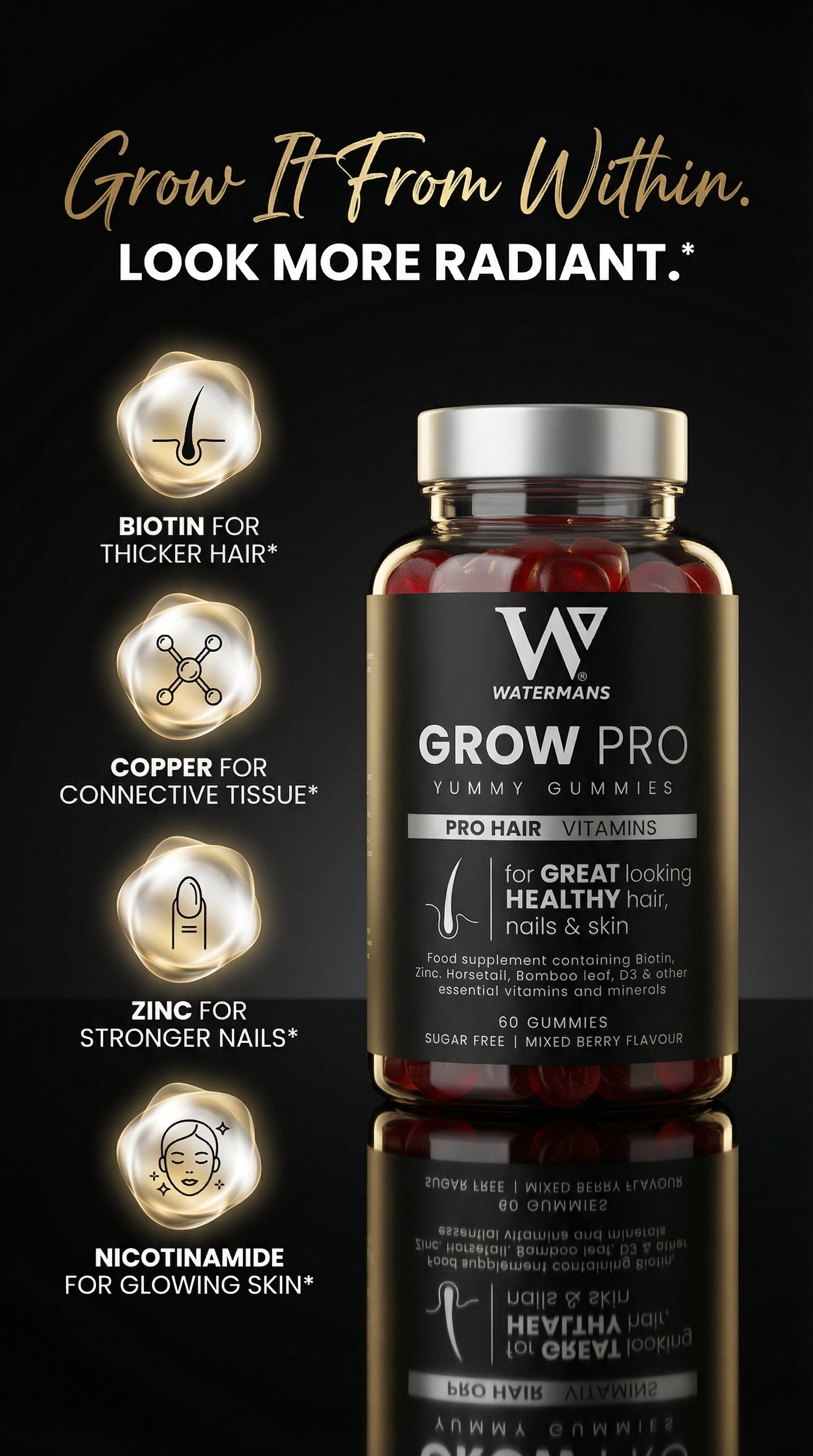
- Hair growth gummies as a fix for pattern loss. Useful when they correct a genuine dietary gap, useless as a counter to hormonal thinning.

How should you layer a shampoo, mask and leave-in serum?
Order matters because each product needs a different surface and a different amount of contact time. Scalp products go on the scalp, fibre products go on the mid lengths and ends, and the leave-on step goes last so nothing rinses it off. The table below is the routine in sequence.
| Step | Where it goes | How often | Why the order matters |
|---|---|---|---|
| 1. Pre-wash oil, optional | Dry mid lengths and ends | 20 to 30 minutes before washing, once a week | Reduces how much water the fibre swells, which reduces wet damage |
| 2. Shampoo | Scalp only, using fingertips not nails | Every 2 to 3 days for most people | Scalp actives need skin contact. Lathering the ends just dries them out |
| 3. Conditioner or weekly mask | Mid lengths to ends, never the roots | Conditioner every wash, mask once a week instead | This is the anti breakage step. Leave a mask on 5 to 10 minutes |
| 4. Leave-in scalp serum | Towel dry scalp, along the partings | Daily or nightly, consistently | Do not rinse. Contact time is the whole point of a leave-on product |
| 5. Heat protection | Mid lengths and ends, before any hot tool | Every single time you use heat | Skipping this undoes the anti breakage work in one styling session |
Two habits undo the whole routine. Brushing hair hard while it is soaking wet, when the fibre is at its most fragile, and tying it tightly in the same place every day, which causes traction loss along the hairline. Neither costs anything to fix.

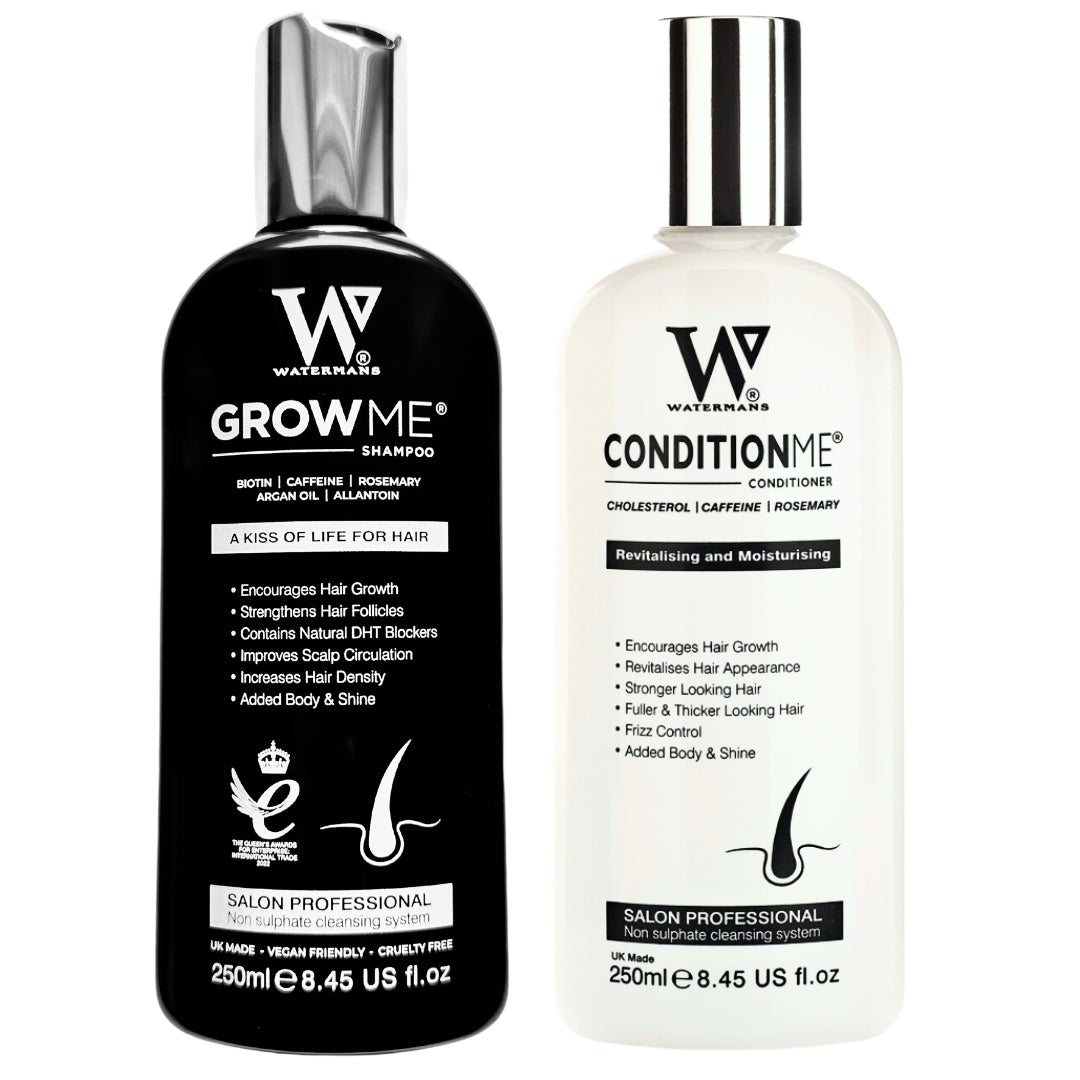
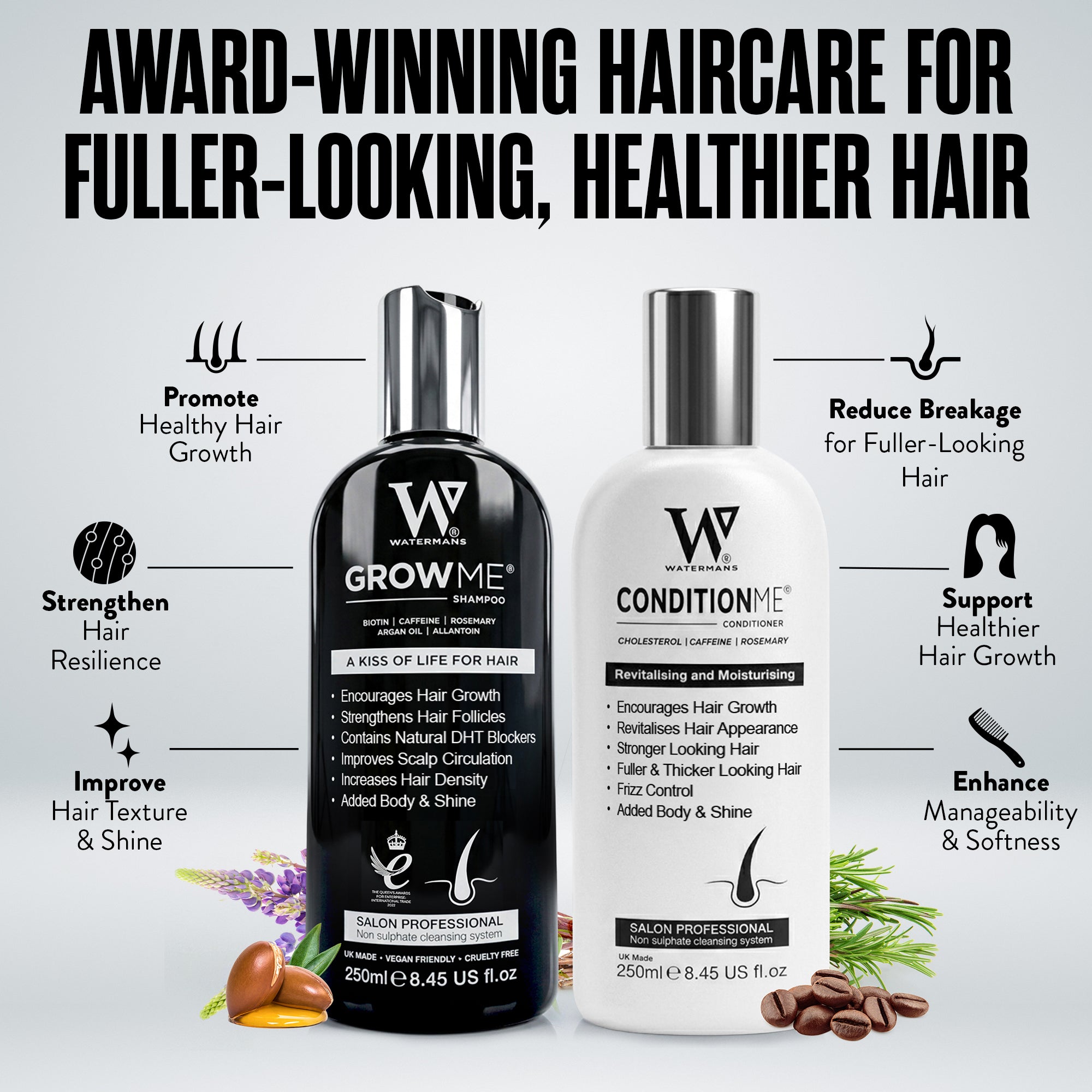
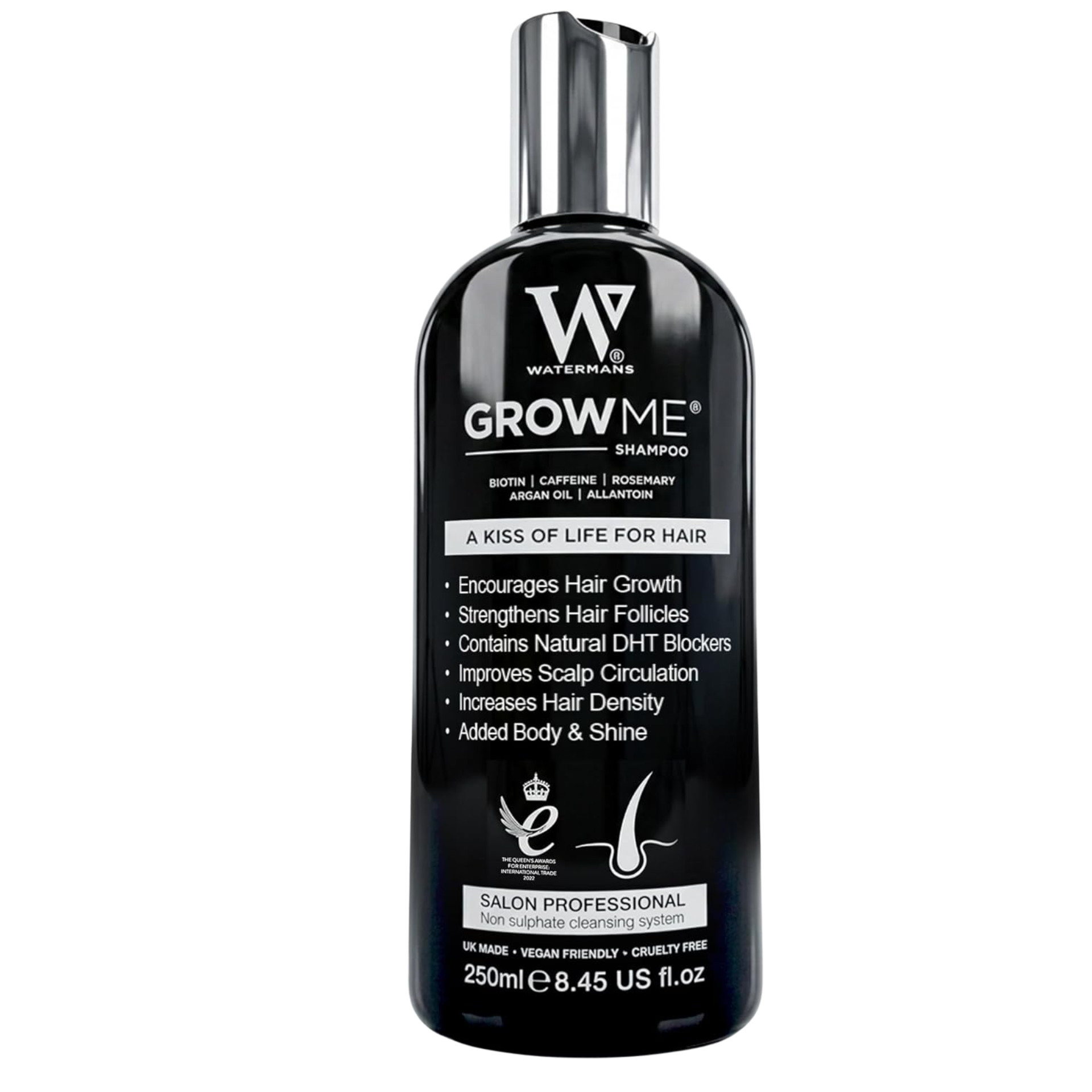
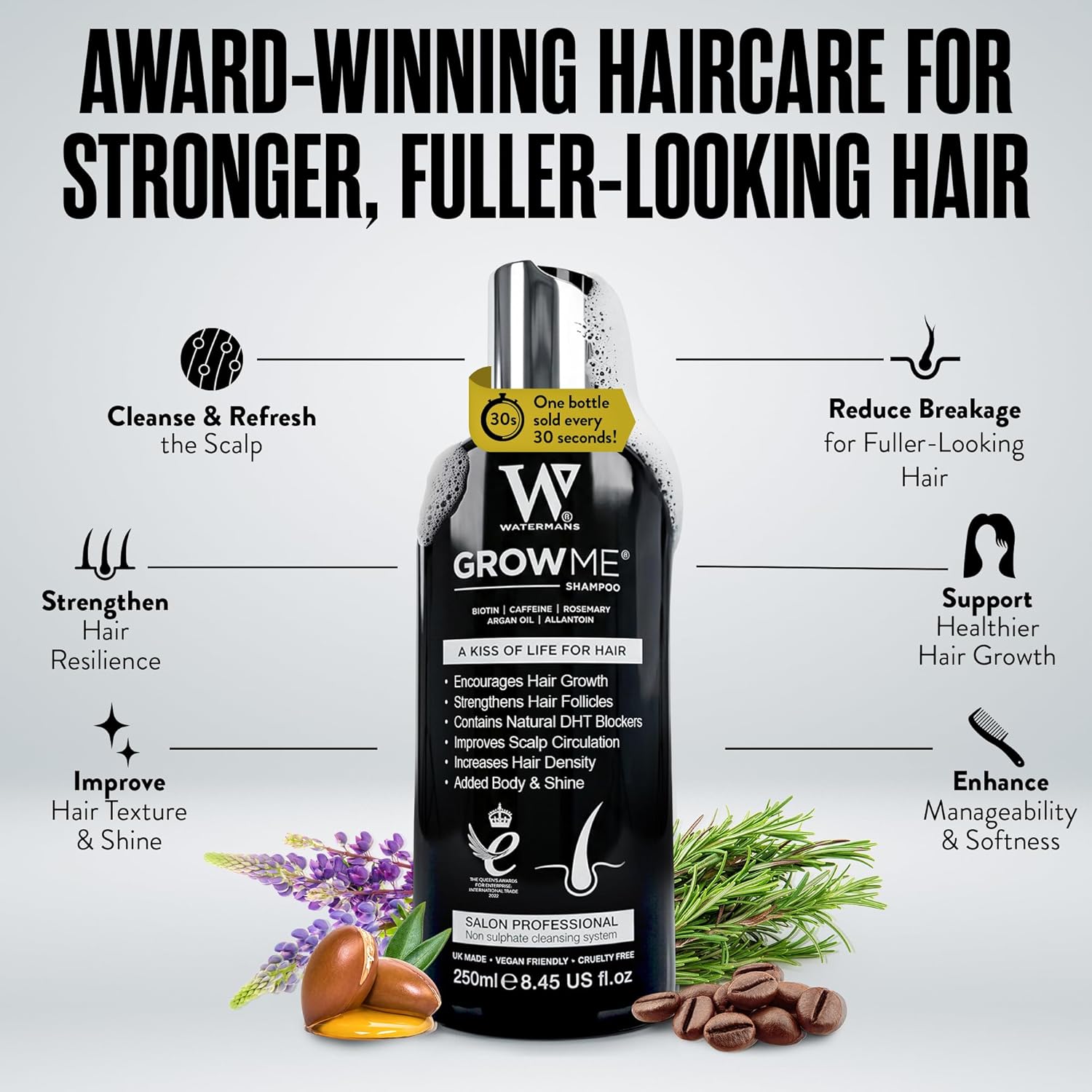
Grow Me® Hair Growth Shampoo, £14.95
A sulfate free shampoo for step 2, formulated with caffeine, biotin, rosemary, niacinamide and hydrolysed lupine protein. Cleanses the scalp without stripping, which matters when the ends are already fragile.
What it is not: a treatment for hair loss. It will not regrow hair, treat alopecia or reverse pattern thinning. It is a cosmetic shampoo for scalp condition, reduced breakage and fuller-looking hair.

How long before a hair growth serum shows anything?
Give any cosmetic routine 8 to 12 weeks before you judge it, because scalp hair grows roughly one centimetre a month and a follicle that changes behaviour today does not show it at the surface for weeks. Anything sold on a two week transformation is selling a photograph, not a result.
| Timeframe | What is realistic | What is not |
|---|---|---|
| 0 to 4 weeks | Calmer scalp, less flaking, hair feels stronger when wet, less on the brush | Any visible change in density |
| 4 to 8 weeks | Shedding settling if the original trigger has passed, better texture and shine | Noticeable new length or a narrower parting |
| 8 to 12 weeks | The first fair photo comparison. Same light, same parting, same time of day | A dramatic before and after |
| 3 to 6 months | About as much as cosmetics will give you. Judge honestly at this point | Continuing indefinitely with no change and hoping |
Take the photographs. People are poor judges of their own hair month to month, and a dated photo in consistent light is the only way to tell a real change from a good hair day. If your shedding began after an illness, a birth, surgery, a crash diet or a period of severe stress, the pattern and the recovery curve are specific, and our guide to telogen effluvium triggers and timelines explains what to expect and when.

Masque Me® Repairing Hair Mask, £24.95
The weekly step 3 option in place of conditioner, with rosemary, caffeine, niacinamide, provitamin B5, argan oil and hydrolysed lupine protein. This is the breakage side of the routine, for hair that snaps mid shaft rather than shedding from the root.
What it is not: a growth treatment. A mask conditions the fibre you already have. It has no effect on follicles or on the cause of hair loss.
When should you see a GP instead of buying another serum?
Book an appointment rather than another bottle if the loss is patchy, fast, painful, or comes with other symptoms. Cosmetic products are the wrong tool for a medical cause, and the treatments that genuinely work in pattern loss protect the hair you still have, so early is much better than late.
See a GP or trichologist if you notice any of these
- Smooth round bald patches appearing, rather than general thinning
- A parting that is visibly widening over weeks rather than years
- Scalp pain, burning, scaling, pustules or sores
- Heavy sudden shedding alongside fatigue, weight change or feeling cold
- Hair loss with irregular periods, acne or new facial hair growth
- Hair coming out in clumps after starting a new medication
- Any noticeable hair loss in a child
If the eventual answer is androgenetic alopecia, that is not the end of the road, it just changes which shelf the solution sits on. Our guide to the stages of pattern hair loss in men and women sets out what the medical options look like and how they are usually sequenced.
Frequently asked questions
Do hair growth serums work for receding hairlines?
A cosmetic serum will not restore a receding hairline, because recession in pattern hair loss is driven by hormone sensitivity in those specific follicles. A serum can improve scalp condition and the look of the hair still growing there. For the recession itself, minoxidil or a prescription route through a clinician is the evidence based answer.
Is caffeine shampoo better than a caffeine serum?
Neither is better, they do different jobs. A shampoo cleanses the scalp and delivers actives for under a minute before rinsing. A leave-on serum stays in contact for hours. Most people get more from using both in the right order than from picking one, which is why routines are sold as sets.
Can I use a hair growth serum with minoxidil?
Usually yes, but stagger them rather than layering both at once, and ask a pharmacist or your GP first. Applying two leave-on products to the same skin at the same time increases the chance of irritation, and irritation makes people stop using the one that actually works.
Why does my hair shed more when I start a new product?
Often it is not the product. Hairs already in the shedding phase come loose during washing, so if you have changed how often you wash, you notice them all at once. Genuine product driven shedding with itching or a rash is different, and means stop using it and patch test next time.
Do hair growth serums work for postpartum shedding?
Postpartum shedding is usually telogen effluvium and resolves on its own within 6 to 12 months as hormones settle. A gentle routine supports condition and reduces breakage while you wait, which makes the regrowth phase look better, but it is not the reason recovery happens.
Is it worth getting a blood test before buying supplements?
Yes, and it often saves money. Iron, ferritin, vitamin D, thyroid function and B12 are the usual panel your GP would consider with diffuse shedding. Correcting a real deficiency helps. Supplementing without one mostly produces expensive urine, and excess iron is genuinely harmful.
How much hair loss per day is normal?
Losing roughly 50 to 100 hairs a day is normal, and more on wash days simply because several days of loose hairs come out together. What matters more than the count is the trend over weeks, whether the parting is widening, and whether the hairs have a small white bulb at the root.
Are natural ingredients safer than minoxidil?
Natural does not mean safer or gentler. Undiluted essential oils cause more contact dermatitis than most synthetic actives, and licensed medicines carry the advantage of documented side effect profiles and dosing. Judge any ingredient on its evidence and its irritation risk, not on where it came from.
Where to start
If your hair is snapping and looks lifeless, start with the fibre: a gentle cleanse, a weekly mask and heat protection will show real change inside a month. If your scalp is the issue and you want the actives with the most contact time, the leave-on serum is the step that earns its place. And if the parting is widening, see a GP early and let the cosmetics support the medicine rather than stand in for it.
Watermans has sold over 5 million bottles since 2012. The range is vegan, cruelty free and made in the UK, and it is cosmetic hair care, which is exactly what it says on the bottle.
Last updated: August 2026. This article is general information about cosmetic hair care, not medical advice. Speak to a GP, pharmacist or trichologist about sudden, patchy or severe hair loss, and before starting any medicine.