

Budget Hair Care Routine: What Actually Works
Short answer: the best budget hair care routine spends almost nothing on products and almost everything on technique. Roughly three quarters of what people are unhappy about, dryness, frizz, split ends, hair that will not grow past a certain length, is breakage rather than anything happening at the follicle, and breakage is caused by how you wash, dry, brush and sleep. All four are free to change. Once those are right, one decent conditioner is worth more than a shelf of everything else.
Key takeaways
- The free changes beat the paid ones. Detangling from the ends up, cooler final rinse, air drying longer before heat, and not sleeping on a rough pillowcase cost nothing and do more than most purchases.
- Two products is a complete routine. A shampoo that suits your scalp and a conditioner that suits your lengths. Everything else is optional.
- Buy in bulk, not down a tier. If something works, the multipack lowers your cost per wash far more than switching to a worse product does.
- Wet hair is at its most fragile. Almost all avoidable damage happens in the ten minutes after a shower.
- Masks, oils, serums and scalp scrubs are nice, not necessary. Add them one at a time, so you can tell which one did anything.
- Give any change eight weeks and one photograph. Hair is slow and memory is generous.
The free changes, ranked by how much they matter
Ordered by impact, not by how satisfying they are to do. If you only ever change three things, change the first three.
1. Detangle from the ends upwards, on conditioned hair
Start at the last few centimetres, work the tangles out there, then move up a hand's width and repeat. Dragging a brush from the roots down gathers every knot on the way and rips through them at the bottom. Do it with conditioner still in, in the shower, using your fingers or a wide tooth comb. This single change is the biggest free win available, and it is why so many people find their hair suddenly stops snapping when nothing else has changed.
2. Stop rubbing your hair dry
A terry towel rubbed vigorously over wet hair roughs up the cuticle and snaps strands, which is where a large share of frizz comes from. Squeeze instead, then wrap. An old cotton t shirt does the job of a microfibre towel for nothing.
3. Sort out the friction while you sleep
Eight hours a night of hair dragging across cotton is a lot of friction, and it lands hardest on long, curly, coily and fine hair. A satin or silk pillowcase is the usual fix, but a satin scarf or a loose braid works too, and if you are spending nothing, the loose braid is free.
4. Turn the last rinse cooler
Not cold, just cooler. Very hot water strips oil and leaves the scalp tight. Thirty seconds of cooler water at the end costs nothing and makes hair noticeably smoother.
5. Let it air dry to about 70 percent before any heat
Heat on soaking hair does far more damage than heat on damp hair, because the water inside the strand boils. If you must blow dry, rough dry the excess out first, then style.
6. Wash your scalp, condition your ends
Shampoo belongs on the scalp, where the oil is. Conditioner belongs from the ears down, not at the roots. Most people do a version of the opposite and then wonder why their roots are greasy and their ends are dry.
7. Wash less often, but properly
Not a moral rule, just economics and hair health. If you can move from daily to every other day without your scalp complaining, you have halved your product cost and reduced mechanical handling by half at the same time.

The minimum viable routine: two products
A complete, genuinely sufficient hair care routine is a shampoo and a conditioner. That is it. Everything sold on top of those two is an optional extra, and treating it that way is how a budget routine stays a budget routine.
| Product | What it is for | How to choose on a budget |
|---|---|---|
| Shampoo | Cleaning the scalp | Match it to your scalp, not your ends. If your scalp feels tight after washing, the detergent is too harsh for you. |
| Conditioner | Protecting the lengths | Match it to your ends, and spend here first. It is what stays on the hair and reduces breakage every time you brush. |
The reason conditioner is the priority is simple. Shampoo is on your head for ninety seconds and then goes down the drain. Conditioner is what remains, and it is what decides how much damage your brush does for the next two days. If you are choosing where a limited budget goes, that is where it goes. We set out the fuller version of that argument, with the price tiers and the cost per wash arithmetic, in are expensive hair products worth it.
What to add next, in order
Once the two basics are right and the free habits are in place, add extras one at a time and a month apart. Adding four things at once means you learn nothing about which of them helped.
- A wide tooth comb. A few pounds, and the single best value purchase in hair care. It is the tool the number one habit above needs.
- A heat protectant, if you use heat. Only worth it if you actually blow dry or straighten, in which case it is not optional at all.
- A leave in conditioner or light oil for the ends. Especially useful for long, curly, coily or coloured hair. A small amount on the last few centimetres only.
- A deep conditioning mask, once a week or fortnight. Diminishing returns after that, whatever the packaging suggests.
- Satin pillowcase. Worth it if the loose braid annoys you.
- A clarifying wash, once a month. Only if you use dry shampoo, wax or heavy silicone products. Otherwise skip it.
The one month rule: add one product, change nothing else, and give it four weeks. Hair grows about a centimetre a month, so anything that claims to be working in three days is working on the surface, which is fine, but it is not the same as your hair being in better condition.
Get the two product routine card
One free email. A single page you can keep on your phone: the seven free habits in order of impact, the wash day sequence written out step by step, how much product to actually use by hair length, the add one thing a month schedule, and the eight week photo check that tells you honestly whether any of it worked.
One email at a time, no spam, unsubscribe whenever you like.
DIY and kitchen ingredients: what works, what does not
Budget hair care attracts a lot of kitchen cupboard advice, and it is a genuinely mixed bag. Being honest about which half is which saves money and, occasionally, saves your hair.
| The idea | Verdict | Why |
|---|---|---|
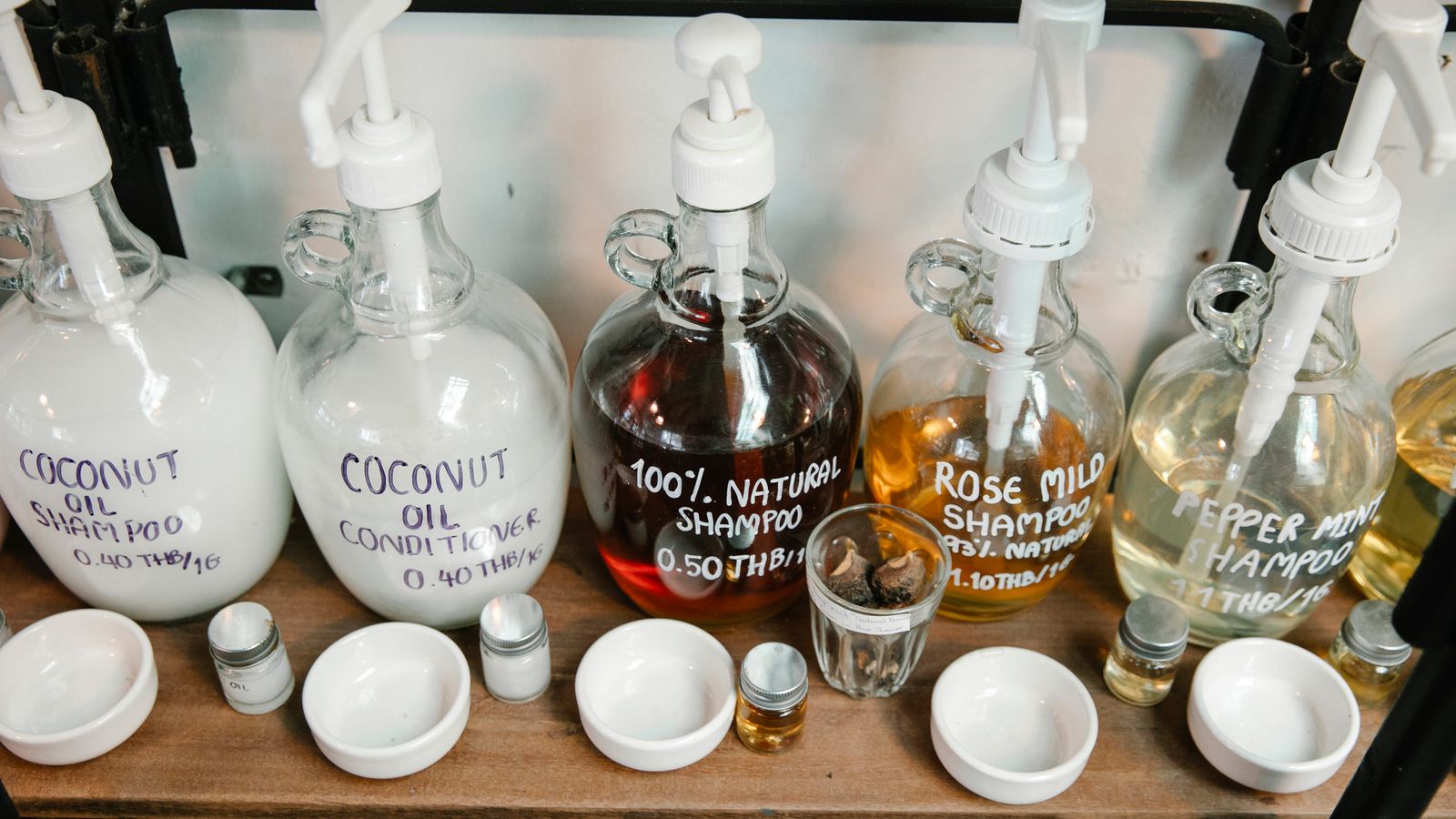
| Coconut or olive oil pre wash | Worth doing | An oil applied before washing reduces how much water the hair takes on, which reduces the swelling that stresses the cuticle. Cheap and genuinely useful on dry or coarse hair. |
| Diluted apple cider vinegar rinse | Sometimes | Helps in hard water areas by removing mineral film, and adds shine. Dilute heavily, once a fortnight at most, and stop if your scalp objects. |
| Rice water | Occasionally, carefully | It coats the hair with protein and can add temporary strength and shine. Overdone, protein makes hair stiff and brittle. Monthly at most. |
| Lemon juice to lighten | Skip | Acidic and combined with sun exposure it damages the cuticle for an unpredictable and usually brassy result. |
| Bicarbonate of soda as shampoo | Skip | Far too alkaline. It lifts the cuticle open and, used repeatedly, causes exactly the roughness and breakage a budget routine is trying to avoid. |
| Mayonnaise or egg masks | Not worth it | Messy, smell persistent, and a cheap conditioner does the same job better for about the same money. |

Where budget routines usually waste money
- Buying small bottles repeatedly. The smallest size is almost always the worst value, and it is the one people buy when money is tight. The larger size or the bundle is the cheaper decision if you already know the product suits you.
- Using far too much product. Most people use two to three times what they need. Around 5ml for short hair, 10ml for shoulder length, 15ml for long. Halving your usage halves your cost, immediately, for free.
- Replacing something that was working. Rotating products is a habit the industry encourages. Hair does not get bored.
- Buying for a problem you do not have. Volumising products on already fine hair that is actually just dry, protein treatments on hair that is protein overloaded, heavy oils on a scalp that is already greasy.
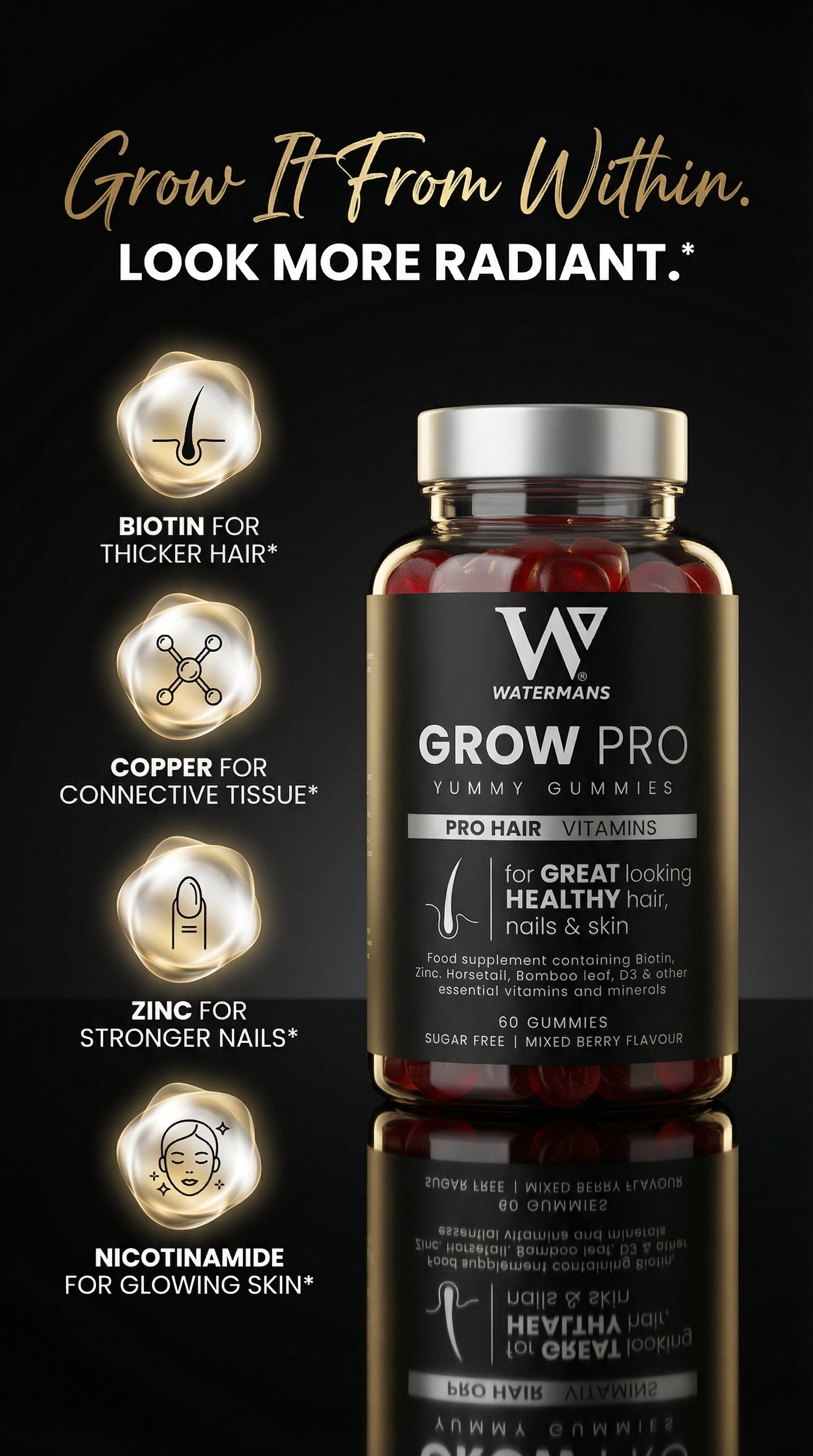
- Supplements taken hopefully. They help if you are genuinely short of something, and iron is the one that most often matters. Taking them when your levels are fine does nothing for your hair and is a standing monthly cost.
- Chasing thinning with shampoo. If you are seeing real thinning rather than breakage, that is a different question with a different answer. Work through the likely causes and talk to your GP before spending anything.
A week of the routine, written out
This is what the whole article looks like in practice, for someone washing twice a week with shoulder length hair.
- Wash day, before the shower. Optional oil on the ends for twenty minutes if your hair is dry. Loosely finger detangle.
- In the shower. Wet thoroughly. About 10ml of shampoo, worked into the scalp only, for a good thirty seconds. Rinse fully.
- Conditioner from the ears down. Leave it two minutes, and use that time to detangle from the ends upwards with a wide tooth comb. Rinse, finishing with thirty seconds of cooler water.
- Out of the shower. Squeeze, do not rub. Wrap in an old t shirt for ten minutes.
- Damp, not wet. Small amount of leave in or oil on the last few centimetres if you use one. Heat protectant if you are about to blow dry.
- Dry. Air dry to about 70 percent first, then heat if you want it.
- Bedtime, every night. Loose braid, or a satin pillowcase.
- Non wash days. Brush gently, ends up. Resist adding product to fix something the wash day will fix.
Making the products you do buy go further
Our own range sits deliberately in the middle of the market rather than the luxury end, and the two things below are the best value we sell for someone building a routine on a budget.

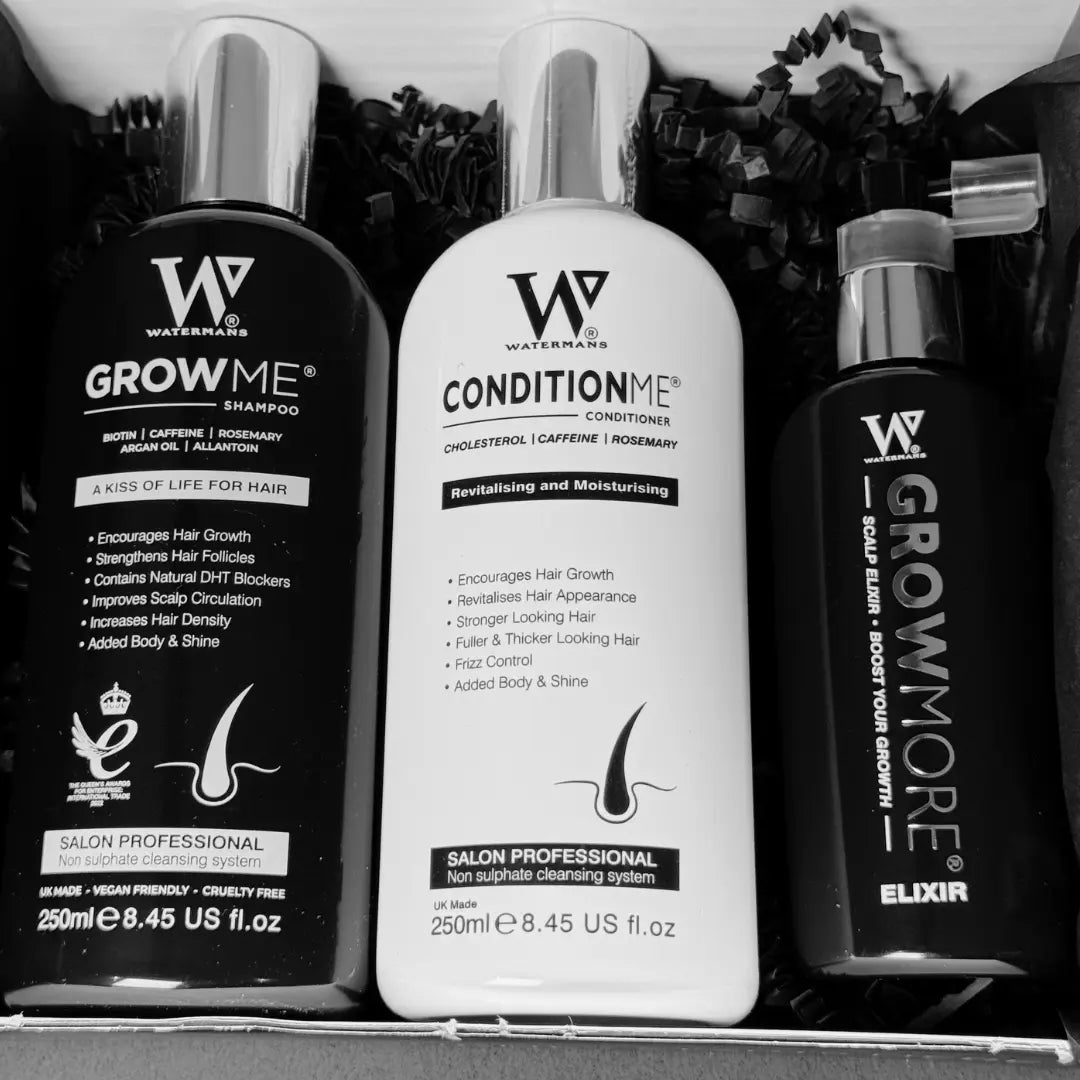
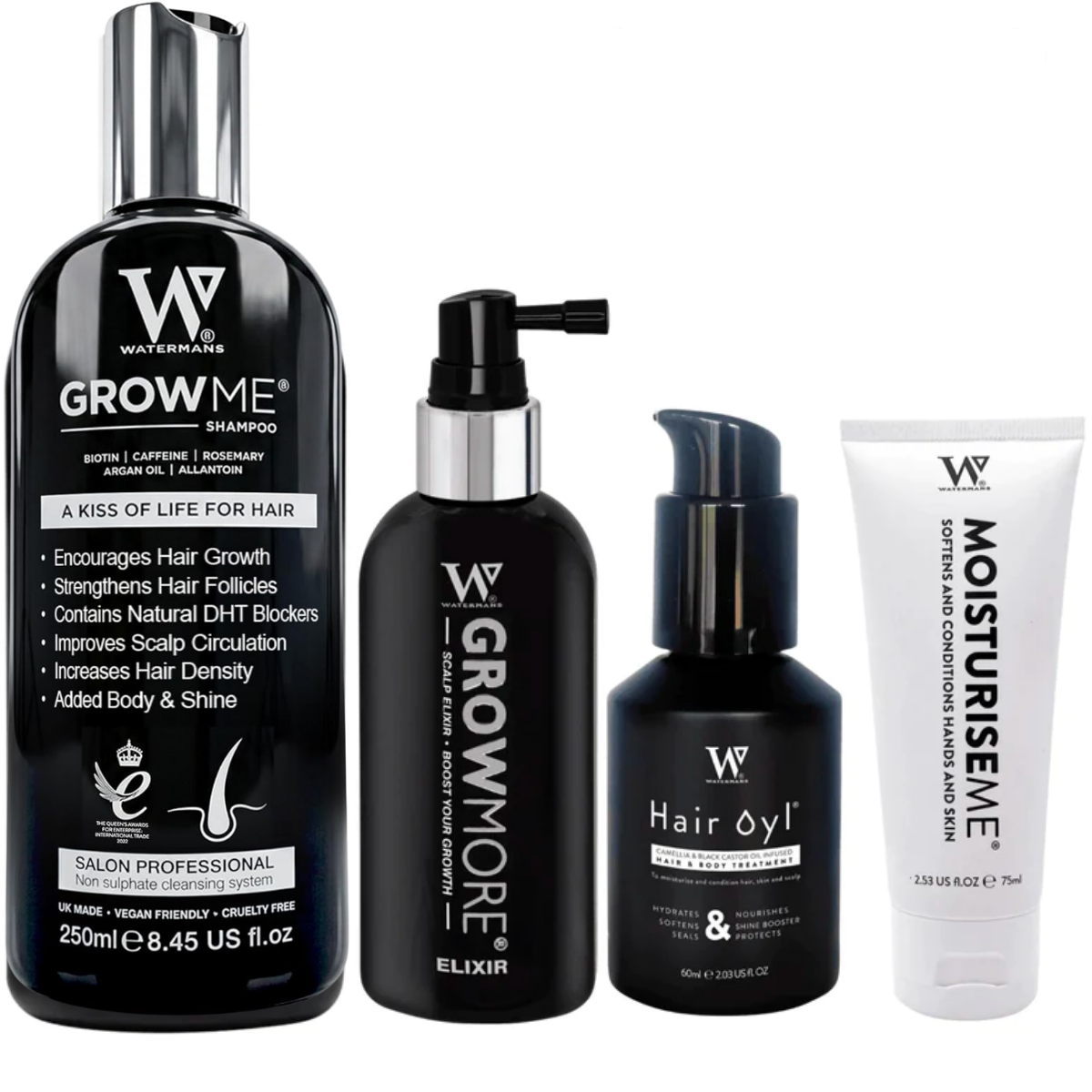
Condition Me® Conditioner
If the argument above is right, this is the one bottle worth upgrading first, because it is what stays on the hair and does the detangling and breakage reduction. Applied from the ears down and left for two minutes while you comb through, it is the cheapest meaningful change in the whole routine.
£13.95 · vegan, made in the UK

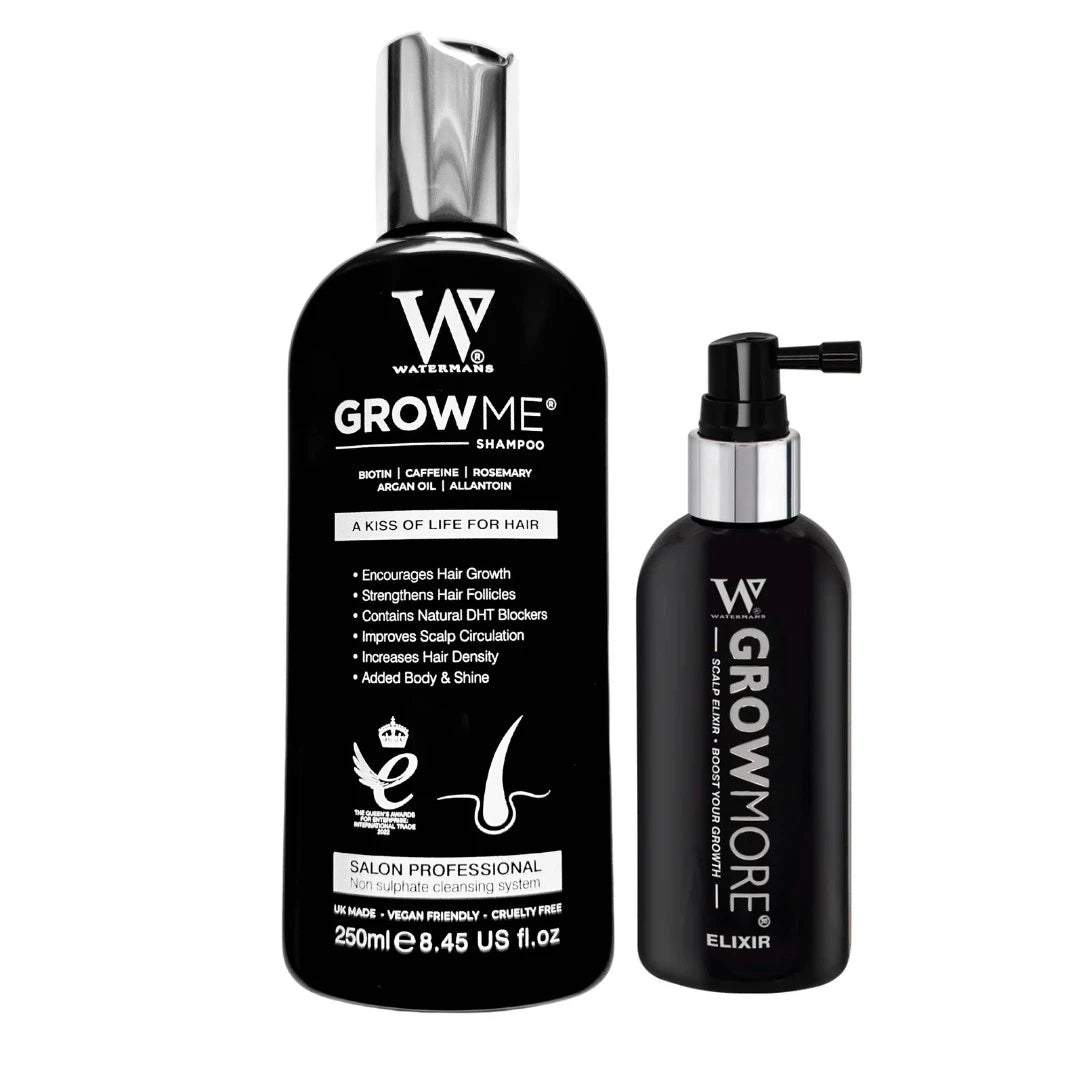
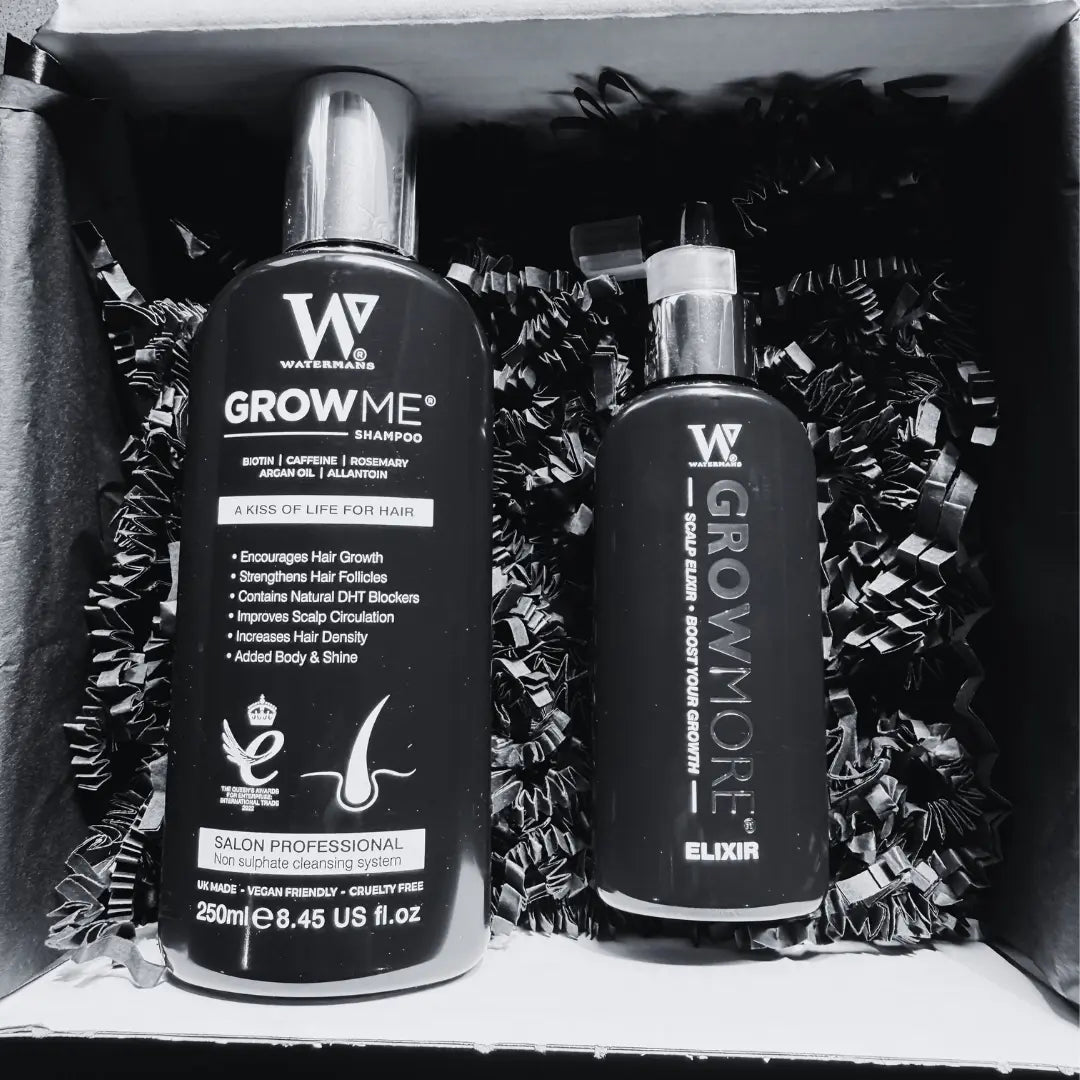
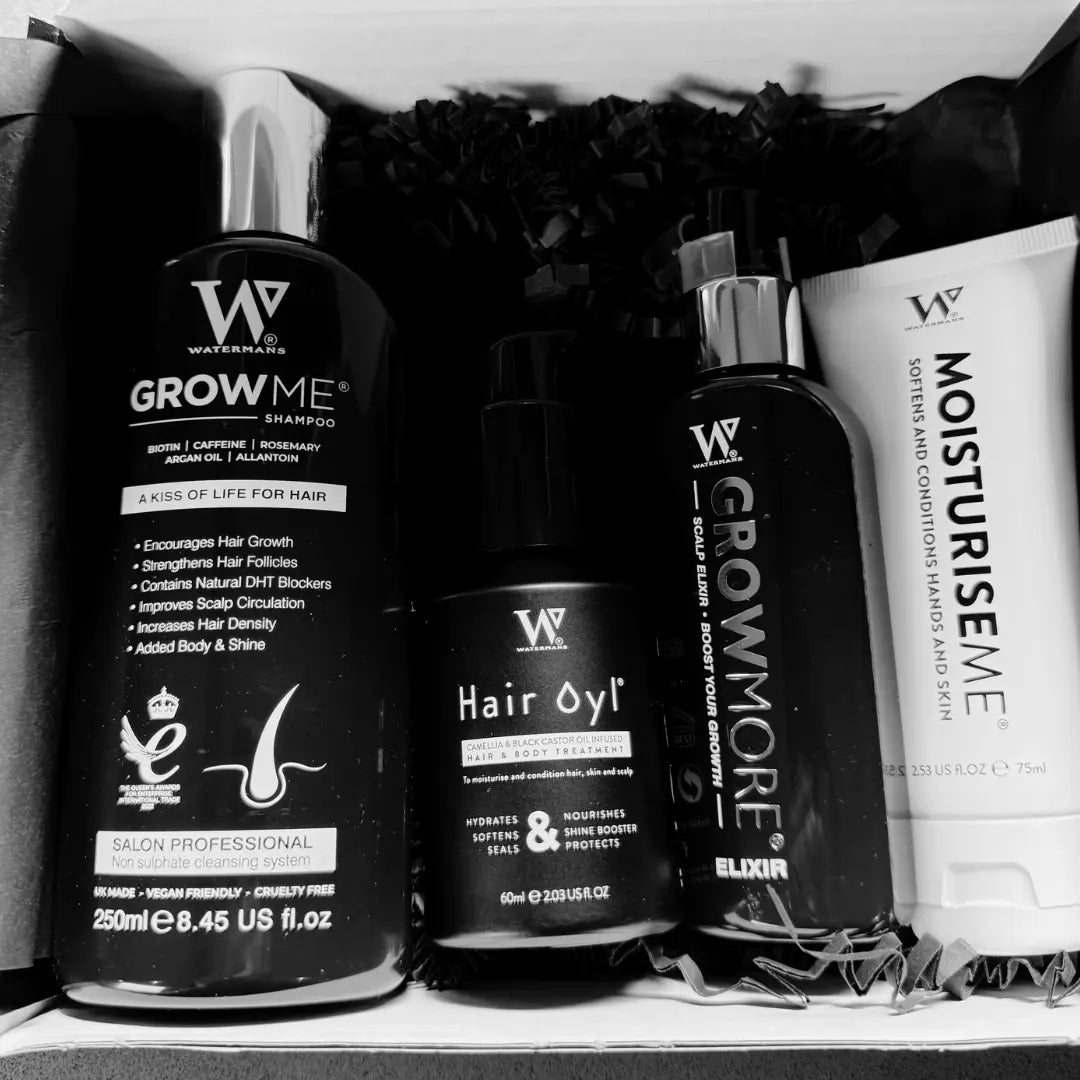
Grow Me® Shampoo & Conditioner Bulk Bundle
Two of each rather than one, which is the practical version of the buy in bulk rather than down a tier point. Same sulfate free formulas, noticeably better cost per wash, and it removes the small bottle trap that quietly makes a budget routine expensive.
£49.50 · sulfate free, vegan, made in the UK
Watermans has sold over 5 million bottles since 2012, everything is vegan, and it is all made here in the UK.
Frequently asked questions
What is the cheapest hair care routine that actually works?
A shampoo suited to your scalp, a conditioner suited to your ends, a wide tooth comb, and the seven free habits above. That is a complete routine. The habits are doing more of the work than the products, which is why it can be genuinely cheap without being a compromise.
Do I really need conditioner?
If your hair is longer than a couple of inches, yes. It is the product that reduces friction when you brush, and brushing is where most avoidable damage happens. Skipping conditioner to save money is the one economy that reliably costs you more in the end.
How often should I wash my hair on a budget?
As often as your scalp needs and no more. Every two to three days suits most people. Washing less uses less product and handles the hair less, so it saves money twice, but forcing an oily, itchy scalp to wait is not a saving.
Is it cheaper to make my own hair products?
Rarely, once you account for ingredients that spoil and results that vary. The exception is a simple oil pre wash, which is cheap, keeps well and genuinely helps. Most other DIY recipes cost about the same as a basic conditioner and work less well.
Does washing my hair less make it grow faster?
No, washing frequency does not change how fast hair grows. What it changes is how much handling the hair takes, and less handling means less breakage, so more of your length survives. That looks like faster growth without being it.
Are supermarket own brand shampoos any good?
Some are perfectly decent. Own brand is a pricing decision rather than a quality one, and the ingredient list is still the test. Read the first five ingredients, and if your scalp feels tight after washing, it is not the right one for you whatever it cost.
How much shampoo should I actually use?
About 5ml for short hair, 10ml for shoulder length, 15ml for long or thick. Most people use two to three times that, which is the easiest saving available and takes no effort at all.
Is a silk pillowcase worth the money?
It genuinely reduces overnight friction, so it is a real effect rather than a marketing one. Whether it is worth the price is up to you, because a satin scarf or a loose braid gets most of the same benefit for a fraction of the cost.
Will a cheap routine work on curly or coily hair?
Yes, with one adjustment: textured hair is dry by default because sebum travels badly down a coiled shaft, so it needs more conditioning and gentler cleansing than straight hair does. Put a larger share of a small budget into conditioner and less into everything else.
How long before I can tell if it is working?
Eight weeks, and take a photo on day one in daylight. Hair grows roughly a centimetre a month and breakage improvements show up gradually as the damaged ends are trimmed away. Anything you notice within a week is a surface effect, which is pleasant but not the same thing.
The short version
Fix the handling before you buy anything. Detangle from the ends, stop rubbing it dry, cool the last rinse, and deal with the pillowcase. Then buy two products rather than seven, put the money into the conditioner, use half as much as you think you need, and buy the bigger size of the thing that works. That is the whole routine, and it costs less than the shelf of half used bottles it replaces.
Watermans products are 100% cosmetic and do not treat medical hair loss. Individual results may vary.