


Why Are My Hair Products Not Working? 8 Real Reasons
Short answer: the usual reason a hair product is not working is that it was never the right tool for the problem. Breakage, shedding, dryness and buildup look similar in the mirror and need opposite responses, so getting it wrong at the start makes everything afterwards pointless. The next most common reasons are not enough time, using far too little or applying it in the wrong place, and changing three things at once so nothing can be judged. Work through the eight below in order, because the first one accounts for more failures than the other seven together.
Key takeaways
- Work out whether it is breakage or shedding first. A hair that snapped mid length and a hair that came out with a white root are different problems, and telling them apart takes ten seconds.
- Eight weeks is the minimum honest test. Hair grows about a centimetre a month, so a four week verdict is a verdict on nothing.
- Buildup makes everything after it look useless. If nothing has worked for months, one clarifying wash is often the whole answer.
- Most people use too little conditioner and far too much shampoo, and put both in the wrong place.
- Change one thing at a time. Three simultaneous changes tell you nothing, whichever way it goes.
- If the real issue is thinning at the roots rather than damage along the lengths, no shampoo at any price answers that question.
1. You are solving the wrong problem
This is the big one. Four completely different issues produce a similar complaint, which is usually some version of my hair looks worse than it should. The response to each is different, and two of them are opposites, so guessing has a decent chance of making things worse.
The quickest way to sort it out is to look at the hairs themselves. Pick a few off your brush or your shoulder and look at the end that was attached to your head. A small white or pale bulb means the hair came out at the root, which is shedding. No bulb, and a blunt or frayed end, means it snapped somewhere along its length, which is breakage.
| What you are seeing | What it actually is | What helps | What makes it worse |
|---|---|---|---|
| Short broken pieces, frizz halo, ends that never get longer | Breakage | Conditioning, gentler detangling, less heat, less tension | Clarifying repeatedly, protein on already stiff hair |
| Whole hairs with a pale bulb, more in the plughole | Shedding | Finding the cause: stress, illness, iron, thyroid, postpartum | Buying products, washing less out of fear |
| Straw like, rough, drinks product and stays thirsty | Dryness | Milder cleansing, richer conditioning, oil on the ends | Harsh shampoo, hot water, daily heat |
| Limp, dull, coated, will not hold a style, greasy quickly | Buildup | One clarifying wash, then lighter products | More conditioner, more oil, more masks |
Look at the last two rows. Dryness and buildup produce the same instinct, which is to add more moisture, and in one of those cases that is exactly the wrong move. This is why so many people report that nothing works: they have been treating a coated head of hair as a thirsty one for six months.

2. You have not given it long enough
Hair grows roughly one centimetre a month, and the ends you are unhappy with today were grown two or three years ago. Nothing you apply changes hair that has already left the follicle in a permanent way, so what you are actually waiting for is either a surface effect, which is quick, or better condition working its way down the length, which is slow.
| What you changed | When you can fairly judge it |
|---|---|
| Conditioner or leave in | 1 to 3 washes for feel, 6 weeks for less breakage |
| Shampoo | 3 to 4 washes, because there is an adjustment period |
| Scalp product | 8 to 12 weeks |
| Detangling and drying habits | 6 to 8 weeks |
| Diet or correcting low iron | 3 to 6 months, sometimes longer |
The practical version: if you abandoned something at three weeks, you did not test it. You sampled it.
3. Buildup is hiding the result
Silicones, heavy oils, dry shampoo, styling wax, and in hard water areas a film of mineral deposits, all accumulate on the hair. The effect is that the surface stops behaving. Products sit on top instead of absorbing, conditioner feels like it is doing nothing, and the hair looks dull and heavy however much you put on it.
The test is simple and free. Do one clarifying wash, or two ordinary washes back to back, and see whether your hair behaves differently. If it suddenly feels lighter and your conditioner starts working again, buildup was the problem and no amount of new product would have fixed it. Hard water is worth ruling in or out too, since it is regional and often the invisible variable: if the problem started after you moved house, that is your suspect.
4. You are applying it wrong
Three specific mistakes account for most of this, and all three are free to correct.
- Placement. Shampoo goes on the scalp, where the oil is. Conditioner goes from the ears down. Conditioner at the roots weighs hair down and reads as greasy, and shampoo dragged through the ends dries them out.
- Amount. Most people use two to three times more shampoo than they need and noticeably less conditioner than they should. Roughly 5ml of shampoo for short hair, 10ml for shoulder length, 15ml for long, and be generous with conditioner on the lengths.
- Contact time. Conditioner rinsed off immediately has barely done anything. Two minutes is the difference between a product that works and the same product apparently not working, and the easiest way to spend those two minutes usefully is detangling from the ends upwards while it sits.

Get the eight week test sheet
One free email. A single page to run the test properly: the ten second breakage versus shedding check, the timeline each type of change actually follows, the clarifying reset and when to use it, how much product to use by hair length, and a simple week by week log so you end up with evidence instead of an impression.
One email at a time, no spam, unsubscribe whenever you like.
5. The ingredient is on the label, not in the bottle
An ingredient can be present and irrelevant at the same time. Ingredient lists run in descending order of quantity down to one percent, after which the order means nothing. So the position of the headline ingredient tells you roughly what you have bought.
If the front of the bottle is about a particular active and that active appears after the fragrance and the preservatives, it is there in trace amounts. That is not always dishonest, some ingredients genuinely work at low levels, but it does mean the bottle is not going to do what the front of it implies. This is worth knowing before concluding that the ingredient does not work, when what actually happened is that you never really tried it. Our guide to niacinamide for hair goes through this for one common example, including what it genuinely does and what it does not.
6. Protein and moisture are out of balance
Hair needs both, and the symptoms of too much of either look confusingly similar, which is why this catches people out.
| Too much protein | Too much moisture | |
|---|---|---|
| How it feels | Stiff, straw like, rough, crunchy | Limp, mushy, over soft, no body |
| When wet | Snaps when stretched, with no give | Stretches a long way, then breaks |
| What to do | Pause protein products, use a rich moisturising conditioner | Add a protein containing product, ease off heavy masks |
If you have been faithfully using a strengthening product for months and your hair has got worse rather than better, this is the most likely explanation, and the fix is to stop rather than to add something else.
7. You keep changing things
New shampoo, new conditioner, a mask, a supplement and a different brush, all in the same fortnight. If your hair improves you cannot say why, and if it gets worse you cannot say what to remove. This is the single most common reason people have a bathroom full of products and no idea which of them are any good.
One change at a time, four weeks apart. It feels slow, and it is the only version of this that ever produces a usable answer. Our budget routine guide sets out the add one thing a month order, and it applies whatever you are spending.
8. It is not a product problem at all
Some of what people try to solve with hair care is not a hair care problem, and continuing to buy things is the expensive way of not finding that out.
- Genuine thinning at the parting or the crown, rather than damage along the lengths, is a follicle question. Cosmetics work on the fibre and the scalp surface, so they can reduce breakage and improve how hair looks, and they cannot change what the follicle is doing.
- Sudden heavy shedding two to four months after illness, surgery, childbirth, a crash diet or a period of significant stress usually settles by itself, and no product accelerates it.
- Low iron, thyroid changes or a new medicine are checked with a blood test and a conversation, not a bottle.
- A persistently itchy, flaking, sore or crusted scalp is a skin issue with its own answer, and a pharmacist is a good first stop.
If any of those fit, the useful next step is working out why your hair is thinning and a GP conversation, not another purchase. We would rather say that plainly than sell you something that was never going to help.
How to run a proper eight week test
- Do the ten second check. Breakage or shedding. Everything downstream depends on this.
- Clarify once. Clear the decks so you are testing on hair that can actually respond.
- Photograph it. Dry, unstyled, same spot, daylight, front and parting. This is the only reliable record you will have.
- Change exactly one thing. Write down what and when.
- Fix the application. Right placement, right amount, two minutes of contact time. A fair test needs the product used properly.
- Leave everything else alone for eight weeks. No new masks, no new supplements, no third shampoo.
- Photograph again in the same light and compare. Then decide, and only then add the next thing.
What a consistent routine looks like
The honest summary of everything above is that consistency beats novelty, and a small routine used properly beats a large one used hopefully. For most people that means a shampoo matched to the scalp and a conditioner matched to the lengths, used the same way every wash for two months. Our own range is built to be exactly that.

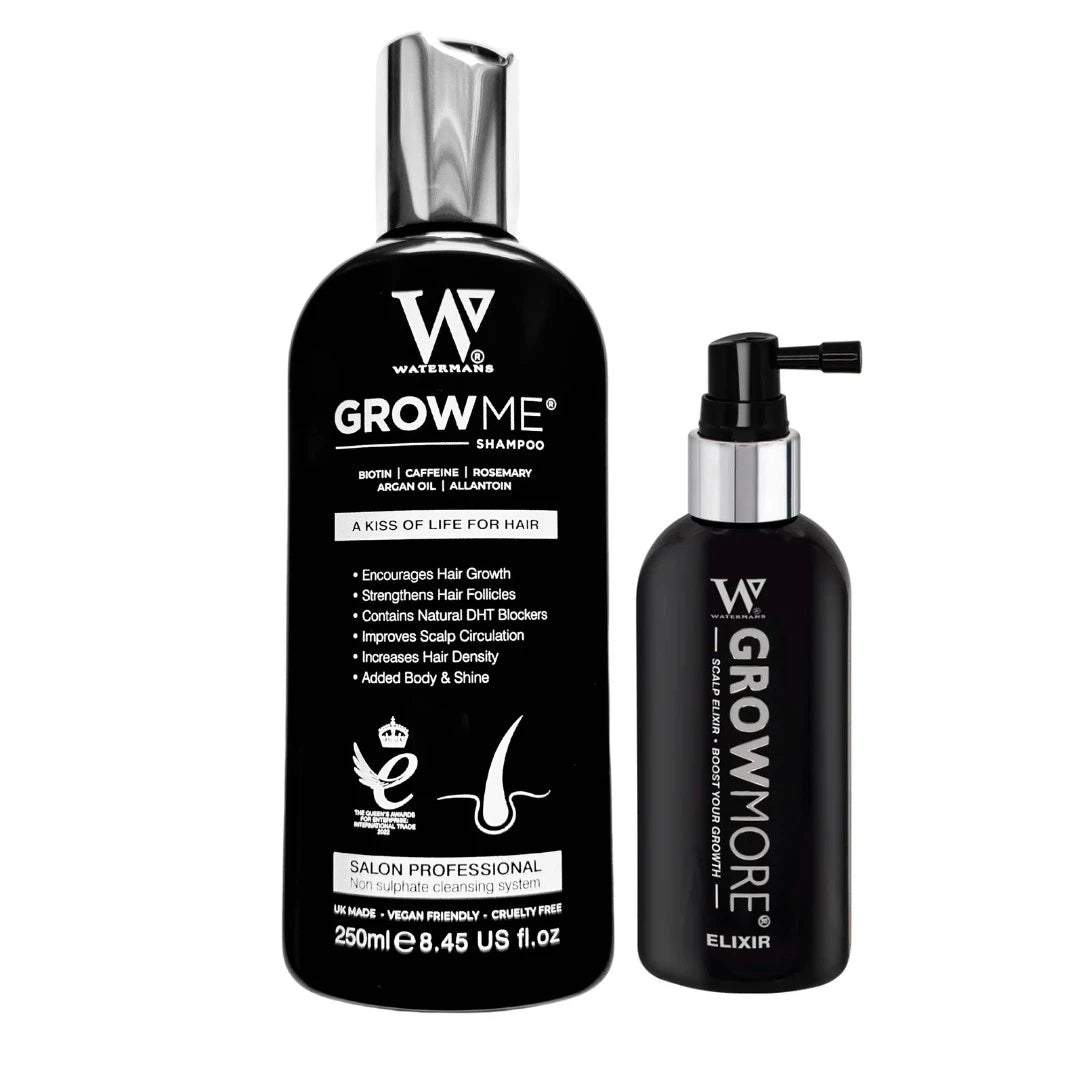
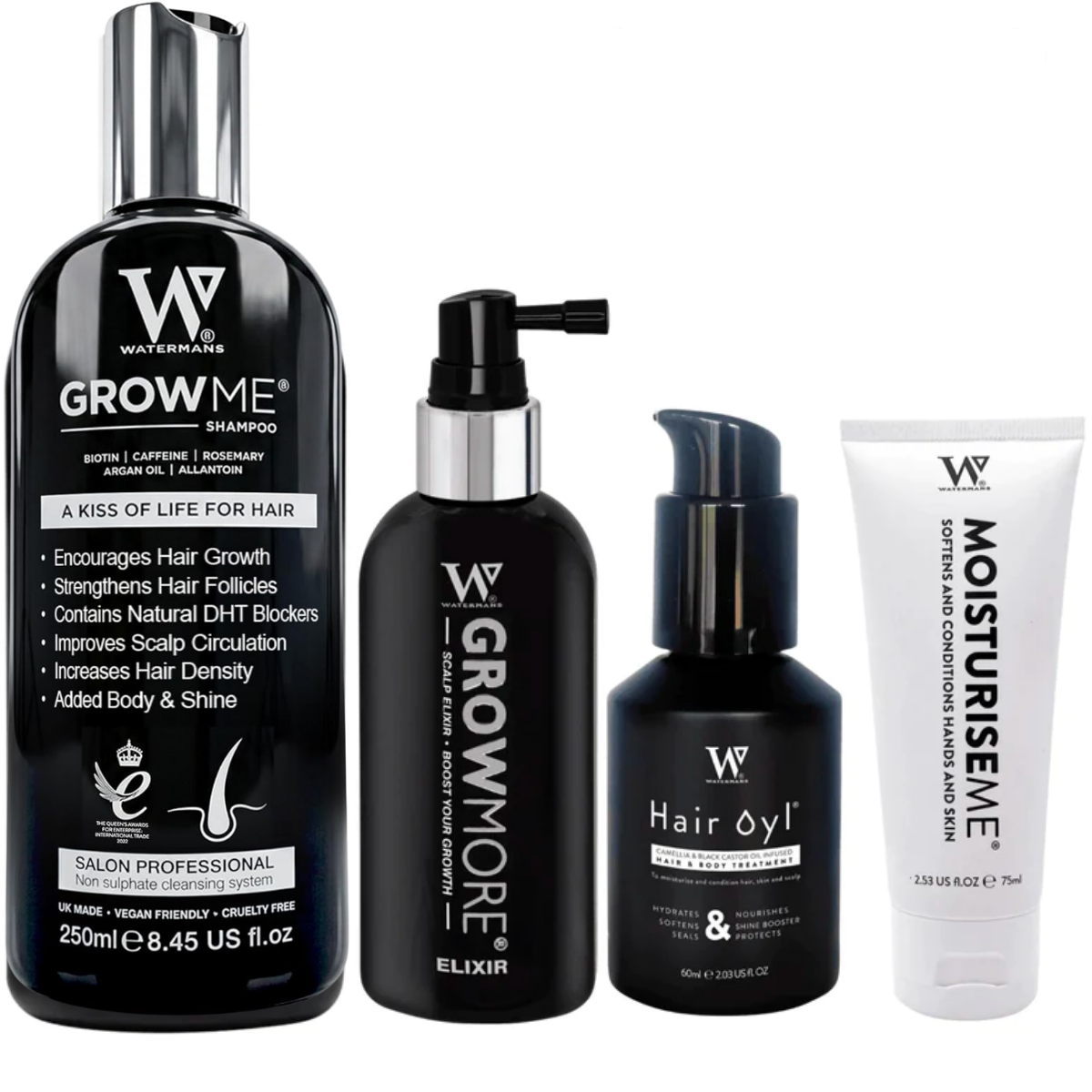
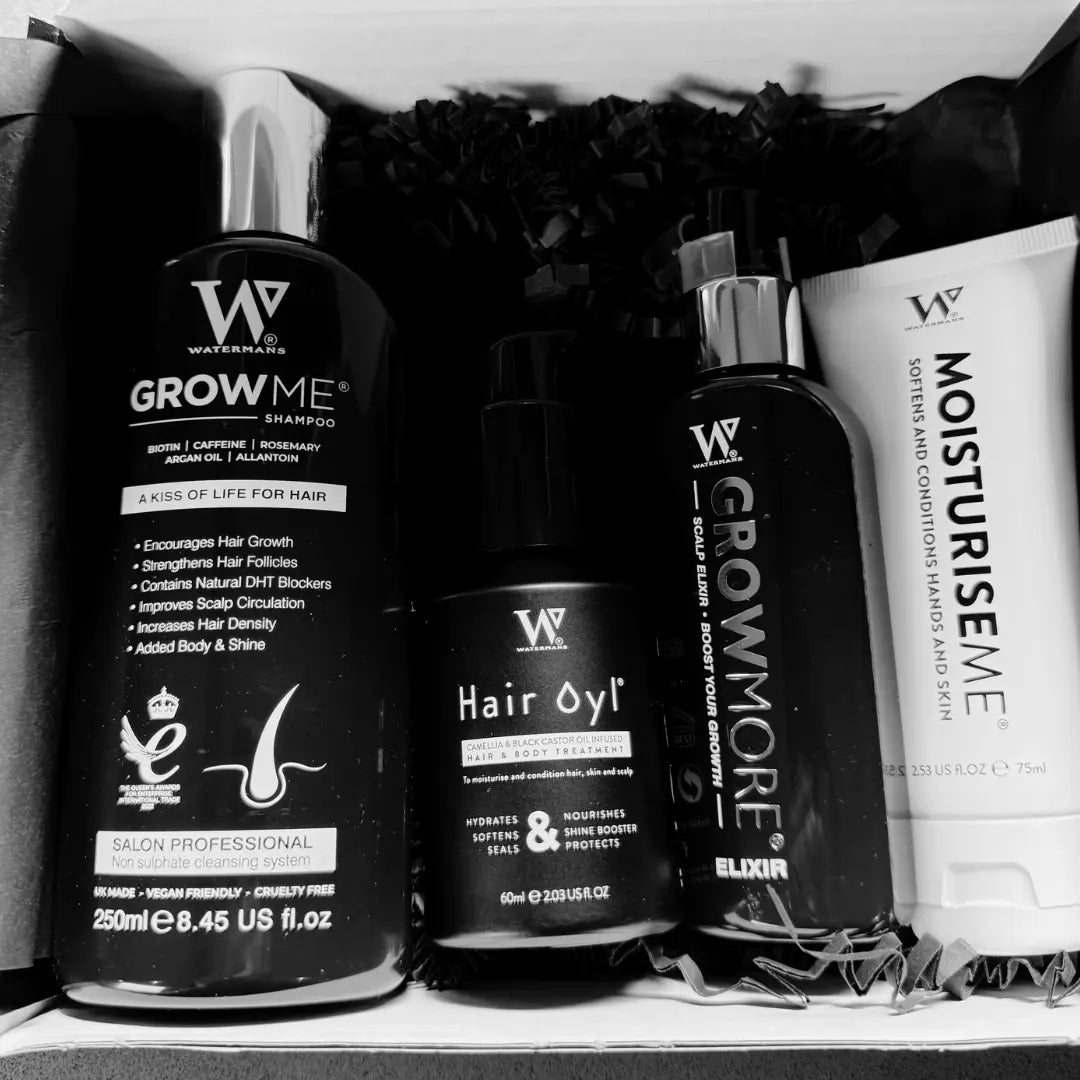
Grow Me® Sulfate Free Shampoo
A mild surfactant blend, so it can be used as often as your scalp needs without stripping, carrying biotin, caffeine, rosemary and niacinamide alongside hydrolysed lupine protein. The protein is the part doing the visible work, filling gaps in a worn cuticle so the fibre snaps less. Reduces breakage for fuller looking hair.
£14.95 · sulfate free, vegan, made in the UK

Grow Me® Shampoo, Conditioner & Scalp Elixir Set
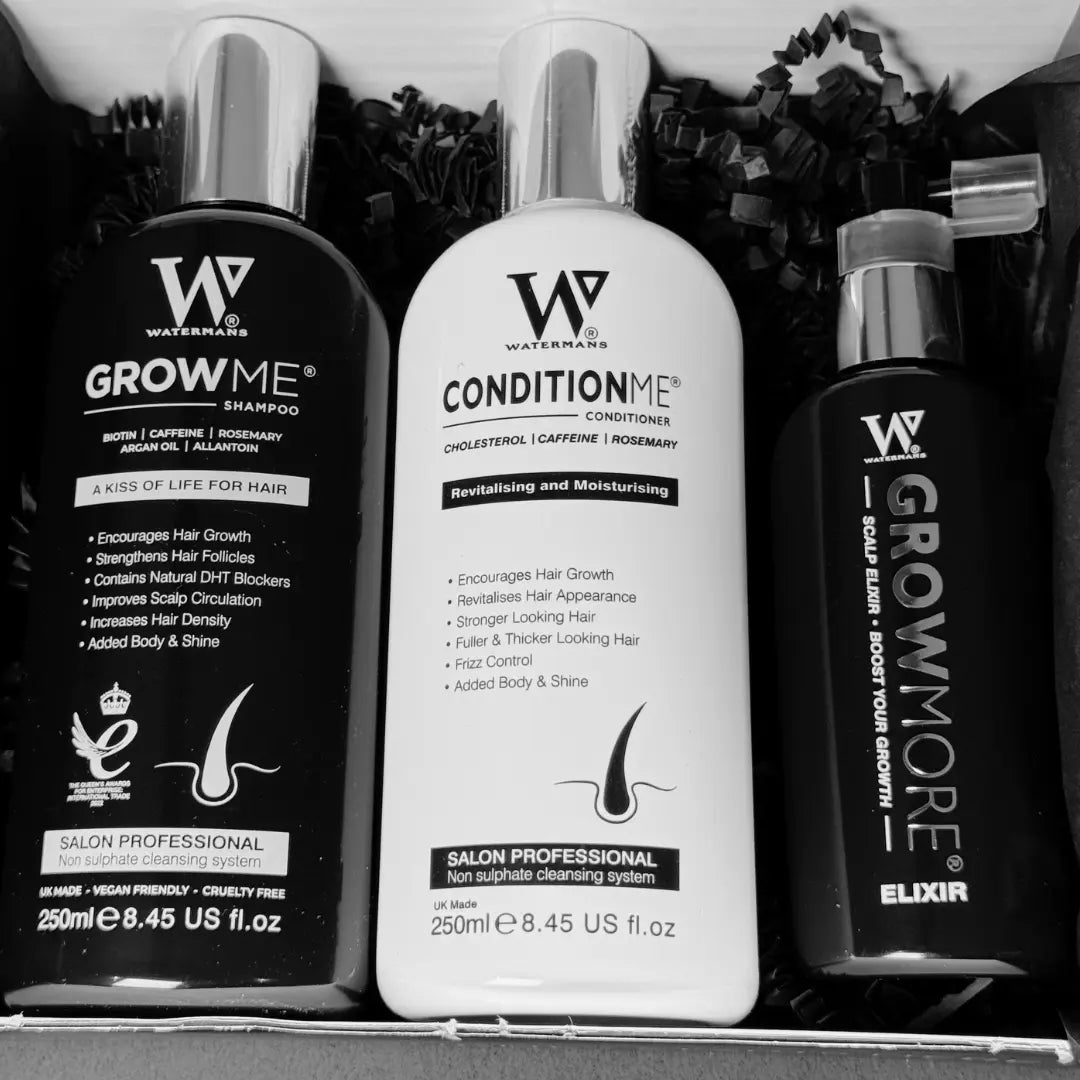
If you would rather change the whole routine at once and then leave it alone, this is the three step version: cleanse, condition, and a scalp step in between washes. The point of buying it as a set is that you run one routine consistently for eight weeks instead of assembling a new one every fortnight.
£53.40 · vegan, made in the UK
Watermans has sold over 5 million bottles since 2012, everything is vegan, and it is all made here in the UK. If you want the habits that sit underneath any product, our six habits for healthier hair is the place to start.
Frequently asked questions
How long should I use a hair product before deciding it does not work?
Eight weeks for anything to do with condition or the scalp, and three or four washes for a shampoo, because there is an adjustment period when you switch. Judging at two weeks tells you how a product feels, not what it does.
Why did my hair get worse after switching products?
Usually one of three things: an adjustment period while old silicone buildup clears, protein overload from a strengthening product on hair that needed moisture instead, or conditioner being applied at the roots. All three settle once identified.
How do I know if I have product buildup?
Hair looks dull and heavy, will not hold a style, gets greasy faster than it used to, and products seem to sit on top rather than absorb. One clarifying wash is the test. If everything behaves differently afterwards, that was your answer.
Is my hair breaking or falling out?
Look at the end of the hair that was attached to your head. A small pale bulb means it came out at the root, which is shedding. No bulb and a blunt or frayed end means it snapped, which is breakage. They need opposite responses, so this is worth thirty seconds.
Can hard water stop my products working?
Yes. Minerals in hard water leave a film on the hair that blocks absorption and makes it feel rough and dull however good your products are. A clarifying wash, a shower filter, or a diluted vinegar rinse every couple of weeks all help.
Am I using too much shampoo?
Probably. Most people use two to three times what they need. About 5ml for short hair, 10ml for shoulder length, 15ml for long or thick. Using less saves money and is gentler on the scalp at the same time.
Do I need to change my shampoo regularly?
No. Hair does not become resistant to a product. If something stops working it is usually because a variable changed, the season, a colour, a house move to a different water supply, rather than because your hair got used to it.
Should I use more than one conditioner?
Only if you have a reason, such as a rinse out for every wash and a leave in for the ends of long or textured hair. Stacking three conditioning products without a reason is how buildup starts.
Why does my hair feel great on wash day and awful by day two?
That pattern usually points at the conditioner being too light for your lengths, or at overnight friction undoing it. Try a richer conditioner on the ends first, and if that does not do it, look at your pillowcase and how you sleep with your hair.
Can any shampoo make my hair thicker?
It can make hair look thicker by reducing breakage, so more of the length you grow survives and stays put. It does not change what is happening at the follicle. That is the honest limit of any cosmetic product, ours included, and any brand telling you otherwise is overselling.
The short version
Work out the problem before you buy. Look at whether the hairs are snapping or shedding, clarify once to clear the decks, then change one thing, apply it properly, and leave it alone for eight weeks with a photograph at each end. Most products are not failing. They are being asked the wrong question, given the wrong amount of time, or buried under four others.
Watermans products are 100% cosmetic and do not treat medical hair loss. Individual results may vary.