

Are Expensive Hair Products Worth It? What the Price Buys
Short answer: price and quality are loosely related in hair care, and they stop being related at all somewhere around the fifteen pound mark. Below about eight pounds you are usually buying a cheap detergent system with very little else in it, and that is a real difference you can feel. Above about twenty, almost everything extra is going into fragrance, packaging, brand and retail margin rather than into your hair. The most useful number is not the price on the bottle, it is the cost per wash, and by that measure the sensible middle of the market usually wins.
Key takeaways
- The detergent system is where cheap shampoo is genuinely cheap. Harsh, high foam surfactants cost very little and strip a lot. That is the one difference worth paying to avoid.
- The premium tier is mostly not formulation. Fragrance, bottle, and the cost of being sold in a salon or a department store account for far more of a thirty pound bottle than the ingredients do.
- Cost per wash is the only honest comparison. A thicker, more concentrated product used in smaller amounts can be cheaper per wash than a watery one half the price.
- Coloured, curly, coily, fine and damaged hair get a real return from spending more. Short, healthy, uncoloured hair mostly does not.
- Conditioner is where the money is best spent if you can only upgrade one thing.
- Price tells you nothing about whether a product suits your hair, which is the variable that actually decides the outcome.
What are you actually paying for?
A bottle of shampoo is not one thing with one price. It is roughly seven things stacked on top of each other, and only two or three of them touch your hair. Understanding the stack is what makes the whole category legible.
| What you are paying for | Does it change the result? | Notes |
|---|---|---|
| Surfactant system | Yes, more than anything else | Mild blends cost several times more than the cheapest options and are the single biggest quality signal. |
| Conditioning agents | Yes | Hydrolysed proteins, quats and good emollients are where a conditioner earns its price. |
| Active ingredients | Sometimes | Depends entirely on inclusion level. A named ingredient at the very bottom of the list is a label, not a formula. |
| Fragrance | No, but it drives repurchase | Genuinely expensive at the luxury end. It is the main thing you notice and the main thing you are sold. |
| Packaging | No | A heavy bottle with a weighted cap can cost more than the liquid inside it. |
| Marketing | No | Ambassadors, campaigns and shelf space are a large share of a premium price. |
| Retail margin | No | A salon or department store adds a substantial markup for the service of selling it to you. |
Read down that table and the pattern is clear. The top three lines are the product. The bottom four are the business. As price rises past the middle of the market, it is overwhelmingly the bottom four that grow.

Where the money genuinely shows
The detergent system
This is the honest one. The cheapest shampoos are built on the harshest, highest foaming surfactants because they are inexpensive, stable and produce the lather people read as cleaning. They work, and they are indiscriminate: they remove the sebum keeping your ends flexible along with everything else. Milder blends cost the manufacturer considerably more and need several surfactants working together to match the cleaning of one aggressive one. If you upgrade nothing else, upgrade this, and our guide to what sulfate free actually changes explains what you are and are not buying.
Conditioner, more than shampoo
Shampoo is on your hair for ninety seconds and then rinsed away. Conditioner is what is left behind, and the difference between a cheap one and a good one is immediately obvious in detangling, in how the ends feel dry, and in how much breakage you cause brushing it. If your budget only stretches to upgrading one bottle, upgrade this one. How you use it matters nearly as much as which one you buy, which we cover in using conditioner properly.
Concentration
Two bottles of the same size can contain very different amounts of actual product, with the difference made up in water. A thin, watery formula needs three pumps where a thicker one needs one. This is invisible on the shelf and obvious after a month, and it is the most common reason a cheap bottle turns out not to have been cheap.
Where it does not
The exotic ingredient on the front
Argan, keratin, caviar, rice water, whatever is current. The question is never whether the ingredient does something in principle, it is whether there is enough of it in the bottle to matter. Ingredient lists run in descending order of quantity down to one percent. Anything sitting after the fragrance and the preservatives is present in trace amounts and is on the label for the label's sake.
Salon exclusivity
Being sold through salons is a distribution decision, not a quality one. It adds cost, and it adds the assumption of quality that comes from a professional handing it to you. Some salon brands are excellent. They are not excellent because they are sold in salons.
The bottle
Weighted caps, frosted glass, matte finishes. All lovely, none of it on your hair.
The five second test: turn the bottle over and read the first five ingredients. That is roughly eighty percent of what is in it. If the front of the bottle is about argan oil and the back has argan oil listed second from last, you now know exactly what you are buying, whatever it costs.
Supermarket, pharmacy, salon and direct: an honest comparison
| Tier | Typical UK price | What you generally get | Worth it for |
|---|---|---|---|
| Budget supermarket | £1 to £4 | Harsh surfactants, heavy fragrance, thin formulas, minimal conditioning | Short, oily, uncoloured hair. Occasional clarifying. |
| Mainstream brand | £4 to £9 | Better fragrance and feel, often the same detergent base, heavy silicone finish | Most people, most of the time, if hair is undamaged |
| Pharmacy and specialist | £9 to £20 | Milder surfactants, meaningful actives, considered formulation | Coloured, dry, fine, curly, damaged or frequently washed hair |
| Salon and luxury | £20 to £45 | Sometimes excellent, always with distribution, brand and packaging in the price | Specific problems, and if you genuinely enjoy it |
The interesting jump is from mainstream to specialist. That is where formulation changes rather than presentation. The jump above it is real far less often.
Get the cost per wash worksheet
One free email. A one page worksheet that works out what your current routine actually costs per wash rather than per bottle, with the millilitre figures for short, mid and long hair, the concentration test that tells you whether you are buying water, and a swap table showing where an upgrade pays for itself and where it never will.
One email at a time, no spam, unsubscribe whenever you like.

The number that matters: cost per wash
Price per bottle is close to meaningless because bottles are different sizes and formulas are used in different quantities. Cost per wash is the comparison that survives contact with reality.
Work it out like this. Take the price, divide by the millilitres, then multiply by the amount you actually use. A rough guide on quantity: about 5ml for short hair, 10ml for shoulder length, 15ml or more for long or thick hair, and roughly double that for a watery formula that will not lather.
| Example | Price and size | Used per wash | Cost per wash |
|---|---|---|---|
| Budget, thin formula | £2.00 for 400ml | 20ml (two lathers) | 10p |
| Specialist, concentrated | £14.95 for 250ml | 10ml | 60p |
| Salon, luxury | £32.00 for 250ml | 10ml | £1.28 |
Two things fall out of this. The first is that the gap between tiers is a matter of pennies per wash, not the dramatic difference the shelf price implies. Three washes a week for a year is about 150 washes, so the specialist option above costs roughly seventy five pounds more per year than the budget one. Whether that is worth it depends entirely on whether your hair is in the group that benefits, which is the next section.
The second is that a bulk or bundle purchase changes the arithmetic more than switching down a tier does, which is why buying your regular product in multiples is usually the better economy than buying a worse product.
When spending more is genuinely worth it
- Coloured hair. The clearest case. Harsh detergents lift the cuticle and let pigment out faster, and colour is expensive. A gentler wash protects an investment you have already made.
- Curly, coily and afro textured hair. Sebum travels badly down a coiled shaft, so these hair types start dry. Stripping what little oil reaches the lengths is exactly the wrong move, and the conditioning demands are higher.
- Fine hair that snaps. Less cuticle to lose and a smaller margin before damage shows.
- Frequent washing. Daily washing multiplies whatever your shampoo does, good or bad.
- Heat styling and chemical processing. Damaged hair cannot be repaired, only managed, and managing it well is where good conditioning earns its keep.
- A scalp that feels tight or itchy after washing. That tightness is a signal, and milder formulas usually resolve it.
- Cold months. Indoor heating and hat friction raise breakage, as we set out in our winter hair care guide.
Where to save without regretting it
- Styling products. The performance gap between cheap and expensive hairspray, mousse and gel is far narrower than in cleansing and conditioning.
- Hair oils. A plain, well chosen oil does most of what a heavily branded one does. This is one of the biggest markups in the category.
- Anything sold as a one off miracle. Hair responds to consistency, not to a single expensive night.
- Supplements, unless you are actually short of something. Correcting a genuine deficiency helps. Topping up normal levels does not.
- Buying small. If you have found something that works, the larger size or the bundle is almost always the better decision.
And one honest caveat: if you are seeing genuine thinning rather than dryness or breakage, no shampoo at any price is the answer to that question. Work through the likely causes of thinning and speak to your GP first, then come back to the product question afterwards.
What we charge, and why
We sit in the specialist tier deliberately, and it is fair to say where our own money goes. We do not sell through salons or department stores, which removes a markup. What is left goes into a mild surfactant system, hydrolysed lupine protein, and a concentration that means a modest amount lathers properly.

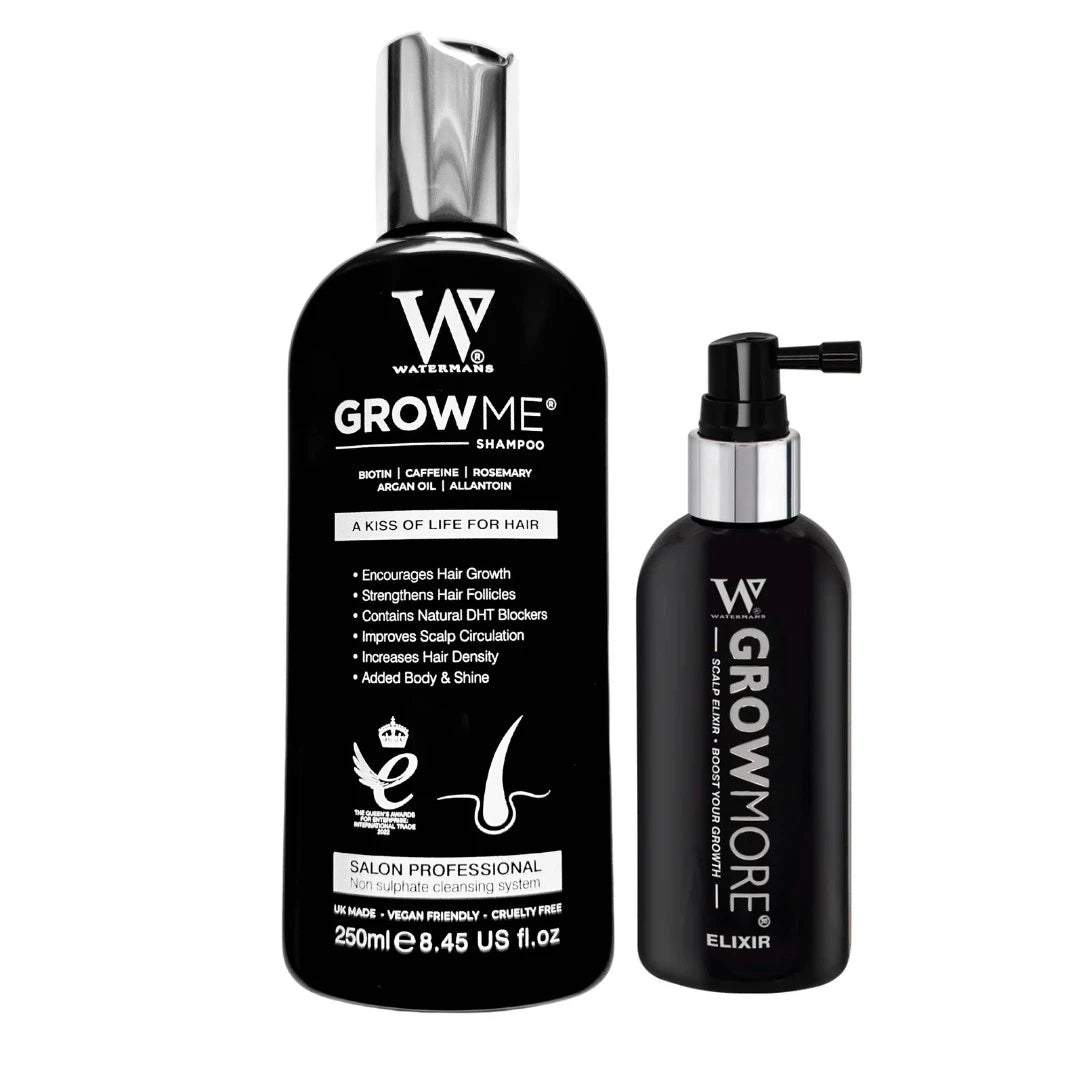
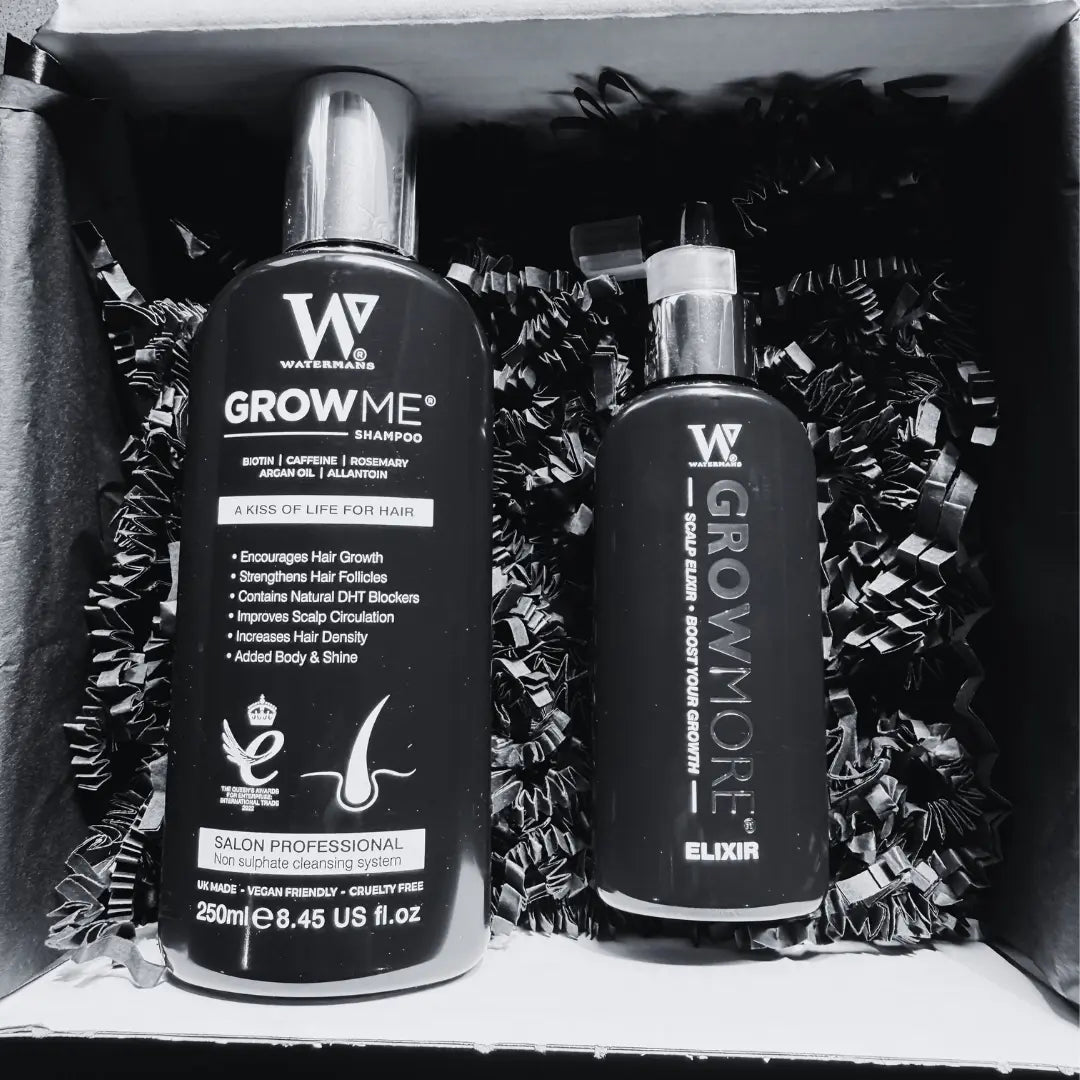
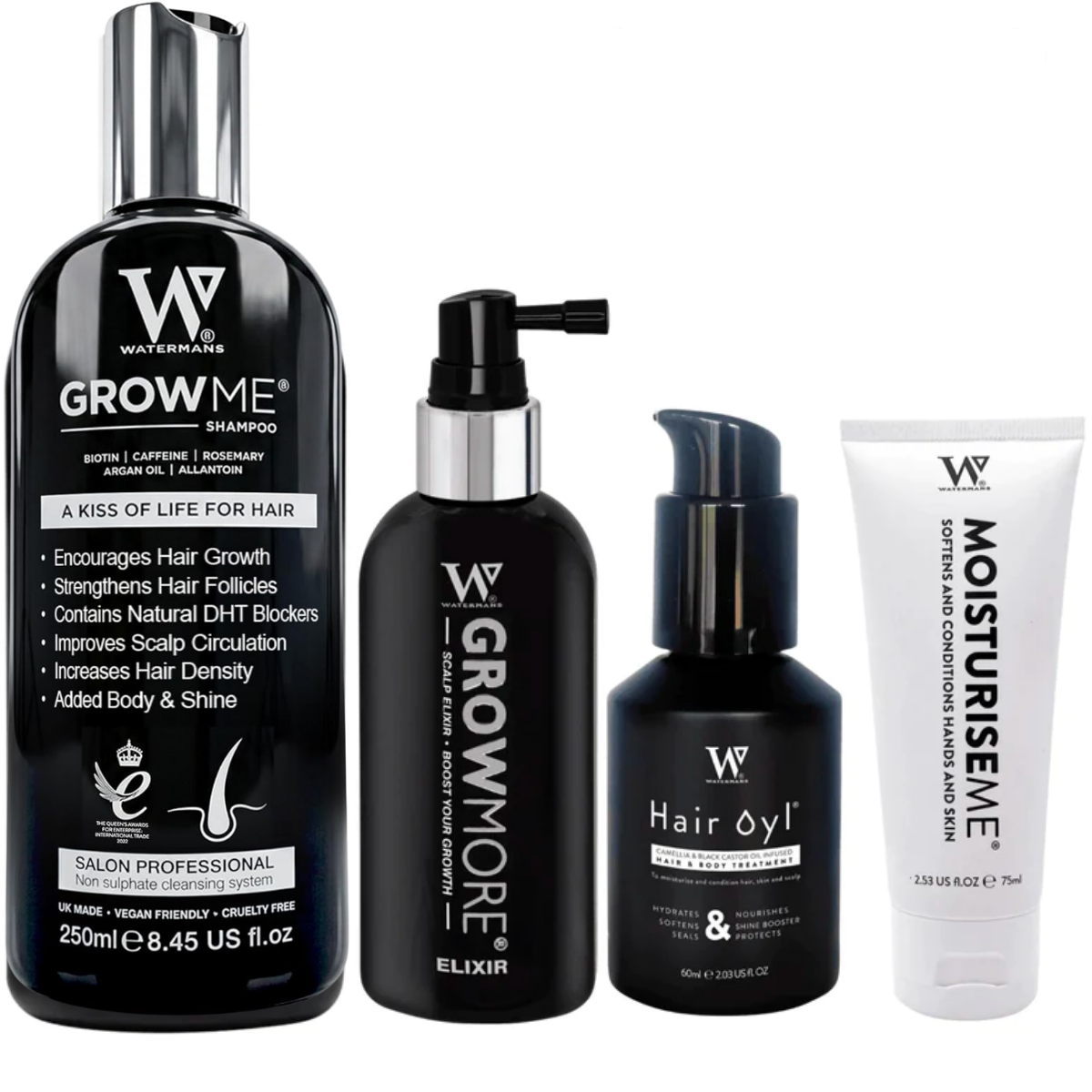
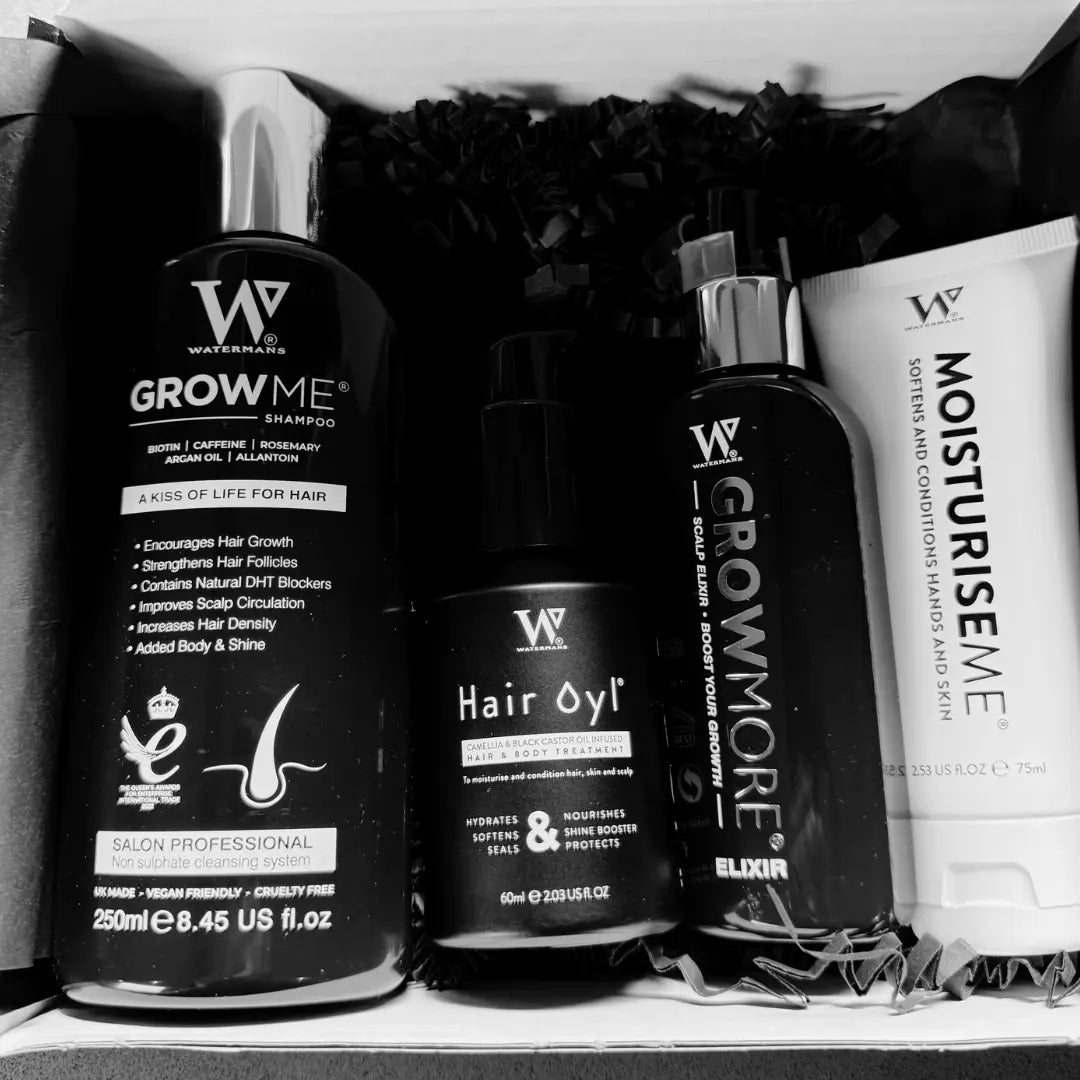
Grow Me® Sulfate Free Shampoo
250ml, so roughly 60p a wash at 10ml. A mild surfactant blend carrying biotin, caffeine, rosemary and niacinamide alongside hydrolysed lupine protein. The protein is the part doing the visible work, filling gaps in a worn cuticle so the fibre snaps less. Reduces breakage for fuller looking hair.
£14.95 · sulfate free, vegan, made in the UK

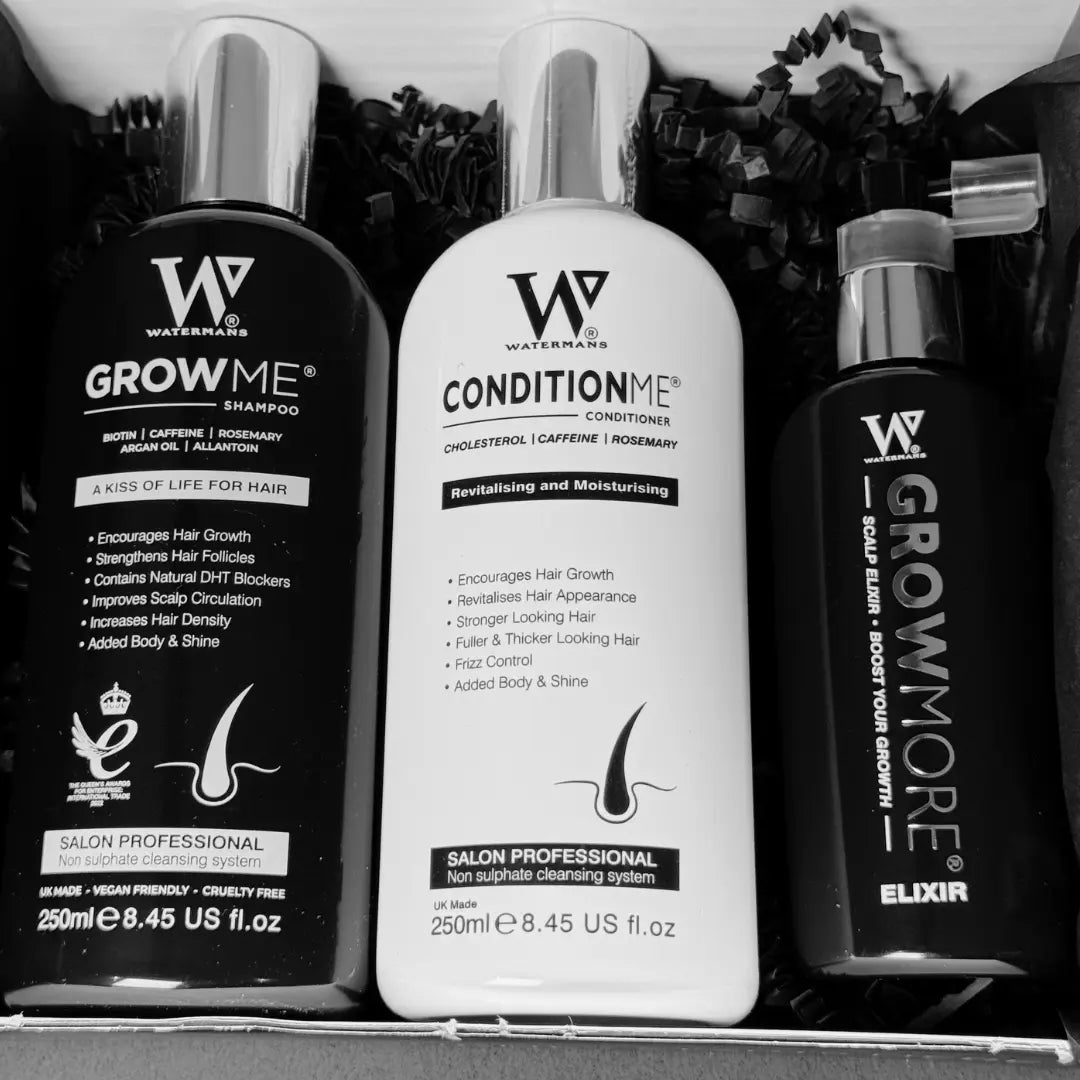
Condition Me® Conditioner
If you are only going to upgrade one bottle, the argument above says make it this one. It is what stays on the hair after rinsing, so it does the detangling and the breakage reduction that you feel every time you brush.
£13.95 · vegan, made in the UK

Grow Me® Shampoo & Conditioner Set
The pair together rather than separately, which is the practical version of the point made above about bundles beating downgrades. Same formulas, better cost per wash.
£26.95 · vegan, made in the UK
Watermans has sold over 5 million bottles since 2012, everything is vegan, and it is all made here in the UK.
Frequently asked questions
Is expensive shampoo actually better?
Sometimes, and less often than the price suggests. The reliable improvement happens between the budget tier and the specialist tier, where the detergent system genuinely changes. Above roughly twenty pounds, most of the extra is fragrance, packaging and distribution rather than formulation.
Is salon shampoo worth the money?
Some salon products are very good, but being sold in a salon is a distribution choice rather than a mark of quality, and it adds a markup for the service of handing it to you. Judge the ingredient list rather than the counter it came from.
Why is my cheap shampoo leaving my hair dry?
Almost always the surfactant system. Inexpensive formulas rely on aggressive, high foaming detergents that remove your natural oils along with the dirt. The squeaky feeling afterwards is a stripped cuticle, not cleanliness.
Should I spend more on shampoo or conditioner?
Conditioner. Shampoo is rinsed away within a couple of minutes, whereas conditioner is what remains on the hair and does the detangling and breakage reduction you feel every day.
How do I know if a product has enough of the ingredient it advertises?
Read the position on the list. Ingredients are listed in descending order by quantity down to one percent. If the headline ingredient appears after the fragrance and preservatives, it is present in trace amounts.
Do professional and retail versions of the same brand differ?
Occasionally in size and packaging, rarely in formula in any meaningful way. The larger professional sizes are usually better value if you get through the product.
Is a more expensive product better for coloured hair?
The specialist tier usually is, because gentler cleansing slows colour fade noticeably. This is the single clearest case for spending more, since you are protecting money you have already spent at the salon.
Are salon own brand and supermarket own brand any good?
Own brand products are made in the same factories as the names, and some are genuinely good value. The ingredient list is still the test. Own brand is a pricing decision, not a quality one, in either direction.
How often should I replace my shampoo?
Only when it stops suiting you, which is usually because something else changed: the season, a colour, a new water supply after moving. Rotating products for the sake of it is a habit the industry encourages and your hair has no opinion on.
Will a better shampoo make my hair thicker?
It can make it look thicker by reducing breakage, so more of what you grow reaches full length and stays there. It does not change what your follicles are doing. That is the honest limit of any cosmetic product, ours included.
The short version
Spend where formulation changes and stop there. The move from the cheapest tier to the specialist middle is the one that shows in your hair. The move above it mostly shows on your bathroom shelf. Work in cost per wash, buy the bundle rather than the downgrade, and put the money into conditioner if you can only move one thing. If you are not sure which formula suits you in the first place, start with how to choose the right shampoo, because the wrong product is expensive at any price.
Watermans products are 100% cosmetic and do not treat medical hair loss. Individual results may vary.