

Oily Roots, Dry Ends: How to Choose the Right Shampoo
Short answer: choose your shampoo for your scalp, and your conditioner for your ends. Almost everyone gets this backwards. They buy a moisturising shampoo because their ends are dry, then wonder why their roots are greasy by day two. Your scalp and your lengths are two different surfaces with two different problems, and the wash routine that works handles them separately. Most people have an oily to normal scalp and dry, damaged ends, which is exactly the combination the shelf labels never account for.
Key takeaways
- Shampoo is for the scalp. Conditioner is for the lengths. Get that one thing right and most shampoo problems disappear.
- Greasy roots with dry ends is the most common hair type in Britain, and it is a technique problem more often than a product problem.
- Washing less often does not fix an oily scalp. Sebum production is not meaningfully retrained by waiting.
- The lather is not the cleaning. Big foam comes from strong detergents, and strong detergents are what leave hair squeaky and brittle.
- How you wash matters as much as what you wash with: fingertips not nails, scalp not lengths, two short washes rather than one long one.
What type is your scalp, actually?
Forget the description on your hair. Work from the scalp, and use one test: how does your root area look and feel at the end of day two after washing? Not day one, which tells you nothing, and not day four, by which point everyone is oily.
| On day two your roots are | Scalp type | What to look for in a shampoo |
|---|---|---|
| Visibly greasy, hair separating into strands, needs washing | Oily | A clarifying wash used no more than weekly, and a gentle daily one otherwise |
| Fine but acceptable, slightly flat | Normal to oily, the most common | A gentle sulfate free wash, conditioner kept off the roots |
| Comfortable, no shine, no tightness | Normal | Almost anything gentle. Choose for your ends instead |
| Tight, itchy, small dry flakes | Dry | A mild non stripping wash and a proper look at your water temperature |
| Oily and flaky at the same time, larger yellowish flakes | Oily with flaking | This pattern is worth a pharmacist or GP conversation rather than a supermarket switch |
Then assess your ends separately, because they are almost certainly a different story. Ends that feel rough, tangle easily, look lighter than your roots or snap when you comb them are damaged and dry, regardless of how oily your scalp is.

Why greasy roots and dry ends happen together
It is not a contradiction and it is not unusual. It is a straightforward consequence of geometry and time.
Sebum is produced by glands in the scalp. It coats the hair nearest the scalp immediately and then has to travel down the hair shaft to reach the rest, which it does slowly and unevenly, and barely at all if your hair is curly, coarse or long. So the root end has a constant fresh supply and the far end has almost none.
Meanwhile the ends are the oldest part of the hair. A hair 30cm long has been on your head for roughly two and a half years. In that time it has been washed several hundred times, brushed thousands of times, and subjected to whatever heat, colour and weather you have put it through. The cuticle is worn away and the fibre is porous. Of course it is dry.
The mistake is trying to solve both with one bottle. A shampoo rich enough to satisfy your ends will leave your roots limp and greasy. A shampoo strong enough to degrease your roots will strip your already fragile ends. The answer is not a compromise product, it is applying two products to two places.
How to actually wash your hair
Technique is genuinely more than half of this, and it costs nothing to change.
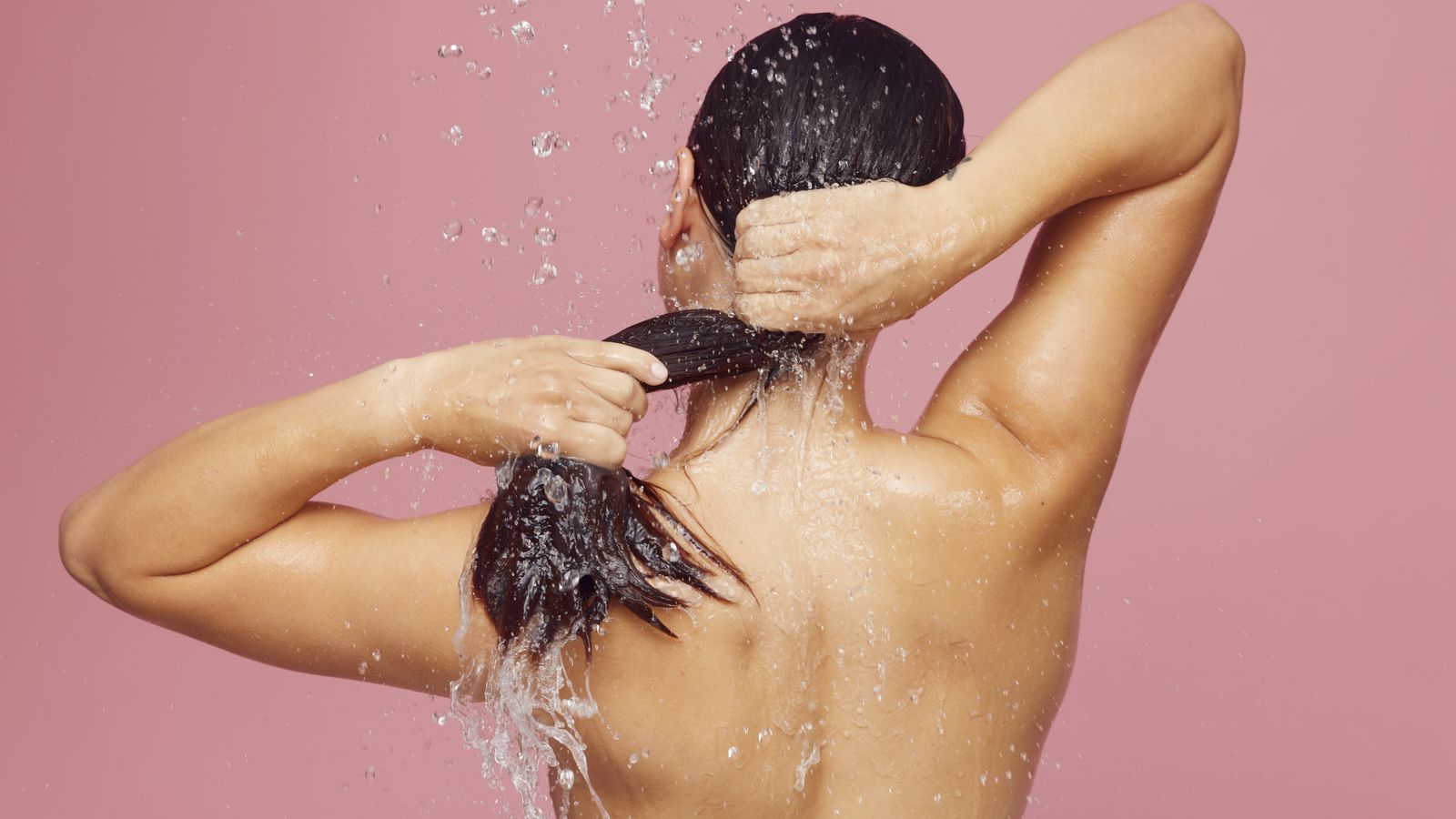
- Wet thoroughly. Longer than feels necessary, a full minute. Properly saturated hair needs far less shampoo, and water alone removes a good deal of surface dirt.
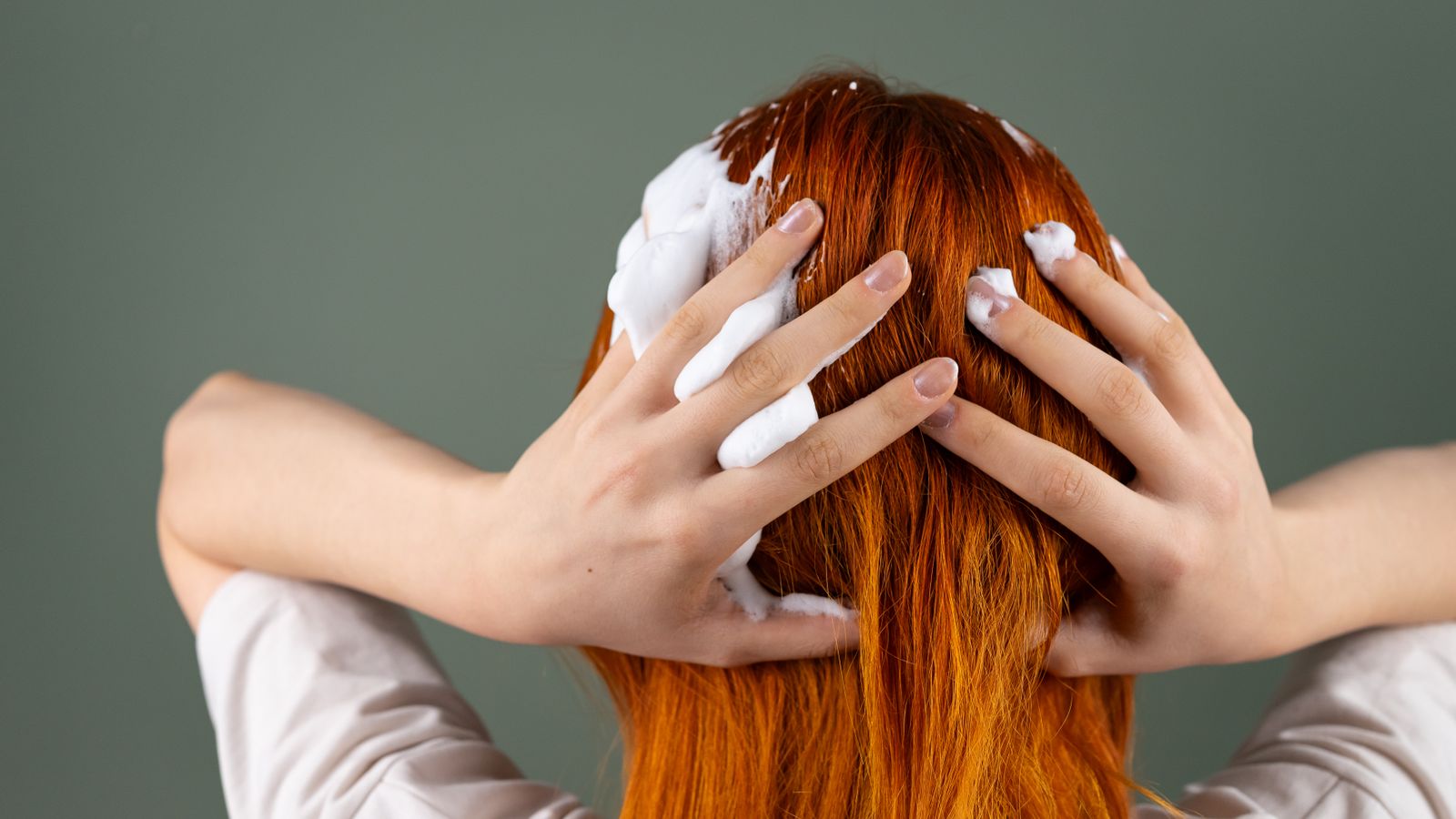
- Shampoo the scalp only. A coin sized amount, emulsified between your palms first, then applied to the scalp. Not to the lengths. The lengths get cleaned by the shampoo running down them when you rinse, which is plenty.
- Use fingertips, never nails. Massage in small circles for 30 to 60 seconds. Nails scratch the scalp and cause irritation, which makes flaking worse.
- Two short washes beat one long one if you are washing infrequently or use a lot of product. The first lifts the buildup, the second actually cleans. If you wash every day or two, once is fine.
- Rinse properly. Longer than you think. Residue left at the root is a common and unrecognised cause of both flat hair and an itchy scalp.
- Condition from the ears down. Mid lengths and ends only. Leave it on while you do something else, comb it through with a wide tooth comb, then rinse. This is the single best moment to detangle, because the conditioner provides slip and the hair is supported.
- Finish cooler. A cooler final rinse encourages the cuticle to lie flat, which is what shine actually is.

How often should you wash?
As often as your scalp needs, which is a real answer rather than a dodge. There is no virtue in leaving hair dirty.
- Oily scalp, fine straight hair: daily or every other day is completely reasonable, provided the shampoo is gentle.
- Normal scalp, mid length hair: two or three times a week suits most people.
- Dry scalp or coarse, curly or coily hair: once or twice a week, because sebum travels down these hair types poorly and the ends need every bit of it.
- After exercise: rinse with water even if you are not shampooing. Sweat left sitting on the scalp is irritating.
The training myth: you will read that if you push through a few greasy weeks, your scalp will learn to produce less oil. There is very little support for this. Sebum production is driven largely by hormones and genetics, not by how long you are willing to wait. What does change is your tolerance for the appearance. Wash when your scalp needs it.
What the label is actually telling you
Sulfates
Sodium lauryl sulfate and sodium laureth sulfate are the detergents responsible for a big satisfying lather. They clean extremely effectively, which is precisely the problem for most people: they do not distinguish between the dirt you want gone and the oils holding your ends together. If your hair feels squeaky and your ends feel like straw after washing, this is usually why. Sulfate free formulas use milder surfactants that foam less. Less foam is not less clean, though it does take a little getting used to.
Silicones
Silicones coat the hair and deliver instant smoothness and shine. They are genuinely effective at what they do. The complaint is buildup: some varieties do not rinse out easily and accumulate over weeks, leaving hair heavy and dull and eventually requiring a clarifying wash to remove. Not a villain, but worth knowing what is happening if your hair has slowly gone limp.
Protein
Hydrolysed proteins are small enough fragments to attach along the hair shaft and temporarily fill the gaps in a worn cuticle. That is what reduces breakage: a fibre with fewer weak points snaps less when you comb it. This is the ingredient class that does the most for damaged ends. Very fine hair can occasionally feel stiff with heavy protein use, in which case alternate with a plain moisturising conditioner.
The active sounding extras
Caffeine, biotin, rosemary, niacinamide and similar appear on a great many hair labels. They are reasonable cosmetic ingredients in a well built formula, and none of them is a magic answer. Be sceptical of any bottle whose promises rest entirely on one headline ingredient.
What we make, and who it suits

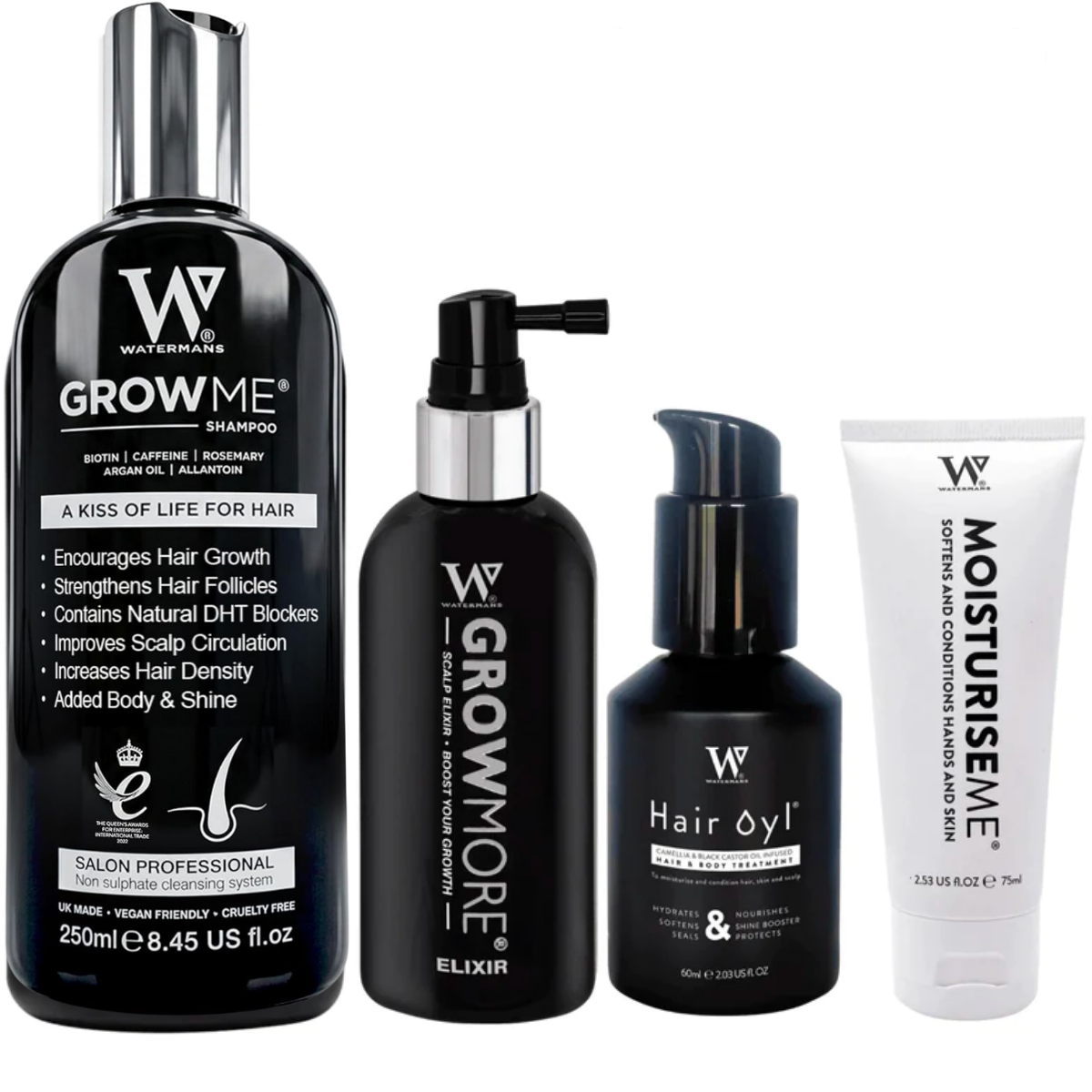
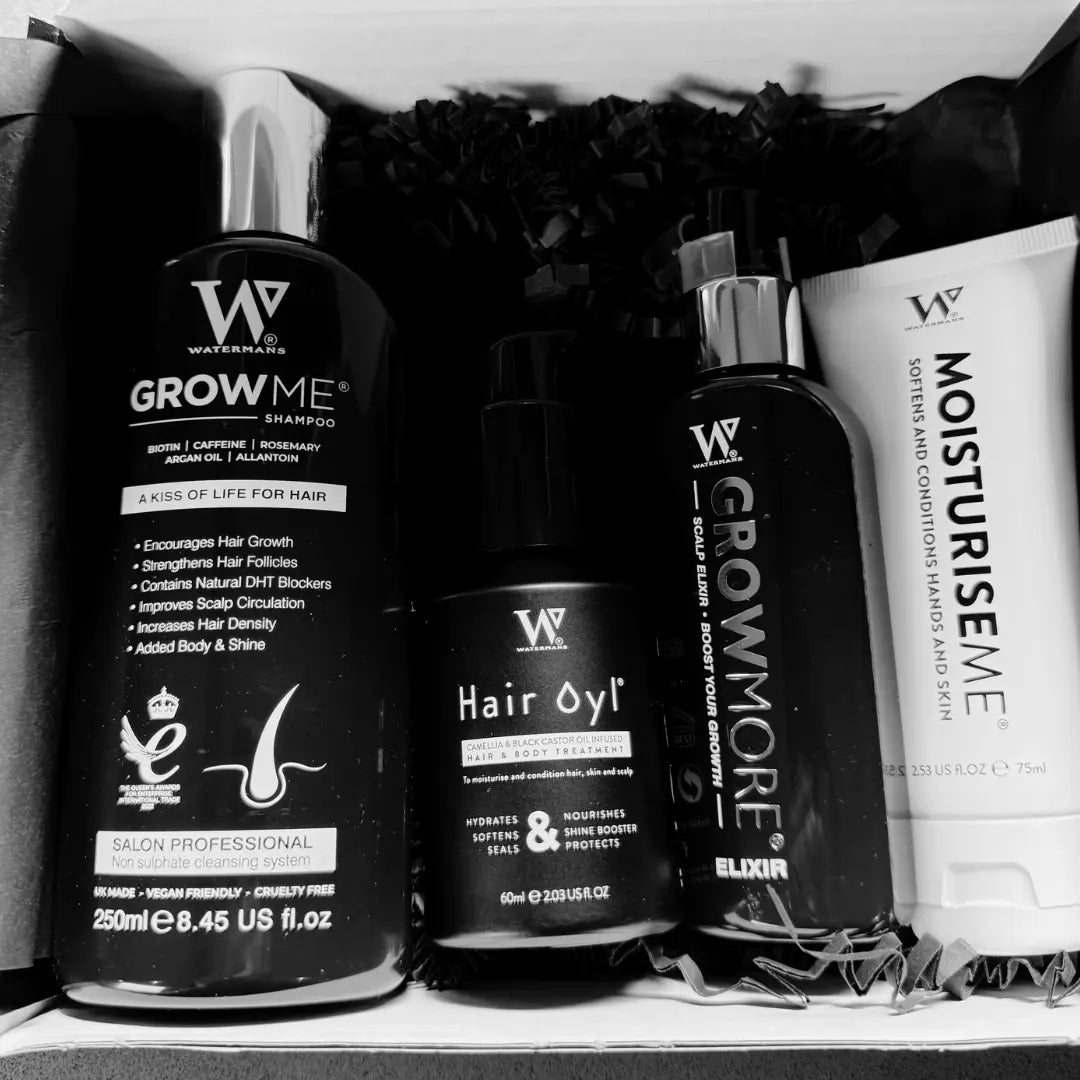
Grow Me® Sulfate Free Shampoo
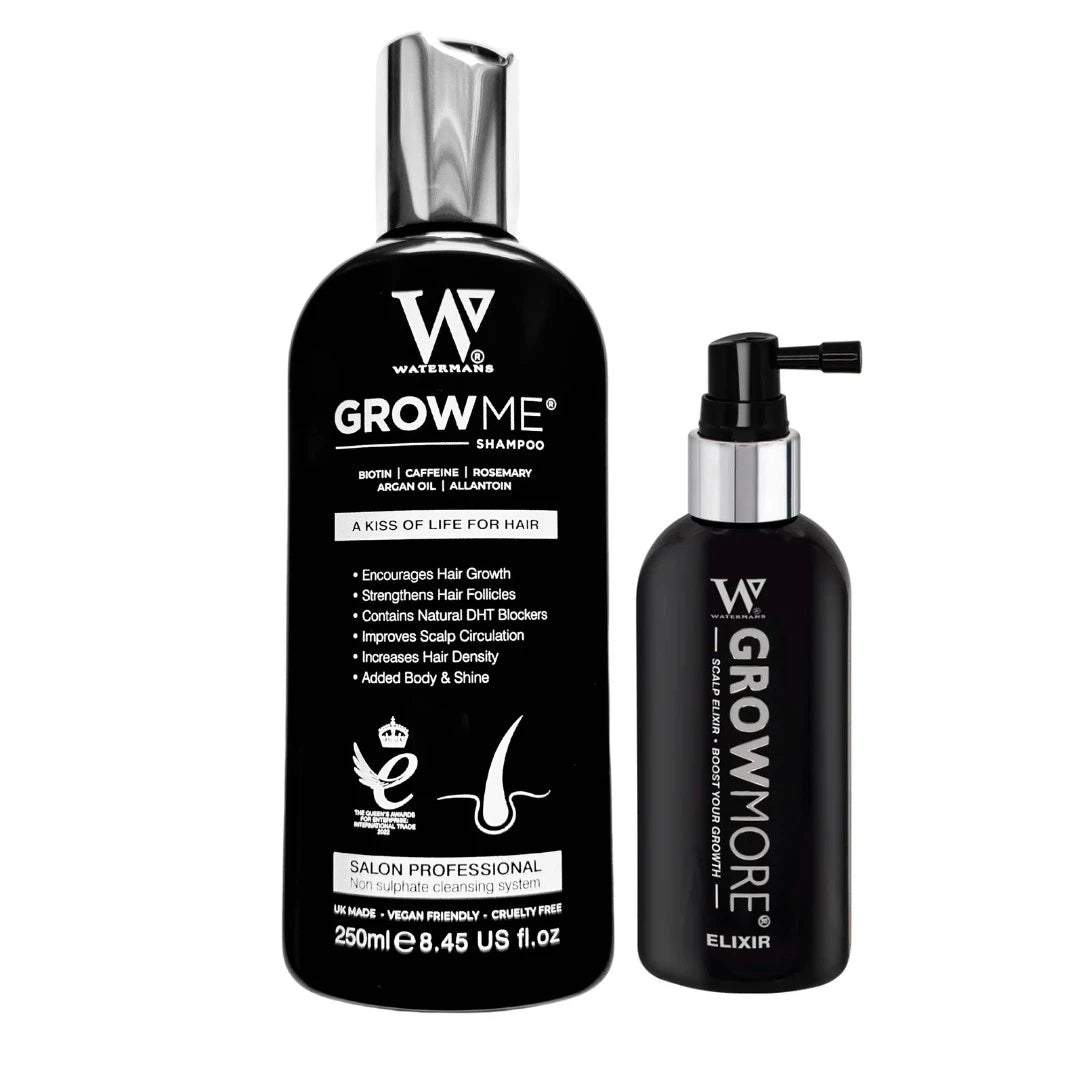
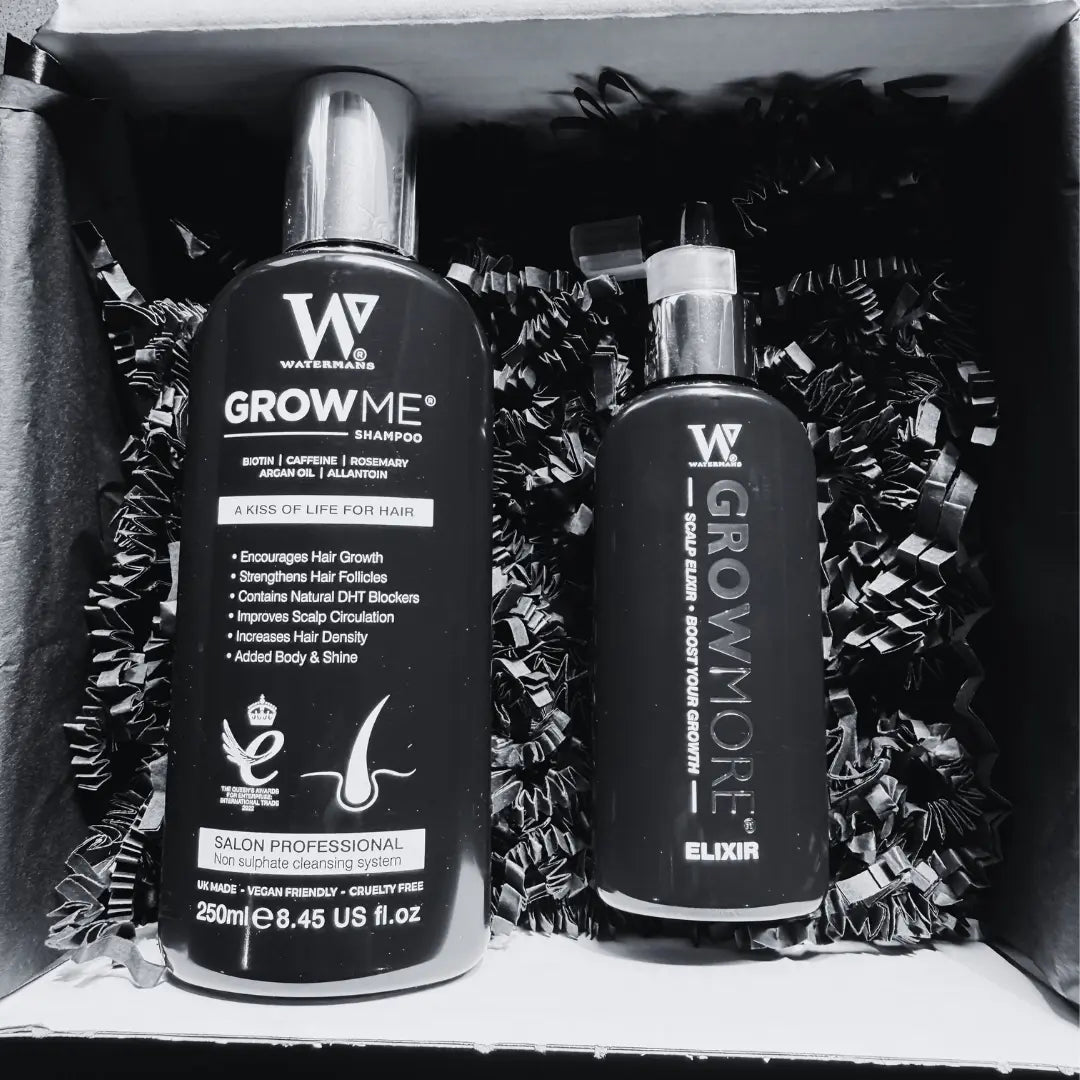
Built for the common case: a scalp that needs washing often and lengths that cannot take a harsh detergent. Sulfate free, so it cleans without the squeaky stripped feeling, with biotin, caffeine, rosemary and niacinamide alongside hydrolysed lupine protein. The protein is the part with the visible job, reducing breakage for fuller looking hair.
£14.95 · sulfate free, vegan, made in the UK

Grow Me® Shampoo and Conditioner Set
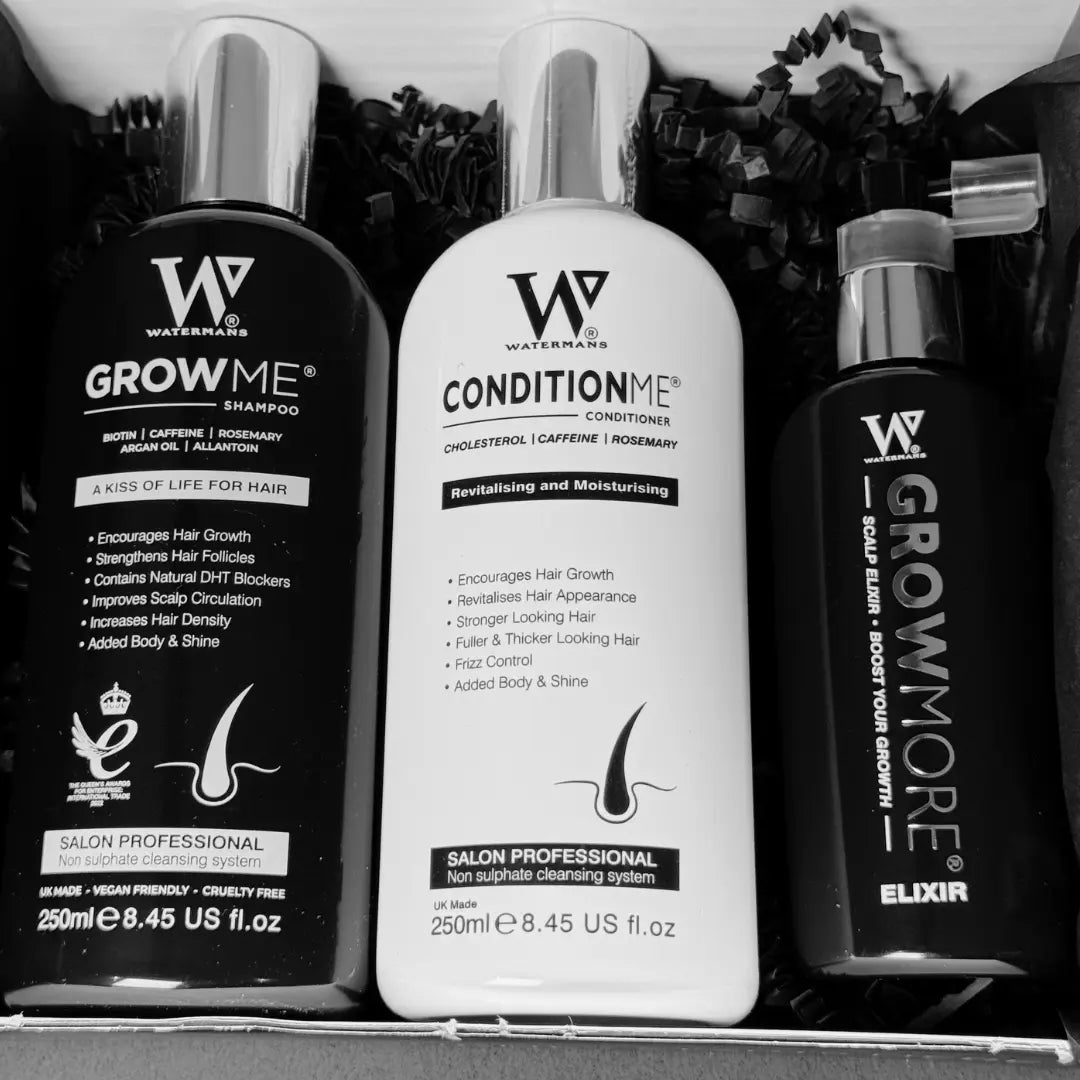
The honest answer to greasy roots and dry ends is two products, not one. This is that pair: the gentle wash for the scalp and a conditioner for the mid lengths down. If the split described at the top of this page is your hair, this is the combination to start with.
£26.95 · sulfate free, vegan, made in the UK

Curly Hair Shampoo and Curl Definition Conditioner Set
If your hair is curly, coily or afro textured, the rules above shift. Sebum travels down a curved shaft very poorly, so these hair types are dry at the ends almost by default and need a gentler wash used less often. This set is built for that, cleansing without stripping and conditioning heavily enough to make detangling possible.
£24.95 · vegan, made in the UK
Get the shampoo matcher
One free email: the day two scalp test written out as a two minute checklist, a plain English decoder for the eight ingredients that actually change how a shampoo behaves, how to work out your wash frequency from your hair type rather than from a rule you read somewhere, and the three technique fixes that solve greasy roots without changing product at all.
One email at a time, no spam, unsubscribe whenever you like.
Common mistakes worth stopping today
- Piling shampoo onto the ends. They do not need it, and it is a direct cause of the dryness you are trying to solve.
- Conditioner at the roots. If your hair goes flat and greasy fast, check this before blaming your shampoo. Conditioner belongs from the ears down.
- Using a clarifying shampoo weekly out of habit. Once a month is plenty for most people. More often and you are stripping constantly.
- Judging a new shampoo in one wash. Give it three or four. The first wash after switching away from silicones in particular can feel dreadful and mean nothing.
- Blaming shampoo for shedding. Hairs come out in the shower because washing releases hairs that had already been shed and were caught in the surrounding hair. It is timing, not cause.
If your ends are already badly damaged, a shampoo change alone will not resolve it. Work through how to rescue dry hair alongside this, and if a flaky scalp is your main complaint, our flaky scalp guide covers what distinguishes a dry scalp from dandruff.
Frequently asked questions
Is sulfate free shampoo better?
For most people, yes, though not universally. Sulfate free formulas clean more gently, which suits coloured, dry, curly or damaged hair and anyone washing frequently. If you use a lot of heavy styling product or have a very oily scalp, you may still want an occasional stronger wash to clear buildup.
Why is my hair greasy the day after washing?
Usually one of three things: conditioner applied too close to the root, shampoo not rinsed out fully, or touching and brushing your hair frequently, which drags sebum from the scalp down the lengths. Check those before changing product.
Do I need to change shampoo regularly so my hair does not get used to it?
No. Hair is not alive and cannot adapt to a product. What genuinely changes is your hair itself, with the seasons, with colour, with length and with age, so the right shampoo may change over time. That is a different thing from rotating bottles for its own sake.
How much shampoo should I use?
Less than you are using. Roughly a ten pence piece for short hair, a two pound coin for long. Emulsify it in wet palms first so it spreads across the scalp rather than sitting in one spot.
Should I use conditioner if my hair is oily?
Yes. Your ends are dry even if your roots are not. Apply from the ears down, avoid the scalp entirely, and rinse thoroughly. Skipping conditioner is one of the fastest ways to end up with brittle, tangling ends.
Does cold water make hair shinier?
A cooler final rinse helps the cuticle lie flatter, which reflects light better. The effect is real but modest, and it is not worth an unpleasant shower if you hate it. Simply avoiding very hot water matters more.
Can the wrong shampoo cause hair loss?
A shampoo does not cause loss from the follicle. A harsh one used constantly can cause breakage, which looks similar in the mirror, and an irritated scalp is an uncomfortable environment for hair. If you are seeing genuine increased shedding of full length hairs with root bulbs over months, look at the possible causes of thinning rather than your bottle.
Is expensive shampoo worth it?
Sometimes, and not reliably. Price correlates with fragrance, packaging and marketing at least as much as with formulation. What is worth paying for is a formula that suits your scalp type and does not strip your ends. That is available at a sensible price.
The short version
Work out your scalp type from how day two looks. Buy your shampoo for that, and your conditioner for your ends. Shampoo the roots, condition the lengths, rinse both properly, and use less product than you think. Get those right and the specific bottle matters far less than the internet suggests.
If your hair is the common greasy root and dry end combination, the Grow Me shampoo and conditioner set is built for exactly that split. Watermans has sold over 5 million bottles since 2012, everything is vegan, and it is made here in the UK.
Watermans products are 100% cosmetic and do not treat medical hair loss. Individual results may vary.