


Winter Hair Care: Why Hair Breaks More in Cold Weather
Short answer: hair breaks more in winter because cold outdoor air holds almost no moisture, indoor heating holds even less, and the difference between the two dries the outer layer of every strand until it loses its flexibility. Add friction from hats, scarves and coat collars and you get static, tangling and snapped ends. Winter does not make you lose hair from the root. It makes the hair you already have snap in the middle, which looks identical in the mirror and is far easier to fix.
Key takeaways
- Winter damage is breakage, not shedding. Snapped hairs are blunt ended and of uneven length. Shed hairs have a small white bulb at the root.
- Indoor heating is usually the bigger culprit, not the cold. Central heating can push indoor humidity down to desert levels.
- Friction is the second half of the problem. Wool hats, scarves and coat collars rub the cuticle open, which is what static and flyaway hair actually are.
- Never leave the house with wet hair in freezing weather. Water inside the strand expands as it cools, and wet hair is already at its weakest.
- The fix is moisture retention plus less friction, not more washing or more heat styling.
Why does hair get so much worse in winter?
A hair is not a living thing once it leaves the follicle. It is a protein fibre with an outer layer of overlapping scales called the cuticle, and its flexibility depends almost entirely on the small amount of water held inside it. Keep that water content in a healthy range and the fibre bends. Let it drop and the fibre becomes brittle, so it snaps rather than flexing when you comb, tie or tug it.
Winter attacks that water content from three directions at once.
Cold air holds very little moisture
Cold air is physically incapable of holding much water vapour. Air at freezing point holds a fraction of what the same air holds at 20 degrees. Step outside and the atmosphere is effectively pulling moisture out of anything that has it, including your hair and your skin.
Indoor heating is drier still
This is the part most people miss. When you take that already dry cold air indoors and heat it, its capacity to hold moisture rises but the actual water content does not. The result is very low relative humidity indoors, often lower than outside. A centrally heated house in January can sit in the region of 20 to 30 percent relative humidity, which is comparable with arid climates. You are not spending winter in the cold. You are spending it in a warm, extremely dry box, for months.
Everything you wear rubs
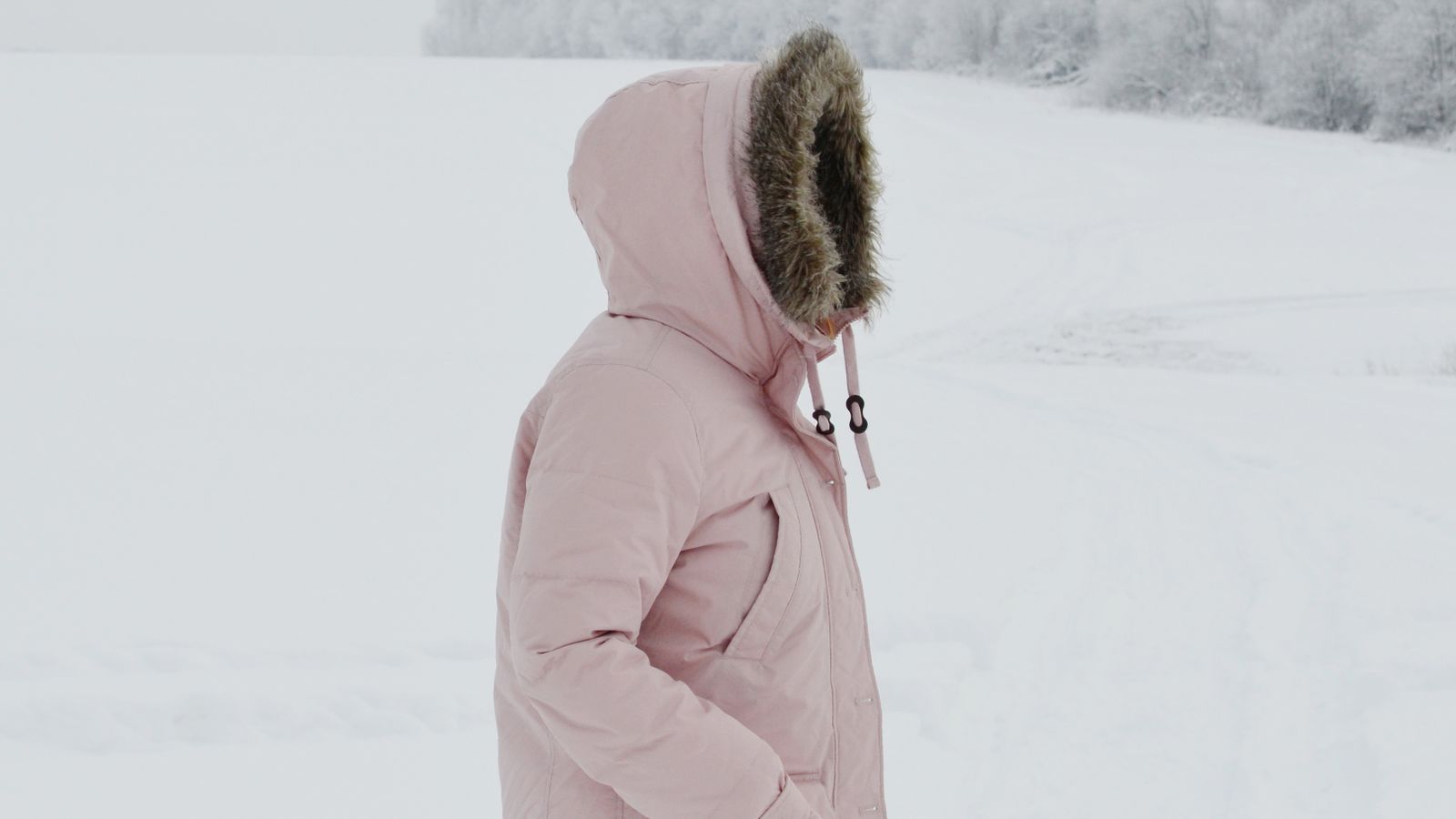
Hats, hoods, scarves and coat collars mean hair is in near constant contact with fabric. That friction lifts the cuticle scales, which is what makes hair look dull and feel rough. Lifted scales snag on each other, which causes tangling, and tangling causes tugging, and tugging causes breakage. Static is the visible signal of the same process: dry air plus friction leaves the strands carrying a charge with no moisture to dissipate it, so they repel each other.

Is your hair breaking or shedding?
This is the single most useful distinction on this page, because the two look the same on your hairbrush and need completely different responses.
| Check | Breakage | Shedding |
|---|---|---|
| The end of the hair | Blunt, snapped, no bulb | Small white or pale bulb at one end |
| Length | Short pieces, uneven lengths | Full length of your hair |
| Where you notice it | Short flyaway halo around the parting, ragged ends | Plughole, brush, pillow |
| What it responds to | Moisture, less friction, less heat | Time, and looking at the underlying cause |
Hold a handful of the hairs from your brush over a sheet of white paper in good light. If most of them are short with blunt ends, this article is the right one for you. If they are full length with a bulb, and there are a lot of them, that is a shedding pattern and worth reading about in our guide to telogen effluvium, which is the most common reason for a sudden increase.
What actually helps, in order of impact
1. Stop washing in hot water
Hot water strips the natural oils that sit on the cuticle and keep moisture where it belongs. In winter a hot shower feels like the best thing in the world, and it is one of the worst things available for dry hair. Wash in warm water and finish with a cooler rinse if you can bear it. The cooler rinse helps the cuticle lie flat, which is what shine actually is.
2. Never go outside with wet hair in freezing weather
Wet hair is at its most fragile, because water swells the fibre and the internal bonds that give it strength are temporarily disrupted. Take that outside below freezing and the water within the strand can freeze and expand. Give hair time to dry indoors, or use a dryer on a low setting with protection.
3. Reduce friction where you can control it
- Choose a hat with a smooth lining, or wear a silk or satin scarf underneath a wool one. Wool directly against hair is the harshest common combination.
- Pull long hair out from under coat collars and scarves rather than letting it sit trapped and rubbing.
- Switch to a silk or satin pillowcase. Cotton is absorbent and abrasive, which is a poor combination for eight hours a night.
- Loosen your ties. Cold weather styles tend to be pulled back and tight, and tension plus brittleness is exactly how ends snap.
4. Condition properly, every single wash
Winter is not the season to skip conditioner. Conditioner works by depositing a thin layer that smooths the lifted cuticle and reduces the friction of everything that comes afterwards, from towel drying to combing to hats. Apply from mid lengths to ends, leave it for the time the bottle says rather than rinsing straight away, and comb it through with a wide tooth comb while it is in. That is the single easiest place to detangle without breakage. Our guide on using conditioner properly covers the technique in more detail.
5. Add oil to the ends, not the roots
The ends of your hair are the oldest part and have been through the most. They are where winter dryness shows first. A small amount of a light oil worked through the last few inches seals moisture in and cuts static immediately. Keep it off the scalp, where it does nothing useful and simply makes hair look greasy at the root.

6. Turn the heat styling down, not just off
Realistically, most people are not going to stop blow drying in January. So the useful advice is not to stop, it is to use a lower temperature, keep the nozzle moving, finish on the cool setting, and always use protection first. Applying 200 degrees to a strand that is already brittle from dry air is where the worst winter damage comes from.
7. Put moisture back into the room
If you can raise indoor humidity, everything above gets easier. A humidifier in the bedroom is the direct approach. A bowl of water near a radiator, drying laundry indoors and keeping a few houseplants all help at the margins. Your skin and your sinuses will notice as well.
What to use through the winter
Two products cover most of it: something that cleans without stripping, and something that puts slip and moisture back at the ends.

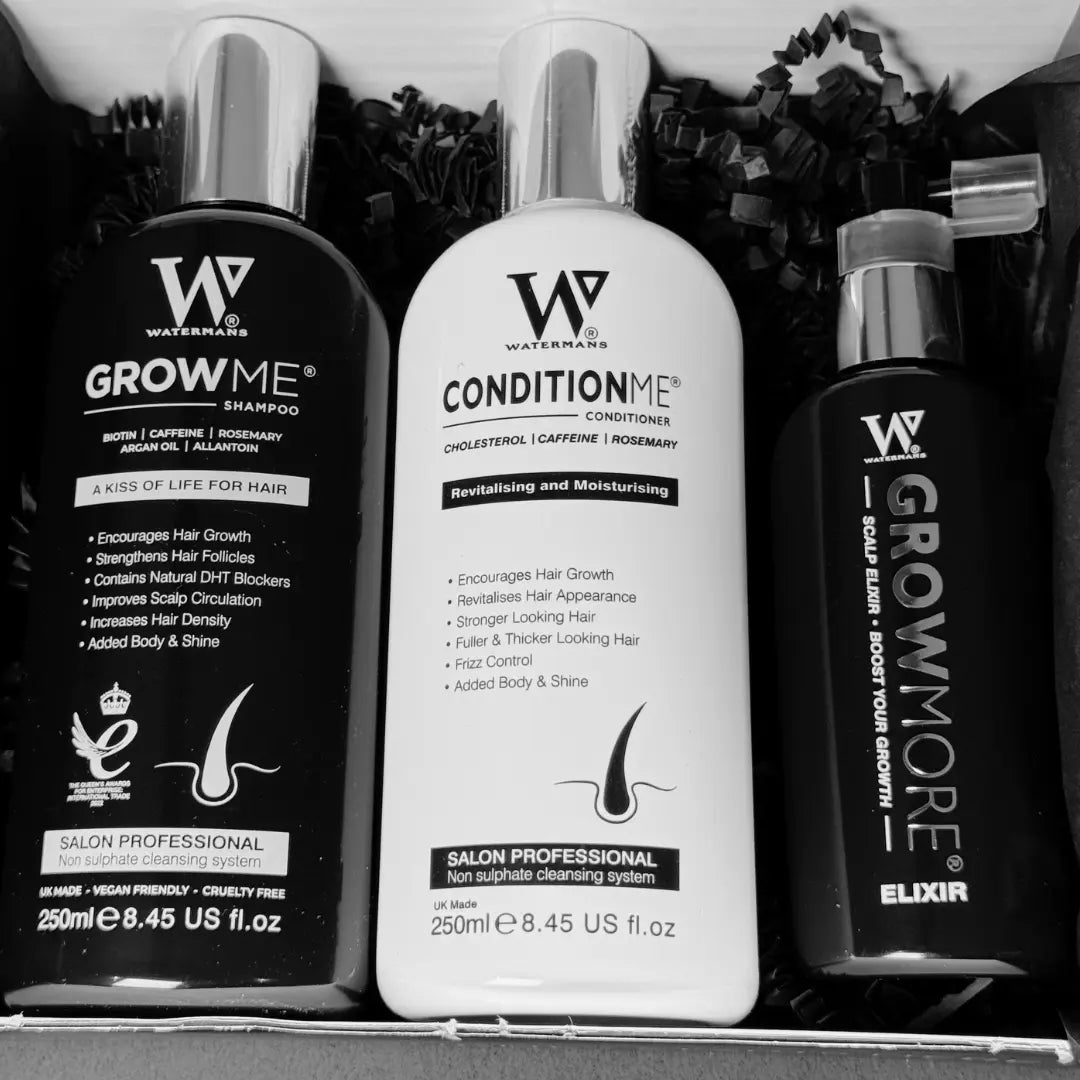
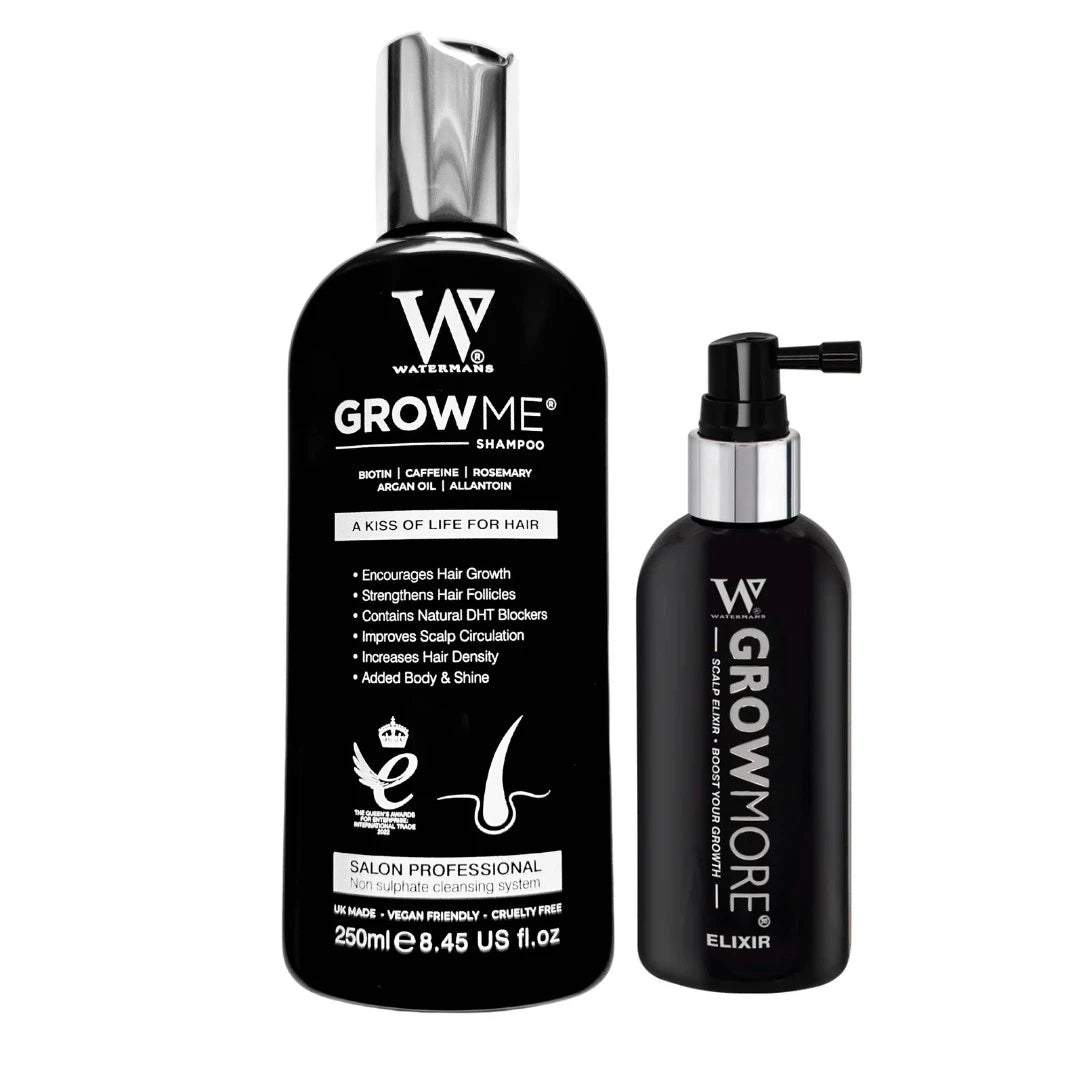
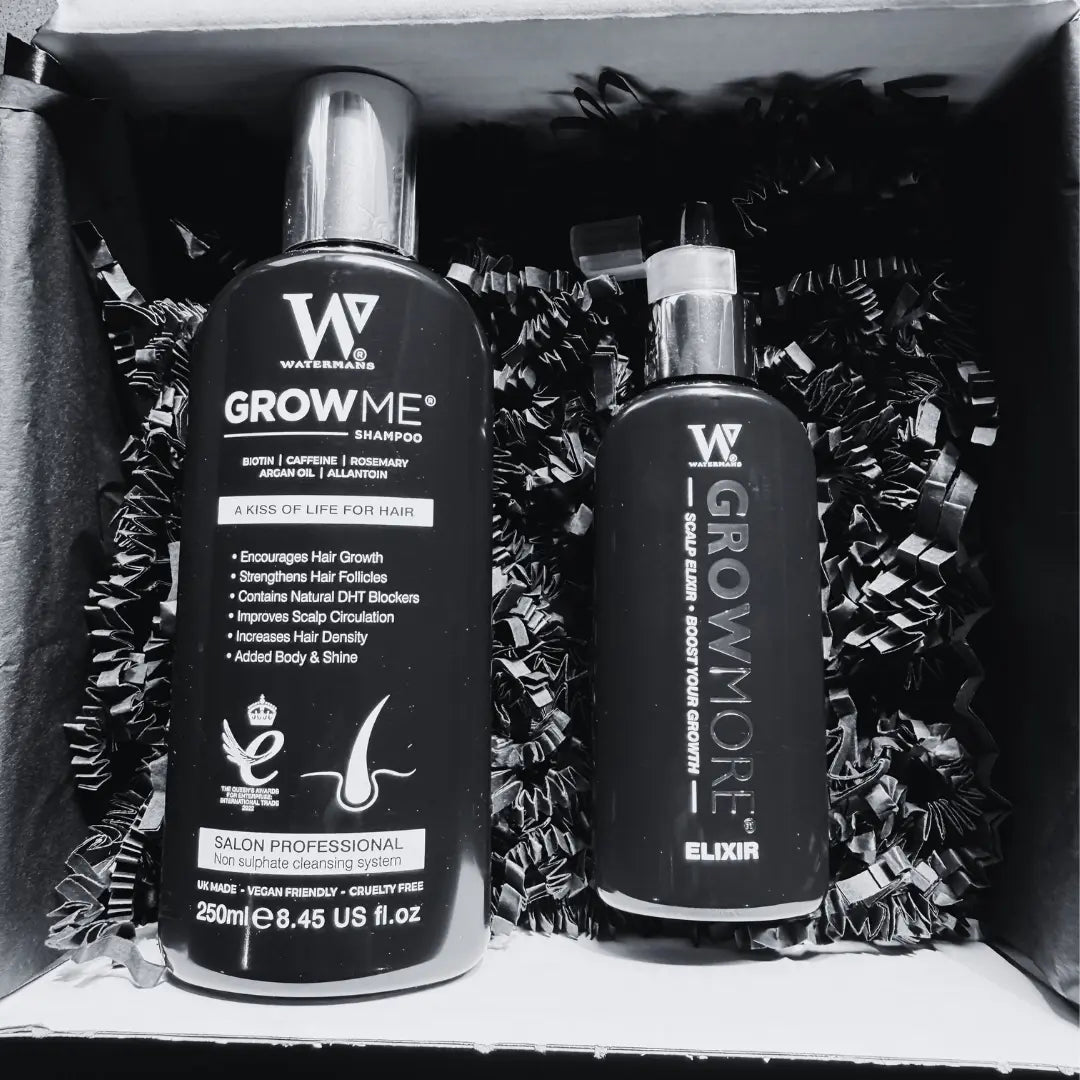
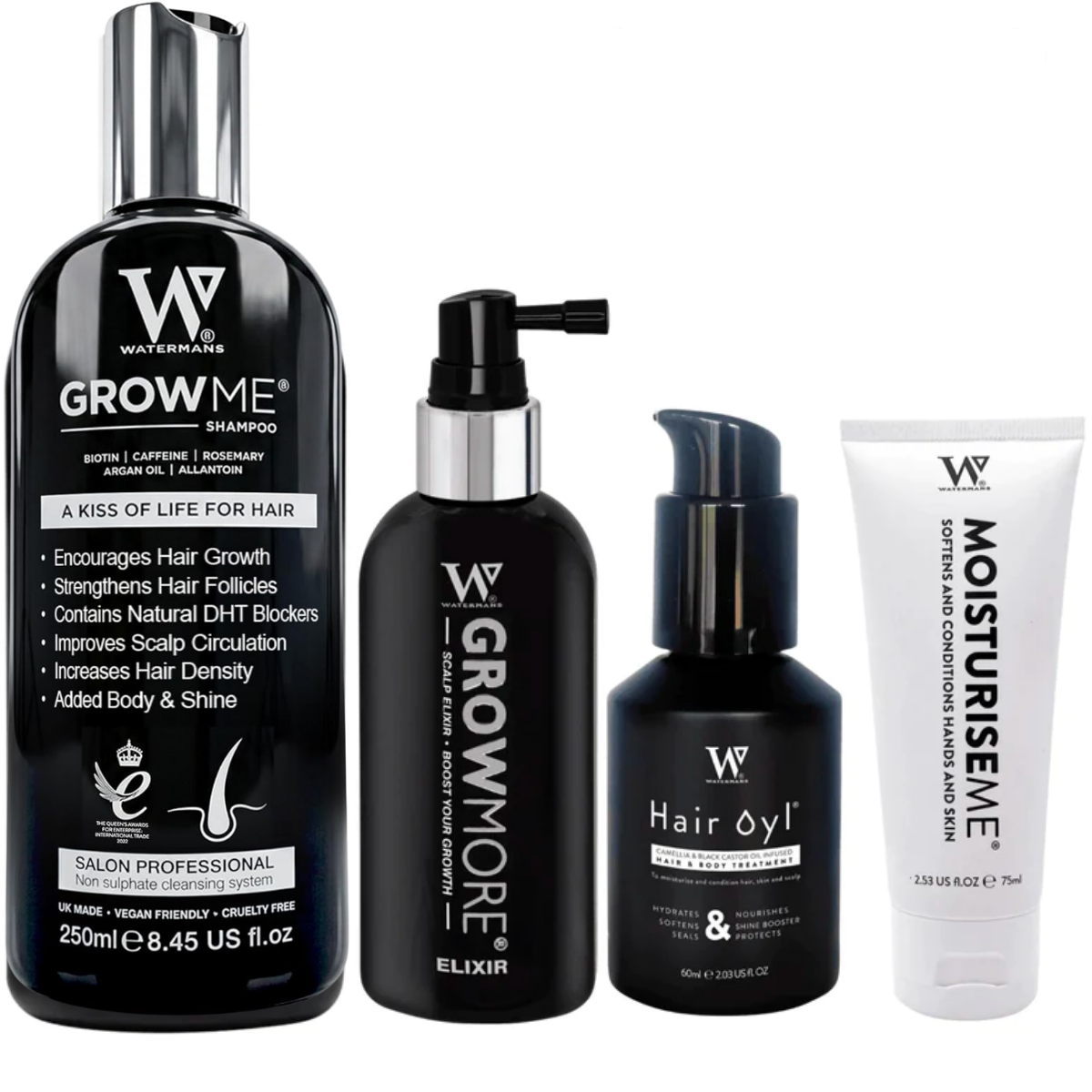
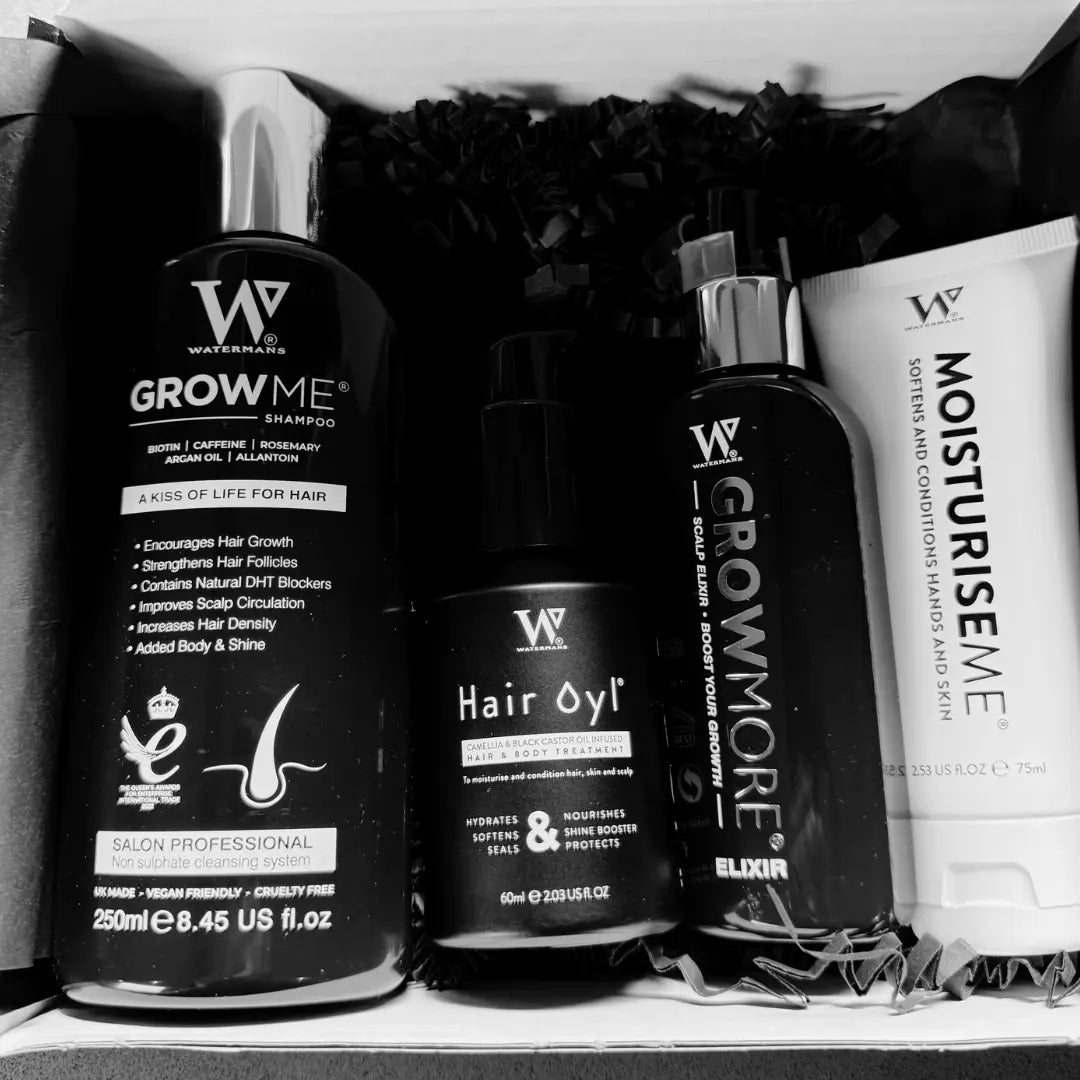
Grow Me® Shampoo and Conditioner Set
The pairing that matters in winter. A sulfate free cleanse that does not strip the oils you need, and a conditioner used every wash to smooth the cuticle back down so hats, scarves and combs have less to catch on. Reduces breakage for fuller looking hair, which in January mostly means keeping the length you already grew.
£26.95 · sulfate free, vegan, made in the UK
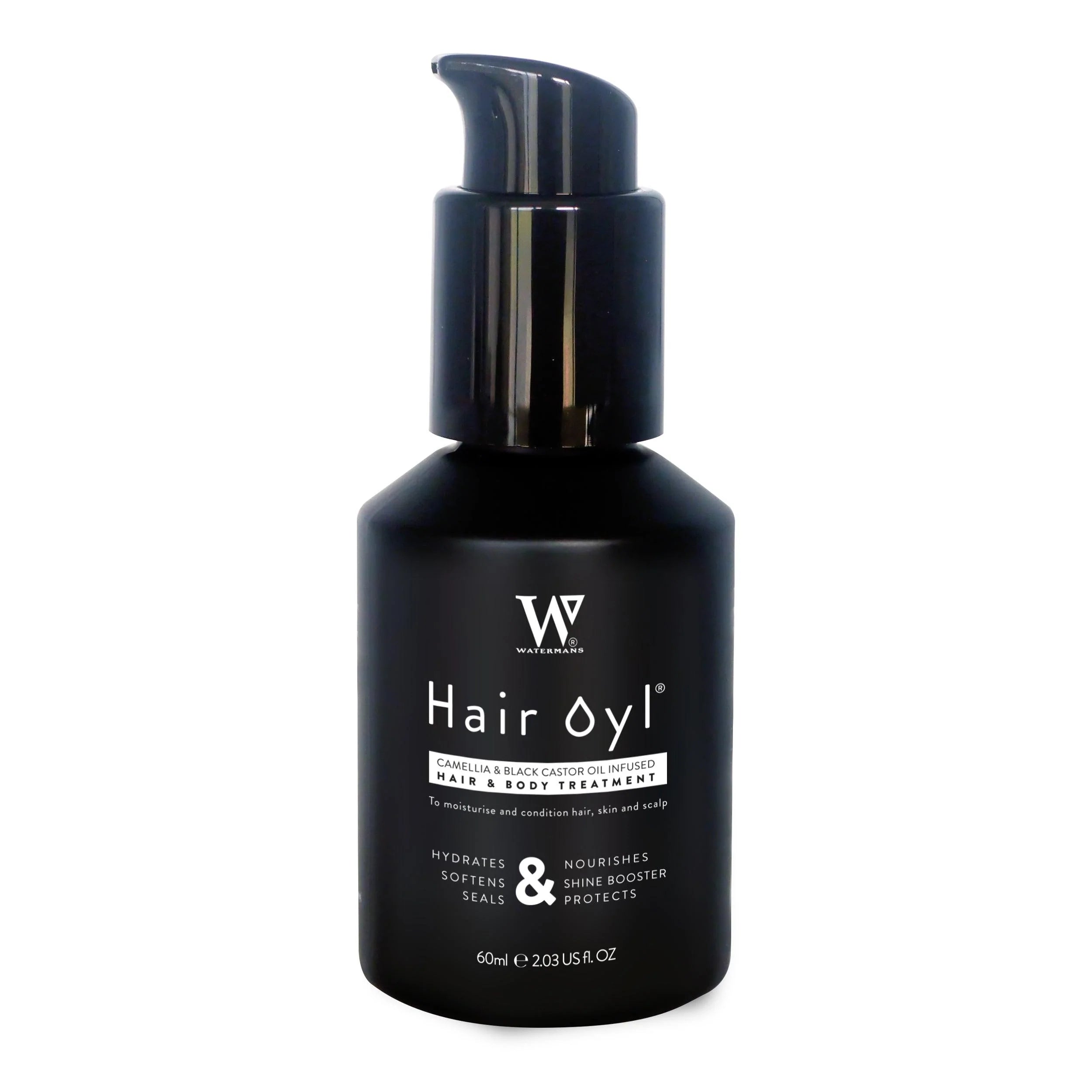
Camellia and Black Castor Hair and Body Oil
Two or three drops through the ends is the fastest fix for winter static and the roughness that comes with it. Camellia oil is light enough not to weigh fine hair down, which is the usual complaint about oils. It also works on the dry skin that comes with the same weather, so it earns its place on the shelf twice.
£24.95 · vegan, made in the UK

Protect Me® Heat Protection Spray
If you are blow drying more in winter, and almost everyone is, this is the one to add. A leave in that gives heat protection and frizz control in the same step, so you are not choosing between drying your hair and looking after it. Also useful on the days when static is the whole problem.
£13.95 · vegan, made in the UK
Get the winter hair rescue plan
One free email with the practical version: the white paper test for telling breakage from shedding, the hat and scarf swaps that stop static overnight, a four week wash routine for dry indoor air, and the three heat styling settings worth changing before you change any product.
One email at a time, no spam, unsubscribe whenever you like.
Does more hair really come out in winter?
Slightly, and it is normal. Seasonal shedding is well documented, with many people noticing a peak in autumn that carries into early winter. The usual explanation is that a larger than average proportion of hairs entered the resting phase in late summer and are released together a few months later. It is a shift in timing rather than a problem, and it settles on its own.
What is worth attention is shedding that is heavy, that goes on for months, or that comes with a visibly wider parting. That pattern is not seasonal and deserves a conversation with your GP rather than a change of conditioner, particularly if it started two to three months after an illness, an operation or a period of real stress.
Worth knowing: winter is the season people most often mistake breakage for hair loss, panic, and start buying growth products. If your hairs are snapping mid length, no growth product will help, because the problem is not at the root. Fix the moisture and the friction first, then reassess in spring.
A simple winter routine
- Wash in warm rather than hot water, two or three times a week rather than daily.
- Condition every wash, mid lengths to ends, and comb it through with a wide tooth comb while it is in.
- Dry indoors, on a lower heat, with protection, and never step outside while it is still wet.
- Seal the ends with a few drops of oil once dry.
- Protect against friction: smooth linings, silk pillowcase, hair out of collars.
- Trim every ten to twelve weeks. Split ends travel upward, and winter is when they multiply.
Frequently asked questions
Why is my hair so static in winter?
Static is dry air plus friction. Hair carries an electrical charge from rubbing against hats, scarves and clothing, and normally the moisture in the air lets that charge dissipate. In very dry indoor air it has nowhere to go, so the strands repel each other. Adding moisture back to the hair with conditioner or a little oil solves it faster than anything else.
Should I wash my hair less often in winter?
Usually a little less, but do not overdo it. Two or three washes a week suits most people. Washing very rarely can leave buildup and an itchy scalp, which is its own problem. Water temperature and what you use matter more than raw frequency.
Do hats cause hair loss?
No. A hat does not damage the follicle. What a hat can do is cause friction and static on the hair shaft, and if it is very tight and worn for hours daily, add tension at the hairline. Wear one, just choose a smooth lining and do not have it clamped down tight.
Is winter hair loss permanent?
Seasonal shedding is temporary and settles by itself. Breakage from dryness and friction is not permanent either, though it takes time to grow out, which is why the ragged look can last well past the weather that caused it. Neither is a reason for alarm on its own.
Does cold weather stop hair growing?
No. Growth happens at the follicle beneath the skin, at a fairly steady rate of around a centimetre a month, and your scalp is kept at body temperature. What changes in winter is how much of that growth survives to stay on your head, because more of it snaps off at the ends.
Why does my scalp get itchy and flaky in winter?
The same dry air affects the skin on your head as much as the skin on your hands. A dry scalp flakes, feels tight and itches, and scratching adds damage. It is a distinct problem from dandruff and is worth handling on its own terms, which we cover in our guide to dry scalp in winter.
Will a humidifier actually make a difference to my hair?
It helps, though it is a supporting change rather than a dramatic one. Raising bedroom humidity means eight hours a night in less punishing air, which shows up as less static and slightly softer hair. It is more noticeable for skin and sinuses, and the hair benefit comes along with it.
Should I cut my hair shorter for winter?
A trim is a good idea regardless, because damaged ends split further up the shaft if left. Whether to go properly short is a style decision. What is true is that longer hair spends more time trapped under collars and scarves, and the ends are the oldest and driest part, so long hair takes more looking after through the cold months.
The short version
Winter is a moisture problem and a friction problem, not a hair loss problem. Wash in warm water, condition every time, seal the ends, cut the friction from wool and cotton, and never go out with wet hair. Do those things and most of what people call winter hair loss simply stops happening.
If you want a straightforward pairing to get through to spring, the Grow Me shampoo and conditioner set covers the cleanse and condition side. Watermans has sold over 5 million bottles since 2012, everything is vegan, and it is made here in the UK.
Watermans products are 100% cosmetic and do not treat medical hair loss. Individual results may vary.
Further reading: how to rescue dry hair and caring for dry skin in winter.