

What Order to Apply Hair Products (And What Not to Mix)
Last updated: August 2026
The rule that decides everything is thinnest to thickest, applied in a specific window: scalp products go on a clean, towel dried scalp within the first few minutes, leave in conditioner and lightweight liquids go on damp hair, creams and oils go on next, and anything with hold goes on last. Get that order wrong and you have not just wasted a product, you have actively blocked the one underneath it. A silicone rich serum applied before a leave in conditioner does not slow it down, it stops it reaching the hair at all.
Most people who feel their hair routine is not working do not need more products. They need the ones they already own to be applied in the right order, on hair at the right dampness, in the right place. That costs nothing and it is the fastest improvement available to almost anyone reading this.
Key takeaways
- Thinnest to thickest, always. Water based liquids, then lotions and creams, then oils, then hold. Anything oily or silicone rich seals what is underneath it and blocks what comes after.
- Damp is a real specification, not a vague word. Towel dried and no longer dripping. Most leave ins are formulated for that state and behave badly on soaking wet or fully dry hair.
- Scalp and lengths are two different routines. Scalp gets the shampoo and anything targeted at roots. Lengths and ends get the conditioner and the oil. Swapping them causes greasy roots and dry ends at the same time.
- You have roughly a five minute window after towel drying before the cuticle closes and absorption drops. Apply leave ins in that window.
- Two things really do fight each other: protein stacked on protein makes hair brittle, and heavy oils applied before water based products block them.
- Layer count is not the point. Three products applied correctly beats seven applied in the wrong order, and it is cheaper.
- Give a routine eight weeks before judging it, and change one thing at a time or you will never know what worked.
Why does the order of hair products matter so much?
Because hair is not a sponge that absorbs everything you put near it. It is a sealed structure with overlapping cuticle scales on the outside, and what reaches the inside depends entirely on whether those scales are open, what is already sitting on them, and how big the molecules are.
Water swells the hair shaft and lifts the cuticle, which is why damp hair takes things up and dry hair mostly does not. Oils and silicones form a film on the outside. That film is genuinely useful, because it slows moisture loss and reduces friction, but it is a barrier and it does not care which direction it is blocking. Put it on first and everything you apply afterwards sits on top of it, doing nothing.
So the sequence is not a beauty industry ritual. It is the practical consequence of two facts: water based things need to get in before anything seals the surface, and heavier things need to go on last precisely because they seal.

The correct order, step by step
| Step | Product | Where it goes | Hair state | Common mistake |
|---|---|---|---|---|
| 1 | Pre wash oil, optional | Mid lengths and ends | Dry, 20 to 60 minutes before washing | Putting it on the scalp, then needing two shampoos to remove it |
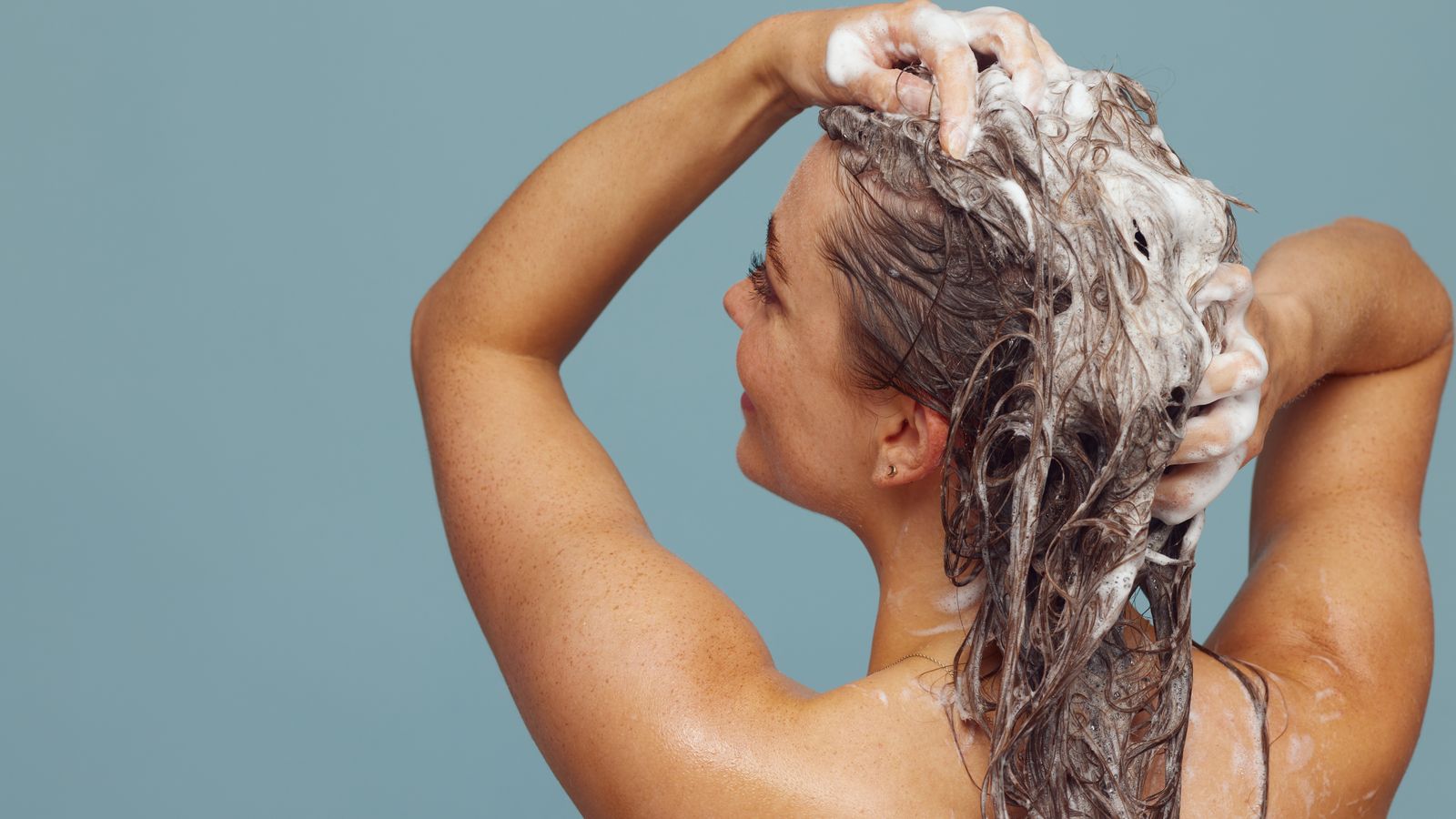
| 2 | Shampoo | Scalp only | Thoroughly wet | Scrubbing it through the ends, which dries them out for no benefit |
| 3 | Conditioner | Mid lengths and ends only | Wet, excess water squeezed out | Applying to sopping hair, so it dilutes and slides off |
| 4 | Scalp serum or tonic | Parted sections of scalp | Towel dried, not dripping | Applying it over the lengths, where it does nothing |
| 5 | Leave in conditioner or spray | Mid lengths and ends | Damp | Applying after an oil, so it never reaches the hair |
| 6 | Cream, curl cream or heat protectant | Mid lengths and ends | Damp | Skipping heat protection entirely, which is the costliest omission here |
| 7 | Oil or finishing serum | Ends, then whatever is left on mid lengths | Damp or dry | Far too much, applied palm first to the crown |
| 8 | Mousse, gel, hairspray | Where you need the hold | Depends on the product | Layering hold under a cream, which then breaks the cast |
Nobody needs all eight. A perfectly good routine is shampoo, conditioner, heat protectant and a little oil on the ends. The table is a sequence to slot into, not a shopping list.
The four rules underneath the sequence
Rule 1: thinnest to thickest
If you remember nothing else, remember this. Watery sprays first, milks and lotions next, creams after that, oils and butters last. Every ordering question you will ever have answers itself if you compare the two products in your hands and ask which one would take longer to rinse out.
Rule 2: scalp is not lengths
Your scalp is skin. It produces its own oil, it can get congested, and it is where anything targeted at roots belongs. Your lengths are dead keratin, they cannot produce anything, and they need moisture and lubrication that the scalp does not. Shampoo the scalp, condition the lengths. Most people who describe greasy roots and dry ends at the same time are applying both products to the wrong halves of their head.
Rule 3: dampness is a specification
Towel dried and no longer dripping means the hair still holds water, the cuticle is still raised, and there is room for the product to distribute evenly. On soaking hair the product dilutes and runs onto the floor. On fully dry hair it sits on the surface in patches. There is a window of roughly five minutes after towel drying, and using it is free.
Rule 4: less product, better placed
Almost everyone uses too much of everything. A ten pence coin of conditioner for shoulder length hair, one or two drops of oil emulsified between the palms and applied to the ends first, a shampoo dose that lathers rather than one that requires more water. Overloading is the most common cause of hair that goes limp by lunchtime, and the fix costs nothing.

What genuinely should not be mixed
Most warnings about combining hair ingredients are marketing. A few are real, and these are the ones worth knowing.
| Combination | Verdict | Why |
|---|---|---|
| Protein mask plus protein leave in plus protein spray | Genuinely a problem | Protein stiffens the shaft. Too much makes hair rigid, straw like and prone to snapping. Alternate with a moisture week |
| Oil before a water based leave in | Genuinely a problem | The oil film blocks the leave in completely. Swap the order and both work |
| Silicone serum then a clay or gel | Avoid | Hold products need to grip the hair. A slippery film stops them holding anything |
| Bond builder immediately after bleaching, then a heavy mask | Space them out | Both are useful. Stacking them the same day usually just weighs hair down |
| Silicones with a sulfate free shampoo | Fine, with a caveat | Gentler cleansers remove less, so heavy silicone users may need an occasional clarifying wash |
| Caffeine, niacinamide, biotin, rosemary together | Fine | These sit together happily and are commonly formulated in the same product |
| Bicarbonate of soda or neat lemon juice as a home remedy | Do not | Both are far outside hair's natural pH and cause real cuticle damage |
How to tell protein overload from dryness, because they look identical and the fixes are opposite. Stretch one wet hair gently. If it stretches and then springs back, it is fine. If it stretches a long way and stays stretched, it needs protein. If it snaps immediately with almost no stretch, it has too much protein and needs moisture and a break from protein products.
Where scalp products fit, and why people get this wrong
Anything aimed at the scalp belongs on the scalp, on clean skin, after washing, before the lengths get anything. That sounds obvious and it is routinely ignored, because people apply scalp serums the way they apply hairspray, over the top of everything.
The practical method: part the hair into sections with the end of a comb, apply along each parting, then work it in with the pads of your fingers for a minute. That minute of massage is worth doing. It distributes the product, and the mechanical stimulation is pleasant and free. Do not use your nails.
Timing matters too. Applied on a towel dried scalp, a serum has clean skin and no competing layer. Applied at the end of a routine over dry, styled hair with product already on it, most of it never reaches the skin at all.

The routine written out, for three common hair types
Fine or oily hair. Shampoo the scalp properly, twice if you wash infrequently. Conditioner on the last few inches only. Skip the leave in cream, use a light spray if anything. Heat protectant. One drop of oil on the ends only, and be strict about it. Volume comes from what you leave off.
Thick, coarse or dry hair. Shampoo the scalp, conditioner generously through the lengths, comb it through in the shower while it is slippery. Leave in on damp hair, then a cream, then oil on the ends to seal. This is the hair type that genuinely benefits from more layers, in that order.
Curly and coily hair. Apply everything to soaking wet hair rather than damp, in sections, because water is the point and the product is there to hold it in. Leave in, then cream, then gel or oil depending on whether you want definition or softness. Do not comb once the product is in, and do not touch it while it dries.
Curly hair genuinely is a different set of rules and deserves its own routine rather than an adaptation of this one. Our guide to caring for afro and coily hair goes through it properly.

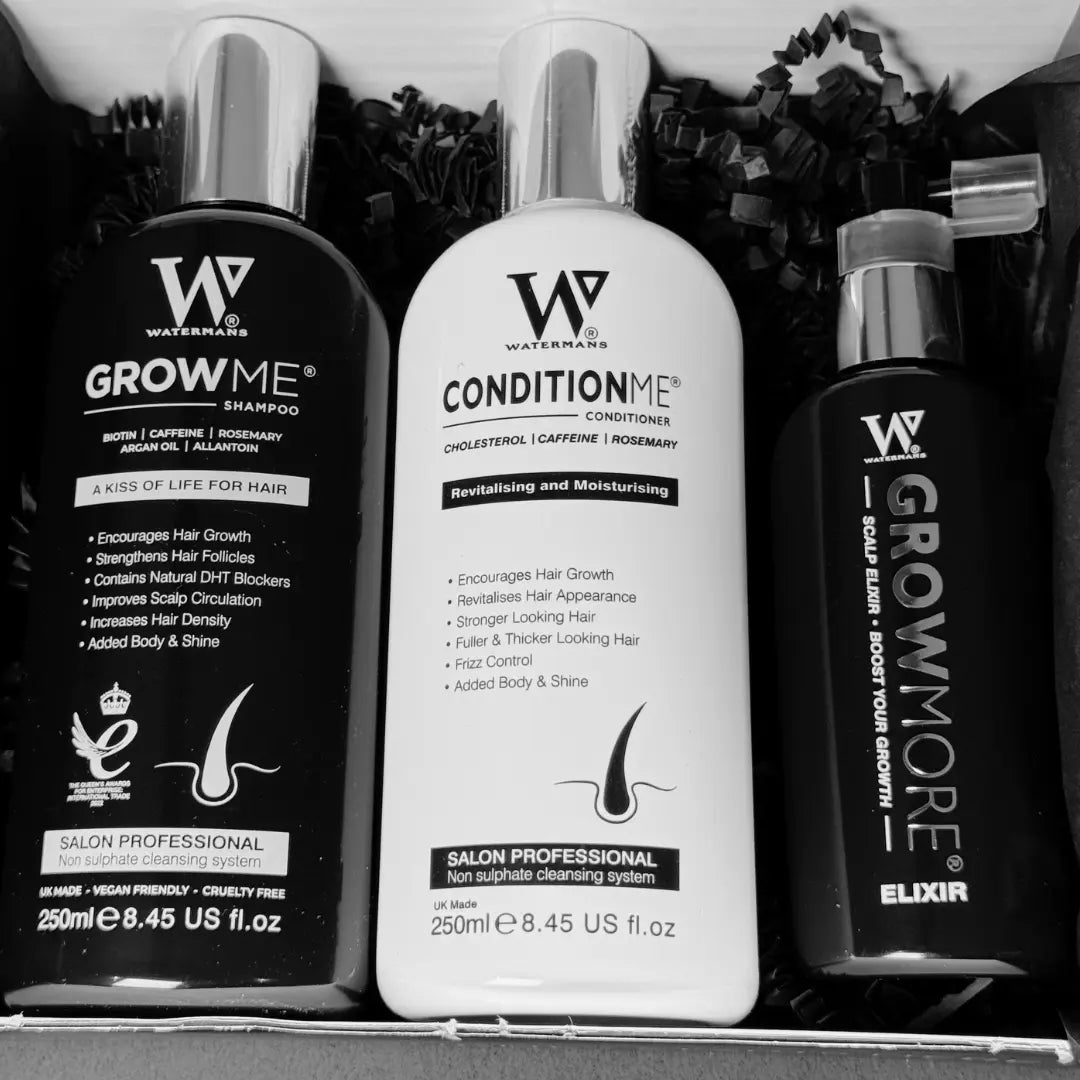
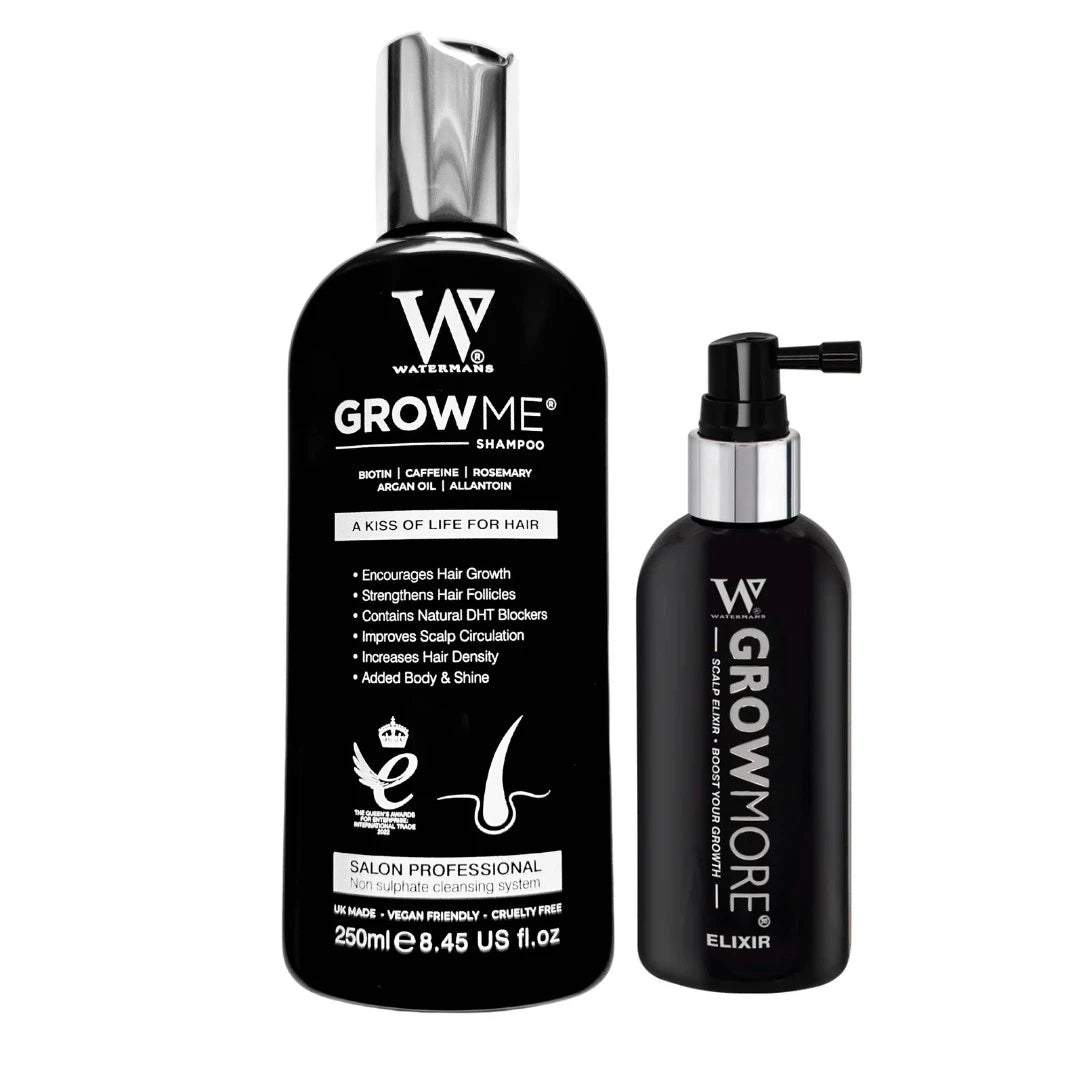
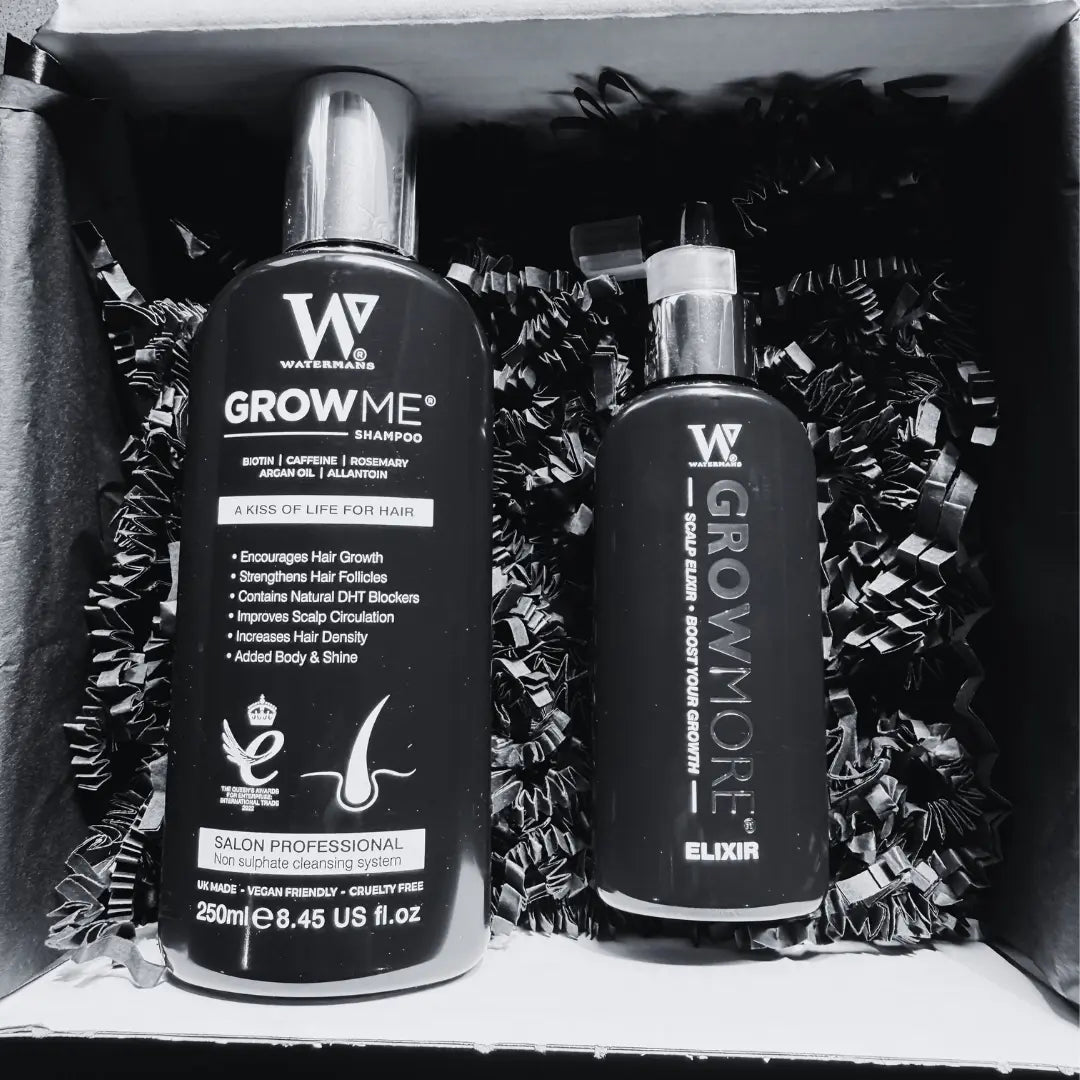
Grow Me Hair Growth Shampoo
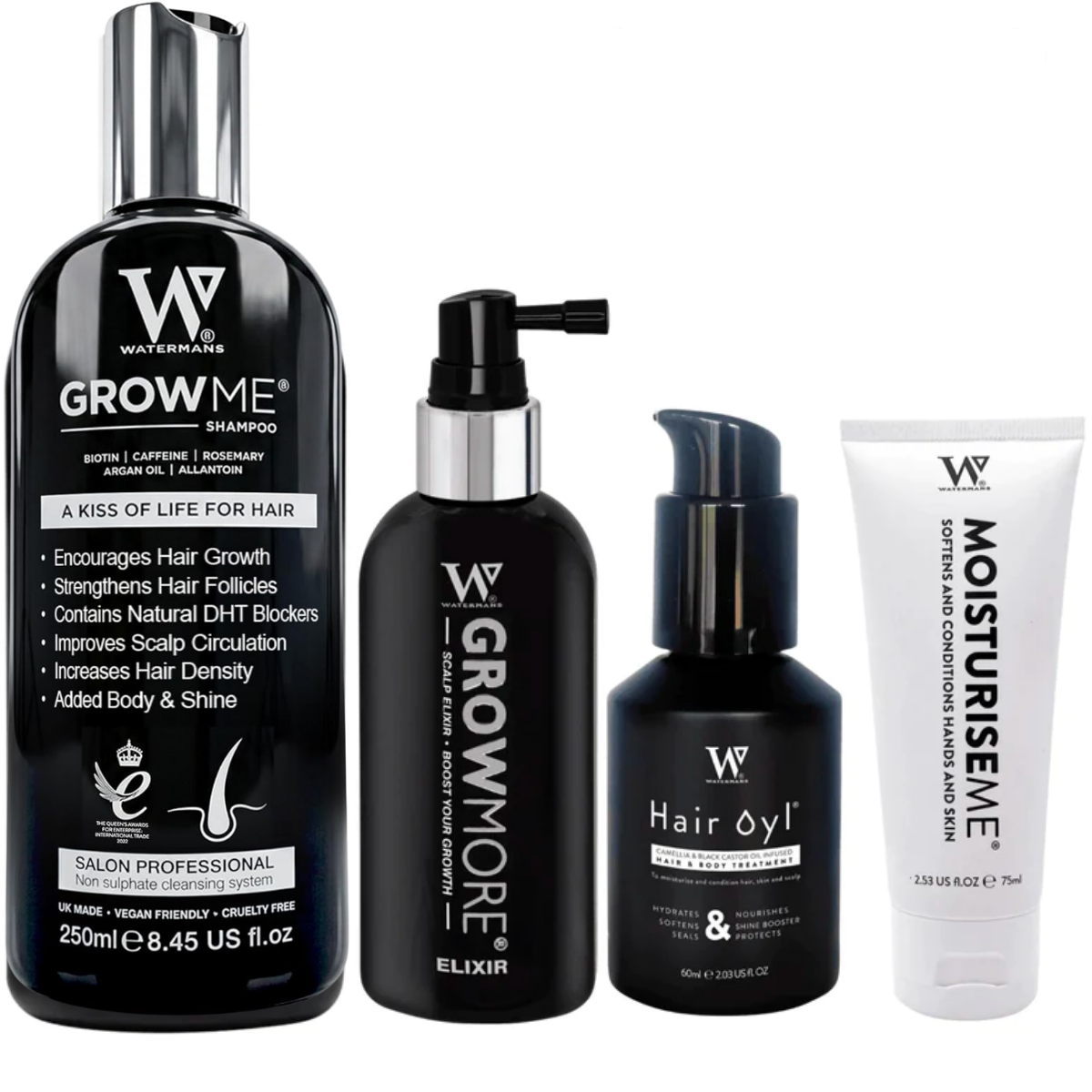
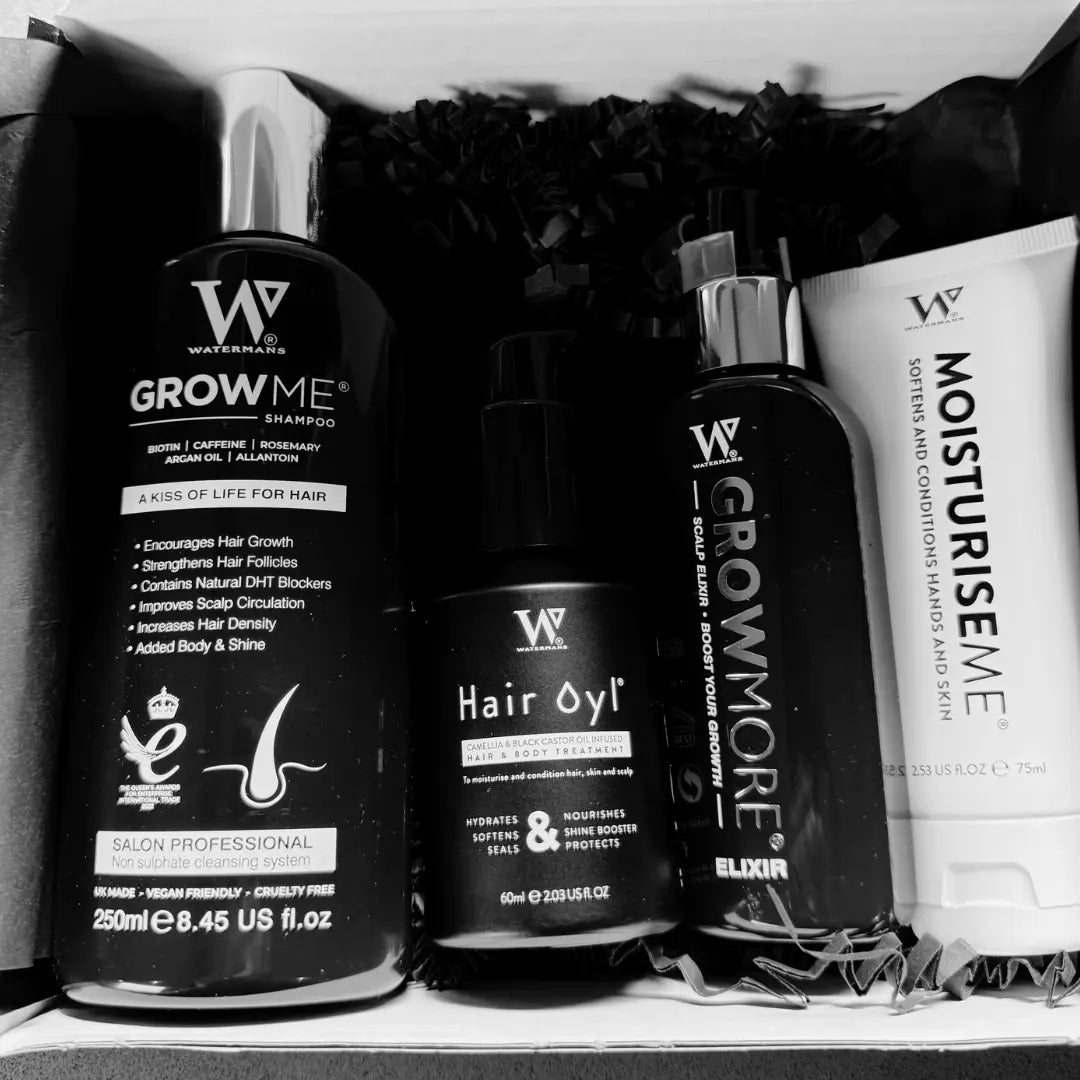
Sulfate free daily shampoo with biotin, caffeine, rosemary, niacinamide and hydrolysed lupine protein. Reduces breakage for fuller looking hair and supports a comfortable scalp environment. This is your step 2, and it belongs on the scalp rather than through the ends. Massage for a minute before rinsing.
Sulfate free, vegan, made in the UK

Condition Me Hair Growth Conditioner
Strengthens and detangles for fuller looking hair. Your step 3, mid lengths and ends only. Squeeze the excess water out first so it is not immediately diluted, then comb it through in the shower while the hair is slippery, which is the moment detangling costs you the fewest hairs.
Vegan and made in the UK
Get the one page layering order
A printable order of application you can stick inside the bathroom cabinet: the eight steps, which products go on scalp versus lengths, the damp window, the combinations that genuinely fight each other, and the stretch test for telling protein overload from plain dryness. Sent once, free.
One email at a time, no spam, unsubscribe whenever you like.
How much of each product, actually
Doses nobody prints on a bottle, because using more sells more:
- Shampoo: a ten pence coin for short hair, a two pound coin for long. If it will not lather, add water rather than product.
- Conditioner: a ten pence coin for shoulder length, more for thick or long hair, none above the ears.
- Leave in spray: four to six pumps on the lengths, not the roots.
- Cream: a hazelnut, emulsified between the palms first so it does not land in one stripe.
- Oil: one or two drops. Palms together, ends first, then whatever remains through the mid lengths. Never straight onto the crown.
- Heat protectant: enough to lightly coat what the heat will touch, which is more than most people use and the one place to be generous.
Oil is the one everyone gets wrong, and it is worth being precise about, because too much greasy weight is the difference between hair that looks glossy and hair that looks unwashed. The way to sanity check it is to apply the amount you think is right, then next time use half and see whether anything actually got worse.
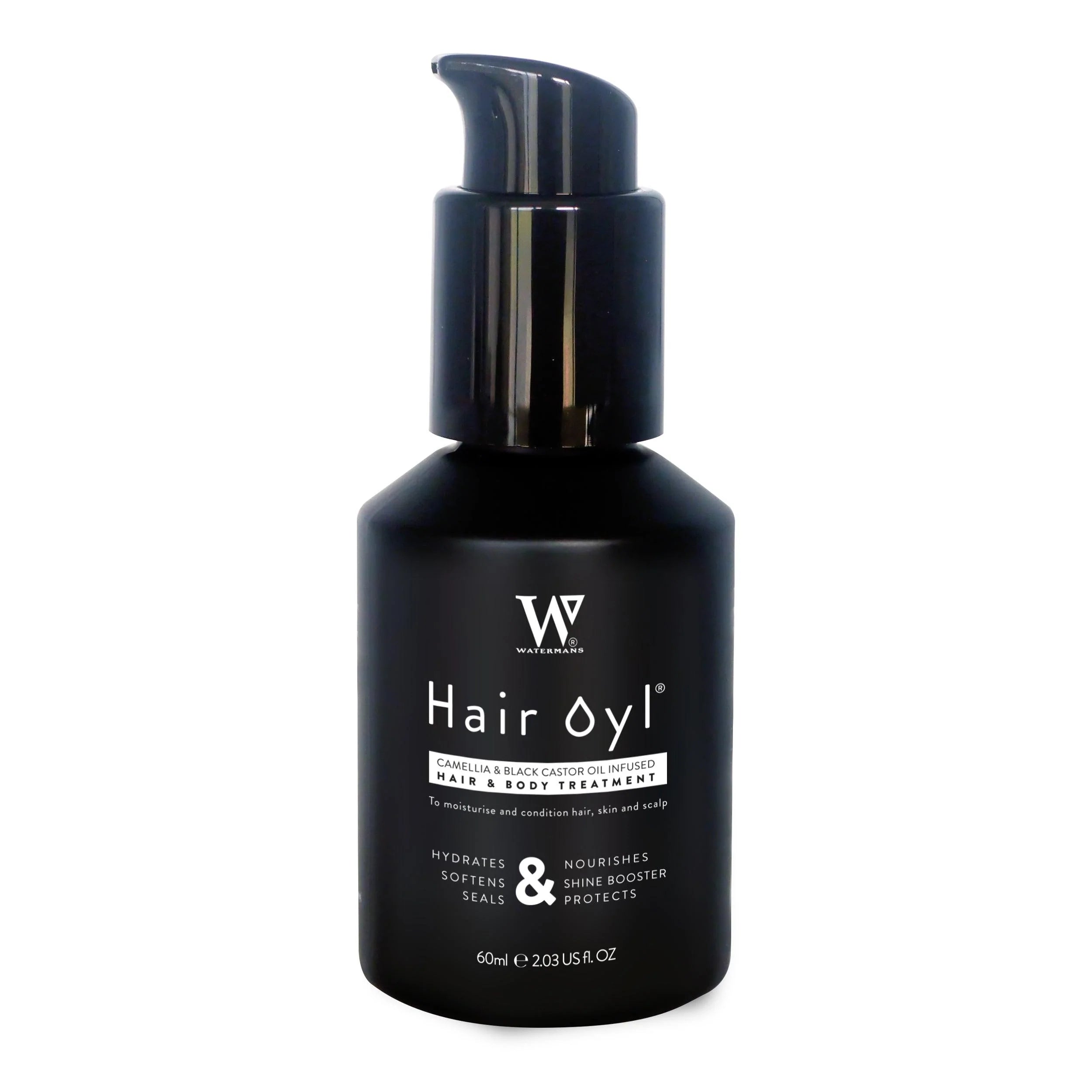
Camellia and Black Castor Hair and Body Oil
Black castor and camellia oil with omega 3, 6 and 9 and vitamins A, B, D and E. Your last step, or your pre wash step if you use it that way. Camellia is a lighter oil than most, which makes it more forgiving on fine hair, but the dose rule still applies: one or two drops, ends first.
Vegan and made in the UK
Common mistakes worth checking tonight
- Conditioner on the roots. The single most common cause of hair that looks flat and greasy a day after washing.
- Shampoo scrubbed through the ends. The ends are the oldest and most fragile hair on your head, and they need cleaning far less than the scalp does.
- Rinsing conditioner out immediately. Give it a minute. Wash your face in the meantime.
- Applying everything to dry hair the next morning. The damp window has closed and most of it will sit on the surface.
- Brushing hard while wet. Wet hair is at its weakest. Detangle with conditioner in, with fingers or a wide tooth comb, from the ends upward.
- Rinsing everything with hot water. A cooler final rinse leaves the cuticle lying flatter, which is why hair looks shinier afterwards.
- Changing four products at once. Then you have no idea what helped or what caused the problem.
If your routine is right and the results still are not there, the problem is usually elsewhere: the wrong product for your actual hair concern, or a hair issue that no bottle addresses. How to use conditioner properly goes deeper on the step most people get wrong, and if you have been wondering whether niacinamide earns its place in a hair product, niacinamide for hair covers what it does and does not do.
How long before you can judge a routine?
Eight weeks, and change one thing at a time. Some effects are immediate, because they are cosmetic: shine, slip, how the hair behaves while you style it. Those you can judge on day one. Anything to do with condition, breakage or how much hair you are losing to snapping needs the length of time it takes for new hair to grow out and old damage to be cut off, and that is measured in months.
Photograph your hair in the same light at the start. Memory is unreliable and gradual improvement is invisible day to day.
Watermans products are 100% cosmetic and do not treat medical hair loss. Individual results may vary.
Frequently asked questions
What order should I apply hair products in?
Thinnest to thickest: shampoo on the scalp, conditioner on the lengths, then on damp hair a scalp serum, a leave in, a cream or heat protectant, an oil, and anything with hold last. The principle behind it is that water based products need to reach the hair before anything oily seals the surface, so if you are ever unsure, ask which of the two products in your hands would take longer to rinse out and put that one second.
Should hair be wet or damp when I apply leave in products?
Damp, meaning towel dried and no longer dripping, for most leave ins, creams and heat protectants. Soaking hair dilutes the product and it runs off, dry hair does not let it distribute. Curly and coily hair is the exception, since it is usually best to apply to soaking wet hair in sections so the product holds the water in.
Can I use hair oil before conditioner?
Only as a deliberate pre wash step on dry hair, applied twenty to sixty minutes before you shampoo, and kept off the scalp. In the after wash routine the oil always comes near the end, because an oil film applied early blocks everything you put on afterwards.
How many hair products do I actually need?
Most people need three or four: a shampoo, a conditioner, a heat protectant if you use heat, and something for the ends. Adding products is the most expensive way to fix a routine and usually the least effective. Fixing the order and the dose of what you already own costs nothing and is where the improvement generally comes from.
Why is my hair greasy at the roots and dry at the ends?
Almost always because the products are on the wrong halves of the head: conditioner creeping up to the roots and shampoo being scrubbed through the ends. Shampoo the scalp only, condition from the ears down only, and keep oil to the last few inches. Give it three or four washes before deciding whether it has helped.
Does the order matter for scalp serums?
Yes, more than for anything else. A scalp product needs to reach skin, so it goes on a clean, towel dried scalp before the lengths get any leave in, cream or oil. Applied at the end of a routine over styled hair, most of it never gets past the hair to the skin it was meant for.
Can I mix hair products from different brands?
Yes. Nothing about a routine requires everything to match, and the ordering rules work across brands because they are about texture and water content rather than branding. What matters is the sequence, the dose and whether you are stacking several protein heavy products without realising it.
Is it bad to use too much conditioner?
It will not damage the hair, but it weighs it down, dulls it and makes it look unwashed sooner, and on fine hair it undoes any volume you had. Start with a ten pence coin for shoulder length hair, keep it below the ears, and only increase if the ends still feel rough after a proper rinse.
Where to start
Tonight, change three things and nothing else. Shampoo the scalp only. Conditioner from the ears down only, left for a minute, combed through while it is slippery. Then apply anything else within five minutes of towel drying, in the order thinnest to thickest. That is the whole thing, it costs nothing, and it is the fastest improvement most people can make to hair they already have.
Then leave it alone for eight weeks before you change anything else. Watermans is a British hair care brand, vegan and made in the UK, with over 5 million bottles sold since 2012.