How to Get a More Defined Hairline: Edge Care That Works
A defined hairline is a cared for edge rather than a relocated one. Where your hairline sits is set by genetics and cannot be moved by any routine, but the fine hairs along that line are the most fragile on your head, and they respond visibly to how you handle them. Protect them from tension and heat, style the line deliberately, and frame it with the right cut, and the line you already have reads as sharper and fuller within a few months.
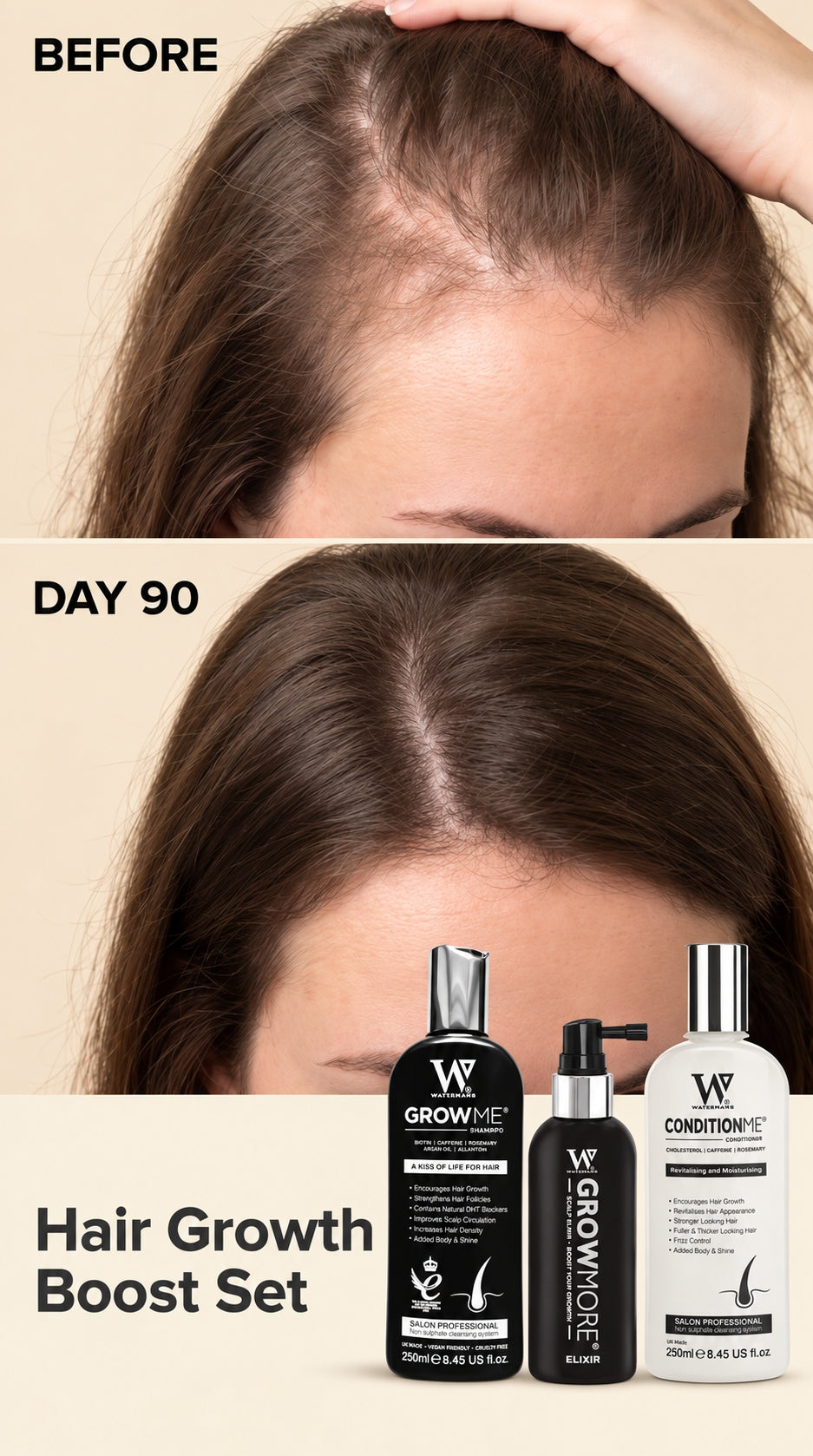
Our hair growth shampoo
Grow Me® Hair Growth Shampoo, £14.95. A sulphate free daily shampoo that supports a healthy scalp environment and helps reduce breakage, so lengths hold on and look fuller.
Key takeaways
- The hairs at the front are the finest on your head. They are the first to thin under tension and the first to look better when the tension stops.
- Definition comes from three things: no traction, deliberate styling, and a cut that frames the line. None of them involve force.
- Traction alopecia is the one genuinely permanent risk here. Caught early it recovers; left for years the follicles scar and stop producing.
- For men, a line up sharpens the edge instantly, but a weekly razored line on the same millimetre is a slow way to lose it.
- Nothing moves the position of your hairline. If the line itself is retreating rather than looking untidy, that is a different problem needing a different answer.
What actually makes a defined hairline?
Three things, in order of how much difference they make. First, density along the edge, which is mostly a question of how much damage the front hairs have taken. Second, a clean visual boundary between hair and skin, which is what a good cut or a barber line up creates. Third, contrast and direction, meaning the hair immediately behind the line moving in a deliberate direction rather than a soft undifferentiated fuzz drifting forward.
Only the first of those three is biological, and it is the one most people ignore in favour of the other two. A defined hairline built purely on styling over a damaged edge tends to look thin under bright light and disappears when the hair is wet.

Is it hair loss, hair shedding or hair breakage at the hairline?
The front of the head is where all three can happen at once, and they need opposite responses. Hair breakage means the fine front hairs snapping partway along, usually from heat, brushing or chemical processing, and it improves within weeks of changing how you handle them. Hair shedding means whole hairs released early because the cycle was disturbed, and at the hairline it is often noticed first simply because the hairs are finest there. Hair loss at the hairline means the follicles themselves producing progressively finer hair or stopping altogether, which is what traction alopecia and inherited pattern recession both do.
| Sign | Breakage | Shedding | Follicle level loss |
|---|---|---|---|
| What you find | Short broken fragments, no bulb | Whole hairs with a small pale bulb | Nothing in your hand, the line is simply further back |
| Pattern | Wherever heat, tension or a brush lands | Even across the whole head, not just the front | A widening gap along the line, often at the temples |
| Timescale | Follows a change in routine | Weeks to months after an illness or stressor | Slow, over years |
| What helps | Change handling now | Address the trigger, then wait for the cycle | Get it looked at early, because the window matters |
If the line itself is moving rather than looking untidy, our guide to the signs of a receding hairline is the more useful page, and the honest options for lowering a hairline covers what can and cannot change its position.
Step one: how do you stop the tension?
This is the highest value action on the page by a wide margin, and it is free. Tight ponytails, buns, braids, weaves, heavy extensions and micro rings all pull hardest exactly where the hair is weakest, and sustained pulling produces traction alopecia. It starts as a thinning fringe of short broken hairs along the line, progresses to a visibly receding edge, and if the pulling continues for years the follicles scar and stop producing permanently. It is one of the few forms of hair loss that is entirely preventable and entirely self inflicted, which is uncomfortable but also good news.
The three warning signs to act on
Soreness or tenderness after taking a style down, small bumps along the hairline, and short broken hairs standing up along the front. Any of the three means the style is too tight and the edge is already under strain. None of them require a professional to spot.
Practical version: vary where the tension sits rather than tying in the same place daily, take styles down before sleeping, choose fabric ties over elastic with a metal join, and regard any style that gives you a headache or a tender scalp as too tight regardless of how it looks. Our full guide to traction alopecia and how to catch it early covers the recovery timeline.

Step two: why handle the front hairs differently from the rest?
The hairs framing your face are finer, shorter and more exposed than anything else on your head, and giving them the same treatment as your lengths is why they look wispy. Four adjustments cover most of it. Keep hot tools off the first centimetre, or shield the line with your hand, because the finest hairs scorch at temperatures the rest of your hair tolerates. Cleanse the front line gently rather than scrubbing, since it collects sunscreen, makeup and sweat and tends to get attacked with a fingernail. Detangle the front last, on conditioned damp hair, working from the ends. And reduce overnight friction, which is where a satin pillowcase earns its keep on the edges specifically.

Get a discount on the thinning hairline range
Join the Watermans mailing list and we will email a discount code straight to your inbox, so you can try the thinning hairline range for less. Made in the UK, over 6.5 million bottles sold since 2012.
Step three: how do you style the line deliberately?
Definition is partly an optical outcome, and this is where a defined hairline is won or lost on any given day. A parting placed slightly off centre reads as sharper than a dead centre one, because the asymmetry gives the eye a line to follow. Face framing layers cut to fall just past the cheekbone create a deliberate boundary rather than a drift. Baby hairs can be laid with a soft bristle brush and a light gel, but the same hairs are the ones traction damages first, so a light hold product and a soft brush matter more than the technique. And a small amount of texture in the hair immediately behind the line stops the front reading as flat. If the shape you are working around is a natural point rather than a recession, our guide to styling a widow's peak is the more useful page.
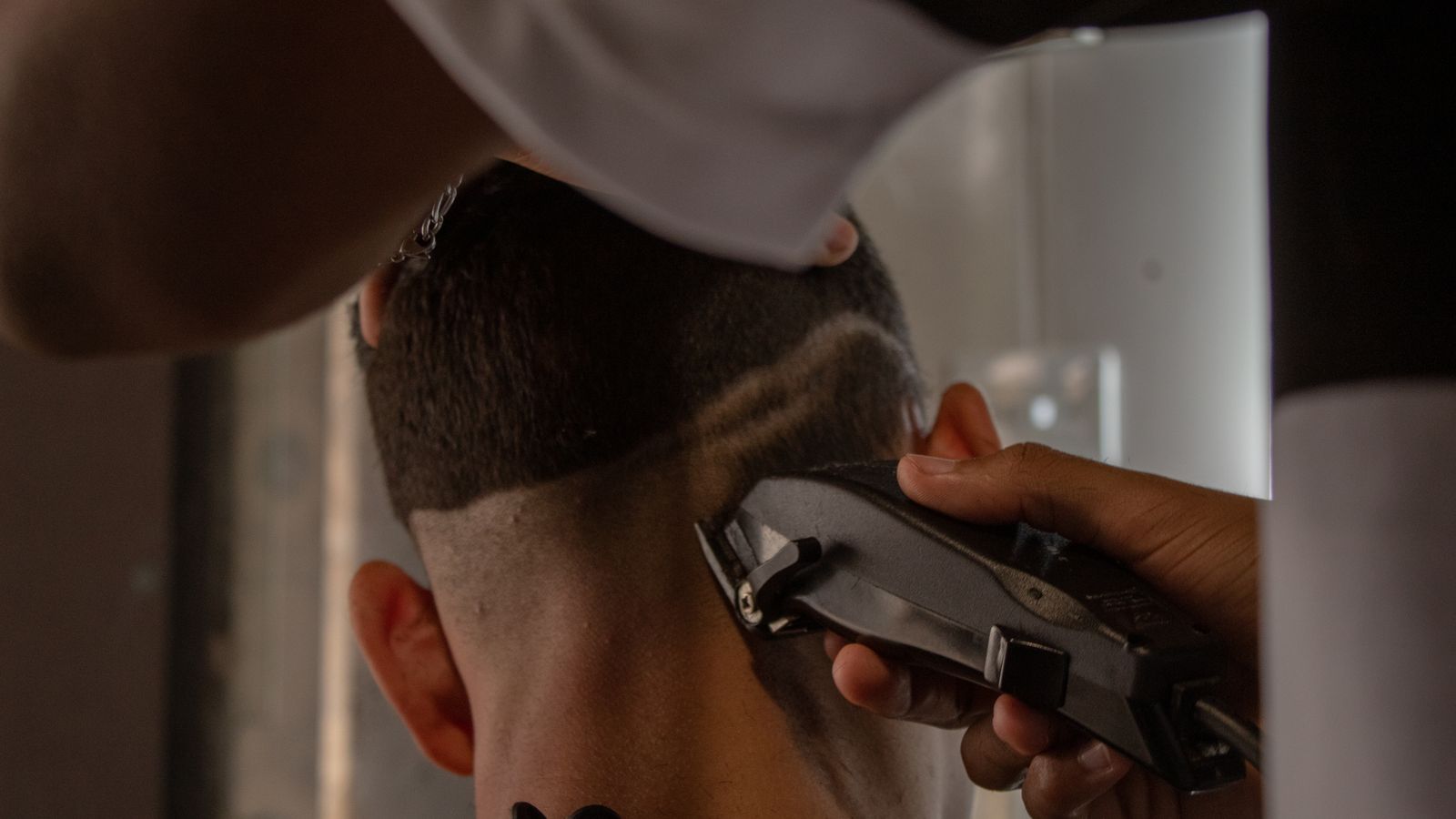
For men, a barber line up creates the sharpest possible edge instantly, and it is the single most effective thing on this list. The caution is that a razored line taken to the same millimetre every week gradually irritates the follicles right at the boundary, and the edge that looked crisp at twenty five looks patchy at thirty five. Every second or third visit, ask for the natural line to be followed rather than squared off, and accept a slightly softer edge in exchange for keeping it.
Does anything help the front hairs directly?
Modestly, and it is worth being clear about how modestly. A minute of fingertip massage along the hairline while washing is a reasonable habit: standardised daily scalp massage has a small body of evidence behind it for increased hair thickness, though the study was small and had no control group. Good general nutrition matters because the follicle is built from what you eat, and protein, iron and zinc are the ones that show up in hair first. Beyond that, the honest position is that no cosmetic product changes where a hairline sits or restarts a scarred follicle, and the useful lever remains removing whatever is damaging the edge.
Our page on what scalp massage does and does not do sets out the evidence, including its limits.
How long does a hairline take to look better?
| Timeframe | What changes | What is happening |
|---|---|---|
| Immediately | A cut, a line up or a shifted parting | Optical. Nothing biological has changed yet |
| 2 to 6 weeks | Fewer short broken hairs standing up along the line | Breakage has stopped, existing hairs are no longer snapping |
| 3 to 6 months | Short new hairs appearing along the edge | Follicles released from tension re entering the growing phase |
| 9 to 12 months | A visibly fuller edge | New hairs reaching a length where they contribute to density |
| Years of tension | Little or no recovery | Follicles scarred. This is why catching it early matters so much |
When is it worth seeing a GP?
Speak to your own GP if the hairline is genuinely receding rather than looking untidy, if there are smooth bald patches with no visible follicle openings, if the scalp along the line is painful, scaly, bumpy or intensely itchy, or if you have been wearing tight styles for years and the edge is not recovering after several months without them. Sudden or patchy loss at the front is worth showing someone rather than watching. We do not run clinics and we do not assess scalps, so this belongs with a clinician who can look at it properly. Product and routine questions? Talk to Gail Waterman, our co-founder, as an AI avatar on the Watermans homepage.
Where does cosmetic hair care fit?
The realistic contribution of hair care here is keeping the front hairs on your head rather than in your brush, and keeping the scalp along the line comfortable. That is worth doing precisely because those hairs are the finest you have, so every one that snaps is disproportionately visible. What it does not do is move a hairline or restart a follicle that has scarred. Watermans is made in the UK, and has sold over 6.5 million bottles since 2012.

Grow Me® Hair Growth Shampoo
A sulfate free daily shampoo that cleans the front line without stripping it, which matters because the hairline collects sunscreen and makeup and tends to get scrubbed at.

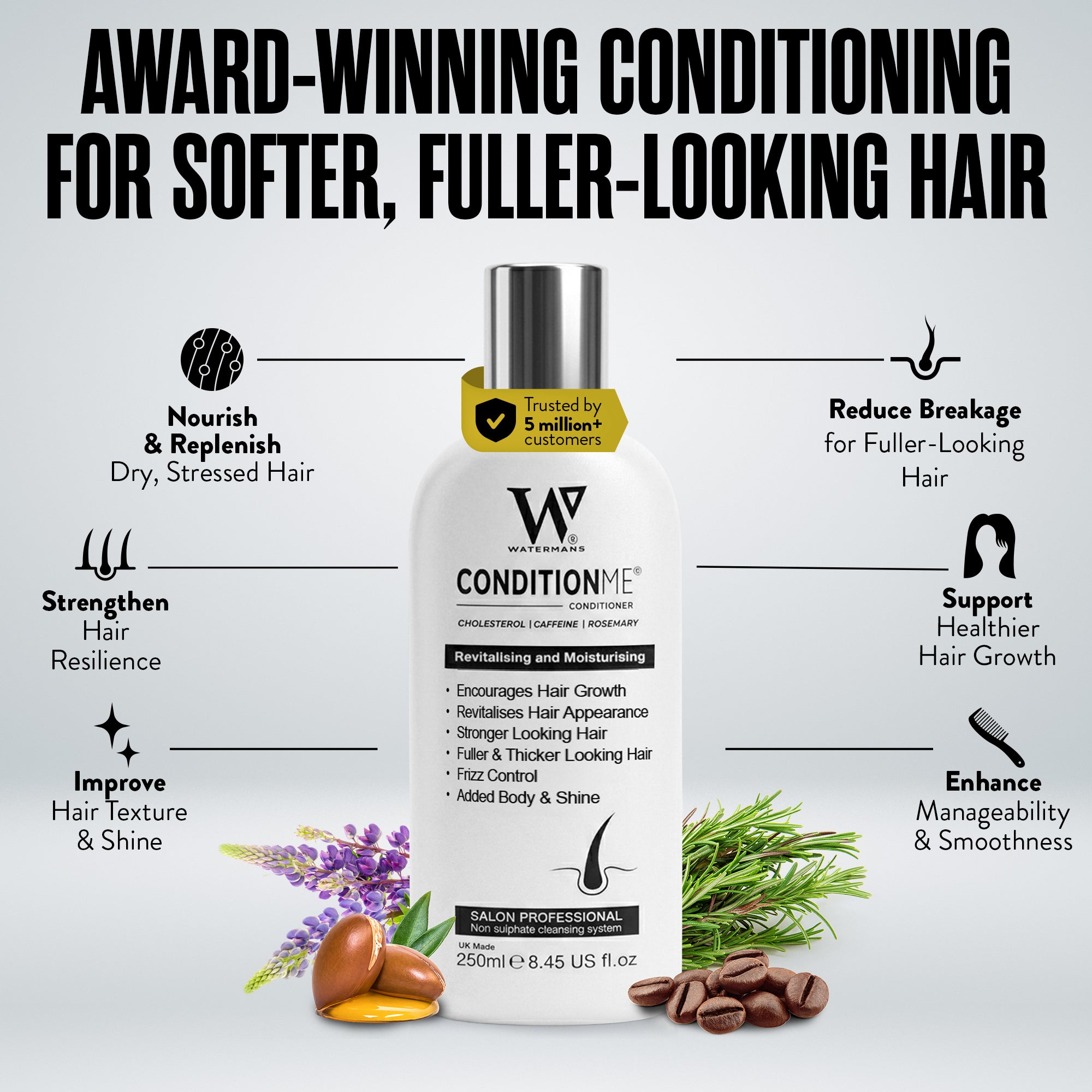
Condition Me® Hair Growth Conditioner
Slip is what lets you detangle the front hairs without snapping them, and the front is where a rough detangle shows up fastest.

Grow More® Scalp Elixir
A leave on scalp elixir, if you want something to work into the hairline directly during the minute of massage.
Watermans products are 100% cosmetic and do not treat medical hair loss. Individual results may vary.
Frequently asked questions
Can I permanently change the shape of my hairline?
Not with any routine or product. The position of the line is genetic, and the only things that move it are surgical. What you can change is how much of the hair along that line survives, which is what makes the difference between a defined hairline and a soft, patchy one.
How long until hairline care shows results?
Breakage stops within two to six weeks of changing how you handle the front, and that alone tidies the line. Genuine new hairs from follicles released from tension take three to six months to appear and closer to a year to add visible density. Anything faster than that is styling, not biology.
Do tight hairstyles really damage the hairline?
Yes, and this is one of the best established things in the whole field. Sustained pulling causes traction alopecia, which begins as broken hairs and tenderness along the line and can become permanent if the pulling continues for years. Occasional tight styles are fine. Daily ones in the same position are the problem.
Are line ups bad for men's hairlines?
The line up itself is not. Taking a razor to exactly the same millimetre every week for years is, because it keeps irritating the follicles right at the boundary. Alternate between a sharp squared line and following your natural line, and the edge lasts considerably longer.
What helps baby hairs at the hairline?
Leaving them alone, mostly. They are short because they are new or because they broke, and the ones that broke will improve once the heat, tension or brushing that broke them stops. Lay them with a soft brush and a light hold product rather than a stiff gel, and avoid taking hot tools anywhere near them.
Does a widow's peak count as a receding hairline?
No. A widow's peak is a hairline shape you are born with, and a mature hairline that settles slightly higher in the late teens and twenties is also normal. Recession is a change that keeps going, particularly at the temples. If the line has been stable for years, it is your shape rather than a process.
Will a satin pillowcase actually help my edges?
It reduces overnight friction, which is a genuine cause of breakage on the finest hairs, so it helps at the margins. It is a small effect and it will not compensate for a tight ponytail worn daily. Think of it as removing one source of damage rather than as a solution on its own.
Can a defined hairline be rebuilt after years of tight braids?
Sometimes, and the deciding factor is how long the pulling went on. Follicles under tension for months usually recover over six to twelve months once it stops. Follicles under tension for years may have scarred, in which case they will not produce again. That is exactly why the early warning signs are worth acting on rather than styling over.
What is the bottom line on defined hairline?
A defined hairline comes from protecting the finest hairs on your head, then styling the line you already have with intent. Stop the tension first, because traction is the only thing here that becomes permanent. Handle the front differently from the rest, keeping heat, hard brushing and harsh cleansing away from the first centimetre. Then use a cut, a parting or a line up to create the visual boundary. Expect breakage to improve within weeks, new hairs at three to six months, and real density change closer to a year. If the line is genuinely retreating rather than looking untidy, that is a question for your GP rather than for a styling routine.
A leave on step only works if it stays in contact with the skin, which is the job the Grow More overnight scalp serum does. Vegan and made in the UK.
Sources and References
- British Association of Dermatologists, Traction alopecia, on the cause, the early signs and when the damage becomes permanent.
- NHS, Hair loss, on causes, patterns and when to see a GP.
- British Association of Dermatologists, Alopecia areata, on smooth patchy loss, which is a different process from traction.
- Standardized scalp massage results in increased hair thickness by inducing stretching forces to dermal papilla cells, Eplasty, 2016, the small uncontrolled study behind the scalp massage evidence.
- Correlation between mechanical and thermal properties of human hair, on how heat affects the strength of the hair fibre.
- NHS, Iron, on dietary sources and absorption.