Scalp Massage: How to Do It and What It Really Does
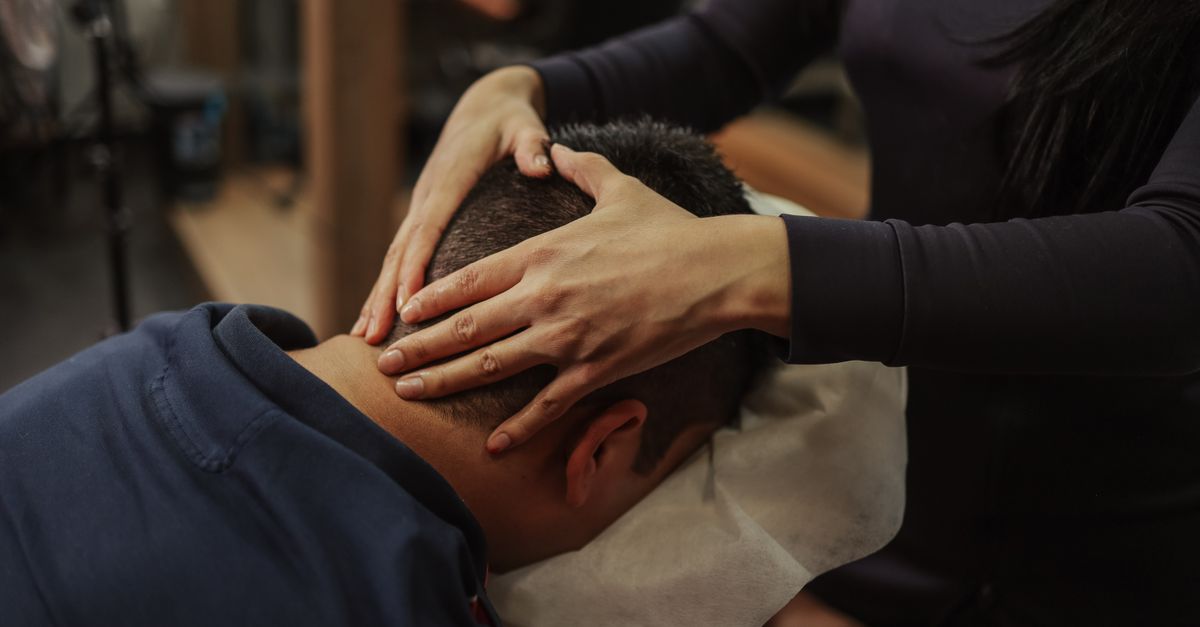
A scalp massage is simply firm, circular pressure applied to the skin of the scalp with the fingertips, moving the skin over the skull rather than sliding across the hair. Done for four to five minutes a day it feels good, loosens tension and spreads natural oils. What it will not do is change a genetic hair loss pattern, and it is worth separating those two claims clearly. If you would rather use a tool than your fingertips, our guide to a scalp massager for hair growth explains what to look for and what the studies measured.
Our overnight scalp elixir
Grow More® Overnight Scalp Elixir, £25.50. A leave in scalp serum worked into the roots at night, supporting a healthy scalp environment while you sleep.
Key takeaways
- Massage moves the skin, it does not rub the hair. Sliding fingers through dry hair causes breakage without doing anything useful.
- Four to five minutes a day is the figure used in the small studies that exist. Longer is not obviously better.
- The strongest honest benefit is relaxation and even oil distribution. Evidence on thickness comes from very small studies.
- Wet hair is at its weakest, so use fingertip pressure rather than nails, and never scrub with a towel afterwards.
- If the scalp is sore, flaky or itchy, deal with that first. Massaging inflamed skin makes it worse.
How do you give yourself a scalp massage properly?
Place the pads of your fingers flat on the scalp, press firmly enough to feel the skin shift over the bone, and move in small circles. Work in sections: hairline, temples, crown, then the base of the skull. Spend roughly 30 seconds per section for a four to five minute session. Fingertips only, never fingernails.
The single most common mistake is raking fingers through the hair instead of moving the skin. That is friction on the hair fibre, not pressure on the scalp, and it is a reliable way to create breakage and tangles. If your fingers are travelling across your head, you are doing the wrong thing. If the skin is travelling under your fingers, you have it right.

A four minute massage, by section
| Where | How long | Pressure |
|---|---|---|
| Front hairline and temples | About 45 seconds | Light to moderate. The temples are tender and the hair here is often finest. |
| Top and crown | About 90 seconds | Firm. This is where most people hold nothing and skip, but it is the largest area. |
| Sides above the ears | About 45 seconds | Moderate. Follow the curve of the skull rather than pressing straight in. |
| Base of the skull and nape | About 60 seconds | Firm. Most tension sits here, and it is the section people notice most. |
Does a scalp massage actually help hair grow?
The honest answer is that the evidence is thin and the claims made for it are much larger than the research supports. The most cited work is a 2016 study in the journal Eplasty that followed nine Japanese men doing four minutes of standardised scalp massage daily for 24 weeks and reported thicker hair at the end. Nine people is far too few to be conclusive.
A later survey by the same researcher asked around 300 people who had tried self-massage about their own impressions, which is useful for generating a hypothesis and close to useless as proof, because people who keep doing something for months are exactly the people who think it is working. There is no large randomised trial. Anyone telling you the technique is established to grow hair is going beyond what exists.
What can be said fairly: massage increases blood flow to the skin in the short term, it relieves tension, and it distributes sebum from the roots down the hair shaft where it is useful. Those are real, modest and worth four minutes. They are not the same as changing a hair loss pattern.
Separate the three things going wrong
Hair loss is follicular and driven by genetics, hormones or a condition. Hair shedding is a cycle event, where more hairs than usual finish their growing phase at once, often two to three months after a trigger. Hair breakage is mechanical, where the fibre snaps and the follicle is untouched. Massage can plausibly help with tension and oil distribution. It cannot alter the first, and a rough one actively worsens the third.
Should you use oil when massaging your scalp?
Oil is optional and mainly makes the whole thing more comfortable by cutting friction. A light oil used once or twice a week before washing gives your fingers slip, which means less tugging on the hair. The tradeoff is that oil has to come out again, and heavy application on an already oily scalp leaves you shampooing twice, which is harsher than shampooing once.
If your scalp runs oily, do the massage dry or in the shower with shampoo already lathered, and keep oils to the mid-lengths and ends. If your scalp runs dry and tight, a small amount worked in before washing is genuinely pleasant and makes the whole thing easier to keep up. There is no ingredient here that changes the follicle; the oil is a lubricant.


Grow More® Leave-In Scalp Elixir
A leave-in scalp elixir designed to be worked into the scalp with fingertips, which makes it a natural fit for a nightly routine. Lightweight enough not to leave the roots greasy. Vegan and made in the UK.

Camellia & Black Castor Hair & Body Oil
A camellia and black castor oil blend for a pre-wash massage when the scalp feels tight and the ends are dry. Use sparingly, then shampoo out.
Get a discount on the scalp care range
Join the Watermans mailing list and we will email a discount code straight to your inbox, so you can try the scalp care range for less. Vegan, made in the UK, over 6.5 million bottles sold since 2012.
How often should you massage your scalp?
Daily is fine if you are doing it gently and on dry hair or in the shower. Four to five minutes a day is the pattern used in the small research that exists, and it is short enough to actually keep up. There is no evidence that twenty minutes works better, and longer sessions raise the odds of over-handling the hair.
Consistency beats intensity here, in the same way it does for most hair habits. A brief, gentle session every evening for six months is a realistic thing to do. A vigorous half hour on a Sunday is both harder to sustain and more likely to leave you with tangles. If you only remember it on wash days, that is still worth doing.
Are scalp brushes and massage devices worth buying?
A silicone scalp brush costs a few pounds and does one useful thing: it applies even pressure without your nails touching the skin, which helps people who scratch instead of press. It is a convenience, not an upgrade. Electric versions and vibrating scalp devices cost far more and do nothing a fingertip cannot.
If you have long nails, arthritis in your hands, or you simply cannot stop scratching, a soft silicone brush is a sensible few pounds. Use it in the shower with shampoo already lathered, with light circles and no dragging. Avoid hard plastic bristles and anything metal, which scratch the skin and snag the hair at the roots.

What does the pressure actually do to the skin?
Firm pressure on the scalp does two measurable things in the short term. It widens the small blood vessels in the skin, which is why the scalp feels warm afterwards, and it releases tension in the thin sheet of muscle and connective tissue that runs across the top of the skull. Both effects fade within an hour or two.
The idea that has been built on top of those two facts is that a long-term increase in blood supply would feed the follicle and change what it produces. That step has never been demonstrated in a large trial. Follicles in a genetic pattern are not starved of blood; they are responding to hormonal signals, which is a different problem entirely. So the warm, loosened feeling is real, and the leap from there to permanent thickening is not.
A fair way to think about it
If someone offers you a habit that costs nothing, takes four minutes, feels good and might help a little, that is worth doing. If someone sells you a 200 pound device on the same evidence, that is not. The evidence has not changed between those two sentences; only the price has.
How do you fit it into an existing hair routine?
The easiest place to put it is the shampoo step, because you are already touching your scalp and the lather gives you slip without leaving residue. Lather first, then spend two to three minutes working in circles across the four sections before rinsing. That adds almost no time to a wash you were doing anyway.
The second easiest place is the last few minutes before bed, on dry hair. Nothing needs to be applied for this to work, though a light leave-in gives your fingers something to move through. Whichever you choose, pick one and keep it, because the honest benefits here are the kind that only show up in something you do for months rather than something you do intensely for a fortnight.
When should you avoid massaging your scalp?
Skip it on broken, sore, infected or actively flaking skin, and stop if it hurts. Pressing on inflamed skin spreads irritation and can make flaking worse, so a persistently itchy, scaly or weeping scalp is a reason to see a GP or pharmacist rather than to press harder. Painful scalp tenderness is also worth having looked at. If your question is about products or a routine rather than a medical one, you can talk to Gail Waterman, our co-founder, as an AI avatar on the Watermans homepage.
Two other situations deserve care. If you are shedding heavily at the moment, handle your hair as little as possible, because every extra session of pulling adds breakage on top of a shed you are already worried about. And after any scalp surgery, follow the clinic's aftercare rather than a general rule from an article.
For the wider routine, our guide to keeping your scalp healthy for longer, stronger hair covers washing frequency and buildup, and what the evidence really says about rosemary oil takes the same sceptical look at another popular scalp habit. If growth speed is what you are actually chasing, how fast hair can realistically grow sets the expectations, and the stages of the hair growth cycle explains why nothing you do shows up for months. Massage is often sold as a way to add oxygen, and our guide to scalp oxygenation explains what the skin research actually shows. If you are thinking about adding a serum to your massage routine, topical melatonin explained covers what the skin and scalp studies show. If you want to know what massage can and cannot do for circulation, our scalp microcirculation guide looks at the research. If you want the detail on that, our guide to oregano for hair growth walks through it step by step.
Frequently asked questions
How long should a scalp massage last?
Four to five minutes is the figure used in the small studies that exist, and it is short enough to do daily. Longer sessions have no demonstrated advantage and increase handling of the hair, which risks breakage.
Should I massage wet or dry hair?
Dry hair or in the shower with shampoo already lathered are both good. Avoid massaging wet, unlathered hair, because wet hair swells and is at its weakest, so friction does more damage than it would when dry.
Can massaging your scalp make hair fall out?
A gentle one will not. A rough one can, by snapping fibres and pulling hairs that were already at the end of their cycle. If you see more hairs in your hands than usual, lighten the pressure and stop raking through the lengths.
Does massaging help with an itchy scalp?
Not reliably, and it can make things worse if the skin is inflamed. Persistent itching, flaking or soreness is worth taking to a pharmacist or GP, because seborrhoeic dermatitis and other scalp conditions need a different approach.
Is it better before or after washing?
Before, if you are using oil, so it washes out. During, if you are not, because shampoo gives you slip without residue. After washing on dry hair is also fine and is the easiest version to do every evening.
Will it help with headaches or tension?
Many people find it does for everyday tension around the temples and the base of the skull, which is the least controversial benefit on this list. It is not a substitute for looking into recurring or severe headaches with a GP.
Do I need a special oil?
No. The oil is there for slip. A light oil used sparingly once or twice a week is comfortable; a heavy one on an oily scalp just means washing twice. No oil changes what the follicle does.
Can children have their scalp massaged?
A gentle one is harmless and often soothing at bath time. Keep pressure light, use fingertips, and do not use growth products or supplements on a child's scalp. If a child is losing hair, that is a GP conversation.
What is the bottom line on scalp massage?
A scalp massage is a cheap, pleasant, low-risk habit with a modest and honestly reported upside: less tension, better oil distribution, and a short-term lift in blood flow to the skin. The evidence that it thickens hair rests on a handful of people in one small study, so treat it as a nice addition to a routine rather than the routine itself.
Four minutes a day, fingertips moving the skin rather than the hair, and stop if it hurts. Then put the rest of your effort into the things that reliably protect the hair you have: gentle washing, less heat, and not pulling it back tightly all day.
If you want something made to be worked into the scalp with your fingers, the leave-in scalp serum is the one to build the nightly habit around.
Watermans products are 100% cosmetic and do not treat medical hair loss. Individual results may vary.