The Best Haircuts for Men's Thin Hair: What to Ask Your Barber
The right cut buys you more visible density than any bottle on the shelf, and it costs less.
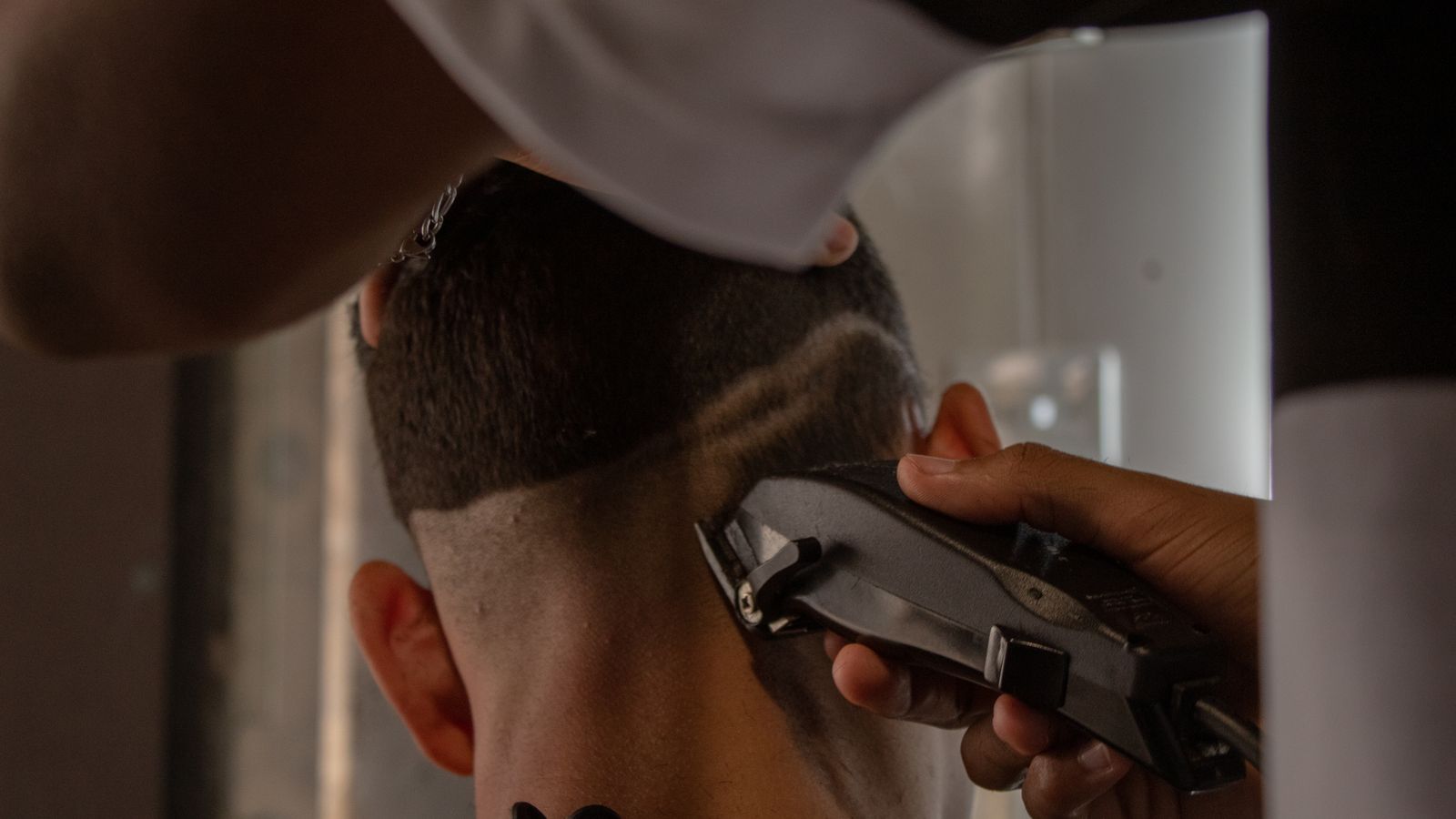
The best haircuts for men's thin hair are short, textured and matte: a French crop, a buzz or a textured quiff, kept between two and five centimetres on top with tight to medium sides. Short hair stands away from the scalp instead of lying flat against it, and shorter lengths mean less contrast between hair and scalp, which is what the eye actually reads as density.
Our hair growth shampoo
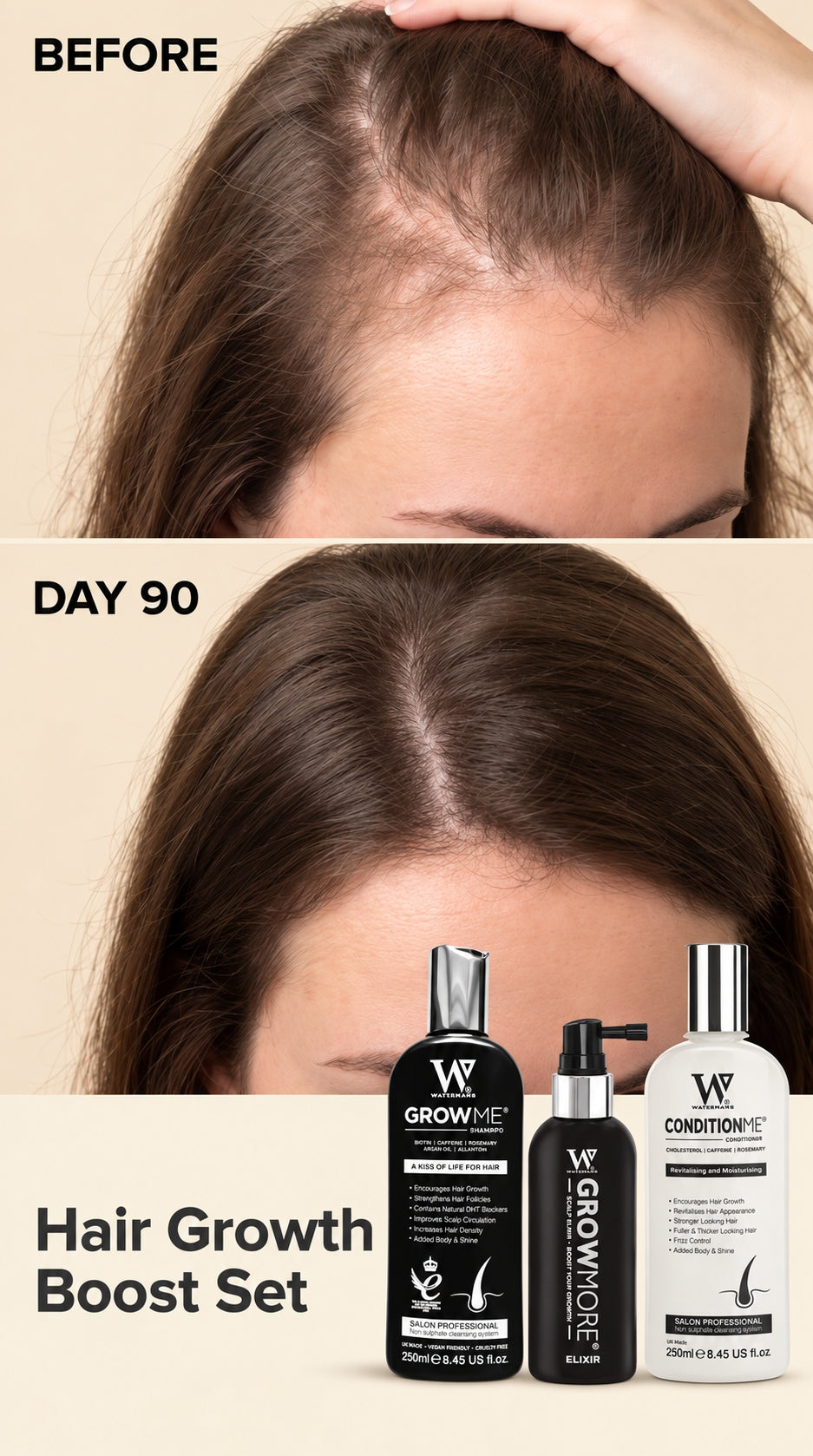
Grow Me® Hair Growth Shampoo, £14.95. A sulphate free daily shampoo that supports a healthy scalp environment and helps reduce breakage, so lengths hold on and look fuller.
Key takeaways
- Short beats long every time. Length pulls hair flat and separates it into strands, which shows scalp.
- Texture beats a clean line. A French crop, a textured quiff or a buzz all break up the outline that makes thinning obvious.
- Matte beats shine. Shiny products reflect light off the scalp between strands. Clay, paste and powder do not.
- Never comb over. Combing hair across a thin area needs length, and length is what exposes it.
- A shorter, blunter fringe hides a receding hairline better than a swept back style does.
- If density is dropping quickly, that is a GP conversation rather than a barber one.
Why does a haircut change how thick hair looks?
Three things decide whether hair reads as full, and a cut influences all three.
Contrast. Your eye reads thinness as scalp showing through, and scalp shows through because there is a colour and brightness difference between hair and skin. Shorter hair sits closer to the scalp and reduces that contrast. It is the same reason thinning is far less noticeable on someone with light hair and pale skin.
Direction. Hair standing at an angle covers more area than hair lying flat. Weight is the enemy, and weight comes from length. Every extra centimetre pulls the whole thing closer to the scalp.
Separation. Long hair clumps into strands, and gaps appear between the clumps. Short textured hair sits as a mass. This is why the best haircuts for men's thin hair are built around texture rather than around a neat, combed shape.

Which haircuts for men's thin hair actually work?
| Cut | Best for | Length on top | Upkeep |
|---|---|---|---|
| French crop | Receding corners, thinning front | 3 to 5cm, forward fringe | 4 to 5 weeks |
| Buzz cut | Diffuse thinning all over | 3 to 12mm, one or two grades | 2 to 3 weeks, or do it yourself |
| Textured quiff | Thin at the crown, decent front | 4 to 6cm, point cut | 4 to 6 weeks |
| Caesar cut | Receding hairline | 2 to 4cm, blunt forward fringe | 4 to 5 weeks |
| Crew cut | General thinning, smart settings | 2 to 3cm, graduated | 3 to 4 weeks |
| Clean shave | Advanced loss, strong head shape | Zero | Every few days |
The French crop is the safest first move for most men, because it works with a receding front rather than fighting it and needs almost no styling. The buzz is the most underrated: it removes contrast entirely and stops the daily inspection in the mirror, which has its own value.
Which cuts make thin hair look worse?
- The comb over. Requires length from one side, and the length is exactly what makes the sparse area visible when it moves. Wind, rain and a car window all give it away.
- Anything long on top with no texture. Weight pulls it flat and gaps open up along the parting.
- A hard side parting. A parting is a deliberate line of exposed scalp. On a thin head of hair it is the last thing you want.
- Long at the back and sides with a thin top. Maximum contrast between full and sparse. This is the single most ageing option available.
- Slicked back with a shiny product. Two problems at once: length pulled flat and light bouncing off the scalp.
- Growing it out to compensate. Understandable and always counterproductive.
Watermans products are 100% cosmetic and do not treat medical hair loss. Individual results may vary.
What should you actually say to your barber?

Barbers are good at this and rarely asked directly. Being straightforward gets a better result than hoping they notice and handle it tactfully.
- Name it. "I am thinning at the crown and the corners, and I want a cut that works with that." One sentence, and it changes everything that follows.
- Ask for texture, not thinning shears. Point cutting and scissor over comb create separation without removing bulk. Thinning shears take out interior weight, which is the last thing thin hair can spare.
- Keep the sides shorter than you think. A tight taper reduces the contrast with the top. Do not go so short that the sides become a shiny band.
- Push the fringe forward. Forward is friend. Back and up exposes the hairline.
- Ask how it will look in five weeks. The best haircuts for men's thin hair still work when grown out slightly, because everyone leaves it too long between visits.
Get a discount on the thinning hair range
Join the Watermans mailing list and we will email a discount code straight to your inbox, so you can try the thinning hair range for less. Vegan, made in the UK, over 6.5 million bottles sold since 2012.
How do you match the cut to where you are thinning?

- Receding at the temples, decent everywhere else. French crop or Caesar. A blunt forward fringe sits across the corners and the eye stops at the fringe line rather than tracking the recession.
- Thinning at the crown, front intact. Textured quiff or crew cut. Height at the front draws attention forward and away from the back.
- Diffuse thinning all over. Buzz or very short crop. Uniform short length removes every gap because there is nothing left to gap between.
- Both crown and hairline. Buzz, or a grade two to three all over with a slight taper. This is where most men fight hardest and gain least by hanging on to length.
- Fine hair rather than thinning hair. A blunter perimeter and slightly more length work here, because density is normal and the strands are simply finer. Our guide to how to get thicker hair covers that distinction properly.
Which styling products help, and which ruin the effect?
Product choice undoes a good cut more often than people realise. Two rules cover almost everything.
Matte, never shiny. Clay, paste, powder and matte cream absorb light. Gel, pomade and wax reflect it, and light reflecting off the scalp between strands is exactly the look you are avoiding.
Less than you think, and never at the roots. Product weight flattens hair, and flat hair shows scalp. Warm a small amount between the palms, apply to the mid lengths and tips, and lift from underneath with your fingers rather than combing.
Drying technique matters as much as product. Rough dry on medium heat with your head tipped forward for the first minute, then finish upright. That single change lifts the roots more reliably than any thickening product does.
Hair loss, hair shedding or hair breakage: which one are you dealing with?
Worth separating before you spend anything, because the right response is different for each.
- Hair loss means the follicle is affected. In men this is usually androgenetic alopecia, which follows a predictable pattern at the temples and crown and progresses gradually over years. A cut manages the appearance. It does not change the pattern.
- Hair shedding means the cycle has been disturbed, as in telogen effluvium after illness, a severe stressful period or a big weight change. Hair comes out diffusely, roughly three months after the trigger, and density usually recovers once the cause has passed.
- Hair breakage means the fibre is snapping mid length rather than leaving the scalp. Short broken pieces of uneven length with white ends. Less common in short men's cuts, but real for anyone growing hair out or using heat.
Sudden diffuse shedding, patches, or a scalp that is sore, red or scaly all warrant a GP appointment rather than a barber. Our overview of what causes thinning hair sets out the mechanisms, and a hair loss consultation is the fastest way to get a real answer.
What about the daily routine around the cut?
A haircut is the fastest visible change, and the wash routine is what keeps it looking right between visits. Keep it simple: a gentle cleanse that does not strip the scalp, a light conditioner on the top and ends only, and a matte finish. Heavy conditioner on short thin hair is the most common self inflicted flattening.

A sulphate free daily wash with biotin, caffeine, niacinamide and rosemary. It supports a healthy scalp environment and helps fine hair look and feel fuller, without the heavy residue that flattens a short crop.
Shop Grow Me
A leave on serum for the areas that look sparser, applied to a dry scalp overnight. Caffeine, biotin, rosemary and hydrolysed lupine protein. Cosmetic support for a healthy scalp environment, alongside a cut that is doing the visible work.
Shop Grow MoreWatermans is a UK family business that has sold over 6.5 million bottles since 2012. Grow Me shampoo is vegan, and the range is cruelty free and made in the UK.
Frequently asked questions
What is the best haircut for a man with thinning hair?
Among haircuts for men's thin hair the French crop suits most men, because it works with a receding front instead of fighting it and needs almost no styling. A buzz cut is the strongest option for diffuse thinning, and a textured quiff suits men thinning at the crown with an intact front.
Should men with thin hair wear it short or long?
Short. Length adds weight that pulls hair flat against the scalp and separates it into strands, and the gaps between those strands are what the eye reads as thinning. Two to five centimetres on top is the useful range.
Does a comb over hide thinning hair?
No. A comb over needs length from one side to cover a sparse area, and that length is precisely what exposes the thinning the moment it moves in wind or rain.
What styling product is best?
Matte products such as clay, paste or styling powder. Gel, pomade and wax reflect light off the scalp between strands, which makes thinning more obvious rather than less.
Do thinning shears help?
No, and the name is misleading. Thinning shears remove interior bulk, which is the one thing thin hair cannot spare. Ask for point cutting or scissor over comb instead, which creates texture without removing weight.
How often should I get it cut?
Every three to five weeks for most short styles, and every two to three weeks for a buzz. Short cuts lose their shape faster than long ones, so a grown out short cut looks noticeably worse than a fresh one.
Does shaving your head make hair come back thicker?
No. Shaving cuts the fibre above the skin and does nothing to the follicle. A cut end feels coarser than a tapered one under the hand, which is where the myth comes from.
Is it worth seeing a GP, or is this just a barber problem?
Both, and in that order if anything is happening quickly. Gradual thinning at the temples and crown over years is the common pattern and is well managed with the right cut. Sudden diffuse shedding, patches, or a sore, red or scaly scalp deserve a GP appointment. If your question is about products or a routine rather than a medical one, you can talk to Gail Waterman, our co-founder, as an AI avatar on the Watermans homepage.
Sources and references
- StatPearls, Physiology of Hair (NCBI Bookshelf), for follicle structure, hair density and the growth cycle.
- DermNet, Hair loss, for the pattern and progression of androgenetic hair loss in men.
- NHS, Hair loss, for when hair changes warrant a GP appointment.
- British Association of Dermatologists information leaflets, for condition specific detail where the pattern is not the usual one.
What is the bottom line on haircuts for men's thin hair?
Go shorter than feels comfortable, ask for texture rather than a neat outline, keep the fringe forward, and switch to a matte product used sparingly. The best haircuts for men's thin hair all do the same three jobs: reduce the contrast between hair and scalp, stop the hair lying flat, and remove the hard lines that draw the eye to a thin area. Then get it cut on time, because a grown out short cut undoes all of it.
For the everyday version of all this, the Grow Me hair growth shampoo does the scalp work while you get on with the rest. Vegan, made in the UK.