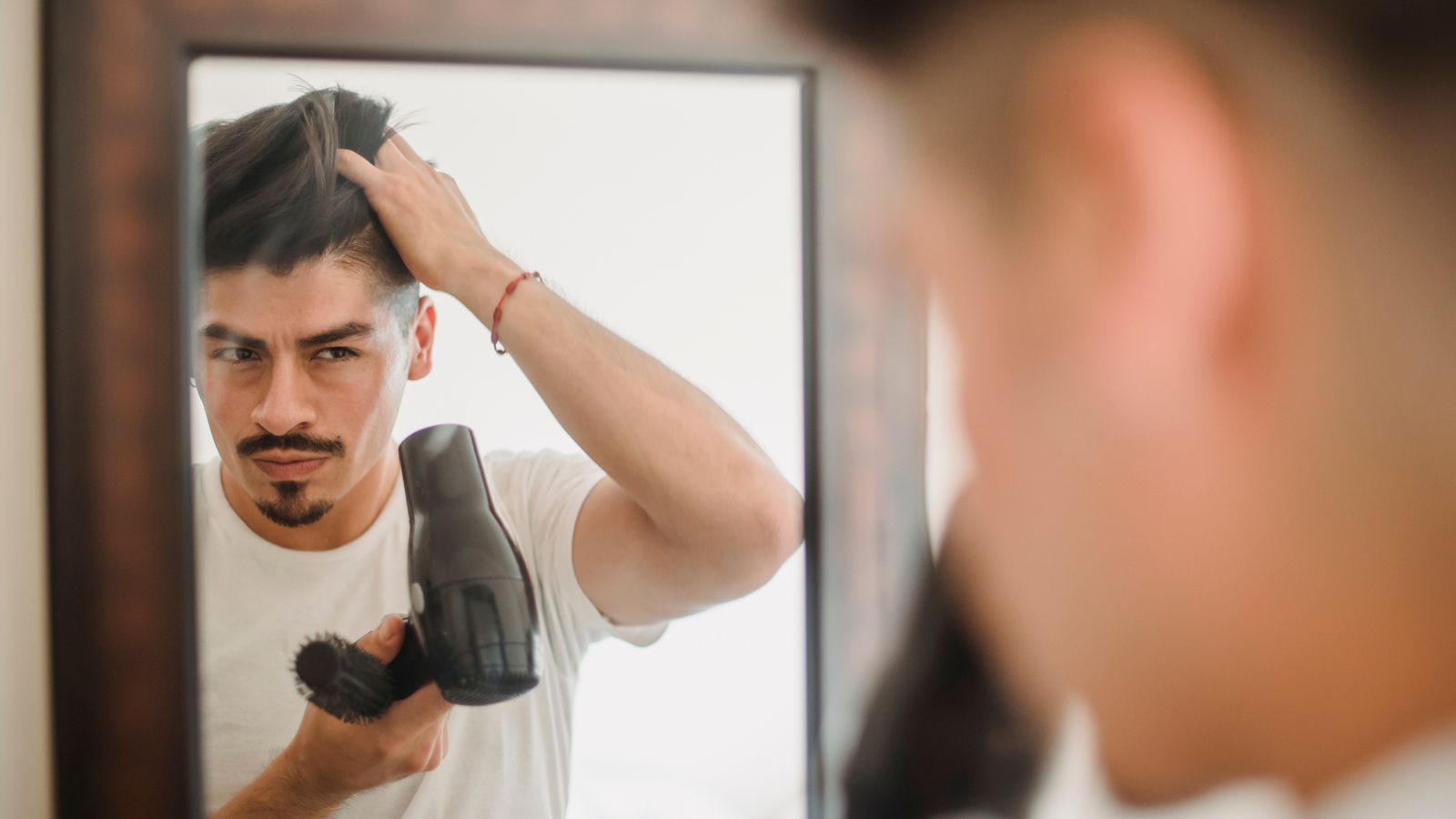



Embracing the Mature Hairline: A Guide to Confidence and Style at Every Age

A mature hairline is the natural, gradual shift of your hairline backward by roughly one to one and a half centimetres, usually starting in your late twenties or thirties. It is a normal part of growing up, not a sign of balding. A mature hairline moves back evenly and then stabilises, giving a slightly higher, more defined shape. It only becomes cause for concern when the recession keeps advancing, forms a deep M-shape, or is joined by thinning at the crown, which points toward male pattern baldness instead. This guide explains how to tell the difference, how to care for a maturing hairline, and the styles that make it look its best.
Key Takeaways
- A mature hairline sits about 1 to 1.5 cm higher than your juvenile hairline and is completely normal with age.
- It typically appears between the late twenties and forties and then stabilises, unlike ongoing pattern baldness.
- The main difference from balding is progression: a mature hairline settles, a balding one keeps receding and thins at the crown.
- Genetics, hormones, and the natural hair cycle drive the change, not poor hygiene or your habits.
- A gentle sulfate-free routine, good nutrition, and the right haircut keep a mature hairline looking full and sharp.
- See a professional if recession is fast, patchy, or paired with heavy shedding.
What Is a Mature Hairline?
The hairline you had as a teenager, sitting low and rounded across the forehead, is called a juvenile hairline. As you move into adulthood, that line naturally rises and takes on a slightly more angular, defined shape. This new, higher position is your mature hairline. Dermatologists consider it a normal developmental stage rather than a form of hair loss.
For most men, the mature hairline settles around one to one and a half centimetres above the highest wrinkle line on the forehead when you raise your eyebrows. The corners at the temples usually recede a little more than the centre, which is why a mature hairline often has a gently rounded or slightly V-shaped look. Women can experience a subtler version too, often noticing a little more forehead over time.
What Causes Your Hairline to Mature?
A maturing hairline is mostly written into your biology. Several factors work together:
- Genetics: Your family history is the strongest predictor of when and how far your hairline moves.
- Hormones: The hormone DHT (dihydrotestosterone) influences follicles along the hairline, which is why the temples are often affected first.
- The natural hair cycle: As we age, some follicles produce slightly finer hair, so the hairline looks a touch less dense.
- Age: The change is simply part of maturing, in the same way skin and body composition shift over the decades.
Importantly, a maturing hairline is not caused by wearing hats, washing your hair, or styling products. Those myths cause a lot of needless worry. To understand the hormonal side in more depth, see our explainer on what triggers androgenic alopecia.

Mature Hairline vs Balding: How Do You Tell the Difference?
This is the question that brings most people to this page, and the good news is that the two look quite different once you know what to check. The single most useful clue is progression over time. A mature hairline moves back a little and then holds steady for years. A balding hairline keeps retreating and is usually accompanied by thinning elsewhere.
| Feature | Mature Hairline | Balding (Pattern Loss) |
|---|---|---|
| Progression | Recedes slightly, then stabilises | Keeps receding over time |
| Shape | Even, gently rounded or shallow V | Deep M-shape, pronounced temple gaps |
| Crown | Stays full | Often thins at the same time |
| Distance moved | About 1 to 1.5 cm | Well beyond 1.5 cm and growing |
| Age of onset | Late 20s to 40s | Can begin in the teens or early 20s |
If you want a fuller side-by-side, we cover it in detail in our guide to mature hairlines versus balding. And if your recession fits the pattern-loss column above, our overview of pattern hair loss stages explains what to expect.
Is a Mature Hairline Something to Worry About?
In most cases, no. A mature hairline is a cosmetic, developmental change, not a medical problem. It does not mean you are going bald, and for many people it never progresses further. The healthiest approach is to understand it, care for the hair you have, and choose styles that flatter your face shape.
That said, pay attention if the recession is rapid, uneven, patchy, or comes with noticeable shedding, an itchy or sore scalp, or thinning at the crown. Those can signal pattern baldness or another condition worth checking. When in doubt, a GP or dermatologist can look at your scalp and give you a clear answer.
How Do You Care for a Mature Hairline?
You cannot rewind your genetics, but a smart routine keeps a mature hairline looking sharp, full, and healthy. Focus on the scalp and on protecting the hair you have.
Use a Gentle, Sulfate-Free Shampoo
Harsh sulfate shampoos strip the scalp and can leave fine hairline hairs looking flat and lifeless. A gentle, scalp-friendly formula keeps the area clean and comfortable without over-stripping.

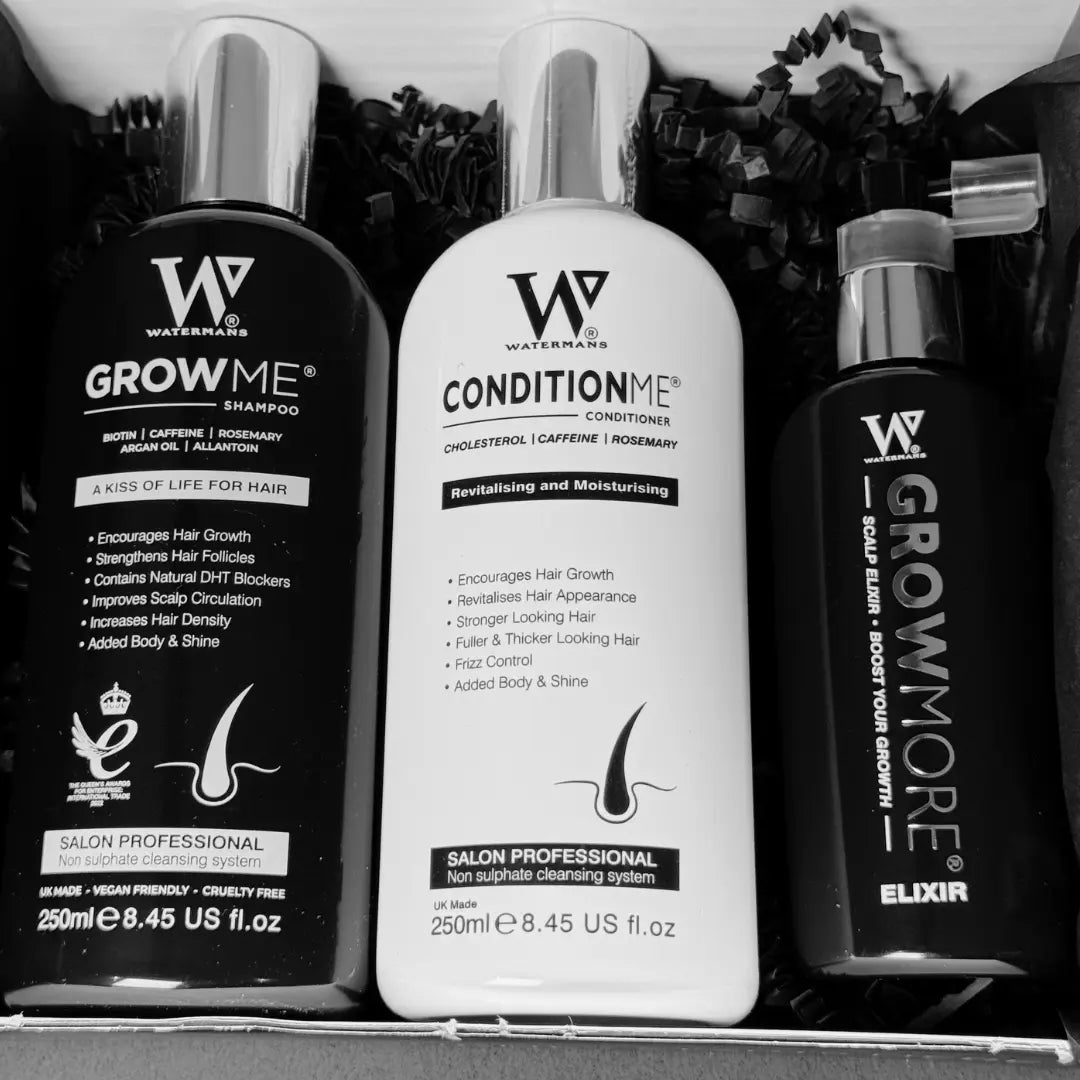
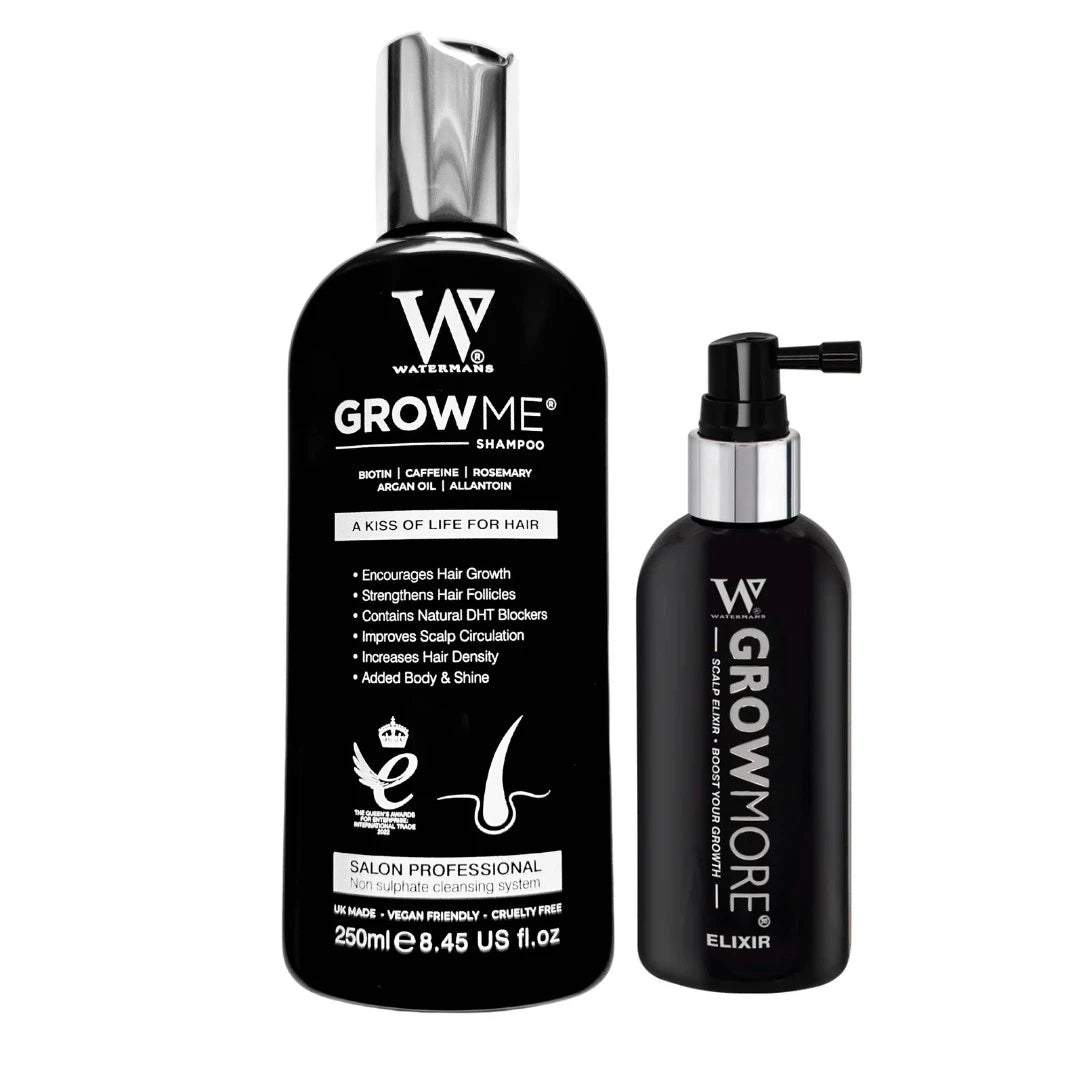
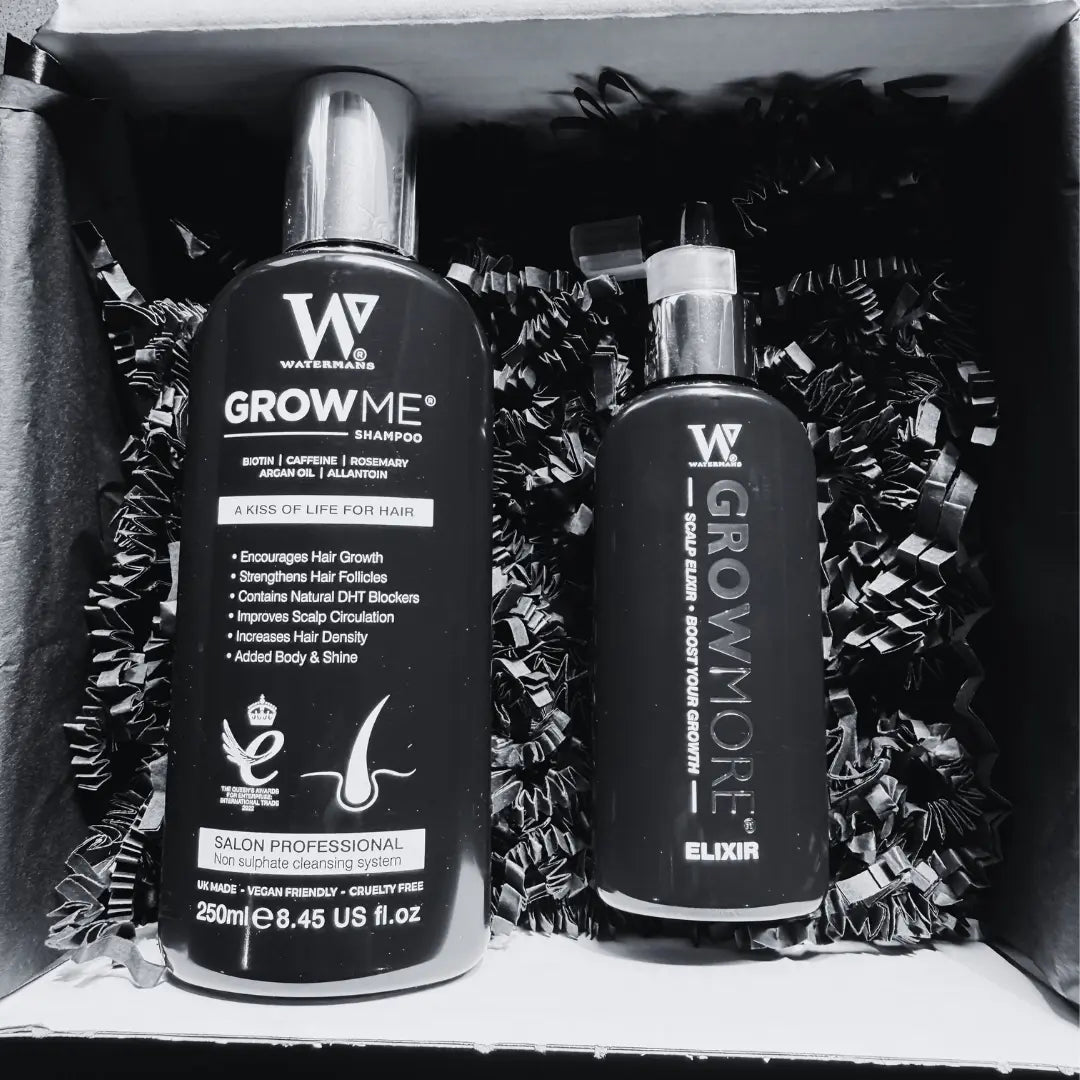
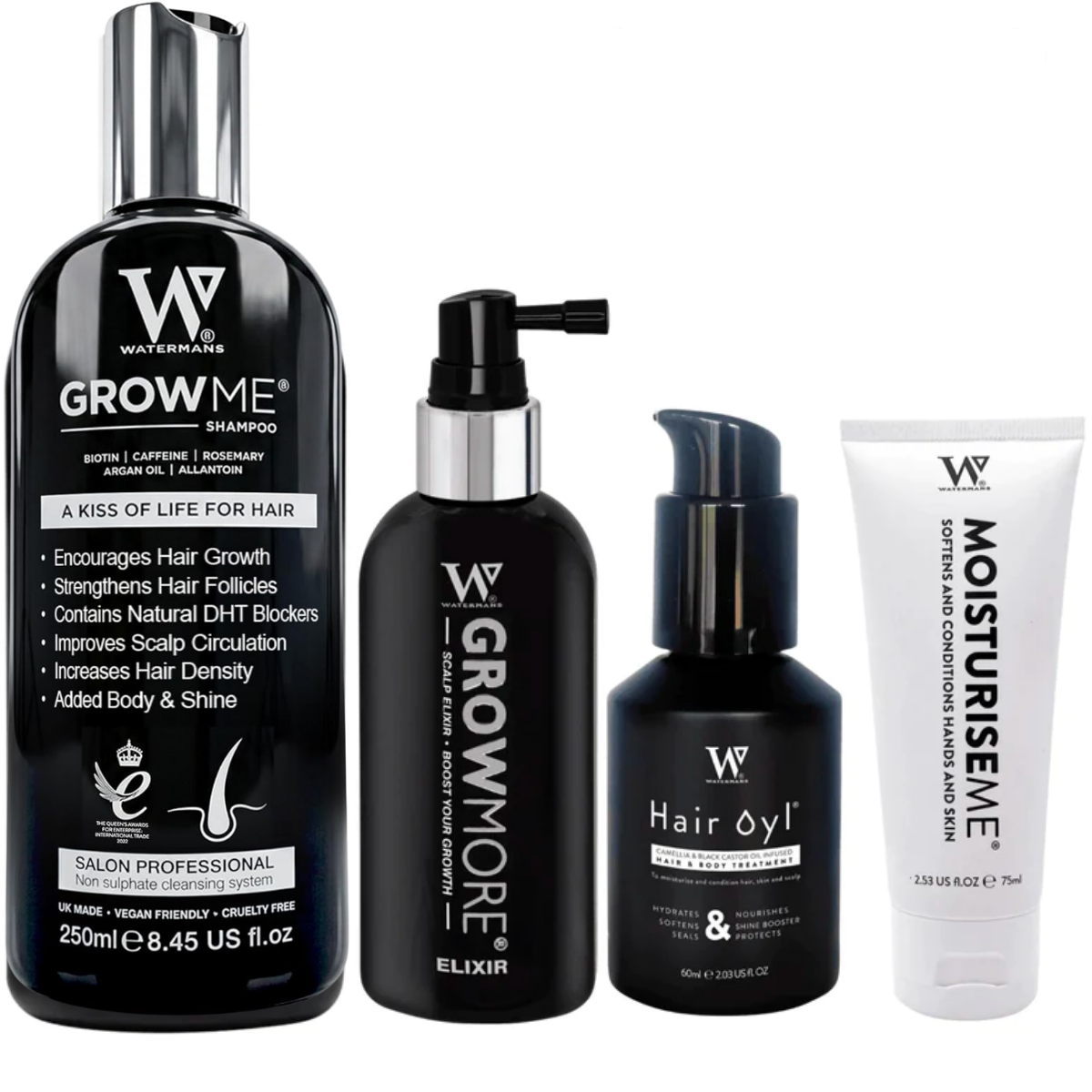
Grow Me® Hair Growth Shampoo
A sulfate-free daily shampoo with biotin, caffeine, rosemary, and niacinamide that cleanses gently and supports the look of thicker, fuller hair around the hairline. Vegan and made in the UK.
Shop Grow Me ShampooSupport the Temples and Crown
The temples are usually where a mature hairline shows first, so a leave-on scalp treatment applied to those areas can help hair look denser and better conditioned. A targeted overnight serum is an easy addition to an evening routine.

Grow More® Elixir
A leave-on overnight scalp serum with rosemary, caffeine, and biotin, ideal for massaging into the temples and hairline to support fuller-looking density where you need it most.
Shop Grow More ElixirEat and Live for Healthy Hair
A balanced diet rich in protein, iron, zinc, omega-3 fats, and vitamins A, C, D, and E gives follicles the raw materials they need. Manage stress, since sudden stress can trigger temporary shedding (learn more about telogen effluvium), stay hydrated, and go easy on high heat and tight styling that tugs at the hairline.

What Are the Best Hairstyles for a Mature Hairline?
The right cut can make a mature hairline look intentional and sharp rather than something to hide. The trick is to work with the shape, not fight it.
For Men
- Buzz cut or crop: Short, even lengths minimise the contrast between hairline and forehead and look clean and confident.
- Textured crop with a fringe: A forward-styled, textured fringe softens the temples and adds the illusion of density.
- Short back and sides with length on top: A classic that keeps focus on the top rather than the hairline corners.
- Embrace the shave: For advanced recession, a confident close shave or bald look is timeless and low-maintenance.
For Women
- Curtain bangs or a soft fringe: Frame the face and gently cover a higher hairline.
- Layers around the face: Add movement and fullness near the hairline.
- A deep side part: Redistributes hair to add volume where you want it.
- Accessories: Headbands and scarves add style while softening the hairline.
The Confidence Side of a Mature Hairline
A hairline does not define your appeal, your success, or your worth. Some of the most magnetic public figures wear a mature hairline, a receding one, or a shaved head with total confidence, and it reads as character, not loss. Getting a cut you genuinely like, keeping your scalp healthy, and owning the look you have will always do more for how you come across than chasing a hairline you had at fifteen.
When Should You See a Professional?
Book an appointment with a GP or dermatologist if you notice rapid recession over a few months, patchy bald spots, a red, flaky, or painful scalp, or heavy daily shedding. These can point to pattern baldness, alopecia areata, a scalp condition, or a nutritional or thyroid issue, all of which benefit from a proper diagnosis and evidence-based options. Early advice gives you the most choices.
Frequently Asked Questions
Is a mature hairline normal?
Yes. A mature hairline is a normal developmental change where the hairline rises about 1 to 1.5 cm from its juvenile position, usually in the late twenties to forties. It is not a sign of balding on its own.
How do I know if my hairline is maturing or balding?
Track it over time. A mature hairline recedes slightly and then stabilises with a full crown, while balding keeps progressing, often forms a deep M-shape, and thins at the crown. Photos taken months apart make the difference clear.
At what age does a mature hairline start?
It most commonly begins in the late twenties or thirties, though it can appear earlier or later depending on genetics. If significant recession starts in the teens, it is more likely pattern loss.
Can a mature hairline be reversed?
A mature hairline is a natural change rather than a condition to reverse. Good scalp care, nutrition, and the right styling keep it looking its best. If it is actually pattern loss, a GP or dermatologist can discuss evidence-based treatment options.
Does washing my hair or wearing hats cause a mature hairline?
No. Normal washing, hats, and styling products do not cause your hairline to mature. The change is driven by genetics, hormones, and age.
What shampoo is best for a mature hairline?
A gentle, sulfate-free shampoo that cleanses without stripping the scalp is ideal. Formulas with biotin, caffeine, and rosemary help keep the hairline area looking full and healthy.
Which hairstyles suit a mature hairline best?
For men, buzz cuts, textured crops, and forward-styled fringes work well. For women, curtain bangs, face-framing layers, and a deep side part are flattering. Avoid slicking hair straight back if you want to downplay the temples.
Your hairline is part of your story, and a mature one is nothing to fear. Care for your scalp, choose a cut you love, and let your confidence do the talking. Watermans makes vegan, UK-made hair care trusted by customers worldwide, with over 5 million bottles sold since 2012.
Keep Your Hairline Looking Its Best
Support fuller, healthier-looking hair with a gentle, sulfate-free routine from Watermans.
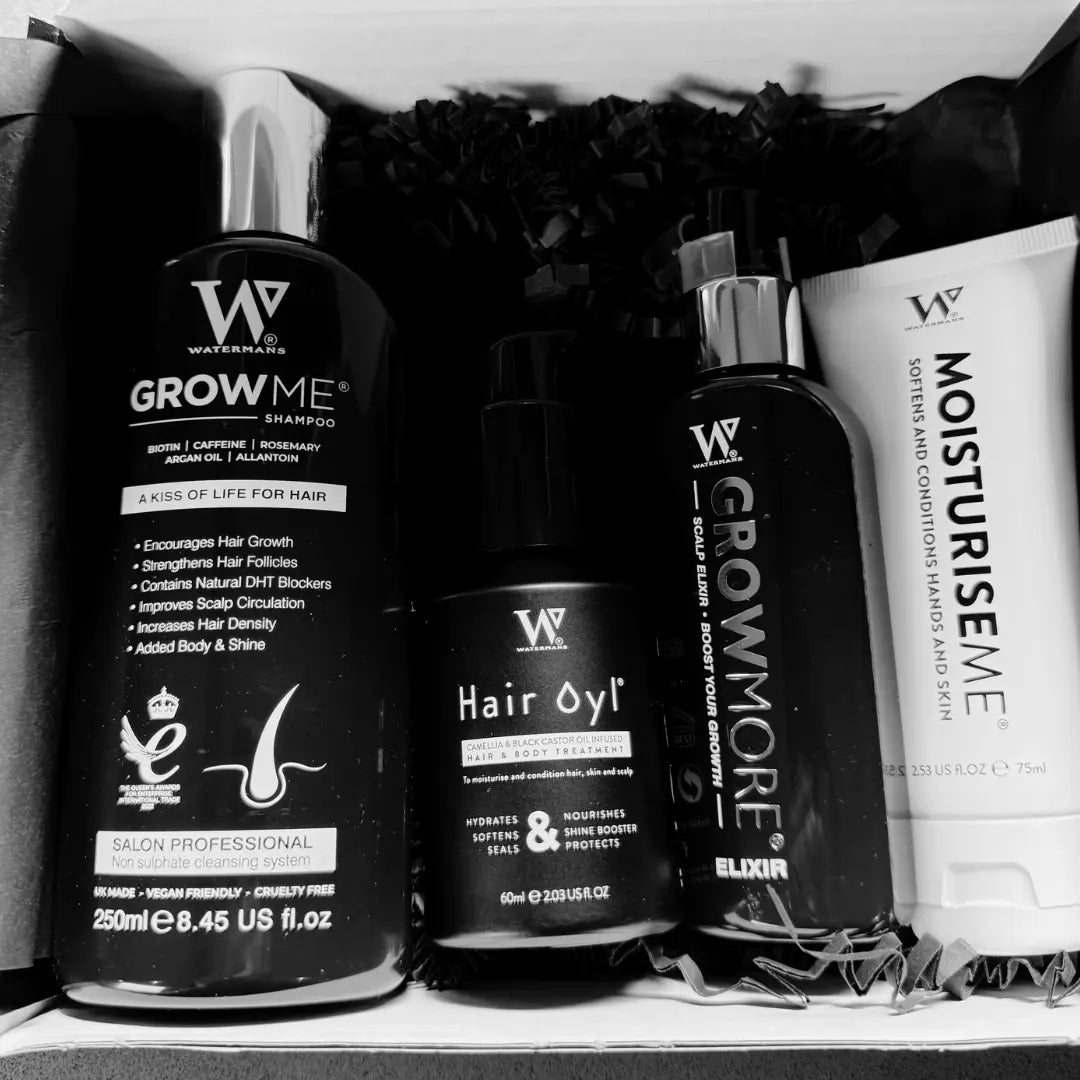
Explore the Hair Growth Boost Set