What Causes Telogen Effluvium? Triggers, Timeline and Recovery
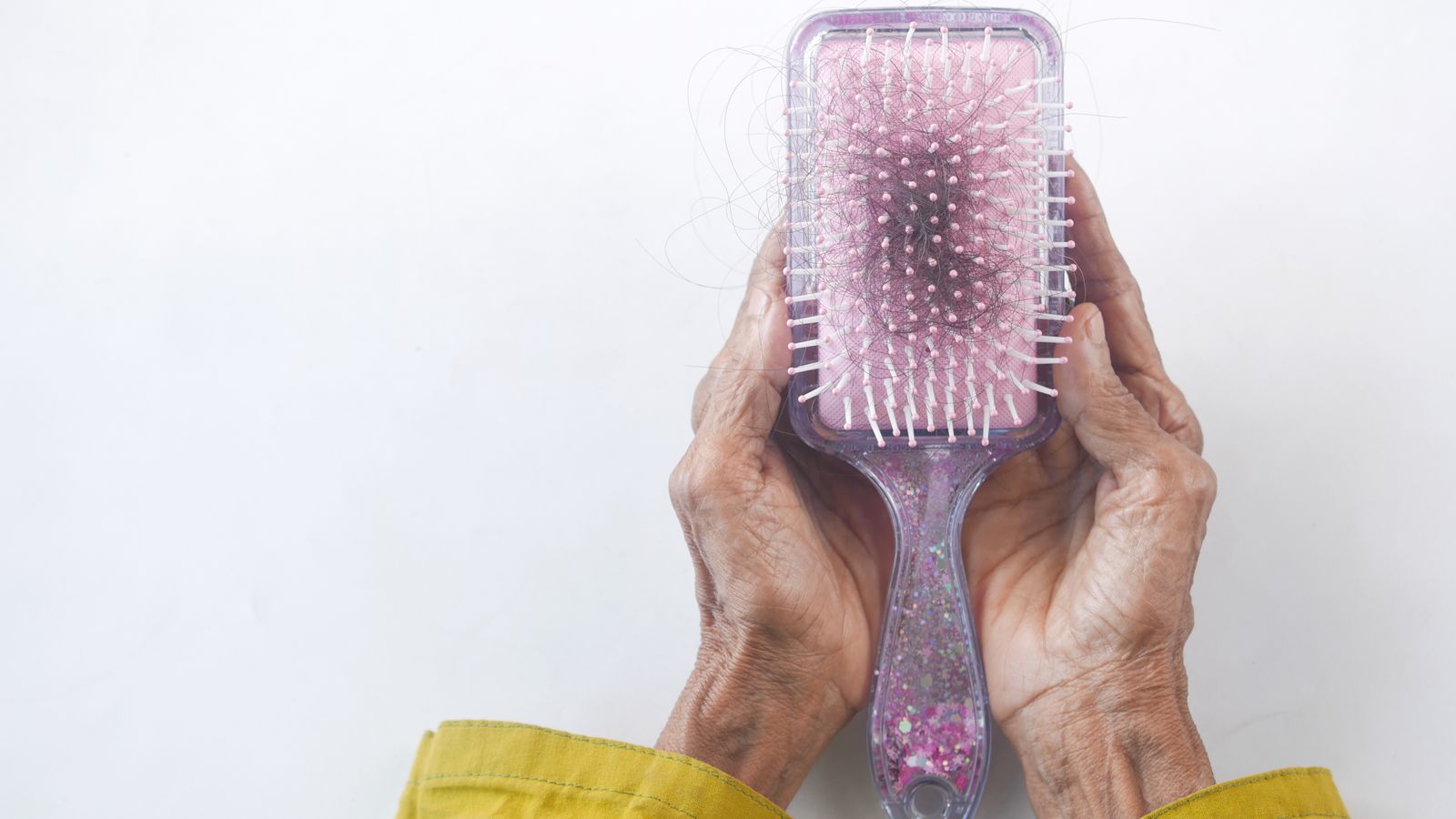
What causes telogen effluvium is almost always a shock to the body that happened two to three months before the shedding started. Childbirth, a high fever, surgery, a crash diet, a severe illness, a bereavement or a sudden drop in iron all push an unusually large share of follicles out of their growing phase and into rest at the same time. Those hairs then fall together, months later, which is why the cause is so rarely obvious at the time.
Our hair growth shampoo
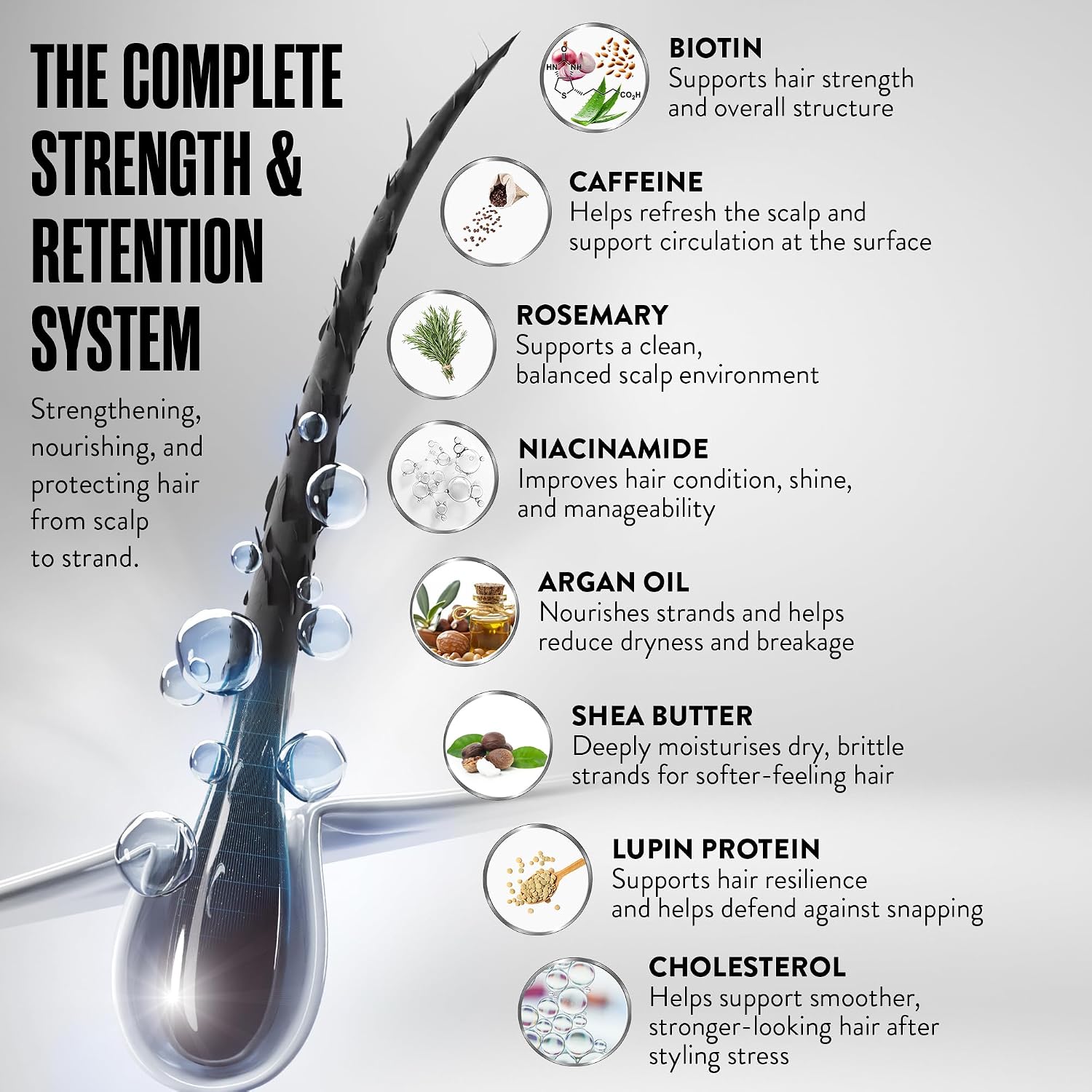
Grow Me® Hair Growth Shampoo, £14.95. A sulphate free daily shampoo that supports a healthy scalp environment and helps reduce breakage, so lengths hold on and look fuller.
Key takeaways
- The delay is the diagnostic clue. Look back two to three months, not at last week.
- It is a shedding problem, not a follicle problem. The follicles are intact and the hair grows back.
- Hairs come out whole, with a small pale bulb at the root. Short broken pieces mean breakage instead.
- Most people shed heavily for six to twelve weeks, then it settles. Density returns over six to twelve months.
- Diffuse thinning all over is typical. Patches and a receding hairline are something else.
- Iron, thyroid function and vitamin D are the blood tests worth asking for.
- Shedding that has not settled after six months is called chronic and needs a GP, not another product.
What causes telogen effluvium at the level of the hair cycle?
Every follicle runs its own independent cycle. Anagen is the growing phase and lasts two to seven years. Catagen is a short transition of a couple of weeks. Telogen is the resting phase, roughly three months, at the end of which the hair is released and a new one starts growing beneath it.
Normally about 85 to 90 percent of your follicles are in anagen at any moment and only 10 to 15 percent in telogen, and because they are out of step with each other you lose a steady 50 to 100 hairs a day without noticing.
A significant physical or emotional shock disrupts that independence. The body, sensibly, deprioritises hair, and a much larger cohort of follicles shifts into telogen together. Instead of 10 percent resting, you might have 30 or even 50 percent. Nothing falls out immediately, because telogen has to run its three month course first. Then the whole cohort is released within a few weeks of each other, and you find handfuls in the shower.
That synchronisation is the entire mechanism. Understanding it explains the delay, the sudden onset, the diffuse pattern, and why it stops on its own.

Which triggers are most common?
When people ask what causes telogen effluvium, they usually expect one answer. In practice it is a list, and often more than one item on it at once.
| Trigger | Typical delay | Notes |
|---|---|---|
| Childbirth | 2 to 4 months | Oestrogen falls sharply and the extended anagen of pregnancy ends together. |
| High fever or serious infection | 2 to 3 months | Including COVID-19, which produced a very visible wave of this. |
| Surgery or general anaesthetic | 2 to 4 months | The physiological stress, not the anaesthetic itself. |
| Rapid weight loss or crash dieting | 2 to 4 months | Protein and calorie shortfall. One of the most common and most missed. |
| Iron deficiency | Gradual | Ferritin can be low while a full blood count reads normal. |
| Thyroid disorder | Gradual | Both under and over active thyroid do it. |
| Severe emotional stress or bereavement | 2 to 4 months | Genuine severe stress, not ordinary busy weeks. |
| Starting or stopping certain medicines | 6 weeks to 4 months | Never stop a medicine your doctor has given you because of your hair. Raise it with them first. |
Note how many are ordinary life events rather than exotic illnesses. That is why so many people conclude nothing happened to them. Something usually did, and it was three months ago.
Why does the shedding start months after the trigger?
Because telogen itself lasts about three months and has to finish. The follicle switches into rest on the day of the shock, but the hair stays anchored in the scalp for the duration of that resting phase, held in place until the new hair beneath it starts pushing. Only then is the old one released.
This is the single most useful thing to understand about the condition, for two reasons. First, it lets you identify the cause: write down what happened in the eight to sixteen weeks before the shedding began and the answer is usually on that list. Second, it sets expectations correctly. By the time you notice the shedding, the trigger is already months behind you, and in many cases already resolved. The shedding you are seeing is history, not an ongoing attack. For the weight-loss version of this timeline in detail, see shedding after weight loss, and the nutrients to check.

The bulb test. Look at a shed hair against a light background. A small, pale, slightly bulbous end means a complete hair released at the end of its resting phase, which is what shedding looks like. No bulb, and a blunt or frayed end, means the fibre snapped and you are dealing with breakage instead. The two need completely different responses.
How long does it last?
Acute telogen effluvium follows a fairly predictable arc. Heavy shedding for six to twelve weeks, then a noticeable slowdown, then a long quiet period while density rebuilds.
Total hair count usually returns over six to twelve months, and in longer hair it can take longer still simply because the new growth has so far to travel before it contributes to the look of your ponytail. The awkward middle stage, when you have a halo of short new hairs standing up around the parting, is a good sign even though it rarely feels like one.
Chronic telogen effluvium is the version that persists beyond six months, sometimes fluctuating for years. It is more common in women in midlife, and it is the point at which self management should stop and a GP should take over, because a persistent trigger such as an untreated thyroid problem or ongoing iron loss is far more likely to be behind it. One of the most common triggers of all deserves its own walkthrough, which we give it in our guide to shedding after weight loss. We look at hair shedding after weight loss in women separately, with the practical steps. One trigger that behaves this way deserves its own care plan, which we give it in our practical plan for hair fall linked to a thyroid problem.
Is it shedding, hair loss or breakage?
These three are constantly confused, and the response to each is different.
Hair shedding is whole hairs leaving the scalp with the pale bulb at the root, diffusely, all over. That is telogen effluvium, and the follicles are unharmed.
Hair loss means the follicle itself is affected. A parting that keeps widening over a year, a hairline creeping back, or a smooth coin shaped bare patch. Pattern hair loss and alopecia areata sit here, they do not resolve on their own, and they need a GP. The causes of thinning hair covers how to tell them apart.
Hair breakage is the fibre snapping partway along its length, leaving short pieces with no bulb. That is heat, bleach and handling, and no amount of resting will fix it.
It is entirely possible to have two at once, which is why so many people feel their situation does not match any description they read. The three clue thinning self check is the fastest way to separate them, and if you have recently given birth, postpartum shedding is the same mechanism with a specific trigger.
Watermans products are 100% cosmetic and do not treat medical hair loss. Individual results may vary.
Get a discount on your next order Our guide to shampoo for hair loss explains what a gentle wash genuinely changes during a shed.
Join the Watermans mailing list and we will email a discount code straight to your inbox. Made in the UK, over 6.5 million bottles sold since 2012.
What can you actually do while you wait?
The honest answer is that the shedding phase runs its course regardless. What you can influence is whether you arrive at the other end with the new growth intact, and whether you have corrected anything that would otherwise prolong it.
- Find and fix the trigger. If it was a crash diet, eat properly. If it was low iron, correct it under GP guidance. If it was a one off illness or surgery, it has already passed.
- Get bloods done. Ferritin specifically, thyroid function, vitamin D, and a full blood count. Ask for the actual numbers rather than a normal verdict.
- Eat enough protein. Around 0.8g per kilogram of body weight a day as a floor. Hair is the first thing the body economises on.
- Stop counting every hair. It is understandable and it makes the anxiety worse, which is not helpful when severe stress is itself on the trigger list.
- Handle new growth gently. The fine short hairs coming through are fragile. Loose styles, no tight ponytails at the hairline, minimal heat.
- Leave it six months before judging anything. Photographs of the same parting in the same light every eight weeks, not daily mirror checks.
What will not help is switching shampoo every fortnight, buying supplements for deficiencies you have not confirmed, or any product sold as stopping the shedding. Nothing stops a telogen wave once it has started. It ends when the cohort has finished falling.
Which products are worth using through it?
Modest, honest ones. During and after a shed, the goal is to protect the new growth as it comes through and keep the scalp comfortable, not to chase a fix that does not exist.

Sulfate free, so it cleans without stripping. Do keep washing during a shed. The hairs coming out in the shower were already released, and leaving hair unwashed does not keep them in.

Condition Me Hair Growth Conditioner
Slip is what stops a comb dragging through fine new hairs and snapping them. This matters far more in the recovery phase than during the shed itself, because that is when the fragile new growth is arriving. If you are considering a private assessment, our guide to the blood tests to ask your GP for before a trichologist appointment covers the panel worth having in hand first. If your question is about products or a routine rather than a medical one, you can talk to Gail Waterman, our co-founder, as an AI avatar on the Watermans homepage.
Over 6.5 million bottles sold since 2012. Cruelty free and made in the UK.
When should you see your GP?
Speak to a GP if any of the following applies. None of it is an emergency, and all of it is worth an appointment slot.
- The shedding has continued beyond six months.
- You cannot identify any trigger in the three to four months beforehand.
- You have a smooth bare patch, or loss concentrated at the hairline or crown rather than spread evenly.
- Your scalp is painful, burning, scaling, or looks shiny and smooth where hair has gone.
- You also feel exhausted, cold, low, have gained or lost weight without trying, or your periods have changed.
- You have heavy periods, are vegetarian or vegan, or have a condition affecting absorption, all of which make iron deficiency more likely.
- It is happening to a child.
Ask specifically for ferritin. It is the single most useful number here and it is not included in a standard full blood count.
Frequently asked questions
What causes telogen effluvium most often in women?
Childbirth, iron deficiency, rapid weight loss and thyroid disorders, roughly in that order. Combinations are common, for example a low ferritin that was already borderline before a pregnancy.
Will my hair definitely grow back?
In acute telogen effluvium the follicles are undamaged, so yes, provided the trigger has resolved. Density typically returns over six to twelve months. If pattern hair loss was already developing underneath, the shed can unmask it and the recovery looks incomplete.
How much shedding is too much?
Above roughly 100 hairs a day sustained over weeks. Rather than counting, notice whether you are clearing the plughole mid shower, finding hair on every surface, and seeing your ponytail circumference shrink.
Should I stop washing my hair?
No. Washing does not cause the shedding. It only gathers hairs that were already released, and an unwashed scalp adds a second problem.
Can COVID-19 be what causes telogen effluvium?
Yes. Any high fever or significant infection can, and COVID-19 produced a large and well documented wave of shedding two to three months after infection.
Do hair supplements help?
Only if you are genuinely deficient. Correcting low iron or low vitamin D helps. Taking a supplement without a shortfall does nothing, and high dose biotin can distort thyroid blood test results.
Is it the same as postpartum shedding?
It is the same mechanism with a specific trigger. Pregnancy holds follicles in the growing phase, and the drop in oestrogen after birth releases them together, usually two to four months later.
Can stress on its own explain what causes telogen effluvium?
Severe or sustained stress can, such as bereavement, a serious accident or a prolonged crisis. Ordinary work pressure rarely does it alone, though it can add to another trigger. The link between stress and hair goes into the detail.
Why does my hair look worse now than when the shedding stopped?
Because volume takes months to return after the shedding ends. The new hairs are short, fine and pale, and they spend a long time contributing nothing visible to your length or thickness.
What is the bottom line on what causes telogen effluvium?
What causes telogen effluvium is a shock the body absorbed two to three months before you noticed anything, most often childbirth, illness, surgery, rapid weight loss, low iron, a thyroid problem or severe stress. The follicles are intact, the shedding is self limiting, and the hair grows back once the trigger is behind you. Look backwards to find the cause, ask your GP for ferritin, thyroid function and vitamin D, eat enough protein, handle the new growth gently, and judge it on photographs at six months rather than on the shower floor. If it has not settled by then, or the loss is patchy rather than diffuse, that is the moment for a medical opinion rather than another product. Our companion piece on working out whether a shed will stop on its own covers the free NHS blood tests to ask for before you spend anything privately.
If your current shampoo is stripping the scalp, the Grow Me hair growth shampoo is the gentler swap. Vegan, made in the UK.
Sources and references
- NHS, Hair loss, on normal daily hair fall, on telogen effluvium as a cause of temporary shedding, and on when to speak to a GP.
- British Association of Dermatologists, public information leaflet on telogen effluvium, on triggers, the two to three month delay and the expected course.
- NICE Clinical Knowledge Summaries, Alopecia, on assessment, on the blood tests usually considered including ferritin and thyroid function, and on chronic telogen effluvium.
- Malkud S, Telogen effluvium: a review, Journal of Clinical and Diagnostic Research, 2015, on the hair cycle mechanism and on acute versus chronic presentations.
- Rebora A, Telogen effluvium: a comprehensive review, Clinical, Cosmetic and Investigational Dermatology, 2019, on trigger categories and on the difficulty of confirming a cause retrospectively.
- Almohanna HM and colleagues, The role of vitamins and minerals in hair loss: a review, Dermatology and Therapy, 2019, on iron, vitamin D and the limits of supplementation without deficiency.