Trichologist Ealing: What to Sort Out Before You Book
If you are weighing up a trichologist Ealing appointment, three things are worth sorting out first, and all three are free. Work out whether hair is leaving the root or snapping along the shaft. Ask your GP for a short blood panel. Check whether anything on your medicine list started three months before the shedding did. A good practitioner asks about all three anyway, so arriving with answers turns an hour you pay for into an hour that actually moves you forward.
Our hair growth shampoo
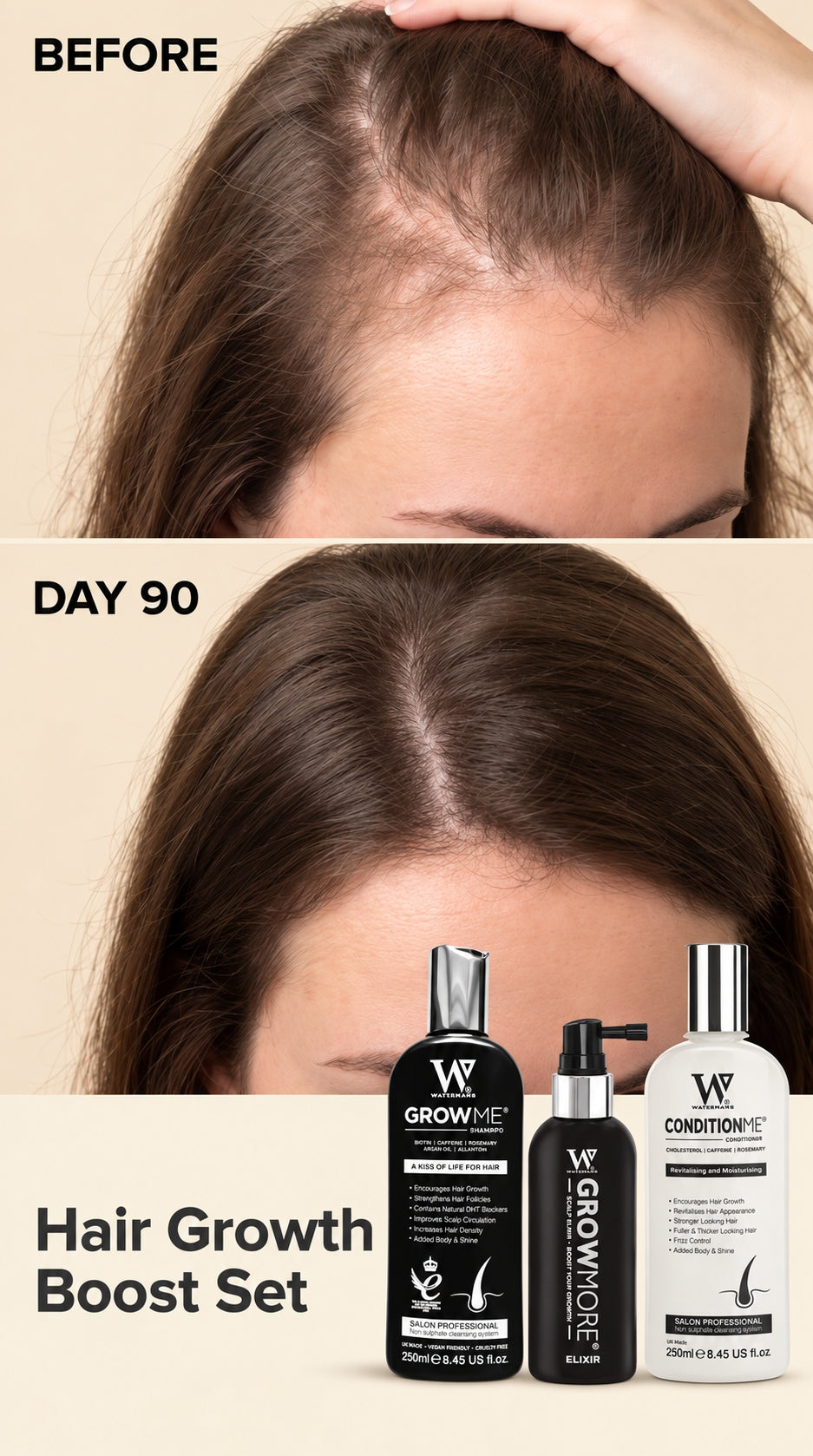
Grow Me® Hair Growth Shampoo, £14.95. A sulphate free daily shampoo that supports a healthy scalp environment and helps reduce breakage, so lengths hold on and look fuller.
In short: A trichologist Ealing consultation is private, unregulated and commonly advertised from around 60 to 150 pounds in west London for a first visit. Before paying, do the root check on ten shed hairs, ask your GP about ferritin, full blood count, thyroid function, vitamin D and B12, and write down when each medicine started. Those three answers decide whether you need a hair specialist at all, or a GP appointment instead.
Key takeaways
- The bulb tells you almost everything. A pale swelling at the root means shedding. No bulb means breakage.
- 50 to 100 hairs a day is the usual figure. The change from your own baseline matters far more than the count.
- The trigger sits two to three months back. Illness, surgery, birth or rapid weight loss shows up late.
- Blood tests come first. Ferritin, full blood count, thyroid function, vitamin D and B12 are the standard five.
- Never stop a medicine over hair. Take the timeline to the clinician who started it.
- The title is not protected in UK law. Check membership with the professional body itself, not a website badge.

What should you do before paying for a trichologist Ealing consultation?
Three pieces of homework change what the hour is worth: a root check on ten shed hairs, a blood panel from your GP, and a dated list of your medicines. None of them costs anything, all three are questions a careful practitioner will ask on the day, and two of them can only be answered by the NHS rather than by a private hair specialist.
The reason this order matters is money. A trichologist Ealing appointment is a private service with no statutory register behind it, and a large share of first consultations end with the reader being sent back to their GP for exactly the blood tests they could have had first. Getting the results in hand converts the consultation from a starting point into a second opinion on real data.
The third piece, the medicine timeline, is the one almost nobody brings. Write down every medicine you take, the month you started it, and the month the shedding started. That single sheet of paper answers a question that otherwise takes a specialist several appointments to reach.
Is it shedding, breakage or thinning?
These three get described with the same words and they are different problems with different answers. Hair shedding means whole hairs are leaving the follicle. Hair breakage means the fibre is snapping partway along its length. Thinning means each hair is growing back finer and the density is dropping. Five minutes and good light separates them.
- The bulb check. Look at ten hairs from the brush or the shower. A shed hair carries a small pale swelling at one end. A snapped hair has a blunt or frayed end and no bulb.
- The length check. Breakage produces short pieces of uneven length, often a halo of them around the crown and along the parting. Shedding produces full length hairs.
- The photo baseline. Photograph your parting and hairline in the same place, same light, dry hair, once a month. Nothing else tells you honestly whether anything is working.
Shedding points at the follicle cycle, which means illness, thyroid function, iron status, hormones and medicines. Breakage points at handling, heat, chemical processing, tension and dryness, which are all under your control. Our guide to the three mechanisms behind thinning hair and the three clue self check take the distinction further.

How much hair loss in a day is normal?
Around 50 to 100 hairs a day is the figure the NHS and most dermatology sources quote, and it is a reasonable rule of thumb rather than a measurement anybody takes. The number moves enormously with wash frequency: washing twice a week means wash day shows several days of shedding at once, which looks alarming and is not.
Two better questions than the count. Has it changed from your own normal, on the pillow and on your clothes as well as in the shower? And is the density changing, measured by that monthly photograph rather than by feel? Heavy shedding with stable density after several months is usually a shed that will settle. Shedding alongside a visibly wider parting is a different conversation, and our guide to how much shedding is too much goes through the thresholds.
The one week collection test
Keep what comes out in the shower and the brush in a labelled bag, one per day, for seven days. A rising trend across a week is far more informative than one frightening morning, and it gives any practitioner something objective to work from instead of a memory of how bad it felt.
Why does shedding start three months after the trigger?
Hair follicles do not react to a shock on the day it happens. A significant physical or emotional event pushes a batch of follicles out of the growing phase, called anagen, and into the resting phase, called telogen. Those hairs stay in place for roughly two to three months before they release together, which is why people connect the shedding to whatever is happening now rather than to the spring. If your shed followed a diet or weight-loss surgery, see our guide to hair shedding after weight loss.
So work backwards. Three months before the shedding started, was there a high fever or a bad viral illness, surgery or a general anaesthetic, childbirth or stopping breastfeeding, a change in hormonal contraception, rapid weight loss or a very low calorie diet, a bereavement, or a new medicine? If you can find the trigger, the picture is usually telogen effluvium, which is self limiting: DermNet and the British Association of Dermatologists both describe recovery over roughly six to nine months once the trigger has passed. Our page on what causes telogen effluvium lays out the full timeline.
Which blood tests should you ask your GP for?
Five tests cover the great majority of correctable causes, and a GP can request all of them where your history supports it. Ask for the printed numbers rather than being told the results are normal, because reference ranges are wide and the bottom of a ferritin range is not the same as a comfortable level.
| Test | Why it is on the list | Clues worth mentioning |
|---|---|---|
| Ferritin (iron stores) | Low iron stores are associated with diffuse shedding and can be low while a full blood count still reads normal. NICE guidance is explicit that ferritin is the test for iron deficiency. | Heavy periods, plant based diet, fatigue, breathlessness, restless legs |
| Full blood count | Picks up anaemia and gives context for the ferritin result. | Tiredness, pallor, frequent infections |
| Thyroid function | Both an underactive and an overactive thyroid cause diffuse hair loss, and the NHS lists hair change among the recognised features of each. | Weight change, temperature intolerance, dry skin, palpitations |
| Vitamin D | Low status is common in the UK, which is why the NHS advises a daily supplement for everyone through autumn and winter. | Little sun exposure, covered clothing, darker skin, aching bones |
| Vitamin B12 and folate | Relevant on plant based diets, after weight loss surgery, or on long term acid reducing medication. | Tingling, mouth ulcers, low mood, poor concentration |

Get a discount on the hair shedding range
Join the Watermans mailing list and we will email a discount code straight to your inbox, so you can try the hair shedding range for less. Made in the UK, over 6.5 million bottles sold since 2012.
Can a medicine be causing the shedding?
Medicine related shedding is usually diffuse rather than patchy, usually starts two to three months after the medicine did, and usually settles once the medicine is changed where changing it is clinically appropriate. The delay is exactly why the connection gets missed: by the time hair starts coming out, the new medicine feels like old news.
Groups that have been associated with shedding include retinoids and high dose vitamin A, some blood pressure medicines, anticoagulants, some antidepressants and mood stabilisers, some anticonvulsants, hormonal contraception and hormone therapies at the point of starting, stopping or switching, some thyroid medicines while the dose is being settled, and some medicines used for gout and autoimmune conditions. That list is not exhaustive, and plenty of people take everything on it with no hair change at all.
Never stop a medicine because of your hair
Several medicines linked with shedding are managing conditions considerably more serious than hair loss, and stopping some of them abruptly is dangerous. Write down what you take, when you started it and when the shedding started, and take that timeline to your GP or the clinician who started it. They can weigh the trade off properly. Nothing on this page is medical advice.
What does a trichologist Ealing consultation actually add?
Quite a lot, once the medical basics are covered. A trichologist Ealing practitioner takes a far longer history than a ten minute GP appointment allows, examines the scalp under magnification, and is genuinely good at pattern recognition: telling a diffuse shed from patterned thinning, spotting traction damage at the hairline, and noticing the scarring patterns that need a dermatology referral rather than a product.
What it does not add is regulation. Trichologist is not a protected title in the United Kingdom, and there is no statutory register of the kind the Health and Care Professions Council maintains for physiotherapists and dietitians. The Institute of Trichologists and The Trichological Society both run assessed training and keep member lists, so confirm membership with the organisation directly rather than trusting a logo.
Five questions sort a useful appointment from an expensive one, and all five can be asked on the phone: which professional body do you belong to and under what name, what does the fee include, what would make you refer me back to my GP, will I get the plan in writing, and do you sell the products you recommend? The last one is not an accusation, it is just a thing worth knowing before you are sitting in the chair.

How should you care for your hair while you work it out?
Cosmetic care cannot change what is happening inside the follicle, and it is worth being blunt about that on a page like this. What it can do is stop you losing length to breakage on top of whatever else is going on, which is the part of the problem most people can actually fix while they wait for blood results. There is also a free NHS step worth taking first, and our guide to the NHS route versus a private trichologist in Lewisham sets out which blood tests a GP can arrange at no cost.
- Wash as often as suits your scalp. Washing does not cause shedding; it collects the hairs that had already released.
- Condition mid lengths to ends every wash, and detangle with conditioner in, from the ends upward.
- Turn the heat down and use protection before straighteners or a dryer.
- Loosen the tension. Tight ponytails, buns and clips concentrate force exactly where hairlines thin.
- Sleep on satin or silk to cut overnight friction.

Grow Me® Hair Growth Shampoo · £14.95
A sulfate free everyday shampoo with biotin, caffeine, rosemary and niacinamide that supports a healthy scalp environment and reduces breakage, so hair looks and feels fuller. It is cosmetic and does not act on the follicle cycle or on a nutritional deficiency.

Condition Me® Hair Growth Conditioner · £13.95
A breakage defence conditioner with cholesterol, shea butter, glycerin and hydrolysed lupine protein. Its job on this page is narrow and honest: make detangling take less length out while you wait for blood results.
When should you see a GP instead?
Some patterns need a doctor rather than a private hair specialist, and some need one quickly. Book time with your GP, and ask about a dermatology referral, if any of the following apply to you.
- Defined round or oval bald patches appearing over weeks.
- Loss at the crown with tenderness, itching, burning or a smooth shiny scalp, which can indicate a scarring condition where the window to preserve follicles closes as it advances.
- A painful, pustular or persistently sore scalp.
- Sudden heavy shedding from the whole scalp with no trigger you can identify.
- Hair loss in a child, which should always go through a GP first.
- Shedding alongside fatigue, weight change, heavy periods or low mood, which point at the blood tests above.
Our guide to telling what is causing patchy loss covers the patterns that need assessment, and thyroid related hair loss explains what to look for alongside the hair.
Frequently asked questions
How much does a trichologist Ealing appointment cost?
First consultations in west London are commonly advertised from around 60 to 150 pounds, with follow ups lower, though nothing about the fee is regulated. Ask exactly what the price includes, whether any tests or products are charged separately, and be cautious about any package of sessions sold before an assessment has actually happened.
Is a trichologist a doctor?
No. A trichologist is a hair and scalp specialist working privately, not a medical doctor, and trichologist is not a protected title under UK law. Good ones are trained and assessed through the Institute of Trichologists or The Trichological Society, and good ones also refer back to a GP when something falls outside cosmetic and lifestyle territory.
Should I see a GP or a trichologist first?
See a GP first if you have patches, pain, a sore or scarring scalp, a sudden unexplained shed, or symptoms like fatigue and weight change. A GP can request blood tests and make a dermatology referral, and neither is available privately from a hair specialist. Once those results exist, a trichology appointment becomes far more useful.
Which blood tests matter most for hair shedding?
Ferritin and a full blood count come first, followed by thyroid function, vitamin D, and vitamin B12 with folate. Ask for the actual numbers rather than a verbal all clear, because the bottom of a reference range and a comfortable level are not the same thing, and ferritin in particular is often reported as normal when it sits very low.
Can my medicine be the cause?
Possibly, and the timing is the clue. Medicine related shedding usually begins two to three months after starting, switching or stopping something, and it is usually diffuse. Write the dates down and take them to the clinician who started the medicine. Do not stop anything on your own, because several of the medicines involved manage conditions far more serious than hair loss.
Will shampoo help with shedding?
Not with shedding itself. Cosmetic shampoos and conditioners work on the fibre and the surface of the scalp, so they cannot change the follicle cycle, a thyroid problem or low iron stores. What they can do is reduce breakage, which is often stacked on top of a shed and is the part you can genuinely improve this week.
How long does telogen effluvium last?
Most cases settle within six to nine months once the trigger has passed, with density recovering afterwards rather than immediately. The shedding usually peaks and then tapers, so the useful measure is your monthly parting photograph rather than the volume in the shower on any one morning.
Does washing my hair less reduce shedding?
No, it just changes when you see it. Hairs that have finished their resting phase are already detached and waiting; washing collects several days of them at once, which is why wash day looks dramatic on a twice weekly routine. Washing less often tends to make scalp comfort worse rather than hair loss better.
What is the bottom line on trichologist Ealing?
A trichologist Ealing appointment is worth having once the free work is done. Check the root end of ten shed hairs to separate shedding from breakage. Ask your GP for ferritin, a full blood count, thyroid function, vitamin D and B12, and take the printed numbers with you. Write down when each medicine started against when the shedding started, and never change a medicine on your own. Verify membership with the professional body, because the title is unregulated. Then send anything patchy, painful or scarring to a GP rather than to anyone private. If your question is about products or a routine rather than a medical one, you can talk to Gail Waterman, our co-founder, as an AI avatar on the Watermans homepage.
While you wait on results, the part you can control is breakage. Our hair growth shampoo is sulfate free, made in the UK and built to reduce breakage so you keep the length you still have.
Sources & references
- NHS, hair loss: common causes, the usual daily range and when to see a GP.
- DermNet, telogen effluvium: the delayed diffuse shed, recognised triggers and typical duration.
- British Association of Dermatologists, telogen effluvium information leaflet.
- NICE, Clinical Knowledge Summaries: iron deficiency anaemia: on ferritin as the test for iron stores.
- NHS, underactive thyroid: recognised features including hair change.
- NHS, vitamin D: UK guidance on autumn and winter supplementation.
- Health and Care Professions Council, Check the Register: the statutory register of protected titles, which does not include trichologist.
- The Institute of Trichologists, membership and training information.
Important: Watermans products are 100% cosmetic and do not treat medical hair loss. Individual results may vary.