

Which Hormone Is Causing Your Hair Loss? A Symptom Guide
Which hormone is causing your hair loss? The pattern gives it away more than the shedding does. Thyroid problems thin hair all over and bring fatigue, cold hands and weight change with them. Androgens like DHT narrow the parting and the temples while the back stays thick. Falling oestrogen at menopause thins the crown gradually. Cortisol from severe stress causes a sudden heavy shed about three months after the event. Insulin resistance and PCOS come with acne, irregular periods and unwanted facial hair.
Those are five different problems needing five different answers, and no shampoo tells them apart. This guide gives you the symptom clusters side by side, the blood test that goes with each, and links to the detailed guide for whichever one matches you. It is information to take to a GP, not a substitute for seeing one.
Key takeaways
- Hair is a low priority tissue for the body, so it is often the first thing to suffer when hormones shift, and one of the last to recover.
- Diffuse thinning all over the head points at thyroid, iron or a shedding trigger. A widening parting with a thick back of the head points at androgens.
- Stress related shedding is delayed. The heavy loss usually arrives 2 to 4 months after the event, not during it.
- Hair loss with irregular periods, acne or new facial hair needs a PCOS assessment rather than another product.
- Adrenal fatigue is not a recognised medical diagnosis. The symptoms are real, the label is not, and it delays finding the actual cause.
- Most hormonal shedding is reversible once the underlying cause is treated. Androgenetic thinning is the exception, and it responds best to early treatment.
- Ask your GP about thyroid function, ferritin, vitamin D and, where relevant, androgens and prolactin.

Can a hormone imbalance really cause hair loss?
Yes, and it is one of the most common reasons for unexplained thinning, particularly in women. Hormones control how long each follicle spends growing before it rests and sheds. Shift the signal and you shift the ratio of growing to resting hairs, which shows up at the surface as thinner density weeks or months later.
The delay is the part that confuses people. A follicle that switches into its resting phase today does not release the hair for another two to three months, and the new hair takes months more to reach a visible length. So the shedding you are seeing now usually reports on something that happened in the spring, not this week. That is also why judging any change over two weeks is pointless.
Which hormone is causing your hair loss? The symptom patterns compared
Read down the middle column and find the cluster that sounds like you. Hair loss on its own is rarely diagnostic, but hair loss plus two or three other specific symptoms usually points somewhere.
| Hormone | What it does to hair | Other symptoms alongside it | Test to ask about |
|---|---|---|---|
| Thyroid (underactive) | Diffuse thinning across the whole scalp, dry and brittle texture, sometimes loss of the outer eyebrow | Fatigue, feeling the cold, weight gain, constipation, low mood, heavy periods | TSH and free T4 |
| Thyroid (overactive) | Fine, soft, diffuse shedding | Weight loss, palpitations, heat intolerance, anxiety, tremor, loose stools | TSH and free T4 |
| Androgens and DHT | Widening parting and thinning at the crown or temples, while the back and sides stay dense | Often none. Sometimes oily scalp, acne, family history of the same pattern | Usually diagnosed on pattern, not blood. Testosterone if other signs are present |
| Falling oestrogen (perimenopause and menopause) | Gradual loss of volume over years, finer strands, slower growth, crown most affected | Cycle changes, hot flushes, night sweats, sleep problems, joint aches, dry skin | Usually diagnosed on age and symptoms. FSH only in specific cases |
| Sudden oestrogen drop (after birth, stopping the pill) | Heavy shedding starting 2 to 4 months after the change, often at the hairline | Recent pregnancy, recent contraceptive change | Ferritin and thyroid, to rule out a second cause |
| Cortisol (chronic or acute stress) | Sudden diffuse shed, handfuls in the shower, starting months after the trigger | Poor sleep, appetite change, a clear stressful event: bereavement, illness, surgery, crash diet | No routine test. Diagnosed from history. Cortisol tested only if Cushing's is suspected |
| Insulin resistance and PCOS | Thinning at the crown in a male type pattern, alongside excess hair growth elsewhere | Irregular or absent periods, acne, facial or body hair, weight gain around the middle, fertility difficulty | Testosterone, SHBG, LH and FSH, HbA1c, pelvic ultrasound |
| Prolactin (raised) | Diffuse thinning, sometimes with excess body hair | Missed periods, milky nipple discharge, reduced libido, headaches or vision change | Serum prolactin |
What does thyroid hair loss actually look like?
Thyroid related loss is diffuse rather than patterned, so the whole scalp thins at once and the parting does not widen in one specific place. The texture usually changes too: hair becomes dry, coarse and brittle in an underactive thyroid, and unusually fine and soft in an overactive one. Loss of the outer third of the eyebrows is a classic clue.
The good news is that it is largely reversible. Once thyroid levels are corrected and stable, hair usually recovers over 6 to 12 months, although it lags well behind the blood results, which frustrates people who expected the two to move together. We have a fuller breakdown in our guide to thyroid hair loss symptoms and whether it is reversible.

What does androgen driven hair loss look like?
Androgenetic hair loss is defined by where it happens rather than how much comes out. Follicles at the crown, parting and temples are genetically sensitive to dihydrotestosterone, so they shrink a little with each growth cycle and produce finer, shorter hairs. The back and sides are not sensitive, so they stay dense, which is why the contrast is the giveaway.
You do not need high testosterone for this to happen. Most people with pattern loss have entirely normal hormone levels and simply have receptor sensitivity, which is inherited. That is also why a blood test often comes back reassuringly normal while the parting keeps widening, and why this is one hormonal cause where waiting is genuinely costly: treatment protects the follicles you still have far better than it revives ones that have already miniaturised. Our guide to the stages of pattern hair loss in men and women covers what the medical options look like.
What happens to hair when oestrogen falls?
Oestrogen helps keep follicles in their growing phase for longer, so as it falls the growing phase shortens, strands come through finer, and density drops gradually. In perimenopause and menopause this happens over years rather than weeks, which is why women often notice it as a ponytail that has quietly halved rather than as shedding.
A sudden oestrogen drop behaves completely differently. After childbirth, or after stopping a combined contraceptive pill, many follicles shift into the resting phase together and release at once, producing frightening handfuls two to four months later. That version usually recovers on its own within 6 to 12 months. The gradual menopausal version does not reverse by itself. See menopause hair loss symptoms and what helps or, if you have recently had a baby, how long postpartum hair loss lasts.

Can cortisol and stress genuinely cause hair loss?
Yes, and the mechanism is well described. A severe physical or emotional shock pushes a large batch of follicles prematurely into their resting phase, and they all shed together once that phase ends. The condition is called telogen effluvium, and the timing is its signature: the hair falls 2 to 4 months after the event, by which point life often feels calmer and the connection is easy to miss.
Everyday work stress is not usually enough. The triggers that do it are bigger: bereavement, major surgery, a high fever, COVID or another significant infection, rapid weight loss, or starting or stopping certain medications. It resolves on its own in most cases once the trigger has passed. Our guides to the link between stress and hair loss and telogen effluvium triggers and recovery timelines go through what to expect month by month.
What about prolactin and insulin resistance?
Raised prolactin is less common but worth knowing about, because it usually comes with missed periods, milky nipple discharge or reduced libido, and it has specific causes including some medications and benign pituitary growths. It is a simple blood test and a treatable finding, so it is a reasonable one to raise if that cluster fits you.
Insulin resistance matters mainly through PCOS, where higher androgen levels produce crown thinning at the same time as unwanted hair growth on the face or body, plus acne and irregular cycles. That combination of thinning on top and coarser hair elsewhere is distinctive enough to be worth investigating properly. See why PCOS causes hair loss and how it is managed.
How do you tell hormonal hair loss from the other causes?
Not every thinning problem is hormonal, and mistaking a mechanical or nutritional cause for a hormonal one wastes months. This table separates the main possibilities by their fingerprint.
| Cause | The fingerprint | Usual course |
|---|---|---|
| Hormonal, patterned (androgenetic) | Parting widens, crown thins, back stays thick, no increase in shedding | Slow and progressive. Does not resolve on its own |
| Hormonal, diffuse (thyroid, postpartum, stress) | Whole scalp thins evenly, more hair in the plughole, hairs have a small white bulb | Usually recovers in 6 to 12 months once the cause is treated |
| Iron deficiency | Diffuse shedding with tiredness, breathlessness, pale skin, heavy periods | Improves once ferritin is corrected. Needs a blood test, not guesswork |
| Breakage and damage | Short broken pieces with no bulb, frizzy halo, ends splitting, worse after bleach or heat | Improves within weeks with gentler handling. Not a follicle problem |
| Traction | Loss follows exactly where hair is pulled: hairline, edges, around a clip or weave | Reversible early, permanent if pulling continues for years |
| Alopecia areata | Smooth, well defined round bald patches with normal skin, appearing quickly | Autoimmune. Needs a GP or dermatologist, not cosmetics |
If you are unsure which column you are in, our diagnostic guide to telling hair fall, thinning and breakage apart walks through the bulb test and the pull test, both of which you can do at home in a minute.
Which hormone problems are not real diagnoses?
Several popular explanations have no clinical standing, and believing them delays finding the cause that does. The symptoms people describe are usually genuine. The labels attached to them are the problem.
- Adrenal fatigue. Not recognised by endocrinology bodies, and not supported by evidence that the adrenals become exhausted from stress. Genuine adrenal insufficiency is a serious, specific and testable condition, and it is diagnosed differently.
- Hormone detox teas and resets. Hormones are not detoxed. Your liver and kidneys clear them continuously, and no tea influences that process.
- Oestrogen dominance as a standalone diagnosis. A useful shorthand for a real pattern of symptoms, but it is not a test result and is not diagnosed by a saliva kit.
- Home saliva hormone panels. Poorly correlated with blood levels for most hormones, and not what a GP or endocrinologist will act on.
- Adaptogen supplements as a hormone fix. Ashwagandha and similar herbs have some small studies on perceived stress, but nothing that establishes they correct a hormone imbalance or regrow hair. Ashwagandha also needs care if you have thyroid disease or take thyroid medication, so mention it to your GP.

What can you actually do while you wait for answers?
Getting the hormonal cause identified and treated is the part that changes the outcome, and nothing on a shelf substitutes for it. What you can do meanwhile is stop losing hair to preventable damage, because hair that is thinning at the root and snapping at the shaft looks far worse than either alone.
- Book the blood tests. Thyroid function and ferritin are the two most commonly missed and the two most treatable.
- Photograph your parting monthly. Same light, same place, same time of day. This is the only reliable way to know whether it is progressing.
- Stop tight styling. Traction loss on the hairline is entirely avoidable, and it compounds any hormonal thinning underneath.
- Never brush hair hard when soaking wet. The fibre is at its weakest then. Detangle from the ends up with a wide tooth comb.
- Use heat protection every time. One unprotected straightening session undoes weeks of careful handling.
- Eat enough protein and enough calories. Under eating is itself a shedding trigger, and it is a common one during stressful periods.
- Do not start iron without a test. Correcting a real deficiency helps. Excess iron is harmful.

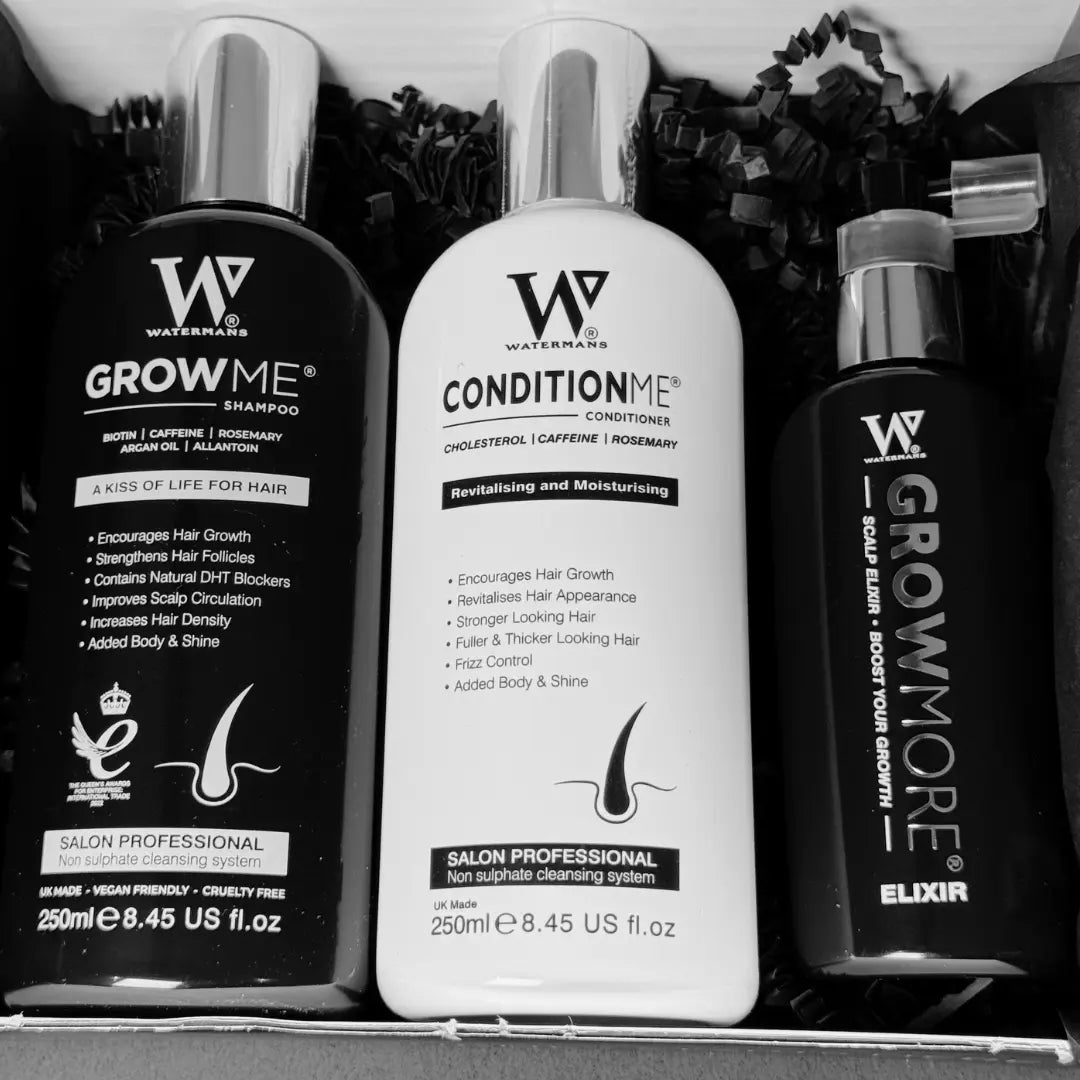
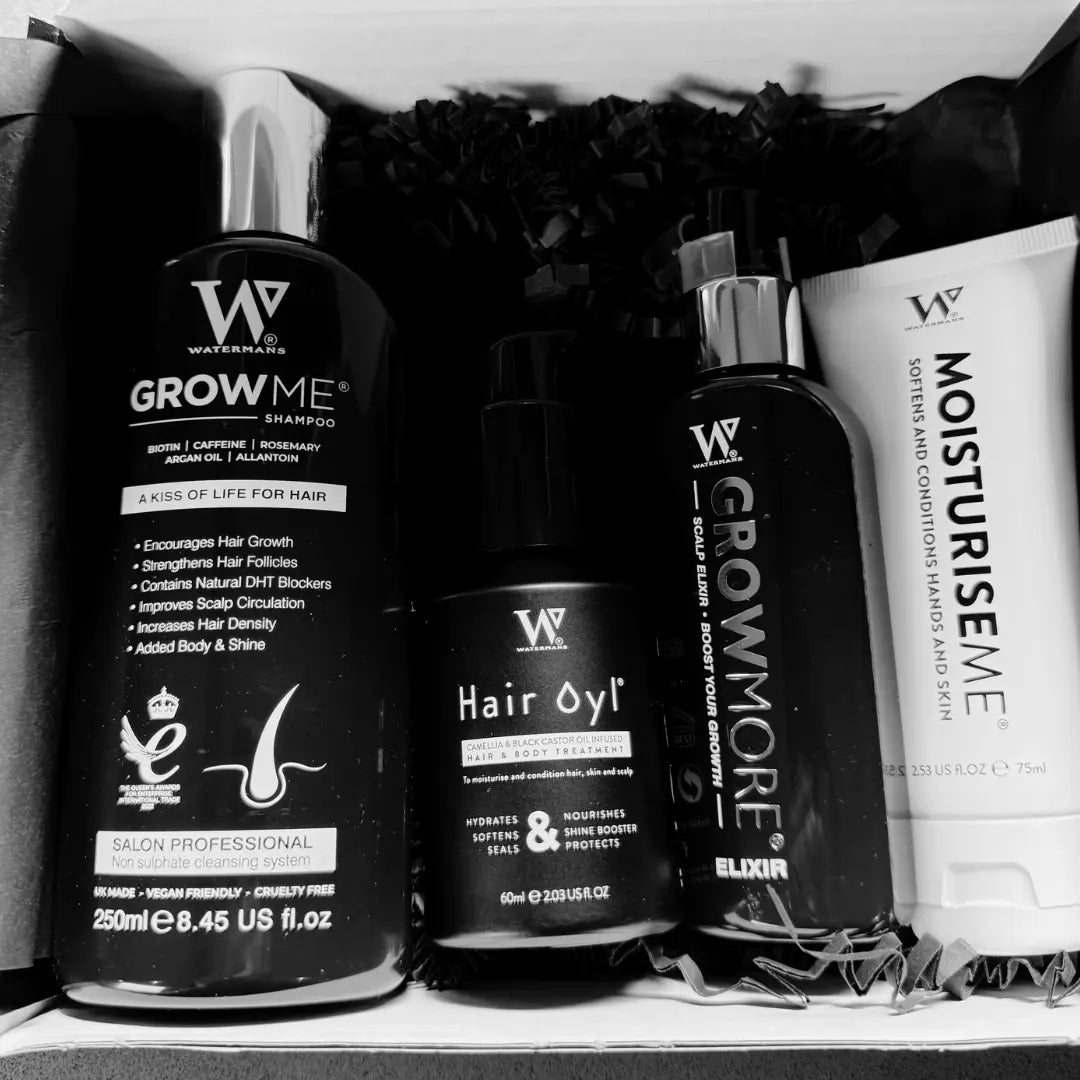
Grow Me® Hair Growth Shampoo, £14.95
Gentle everyday care for the fragile phase: a sulfate free shampoo with caffeine, biotin, niacinamide and hydrolysed lupine protein, formulated to cleanse the scalp without stripping and to reduce breakage so more of your length survives.
What it is not: a treatment for any hormonal condition. It cannot correct a thyroid problem, PCOS, raised prolactin or falling oestrogen, and it is not a substitute for seeing a GP. It is a cosmetic shampoo for scalp condition and fuller-looking hair.
When should you see a GP about hormonal hair loss?
Book an appointment if the hair loss comes with any other symptom, or if it is changing quickly. Hair is a visible signal from the endocrine system, and treating it as a purely cosmetic problem is how thyroid disease and iron deficiency get missed for years.
See a GP promptly if you have
- Hair loss with fatigue, weight change, feeling the cold, or palpitations
- Irregular, absent or newly very heavy periods
- New facial or body hair growth, or worsening acne as an adult
- Milky nipple discharge, or headaches with changes in your vision
- Smooth round bald patches rather than general thinning
- A parting that is visibly widening month on month
- Scalp pain, burning, scaling or sores
- Shedding that started within weeks of a new medication
Go in prepared. Knowing which tests are relevant, and when in your cycle they should be taken, makes a ten minute appointment far more productive, and we set that out step by step in our companion guide to which hormone tests to ask your GP for.
Frequently asked questions
Will hair grow back after a hormone imbalance is treated?
Usually yes for diffuse hormonal shedding. Once thyroid levels, iron stores or a postpartum hormone shift settle, most people see regrowth over 6 to 12 months. Androgenetic thinning is different: it is progressive and does not reverse by itself, which is why early assessment matters more in that case.
Can a blood test tell me why my hair is falling out?
Sometimes. Thyroid function, ferritin, vitamin D and B12 can each reveal a treatable cause, and prolactin or androgens help in specific symptom patterns. But pattern hair loss is diagnosed by looking at the scalp, not by blood, so a completely normal panel does not mean nothing is wrong.
Does birth control cause hair loss?
Some progestogens are more androgenic than others and can worsen thinning in susceptible people, and stopping a combined pill can trigger a temporary shed for a few months. If you suspect your contraception, discuss switching with your GP rather than stopping suddenly.
Is hormonal hair loss the same as going bald?
No. Most hormonal hair loss is diffuse thinning that recovers when the cause is treated, and it does not progress to baldness. Androgenetic hair loss is the type that can progress, and it follows a recognisable pattern at the parting, crown and temples rather than thinning everywhere.
Can men have hormonal hair loss other than male pattern baldness?
Yes. Thyroid disease, iron deficiency, severe stress, rapid weight loss and some medications cause diffuse shedding in men too, and it is frequently assumed to be male pattern baldness and left uninvestigated. Diffuse thinning with the back of the head equally affected deserves a blood test.
How long does hormonal hair loss last?
Stress and postpartum shedding typically runs its course in 3 to 6 months, with regrowth visible over the following 6 to 12. Thyroid related loss improves once levels are stable. Menopausal and androgenetic thinning continue unless treated, because the driver does not go away.
Do hormone balancing supplements help hair?
There is little evidence that any supplement corrects a hormone imbalance. Supplements help when they fill a genuine deficiency, which is why testing first is worth it. High dose biotin also interferes with several laboratory tests including thyroid ones, so tell whoever takes your blood.
Can perimenopause cause hair loss in your 30s?
Perimenopause can begin in the late 30s, so it is possible, but thinning at that age is more often thyroid, iron, PCOS or a shedding trigger. Get those excluded first rather than assuming hormones and waiting, particularly if your periods are still regular.
Where to go from here
Find your cluster in the first table, read the detailed guide for it, then book the blood tests. Treating the hormone is what changes your hair. Careful handling and gentle products protect what you have while that happens, which is a genuinely useful job, and a smaller one than the marketing usually implies.
Watermans is a founder led British brand that has sold over 5 million bottles since 2012. Everything in the range is vegan, cruelty free and made in the UK, and all of it is cosmetic hair care.
Last updated: August 2026. This article is general information, not medical advice, and it does not diagnose any condition. Please see a GP about hair loss that is sudden, patchy, progressive, or accompanied by other symptoms.