


Dry Scalp in Winter: Why It Flares and What Helps

A dry scalp in winter is almost always a barrier problem rather than a hygiene problem. Cold outdoor air holds very little moisture, indoor heating strips what is left, hot showers feel irresistible, and hats and hoods add friction on top. The result is a scalp whose lipid barrier, the ceramides, cholesterol and fatty acids holding the outer layer together, has been depleted faster than it can be replaced. That shows up as tightness, itching and fine white flakes. The fix is not washing harder or more often, which is what most people try first and what makes it worse. It is cooler water, a gentler sulfate free wash, conditioner where it belongs, and a bit of humidity in the rooms you live in.
Key Takeaways
- Your scalp is skin, and winter depletes its barrier lipids exactly as it does on your shins and hands.
- Fine, dry, white flakes with tightness point to dryness. Larger, greasy, yellowish flakes are a different problem.
- Washing more often makes a dry scalp worse. Washing gently is the actual fix.
- Water temperature is the single easiest change, and it is free.
- Conditioner belongs on the lengths, not piled at the roots, even when your scalp feels dry.
- Indoor humidity matters more than people expect. Central heating is drier than most winter air outside.
- Winter shedding is common, usually temporary, and different from a dry scalp even though they arrive together.
Why does my scalp get dry in winter?
Four things happen at once from about October, and they compound.
Cold air holds less water. Air at two degrees simply cannot carry the moisture that air at twenty can. Every hour outdoors pulls water out of exposed skin, and the scalp is only partly protected by hair.
Indoor heating dries the air further. Warming cold outdoor air without adding moisture drops indoor relative humidity sharply, often into the twenties or thirties. That is comparable to desert air, and it is where most of us spend the winter.
Hot showers. Genuinely the biggest single offender. Hot water dissolves the lipids that hold the barrier together, and the tight, squeaky feeling afterwards is the sign of it.
Hats, hoods and scarves. Useful for warmth, but they create friction, trap sweat and then leave the scalp damp in cold air. Wool directly against the skin adds itch on top for a lot of people.
What is actually happening to the skin?
The outermost layer of the scalp works like a brick wall. The cells are the bricks, and a mixture of ceramides, cholesterol and free fatty acids is the mortar. When the mortar is intact, water stays inside and irritants stay outside.
Cold air, hot water and strong detergents all deplete that lipid mortar. Water then escapes more quickly than it is replaced, the outer cells shrink and lift at the edges, and you see them as fine flakes. At the same time nerve endings become more exposed, which is why a dry scalp itches, and why scratching it makes the following day worse rather than better.
That is the whole mechanism, and every useful step below is doing one of two things: putting less stress on the mortar, or helping to replace it.

Is it a dry scalp or is it dandruff?
They get treated as the same thing and they are not, which is why so many people use the wrong product for months. The distinction is straightforward once you know what to look at.
| Sign | Dry scalp | Dandruff or seborrhoeic flaking |
|---|---|---|
| Flakes | Small, dry, white, powdery | Larger, oily, yellowish, stick together |
| Scalp feel | Tight, sometimes rough | Greasy, sometimes red |
| Rest of your skin | Usually dry too, shins and hands | Often normal or oily |
| Season | Clearly worse in winter | Year round, flares in stress or cold |
| Washing more | Makes it worse | Often helps |
If your flaking is greasy, yellowish and stubborn all year, that is a different mechanism involving a yeast that lives on everyone's skin, and it wants a different approach. We have set out what causes it and what actually helps in our guide to a persistently flaky scalp.
What actually helps a dry scalp in winter?
Seven things, roughly in order of how much difference they make relative to the effort involved.
- Turn the water down. Warm, not hot. This is free, it takes no time, and for a lot of people it is most of the fix on its own. Rinse hair cooler than you wash your body if that is easier.
- Switch to a gentler, sulfate free shampoo. High strength sulfates are efficient degreasers, which is exactly the wrong property for a scalp whose lipids are already depleted.
- Wash less often, not more. Most people with a genuinely dry scalp do better on two to three washes a week in winter. Flakes are not dirt.
- Use fingertips, never nails. Massage the scalp with the pads of your fingers for thirty seconds. Scratching with nails breaks the barrier further and prolongs the itch cycle.
- Put conditioner on the lengths. It belongs from mid length to ends, where the hair is oldest and driest. Piling it at the roots does not moisturise the scalp and does leave residue behind.
- Add humidity indoors. A humidifier in the bedroom, or simply a bowl of water near a radiator and drying laundry indoors, lifts relative humidity meaningfully overnight.
- Pre wash oil, occasionally. A small amount of a light oil massaged into the scalp and lengths half an hour before washing gives the barrier something to work with, and it rinses out with a gentle shampoo.

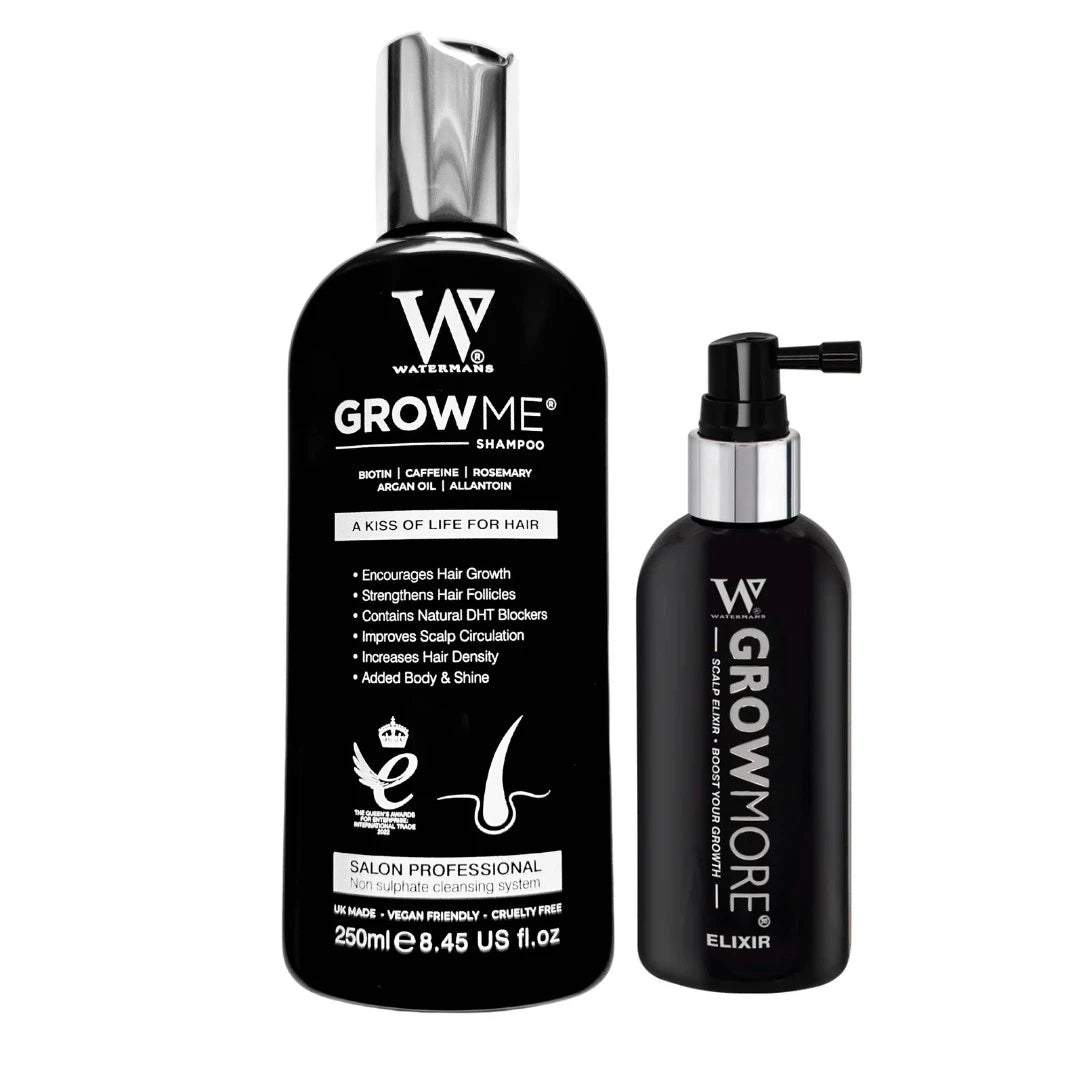
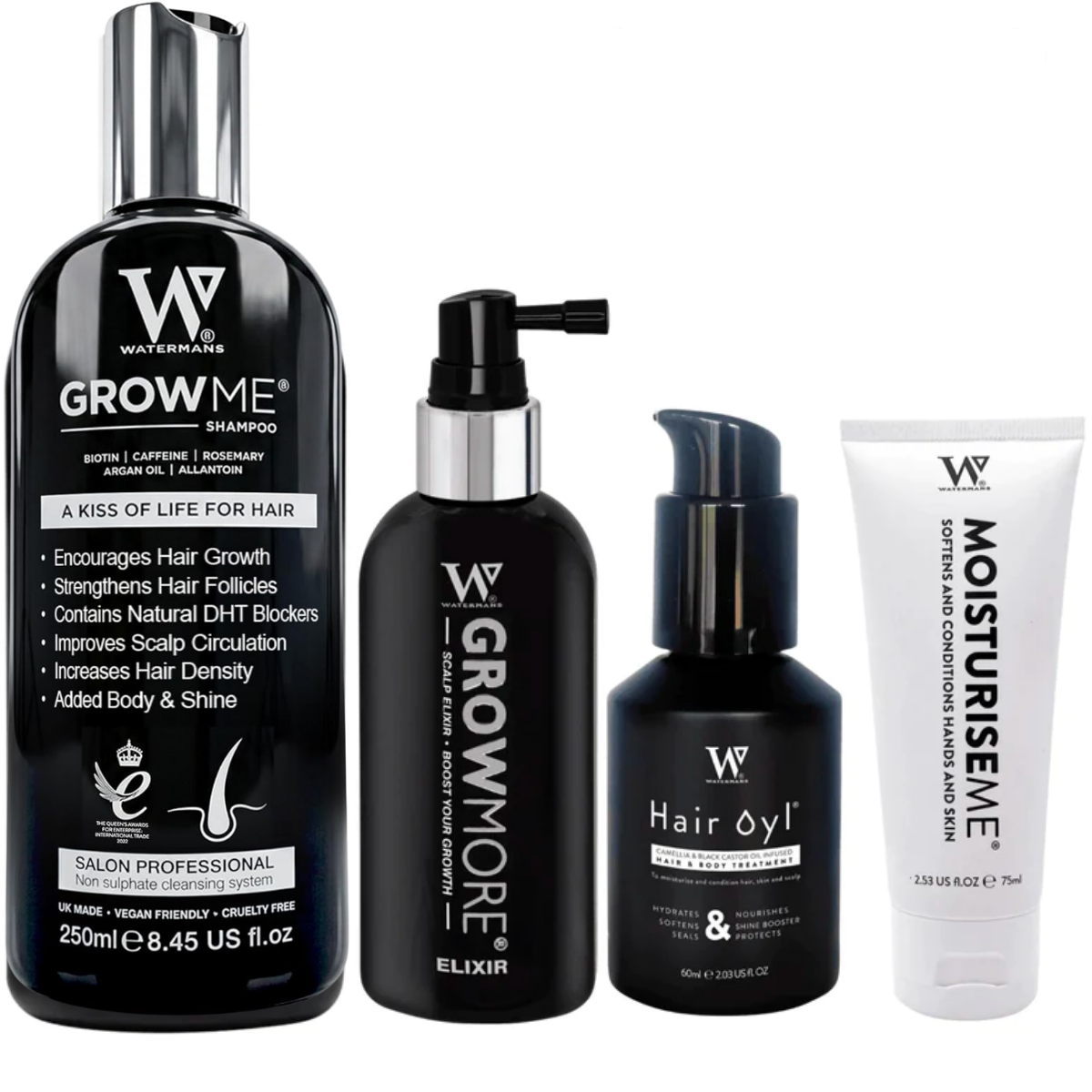
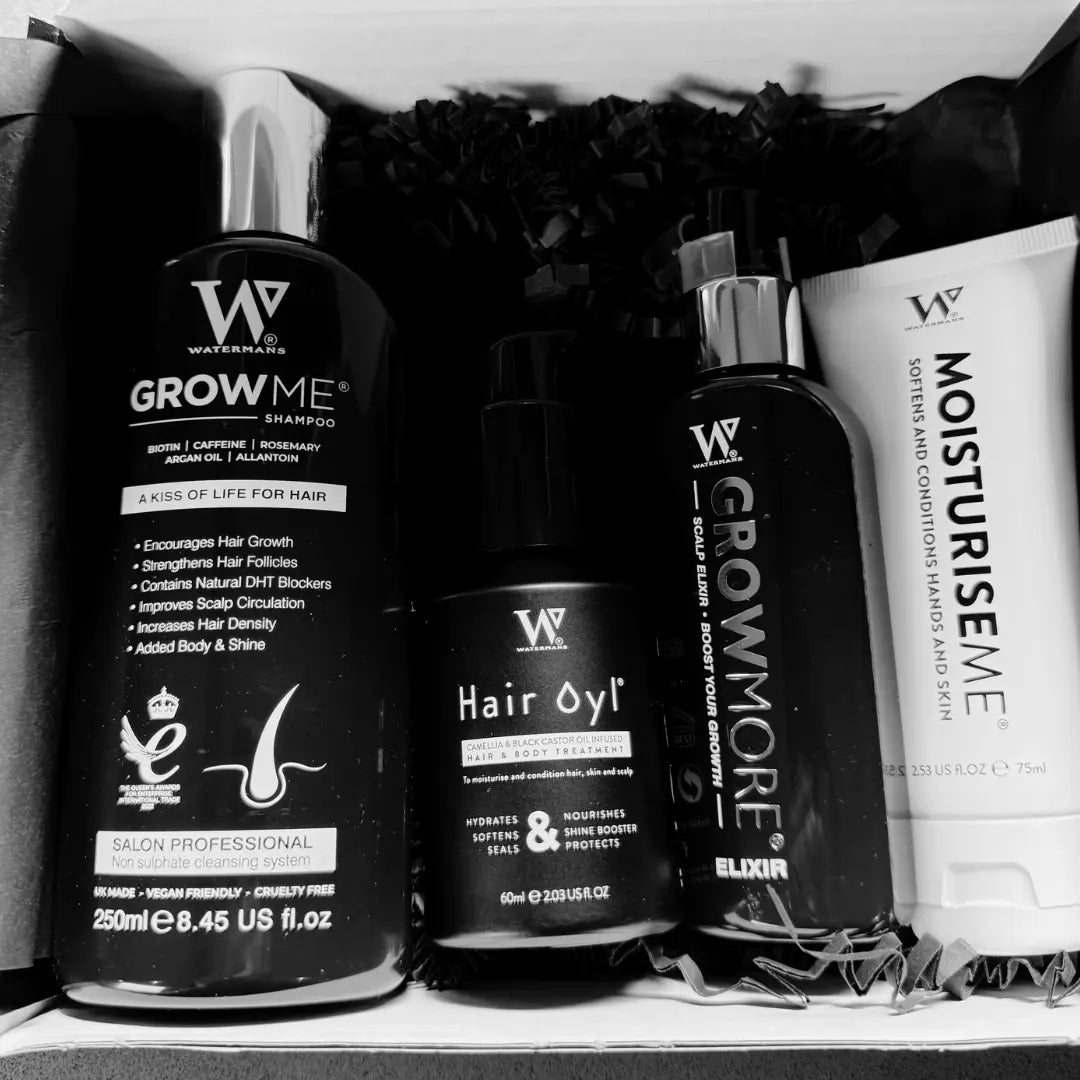
Grow Me® Sulfate Free Shampoo
Sulfate free is the point here. It cleans without the aggressive degreasing that leaves a winter scalp tight, and it carries biotin, caffeine, rosemary and niacinamide alongside hydrolysed lupine protein. It reduces breakage for fuller looking hair and supports a comfortable scalp environment. Cosmetic care, honestly described.
£14.95 · sulfate free, vegan, made in the UK
Get the winter scalp reset
A one page plan for the next four weeks: the wash day routine, the water temperature test, how to tell dry scalp from dandruff at a glance, what to change about hats and indoor heating, and the point at which it is worth speaking to your GP. Sent once, free.
One email at a time, no spam, unsubscribe whenever you like.
Do ceramides help a scalp the way they help skin?
The principle carries across, with one important adjustment.
Ceramides, cholesterol and fatty acids are the same lipids in scalp skin as in the skin on your arms, and products carrying them help replace what has been depleted. That is genuinely useful on a tight, dry, flaking scalp in January.
The adjustment is texture. The scalp produces far more of its own oil than most of your body, and it has hair sitting on top of it that traps whatever you apply. A thick barrier cream that suits a cracked heel will sit as residue at the roots, look greasy and attract more flaking rather than less. So on the scalp you want the barrier friendly ingredients delivered in something light that rinses cleanly, or applied as a pre wash step, rather than as a heavy leave on cream at the roots.
The same four ingredient families that govern body products govern this, and we have set out the whole label in our guide to which body care ingredients are actually worth it. For the rest of your skin in the same months, our winter dry skin guide covers the seasonal swaps.

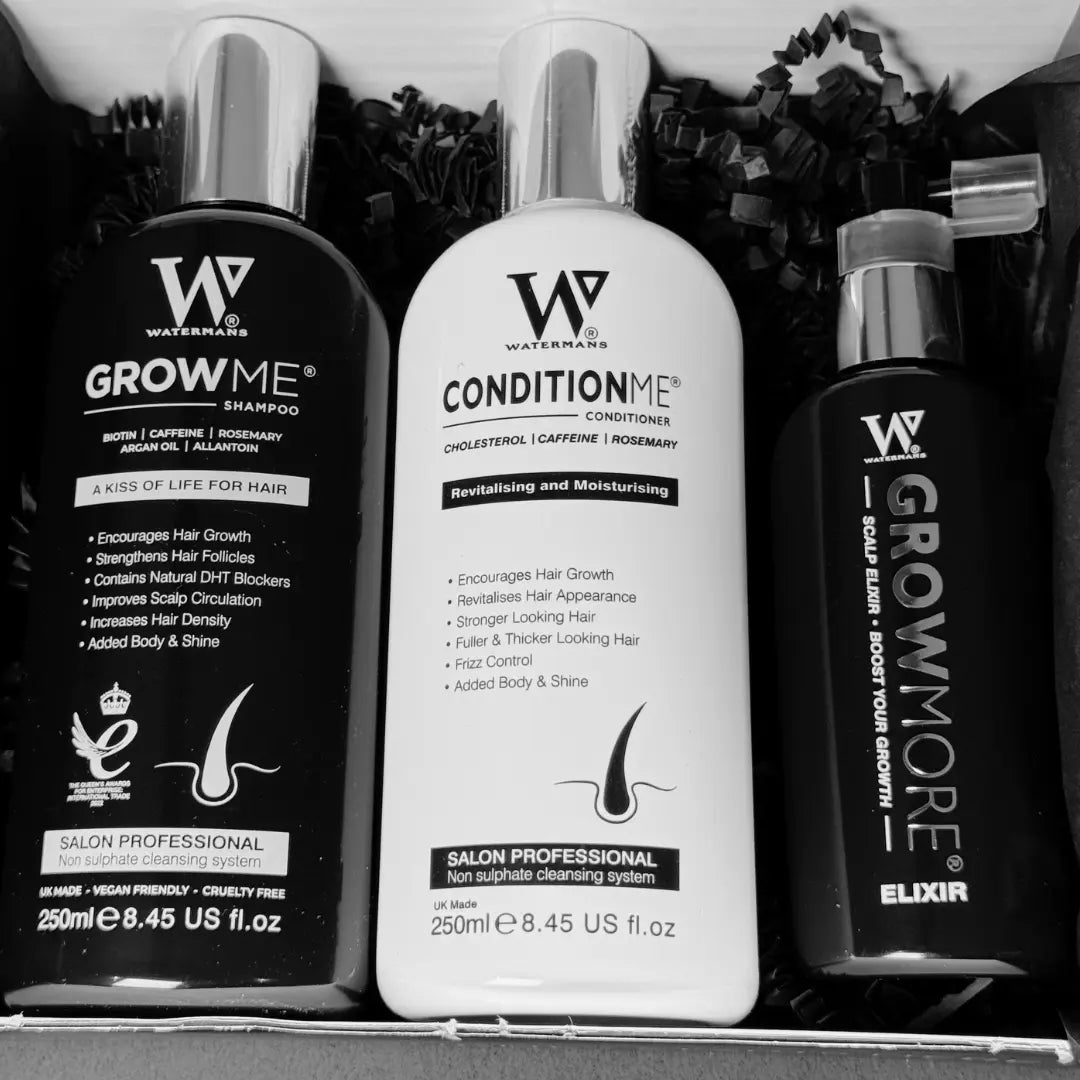
Condition Me® Hair Conditioner
The lengths half of the routine above. Applied from mid length to ends it detangles and smooths, which is what stops winter friction from hats and scarves turning into breakage. Strengthens and detangles for fuller looking hair.
£13.95 · vegan, made in the UK

What about hats, and why does my head itch under one?
Hats are not the enemy, but they are worth thinking about.
Wool and coarse synthetics rub against a scalp whose barrier is already compromised, and friction on dry skin is irritating in its own right. A hat also traps warmth and sweat, and then you step outside and the damp sits against cold skin. Both effects show up as itch.
Three easy adjustments. Choose a lining of cotton, silk or a soft synthetic against your head rather than raw wool. Take the hat off indoors rather than keeping it on through a warm shop. And never put a hat on genuinely wet hair in freezing weather, because wet hair is fragile and the friction against a hat is how a lot of winter breakage happens.
Why am I shedding more in winter too?
Because more of your hairs are simply reaching the end of their cycle at the same time. A degree of seasonal shedding is well documented, most commonly noticed in autumn and early winter, and it is not caused by the dry scalp even though the two turn up together and feel connected.
Normal is somewhere around 50 to 100 hairs a day, and a seasonal peak can push that higher for a few weeks before settling. Hair on the brush is not by itself a sign of anything wrong.
What is worth paying attention to is duration and pattern. Shedding that continues for more than about three months, comes out in handfuls, leaves visible patches, or arrives alongside fatigue, weight change or heavy periods is worth raising with your GP rather than attributing to the weather. Iron, thyroid and vitamin D are the usual things they will want to check, and none of that is fixed by a shampoo.
How long does it take to settle?
Two to four weeks for comfort, longer for flaking to clear completely.
Itching and tightness usually ease within about a week of cooler water and a gentler wash. Visible flaking takes two to four weeks, because the outer layer of skin needs a full turnover cycle to replace what has lifted. If you have done all seven steps consistently for six weeks and the flaking has not budged, it probably is not simple winter dryness, and that is the point to get it looked at rather than buying a fifth shampoo.
Change one thing at a time if you can. Switching shampoo, water temperature and wash frequency all in the same week means you learn nothing about which of them your scalp actually needed.
When should I speak to my GP?
Cosmetic care is the right answer for a scalp that is dry, tight and flaking in the cold. It is the wrong answer for a scalp that is unwell. Speak to your GP or a pharmacist if you notice:
- Itching intense enough to disturb your sleep.
- Redness, weeping, crusting, painful areas or any sign of infection.
- Well defined thickened, scaly patches, particularly if they also appear on elbows or knees.
- Flaking that has not improved at all after six weeks of gentler care.
- Shedding lasting more than three months, coming out in handfuls, or leaving visible patches.
- Scalp changes alongside fatigue, weight change or other symptoms elsewhere.
Watermans products are 100% cosmetic and do not treat medical hair loss. Individual results may vary.
Frequently asked questions
Why does my scalp get dry in winter?
Cold air holds less moisture, indoor heating dries the air further, hot showers strip the lipids holding the skin barrier together, and hats add friction. All four deplete the barrier faster than it can rebuild, which shows up as tightness, itching and fine flakes.
Is my flaking a dry scalp or dandruff?
Small, dry, white, powdery flakes with a tight feeling and dry skin elsewhere point to dryness. Larger, oily, yellowish flakes that stick together, on a scalp that feels greasy and flares year round, point to dandruff, which needs a different approach.
Should I wash my hair more often if my scalp is flaky?
Usually the opposite. Flakes from a dry scalp are not dirt, and washing more strips more of the lipids you need. Two to three gentle washes a week suits most dry scalps in winter.
Does water temperature really matter?
Yes, and it is the easiest change on this page. Hot water dissolves barrier lipids. Washing and rinsing warm rather than hot often produces a noticeable difference within a week, and it costs nothing.
Can I put moisturiser or body cream on my scalp?
A heavy body cream is the wrong texture. It sits as residue at the roots, looks greasy and can make flaking look worse. A light pre wash oil, or barrier friendly ingredients in something that rinses cleanly, suits the scalp better.
Do hats cause a dry, itchy scalp?
They contribute through friction and trapped sweat rather than causing it. Choose a soft cotton or silk lining against your head, take the hat off indoors, and never put one on wet hair in freezing weather.
Is it normal to shed more hair in winter?
A seasonal increase is common and usually settles within a few weeks. Around 50 to 100 hairs a day is normal. Shedding that lasts beyond three months, comes out in handfuls or leaves patches is worth discussing with your GP.
How long until my scalp settles?
Comfort in about a week, flaking over two to four weeks as the outer layer turns over. If six weeks of gentler care changes nothing, it is worth getting it looked at rather than trying another shampoo.
Start with the shower
Turn the water down, swap to a gentler sulfate free shampoo, use your fingertips instead of your nails, and put the conditioner where it belongs on the lengths. Give that four weeks before you change anything else. For most people that is the entire fix, and it costs one product swap and no extra time.
If you want a winter routine built around it, the Watermans Grow Me range is designed to clean gently and reduce breakage so hair looks fuller. Vegan, made in the UK, and over 5 million bottles sold since 2012.