Moisturiser for Dry Skin: What to Look For and How to Use It in Winter
The right moisturiser for dry skin is one that holds water in rather than only drawing it to the surface: a cream or balm with a humectant such as glycerin, emollient plant butters and an occlusive layer, applied to damp skin within three minutes of washing. Dry skin in winter is driven by cold outdoor air and central heating together, so a light summer lotion stops being enough. Lips need a greasier answer, which our guide to what causes chapped lips and what genuinely helps sets out.
Our face and hand cream
Moisturise Me® Face & Hand Cream, £15.00. A rich, plumping moisturiser for dry skin on the hands and face, made with cupuacu, shea and cocoa butters.
Key takeaways
- Indoor heating is usually the bigger culprit, not the weather. Dry air pulls water out of skin all day.
- Hot showers feel wonderful and strip the skin barrier. Warm and shorter is the single highest value change.
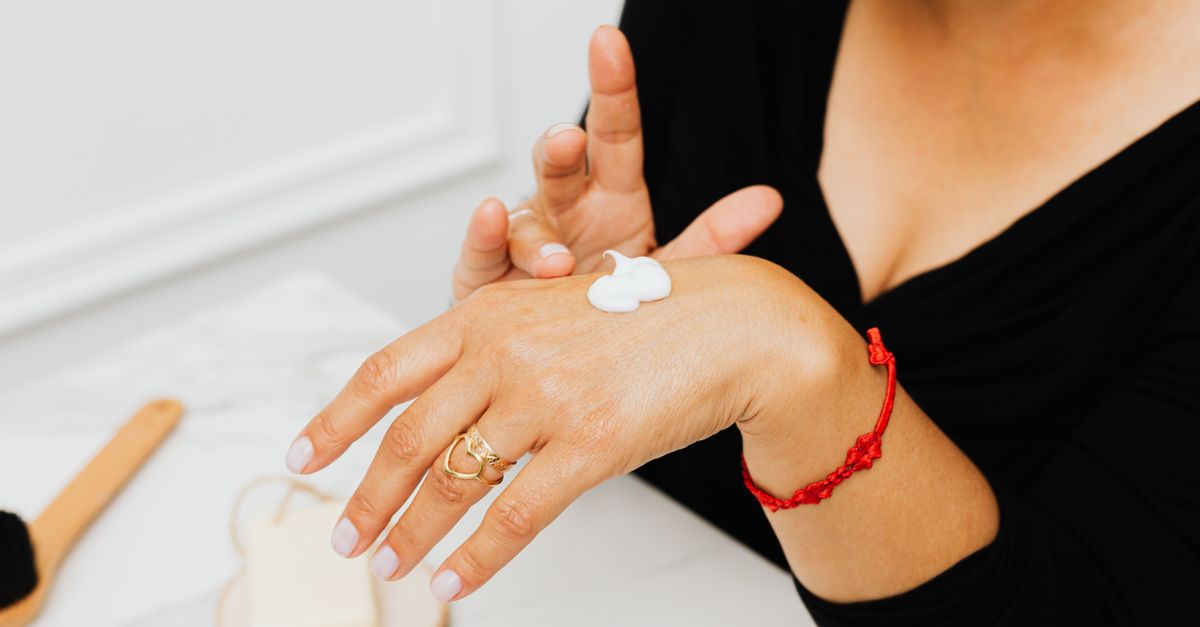
- Apply moisturiser to slightly damp skin within a few minutes of washing. Timing matters as much as the product.
- A moisturiser for dry skin should be richer than a summer lotion: cream or ointment weight holds water in better. Winter is the season to switch up in weight.
- Lips, hands and the scalp dry out first, and the scalp is the one people forget entirely.
- Skin that is cracked, bleeding, weeping, intensely itchy or not settling in a couple of weeks is a pharmacist or GP matter.
What causes dry skin in winter?
Four things stack up, and most people only address one of them.
Cold air holds less water. The colder the air, the lower its capacity to carry moisture, so outdoor air in winter is genuinely drier than summer air even when it is raining.
Indoor heating makes it worse. Warming that same dry air lowers its relative humidity further. A heated room in January can be drier than the air outside, and you spend most of your day in it.
Hot water strips lipids. Long hot showers and baths remove the oils that hold the skin barrier together, which is why skin often feels tightest immediately after a wash.
Wind and fabric add friction. Cold wind on exposed skin and rough winter fabrics against dry skin both cause irritation on top of the water loss.
Because the causes are cumulative, the fixes are too. No single product outweighs four simultaneous drivers, which is the honest reason people find their usual moisturiser stops being enough in November.
How should you change your washing routine?
This is where the biggest improvement usually comes from, and it costs nothing.
- Turn the temperature down. Warm, not hot. If your skin is pink when you get out, the water was too hot.
- Make it shorter. Ten minutes under hot water does more damage than most people realise. Five is plenty.
- Use a gentler cleanser. A soap that squeaks has removed more than dirt. A cream or oil based wash leaves the barrier intact.
- Pat dry, do not rub. Leave the skin slightly damp rather than bone dry.
- Moisturise within three minutes. This is the part people skip, and it roughly doubles what the product achieves.
That last point is the one worth remembering. A moisturiser applied to damp skin traps the water already there. The same product on skin that dried twenty minutes ago has far less to hold on to.
What should you look for in a moisturiser for dry skin?
A good moisturiser for dry skin combines three ingredient types on one label, a humectant to draw water into the outer skin, emollients to smooth the surface and an occlusive to slow the water escaping again, in a cream or ointment weight rather than a thin lotion. The NHS emollients guidance makes the texture point plainly: lotions are thin and spread easily, but they are not very moisturising.
| Label check | What to look for | Why it matters |
|---|---|---|
| Texture | A cream, balm or ointment rather than a runny lotion | The NHS emollients guidance notes that lotions are thin and spread easily but are not very moisturising; the oilier the texture, the slower water escapes |
| A humectant near the top of the list | Glycerin, urea, hyaluronic acid or allantoin | Draws water into the outer layer of skin so there is something for the richer ingredients to hold in |
| Emollient butters and oils | Shea, cocoa or cupuacu butter, almond oil, squalane | Fill the gaps between skin cells so the surface feels smooth rather than rough |
| An occlusive | Petrolatum, beeswax, dimethicone or heavy plant butters | Slows water escaping through the night and in heated rooms, the part a light summer product usually lacks |
| Low or no fragrance and alcohol denat if skin stings | Check the back of the pack, not the front | A dry barrier lets irritants in more easily, so stinging is a sign to go plainer |
| Pack size against how often you apply | A pump or tub you will not ration | A face cream for dry skin used twice a day and a hand cream used after every wash both run out faster than people plan for |
Two practical points from the same NHS page. Smooth a moisturiser for dry skin into the skin gently in the same direction the hair grows rather than rubbing it in, and think in terms of a daytime cream and a richer product at night, which is the pattern the NHS describes. A face cream for dry skin follows the same rules, with one addition: if sunscreen or make-up goes on top, give the cream a few minutes to settle first.
Measured against that checklist, Moisturise Me Face & Hand Cream is built from cupuacu, shea and cocoa butters with allantoin and almond oil, so it covers the humectant, emollient and occlusive boxes in one £15.00 pot and is sold for both face and hands. That is why it is the one cream we card on this page, and it is a cosmetic moisturiser, nothing more.
Which moisturiser actually helps dry skin in winter?
Ignore the marketing categories and look at what the formula does. Three mechanisms matter, and good winter products combine all three.
| Type | What it does | Common examples |
|---|---|---|
| Humectants | Draw water into the outer layer of skin. Need something over the top in dry air, or the water simply evaporates. | Glycerin, hyaluronic acid, urea, allantoin |
| Emollients | Fill the gaps between skin cells so the surface feels smooth and less rough. | Shea butter, cocoa butter, almond oil, squalane |
| Occlusives | Form a physical barrier that slows water escaping. The workhorse of a winter routine. | Petrolatum, beeswax, dimethicone, heavy plant butters |
A common winter mistake is using a humectant serum alone. In dry indoor air a humectant with nothing sealing it in can leave skin feeling tighter, not softer. Pair it with something richer on top, and the combination works.

What can you change about the room rather than the skin?
Since the air is doing most of the drying, the environment is worth a look.
- Turn the thermostat down a degree or two. Slightly cooler air is slightly less drying, and it saves money.
- Put moisture back into the air. A humidifier in the bedroom is the direct answer. A bowl of water near a radiator, or drying laundry indoors, does a smaller version of the same job.
- Do not sit directly in front of a heater. Concentrated hot dry air on one patch of skin is worse than a warm room.
- Choose softer layers next to the skin. Wool directly against dry skin is a common source of itch that gets blamed on the skin itself.
- Keep drinking water, though with realistic expectations. Hydration matters for overall health but drinking more will not overcome water loss happening at the surface.
Get a discount on the dry skin range
Join the Watermans mailing list and we will email a discount code straight to your inbox. Made in the UK, over 6.5 million bottles sold since 2012.
Why does your scalp get dry in winter too?
The scalp is skin, and it is subject to exactly the same forces, but it gets left out of most winter skincare advice.
Several winter habits stack against it. Hot showers hit the scalp first. Hats trap sweat and then leave the skin cold and damp. Indoor heating dries it as it dries everything else. And people often wash more often in winter because hats flatten hair, which means more cleansing on an already dry scalp.
The result is tightness, itching and small dry flakes. Worth distinguishing: a dry scalp produces small, fine, white flakes and feels tight, while dandruff tends to produce larger, oilier, yellowish flakes and comes with an oily rather than a dry scalp. They need opposite approaches, so getting this the wrong way round is a common reason winter scalp problems drag on. Our guide to keeping a healthy scalp goes into the difference.
Practically: use a gentler shampoo, wash with warm rather than hot water, and let a hat come off indoors so the scalp is not sitting damp under it all day.
Does winter affect your hair as well as your skin?
Yes, and mostly through breakage rather than anything happening at the root.
Dry indoor air, wool hats and scarves, and more frequent blow drying all increase friction and static, and dry hair snaps more easily than hydrated hair. What people often read as winter shedding is usually a mix of ordinary seasonal shedding and a genuine increase in breakage. The two look different in the brush: shed hairs are full length with a small pale bulb at the root, while broken pieces are short, uneven and have no bulb.
It is worth being clear that hair loss, meaning a real drop in density from the follicle, is a separate thing again and is not caused by cold weather. If density is genuinely dropping, that is a GP conversation rather than a seasonal one.


Moisturise Me Face & Hand Cream
Relevant here because of what is in it rather than what it promises: cupuacu, shea and cocoa butters as emollients and occlusives, with allantoin and almond oil. That combination is the type that suits cold weather, since it holds water in rather than only drawing it to the surface. Apply to slightly damp skin.

Camellia & Black Castor Hair & Body Oil
An oil is the simplest way to add the sealing layer that dry air removes. Useful on damp skin after a shower, and on the ends of hair where winter friction shows first. Keep it off the hairline if you are prone to breakouts there. Related reading: our guide to hairline breakouts.
Which areas need extra attention?
Some areas dry out faster because they have fewer oil glands or more exposure.
Hands take the most punishment, because washing and cold exposure combine. They need their own routine, covered in our guide to rescuing dry hands. Lips have no oil glands at all, so they rely entirely on what you put on them, and licking them makes it worse as the saliva evaporates. Shins and forearms are classic winter itch spots and respond well to moisturising straight after a shower. Around the eyes the skin is thinnest and shows dryness first.
The scalp belongs on that list too, and it is the one most often missed.
When should you see a pharmacist or GP?
Speak to a pharmacist, which is free and needs no appointment, if a few weeks of gentler washing and a richer moisturiser have not settled things, or if you are not sure whether what you have is simple dryness. They can recommend an emollient suited to you.
See your GP if the skin is cracked or bleeding, if it is weeping, crusting or looks infected, if the itch is bad enough to disturb your sleep, if there are defined red scaly patches rather than general dryness, or if it appeared suddenly without an obvious cause. Persistent dry skin is sometimes a sign of an underlying condition worth checking. If your question is about products or a routine rather than a medical one, you can talk to Gail Waterman, our co-founder, as an AI avatar on the Watermans homepage.
We are a hair and skin care company, not a clinic. We cannot examine anyone and we cannot tell you what a rash is, and the point of this section is to be clear about where the line sits. On the cosmetic side of that line, the money question comes up constantly, and our guide to whether expensive skincare is worth it explains what a price tag actually buys.
Frequently asked questions
How often should you apply a moisturiser for dry skin?
Whenever the skin feels tight, and on hands after every wash, which is more often than most people manage. The NHS emollients guidance describes using a cream during the day and an ointment at night as one workable pattern, and the three minutes after washing is the single most valuable application of the day.
Why is my skin drier in winter even though it rains more?
Rain does not raise how much water the air can hold. Cold air carries less moisture than warm air, and heating that air indoors lowers its relative humidity further, so both environments pull water out of your skin.
Should I moisturise more often or use something richer?
Richer, first. Frequency helps, but the bigger gain in cold weather comes from a formula with more occlusive content, applied to damp skin so there is water underneath to hold in.
Does drinking more water fix dry skin in winter?
Not on its own. Hydration matters for overall health, but the water loss here happens at the surface and is best addressed at the surface.
Are hot baths really that bad?
They are one of the most common causes of the tight feeling afterwards. You do not have to give them up. Make them warm rather than hot, keep them shorter, and moisturise within a few minutes of getting out.
Is my flaky scalp dryness or dandruff?
A dry scalp gives small, fine, white flakes and feels tight. Dandruff gives larger, oilier, yellowish flakes on a scalp that is not dry. They need different approaches, so it is worth working out which you have before buying anything.
Can dry skin in winter make my hair fall out?
Dry conditions increase breakage, which looks like more hair in the brush. Genuine hair loss from the follicle is a different thing and is not caused by cold weather. Short broken pieces with no bulb point to breakage.
Do I need a humidifier?
It is the most direct way to address the cause rather than the symptom, and it often helps most in the bedroom overnight. It is not essential if the rest of your routine is right.
Can I use my summer moisturiser with an oil on top?
Yes, and that is a sensible way to avoid buying something new. Apply the lighter product to damp skin, then seal it with an oil or balm.
What is the bottom line on moisturiser for dry skin?
The bottom line on a moisturiser for dry skin is weight, ingredients and timing: pick a cream or balm with a humectant, plant butters and an occlusive, and put it on damp skin within three minutes of washing. Dry skin in winter comes from dry air indoors and out, hot water, and friction, stacking up together. Turn the shower down and make it shorter, use a gentler cleanser, and moisturise damp skin within three minutes with something richer than you use in summer. Put moisture back into the room if you can, and do not forget the scalp, the lips and the hands, which dry out first. If the skin cracks, bleeds, weeps or keeps you awake, that is a pharmacist or GP conversation rather than another cream.
For hands and face rather than hair, Moisturise Me, our moisturiser for dry skin, is what we make, at £15.00. Made in the UK, with over 6.5 million bottles sold since 2012.
Watermans products are 100% cosmetic and do not treat medical hair loss. Individual results may vary.
Sources and references
- NHS, Emollients, on how moisturisers work and how to apply them.
- DermNet, Dry skin, on causes, barrier function and management.
- National Institute for Health and Care Excellence, Clinical Knowledge Summaries: Eczema, atopic, on when dryness needs clinical assessment.
- NHS, Atopic eczema, on the symptoms that distinguish eczema from ordinary dryness.