

Silk Pillowcase for Hair: Does It Actually Help?
A silk pillowcase for hair is one of the few pieces of hair folklore with a plausible mechanism behind it: silk has a smoother surface than cotton and absorbs far less moisture, so hair slides across it instead of catching and drying out. What it will not do is make hair grow, thicken it, or change anything happening at the follicle. Think of a silk pillowcase for hair as friction control for the eight hours nobody supervises, and it is a reasonable buy.
Key takeaways
- The mechanism is real: lower surface friction and much lower moisture absorbency than cotton.
- The evidence is thin. There is good laboratory data on fibre friction and very little clinical research on hair outcomes specifically.
- Satin is a weave, not a fibre. A polyester satin pillowcase is nearly as smooth and a fraction of the price.
- It helps most if your hair is bleached, curly, coily, fine, long or already breaking. Short robust hair will notice very little.
- A bonnet or scarf outperforms a pillowcase, because it stays on your head when you turn over.
- An unwashed pillowcase of any fibre is a scalp problem. Wash it twice a week whatever it is made of.
What does a silk pillowcase for hair actually do?
Two properties do the work, and both are measurable rather than marketing.
Lower friction. Silk filaments are long, smooth and continuous. Cotton is spun from short staple fibres, so its surface has thousands of tiny protruding ends. Hair dragged across cotton catches on those ends, which lifts the cuticle scales and, over thousands of nights, contributes to roughness, tangling and snapping. Hair moving across silk slides.
Lower absorbency. Cotton is highly absorbent and will happily pull moisture out of hair and skin overnight. Silk absorbs considerably less, so hair and any product you applied stay where you put them rather than migrating into the bedding.
Neither of those is a hair growth mechanism. They are both about protecting hair you already have from mechanical wear, which is a modest but genuine benefit and worth being precise about.

Does a silk pillowcase for hair reduce breakage?
Probably, for some hair types, and the honest answer has to include how weak the evidence is. The friction difference between silk and cotton is well established in textile science. The step from that to a measured reduction in hair breakage in real people over months has very little published research behind it, and most of what circulates online is a brand extrapolating from the first fact to the second.
What can be said fairly is that mechanical friction is a real and significant cause of hair damage, that it accumulates, and that reducing it is sensible. Whether a pillowcase is where your money is best spent depends entirely on your hair.
| Your hair | Likely benefit | Better use of the money first |
|---|---|---|
| Bleached or heavily coloured | High. The cuticle is already compromised and friction costs more. | Heat protection and a gentler detangling routine |
| Curly or coily | High. Cuticle sits more open and tangling is the main damage route. | A bonnet, which stays put better than a pillowcase |
| Fine and long | Moderate to high. Long hair spends more time being dragged. | A soft hair tie and a loose night plait |
| Thick, short, unprocessed | Low. Not much to gain. | Nothing. Your hair is fine as it is. |
| Prone to morning frizz | Moderate. Less roughing up means less frizz to fix. | Not going to bed with damp hair |
| Thinning or shedding | None for the shedding itself. | See a GP about the cause rather than the bedding. |
The money-saving detail nobody selling silk will tell you
Satin is a weave, not a fibre. You can weave satin from silk, polyester, nylon or bamboo viscose, and a polyester satin pillowcase has a smooth surface for a small fraction of the price of mulberry silk. It is less breathable and it does not feel as nice, but on the specific measure you are buying for, surface smoothness, it does most of the same job. If the choice is a cheap satin pillowcase or nothing because silk is too expensive, buy the satin one.
How do you choose one?
If you have decided on real silk, four things matter and the rest is packaging.
- Momme weight. This is the unit of silk density. Nineteen to twenty two momme is the sensible range for bedding. Below about sixteen it wears out quickly, above twenty five you are paying for weight you will not notice.
- Mulberry silk, charmeuse weave. Mulberry describes the silkworm's diet and correlates with longer, more uniform filaments. Charmeuse is the weave that gives the smooth face.
- Both sides the same. Some pillowcases are silk on one face and cotton on the other, which is fine until you turn it over in your sleep.
- An envelope closure. Zips are hard, catch hair and defeat the entire point.
The overnight hair routine card
One email with the whole night routine on a single page: how to plait or pineapple your hair by length and texture, what to put on your ends before bed and what to keep off them, how to wash silk without ruining it, and the friction habits during the day that matter more than the bedding does.
Is a bonnet better than a silk pillowcase for hair?
For most people with textured, long or fragile hair, yes. A pillowcase only protects hair that is actually on the pillowcase, and hair moves. A bonnet, cap or scarf travels with your head, so it covers the whole night rather than the portion of it you spend facing the right way.
The counterargument is comfort and consistency. The best option is the one you will use every night, and plenty of people will not sleep in a bonnet. A pillowcase asks nothing of you, which is a real advantage in a habit that only works through repetition. Some people use both.
What else should you do at night?
The bedding is one variable among several, and the others are free.
- Never go to bed with soaking wet hair. Wet hair is at its most fragile and it will be dragged for hours.
- Put long hair in a loose plait or a loose high bun on top of the head, secured with a soft fabric tie rather than an elastic band.
- Vary where you tie it. The same tight point every night is a reliable way to snap a section.
- Detangle gently before bed, from the ends upwards, so you are not fighting a knot in the morning when hair is at its most tangled.
- Keep heavy oils off the scalp overnight, and remember that oil transfers to fabric.
- Wash the pillowcase twice a week regardless of fibre.
That last point matters more than the fabric choice. A pillowcase left for a fortnight collects sebum, dead skin and product, and puts it back against your scalp every night, which is one of the quiet causes of a scalp that smells however often you wash your hair.

How do you wash silk without ruining it?
Silk is a protein fibre, chemically closer to your hair than to cotton, which is why it dislikes the same things your hair dislikes: high heat, strong alkalis and rough handling.
- Wash at thirty degrees or cooler, on a delicates cycle, ideally in a mesh bag.
- Use a detergent without enzymes. Biological detergents are designed to break down protein, and silk is protein.
- No bleach, no fabric softener, no tumble dryer.
- Hang to dry out of direct sunlight, and iron on the silk setting if you must, inside out.
- Buy two, so one is always in the wash. A silk pillowcase you cannot be bothered to launder is worse than a cotton one you change often.
Which products help overnight?
We do not make pillowcases and we are not going to pretend the bedding is the main lever. Friction damage happens all day as well as all night, and the two products below address the part of it you can actually control with a bottle.

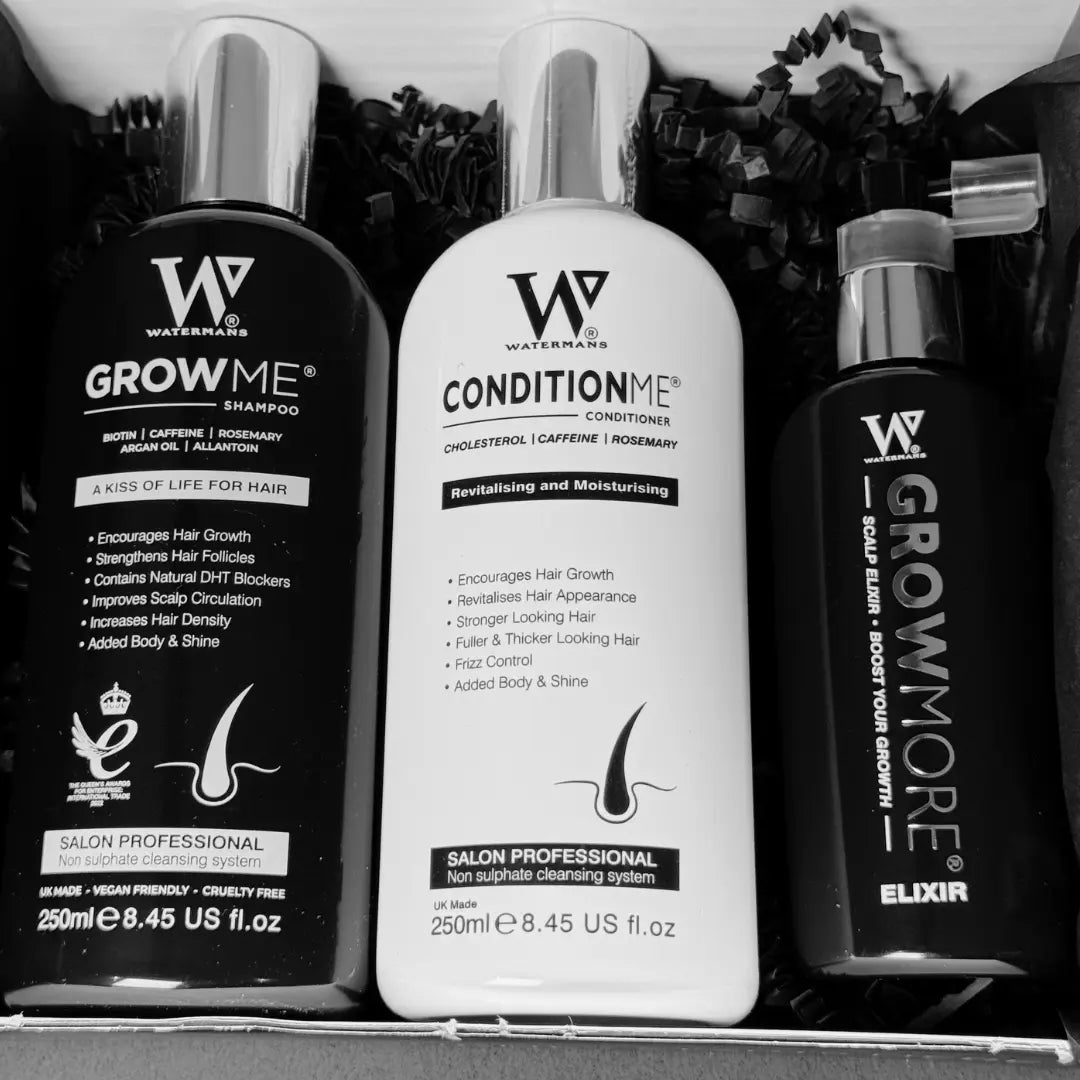
Condition Me® Conditioner, because detangling is where the damage happens
Most overnight breakage is really morning breakage: hair tangles in the night and then gets dragged through with a brush. A conditioner that gives proper slip means the comb passes instead of pulling, which does more for breakage than any fabric will.
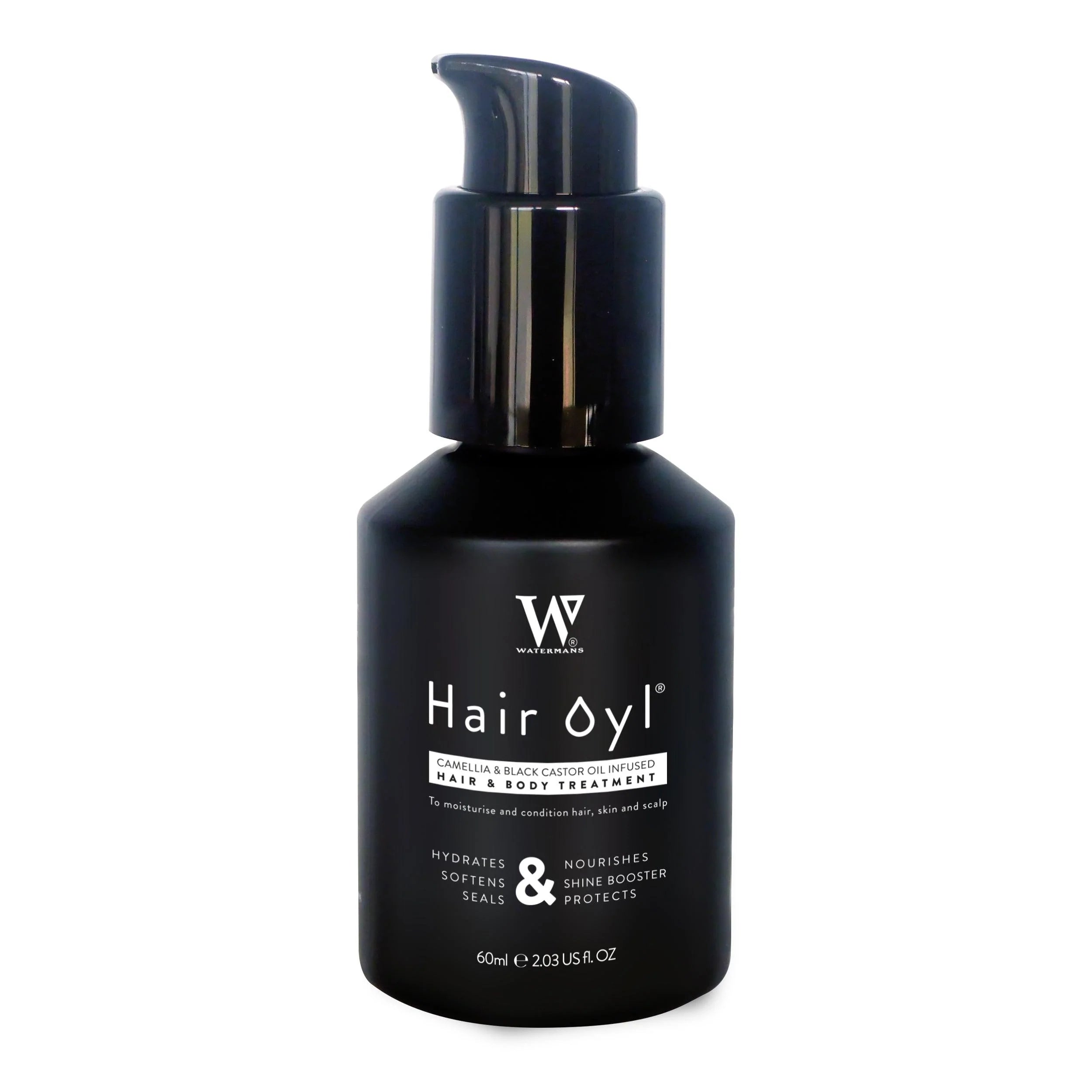
Camellia & Black Castor Oil, a few drops on the ends before a night plait
Camellia and black castor oil on the last few inches before you plait helps the ends hold moisture overnight and reduces the roughness that causes tangling. Use it sparingly, keep it off the scalp, and note that any oil will mark bedding, so a cheap cotton case on oiling nights is sensible.
For the wider picture on where hair damage genuinely comes from, our guides to what causes hair damage and how to prevent split ends put the overnight question in proportion.
Will a silk pillowcase help with hair loss?
No, and this is where the marketing sometimes crosses a line worth naming. Bedding cannot change what happens inside a follicle. It can only affect the fibre after it has left the scalp.
Hair breakage is the fibre snapping along its length, giving short fragments with blunt ends and no bulb. That is the only one of the three a pillowcase touches.
Hair shedding is full length hairs with a small pale bulb leaving the follicle at the end of their cycle, fifty to a hundred a day being normal.
Hair loss showing as a widening parting, a receding line or visible scalp is a medical matter, and no fabric, oil or conditioner changes it. It is worth raising with your GP rather than working through products.
Watermans products are 100% cosmetic and do not treat medical hair loss. Individual results may vary.
Frequently asked questions
Is a silk pillowcase for hair worth the money?
If your hair is bleached, curly, coily, fine or long, it is a reasonable purchase and the mechanism is sound. If your hair is short, thick and unprocessed you will probably notice very little. A satin pillowcase gives you most of the surface benefit for a fraction of the price, so cost is rarely a reason to go without.
Silk or satin, which should I buy?
Satin is a weave and silk is a fibre, so the two are not alternatives in the way marketing implies. Silk satin is the premium option, polyester satin the budget one. Polyester is less breathable and can feel warm, but its surface smoothness is close, which is the property you are buying for.
What momme weight should I look for?
Nineteen to twenty two momme is the usual sweet spot for pillowcases. Lighter silk wears through faster, heavier silk costs more without a benefit you will feel against your hair.
Does it help with frizz?
Often, modestly. Frizz is partly raised cuticle scales scattering light and catching on each other, and a smoother surface roughs the cuticle up less overnight. It will not do anything about frizz caused by humidity or by damage that is already there.
Will it help my curls last longer?
Usually yes, and this is one of the clearer everyday benefits. Less friction means less disruption to the curl clump, so second and third day hair holds its pattern better. A bonnet or a loose pineapple does the same job more thoroughly.
How often should I wash a silk pillowcase?
Twice a week, the same as any pillowcase. Fibre choice does not change the fact that it collects sebum, skin cells and product, and a dirty silk pillowcase against your scalp is worse than a clean cotton one.
Can I use one if I have oily hair?
Yes, and change it often. Silk absorbs less oil than cotton, which is good for your ends and means slightly more oil stays on your hair and skin rather than the fabric. Washing the case twice a week matters more here, not less.
Is bamboo or a copper-infused pillowcase better?
Bamboo viscose can be woven smooth and is a reasonable middle option. Claims about copper or other infused fibres changing skin or hair are not well supported, and you are usually paying a premium for a marketing story rather than a measurable surface property.
Do I still need to plait my hair?
If your hair is long or textured, yes. The pillowcase reduces friction where hair touches it, but containing the hair in a loose plait or bun stops it being pulled and tangled in the first place. The two work together.
Sources and references
- The textile science literature on fibre surface friction, silk filament structure and the difference between staple and filament yarns.
- Robbins, C. R., Chemical and Physical Behavior of Human Hair, Springer, on mechanical damage, cuticle wear and the role of friction in hair fibre breakage.
- British Association of Dermatologists public information leaflets on general hair and scalp care.
- NHS guidance on hair loss, for distinguishing normal shedding from hair loss that should be discussed with a GP.
The short version
A silk pillowcase for hair works on a real mechanism, lower friction and lower absorbency, and the honest evidence for how much it changes in practice is thinner than the marketing suggests. It is most worth it for bleached, curly, coily, fine or long hair, and barely worth it for short robust hair. Satin gets you most of the way for far less. A bonnet beats both. And whatever you sleep on, washing it twice a week and plaiting long hair loosely will do more than the fibre choice ever will.
Watermans is vegan, UK made, and has sold over 5 million bottles since 2012.