

Hair Care While Breastfeeding: What Is Safe to Use
Last updated: August 2026
Ordinary cosmetic hair products used on your own head are not something breastfeeding gives you a new reason to worry about. Shampoo and conditioner sit on the scalp for a minute or two and are rinsed away, the amount that crosses intact skin is negligible, and the amount that could reach breast milk from that is smaller again. The genuinely useful questions for a new parent are different ones: why your hair is falling out at four months, what to do about the fine new hairs that appear later, and how to keep any routine at all when you have roughly four minutes to yourself.
A note on where our advice stops. We make cosmetic hair care, not medicines, and we are not clinicians. Anything you want a definitive safety answer on while feeding, including any medicine, is a question for your midwife, health visitor, GP or pharmacist, who can check it properly against your circumstances. What follows is the hair side, written for the months when nobody has time.
Key takeaways
- Rinse-off products are the least of your concerns. Shampoo and conditioner are on the scalp briefly and washed off, and intact skin is a very effective barrier.
- Postpartum shedding is not caused by anything you used. It is the pregnancy hormone drop, it starts around two to four months after birth, and it is temporary.
- Feeding does not cause the shedding either. Women who do not breastfeed shed on the same timetable, so stopping will not stop it.
- Current NHS guidance does not tell people to avoid hair dye while breastfeeding. If you want extra reassurance, highlights avoid scalp contact almost entirely.
- Your nutritional demands are genuinely higher while feeding. Protein, iron and vitamin D are worth actual attention rather than guesswork.
- The fine flyaway hairs at your hairline around month eight are new growth, not damage. Leave them alone.
- Ventilation matters more than the product for anything strongly scented. Do it in a well aired room, not with the baby on your hip.
- See your GP if shedding is still worsening past nine months, or comes with exhaustion beyond ordinary newborn tiredness.
Is it safe to use hair products while breastfeeding?
For everyday cosmetic hair care, the honest answer is that this is not where the risk in your life is. Two things make it a small question. First, intact skin is a genuinely effective barrier, and the scalp is not a special exception to that. Second, rinse-off products have contact times measured in a minute or two, after which most of the product goes down the drain.
It is still reasonable to want a sensible framework rather than blanket reassurance, so here is how the categories actually differ.
| Product type | Contact with skin | Sensible approach |
|---|---|---|
| Shampoo | One to two minutes, then rinsed | Use as normal. Nothing to change |
| Conditioner and masks | Mostly on lengths, not scalp | Use as normal. Keep it off the roots anyway, for volume |
| Leave-in sprays and serums | Stays on, but usually on lengths | Fine. Apply away from the baby and let it settle |
| Permanent colour | Scalp contact for 30 to 45 minutes | Not advised against. Ventilate well, or choose highlights |
| Highlights and balayage | Little or no scalp contact | The easiest option if you want extra reassurance |
| Chemical straightening | Strong fumes, long contact | The ventilation question is the real one. Salon, not kitchen |
On colour specifically, NHS guidance does not tell people to avoid hair dye while breastfeeding, and the amount absorbed through the scalp is very small. Many people still prefer to wait until the early weeks are behind them, or to switch to highlights, which keep the product off the scalp almost entirely. Both are perfectly reasonable positions and neither needs justifying. If you want a definitive answer for your own situation, your health visitor or pharmacist is the right person to ask.
The one thing genuinely worth attention is ventilation rather than absorption. Strong fumes in a small unventilated bathroom are unpleasant for you and pointless to share with a baby. Open a window, use the extractor, and do it when someone else has the baby.

The shedding is not your shampoo
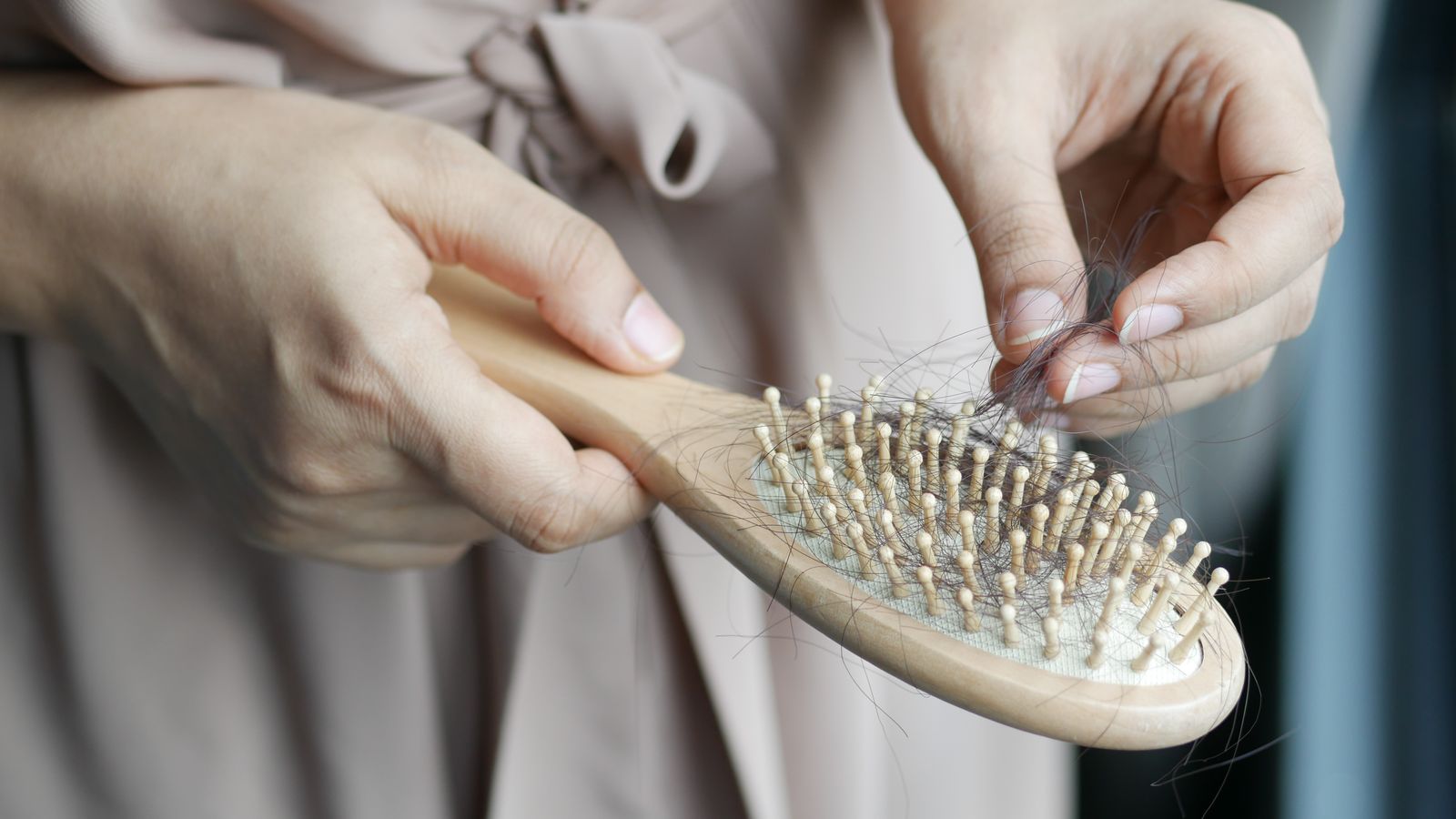
Somewhere around month two to four after birth, a great many people lose hair in a way that is genuinely frightening the first time. It comes out in the shower in quantities that look like something has gone badly wrong. It has nothing to do with what you have been using on it.
What happens is this. During pregnancy, high oestrogen keeps far more hairs than usual in their growing phase, so the normal daily shedding almost pauses. That is the famous pregnancy hair. After birth the hormones drop, all those hairs that were held on past their natural exit point are released at once, and they come out together over a few weeks. You are not losing extra hair overall. You are catching up on nine months of shedding that never happened.
Two things worth knowing. It is not caused by breastfeeding, and stopping feeding will not stop it, because people who do not feed shed on exactly the same schedule. And it resolves on its own, usually settling by six to twelve months after birth. Our full guide to postpartum hair loss and how long it lasts covers the timeline properly, so this page will not repeat it.
The bit nobody warns you about. Around month eight to twelve you will get a fringe of short fine hairs standing straight up along your hairline. That is the new growth coming through, not damage, and it is the sign the whole thing is over. Do not try to flatten it with heat or scrape it back. It grows in.
Your nutrition demands really are higher
This is the part where the feeding genuinely matters to your hair, though indirectly. Producing milk raises your energy and nutrient requirements meaningfully, and it lands at the exact point in life when you are least able to shop, cook or sit down to eat. Hair is the tissue the body de-prioritises first when intake falls short, so a period of eating badly shows up in your hair two to four months later.
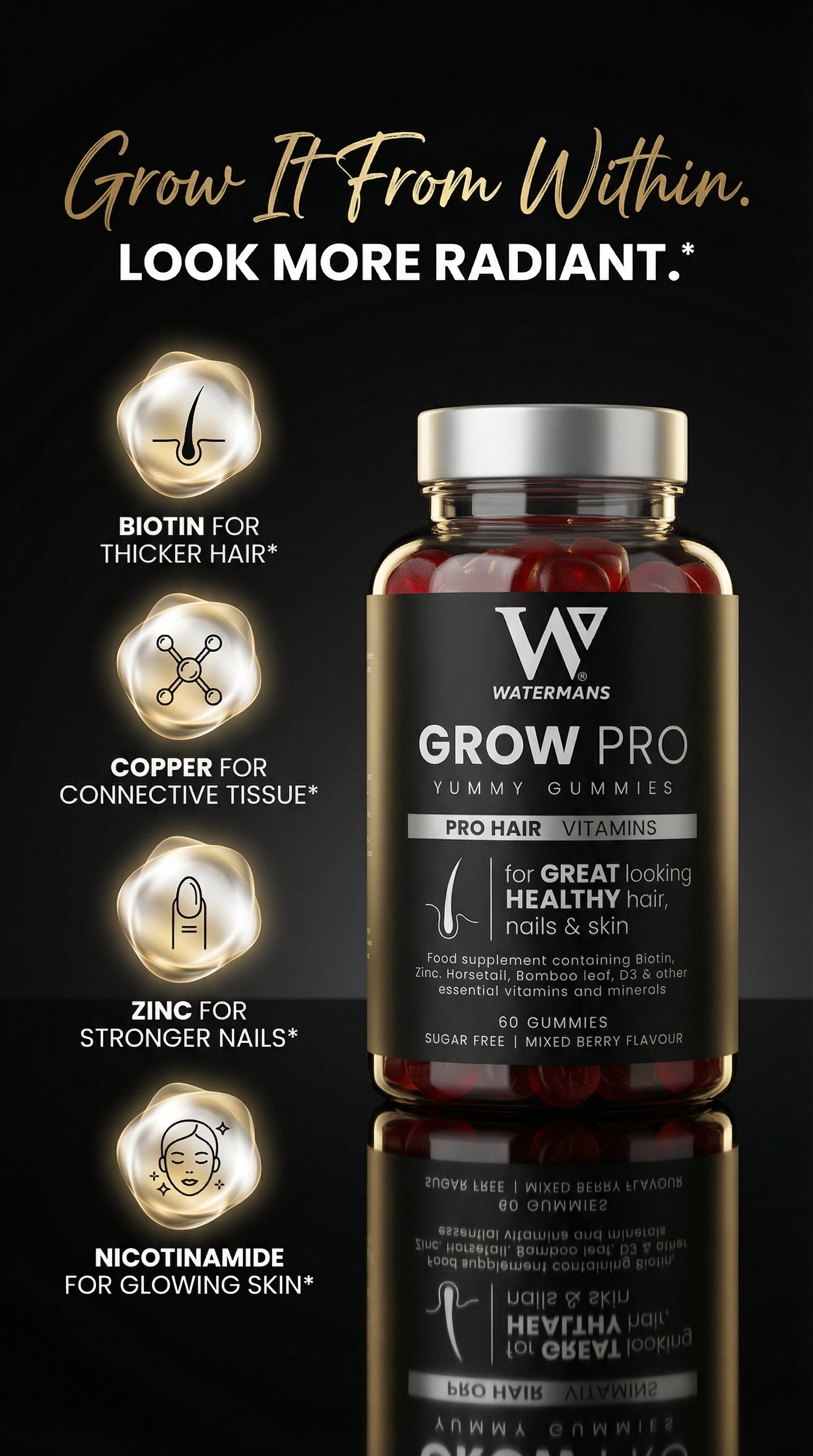
The things worth attention are unglamorous: enough overall food, protein at each eating occasion, and iron. Iron stores are commonly depleted by pregnancy and birth, particularly after significant blood loss, and low ferritin is well associated with diffuse shedding. UK guidance is also that everyone should consider a vitamin D supplement through autumn and winter, and there is specific advice for breastfeeding parents, so it is worth asking your health visitor what applies to you.
Practically, this means keeping food that requires no preparation within reach of wherever you feed. Greek yoghurt, boiled eggs, cheese, nuts, tinned fish, oatcakes. Anything requiring a hob will not happen. If you suspect you are running low on iron, ask your GP for ferritin alongside a full blood count rather than starting a supplement on a hunch, because too much iron is harmful.

A hair routine that survives a newborn
Every hair routine written for people with time is useless here. This is the version that assumes you have four minutes, no warning, and one hand.
- Wash less often, but wash properly when you do. Two shampoos on the scalp only, thirty seconds each, is better than a daily rushed rinse. Skipping washes does not reduce shedding, it just batches it into the next one.
- Never skip conditioner. If you have to choose between shampoo and conditioner, conditioner is the one doing the protective work. Mid lengths and ends only.
- Detangle in the shower. Wide tooth comb, conditioner still in, from the ends upwards. This is where breakage happens and it takes ninety seconds.
- Stop the tight bun. The permanently scraped-back mum bun is the single most common cause of avoidable hairline damage in the first year. Loose, low, different position each day, and a fabric scrunchie rather than an elastic.
- Air dry as the default. Not because heat is disastrous, but because it removes a task, and the tasks you remove are the ones that actually get skipped.
- One mask a week, applied in the shower and rinsed at the end. No extra time cost, and it does most of the repair work for the whole week.
The mum bun point deserves emphasis because it is genuinely the thing we see doing damage. Repeated tight tension on the same spot, day after day, on a hairline that is already shedding for hormonal reasons, produces thinning at the temples that people then blame on the hormones alone. The hormonal part resolves. The tension part does not, if you keep doing it.

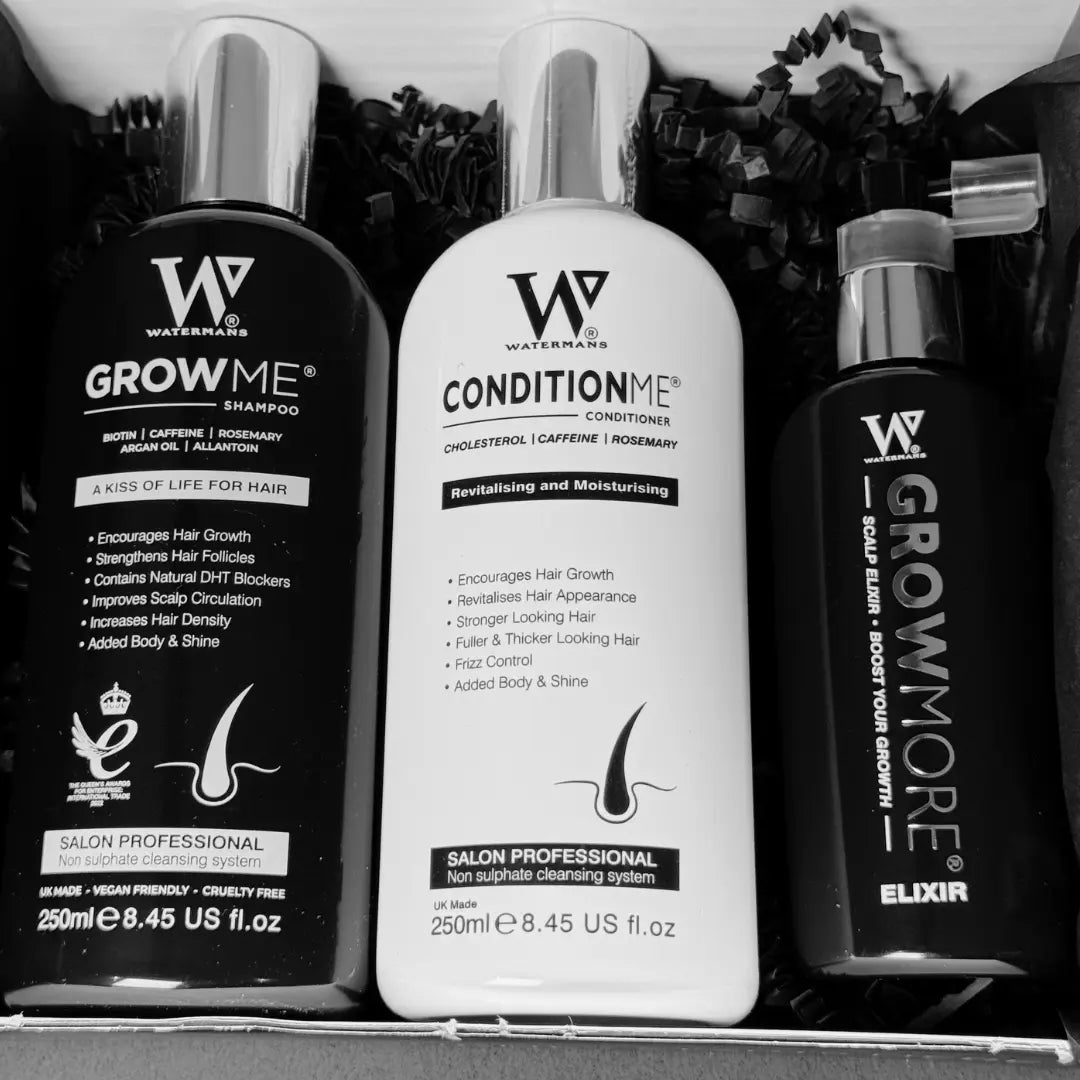
Condition Me Hair Growth Conditioner
Strengthens and detangles for fuller looking hair. The one product to keep if you keep only one, because detangling is where postpartum hair actually gets broken. Mid lengths and ends, comb it through in the shower while it is slippery, then rinse.
Vegan and made in the UK

Masque Me Deep Conditioning Hair Mask
An 8 in 1 deep conditioning mask with rosemary, caffeine, hydrolysed lupine protein, niacinamide, provitamin B5 and argan oil. Once a week, applied at the start of a shower and rinsed at the end, so it costs no extra time. Softer ends break less, and less breakage is the whole game right now.
Vegan and made in the UK
Get the newborn proof hair routine
A one page routine built for four minutes and one free hand: what to keep and what to drop, the detangling order that stops breakage, the styles that damage a shedding hairline, and the no-cooking foods to keep where you feed. Sent once, free.
One email at a time, no spam, unsubscribe whenever you like.
Making it look better while you wait
None of the above changes the timeline, because the timeline is hormonal and it is going to run its course. What you can change is how it looks meanwhile, and there is no vanity in wanting that.
A shorter cut is the fastest improvement available, because density is a ratio of how much hair you have to how much length it is spread across. Taking length off concentrates what remains, and it also removes the weight that drags fine postpartum hair flat. Ask for blunter ends rather than heavy layering, since blunt ends read as considerably fuller.
Beyond that: move your parting, which alone covers a surprising amount of hairline thinning. Use dry shampoo at the roots for lift rather than for cleanliness, because lift is what the eye reads as volume. And avoid the very tight scraped back look while your hairline is recovering, which exposes exactly the area you would rather not draw attention to.


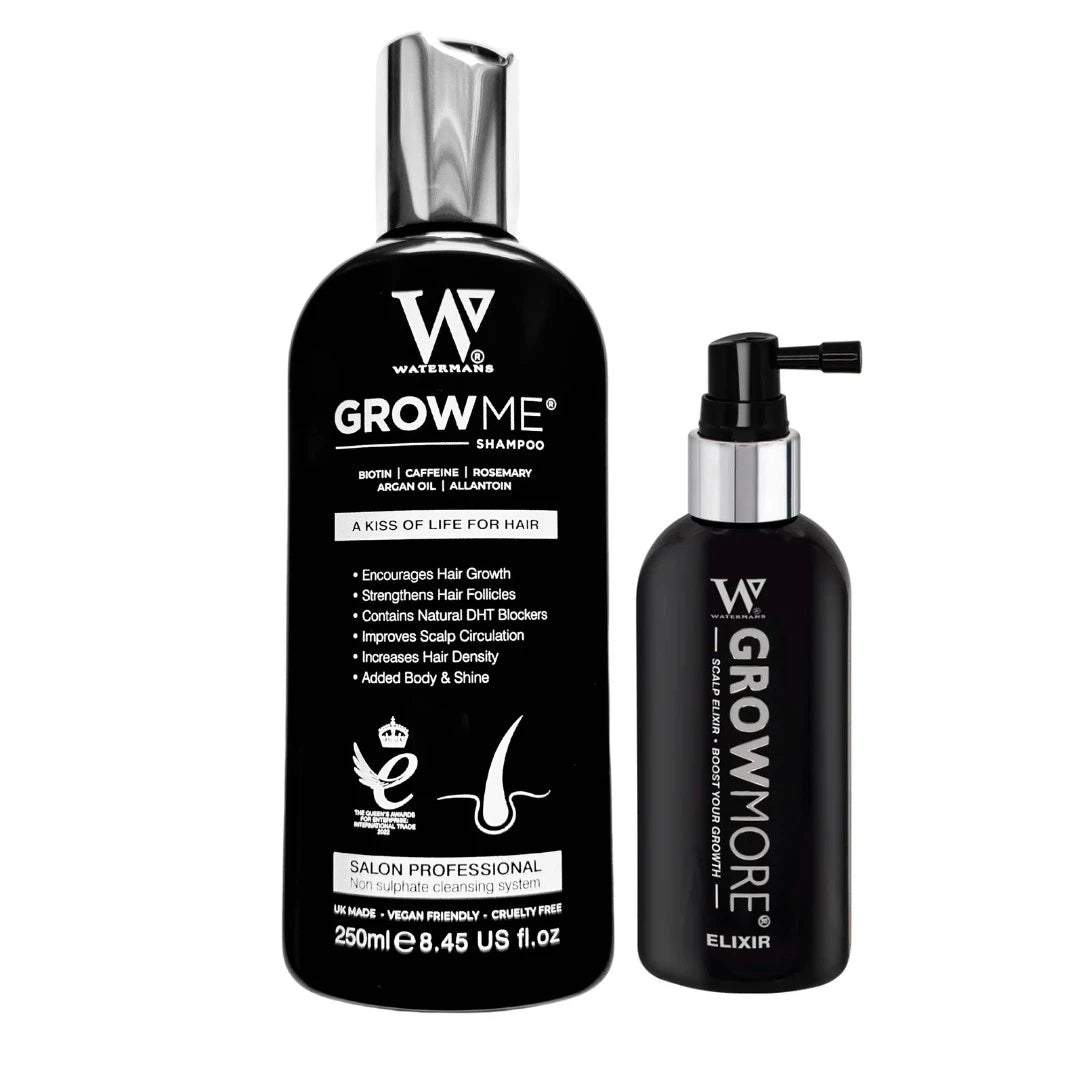
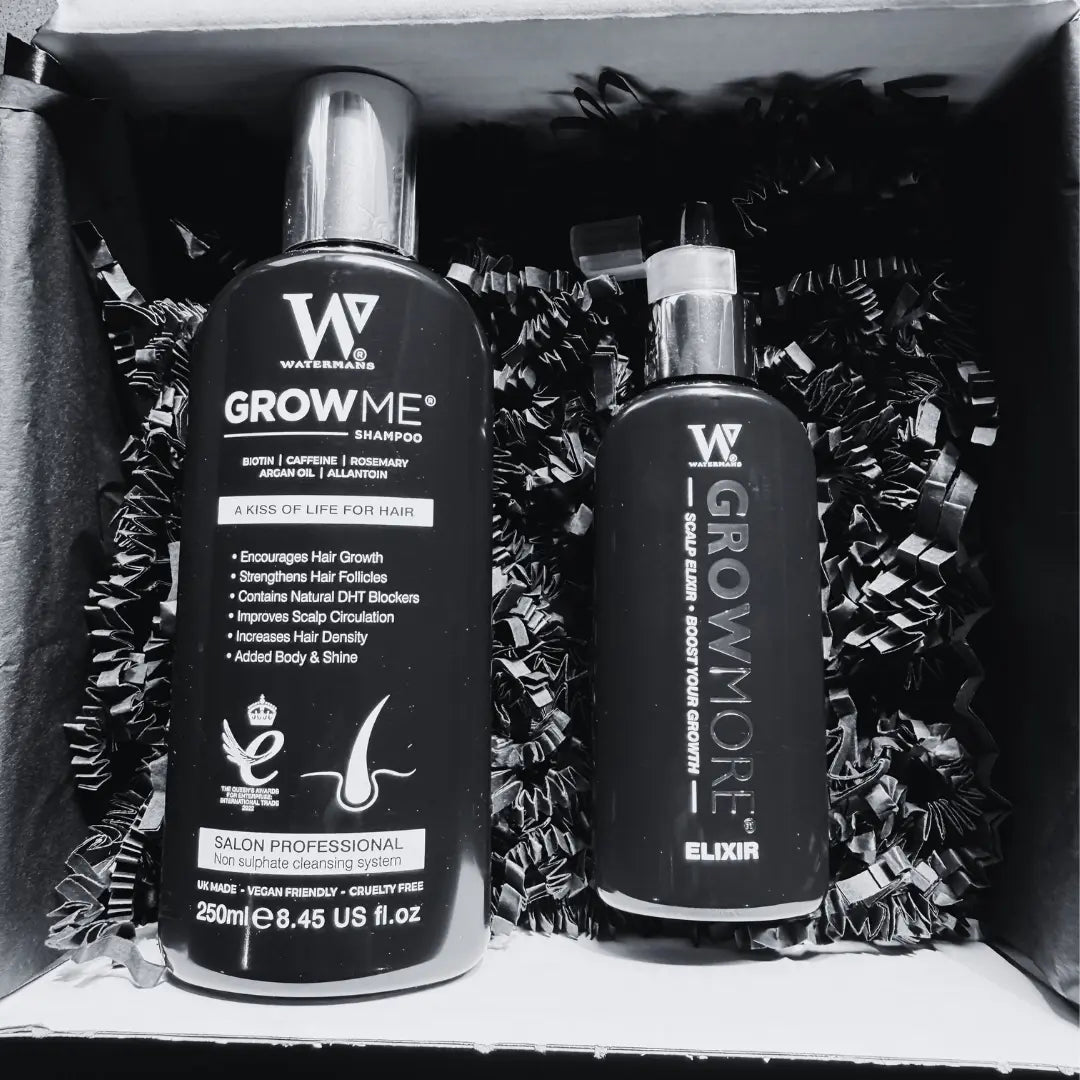
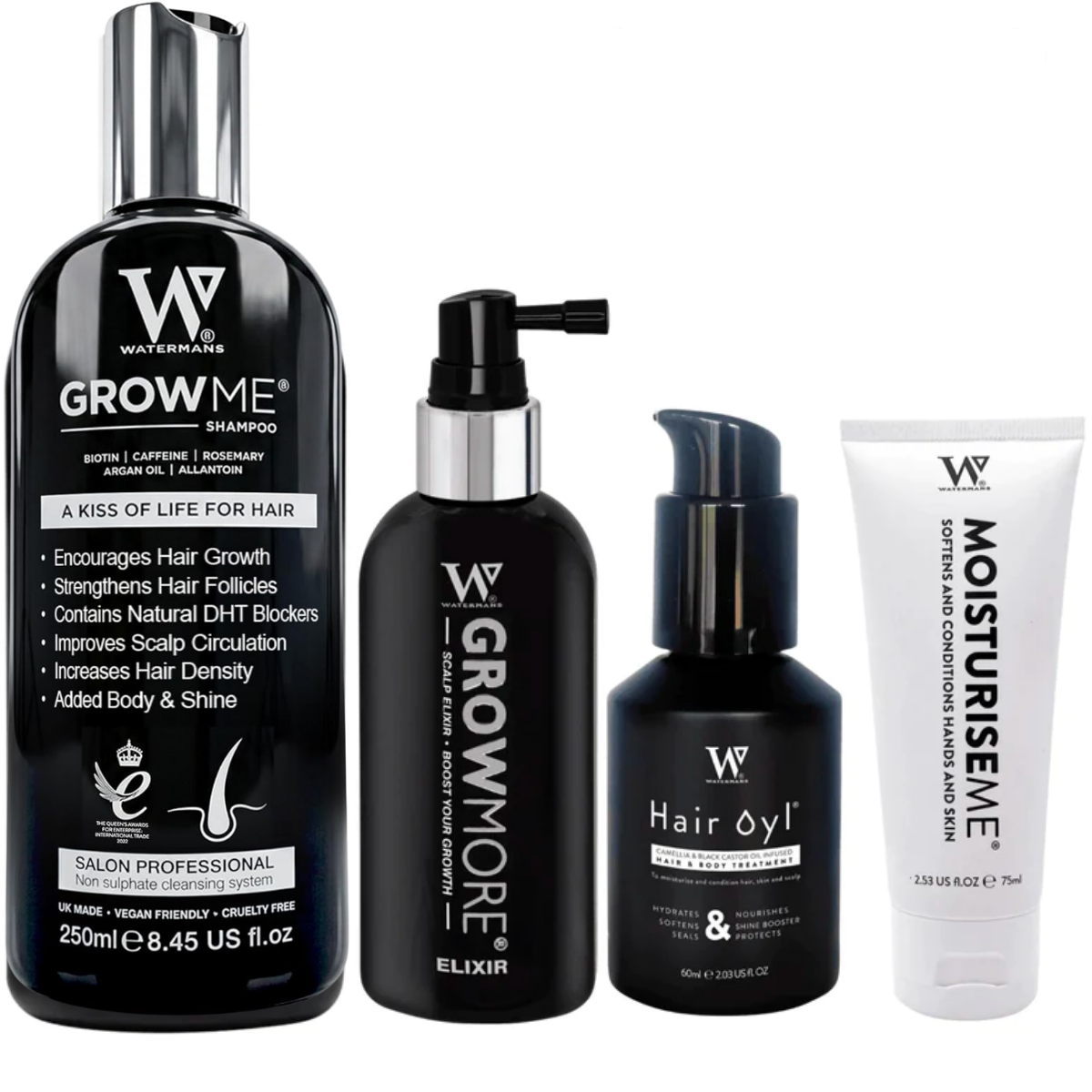
Grow Me Hair Growth Shampoo
Sulfate free daily shampoo with biotin, caffeine, rosemary, niacinamide and hydrolysed lupine protein. Reduces breakage for fuller looking hair and supports a comfortable scalp environment. A rinse-off product doing an ordinary job gently, which is exactly what this period calls for.
Sulfate free, vegan, made in the UK
When to speak to someone
Most postpartum hair change needs patience rather than intervention. A few things do not, and they are worth acting on rather than filing under new parent tiredness.
- Shedding still getting worse rather than easing beyond nine to twelve months after birth
- Smooth, completely bare, coin shaped patches anywhere on your scalp
- A scalp that is red, sore, scaly or has pustules
- Exhaustion, feeling cold, low mood, palpitations or unexplained weight change, which can point towards thyroid problems that are genuinely common after birth and easy to miss among newborn tiredness
- Thinning specifically at the temples where you tie your hair back, which is tension rather than hormones and will keep going if the styling does not change
- Any worry at all, which is reason enough
Your health visitor and GP are used to this question and it is not a waste of their time. Take a photograph of your parting with you, since it is far more useful than trying to describe the change.
Watermans products are 100% cosmetic and do not treat medical hair loss. Individual results may vary.
Frequently asked questions
Is it safe to use hair products while breastfeeding?
Ordinary cosmetic shampoos and conditioners are rinse-off products with a contact time of a minute or two, and intact skin is a very effective barrier, so the amount reaching your bloodstream is negligible. If you want a definitive answer about any specific product or medicine, your midwife, health visitor or pharmacist can check it properly for your circumstances.
Can I dye my hair while breastfeeding?
NHS guidance does not advise against colouring your hair while breastfeeding, and scalp absorption is very small. If you would prefer extra reassurance, highlights and balayage keep the product off the scalp almost entirely. Whichever you choose, do it in a well ventilated space rather than a closed bathroom.
Does breastfeeding cause hair loss?
No. Postpartum shedding is caused by the drop in pregnancy hormones after birth releasing hairs that were held in the growing phase for nine months. People who do not breastfeed shed on the same timetable, so stopping feeding will not stop the shedding.
When does postpartum hair loss stop?
It usually begins around two to four months after birth and settles by six to twelve months. New growth then needs a further several months to reach a length that restores your usual density, so the whole cycle commonly runs to about eighteen months after birth.
What are the short spiky hairs around my hairline?
New growth, and a good sign. They appear as the shedding phase ends, usually somewhere around month eight to twelve, and they stand up because they are short and fine rather than because anything is wrong. Trying to flatten them with heat or scrape them back is the one way to lose them again.
Should I take hair vitamins while breastfeeding?
Check with your health visitor, GP or pharmacist before adding any supplement while feeding, because what is appropriate depends on your circumstances and on what you are already taking. Iron in particular should not be supplemented without a blood test, since too much is harmful.
Why does my hair feel so dry since having a baby?
A combination of hormonal change, less frequent washing, less conditioning, and hair that is generally older at the ends because it has not been cut. Conditioning the mid lengths and ends every wash and a weekly mask deals with most of it, and a trim removes the rest.
Is my hair thinning at the temples permanent?
If it is tension from tight ponytails and buns, it usually recovers once the tension stops, but persistent pulling over a long period can cause lasting change, so it is worth acting on early. If it is not obviously related to how you tie your hair back, get it looked at rather than waiting.
The short version
Use your normal shampoo and conditioner without a second thought. Take the ventilation seriously rather than the absorption. Loosen the bun and vary where it sits, because that is doing more damage than anything in a bottle. Keep no-cook protein where you feed, and ask about ferritin rather than guessing.
Then wait, because the hormonal part is not negotiable and it does end. If your hair is dry and worn rather than shedding, our guide to rescuing dry hair covers that side. Watermans is a British hair care brand, vegan and made in the UK, with over 5 million bottles sold since 2012.