


Protein Overload in Hair: Signs and How to Fix It
Protein overload is what happens when hair has taken on more structural protein than it has moisture to balance it, and the result is hair that feels stiff, straw-like and strangely brittle despite an expensive routine. It is the opposite problem to dryness and it needs the opposite fix, which is why so many people make it worse by reaching for another repair mask. The imbalance is corrected by pausing protein and rebuilding moisture, and most hair recovers within two to four weeks.
Key takeaways
- Hair that snaps and feels rough is not automatically dry. It can be over-proteined, and the fixes are opposites.
- The tell is texture plus behaviour: stiff, rigid, rough, tangly, and hair that will not hold a style or a curl.
- It usually follows months of bond builders, repair masks, keratin products and protein leave-ins used weekly rather than monthly.
- The correction is a moisture reset: pause every protein product, condition richly, add oil, and wait two to four weeks.
- Fine and low porosity hair tips into this imbalance much faster than coarse or high porosity hair.
- If you cannot tell which problem you have, the wet stretch test settles it in ten seconds.
What is protein overload in hair?
The condition describes a hair fibre whose surface and outer cortex have been filled with hydrolysed proteins to the point where the strand has lost its flexibility. Hair is roughly ninety per cent keratin already, and the small protein fragments in conditioners, masks and bond products work by temporarily filling gaps in a damaged cuticle. That is genuinely useful when hair is porous. Keep doing it after the gaps are filled and the deposits build into a rigid film that holds the fibre straight and stops it flexing.
A hair strand needs both protein and water to behave well. Protein gives it structure and resistance to stretching. Water, held in place by conditioners and oils, gives it the pliability to bend without snapping. Push the balance too far toward protein and you get a strand that is strong in the sense that a dry twig is strong, which is to say it does not stretch and it breaks cleanly.

What does over-proteined hair feel like?
The signs are consistent enough that most people recognise their own hair immediately in this list. It shows up as a change in how hair behaves, not just how it looks.
- Hair feels rough, rigid and almost crunchy when dry, even straight after conditioning.
- Strands snap cleanly with a small dry sound rather than stretching first.
- Hair tangles far more than it used to and a comb catches rather than glides.
- Curls loosen, drop or go frizzy and stringy, and styles will not hold.
- Colour looks dull and the surface has no shine, because a rough cuticle scatters light.
- More conditioner makes no difference at all, which is the clue people usually miss.
The detail that gives it away
Dryness and over-proteined hair both feel rough, but they behave differently under water. Dry hair softens noticeably the moment it is wet and conditioned, then goes rough again as it dries. Hair that is over-proteined stays stiff even when soaking wet and slippery with conditioner. If wetting your hair changes nothing about how rigid it feels, protein is the more likely culprit.
Is it protein overload or is it dryness?
This is the whole question, because the two problems look identical from across a room and need opposite corrections. Getting it wrong does not just waste money, it actively deepens the problem. The table below separates them on the signs that genuinely differ.
| Signal | Protein overload | Simple dryness |
|---|---|---|
| Feel when dry | Stiff, rigid, rough, board-like | Rough but soft, fluffy, straw-like |
| Feel when soaking wet | Still stiff, barely softens | Softens immediately, feels slippery |
| Wet stretch test | Snaps quickly with a clean break, almost no stretch | Snaps, but stretches a little first |
| Response to a rich mask | No change, or feels worse and stiffer | Clear improvement for a few days |
| Response to oil | Sits on top, hair still rigid | Absorbs, softens, holds |
| Recent history | Bond builders, keratin or repair products used weekly | Bleach, heat, sun, hard water, no conditioner |
| What it needs | Pause protein, add moisture and oil | Add moisture, and some protein monthly |
If the table still leaves you unsure, run the wet stretch test described in our guide to hair elasticity, which covers the diagnostic in full and applies to both directions of the imbalance. This page deals with one specific failure mode, the protein-heavy end of it, and what to do about it.
What causes protein overload?
Almost always a good routine applied too often rather than a bad product. Four patterns account for most cases.
Bond builders used weekly. These are designed as a periodic intervention, particularly around colour services. Used every wash they keep depositing on hair that has already had its gaps filled.
Stacking without realising. A protein shampoo, a protein conditioner, a protein leave-in and a weekly protein mask is four sources at once. Hydrolysed keratin, hydrolysed wheat, silk amino acids, collagen and hydrolysed lupine protein all count, and most people never read that far down an ingredients list.
Fine or low porosity hair. Fine hair has less surface area to fill and low porosity hair has a tightly packed cuticle that does not need filling in the first place, so both reach saturation much sooner. Coarse, bleached, high porosity hair can take far more.
Chasing a damage problem with repair products. Hair breaks, so the reader buys a repair mask, which helps briefly, so they use it more often, and the breakage gets worse. It is a genuinely easy trap and it is the most common route in.
The two week moisture reset
One email with the reset on a single page: the day by day plan, the ingredient names to look for and pause on a label, how to tell when your hair has had enough of a break, and how to reintroduce protein at the right interval so this does not happen again.
How do you fix protein overload?
You clear it by stopping the input and rebuilding the water side of the balance. Nothing dissolves protein deposits instantly, so the honest timeline is two to four weeks, and hair that is very fine often responds inside a fortnight.
Days one to three, stop everything protein. Read the labels on your shampoo, conditioner, leave-in and mask and put aside anything listing hydrolysed anything, keratin, amino acids or collagen. This single step does most of the work and people routinely skip it because the products were expensive.
Week one, clarify once, then condition heavily. One gentle clarifying wash lifts surface deposits and silicone that is holding water out. Follow it with a rich, protein-free conditioner left on for five minutes, and repeat the conditioning every wash.
Week one onwards, add oil to the lengths. A light oil on damp mid-lengths and ends after every wash helps hold water in the fibre while the balance recovers. Apply to damp hair, not dry, because oil on dry hair coats rather than seals.
Week two, retest. Wet a shed strand and pull. If it now stretches a little before breaking, the balance is coming back. If it is still snapping cleanly, continue another fortnight before changing anything.
Week three or four, reintroduce protein deliberately. Once hair feels pliable again, a protein-containing product once a month is usually right for fine hair and once a fortnight for coarse or colour-treated hair. The mistake to avoid is going straight back to weekly.

Which products help, and which to pause?
Being straight about this matters more than selling, because the whole point of the reset is using less product rather than more. Two of ours belong in a moisture reset. One of ours explicitly does not, and it is worth saying so.
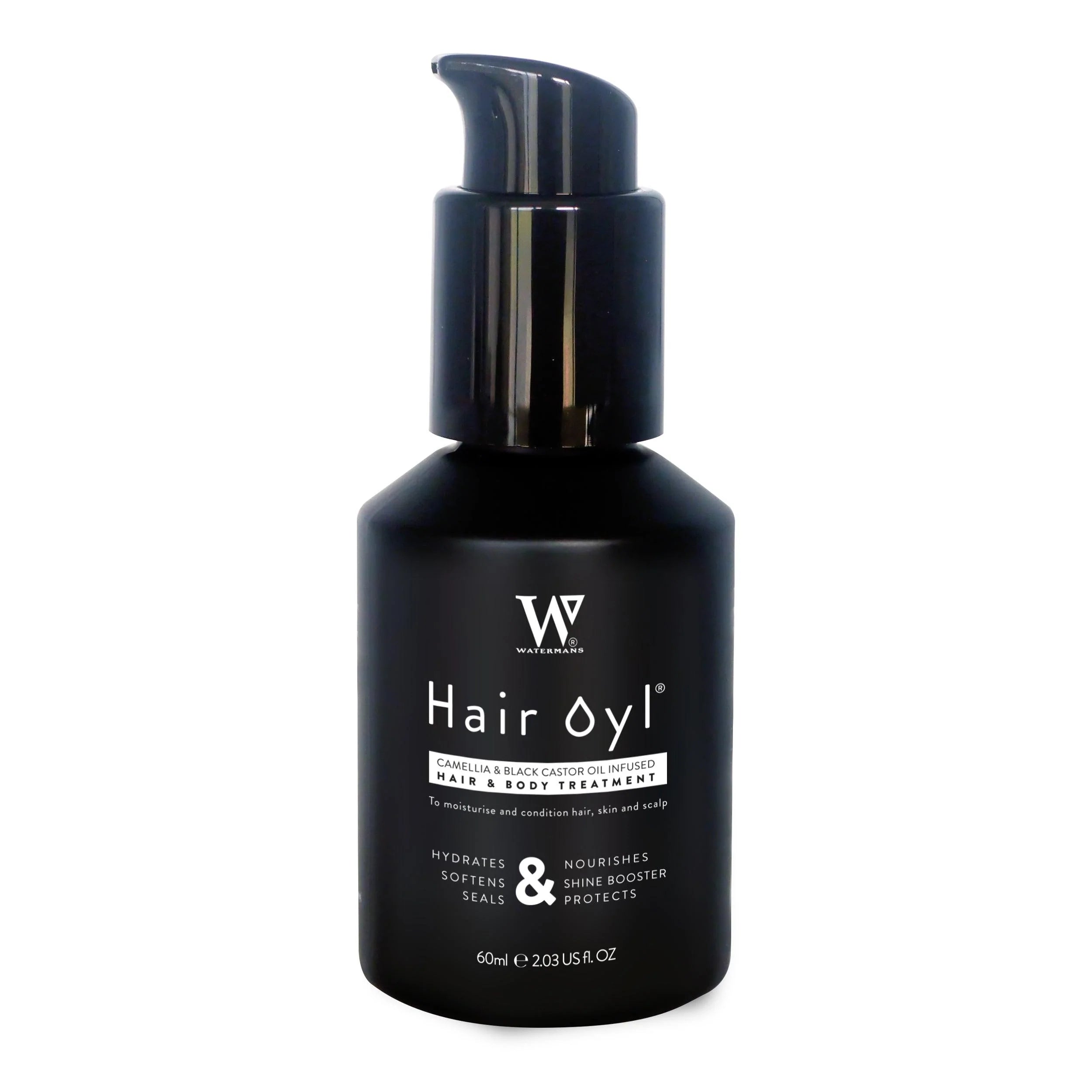
Camellia & Black Castor Oil, on damp lengths, every wash during the reset
Camellia and black castor oil, with no hydrolysed protein in it. During a moisture reset this is the product doing the real work, because it helps the fibre hold water while the protein side of the balance settles. A few drops on damp mid-lengths and ends, never on the scalp.

Condition Me® Conditioner, for slip while the cuticle is rough
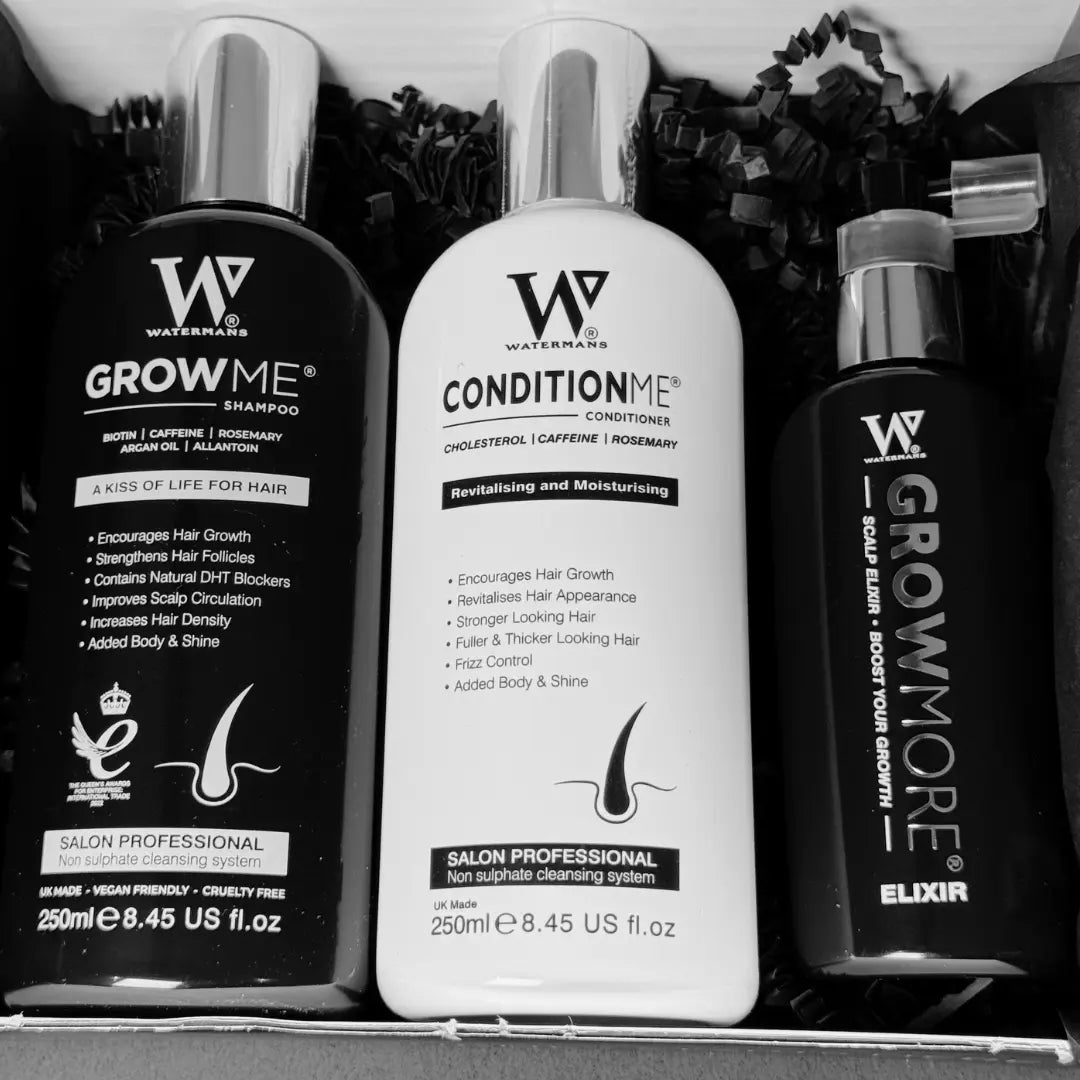
Cholesterol, shea butter and glycerin give the slip that stops a comb snapping brittle strands, which matters most in the fortnight when hair is at its most fragile. It does contain hydrolysed lupine protein, so if your hair is very fine, alternate it with a plain moisturising conditioner during the reset and return to it fully afterwards.

Masque Me® Mask, the one to pause for a fortnight
Our repair mask contains hydrolysed lupine protein, which is exactly what you are trying to stop adding. If you are in a moisture reset, put it away for two to four weeks and bring it back monthly once your hair is flexible again. Selling you more of it right now would make your hair worse.
For the routine underneath all of this, our guide to using conditioner properly covers placement and quantity, which is where most of the benefit actually comes from.
How do you stop it happening again?
- Use protein as a monthly product for fine hair and a fortnightly one for coarse or bleached hair, not a weekly one.
- Use one protein source at a time. If the mask has it, the leave-in should not.
- Read the first six ingredients rather than the marketing on the front.
- Add protein after a colour service or a lot of heat, which is when hair genuinely has gaps to fill.
- Run the wet stretch test monthly so you catch the drift before it becomes obvious.
- Judge a product by how your hair behaves a week later, not by how it feels in the shower.
Underlying damage is the reason protein products get reached for in the first place, so it is worth understanding what causes hair damage and removing the cause rather than patching the symptom every week.

Does protein overload cause hair loss?
No, and the distinction matters because the panic it causes is out of proportion to the problem. What it causes is hair breakage, which is the fibre snapping along its length. That looks alarming in a brush, but the hair is still anchored in the follicle and the situation is fully correctable.
Hair breakage gives you short fragments with blunt ends and no bulb, and flyaway pieces around the parting. That is what this article addresses.
Hair shedding gives you full length hairs with a small pale bulb at one end. Fifty to a hundred a day is normal, and a temporary rise after illness, childbirth or a stressful period is a recognised pattern called telogen effluvium.
Hair loss from the follicle, showing as a widening parting or visible scalp, is a medical matter. No conditioner, oil or mask changes it, and it is worth raising with your GP rather than working through more products.
Watermans products are 100% cosmetic and do not treat medical hair loss. Individual results may vary.
Frequently asked questions
How long does it take to correct protein overload?
Usually two to four weeks. Fine hair often feels different within ten days, coarse or bleached hair takes longer because it holds more deposit. Nothing removes it instantly, and any product promising an overnight fix is overselling.
Can I just wash protein out?
One gentle clarifying wash helps by lifting surface deposits, but repeated harsh washing strips the moisture you are trying to rebuild and makes the hair feel worse. Clarify once, then focus on conditioning.
Which ingredients should I pause?
Anything beginning with hydrolysed, plus keratin, collagen, silk amino acids, wheat or soy protein, and most products marketed as bond building or repair. Check shampoo and leave-ins as well as masks, since stacking is the usual cause.
Does everyone get this eventually?
No. Coarse, high porosity and heavily bleached hair can use protein frequently for years without trouble, because it genuinely has gaps to fill. Fine and low porosity hair is where it usually happens.
Is this the same as buildup?
They overlap but are not identical. Buildup is a general surface film from silicones, oils, dry shampoo and styling products. The protein problem is specifically about the balance inside and on the fibre, and it changes how the strand flexes rather than just how it feels.
Should I cut my hair?
Only the ends, and only if they are splitting. The rest recovers with a moisture reset, so there is no need for a dramatic cut. A routine trim removes the fragments that snapped while the balance was off.
Can low porosity hair use protein at all?
Yes, occasionally, and usually best after colour or heat damage rather than as a standing part of the routine. Monthly at most is a sensible default for low porosity hair.
Why did my curls go straight and stringy?
A rigid protein film holds the fibre in a straighter shape and stops it flexing into its natural pattern. Curl definition is one of the first things to go and one of the first to come back once the moisture side recovers.
Does it happen to the scalp too?
Not in the same way. The scalp is living skin and sheds its surface continuously, so protein products do not accumulate there the way they do on dead fibre. Scalp problems from heavy products are usually residue rather than protein.
Sources and references
- Robbins, C. R., Chemical and Physical Behavior of Human Hair, Springer, on keratin structure, fibre mechanics and the behaviour of hydrolysed proteins on the hair surface.
- Journal of Cosmetic Science, the peer-reviewed literature on hydrolysed protein substantivity, molecular weight and penetration into the hair fibre.
- British Association of Dermatologists public information leaflets on hair and scalp care.
- NHS guidance on hair loss, for distinguishing normal shedding and telogen effluvium from hair loss that should be discussed with a GP.
The short version
Protein overload is hair that has had too much structure and not enough water, and it is unusual among hair problems in that the fix is to stop buying things rather than to start. Put the repair products away for two to four weeks, condition richly, add a light oil to damp lengths, and let the balance come back. Then reintroduce protein monthly rather than weekly. If you take one thing from this page, take the wet stretch test, because it tells you which of the two opposite problems you actually have before you spend another pound.
Watermans is vegan, UK made, and has sold over 5 million bottles since 2012.