


How to Apply Sunscreen on Oily Skin Without Shine
The most common piece of sunscreen advice given to people with oily skin is also the most dangerous: use a small amount so it does not feel heavy. Do that and you are not wearing the SPF on the bottle. You are wearing a fraction of it, while believing you are protected. Almost everything that goes wrong with sunscreen is a quantity and technique problem rather than a product problem, and all of it is fixable without buying anything.
Key takeaways
- The tested dose is 2mg per square centimetre, which works out at roughly a quarter of a teaspoon for the face and neck.
- Applying half the dose gives far less than half the protection, not a proportional reduction.
- Use the two finger rule or the 13 dot method so the amount is a measurement rather than a guess.
- Powder and mist SPF cannot deliver a tested dose. They top up; they do not replace.
- Pilling is a layering problem. Fewer products, thinner layers, and time between them.
- Shine is managed by blotting, not by applying less.
How much sunscreen should you actually use?
SPF is measured in a laboratory at a standard application density of 2mg of product per square centimetre of skin. Every number on every bottle assumes that thickness. Studies of real-world use consistently find people apply somewhere between a quarter and a half of it.
This matters more than most people realise, because the relationship between the amount applied and the protection delivered is not a straight line. A commonly used approximation in the sunscreen literature raises the labelled SPF to the power of the fraction of the dose applied. On that model, applying half the required amount of an SPF 30 leaves you with an effective SPF of roughly 5 to 6, not 15. The exact figure is debated and depends on the formula, but the direction is not in dispute: skimping costs you disproportionately.
Two ways to measure it without a set of scales in the bathroom:
- The two finger rule. Squeeze two lines of sunscreen along the full length of your index and middle fingers. That is approximately the right amount for face and neck. It will look like far too much. It is not.
- The 13 dot method. Place thirteen small dots across the face, roughly three on the forehead, two on each cheek, one on the nose, one on the chin, and the rest along the jaw and hairline, then spread each one locally rather than smearing everything around at once. This gives more even coverage than starting with a blob on the palm.
If two fingers of your current sunscreen feels intolerable on your skin, that is a signal to change the formula rather than the quantity. The texture is the variable you can afford to adjust.

The application sequence that avoids shine
- Start with skin that is clean and dry. Applying over damp skin dilutes the film and encourages pilling.
- Hydrating layer first, and keep it thin. A lightweight moisturiser or a humectant serum. Counter-intuitively, skipping hydration on oily skin often increases shine later, because a stripped barrier tends to overproduce oil.
- Wait two to three minutes. Most pilling happens because the layer underneath had not settled.
- Apply the full sunscreen dose in two thin passes rather than one thick one. Let the first pass set for a minute, then go again. This is the single best technique for getting the full amount on without it feeling like a mask.
- Press, do not rub. Patting the second pass in reduces the rolling and balling that comes from friction.
- Wait a further five minutes before makeup. Rushing this step is the number one cause of foundation sliding.
- Set with a light powder if you want matte, rather than choosing a drier sunscreen and under-applying it.
One timing note: organic filters need a short window to form an even film, which is why 15 to 20 minutes before sun exposure is the standard advice. Mineral filters work as soon as they are on the skin, but they still benefit from the settling time before makeup.
Reapplying over makeup, honestly
This is where most guidance quietly overpromises. The uncomfortable truth is that none of the reapplication methods over makeup deliver the laboratory dose. They are damage limitation, and it is worth knowing which is least bad.
| Method | Realistic verdict |
|---|---|
| Reapplying the same fluid sunscreen with clean hands | Best protection, worst for makeup. The only method that gets close to a real dose. |
| SPF powder or brush | Convenient and mattifying. Delivers a small fraction of the tested dose. A top-up, not a reapplication. |
| SPF setting mist | Even less product on the skin than powder, and much of it misses. Mostly reassurance. |
| Cushion compact with SPF | Better than powder or mist because it is a wet formula, still short of a full dose. |
| Blotting paper then powder | Good for shine, no meaningful UV benefit. Do not confuse the two jobs. |
The practical conclusion: if you are going to be outdoors for a sustained period, plan for the fluid reapplication and accept that your makeup will not survive it. If you are office-based with a walk at lunchtime, a powder top-up on the nose, cheekbones and forehead is a reasonable compromise. Just be honest with yourself about which situation you are in.

When to reapply
- Every two hours of continuous sun exposure. This is the standard because the film degrades and is physically removed, not because the filters expire on a timer.
- Immediately after swimming or heavy sweating, and after towelling. Towelling removes more sunscreen than water does.
- After touching your face repeatedly, which most people do far more often than they think.
- Not needed if you are indoors away from windows. If you applied in the morning and have been at a desk in the middle of a building, a top-up before you leave is enough.
How to stop sunscreen pilling
Pilling is the little grey rolls that appear when you rub. It happens when film-forming ingredients from two products refuse to mix. The fixes are all about layering discipline.
- Reduce the number of layers. Serum, essence, moisturiser, primer and sunscreen is four opportunities for incompatibility.
- Avoid stacking silicone-heavy products. A silicone primer under a silicone sunscreen is the classic offender.
- Give each layer time. Two to three minutes is usually enough.
- Watch high molecular weight polymers such as some hyaluronic acid gels and aloe formulas, which pill readily under sunscreen.
- Press rather than rub, and never go back over a section that has started to set.
Managing shine through the day
Shine and protection are separate problems and should be solved separately. Applying less sunscreen to control shine trades a cosmetic issue for a real one.
- Blot, do not wipe. Press a blotting paper or a tissue against the skin and lift it straight off. Wiping drags the sunscreen film away with the oil.
- Blot the T-zone only. The cheeks and jaw rarely need it and you are removing product each time.
- A light dusting of powder after blotting extends the matte effect without adding much weight.
- Check your hydration layer. Skin that is shiny by 11am but tight first thing is usually dehydrated, not oily, and responds better to a lighter moisturiser than to more oil control.
The formula side of this, including which ingredients create a matte finish and what they cost you, is covered in how to read a sunscreen formula for oily skin. This page assumes you have already chosen something you can tolerate.
The areas everyone misses
Studies of sunscreen coverage consistently find the same gaps: the eyelids, the sides of the nose, the ears, the hairline and the back of the neck. These are not trivial. The ears and the scalp are common sites for sun damage precisely because they are chronically under-protected.
For each one:
- Ears. Front, back and the rim. A stick format makes this far easier.
- Hairline and parting. A stick along the parting, or a spray held close and combed through. If your parting is widening or your hair is thinning, this stops being optional, because there is less hair providing shade.
- Back of the neck. Particularly if you wear your hair up.
- Eyelids. Use a gentle, low-sting formula and be careful. If everything stings, a hat and sunglasses do the job better.
- Lips. Sunscreen is not designed for them and gets eaten. Use a dedicated balm, as we explain in why lips burn and how to choose an SPF balm.

Wash it off properly at night
Water-resistant sunscreens are designed not to come off easily, which means a quick splash will not remove them. Residue left overnight is a plausible contributor to congestion, and people often blame the sunscreen itself when the real problem is incomplete removal. Use a cleansing oil, balm or micellar water first, then your normal cleanser. The same applies to any product that has run into your hairline, which needs a proper shampoo rather than being left to build up on the scalp.
Myths worth retiring
| The claim | What is actually true |
|---|---|
| One application in the morning lasts all day | The film is removed by sweat, touching and towelling. Outdoors, plan on two-hourly. |
| You cannot burn on a cloudy day | A significant proportion of UV passes through light cloud, and people stay out longer because it feels cooler. |
| A base tan protects you | A tan is evidence of UV damage and offers very little protection. |
| Darker skin does not need sunscreen | More melanin means more baseline protection but not immunity, and UV still drives pigmentation and photoageing. |
| Fake tan gives you SPF | It does not. Self-tanning products colour the skin and provide no meaningful UV protection unless they separately contain a rated SPF. |
| Window glass protects you | Standard glass blocks most UVB but transmits a lot of UVA, which is relevant for drivers and desks by windows. |
The tan point has more nuance than it first appears, and it is genuinely interesting: see why some people burn and others go brown.
Your scalp is part of this routine
If you apply anything along your parting, whether a stick SPF, a spray or a hat-free day of sweat and sea salt, it ends up on the scalp, and the scalp is skin with the highest concentration of oil glands on the body. Product build-up there is a genuine cause of itching, flaking and discomfort, and washing it out properly is more useful than any scalp treatment you can buy. If you are being careful about removing sunscreen from your face at night, extend the same thinking to your hairline. More on the general principles in keeping your scalp healthy for longer, stronger hair, and on what a summer of sun and salt does to the hair itself in how to rescue dry hair.

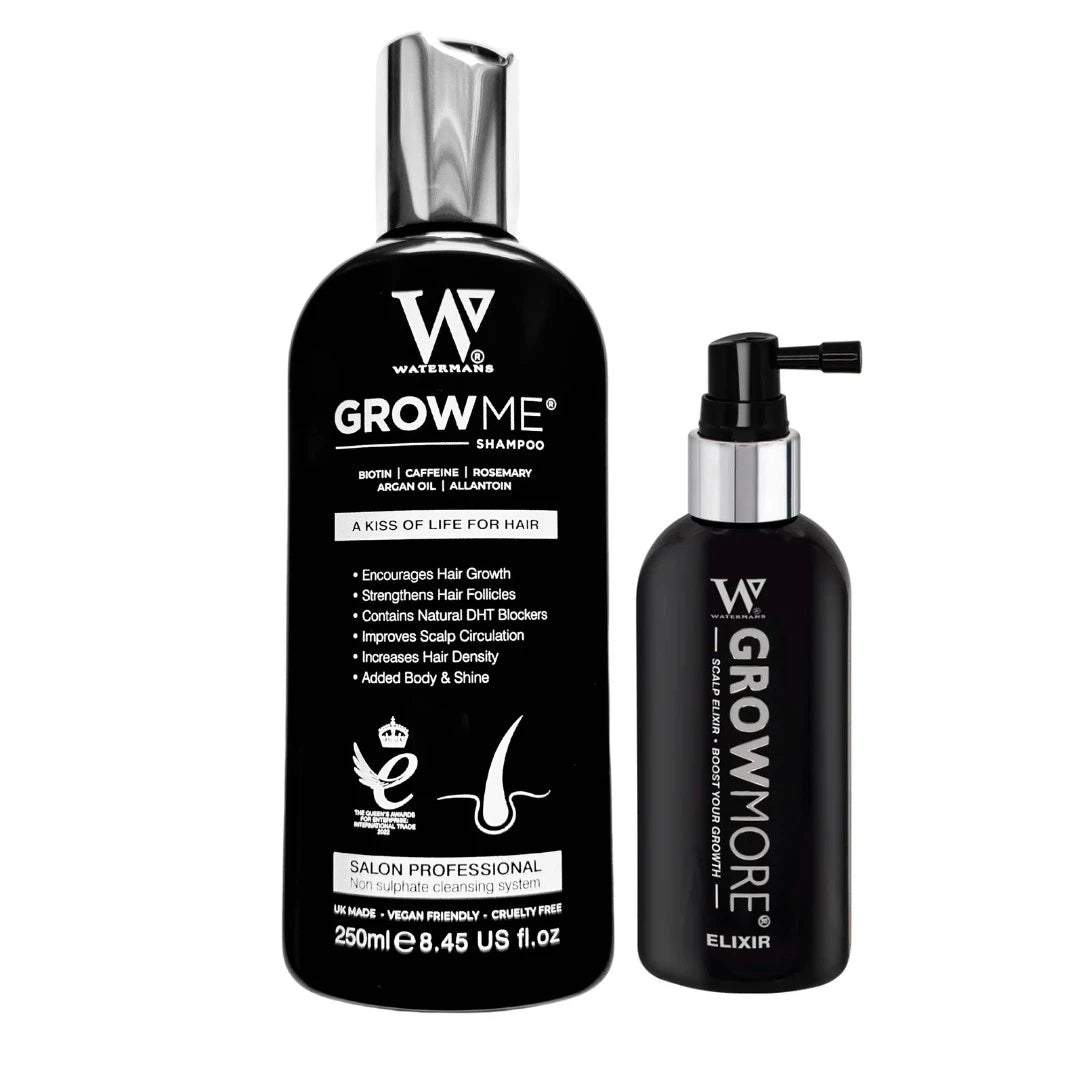
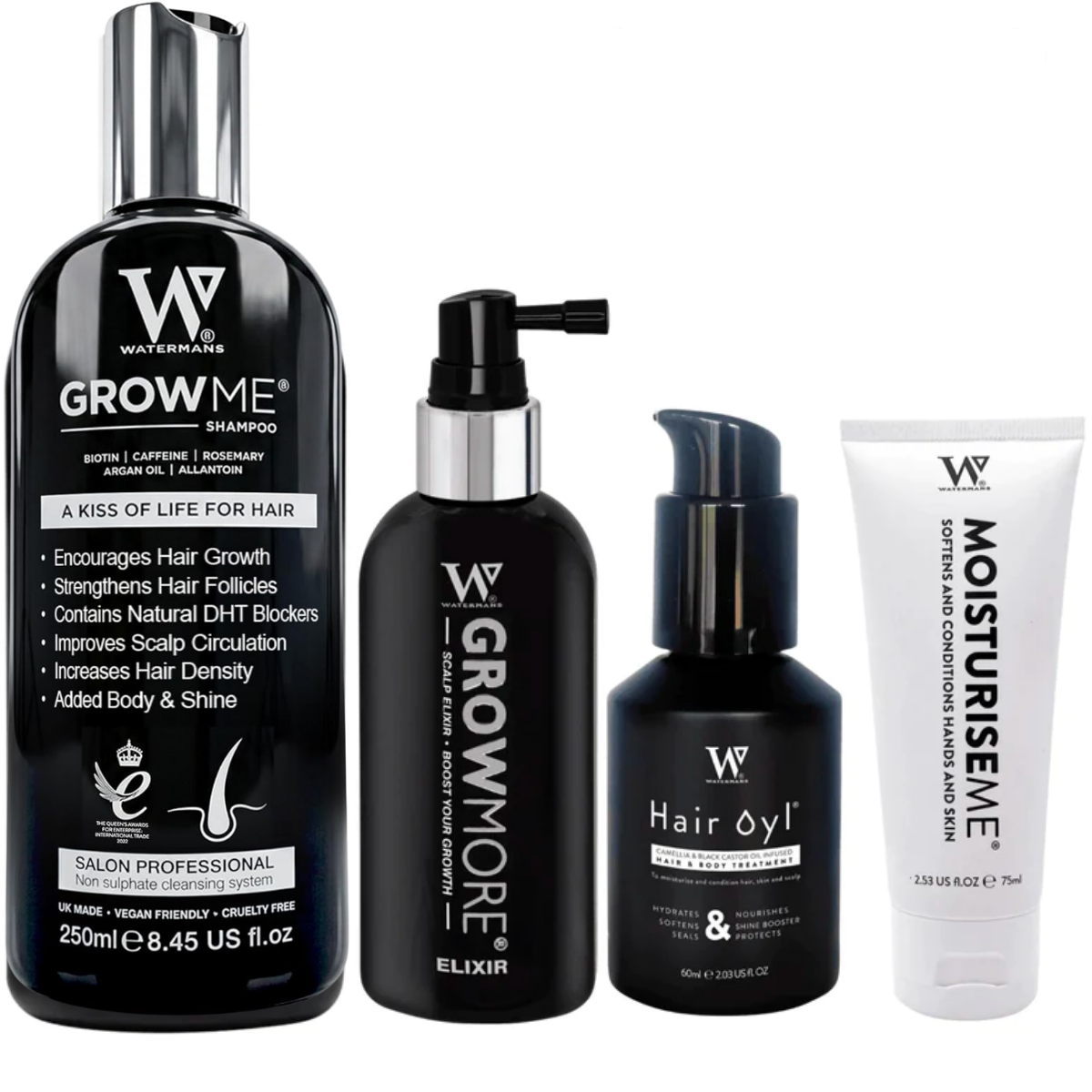
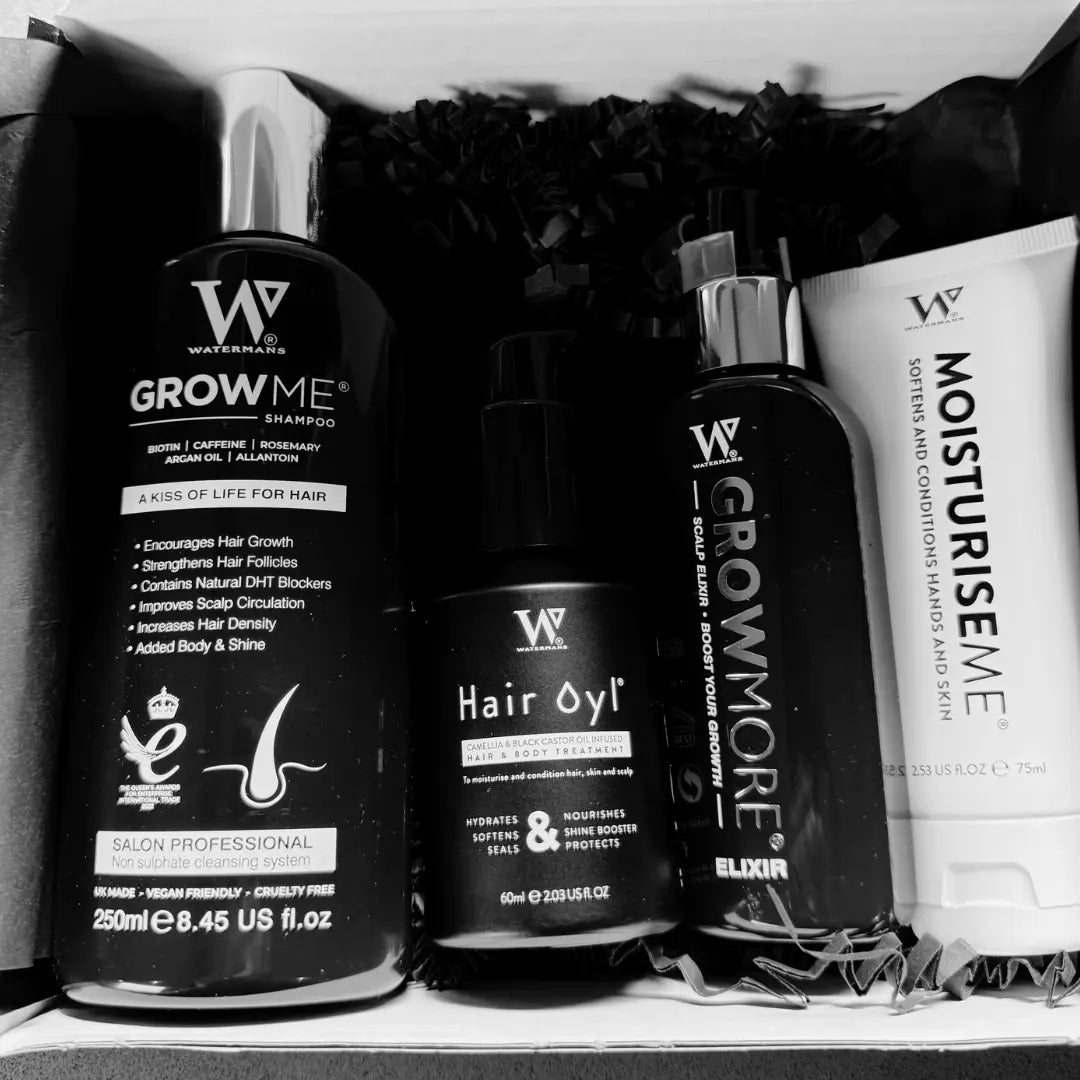
Grow Me® Shampoo
A sulfate-free cleanse that is gentle enough to use often, which is the point in summer when you are washing out sunscreen, sweat, salt and chlorine more frequently than usual. It cleans without the stripped, squeaky feeling that pushes an oily scalp to produce more.
£14.95. 250ml, vegan, made in the UK. A cosmetic hair product, not a sun protection product.
Frequently asked questions
How much sunscreen do I need for my face?
Roughly a quarter of a teaspoon for the face, or a third of a teaspoon including the neck. The two finger rule, two full lines along your index and middle fingers, is the easiest way to judge it without measuring.
What happens if I use less than the recommended amount?
You get disproportionately less protection. On the approximation commonly used in sunscreen research, applying half the dose of an SPF 30 leaves an effective SPF of around 5 to 6. The precise number varies by formula, but under-application is the main reason people burn while wearing sunscreen.
Does SPF powder count as reapplication?
Not really. Powders and mists deliver a small fraction of the tested dose and are best thought of as a top-up. If you will be outdoors for a sustained period, reapply a fluid or cream properly and accept the effect on your makeup.
How do I stop my sunscreen pilling under makeup?
Use fewer layers, avoid stacking silicone-heavy products, leave two to three minutes between each layer, apply in two thin passes rather than one thick one, and press rather than rub. Do not go back over an area that has started to set.
Should I apply sunscreen before or after moisturiser?
After. Moisturiser first, thin, then let it settle, then sunscreen as the final skincare step before makeup. If you use a prescription treatment, follow the instructions that came with it.
How do I get sunscreen off at the end of the day?
Water-resistant formulas need an oil-based or micellar first step followed by your normal cleanser. A single splash of water will leave residue, which is a common and avoidable cause of congestion.
Do I need to reapply if I am indoors all day?
Generally not, if you are away from windows. Apply in the morning and top up before you go outside. UVA does pass through standard glass, so a desk beside a large window is a different situation from an interior office.
Does sweating mean my sunscreen has come off?
Heavy sweating degrades the film, and towelling removes it faster than the sweat does. Water resistant formulas are tested for a set immersion time, not for an unlimited period, so reapply after significant sweating regardless of the claim on the pack.
The short version
Two fingers, two thin passes, five minutes before makeup. Blot for shine rather than applying less. Treat powder as a top-up and not a reapplication. Cover your ears, your parting and the back of your neck. Wash it off properly at night. None of that costs anything, and it will do more for your skin than switching brands again.
Watermans has been making vegan, UK-made hair care since 2012, with over five million bottles sold. For the summer washing-out part of the routine, Grow Me Shampoo is our gentle sulfate-free cleanse.
This article is general cosmetic information and is not medical advice. Speak to a pharmacist, GP or dermatologist about persistent skin problems, moles that are changing, or reactions to a product.