


Sunburnt Scalp: What Helps, What Hurts, When to Worry
A sunburnt scalp is the burn almost nobody plans for. The skin along your parting, at the crown and on the tops of the ears gets more direct midday sun than your face does, and it is the one area most people never cover with sunscreen. It also keeps developing for twelve to twenty four hours after you come indoors, so the tight, hot feeling at bedtime is rarely the final result. Here is what genuinely helps, what quietly makes it worse, and when it needs a pharmacist rather than another cold shower.
Key takeaways
- The parting and the crown take the most UV. Thinning hair and a fixed parting both raise the exposure considerably.
- Cool, cover, hydrate, leave alone. Cool water, a loose hat, plenty of fluids and no picking is most of the answer.
- Do not scrub or exfoliate a peeling scalp. Peeling is the skin doing its job. Pulling it off delays the settling and risks infection.
- A bad burn can show up in your hair weeks later. Severe sunburn is a physical stress, and a heavy shed two to three months later is a recognised pattern.
- Blistering, dizziness, fever or a burn on a small child means get advice. A pharmacist or GP, not a stronger after sun.
Why does a sunburnt scalp happen so easily?
Because the top of the head faces the sun almost directly between about eleven and three, and because hair is far less protective than it feels. A dense head of hair blocks a good deal of UV, but a parting is a strip of bare skin, and a crown that has thinned is effectively unprotected skin that nobody thinks of as skin. Add a haircut that is shorter than usual, a windy day that hid the heat, or a swim that flattened your hair to your head, and the exposure goes up sharply without anything feeling different at the time.
Men with receding or thinning hair, anyone with a shaved head, people with a fixed parting they never change, and children with fine hair are all at higher risk. So is anyone who wears their hair scraped back, because a tight ponytail widens the exposed strip along the top.

What actually helps a sunburnt scalp in the first two days?
Cool it, cover it, hydrate, and be gentle. Nothing on this list is dramatic, and that is rather the point.
- Cool water, not cold. A cool shower or a cool damp flannel held on the area brings the temperature down. Ice and very cold water on burnt skin can make things worse.
- Drink more than you think you need. Sunburn pulls fluid to the skin surface, and mild dehydration usually travels with it.
- Cover up completely for a few days. A loose brimmed hat, or staying out of direct sun, while the skin settles. Burnt skin burns again far more easily.
- Skip the hot shower and the hairdryer. Heat on an already hot scalp is genuinely uncomfortable and slows the settling.
- Leave the peeling alone. Do not pick it, comb at it, or reach for a scalp scrub. It looks untidy for a week and then it is over.
- Ask a pharmacist about pain relief. An ordinary over the counter painkiller is often the most useful thing in the house, and your pharmacy can advise on what suits you.
What makes a sunburnt scalp worse?
The mistakes are consistent and mostly involve trying too hard. Very hot water feels soothing for a second and is not. Alcohol based styling products sting badly on broken skin. Exfoliating scrubs and clarifying shampoos on peeling skin remove the layer that is protecting what is underneath. Home remedies applied to blistered skin risk infection, and butter and oil trap heat rather than releasing it. Tight hats and helmets rubbing on a raw scalp keep the irritation going.
One more: strong scalp serums and leave on products should go back in the cupboard until the skin is fully comfortable again. If it stings when it goes on, that is information, not a sign that it is working. Our guide to a burning or stinging scalp covers the non sun causes of the same sensation, which are easy to confuse.
See a pharmacist or GP, today, if: the scalp is blistered over a large area, the skin is broken and weeping or looks infected, you feel dizzy, sick, feverish or have chills, you have a bad headache with the burn, or the person burnt is a baby or a small child. Sunburn plus feeling unwell can mean heat exhaustion, which needs attention rather than another cold flannel.
Can a sunburnt scalp affect your hair?
It can, in three separate ways that people tend to run together. Keeping them apart makes it much easier to know whether what you are seeing is worrying or ordinary.
- Hair breakage. UV degrades the protein and lipids in the hair fibre itself, which is why sun exposed lengths go dry, dull, lighter in colour and snappier. This is damage to the hair, not to the follicle, and it is fixed by cutting off the damaged part and protecting the rest. It has nothing to do with density.
- Hair shedding. A severe burn is a real physical stress on the body, and significant stress can push a batch of hairs into the resting phase together. That shows up as a heavy shed two to three months later, which almost nobody connects back to a holiday. Telogen effluvium of this kind is usually self limiting. Our guide to telogen effluvium and how long shedding lasts sets out the timeline.
- Hair loss in the follicular sense, meaning androgenetic alopecia, is not caused by sunburn. A single burn does not change the follicle. What sunburn does do is expose that thinning was already there, because the burn maps exactly onto the areas where hair no longer covers the skin.
So a sunburnt scalp followed by a shed three months later is a recognised sequence and usually settles. A sunburnt scalp followed by a parting that keeps widening over a year is a separate matter, and worth raising with your GP.

How long does it take to settle, and what should each stage look like?
| When | What you notice | What to do |
|---|---|---|
| Hours 0 to 24 | Heat, tightness, tenderness when you brush, redness still deepening | Cool water, fluids, cover up, painkiller if you need one |
| Days 2 to 3 | Peak soreness, sometimes small blisters, hair feels painful to part | Gentle handling, loose styles, no heat styling, pharmacist if blistered |
| Days 4 to 7 | Itching and the start of peeling, flakes in your hair | Do not scrub or pick, mild shampoo, moisturise the hairline and ears |
| Week 2 | Peeling finishing, new skin pink and sensitive | Keep it covered outdoors, reintroduce your normal routine slowly |
| Months 2 to 3 | A possible heavy shed, if the burn was severe | Usually settles on its own, see a GP if it lasts beyond three months |
Get the scalp sun plan
A one page plan for the summer: how to protect a parting and a crown without greasy hair, the day by day recovery steps for a burn, what to use on the ears and hairline, and the specific warning signs that mean it needs a pharmacist.
How do you stop it happening again?
Prevention is genuinely easy once you accept that a scalp is skin. A hat with a brim beats everything else, because it covers the parting, the crown and the ears in one move and does not need reapplying. Where a hat is not practical, a light spray or powder sunscreen applied along the parting works, and moving your parting a couple of centimetres every few weeks spreads the exposure rather than concentrating it in one line.
Reapply after swimming and after heavy sweating, and remember the two places people always miss: the tops of the ears and the back of the neck where the hairline sits. Our guide to sunscreen for the scalp and the mistakes people make with it goes into the product options, and our summer hair care guide for sun, sea and heat covers protecting the lengths as well as the skin.

Which everyday products are sensible once it has settled?
Nothing here is for a burn. Put the routine on hold while the skin is raw, and come back to it when the scalp is comfortable again. At that point two things are worth having.

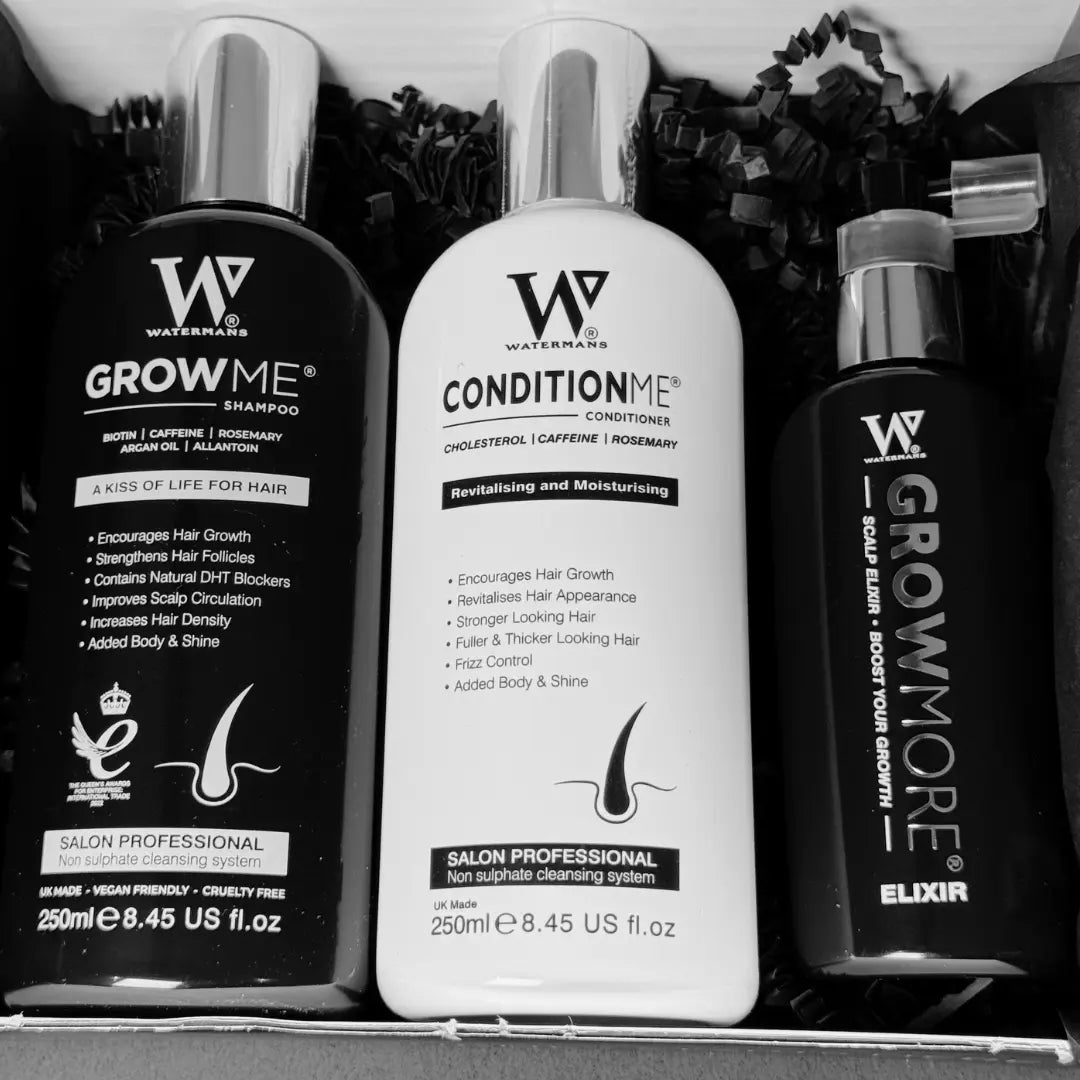
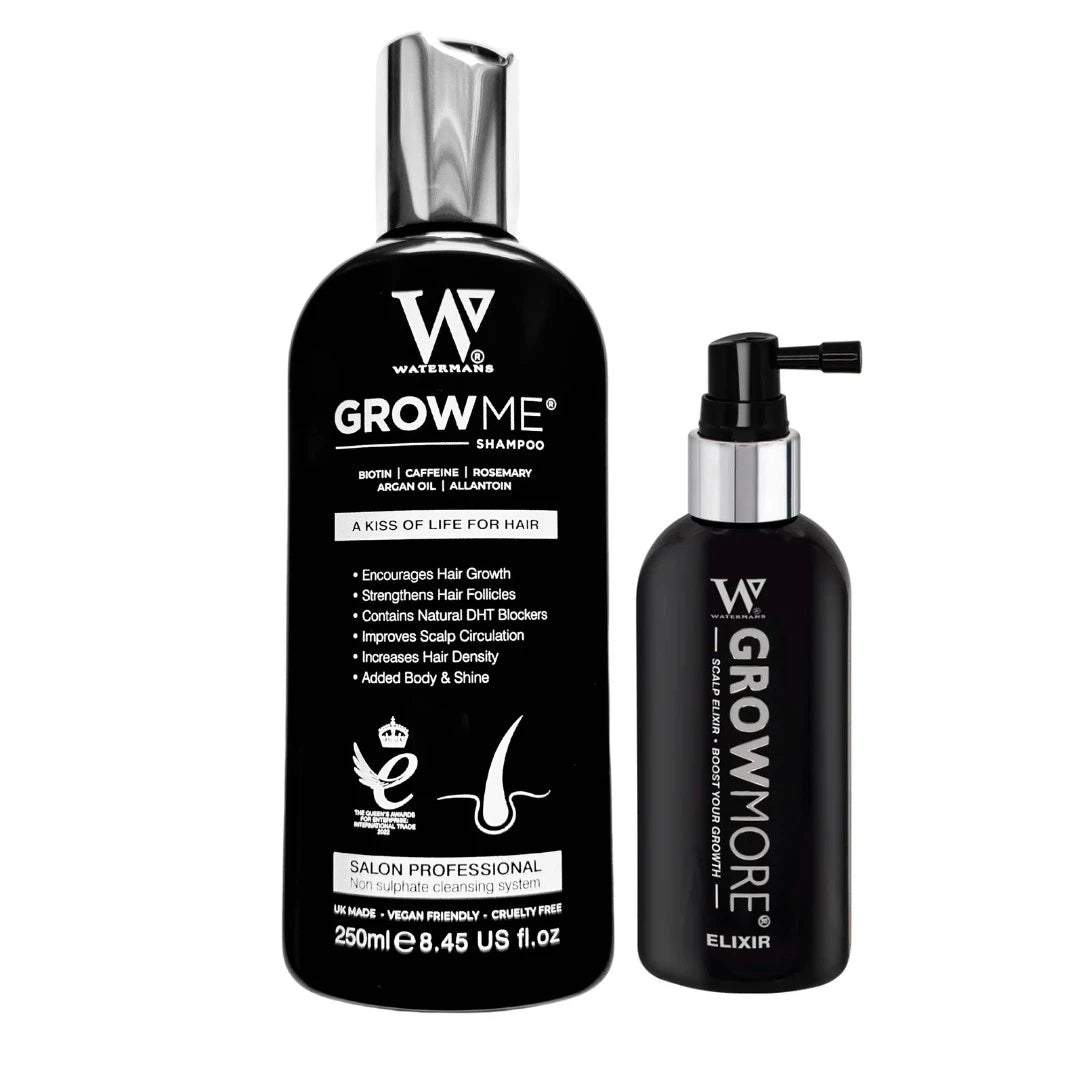
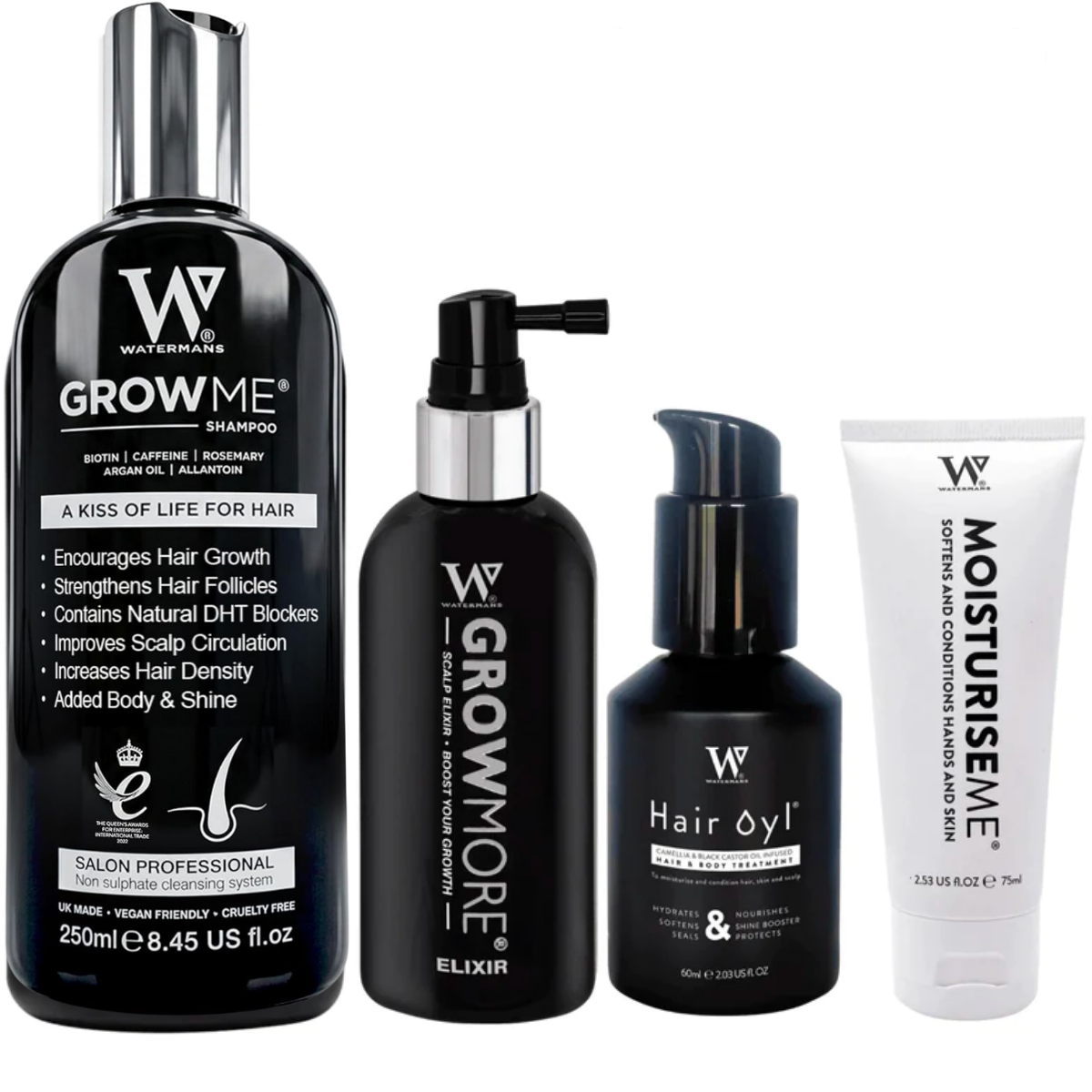
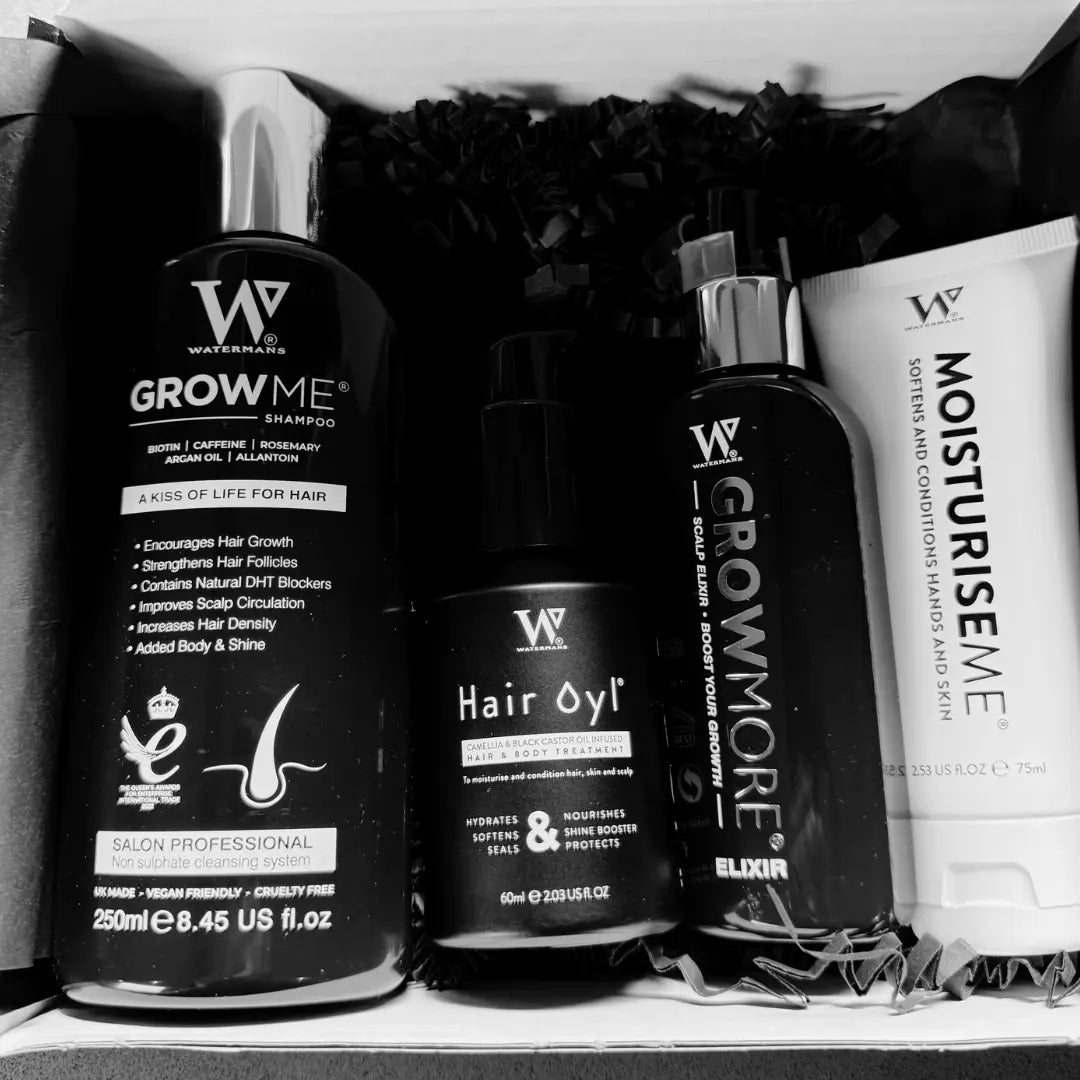
Grow Me Shampoo
Sulphate free, which makes it a gentler wash than a strong clarifying shampoo once the peeling stage is over. Cosmetic support for a comfortable scalp and fuller looking hair. Keep it off skin that is still broken, weeping or blistered.

Moisturise Me Face and Hand Cream
A plain moisturiser with cupuacu, shea and cocoa butters and allantoin, for the tightness and flaking on the forehead, the hairline and the tops of the ears once the skin is intact again. It is a cosmetic moisturiser and nothing more. Not for broken or blistered skin.
Over 5 million bottles sold since 2012, which is a fact about repurchasing and has nothing to say about a burn. For the burn itself, the pharmacy counter is a better destination than our shop.
Frequently asked questions
How do I tell a sunburnt scalp from dandruff?
Timing and sensation. A burn is sore and hot before it flakes, the flaking arrives all at once four to seven days after sun exposure and then stops, and it is limited to the exposed area. Dandruff is ongoing, usually itchy rather than sore, and is spread across the scalp rather than mapped to your parting.
Can I wash my hair with a sunburnt scalp?
Yes, gently, with cool or lukewarm water and a mild shampoo. Use your fingertips rather than your nails, skip the scalp massage, and pat rather than rub with the towel. Avoid the hairdryer until the tenderness has gone.
Is aloe vera useful on a scalp?
Many people find a cool aloe gel comfortable on intact skin, and it is easier to apply to a parting than a thick cream. It is a comfort measure rather than anything more. Do not apply it to blistered or broken skin, and check with a pharmacist if you are unsure.
Why does my sunburnt scalp itch so much on day four?
Itching is a normal part of the peeling stage as the surface layer separates. It is intensely annoying and passes within a few days. Scratching it prolongs the whole thing and can break the skin, so keep the nails away and keep it cool instead.
Will sunburn make me go bald?
No. A single burn does not cause pattern hair loss. A severe burn can contribute to a temporary shed a couple of months later, and repeated burning damages skin over a lifetime, but the pattern of thinning itself is a separate process.
Does a sunburnt scalp mean I should stop using my hair serum?
Pause it while the skin is sore or peeling. Alcohol and active ingredients on damaged skin sting and can prolong the irritation. Start again once your scalp feels completely normal, and expect no lasting consequence from the break.
Do I need sunscreen on my scalp if I have thick hair?
On the parting, yes, if you will be in strong sun for any length of time. Dense hair protects the skin under it reasonably well, but the parting line is bare skin and a hat is the simplest answer for it.
What about a shaved head or very short hair?
Then the whole scalp is exposed skin and should be protected exactly like a face. Use a proper facial or sport sunscreen, reapply after sweating and swimming, and wear a hat where you can.
Sources and references
- NHS, Sunburn, for self care guidance, what to avoid, and the signs that need medical help.
- NHS, Heat exhaustion and heatstroke, for the symptoms that turn sunburn into an urgent problem.
- NHS, Hair loss, for the distinction between temporary shedding and pattern hair loss, and when to see a GP.
- British Association of Dermatologists information leaflets, for sun protection and the effects of UV on skin.
The short version
A sunburnt scalp is ordinary skin damage in a place people forget is skin. Cool it, cover it, drink more, be gentle with your hair, and leave the peeling to finish on its own. Get advice from a pharmacist or GP if it blisters widely, breaks, looks infected, or comes with dizziness, fever or a bad headache, and always for a small child. Expect the burn to settle in a week or two, expect the hair fibre in that area to be drier for a while, and do not be surprised by a heavier shed two or three months later if the burn was a bad one. Then buy the hat, because it works better than anything else on this page.
Watermans products are 100% cosmetic and do not treat medical hair loss. Individual results may vary. Nothing here is medical advice. If your scalp is blistered, broken or infected, or you feel unwell after sun exposure, speak to a pharmacist, your GP or NHS 111.