
Article: Diet for Glowing Skin: What the Evidence Actually Supports

Diet for Glowing Skin: What the Evidence Actually Supports
A diet for glowing skin works at the margins, not the centre. Eating enough protein, plenty of vegetables, oily fish and fewer heavily processed foods genuinely supports skin structure and repair, and correcting a real nutrient shortfall can change how skin looks within a few months. What no diet does is outperform sun protection, sleep and not smoking, which remain the three biggest levers anyone has over how their skin ages.
This guide sorts the common advice by how much evidence sits behind it, so you can spend your effort on the parts that matter. It is general information, not medical advice. Persistent acne, rosacea, eczema or any changing mole is a matter for a GP or dermatologist. Last updated: August 2026.
Key takeaways
- Skin is replaced roughly every 4 to 6 weeks, so give any dietary change at least 8 to 12 weeks before judging it.
- The strongest dietary evidence is unglamorous: enough protein, enough vitamin C, and correcting genuine deficiencies such as iron or vitamin D.
- Daily sunscreen outperforms every food on this page for preventing lines, pigmentation and skin ageing.
- Drinking extra water only improves skin if you were dehydrated. Beyond that, more water does not add glow.
- High sugar diets are linked to glycation, which stiffens collagen. The effect is real but slow, and it is a pattern issue rather than one biscuit.
- Supplements help when they fill a gap. Taken on top of a good diet, most do very little, and some are harmful in excess.
Does what you eat actually change your skin?
Yes, but modestly and slowly. Skin is a living organ that rebuilds itself constantly, and it draws on the same protein, fats, vitamins and minerals as the rest of the body. When those run short, skin is one of the first places it shows, because the body prioritises organs you cannot live without.
The realistic scale matters. Correcting a genuine deficiency can produce a visible change. Adding more of a nutrient you already have enough of usually produces none. That single distinction explains most of the disappointment people feel after three months of an expensive supplement, and it is why testing beats guessing when something has genuinely changed about your skin.
Timing matters too. The outer layer of skin turns over roughly every four to six weeks, and collagen in the deeper layer changes over months to years. Anything promising visible results in a week is describing hydration and light reflection, not structure.
Skin advice ranked by how much evidence supports it
| Strength of evidence | What it covers | How much effort it deserves |
|---|---|---|
| Well established | Daily sun protection, not smoking, adequate protein, vitamin C for collagen formation, correcting deficiencies | Most of it. These are the foundations |
| Reasonably supported | Omega 3 fats for dry and inflammation prone skin, lower glycaemic diets for acne, zinc where intake is low | Worth doing, with realistic expectations |
| Emerging | Probiotics and the gut skin axis, polyphenols from tea and cocoa, collagen peptides | Interesting, not yet a plan to build around |
| Weak or overstated | Detox diets, extra water beyond thirst, chocolate as an acne cause, most single ingredient miracle foods | None. Spend the effort elsewhere |

What do antioxidant foods actually do for skin?
Antioxidants from food help limit oxidative damage from ultraviolet light and pollution, and vitamin C in particular is required for the body to build collagen at all. That makes a varied intake of fruit and vegetables genuinely useful. It does not make any of them a substitute for sunscreen, which blocks the damage before it starts.
Practical sources beat exotic ones. A red pepper carries more vitamin C than an orange. Berries, kiwi, broccoli, tomatoes, spinach and carrots between them cover vitamins C, E and the carotenoids, and eating a range of colours across a week is a more reliable strategy than fixating on one superfood.
Two honest caveats. First, high dose antioxidant supplements have not shown the benefits that food based intake suggests, and some have shown harm at high doses. Second, the visible payoff is prevention rather than repair, so it is measured over years and never noticeable next week.
Do omega 3 fats help dry or irritated skin?
They can. Omega 3 fatty acids from oily fish support the skin barrier and have anti inflammatory effects, and people with dry or inflammation prone skin most often report benefit. Two portions of oily fish a week is the standard UK recommendation, one of which should be oily, and that is a realistic target for most households.
Salmon, mackerel, sardines and herring are the practical sources. Walnuts, chia and flaxseed provide a plant form the body converts inefficiently, so they help but do not replace fish. Nobody needs to eat salmon daily, and the barrier benefit builds over months rather than days.
If your skin is dry, remember that most of the fix is external rather than internal. Water loss through the skin barrier is the mechanism, so a moisturiser applied to damp skin does more, faster, than any dietary change. Our guide on caring for dry skin in winter covers that side in detail.


Plumping Moisturise Me Face & Hand Cream, £15.00
A rich cream with cupuacu butter, shea butter, cocoa butter, allantoin and almond oil, formulated to soften and hydrate dry skin on the face and hands. Cosmetic moisturisation. Apply to slightly damp skin, which traps more water than applying to dry skin.
Shop Moisturise Me CreamDoes sugar really age your skin?
Sustained high sugar intake drives glycation, a process where sugar molecules attach to collagen and elastin and make them stiffer and less elastic. The effect is real, gradual and cumulative over years. It is a pattern of eating that matters, not a single dessert, and the change is measured in decades rather than weeks.
There is a second, faster route. Diets high in refined carbohydrates raise insulin, and higher insulin levels are associated with more sebum production and more acne, which is why lower glycaemic diets show modest benefit in acne studies. The realistic gain is fewer breakouts over two to three months, not clear skin in a fortnight.
This connection is clearest in people with insulin resistance. Where acne appears alongside irregular periods and unwanted hair growth, an underlying hormonal condition may be involved, and that is a GP conversation. Our article on PCOS and hair loss explains how that cluster of symptoms fits together.
Do dairy and chocolate cause breakouts?
Dairy, particularly skimmed milk, shows a modest association with acne in observational studies, though the evidence is not strong enough to tell everyone to give it up. Chocolate has a much weaker case, and the sugar and fat it is usually served with are the likelier culprits than cocoa itself.
The sensible approach is personal rather than universal. If you suspect a food, remove it properly for eight weeks, keep everything else the same, then reintroduce it and watch. That is long enough for skin to turn over twice, and it stops you eliminating whole food groups on the strength of a bad week. Cutting out dairy permanently without replacing the calcium is a poor trade for most people.

What about probiotics and the gut skin connection?
The gut skin axis is a genuine and active area of research, and some trials of specific probiotic strains show modest improvements in acne and eczema. What does not yet exist is reliable guidance on which strain, what dose, or for whom, which is why the honest label for this is promising rather than proven.
Fermented foods such as live yoghurt, kefir, sauerkraut and kimchi are a low risk way to participate. They are food, they are affordable, and they bring fibre and variety with them. Fibre itself may be doing much of the work, since it feeds the bacteria you already have rather than importing new ones that may not stay.
Be wary of any product marketed as a skin probiotic with a specific promise attached. If a supplement claims to clear acne, that is a medical claim about a condition that has real treatments, and it deserves scepticism rather than your money.
Does drinking more water give you glowing skin?
Only if you were dehydrated to begin with. Skin hydration is governed mainly by the barrier that stops water escaping, not by how much you drink. Once you are adequately hydrated, extra glasses are excreted rather than routed to your face, and studies have not shown a glow benefit from drinking beyond thirst.
What genuinely helps dry skin is reducing water loss: lukewarm rather than hot showers, a gentle non stripping cleanser, moisturiser applied within a few minutes of washing while skin is still damp, and humidity indoors during winter. Hands take the worst of it, and our guide on rescuing dry hands covers the routine that actually works.
Which nutrients matter most for skin, and what do they do?
Five nutrients carry most of the evidence for skin structure and repair. The table below sets out what each does and where to get it from food, which is the form that consistently performs better than high dose supplements.
| Nutrient | Role in skin | Food sources |
|---|---|---|
| Protein | Supplies the amino acids skin and collagen are built from | Eggs, fish, poultry, dairy, beans, lentils, tofu |
| Vitamin C | Required for collagen formation, and acts as an antioxidant | Peppers, berries, kiwi, citrus, broccoli |
| Zinc | Contributes to normal skin and wound healing | Shellfish, pumpkin seeds, chickpeas, beef |
| Omega 3 fats | Support the skin barrier and moderate inflammation | Salmon, mackerel, sardines, walnuts, flaxseed |
| Vitamin A group | Involved in skin cell turnover. Toxic in excess as retinol | Sweet potato, carrots, dark leafy greens, eggs |
Two warnings apply to the supplement aisle. Vitamin A as retinol is genuinely toxic in excess and should not be taken in pregnancy without medical advice, and selenium has a narrow safe range. Food is difficult to overdose on. Capsules are not.

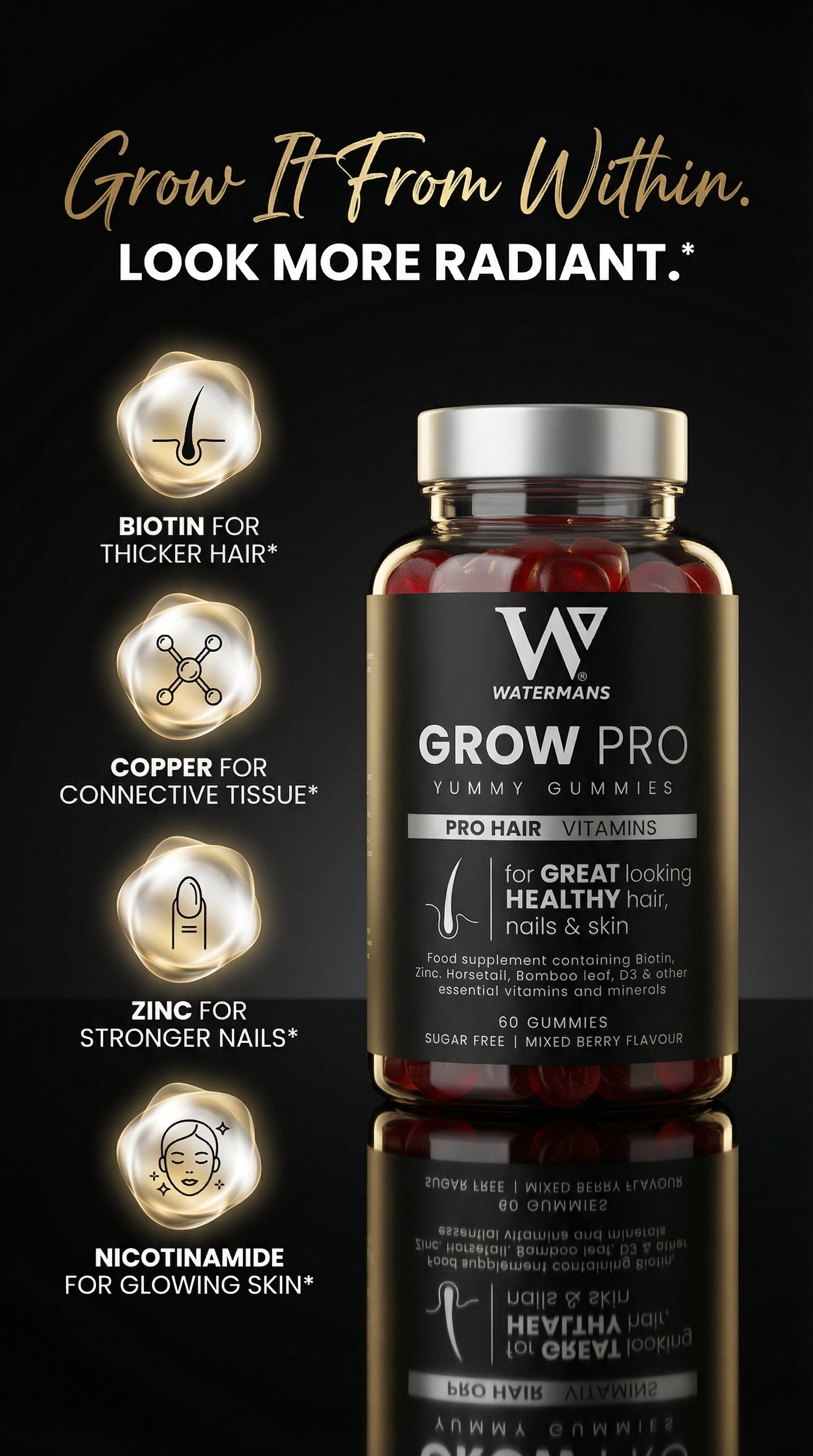
GrowPro Hair, Skin & Nails Gummies, £22.95
Sugar free vegan gummies with biotin, zinc, vitamin C and vitamin A, nutrients that contribute to the maintenance of normal skin. Useful as a top up where diet falls short. They are not a treatment for any skin condition, and food remains the better first route.
Shop GrowPro GummiesWhat does a skin friendly day of eating look like?
It looks unremarkable, which is the point. A day that covers protein at every meal, several colours of vegetable, one oily fish portion across the week and limited ultra processed food gives skin everything it can actually use. No single meal is doing the work.
| Meal | Example | What it contributes |
|---|---|---|
| Breakfast | Live yoghurt with berries, oats and seeds | Protein, vitamin C, fibre, live cultures |
| Lunch | Wholegrain sandwich or salad with eggs or beans, plus peppers | Protein, vitamin C, slow release carbohydrate |
| Dinner | Oily fish twice a week, otherwise poultry, tofu or lentils with two vegetables | Omega 3 fats, zinc, carotenoids |
| Snacks | Nuts, fruit, hummus and vegetable sticks | Vitamin E, zinc, fibre, steadier blood sugar |
The uncomfortable truth: if you did only one thing for how your skin ages, it would not be a food. It would be broad spectrum sunscreen every day, including in British winter. Ultraviolet exposure accounts for the large majority of visible skin ageing, and no diet compensates for skipping it.
What can diet not fix?
Diet cannot undo sun damage, change your genetics, or treat a medical skin condition. Acne, rosacea, eczema and psoriasis have effective treatments, and delaying them in favour of an elimination diet can allow scarring that was avoidable. Nutrition supports treatment. It does not replace it.
See a GP or dermatologist if you have acne that scars or has not responded to over the counter products, persistent redness and flushing, eczema disturbing your sleep, or any mole that changes size, shape or colour. Sudden skin changes alongside fatigue, weight change or hair shedding are also worth a blood test rather than a new diet, since iron, thyroid and vitamin D problems show up in skin and hair together. Niacinamide is one of the few ingredients with genuine barrier support evidence, and our piece on niacinamide and how it works explains what it does and does not do.
Frequently asked questions
How long does it take for diet changes to show in your skin?
Allow 8 to 12 weeks. The outer layer of skin renews roughly every four to six weeks, so you need at least two full cycles before a fair judgement. Changes to deeper collagen structure take considerably longer, often a year or more.
What is the single best food for skin?
There is not one. Variety outperforms any individual food, because skin needs protein, vitamin C, zinc, healthy fats and carotenoids together. If forced to pick one habit, oily fish twice a week covers the nutrient most people are genuinely short of.
Do collagen supplements improve skin?
Evidence is mixed and mostly funded by supplement makers. Ingested collagen is broken into amino acids during digestion rather than delivered to your face intact. Some trials show small hydration and elasticity gains. Adequate protein and vitamin C do the same job more cheaply.
Can drinking more water clear up acne?
No. Acne is driven by sebum, follicle blockage, bacteria and inflammation, none of which respond to fluid intake. Staying properly hydrated is worth doing for general health, but it is not an acne treatment and should not delay one that works.
Is dairy bad for skin?
For most people, no. There is a modest observational association between skimmed milk and acne, but it is not strong enough to justify a blanket recommendation. If you suspect it, remove it for eight weeks, reintroduce it, and replace the calcium while you test.
Do detox diets or juice cleanses help skin?
No. The liver and kidneys already perform detoxification continuously, and no juice regime improves that. Very low calorie cleanses can reduce protein intake enough to work against skin repair, which is the opposite of the intended effect.
Does alcohol affect your skin?
Yes. Alcohol dilates blood vessels, disturbs sleep quality and mildly dehydrates, which shows up as puffiness and dullness the next day. Heavy long term use is associated with worsening rosacea. The short term effects reverse quickly once intake drops.
Should I take a supplement for my skin?
Only where diet leaves a genuine gap, or a blood test shows a shortfall. Supplementing a nutrient you already have enough of adds nothing, and vitamin A and selenium in particular are harmful in excess. Ask your GP if you are unsure.
Where to start
Cover the basics before buying anything: protein at every meal, several colours of vegetable a day, oily fish twice a week, and sunscreen every morning. Give it three months, and take a photograph at the start so you have something honest to compare against.
For the topical half, Moisturise Me Face & Hand Cream handles the dryness that no diet reaches, and GrowPro Gummies are there if your diet has gaps you cannot close. Watermans is a family run British brand with over 5 million bottles sold since 2012, and every product is vegan and made in the UK.