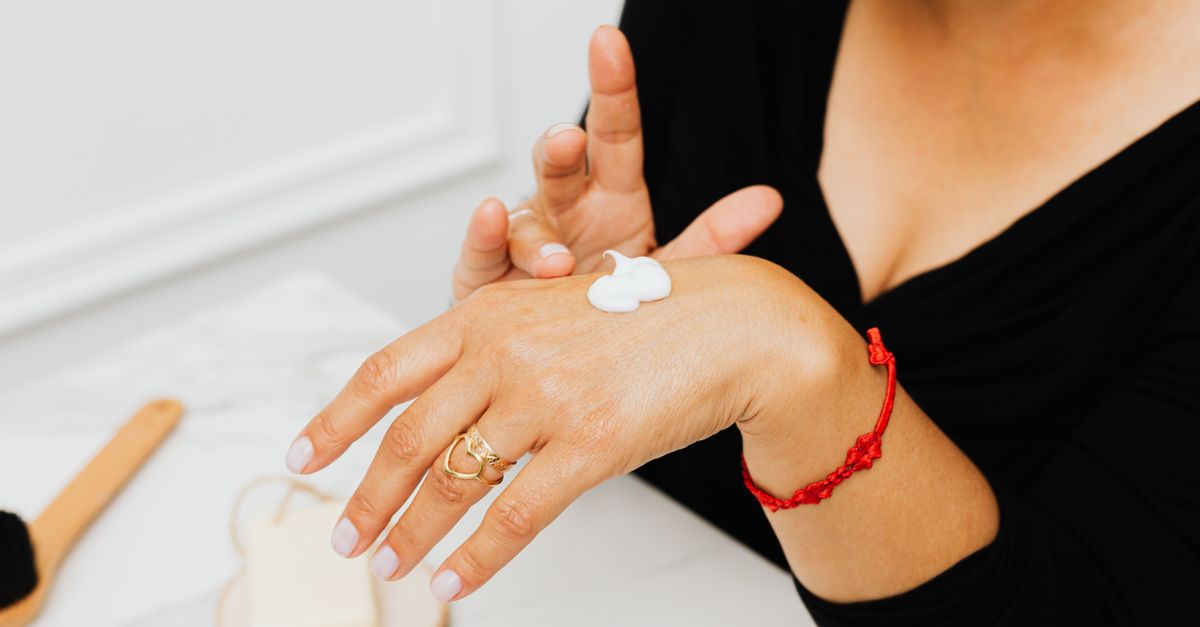
Hand Cream for Dry Hands: What to Look For and How to Use It
A hand cream for dry hands works when two things line up: the texture matches how damaged the skin is, and you apply it after every wash rather than once at night. Dry hands are almost always a washing problem. Every wash removes some of the oils holding the skin barrier together, water then escapes faster than the skin can replace it, and you get tightness, roughness and cracking. Below: what to look for in a hand cream for dry hands, how to use it, and when a pharmacist is the better call.
Our face and hand cream
Moisturise Me® Face & Hand Cream, £15.00. A rich, plumping cream for dry hands and face, made with cupuacu, shea and cocoa butters.
Key takeaways
- Frequent washing is the main cause. Hot water and harsh soap accelerate it.
- The single best habit is applying a hand cream for dry hands to slightly damp skin straight after every wash, not once at bedtime.
- An ointment or balm holds water in better than a light lotion. Texture matters more than the price.
- Alcohol gel is usually gentler on already damaged skin than another wash with soap, which surprises people.
- Gloves for washing up and for cold weather do more than most products.
- Cracked, bleeding, weeping or intensely itchy skin, or a rash that spreads, needs a pharmacist or GP rather than another cream.
What causes dry hands?
Several things, and they nearly always combine rather than acting alone.
Washing. Surfactants in soap lift grease, and they cannot tell the difference between grease you want gone and the lipids holding your skin barrier together. Twenty washes a day is twenty small strips of that barrier.
Hot water. Heat dissolves those lipids more effectively, which is why hands feel tightest after a hot wash.
Cold, dry air. Winter air holds little moisture and indoor heating holds even less, so water evaporates from exposed skin all day.
Chemicals and friction. Washing up liquid, cleaning products, solvents and repeated contact with cardboard, paper or fabric all wear at the surface.
Age and underlying conditions. Skin produces less oil over time, and conditions such as eczema or contact dermatitis make hands dry out far more readily.
Because the causes stack, so must the responses. That is the honest reason a single expensive cream rarely solves it on its own.

What are the five fixes that actually work?
In order of how much difference they make, not how much they cost.
- Cream after every wash, on damp hands. Not once a day. Every wash, within a minute, while the skin still holds water. This one change outperforms switching product.
- Turn the water down. Lukewarm cleans just as well. Hot water is doing measurable damage for no cleaning benefit.
- Switch to a gentler wash. A cream or oil based hand wash, or a soap substitute, removes far less of the barrier than a foaming antibacterial soap.
- Wear gloves. Rubber gloves for washing up and cleaning, warm gloves outdoors. Both remove a whole category of damage.
- Use a heavier product overnight. A thick balm before bed, and cotton gloves over the top if hands are badly cracked, gives eight uninterrupted hours.
Keep a tube wherever you wash: kitchen sink, bathroom, desk, bag. The reason people fail at this is not motivation, it is that the cream is in the wrong room.
Which hand cream for dry hands should you choose?
Look at the texture rather than the branding. A hand cream for dry hands needs enough occlusive content to stop water escaping, and thicker generally means more of it.
| Texture | How well it holds water in | Best for |
|---|---|---|
| Lotion | Least. High water content, absorbs fast, wears off quickly. | Mild dryness, daytime use when you need hands usable immediately. |
| Cream | Good. The practical middle ground for most people. | Everyday use after each wash. |
| Balm or ointment | Best. Greasy, long lasting, forms a real barrier. | Overnight, and for cracked or badly damaged skin. |
Useful ingredients to recognise: glycerin, urea and hyaluronic acid draw water in; shea butter, cocoa butter and almond oil smooth the surface; petrolatum, dimethicone and beeswax seal it. A good hand cream usually contains something from each group. Allantoin is worth noting too, since it soothes rough skin and turns up in gentler formulas. For a related angle, see our guide to is petrolatum bad for hair.
Heavy fragrance is the thing most worth avoiding on already irritated skin, since it is a common cause of contact reactions.
How do you use a hand cream for dry hands so it actually works?
Timing beats formula. The NHS guidance on emollients, which is the category a hand cream for dry hands belongs to, says to apply as soon as you have patted the skin dry after washing, at least three or four times a day, and that hands and face need it especially often. It also says you cannot overuse them. That is the whole method: the cream is a seal, and it seals best over skin that still holds water.
| Step | What to do | Why |
|---|---|---|
| 1 | Wash lukewarm and pat dry | Hot water dissolves the lipids in the barrier, and rubbing lifts the surface |
| 2 | Apply within a minute, while the skin is still damp | The NHS says to apply as soon as you have patted the skin dry, so the cream seals in water that is already there |
| 3 | Smooth it on in the direction the hairs grow | NHS wording. Rubbing hard can irritate the hair follicles on the back of the hand |
| 4 | Repeat after every wash, at least three or four times a day | NHS guidance says hands and face need emollient especially often, and that you cannot overuse it |
| 5 | Apply before irritating jobs, and before and after swimming | Also NHS advice. Leave time for it to absorb before you get in the water |
| 6 | Switch to an ointment or balm at night | The thickest texture, which the NHS describes as suiting very dry, thickened skin |
Two label notes from the same NHS guidance. Aqueous cream is no longer recommended as a leave on emollient because its sodium lauryl sulphate can irritate the skin, so an old tub in the bathroom cabinet is better used as a soap substitute than as a hand cream. And a leave on emollient or soap substitute can replace soap entirely: about a teaspoon mixed with a little warm water in the palm cleans the hands without the foam, which is the gentlest wash there is for skin that is already cracked.
Get a discount on your next order
Join the Watermans mailing list and we will email a discount code straight to your inbox. Made in the UK, over 6.5 million bottles sold since 2012.
Is hand sanitiser worse than soap?
Usually the opposite, which is the wrong way round from what most people assume.
Alcohol gel evaporates and does not involve the mechanical scrubbing, hot water and surfactant action of a wash. On skin that is already damaged, a gel is often the gentler choice. The sting people feel on cracked skin is alcohol reaching broken tissue, and it signals damage that is already there rather than damage being caused.
Good gels include a humectant such as glycerin to offset the drying effect of the alcohol. Apply hand cream after the gel has fully dried, and note that soap and water is still the right choice when hands are visibly dirty or greasy.

How do you handle cracks and splits?
Splits around the fingertips and knuckles are the painful end of this, and they need a slightly different approach because the skin is broken rather than just dry.
- Switch to an ointment. A cream is not enough once skin has split. Something greasy that stays put is what closes the gap.
- Cover overnight. Ointment plus cotton gloves, or a plaster on a single deep split, keeps it protected and stops it reopening in your sleep.
- Avoid water on it where you can. Gloves for washing up become non negotiable at this stage.
- Do not pick the loose edges. It extends the split and delays healing.
- Give it a fortnight. If it is not closing, or if it is red, hot, swollen or oozing, that is a pharmacist or GP matter.
How long should it take to improve?
Faster than most people expect, provided the routine is consistent rather than occasional.
The outer layer of skin turns over in roughly two to four weeks, so a barrier that has been thinned by washing has a natural rebuilding schedule. Tightness and the immediate post wash discomfort usually ease within a few days once you start applying cream after every wash. Visible roughness takes one to two weeks. Splits and cracks are the slowest, because the skin has to close a physical gap while you keep using your hands, and two to three weeks is realistic.
The common reason people conclude nothing is working is that they judge it after four days, or they apply cream in the evening only and wash fifteen times during the day. Consistency is the active ingredient here. If three weeks of doing it properly has changed nothing, that is genuinely useful information and it is the point at which a pharmacist becomes worth a visit, because it suggests something other than simple dryness.
What about your nails and cuticles?
They are part of the same problem and usually get ignored until they are painful.
Repeated wetting and drying makes nails more brittle and lifts the cuticle, which is the seal protecting the nail matrix. Once that seal breaks you get hangnails and, occasionally, infection. Massage a little cream or oil into the nail folds when you moisturise, do not cut cuticles back, and push them gently only when they are soft after a bath. Brittle nails respond to the same barrier logic as skin: less water exposure, more sealing afterwards.

Moisturise Me Face & Hand Cream
This is the product we make for this job. Cupuacu, shea and cocoa butters do the smoothing and sealing, with allantoin and almond oil alongside. It sits in the cream rather than balm category, so it suits use after every wash during the day, with something heavier reserved for overnight if hands are cracked.

Camellia & Black Castor Hair & Body Oil
Useful as the overnight sealing layer, applied over cream on damp hands and left on. Oil on its own does not add water, so the order matters: damp skin, then cream, then oil on top.
Does the rest of your skin need the same approach?
Largely yes, because the mechanism is identical everywhere. Hands simply get the worst of it because of how often they are washed.
The same barrier logic applies to the face, the body and the scalp, which is skin people rarely think of in these terms. Cold weather turns all of it into one problem, covered in our guide to dry skin in winter, and the scalp specific version is in our guide to keeping a healthy scalp. A tight, flaky scalp in January is the same story as tight, flaky hands.
When should you see a pharmacist or GP?
Speak to a pharmacist, which is free and needs no appointment, if two to three weeks of consistent moisturising and gentler washing have not improved things. They can recommend an emollient or soap substitute and tell you whether what you have looks like simple dryness.
See your GP if the skin is cracked and bleeding, weeping, crusting or looks infected, if there is a rash spreading up the wrists or arms, if there are blisters, if the itch is disturbing your sleep, or if it started suddenly at work, which can point to something you are being exposed to there. Hand dermatitis is common, it is not the same as ordinary dryness, and it responds to different care. For ordinary dryness, the next question is usually how much to spend, and our guide to how to judge a cheap cream against a costly one covers how to read a label in thirty seconds.
We are a hair and skin care company rather than a clinic. We cannot examine anyone, and cream is not the right answer to every hand problem.
Frequently asked questions
What is the best hand cream for dry hands?
The one you will apply after every wash. We will not claim ours is the best hand cream for dry hands, because the honest answer depends on the damage: a cream with butters and glycerin for daytime use, an ointment or balm for cracked skin and overnight, and a fragrance free formula if your skin reacts easily. Judge any tub against the texture table above and the ingredient groups listed under it.
Why are my hands dry when the rest of me is fine?
Because you wash them many times more often than anything else. Each wash removes some of the oils holding the barrier together, and hands are also the most exposed to cold air, cleaning products and friction.
How often should I use hand cream on dry hands?
After every wash, not once a day. Applying to slightly damp hands within a minute of washing is what makes the difference, because there is still water at the surface to hold in.
Is hand sanitiser drying my hands out?
Less than repeated washing with soap and hot water, in most cases. Alcohol gel skips the scrubbing and the surfactants. Choose one containing glycerin, and moisturise once it has dried.
Why do my fingertips split in winter?
Fingertip skin is thick, has few oil glands and flexes constantly. When cold dry air and frequent washing thin the barrier, that constant flexing opens splits. An ointment and overnight covering close them faster than a cream.
Do expensive hand creams work better?
Not reliably. Texture and how often you use it matter far more than price. A cheap ointment used after every wash will beat an expensive lotion used once a day.
Should I exfoliate rough dry hands?
Rarely a good idea while they are damaged. Scrubbing removes more of an already thin barrier. Moisturise consistently for a couple of weeks first, and the roughness usually resolves without it.
Can wearing gloves cause problems too?
Rubber gloves worn for long stretches trap sweat, which is its own irritant. Use them for washing up and cleaning rather than all day, and a thin cotton liner inside helps.
Is it dry skin or is it eczema?
Simple dryness is rough and tight and improves with consistent moisturising. Eczema and contact dermatitis tend to be itchy, red, sometimes blistered, and they do not settle with moisturiser alone. If it is not improving in two to three weeks, ask a pharmacist. If your question is about products or a routine rather than a medical one, you can talk to Gail Waterman, our co-founder, as an AI avatar on the Watermans homepage.
What is the bottom line on hand cream for dry hands?
A hand cream for dry hands only works as well as the habit around it. Dry hands come from repeated washing thinning the skin barrier faster than it rebuilds. Apply cream to damp hands after every wash rather than once at night, turn the water temperature down, switch to a gentler wash, wear gloves for washing up and for the cold, and use something heavier overnight. Match the texture to the damage: lotion for mild, cream for everyday, ointment for cracks. If skin is bleeding, weeping or itching enough to wake you, that is a pharmacist or GP conversation rather than another purchase.
For hands and skin rather than hair, our hand cream for dry hands is what we make. Made in the UK, with over 6.5 million bottles sold since 2012.
Watermans products are 100% cosmetic and do not treat medical hair loss. Individual results may vary.
Sources and references
- NHS, Emollients, on how moisturisers work, the different textures and how to apply them.
- DermNet, Hand dermatitis, on causes, common patterns and what distinguishes it from simple dryness.
- NHS, Contact dermatitis, on irritant exposure at work and at home.
- DermNet, Dry skin, on barrier function and management.