


How to See a Dermatologist in the UK (and Who to Trust Online)
Short answer: in the UK you normally reach a dermatologist through your GP, who refers you on the NHS, and there is no charge. You can also book privately without a referral, though many private clinics still prefer one. Before you trust anyone with your skin, check they appear on the General Medical Council register and, for a consultant dermatologist, on the GMC Specialist Register for dermatology. That check takes about a minute and is free.
Key takeaways
- Your GP is the front door. On the NHS you need a GP referral, so the appointment to book today is with your own surgery.
- Verify, do not assume. Search the GMC register for the name. A dermatologist consultant should be on the Specialist Register for dermatology, not just licensed to practise.
- Dermatologist is a protected medical role. Trichologist is not a protected title in the UK, and anyone can use it. Good ones exist, but the word alone tells you nothing about training.
- Board-certified is an American term. It has no UK equivalent, so seeing it on a website usually means you are reading US advice.
- Most US skincare advice does not transfer. Several products sold over the counter in America are prescription-only here, which is the single most common source of confusion.
- Some things skip the queue. Suspected skin cancer goes on an urgent two week referral pathway, and hair loss with scalp scarring or pain needs prompt assessment.
How do you get a dermatologist appointment in the UK?
There are two routes, and they are not in competition. Plenty of people start on one and switch.
| NHS route | Private route | |
|---|---|---|
| How you start | GP appointment, then referral | Book directly, though a GP letter helps |
| Cost | Free, including any treatment deemed clinically necessary | You pay per consultation, plus tests and procedures |
| Waiting time | Varies widely by area. Urgent suspected cancer is fast tracked | Usually days to weeks |
| Cosmetic concerns | Generally not funded | This is where most cosmetic work happens |
| Best for | Anything medical: suspicious moles, severe acne, eczema, psoriasis, unexplained rashes, scarring hair loss | Speed, second opinions, and appearance-related concerns |
One point worth knowing: your GP can prescribe a great deal of dermatology treatment themselves, and often will. A referral is not the only useful outcome of that appointment, so do not treat it as a formality on the way to somewhere else.
Some areas also run community dermatology clinics or teledermatology, where your GP photographs the problem and a specialist reviews the images. If you are offered this, good photographs matter. Use natural daylight, take one wide shot for location and one close up, and include something for scale.

How to check someone really is a dermatologist
This is the most useful skill on this page, and almost nobody uses it.
- Get the full name. Websites and social media profiles often give only a first name or a brand handle. If you cannot find a full name, that is your first answer.
- Search the GMC register. The General Medical Council publishes a free public register of every doctor licensed to practise in the UK. It confirms they are a doctor at all.
- Check the Specialist Register. This is the part people miss. The GMC record shows whether a doctor is on the Specialist Register and in which specialty. A consultant dermatologist will show dermatology. A doctor who is licensed but not on that register for dermatology is a doctor, not a dermatology specialist.
- Look at any fitness to practise history, which the register also shows.
- For nurses and other clinicians, the equivalent registers are the Nursing and Midwifery Council, and the Health and Care Professions Council.
Skin doctor and skin expert mean nothing. Neither phrase is regulated, and neither requires any qualification. The words that carry weight are the ones you can verify on a register. If a website uses vague titles and never gives a checkable name, treat that as information in itself.
Dermatologist, cosmetic doctor, aesthetician, trichologist: who does what?
These roles get used interchangeably online and they are not interchangeable at all.
| Role | Training and regulation | See them for |
|---|---|---|
| Consultant dermatologist | Medical degree plus specialist dermatology training. On the GMC Specialist Register | Diagnosis, skin cancer, severe or resistant conditions, biopsies, prescriptions |
| GP with a special interest | A GP with extra dermatology training. GMC registered | Common conditions, often faster than a hospital referral |
| Cosmetic doctor or nurse prescriber | A registered doctor, dentist or nurse. May have no dermatology specialty training | Appearance-related treatments. Not the person to diagnose a rash |
| Aesthetician or beauty therapist | Beauty qualifications. Not a medical role and not on a medical register | Facials and cosmetic treatments. Cannot diagnose or prescribe |
| Trichologist | Not a protected title in the UK. Training varies from a recognised professional qualification to none at all | Hair and scalp advice. Check the individual's training and whether they work alongside doctors |
| Pharmacist | Registered with the General Pharmaceutical Council | Genuinely underused. Free advice, and can supply a great deal without an appointment |
Hair and scalp: who should you actually see?
This is where people most often go to the wrong door, so it is worth being specific.
Start with your GP. Most hair loss in both men and women has a cause that can be narrowed down with a history and a blood test. Iron deficiency, thyroid problems, recent illness, surgery, pregnancy, crash dieting, new medication and significant stress all show up regularly, and several of them are correctable. A GP can also refer you on.
Ask for a dermatology referral if your scalp is painful, itching or burning, if you can see redness, scaling or pustules, if the skin in the thinning area looks smooth and shiny with no visible follicle openings, if hair is coming out in discrete round patches, or if loss is rapid and unexplained. The smooth shiny picture matters most, because it can indicate a scarring type of hair loss, where follicles are permanently replaced. In those conditions the window for preserving what remains is genuinely time limited, so it is not one to sit on. Our guides to alopecia areata and to working out why your hair is thinning go through the patterns in more detail.
Where a trichologist fits. An experienced trichologist can be genuinely helpful, particularly for scalp condition, breakage and everyday management. But because the title is not legally protected in the UK, the responsibility to check credentials falls on you. Ask what qualification they hold, which body awards it, and whether they refer to doctors when something looks medical. Anyone who discourages you from seeing a doctor, or who sells you a lengthy in-house treatment programme in place of a diagnosis, has told you what you need to know.
If your main problem is greasy yellowish flaking with redness, that is more likely to be seborrheic dermatitis than hair loss, and it is treatable from the pharmacy in most cases.

Why so much online skincare advice does not apply in the UK
A large share of the skincare content in your feed is made in the United States, for American shoppers, under American rules. The science travels. The shopping advice frequently does not.
- Availability differs. Products routinely recommended as everyday purchases in US videos are prescription-only in the UK. Adapalene is the clearest example: sold over the counter in America, prescription-only here. Our guide to tretinoin versus adapalene sets out what you can and cannot buy here.
- Sunscreen labelling differs. The UK uses a star rating for UVA alongside SPF, while other markets use PA plus signs or different filter approvals entirely. A product cannot always be compared like for like.
- Titles differ. Board-certified is a US credential. It is not wrong, it is simply not a UK thing, and it is a reliable clue that you are reading advice written for another country.
- Routes to care differ. Advice to just go and see a dermatologist assumes a system where you book one directly. Here, that is usually a GP conversation first.
Red flags in online skincare advice
Useful advice and marketing can look identical at a glance. These are the signals worth noticing.
- No checkable name. A confident face and a first name only.
- Undisclosed commercial relationships, or a discount code attached to every recommendation.
- Certainty about things that are genuinely uncertain. Real clinicians hedge, because the evidence often does.
- Single-ingredient miracle framing. One thing that fixes acne, ageing, pigmentation and hair loss at once.
- Before and after photographs with different lighting, angle, makeup or camera. Lighting alone can produce most transformations you see.
- Advice to stop a prescribed medication in favour of a supplement, a diet or a cosmetic product. This is the one to walk away from immediately.
- Fear as the opening move. Content that starts by telling you what is secretly damaging you is usually selling the remedy.
- A named professional endorsing a product they have no stated connection to. If a brand is leaning on someone else's authority, that is the brand's claim, not the clinician's.

How to get the most out of a ten minute appointment
Appointments are short. Preparation is the difference between leaving with a plan and leaving with a shrug.
- Take photographs in advance, especially of anything that comes and goes. A rash that clears the morning of your appointment is a real and frequent problem.
- Write down the timeline. When it started, what makes it better or worse, and what has changed in your life around that time.
- Bring a list of everything you have already tried, including how long you used it and at what strength. This prevents being sent round the same loop.
- Bring all your medications, including the contraceptive pill, supplements and anything bought online. Several common medicines affect skin and hair.
- Lead with your main concern. If you have three, say so at the start rather than raising the important one as you reach the door.
- Ask three questions: what do you think this is, what are my options, and when should I come back if it has not improved.
- Ask for the diagnosis in writing, or at least the name of it. You cannot research or explain a condition you cannot name.
When not to wait
Book urgently, and say why when you call, if you notice any of the following.
- A new mole, or a mole changing in size, shape, colour or outline, itching or bleeding. Suspected skin cancer is handled on an urgent referral pathway.
- A sore, scab or ulcer that has not healed within a few weeks, particularly on the face, ears or scalp.
- A rapidly spreading rash, especially with fever, blistering, or involvement of the eyes, mouth or genitals.
- Hair loss with a painful, burning or scarring scalp, or areas where the skin looks smooth and shiny.
- Any skin reaction that begins shortly after starting a new medication.
If you are ever unsure how urgent something is, NHS 111 can advise.
Where cosmetic products fit, and where they do not
Everyday hair and skin care sits alongside medical care, not in place of it. Shampoos, conditioners and serums are cosmetic products. They can improve how hair looks and feels, support scalp comfort and reduce breakage. They do not diagnose anything, and they do not treat a medical condition. If you are waiting on an appointment, there is no harm in looking after your hair well in the meantime, but the appointment is still the thing that matters.

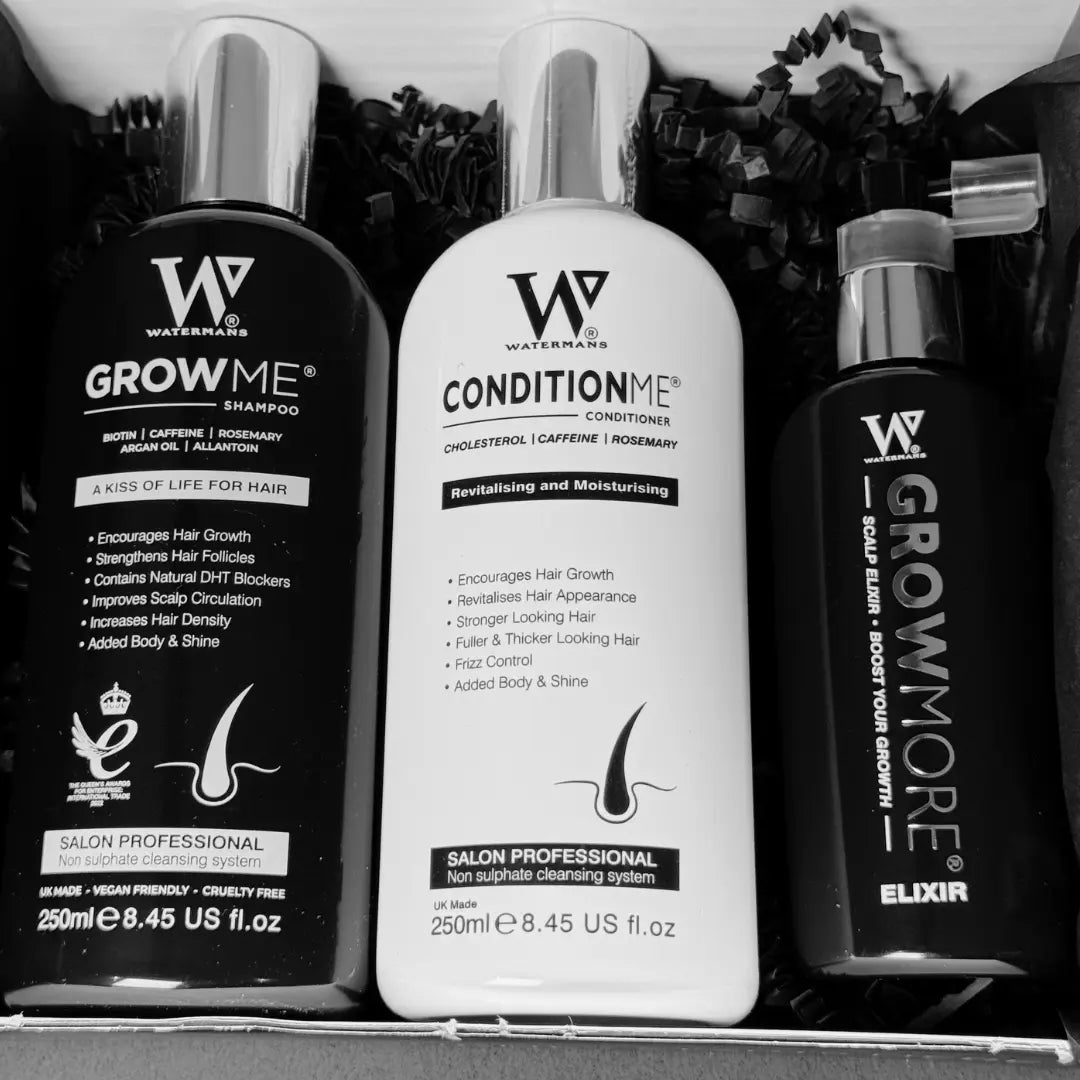
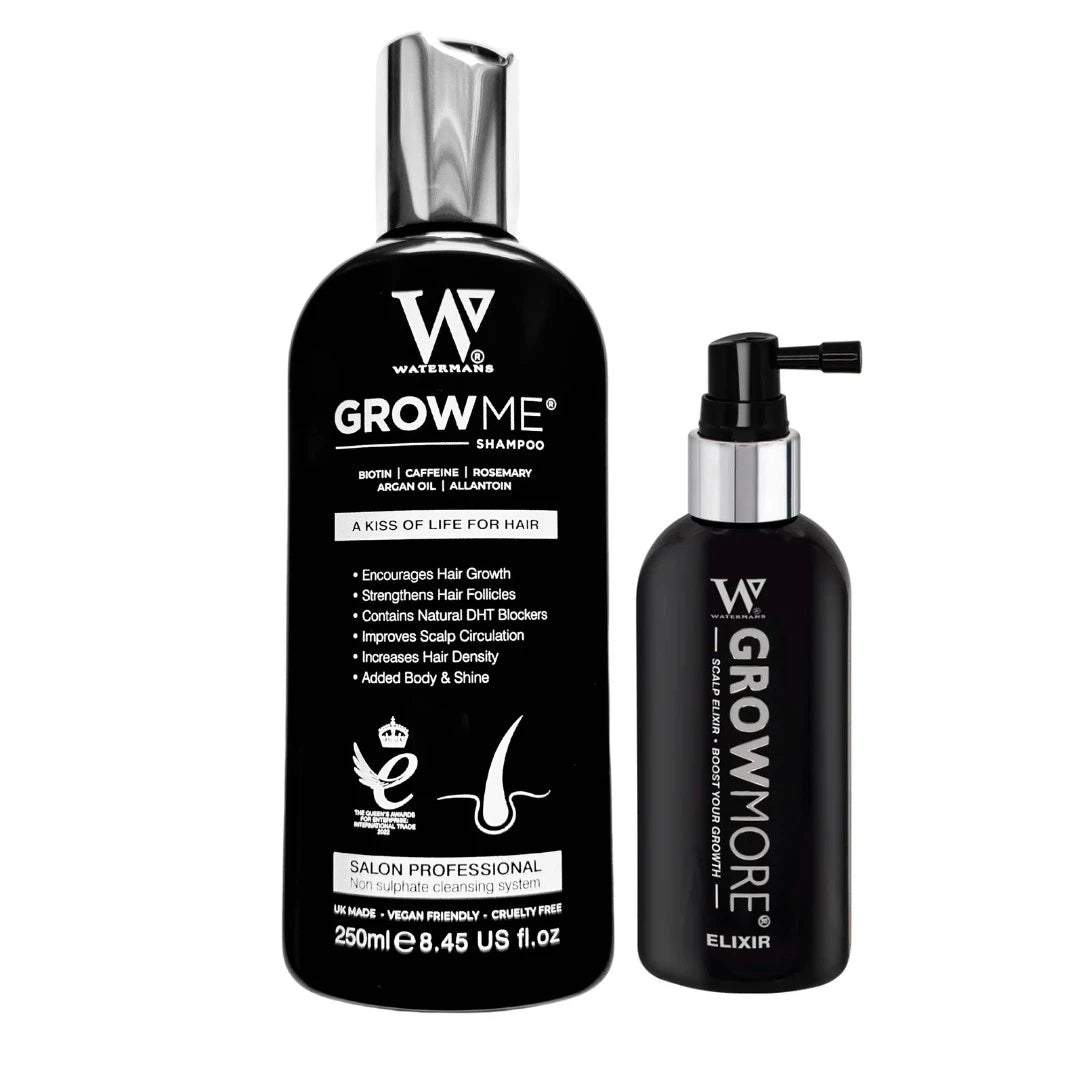
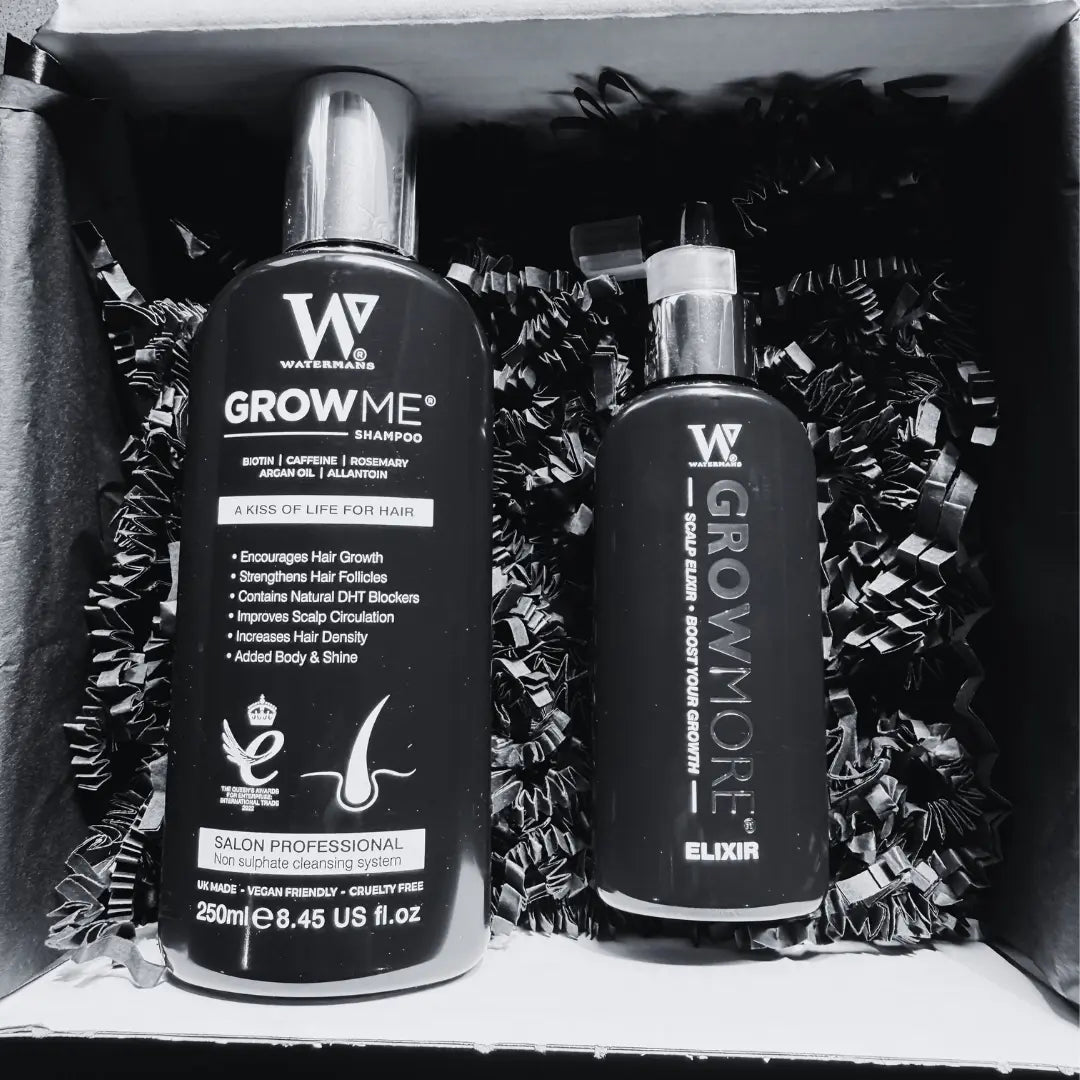
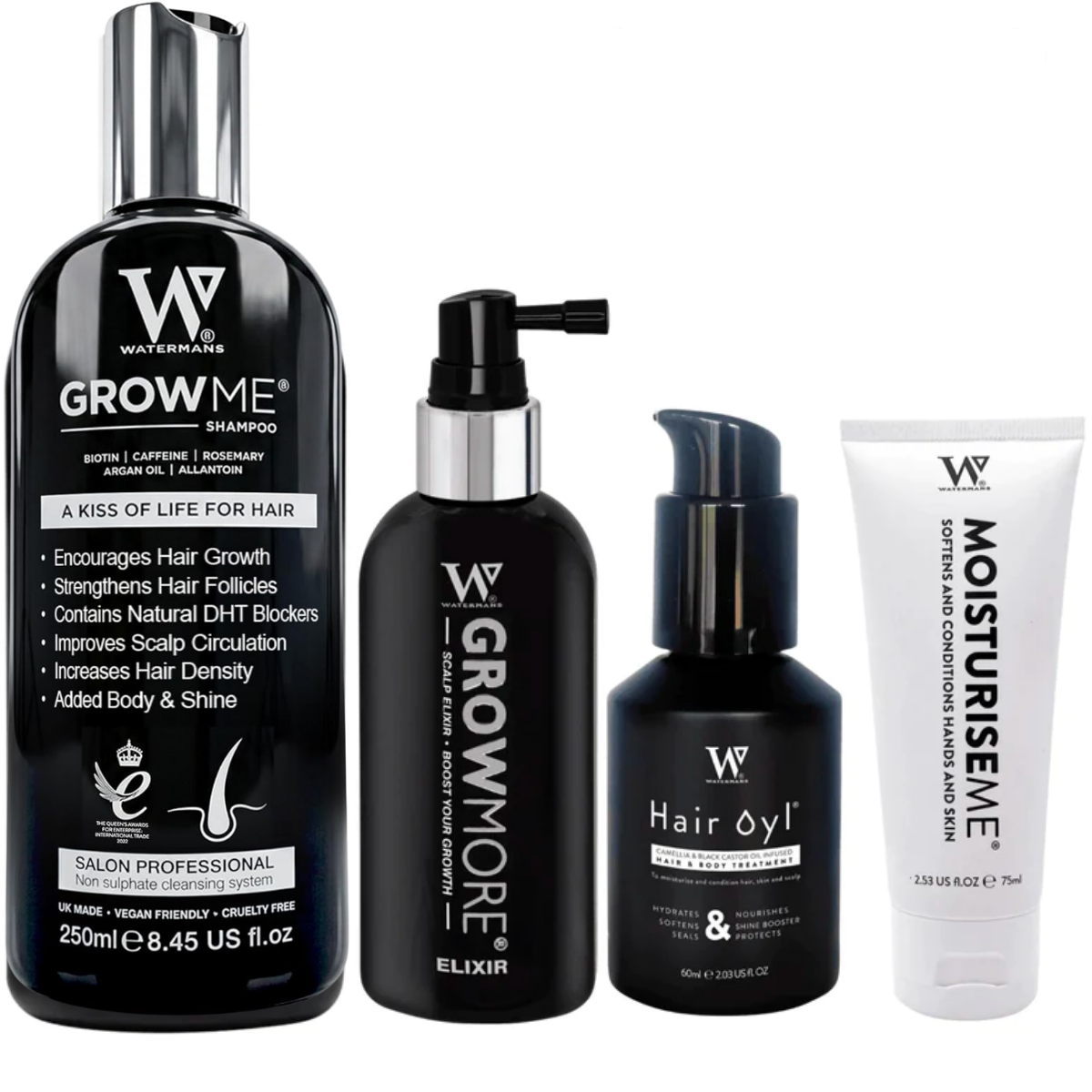
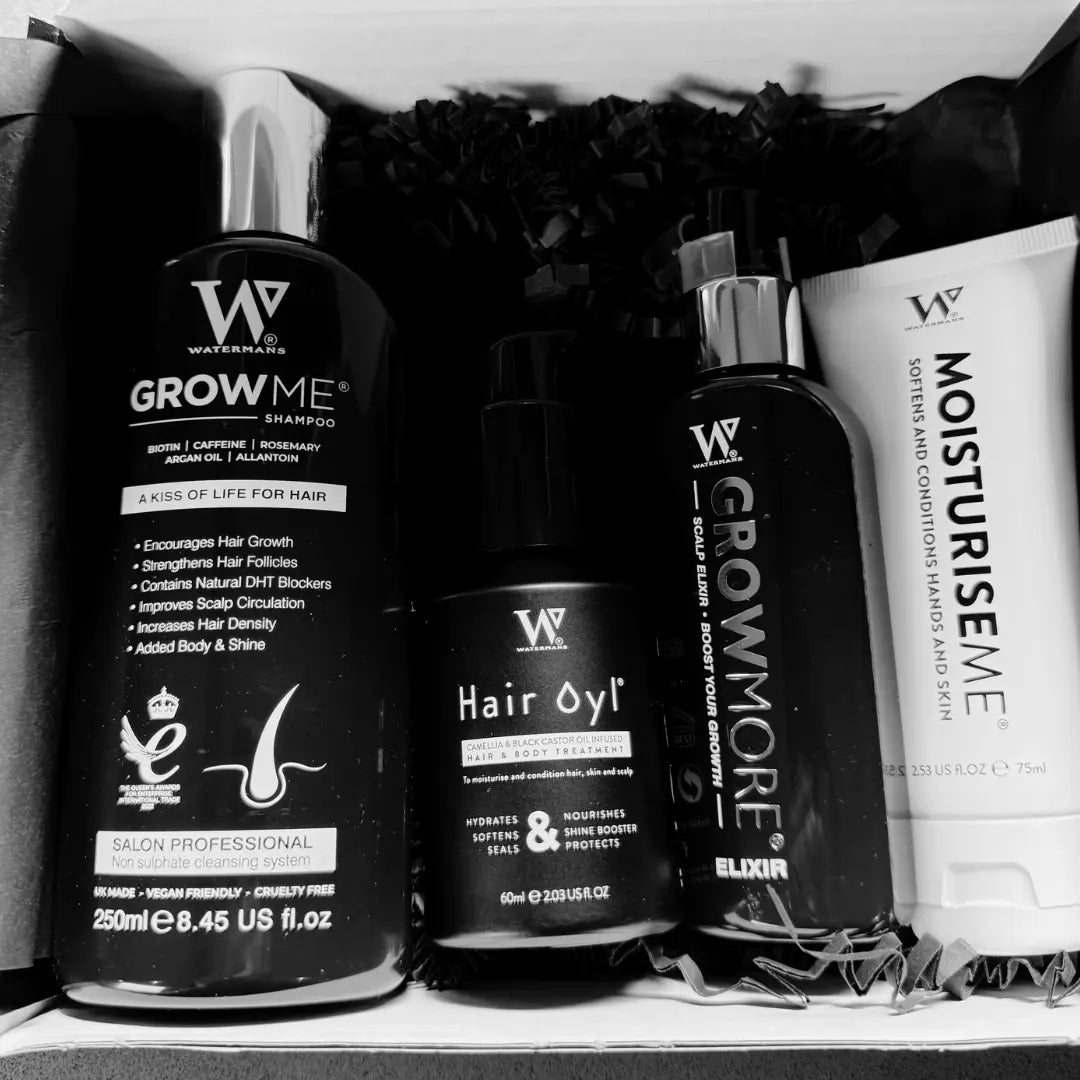
Grow Me Shampoo and Condition Me Conditioner Set
A sulphate-free everyday cleanse and condition routine with biotin, caffeine, rosemary and niacinamide. Formulated to support scalp comfort and reduce breakage, for fuller-looking hair.
Cosmetic care only. This is not a treatment for hair loss, alopecia or any skin condition, and it is not a substitute for seeing a GP or dermatologist. If you have any of the red flags above, book the appointment.
Watermans has sold over five million bottles since 2012, all vegan and made in the UK. We are a hair care company, not a clinic, and we would always rather you got a diagnosis than bought a bottle.
Frequently asked questions
Do I need a GP referral to see a dermatologist in the UK?
On the NHS, yes. Your GP assesses the problem and refers you if specialist input is needed. Privately you can usually book directly, although many clinics prefer a GP letter because it gives them your history and medication list.
How do I check that someone is a real dermatologist?
Search their full name on the General Medical Council register, which is free and public. Then check whether they appear on the Specialist Register for dermatology. Being licensed to practise makes someone a doctor. The Specialist Register entry is what marks them out as a dermatology specialist.
Is a trichologist a doctor?
Usually not, and trichologist is not a protected title in the UK, so there is no legal requirement to hold any particular qualification to use it. Experienced, well trained trichologists do valuable work on scalp and hair condition. Ask what qualification they hold, who awards it, and whether they refer to doctors when needed.
Can my GP treat skin problems without referring me?
Frequently, yes. GPs manage a large amount of dermatology, including acne, eczema, psoriasis and many rashes, and can prescribe accordingly. A referral is for cases that need specialist assessment, procedures or a diagnosis that is not clear.
What does board-certified mean in the UK?
Nothing official. It is a United States credential with no UK equivalent, so if you see it on a profile you are almost certainly reading American content. The UK equivalent concept is entry on the GMC Specialist Register.
Should I see a dermatologist for hair loss?
See your GP first, since blood tests and a history often identify the cause. Ask for a dermatology referral if your scalp is painful, itchy, red, scaling or pustular, if you have discrete round bald patches, if loss is rapid, or if the skin looks smooth and shiny where hair used to be.
Are private dermatology consultations worth paying for?
They can be, particularly for speed or a second opinion. Check the same registers you would for any clinician, ask for the cost of follow-ups and any procedures before you book, and be cautious anywhere a consultation leads straight to an expensive in-house treatment package.
Why does so much skincare advice online not work for me?
Often because it was written for a different market. Availability of ingredients, sunscreen labelling, product regulations and even the route to seeing a specialist all differ between countries. Check whether the advice is UK-based before you act on it.
The bottom line
Getting good skin and scalp care in the UK comes down to three habits. Start with your GP, because that is the door that opens the rest of the system. Verify anyone you are trusting, using a register rather than a follower count. And treat online advice as a starting point for questions to ask, not as a diagnosis. Nothing on this page is medical advice, and no cosmetic product replaces a proper assessment.