

Are Keratin Treatments Safe? Formaldehyde, Damage and Safer Options
Keratin smoothing treatments are not risk free. Most salon keratin and Brazilian blow-dry treatments work by sealing the hair with a resin that is cross-linked using formaldehyde, and the gas is released into the air when the stylist blow-dries and flat-irons the hair at high heat. In the UK and EU, formaldehyde cannot legally be added to a cosmetic as an ingredient, yet treatments still reach salons under alternative chemical names. This guide explains what is really in the bottle, how to read the label, who should avoid these treatments, and what actually works instead for frizz.
Last updated: August 2026
Key takeaways
- Formaldehyde is classified by the International Agency for Research on Cancer as carcinogenic to humans (Group 1), and it is banned as an added cosmetic ingredient in the UK and EU.
- "Formaldehyde free" on the front of a bottle is not a guarantee. Methylene glycol, methanediol, formalin and several preservative names all release formaldehyde when heated.
- The highest exposure falls on the stylist, who breathes the fumes all day, not on the client who sits in the chair three times a year.
- Glyoxylic acid is the main formaldehyde-free replacement, but case reports have linked it to acute kidney injury, so it is not automatically the safe option.
- Keratin treatments do not cause pattern hair loss. They can cause breakage that looks like hair loss, because the damage happens along the strand rather than at the follicle.
- If you are pregnant, asthmatic, or have a sensitive or broken scalp, speak to your GP or midwife before booking any chemical smoothing service.

Are keratin treatments safe for your hair and for you?
Keratin treatments carry two separate risks that get confused with each other. The chemical risk is inhaling formaldehyde gas during the flat-ironing stage, which irritates the eyes, nose and throat and is a recognised occupational hazard for salon staff. The hair risk is cumulative protein and cuticle damage from repeated high-heat sealing, which shows up months later as snapping and shorter, wispy lengths.
Neither risk is a reason to panic if you had one treatment two years ago. Both are reasons to ask better questions before the next one. The single most useful thing to understand is that the smoothness does not come from keratin. Keratin protein is in the formula, and it does deposit on the surface, but the lasting straightening effect comes from a resin that is set into the hair by heat. Formaldehyde, or a chemical that turns into it, is what makes that setting reaction happen.
What is actually in a keratin smoothing treatment?
A typical keratin smoothing formula contains four things: hydrolysed keratin or another protein, a cross-linking agent, a conditioning and film-forming base, and a solvent. The cross-linking agent is the part that matters for safety, because it is the component that binds the resin into a semi-permanent shell around the hair fibre when the temperature passes roughly 180C.
| Name on the label | What it really is | Releases formaldehyde when heated? |
|---|---|---|
| Formaldehyde, formalin, formic aldehyde | The chemical itself | Yes. Banned as an added cosmetic ingredient in the UK and EU. |
| Methylene glycol, methanediol | Formaldehyde dissolved in water, chemically the same substance in hydrated form | Yes. This is the most common way the claim "formaldehyde free" is technically defended. |
| Timonacic acid, thiazolidinecarboxylic acid | A compound that breaks down under heat | Yes, on heating. |
| DMDM hydantoin, imidazolidinyl urea, quaternium-15 | Preservatives that slowly release small amounts of formaldehyde | Yes, at low preservative-level concentrations. Regulated separately from smoothing chemistry. |
| Glyoxylic acid, glyoxyloyl carbocysteine | A genuinely different cross-linker used in newer treatments | No. But see the kidney safety section below. |
Under the UK Cosmetics Regulation, formaldehyde is prohibited as an intentionally added ingredient in cosmetic products. Formaldehyde-releasing preservatives are still permitted within set concentration limits, and since 2024 a product must carry a "releases formaldehyde" warning if the level of free formaldehyde exceeds 0.001 percent. Those limits were written for preservatives sitting in a bottle at room temperature. They were not written for a chemical deliberately driven out of the hair with a 230C flat iron.
Why does "formaldehyde free" not always mean formaldehyde free?
The claim usually rests on a chemistry technicality. In water, formaldehyde exists mostly as methylene glycol, which is the hydrated form. A manufacturer can state that the bottle contains no formaldehyde, because at rest in solution the molecule is present as methylene glycol. Apply heat and drive off the water, and it converts back. What the client breathes at the flat-ironing stage is formaldehyde gas, whatever the front of the bottle says.
How to check in ten seconds: ignore the front of the packaging entirely and read the ingredients list on the back. Search that list for the words glycol, glyoxylic, formal, methanediol, hydantoin and urea. If the salon will not show you the ingredients list, that is your answer.

What does formaldehyde exposure actually feel like in a salon?
Symptoms usually start during the blow-dry and flat-iron stage, not during application. The typical pattern is stinging or watering eyes, a burning sensation in the nose and throat, a dry cough, and a headache that lifts an hour or two after leaving. People with asthma often notice chest tightness. None of this is a normal part of a hair treatment, and it is not something to sit politely through.
If your eyes are streaming and your throat is burning, ask the stylist to stop and step outside for fresh air. Ventilation is the single biggest variable in how much you inhale. A salon doing this work properly will have a local extraction fan running at the styling station, open airflow, and staff wearing appropriate protection. A treatment done in a small back room with the door shut is the worst-case setup.
Salon professionals carry far more risk than clients here, because exposure is about dose over time. A client sits through this two or three times a year. A stylist may perform several a week for years. If you work in a salon and these treatments are on your menu, your employer has duties around ventilation and exposure under UK health and safety law, and it is entirely reasonable to raise it.
Is glyoxylic acid a safe alternative to formaldehyde?
Glyoxylic acid is the main replacement chemistry, and it genuinely does not release formaldehyde. That solves the air-quality problem. It does not make the category risk free, and this is the part most salon conversations miss.
Since 2024, published case reports in the medical literature have described acute kidney injury in people shortly after glyoxylic acid hair-straightening treatments, with the proposed mechanism being absorption through the scalp and conversion to oxalate, which can deposit in the kidneys. These are case reports rather than a large study, so the true frequency is unknown and is very likely low. But the honest position is that the newer chemistry has a different open question rather than no question at all. If you have any existing kidney condition, discuss it with your GP before booking one, and do not have the product applied to a scalp with cuts, scratches or active irritation.
See a doctor rather than a stylist if, in the days after any chemical smoothing treatment, you have persistent breathing difficulty, a scalp burn or blistering, unusual swelling, a sharp drop in how much you are passing urine, or nausea with flank pain. These are medical symptoms and no hair product addresses them.
What does a keratin treatment do to the hair fibre itself?
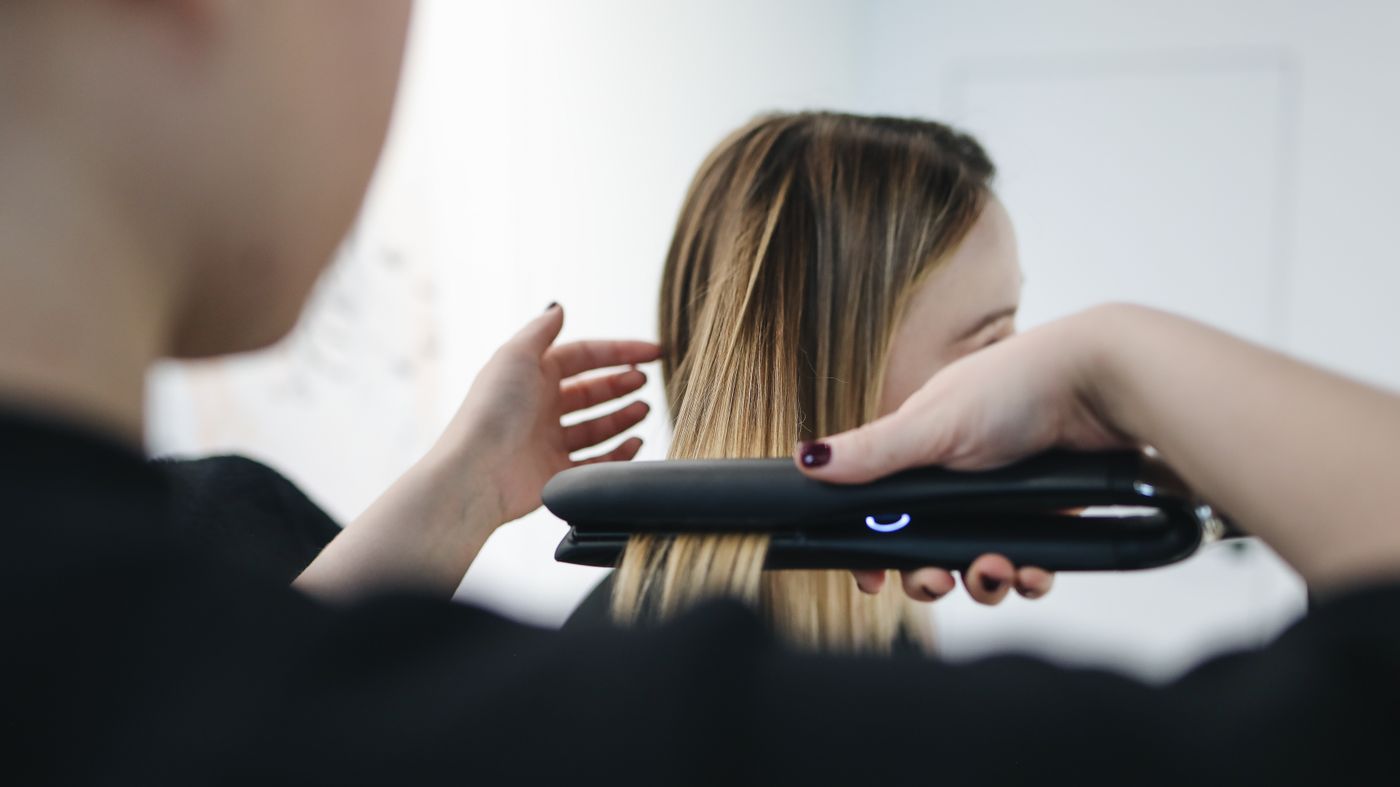
A keratin treatment lays a resin film along the cuticle and holds it there with heat, which flattens the surface so light reflects evenly and the strand slides instead of catching. That is a genuine cosmetic effect and it is why the result looks so good on day one. The trade-off is that the hair spends 20 to 40 minutes under a flat iron at very high temperature, repeatedly, in a single sitting.

Heat above roughly 180C progressively degrades keratin structure and strips lipid from the cuticle. The treatment masks that damage while the coating lasts, typically 8 to 16 weeks. When the coating wears away, the underlying hair is drier and more porous than it was before. Do this three times a year for a few years, particularly on hair that is also coloured or bleached, and you reach a point where the mid-lengths snap when you brush them.
This is why people say a keratin treatment "ruined" their hair when the first one seemed fine. The cost is cumulative and it appears at the point where the coating stops covering it. Bleached hair, fine hair and hair that has already been through repeated colouring reaches that point fastest. If you colour regularly, our guide on repairing bleach and colour damaged hair covers how to space chemical services out sensibly.
Do keratin treatments cause hair loss?
Keratin treatments do not cause pattern hair loss, because they act on the strand above the scalp rather than on the follicle beneath it. What they can cause is breakage, and breakage is very easy to mistake for loss. The distinguishing sign is the length of what you find: shed hairs from the follicle come away full length with a small pale bulb at the root, while broken hairs are short fragments with a blunt or frayed end and no bulb.
There is a second, less common route worth naming. A treatment applied carelessly onto the scalp can cause irritant contact dermatitis, and a genuinely inflamed, sore scalp can push follicles into shedding a few weeks later. That settles once the irritation is treated. If you are shedding heavily and it is not settling, the cause is usually somewhere else entirely, and our guide to what causes thinning hair works through the common ones. Sudden, patchy, or rapidly worsening loss always warrants a GP appointment rather than a shopping decision.
Who should think twice before booking a keratin treatment?
- Anyone pregnant or breastfeeding. There is no good safety data either way, and inhaled chemical exposure is exactly the category where caution is standard advice. Ask your midwife or GP.
- Asthmatics and people with other respiratory conditions. Formaldehyde is a known respiratory irritant and can trigger symptoms directly.
- Anyone with a sore, flaking, broken or recently treated scalp. Damaged skin absorbs more and reacts more.
- Heavily bleached or highly porous hair. The hair most likely to be sold this treatment is the hair least able to survive the heat stage.
- Children and teenagers. Their hair is finer, their airways are smaller, and the treatment offers nothing that gentler care cannot. Traction from tight styles is a far more common cause of hair problems in children, covered in our guide to hair loss in children.
- Anyone with a diagnosed kidney condition, specifically for the glyoxylic acid versions.
What are the safer alternatives for frizz and unmanageable hair?
Most people booking a keratin treatment are not chasing poker-straight hair. They want their hair to stop frizzing, to dry faster, and to be less of a daily fight. Those three outcomes are reachable without a chemical smoothing service, because frizz is largely a moisture and cuticle problem rather than a shape problem. Hair that is well conditioned, protected from heat, and dried without aggressive friction frizzes far less.
| Approach | How long it lasts | Chemical exposure | Best for |
|---|---|---|---|
| Formaldehyde-based keratin treatment | 8 to 16 weeks | High, inhaled during flat-ironing | Maximum straightening, at the highest cost to hair and air quality |
| Glyoxylic acid smoothing | 6 to 12 weeks | No formaldehyde, but scalp absorption questions remain | People who want smoothing without the fumes and have no kidney concerns |
| Weekly deep conditioning mask | Days, cumulative with use | None beyond ordinary cosmetics | Dryness, roughness, frizz caused by moisture loss |
| Heat protection plus lower styling temperature | Per wash, preventative | None beyond ordinary cosmetics | Anyone who blow-dries or straightens more than twice a week |
| Technique changes: microfibre towel, air-dry, silk pillowcase | Ongoing | None | Frizz caused by friction, which is more of it than most people expect |
Feed the hair before you flatten it
A deep conditioning mask does not restructure hair permanently, and no honest product claims it does. What it does is deposit conditioning agents and proteins that temporarily fill gaps in a roughened cuticle, so the surface behaves smoothly and holds water better. Used weekly, that is often enough to take frizz from unbearable to manageable, which is the actual goal for most people.

Masque Me Repairing Hair Mask, GBP 24.95
An 8-in-1 deep conditioning treatment formulated with rosemary, caffeine, provitamin B5 and argan oil. Used once a week, it supports softer, smoother, more manageable hair and helps reduce the breakage that makes frizz look worse. Cosmetic care only, and not a replacement for a salon service if you genuinely want your hair structurally straightened.
Vegan, made in the UK, from a brand that has sold over 5 million bottles since 2012.
Protect the hair you already have from heat
If you are going to use a flat iron or a hairdryer, the temperature you choose matters more than the tool you buy. Most fine to medium hair styles perfectly well at 150C to 180C. Turning the plates to maximum because it is faster is where a great deal of avoidable damage happens, and it is the same mechanism that makes the keratin treatment itself costly.


Protect Me Heat Protection Spray, GBP 13.95
A leave-in spray offering heat protection to 230C, plus colour protection and frizz control. Spray through damp hair before blow-drying and again on dry hair before straightening. It reduces heat damage and breakage during styling. It does not straighten hair and it is not a smoothing treatment.
Sulfate-free, vegan and UK-made.
Condition properly, which most people do not
Conditioner applied to soaking wet hair for 30 seconds and rinsed immediately does very little. Squeeze the water out first, apply from mid-length to ends, comb it through, and leave it two to three minutes. That one change reliably improves how hair feels and how much it frizzes, at no extra cost. Our guide on how to use conditioner properly walks through it, and preventing split ends covers the trimming and handling side.
How do you look after hair after a keratin treatment?
If you have already had the treatment, the aftercare genuinely affects how long it lasts and how the hair looks when it wears off. The usual instruction is to avoid washing for 48 to 72 hours while the coating sets, then to switch to a sulphate-free shampoo, because harsh detergents strip the film faster.
- Wait the full 72 hours before the first wash, and avoid clipping, tying or tucking the hair behind your ears in that window, since the resin is still setting and will hold a crease.
- Move to a sulphate-free shampoo. This is the single most repeated piece of aftercare advice and it is sound. Our explainer on switching to sulphate-free shampoo covers what changes and what does not.
- Wash less often. Every wash removes some of the coating. Two to three times a week extends the result noticeably.
- Keep conditioning. Smooth is not the same as hydrated, and the hair underneath is drier than it looks.
- Rinse after swimming. Chlorine and salt water both shorten the life of the treatment considerably.
- Space out other chemical services. Stacking colour, bleach and smoothing in the same month is where hair reaches breaking point.
What should you ask the salon before you book?
A good salon will answer all six of these without hesitation, and the answers tell you more than any review. If the response to the first question is vague, you have learned what you needed to know.
- Can I see the full ingredients list on the back of the bottle, not the marketing sheet?
- Does this product contain methylene glycol, methanediol or glyoxylic acid?
- What ventilation or extraction do you have at the styling station?
- What temperature will the iron be set to, and how many passes per section?
- Given my hair has been coloured or bleached, is it strong enough for this right now?
- What exactly happens as the treatment grows out, and what does the regrowth line look like?
Is it worth it?
For someone with coarse, healthy, uncoloured hair who spends 40 minutes fighting it every morning, a well-performed smoothing treatment in a properly ventilated salon can be a reasonable trade. For someone with fine or bleached hair chasing a smoother finish they could get from better conditioning and lower heat, it usually is not. The category is not evil, but it is routinely sold to the people it suits least, on the strength of a "formaldehyde free" claim that often does not survive contact with the ingredients list.
Start with the free changes: lower your iron temperature, use heat protection every time, condition properly, dry with a microfibre towel instead of rubbing, and sleep on silk. Give that eight weeks. A large share of people who do this find the frizz problem shrinks enough that the treatment stops feeling necessary. If you want the ingredient side of that routine explained properly, our companion guide breaks down what sulphates and silicones actually do in shampoo.
Build a gentler routine instead. Watermans makes sulphate-free, vegan hair care in the UK, and has sold over 5 million bottles since 2012. Start with Masque Me once a week for smoothness and Protect Me before every heat styling session.
Cosmetic hair care only. For a sore, blistered or persistently irritated scalp, or for sudden or patchy hair loss, see your GP.
Frequently asked questions about keratin treatments
Are keratin treatments banned in the UK?
Keratin treatments are not banned in the UK, but formaldehyde is prohibited as an intentionally added cosmetic ingredient under the UK Cosmetics Regulation. Products still reach salons using chemicals such as methylene glycol that release formaldehyde on heating, which is why reading the ingredients list matters more than reading the front label.
How can I tell if a keratin treatment contains formaldehyde?
Read the ingredients list on the back of the bottle and look for formaldehyde, formalin, methylene glycol, methanediol, timonacic acid or thiazolidinecarboxylic acid. Any of these means formaldehyde gas will be released during the flat-ironing stage, regardless of what the front of the packaging claims.
Does a keratin treatment damage your hair permanently?
A single treatment on healthy hair is unlikely to cause lasting harm. Damage is cumulative: repeated exposure to flat-iron temperatures above 180C degrades keratin structure and strips cuticle lipids, and the effect becomes visible as breakage once the coating wears off, typically after several rounds.
Can a keratin treatment make your hair fall out?
Keratin treatments do not cause pattern hair loss, because they act on the strand rather than the follicle. They can cause breakage that resembles hair loss. Broken hairs are short fragments with a blunt end, while shed hairs come away full length with a pale bulb at the root.
Is glyoxylic acid safer than formaldehyde for hair straightening?
Glyoxylic acid does not release formaldehyde, which removes the inhalation risk. However, case reports published since 2024 have linked glyoxylic acid straightening treatments to acute kidney injury through scalp absorption. Frequency is unknown and likely low, but it is not a risk-free swap.
Can I have a keratin treatment while pregnant?
Standard advice is to avoid chemical smoothing treatments during pregnancy and breastfeeding, because there is no good safety data and the treatment involves inhaling chemical fumes. Speak to your midwife or GP before booking anything, rather than relying on salon reassurance.
How long does a keratin treatment last?
Most keratin smoothing treatments last 8 to 16 weeks, depending on hair type, wash frequency and shampoo choice. Sulphate-containing shampoos, frequent washing, chlorinated pools and salt water all shorten it, sometimes to as little as six weeks.
What can I use instead of a keratin treatment for frizz?
Frizz is mostly a moisture and friction problem rather than a shape problem. A weekly deep conditioning mask, heat protection before every styling session, a lower iron temperature of 150C to 180C, a microfibre towel instead of rubbing, and a silk pillowcase address it for most people without any chemical service.