



Body Care Routine: A Simple Head to Toe Guide That Works

A body care routine that actually holds up is four steps, not fourteen: wash with something that does not strip you, moisturise while your skin is still damp, protect the areas that take the most punishment, and include your scalp instead of forgetting it exists. Everything else is optional. The single biggest improvement most people can make costs nothing at all, and it is applying moisturiser within three minutes of getting out of the shower rather than twenty minutes later. This guide covers the order, what each step is for, how to adapt it for dry, oily or sensitive skin, and the part almost every routine leaves out.
Key Takeaways
- Four steps is enough: cleanse, moisturise on damp skin, protect the high wear areas, look after your scalp.
- Apply body moisturiser within three minutes of towelling off. Timing matters more than the price of the cream.
- Very hot showers and heavily foaming washes strip the skin barrier faster than anything else in an average day.
- Hands, elbows, heels and shins need more than the rest of you, because they have the least oil of their own.
- Your scalp is skin. A dry, tight, flaky scalp responds to the same barrier logic as a dry shin.
- Give any new routine four weeks before you judge it, and change one thing at a time.
- Persistent itching, cracking, bleeding or a rash that spreads belongs with your GP, not with a richer cream.
What does a body care routine actually need to do?
Two things, and it is worth stating them plainly because the aisle is designed to make you forget. First, do not damage the skin barrier. Second, help it hold on to water.
The barrier is the outermost layer of skin, a lattice of cells held together by lipids including ceramides, cholesterol and fatty acids. When it is intact, water stays in and irritants stay out. When it is disrupted by hot water, harsh surfactants, cold dry air or over exfoliation, water escapes and the skin responds with tightness, roughness, itching and flaking.
Every genuinely useful body care step is doing one of those two jobs. Once you see it that way, most of the shelf becomes optional and the four steps below become obvious.

Step 1: cleanse without stripping
Most people wash too hot, too long and with too much product. All three do the same damage.
Warm rather than hot is the rule. A shower hot enough to turn your skin pink is dissolving the lipids you need, and the tight, squeaky feeling afterwards is not cleanliness, it is a stripped barrier. Keep showers to around ten minutes where you can, and finish cooler if you can bear it.
On product, a rich foam is a marketing signal rather than a cleaning one. Look for a body wash or cream cleanser that lists a gentle surfactant system and skips high strength sulfates if your skin runs dry. You genuinely only need it on the areas that get dirty and sweaty: underarms, feet, groin, and anywhere you have been working. Arms, legs and back mostly need water.
Frequency is personal, but daily full body soaping is more than most skin needs in a British winter, and cutting back is often the whole fix for winter itch.
Step 2: moisturise on damp skin, within three minutes
This is the step that changes results, and it is free.
When you step out of the shower your skin is saturated with water. A moisturiser applied at that moment traps the water that is already there. Applied twenty minutes later, on skin that has dried out, it has far less to hold on to. Pat with the towel rather than rubbing, leave yourself slightly damp, and apply straight away.
Choose the texture by season and skin type rather than by brand. A light lotion suits summer and oilier skin. A cream suits most people most of the year. An ointment or balm suits genuinely cracked hands, heels and elbows, and it is worth having one even if you use a lotion everywhere else.
Quantity matters too, and almost everyone under applies. A full body application for an adult is roughly a golf ball of lotion. If a 250ml bottle is lasting you six months, you are not using enough of it to see a difference.

Step 3: protect the areas that take the punishment
Skin is not uniform, and a routine that ignores that will always leave some parts rough while others are perfectly fine.
Hands take the worst of it. They are washed a dozen times a day, exposed to detergent, cold and wind, and they have relatively few oil glands. Hands need a richer cream than your arms and they need it after every wash, not once a day. Keeping a tube by the kitchen sink and one in a bag does more than any single product upgrade.
Elbows, knees, heels and shins are the other usual suspects, all for the same reason: thicker, drier skin with little oil of its own. These are where an ointment or a butter based cream earns its place, ideally at night when it has hours to work rather than minutes.
Sun protection belongs in this step for any skin that will be uncovered. In the UK that means roughly April to September on face, neck, ears and the backs of your hands, which are the areas that show cumulative sun damage first.

Plumping Moisturise Me® Face and Hand Cream
A butter rich cream built on cupuacu, shea and cocoa butters with allantoin and almond oil. That combination is exactly what the hands and face step above calls for: emollient butters to soften, plus occlusive richness to hold water in after washing. Keep one by the sink.
£15.00 · vegan, made in the UK
Step 4: the step almost everyone skips, your scalp
Your scalp is skin. It has the same barrier, the same lipids and the same reaction to hot water and harsh detergent as the skin on your shins. It also has thousands of follicles, more oil glands than most of your body, and a layer of hair that makes it easy to ignore until it starts itching.
Treated as skin, most scalp complaints get simpler. A tight, flaky, itchy scalp in January is usually the same story as dry shins: hot showers, dry indoor heating, and a cleanser that is too stripping used too often. The fixes rhyme. Wash in warm water rather than hot, use a gentler sulfate free shampoo, do not scrub with your nails, and get conditioner onto the lengths where it is needed rather than piling it at the roots.
The two things that make scalp different are worth knowing. It produces more oil than the rest of your body, so a genuinely dry scalp and an oily scalp can coexist with flaking, and the answer is rarely to wash more aggressively. And because hair sits on top of it, product residue builds up in a way it never does on your arm, which is why a clarifying wash occasionally helps where a richer conditioner does not.
If your flaking is greasy, yellowish and stubborn rather than fine and white, that is a different problem with a different answer, and we have set it out in our guide to a flaky scalp and what causes it.

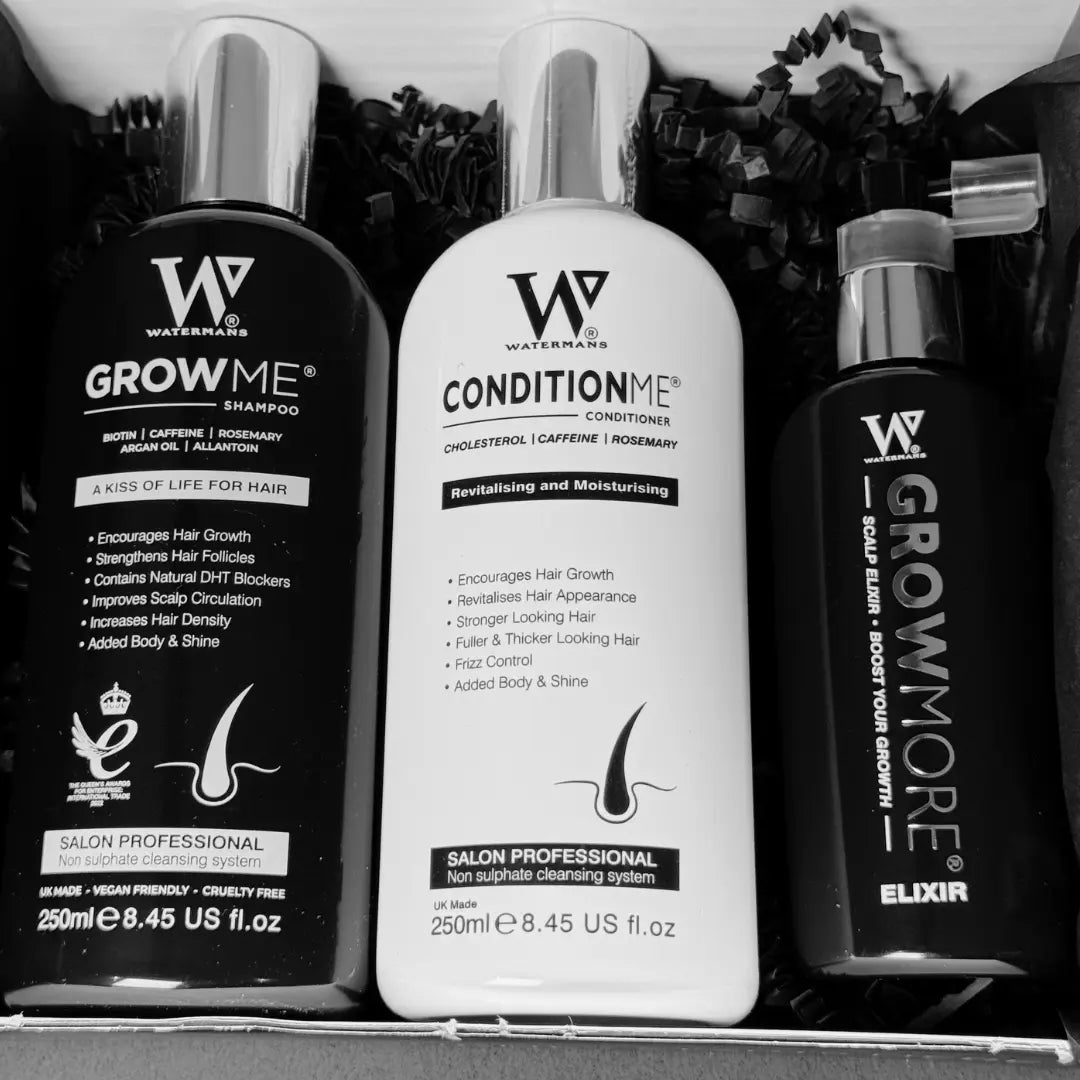
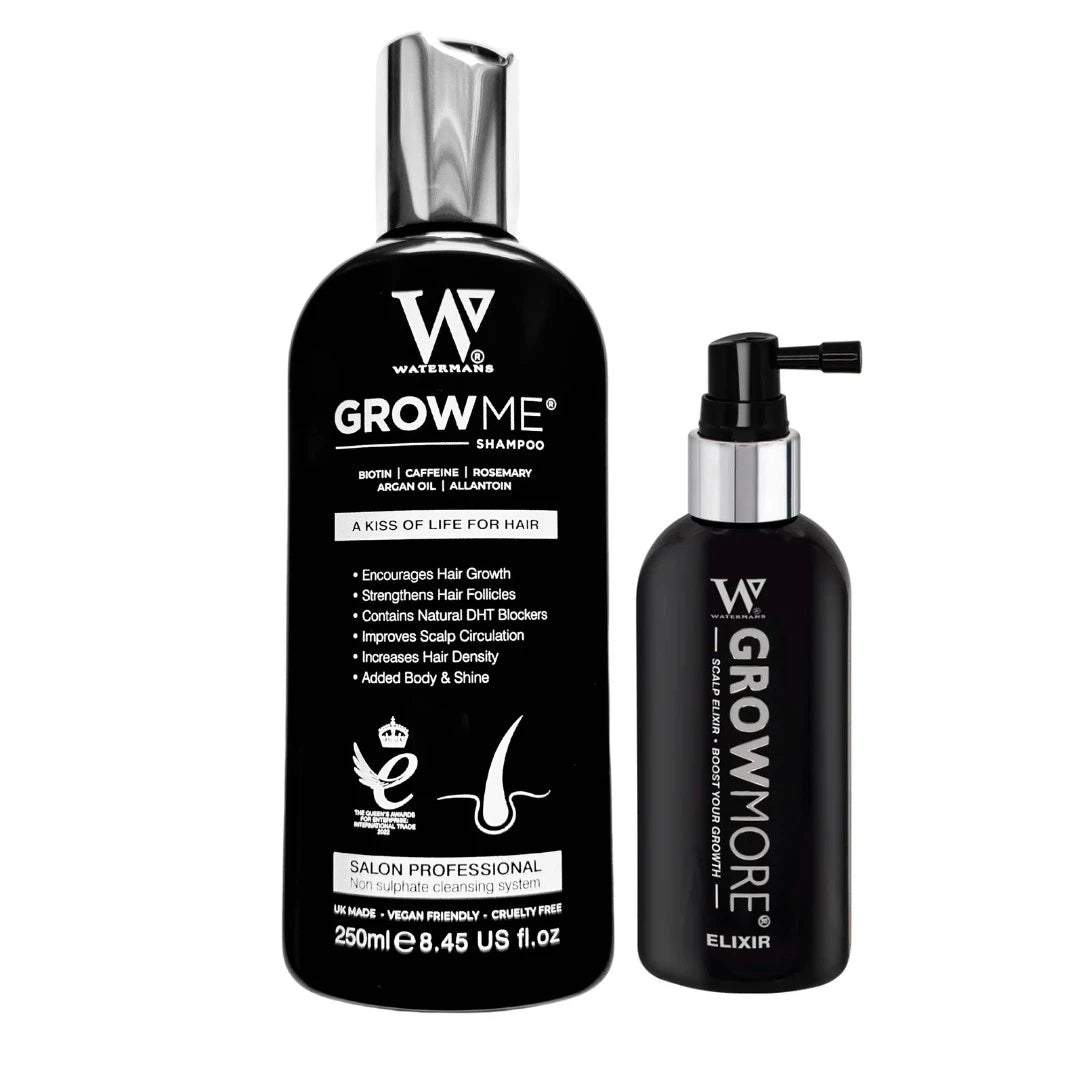
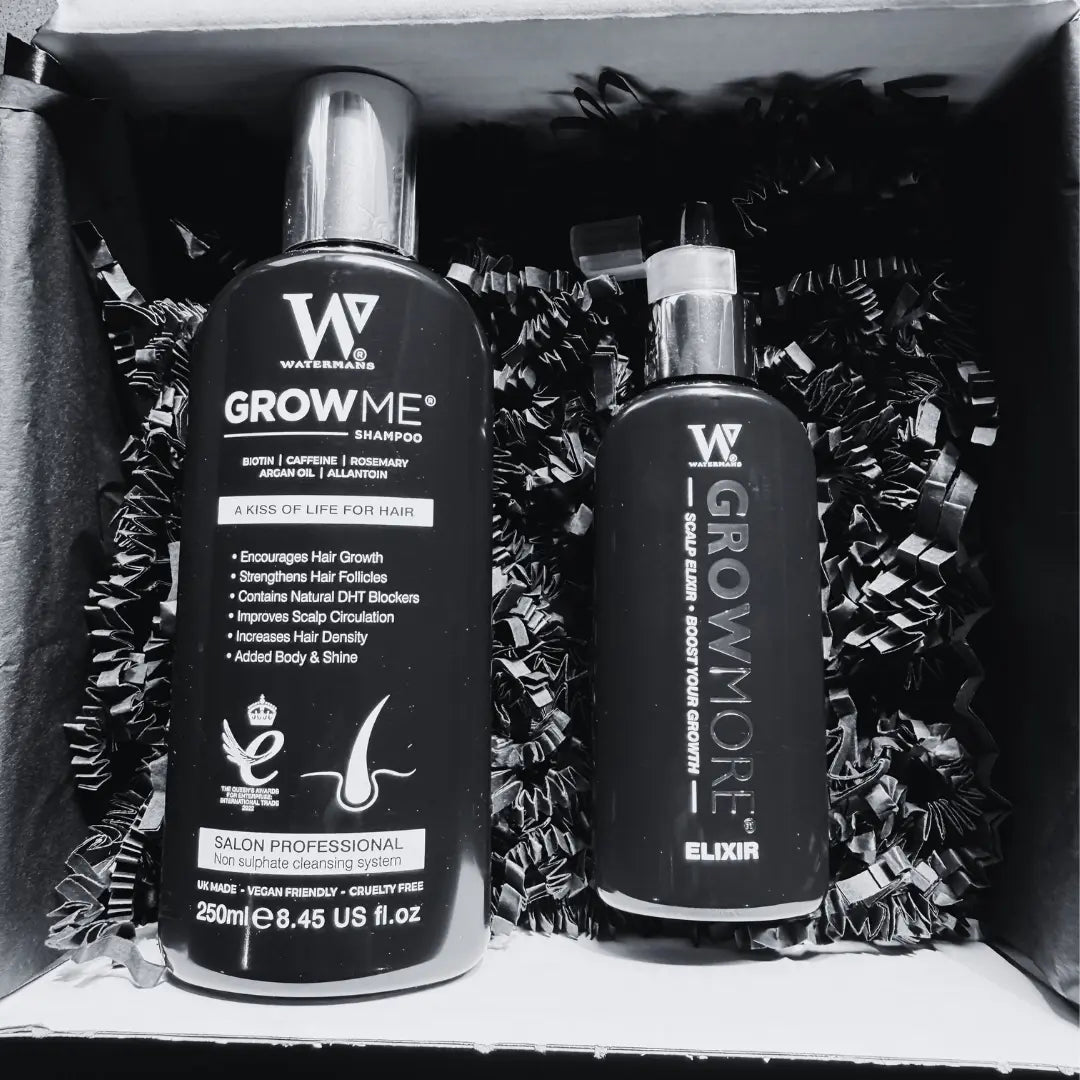
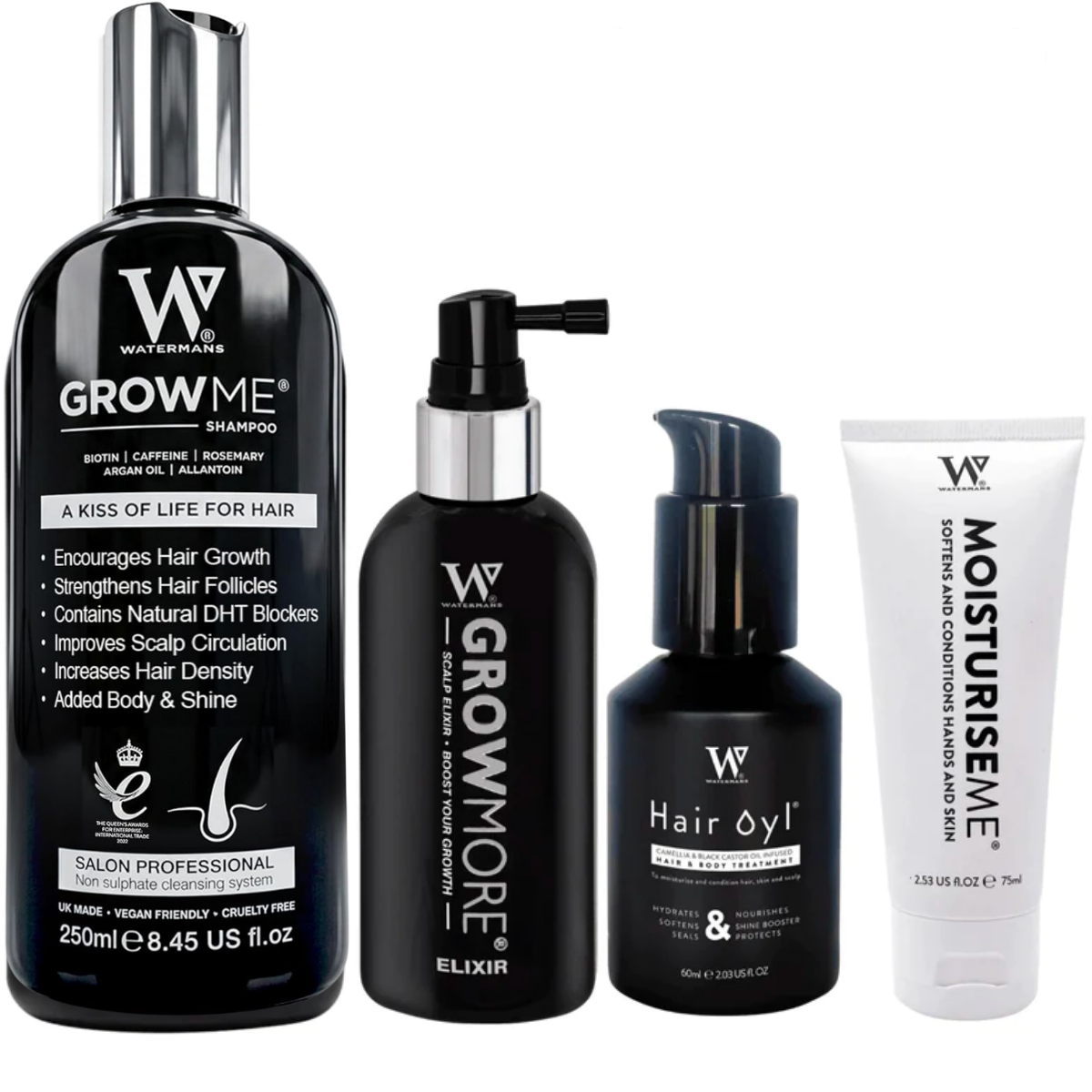
Grow Me® Sulfate Free Shampoo
A sulfate free daily shampoo with biotin, caffeine, rosemary, niacinamide and hydrolysed lupine protein. Sulfate free matters here for the same reason a gentle body wash does: it cleans without stripping, which suits a scalp that feels tight or flaky in winter. It reduces breakage for fuller looking hair. Cosmetic care, honestly described.
£14.95 · sulfate free, vegan, made in the UK
What does the routine look like written out?
| When | What | Why it is there |
|---|---|---|
| In the shower | Warm water, gentle wash on the areas that need it | Cleans without stripping the barrier |
| Within 3 minutes | Body moisturiser on damp skin, a golf ball worth | Traps the water already in the skin |
| Morning | Sunscreen on exposed skin, April to September | Prevents cumulative sun damage |
| After every hand wash | Hand cream | Hands lose the most and hold the least |
| Wash days | Gentle shampoo, conditioner on lengths, no nails | Scalp is skin and behaves like it |
| Night, as needed | Balm on heels, elbows, cracked hands | Hours of contact beats minutes |
Get the four step body care checklist
A one page printable version of the table above, plus the seasonal swaps, how much product to actually use, the three habits that undo the whole routine, and the scalp version most guides leave out. Sent once, free.
One email at a time, no spam, unsubscribe whenever you like.
How do I adapt it for my skin type?
The four steps stay the same. What changes is texture and frequency.
Dry skin. Cream or ointment rather than lotion, applied twice a day in winter. Shorter, cooler showers. Skip the exfoliating mitt entirely when things are bad, because scrubbing dry skin makes it drier. A humidifier or simply a bowl of water near a radiator helps more than people expect.
Oily or acne prone skin. You still need moisturiser, and skipping it is a common mistake that makes oiliness worse. Use a light lotion, look for non comedogenic on the label for the chest and back, and change out of damp gym kit promptly rather than relying on stronger washes.
Sensitive or reactive skin. Fewer products, fragrance free, and one change at a time so you can tell what caused a reaction. Patch test on the inner forearm for a couple of days before committing anything to a large area.
Mature skin. Oil production falls with age, so the same routine that worked at thirty often feels inadequate at sixty. Move up a texture, add the night time balm step, and pay attention to shins and forearms where thinning skin shows first.
What is genuinely optional?
Quite a lot of the aisle, in fact.
- Body exfoliants. Nice occasionally, unnecessary weekly for most people, and counterproductive on dry or irritated skin. Once a fortnight with a gentle chemical exfoliant beats a harsh scrub every Sunday.
- Body serums. Usually a thinner, pricier moisturiser. If you like them, fine, but they replace nothing.
- Dry brushing. Pleasant, no meaningful evidence for the claims made about it, and rough on sensitive skin.
- Separate day and night body creams. Marketing. One good cream and one balm cover it.
- Twelve step routines. The main casualty of a long routine is that nobody keeps it up, and consistency is where the results actually come from.
How long before a body care routine shows results?
Faster than hair, slower than you would like. Skin on the body turns over roughly every four to six weeks, and more slowly as you get older, so four weeks is the honest point at which to judge a change.
Expect comfort first. Itching and tightness usually settle within a week of shorter, cooler showers and consistent moisturising. Roughness on elbows, knees and heels takes two to four weeks of nightly balm. Overall texture and tone shift over a couple of months. Anything promising a transformation in seven days is describing hydration, which looks good and washes off.
If you want the same logic applied to your face, where the order of products genuinely matters more, we have set that out in our guide to what goes first in a skincare routine and why. For the seasonal version, our winter dry skin guide covers the specific changes worth making from October onwards.
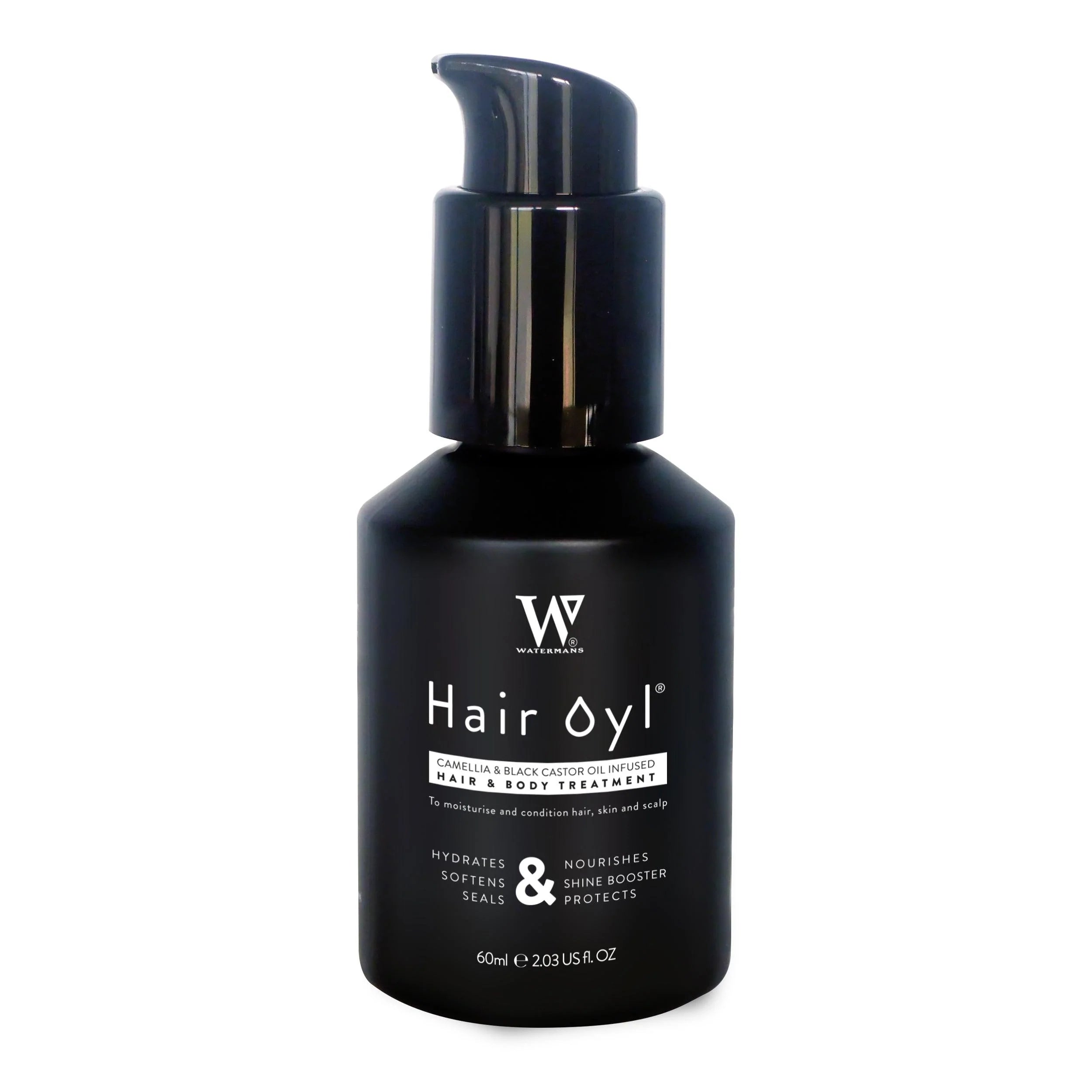
Camellia and Black Castor Hair and Body Oil
A cold pressed blend rich in omega 3, 6 and 9 and vitamins A, B, D and E. Smoothed over damp skin straight out of the shower it works as the occlusive layer described in step 2, and the same bottle doubles as a pre wash oil for the lengths of your hair.
£24.95 · vegan, made in the UK
When should I speak to my GP?
A routine is the right answer for skin that is dry, rough or a bit uncomfortable. It is the wrong answer for skin that is unwell. Speak to your GP or a pharmacist if you notice:
- Itching intense enough to disturb your sleep, or itching without any visible rash.
- Skin that cracks, weeps, bleeds or shows signs of infection.
- A rash that is spreading, or one that appeared after starting a new medicine.
- Patches that are thickened, scaly and well defined, which may be something other than simple dryness.
- Any new mole, or a mole that changes shape, colour, size or starts to itch or bleed.
- Sudden dryness alongside other changes such as fatigue, weight change or hair shedding, which is worth investigating properly.
Watermans products are 100% cosmetic and do not treat medical hair loss. Individual results may vary.
Frequently asked questions
What order should a body care routine go in?
Cleanse in a warm shower, pat dry, moisturise within three minutes while skin is still damp, then add sunscreen in the morning on exposed skin and a richer balm at night on hands, elbows and heels. Wash days add gentle shampoo and conditioner on the lengths.
How often should I moisturise my body?
Once a day for most people, twice in winter or if your skin runs dry. The timing matters more than the count: straight out of the shower is worth two applications at any other time of day.
Do I really need a separate body moisturiser and face cream?
Usually yes, but not because of marketing. Facial skin is thinner and more prone to congestion, so a rich body cream on the face can cause breakouts. A gentle face cream on the body is fine, just expensive.
Should I moisturise my scalp?
Your scalp is skin, so it benefits from the same barrier logic, but it also produces more oil than the rest of you. Start with a gentler sulfate free shampoo, warm rather than hot water and conditioner on the lengths, rather than adding a heavy cream to the roots.
Is exfoliating my body necessary?
No. It is optional and easy to overdo. If you enjoy it, a gentle exfoliant once a fortnight is plenty, and skip it entirely while skin is dry, itchy or irritated.
Why is my skin drier in winter?
Cold air holds less moisture, indoor heating dries the air further, and hot showers feel more tempting. All three pull water out of the skin. Shorter, cooler showers plus a richer cream applied on damp skin covers most of it.
How much body lotion should I actually use?
Roughly a golf ball sized amount for a full body application on an adult. Most people use a fraction of that and then conclude the product does not work.
How long before I see a difference?
Comfort within about a week, rough patches over two to four weeks, and overall texture across a couple of months. Change one thing at a time so you know what worked.
Start with the three minute rule
If you take one thing from this, move your moisturiser into the bathroom and use it while you are still damp. That single change does more than an upgrade to a more expensive cream, and it costs nothing. Add the hand cream by the sink, the nightly balm on heels and elbows, and a gentler shampoo for your scalp, and you have a routine that survives a busy week.
If you want that thinking applied to your hair as well as your skin, the Watermans Grow Me range is built on the same principle of cleaning gently and reducing breakage so hair looks fuller. Vegan, made in the UK, and over 5 million bottles sold since 2012.