FTM Transition Hair Loss: A Practical Care Guide
FTM transition hair loss is the scalp thinning some trans men notice once testosterone raises androgen levels into the male range, and it is manageable rather than a choice between your transition and your hair. This guide is the practical half: the wash routine, the styling, the food, and the habits that protect the hair you have. The biology, the patterns and the prevalence are covered separately.
Our hair growth shampoo
Grow Me® Hair Growth Shampoo, £14.95. A sulphate free daily shampoo that supports a healthy scalp environment and helps reduce breakage, so lengths hold on and look fuller.
Key takeaways
- Keeping hair is far easier than getting it back, so the routine matters most in the first couple of years on testosterone.
- The single biggest free win is a haircut that suits the hairline you have now, not the one you had at twenty.
- Wash the scalp more, not less. Skipping washes does not save hair and it does flatten what is there.
- Watch iron and protein. Both are common gaps and both show up in the hair before anywhere else.
- Never change your testosterone dose over hair worries. That conversation belongs with the clinician managing your care.
- Cosmetic products cannot alter hormones. They reduce breakage and keep the scalp comfortable, which is genuinely worth having.
What is FTM transition hair loss, in one paragraph?
FTM transition hair loss is inherited pattern hair loss becoming visible once masculinising hormone therapy lifts androgen levels. Testosterone converts in the skin to DHT, and follicles that carry the inherited sensitivity respond by shortening their growing phase. Each cycle produces a finer, shorter hair at the temples and crown. It is slow, it is painless, and whether it happens at all comes down to genetics rather than to your dose. Scalp oil and texture shift on testosterone as well, and our guide to transgender hair care during hormone therapy covers how to adjust wash frequency as that happens.
That is the short version. For the full picture, including the patterns, the timing and how the medical conversation works, read our companion piece on androgenetic alopecia in trans men. This page assumes you already know it is happening and want to know what to actually do.
Before anything else. Do not change, pause or reduce your testosterone because of your hair, and do not add anything that acts on hormones without talking to the clinician who looks after your hormone therapy. Medicines for pattern hair loss exist in the UK and are prescription-only, and some of them interact with masculinisation goals in ways that matter to you. Watermans is a cosmetic hair care company. We do not name, supply or advise on medicines, and we do not run clinics. Raise it at your next routine review, and ask about iron, ferritin and thyroid at the same time.
What does a good wash routine look like?
A good routine cleans the scalp regularly, conditions only where hair actually needs it, and dries with as little heat and friction as possible. Most men get this wrong in the same two ways: washing too rarely because they think it saves hair, and drying too aggressively because they are in a hurry.
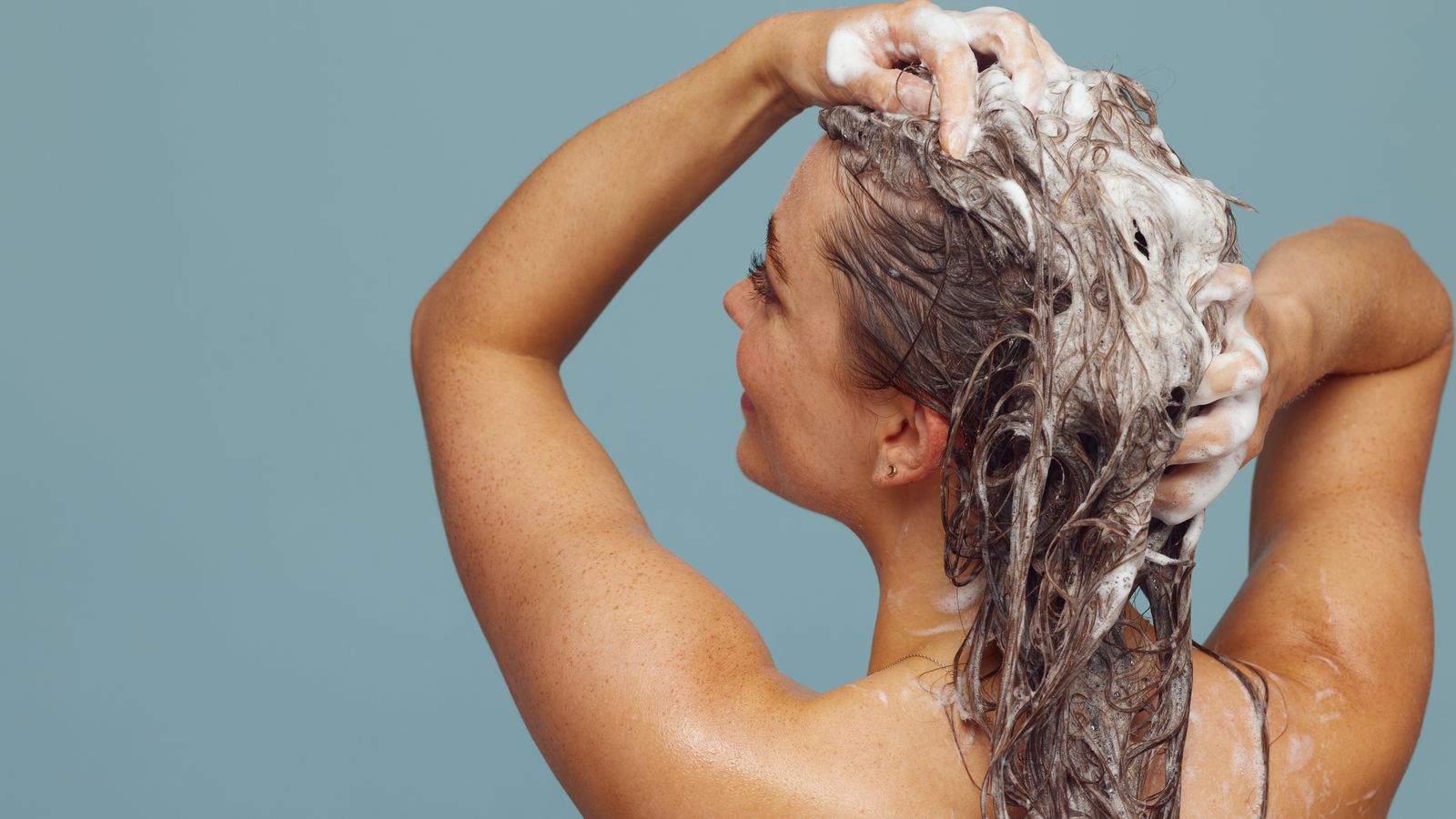
- Wash every day or every other day if your scalp is oily. Hairs that come out in the shower had already finished their cycle. Skipping washes just banks them into a larger, more upsetting handful later.
- Shampoo the scalp, not the lengths. Work it in with your fingertips, not your nails, for a good 30 seconds. The lengths get cleaned on the way out.
- Condition the mid-lengths and ends only. On very short hair you may not need conditioner at all. On anything past two inches, skipping it costs you length to breakage.
- Squeeze, do not rub. Rubbing a towel over the top of your head roughs up the cuticle and snaps fine hairs at the temples, which is exactly where you can least afford it.
- Rough dry on cool or low. Hot air on an already fragile hairline is a slow tax on your visible density.

Which haircut works best with a changing hairline?
Short, textured and high contrast wins almost every time, because length drags hair flat and exposes scalp while a shorter cut stands up and closes the gaps. Fighting to keep a long fringe over receding temples is the most common mistake and it usually looks worse than the recession would on its own.
| Cut | Best for | Why it works |
|---|---|---|
| Textured French crop | Temple recession, decent density on top | The broken fringe sits forward over the corners and hides the M shape |
| Short back and sides with texture on top | General thinning, all over | Contrast makes the top read as denser than it is |
| Buzz cut, grade 2 to 4 | Crown thinning, or wanting it off your mind | Uniform length removes the comparison entirely and needs no styling |
| Shaved or grade 0 to 1 | Advanced pattern, or personal preference | Reads as a deliberate choice rather than as loss, and pairs well with a beard |
Two styling rules matter more than the cut itself. Use matte clay or paste rather than anything shiny, because shine reflects off scalp and gel welds strands into visible clumps. And dry upward at the root with your fingers before you touch any product, because root lift buys more apparent volume than any product claim ever will.
Get a discount on the thinning hair range
Join the Watermans mailing list and we will email a discount code straight to your inbox, so you can try the thinning hair range for less. Made in the UK, over 6.5 million bottles sold since 2012.
Does what you eat affect FTM transition hair loss?
Diet will not switch off inherited pattern hair loss, but a genuine shortfall will make everything worse and it is one of the few things you can fix quickly. Two gaps come up repeatedly in this group, and both are worth checking rather than guessing at.
Iron. Anyone who had heavy periods before starting testosterone may have run their stores down, and stores take months to rebuild even after periods stop. Low iron causes a diffuse shed that is entirely separate from pattern hair loss, and it is easy to miss because the two can happen at once. Ask for ferritin, not just a full blood count.
Protein. Hair is mostly keratin, and if you are training hard, cutting weight, or eating erratically around work, you may be well under what you need. Aim for a real protein source at every meal rather than relying on a shake to rescue a thin day.
Beyond that, supplements only help if you are short of something. Taking extra of a nutrient you already have enough of does nothing for the follicle, and very high dose biotin can skew some blood test results, which matters if you are having hormone levels checked. Mention anything you take before bloods are drawn. Our guide to what hair vitamins actually do goes through the evidence honestly.

Which everyday habits cost trans men the most hair?
Friction, heat and tension do the damage that people blame on hormones. None of these cause pattern hair loss, but all three cause breakage, and breakage on a hairline that is already thinning is what turns a manageable situation into a visible one.
- Tight caps and beanies on damp hair. The band sits in the same place for hours and rubs. If you wear one daily, let hair dry first and loosen the fit.
- Binders are fine, hoods are not always. A binder has no effect on scalp hair. A hood rubbing the back of your head all day does contribute to breakage at the crown.
- Gym friction. Headbands, helmets and constantly pushing damp hair back with your hands all add up. Dry hair is much more robust than wet hair.
- Bleach and heavy colour. If you are lightening, space it out and regard the mid-lengths as permanently borrowed. Damage to the fibre does not repair itself.
- Picking and pulling. Anxious hair pulling is genuinely common when you are watching a hairline. If you notice you are doing it, that is worth mentioning to your GP too.
Our wider guide to what causes hair damage covers the fibre side in more depth, and it applies to everyone regardless of hormones.
What can cosmetic products realistically do?
Cosmetic products cannot change a hormone level, restore a miniaturised follicle or stand in for medical care. What they do is keep the scalp clean and comfortable, and reduce breakage so that the hair you still have stays on your head at full length. On a short cut with thinning temples that is a visible difference, because you are no longer losing the hairs at the front to friction on top of losing them to the cycle.
What we make, and what it is honestly for
Our products are cosmetics, formulated to support a healthy scalp environment and reduce breakage so hair looks fuller and thicker. They are not medicines and we will not pretend otherwise, particularly on a page like this.

Grow Me® Hair Growth Shampoo, £14.95
A sulfate free daily shampoo with Biotin, Caffeine, Rosemary, Niacinamide and hydrolysed lupine protein. Built for washing often without stripping the scalp, which is exactly the routine described above.

Condition Me® Hair Growth Conditioner, £13.95
For anyone considering surgery rather than care alone, we cover the NHS cost range, FUE versus FUT and the clinic checks in our guide to the transgender hair transplant.
For anyone keeping length rather than going short. Cholesterol, shea butter and hydrolysed lupine protein add slip, and hair that combs out easily is hair that snaps less at the temples.

Protect Me® Heat Protection Spray, £13.95
If you blow dry, this is the one that earns its place. Heat damage along the fibre is cumulative and does not repair, so protecting a fragile hairline before the dryer goes near it is the cheapest saving on this page.

What is a realistic timeline for FTM transition hair loss?
Judge nothing before six months, because the hair growth cycle sets the pace and nothing shortens it. Changes to breakage show up sooner, often within four to eight weeks, since you stop losing length you already had. Changes in density are slower and only visible in photographs taken under the same conditions.
- Weeks 1 to 4. Fix the wash routine, get the cut changed, cut the heat. Hair feels better and looks tidier almost immediately.
- Weeks 4 to 8. Breakage drops. Ends look less ragged and the hairline holds its shape between cuts.
- Months 3 to 6. Any nutritional gap you corrected starts showing in new growth at the root.
- Month 6 onward. Compare photographs, not memories. This is the point at which you can honestly say whether density has changed.
Take the photos from the start. Same room, same light, hairline and crown, once a month on your phone. It is the only measure that survives a bad-lighting day.
Frequently asked questions
Will my hair loss stop if I stop testosterone?
Lowering the androgen signal can slow the process, and follicles that are still producing fine hair may thicken up somewhat, but follicles that have been dormant for years generally do not come back. Stopping hormone therapy has a very wide set of effects on your body and your wellbeing, so it is not a hair decision. Take the question to the clinician managing your care rather than acting on it.
Does gel or hairspray make FTM transition hair loss worse?
Neither causes pattern hair loss. Heavy product plus aggressive brushing to get it out does cause breakage, and wet-look finishes make thinning far more visible by clumping strands and exposing scalp. Matte clay, applied to dry hair and washed out properly, is the better choice on every count.
I am shedding a lot two months after top surgery. Is that the hormones?
More likely it is the surgery. General anaesthetic, the physical stress of an operation and the recovery period are a classic trigger for a diffuse shed that starts two to three months later and settles over six to nine. It looks alarming, it is usually temporary, and it is a different thing from the gradual thinning at the temples. If it has not settled after nine months, get iron and thyroid checked.
Should I use a hair loss shampoo?
A shampoo cannot alter your hormones, so judge one on what it honestly does: cleans the scalp without stripping it, and leaves hair less prone to snapping. If a product promises to bring back a receding hairline, that promise is not one a cosmetic can support. Buy on formulation and on how your scalp feels after four weeks.
Does a beard make thinning on top less noticeable?
For many trans men, yes. Facial hair moves the visual weight of your face downward and balances a higher hairline, which is part of why the shaved head and beard combination works so well. It is also usually one of the changes testosterone gives rather than takes, so it is worth leaning into.
Is microneedling at home a good idea?
Not without proper advice. Needle length, sterilisation and technique all matter, and doing it badly on a fragile hairline risks scarring, which is permanent in a way that thinning is not. If you want to explore it, ask a clinician rather than a video. If your question is about products or a routine rather than a medical one, you can talk to Gail Waterman, our co-founder, as an AI avatar on the Watermans homepage.
How do I talk to a barber about it?
Say it plainly at the start: your hairline is changing and you want a cut that works with it. A good barber deals with this weekly and will cut for the shape you have rather than leaving weight where it exposes scalp. If a barber brushes it off or makes a joke of it, find another one.
Do hats cause baldness?
No. Hats do not cause pattern hair loss and never have. A tight hat worn on damp hair every single day can cause breakage where the band sits, which is a fibre problem rather than a follicle problem, and it is fixed by loosening the fit and drying your hair first.
Sources and references
- NHS: Hair loss
- NHS: Gender dysphoria, including referral routes to gender identity services
- NHS: Iron deficiency anaemia
- NHS: Iron, how much you need and food sources
- StatPearls, NCBI Bookshelf: Androgenetic Alopecia
- StatPearls, NCBI Bookshelf: Physiology, Hair
What is the bottom line on FTM transition hair loss?
FTM transition hair loss is inherited pattern hair loss that testosterone has made visible, and the practical response is unglamorous and effective: change the cut, wash the scalp properly, drop the heat and the tension, sort out iron and protein, and photograph the hairline monthly so you are working from evidence. Keep the hormone questions for the clinician managing your care, keep the styling questions for a barber who takes them seriously, and use cosmetic care for what it genuinely does.
Watermans is made in the UK, and has sold over 6.5 million bottles since 2012.
The shampoo is the step you actually repeat, which is why our sulphate free hair growth shampoo is the one worth getting right.
Watermans products are 100% cosmetic and do not treat medical hair loss. Individual results may vary.